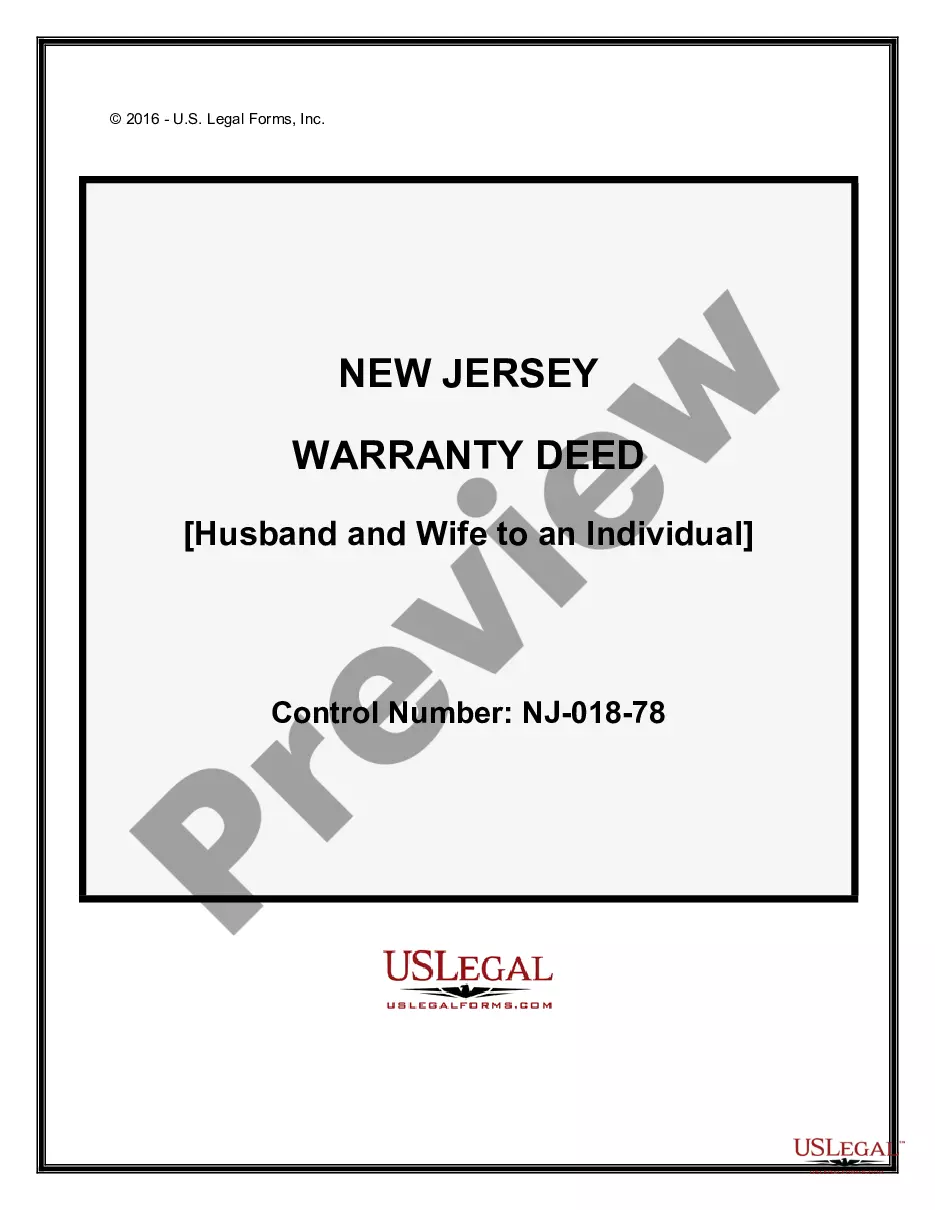
New Jersey Warranty Deed from Husband and Wife to an Individual
Understanding this form
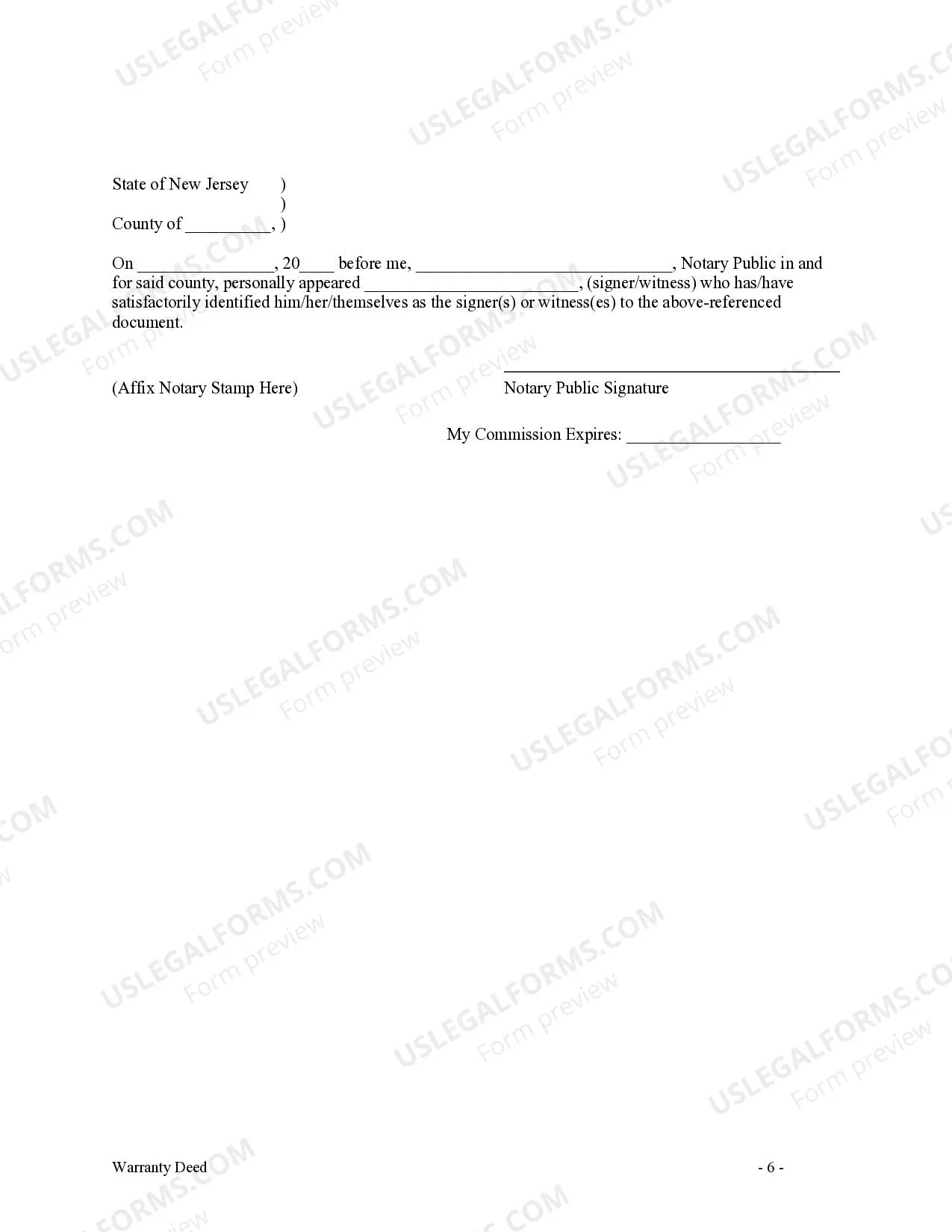
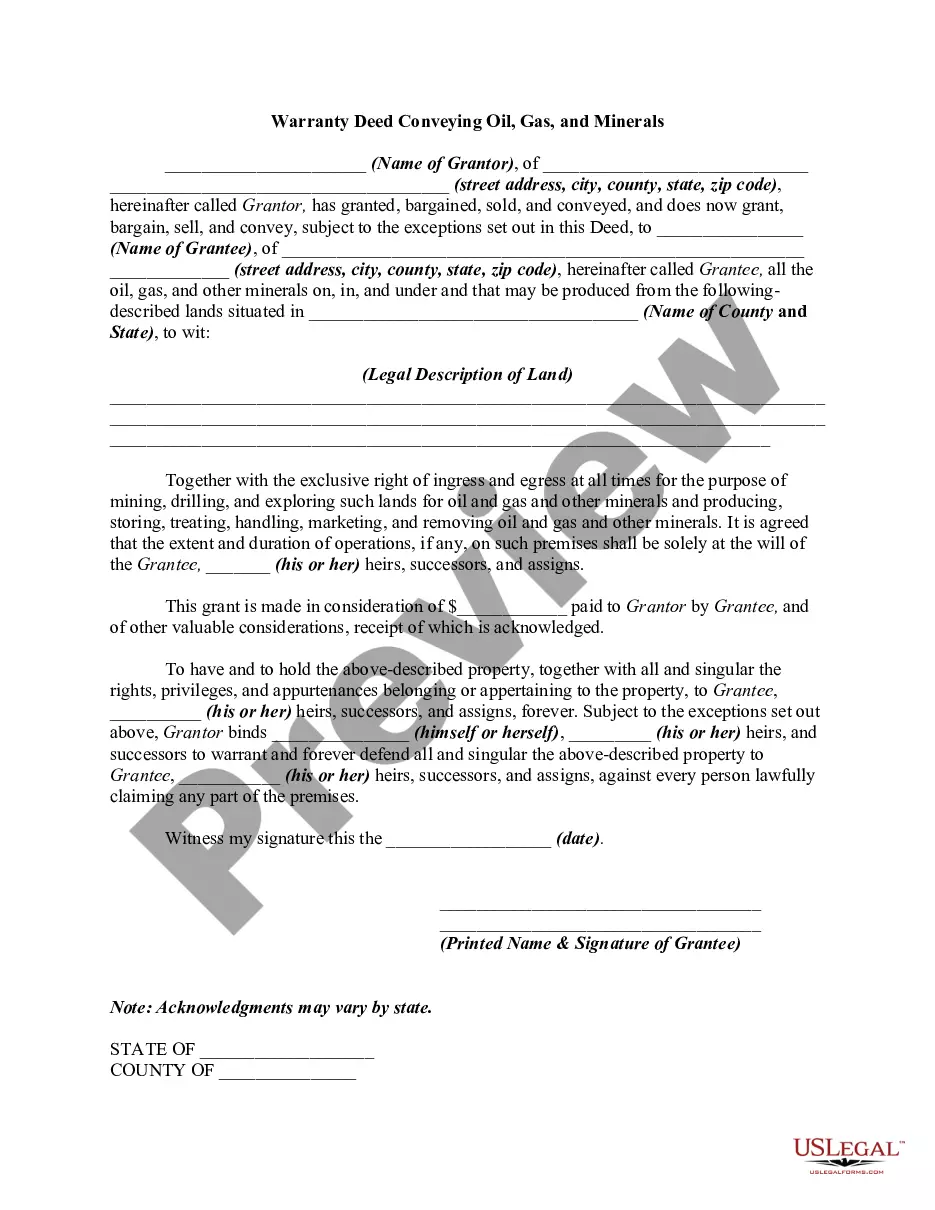
A Warranty Deed from Husband and Wife to an Individual is a legal document used to transfer ownership of real estate from a married couple (the grantors) to an individual (the grantee). This form ensures that the grantors provide guarantees regarding their ownership of the property and that it is free from liens or encumbrances except as noted. Unlike other forms of deeds, a warranty deed offers the grantee the highest level of protection, as it guarantees the title's validity against any claims.
Form components explained
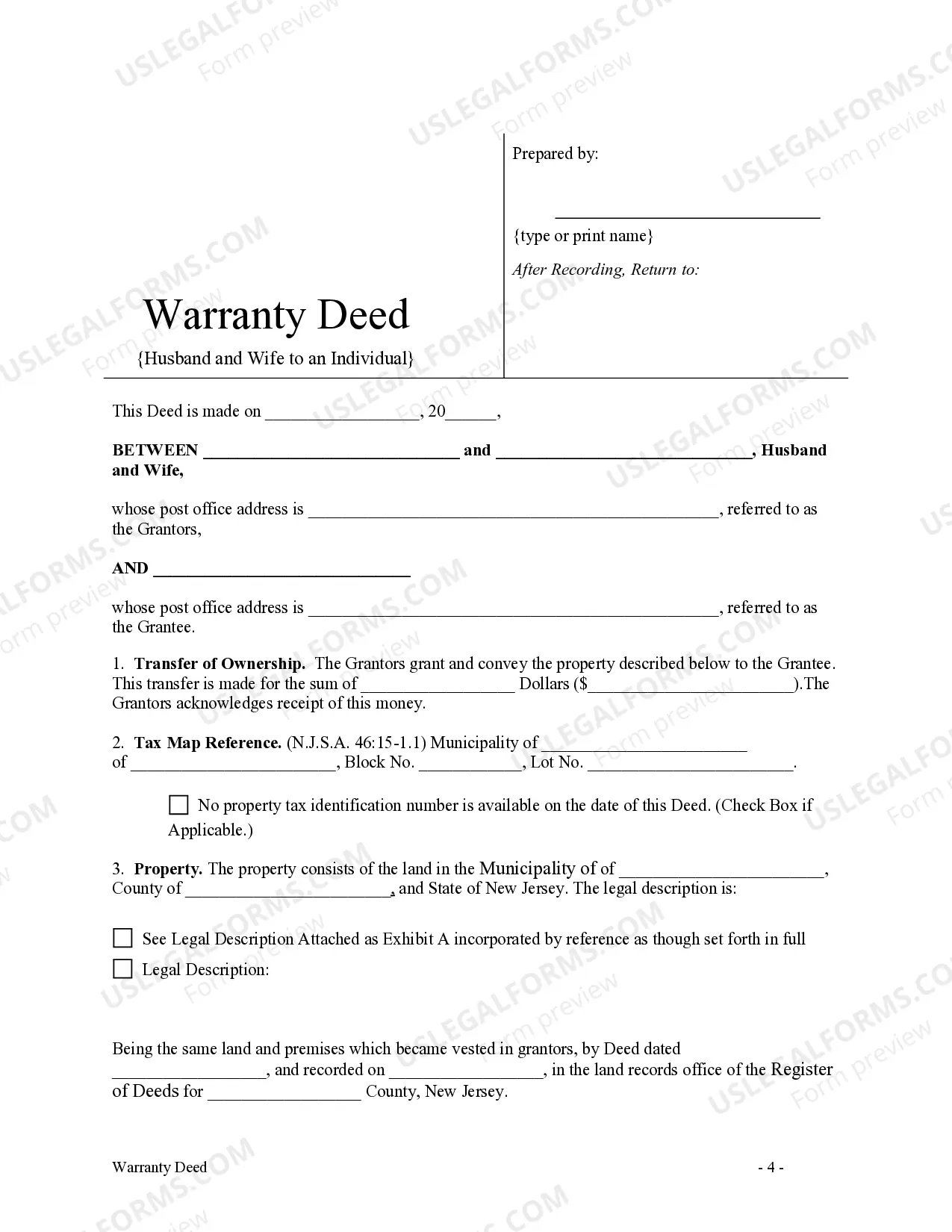
- Transfer of Ownership: Details the conveyance of the property from grantors to the grantee for a specified amount.
- Tax Map Reference: Requires information about the propertyâs municipality and tax identification.
- Property Description: Provides a legal description of the property being conveyed.
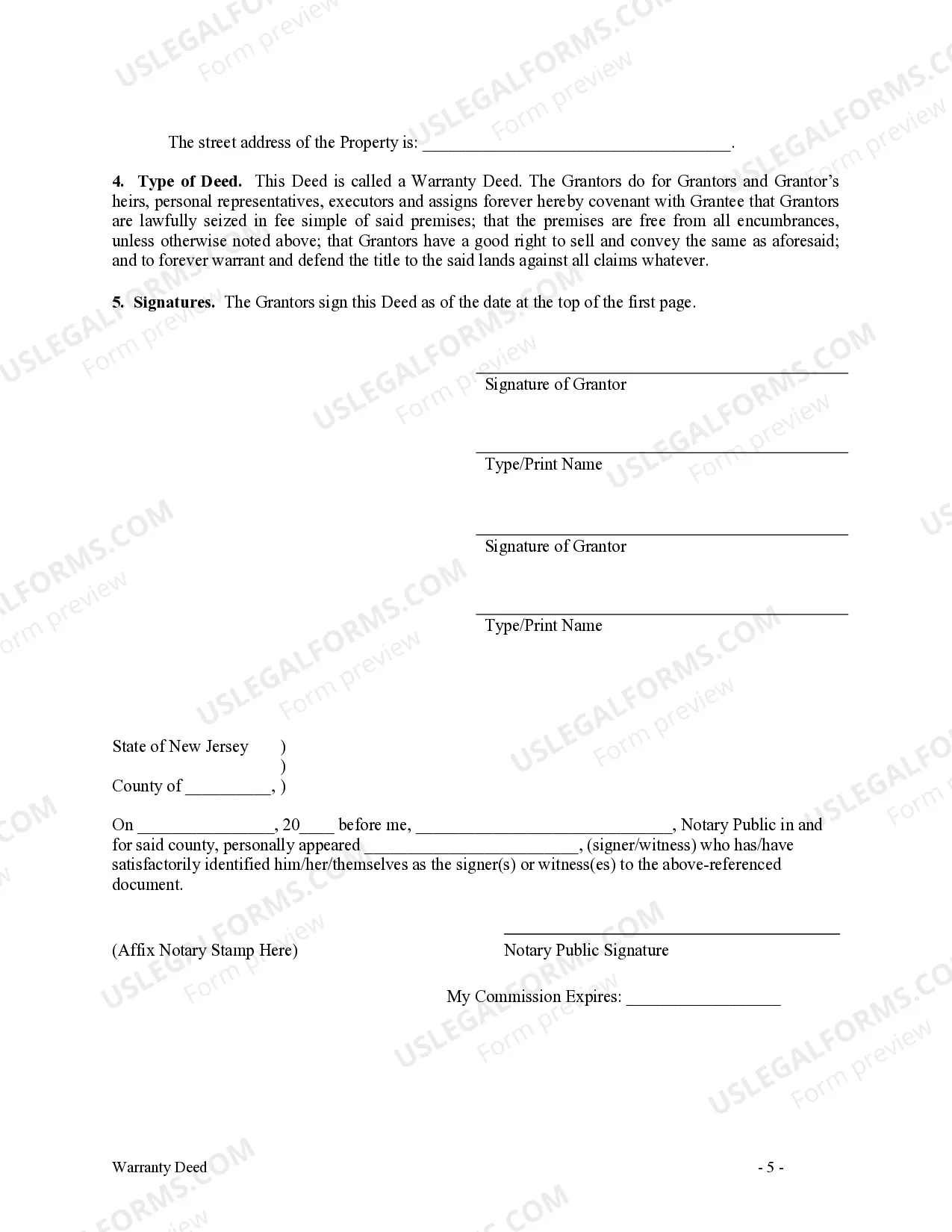
- Type of Deed: States that this is a warranty deed, emphasizing the grantorsâ assurance of clear title.
- Signatures: Requires signatures from both grantors to validate the deed.




When to use this document
This form is used when a married couple wishes to transfer ownership of their property to an individual. It may arise in various scenarios, such as after a divorce, as part of estate planning, during the sale of property, or as a gift. The warranty deed ensures that the grantee has legal protection regarding the title of the property and its potential claims.
Who can use this document
This form is intended for:
- Married couples seeking to transfer property ownership.
- Individuals purchasing property from a husband and wife.
- Estate planners who wish to designate property transfer to a specific individual.
How to prepare this document
- Identify the parties involved: Clearly state the names of the husband and wife as grantors and the individual as the grantee.
- Specify the property: Enter the legal description of the property, including the address and tax map reference.
- Indicate the consideration: Fill in the amount paid for the property transfer.
- Complete the type of deed: Confirm that this document is a warranty deed.
- Sign the document: Both grantors must sign and date the form to validate the transfer.
Does this form need to be notarized?
This form does not typically require notarization unless specified by local law. However, it's advisable to check with your local recording office for any additional requirements regarding notarization before submitting the deed.
Get your form ready online
Our built-in tools help you complete, sign, share, and store your documents in one place.
Make edits, fill in missing information, and update formatting in US Legal Forms—just like you would in MS Word.
Download a copy, print it, send it by email, or mail it via USPS—whatever works best for your next step.
Sign and collect signatures with our SignNow integration. Send to multiple recipients, set reminders, and more. Go Premium to unlock E-Sign.
If this form requires notarization, complete it online through a secure video call—no need to meet a notary in person or wait for an appointment.
We protect your documents and personal data by following strict security and privacy standards.

Make edits, fill in missing information, and update formatting in US Legal Forms—just like you would in MS Word.

Download a copy, print it, send it by email, or mail it via USPS—whatever works best for your next step.

Sign and collect signatures with our SignNow integration. Send to multiple recipients, set reminders, and more. Go Premium to unlock E-Sign.

If this form requires notarization, complete it online through a secure video call—no need to meet a notary in person or wait for an appointment.

We protect your documents and personal data by following strict security and privacy standards.
Common mistakes
- Not including the full legal description of the property.
- Failing to have both spouses sign the document.
- Omitting the tax map reference or municipality information.
- Not entering the consideration amount correctly.
Advantages of online completion
- Convenience: Downloadable and ready for immediate use.
- Editability: Easily fill out the form using your computer or by hand.
- Reliability: Forms are drafted by licensed attorneys to ensure compliance with state laws.
Looking for another form?

Form popularity
FAQ
1Retrieve your original deed.2Get the appropriate deed form.3Draft the deed.4Sign the deed before a notary.5Record the deed with the county recorder.6Obtain the new original deed.
Special warranties allow the transfer of property title between seller and buyer. The purchase of title insurance can mitigate the risk of prior claims to the special warranty deed.
Recording a property interest transfer means that everyone is on notice that the prior owner no longer is responsible for the real estate but that the new owner is in charge.In short, recording a property deed is not just the law; it's a good idea and offers both parties legal protections.
1Discuss property ownership interests.2Access a copy of your title deed.3Complete, review and sign the quitclaim or warranty form.4Submit the quitclaim or warranty form.5Request a certified copy of your quitclaim or warranty deed.
A special warranty deed to real estate offers protection to the buyer through the seller's guarantee that the title has been free and clear of encumbrances during their ownership of the property. It does not guarantee clear title beyond their ownership.
It will not protect against title issues that arose prior to the time the seller took occupancy. Consequently, it offers less protection to buyers, and more protection to sellers, than a general warranty deed, which is the most common option for selling or buying a property.
A warranty deed guarantees that: The grantor is the rightful owner of the property and has the legal right to transfer the title.The title would withstand third-party claims to ownership of the property. The grantor will do anything to ensure the grantee's title to the property.
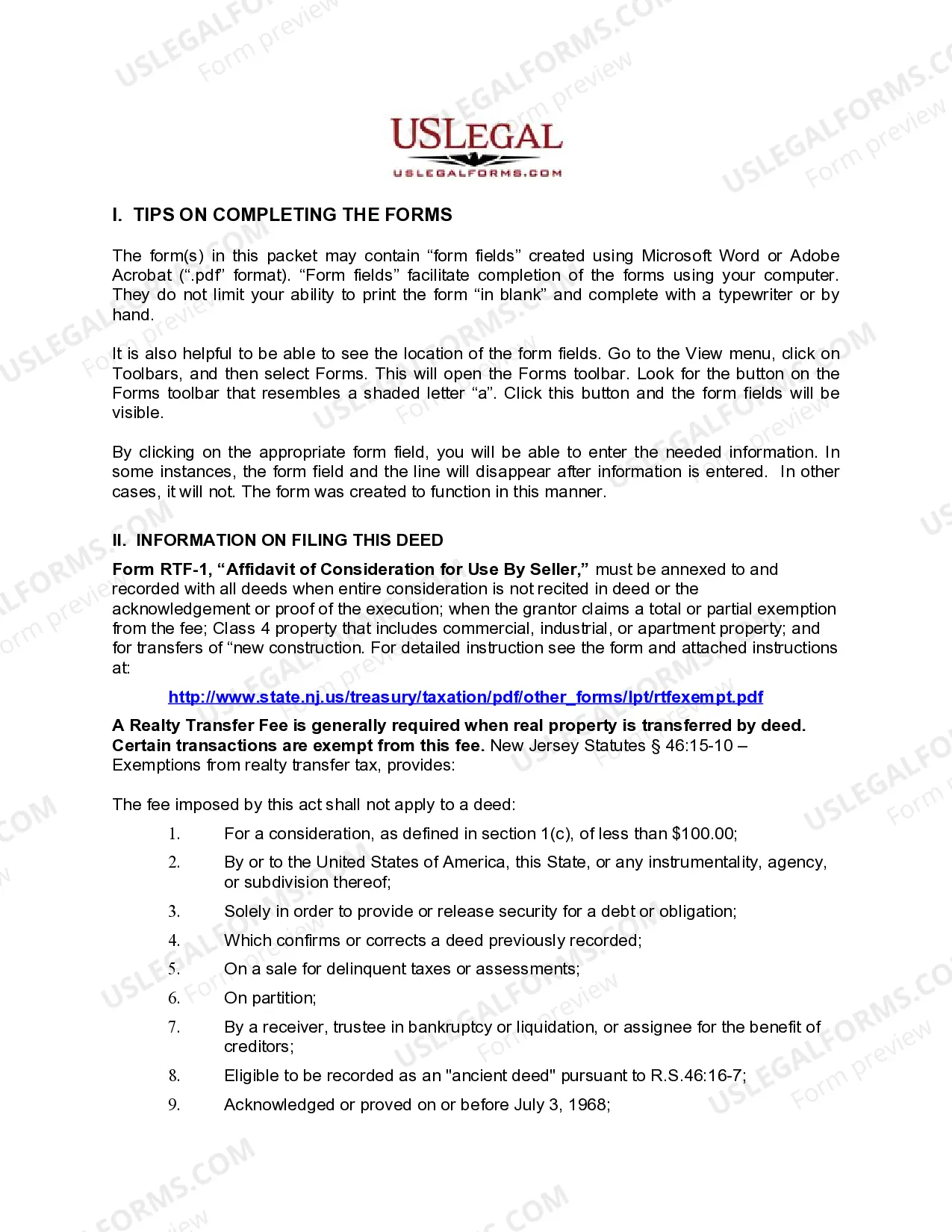
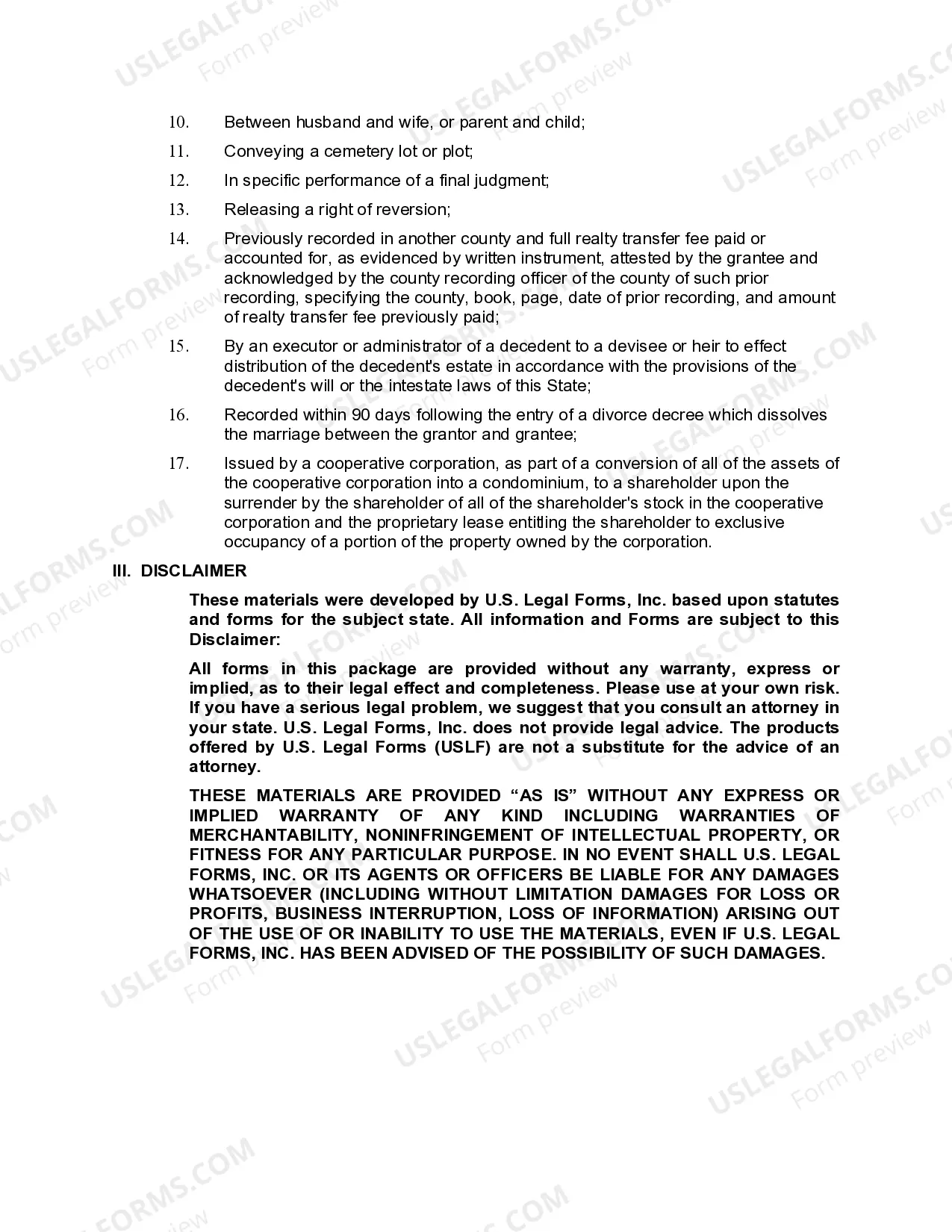
In New Jersey, the deed must be in English, identify the seller/buyer (grantor/grantee), name the person that prepared the deed, state the consideration (amount paid) for the transfer, contain a legal description of the property (a survey), include the signature of the grantor and be signed before a notary.