Nebraska Last Will and Testament for a Married Person with No Children
About this form
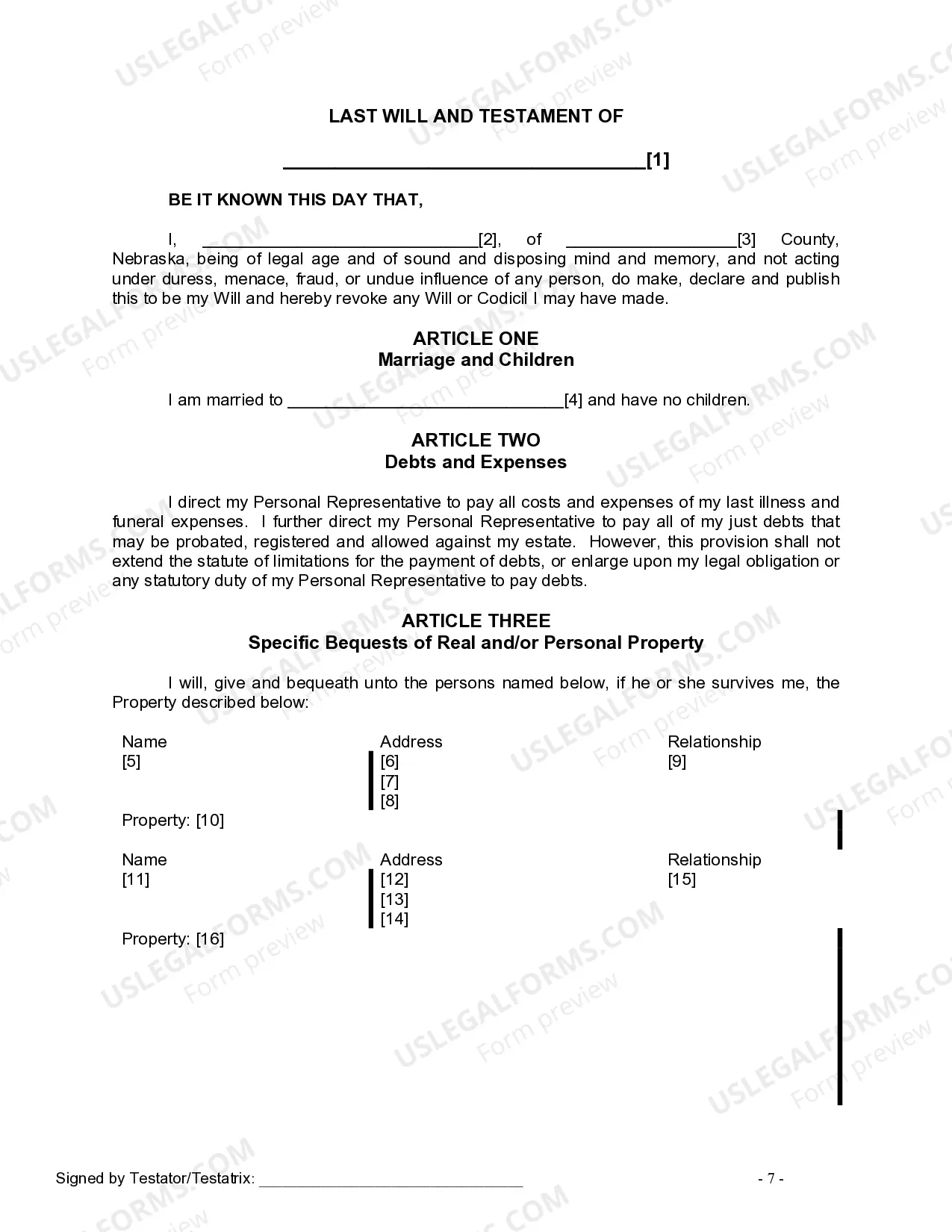
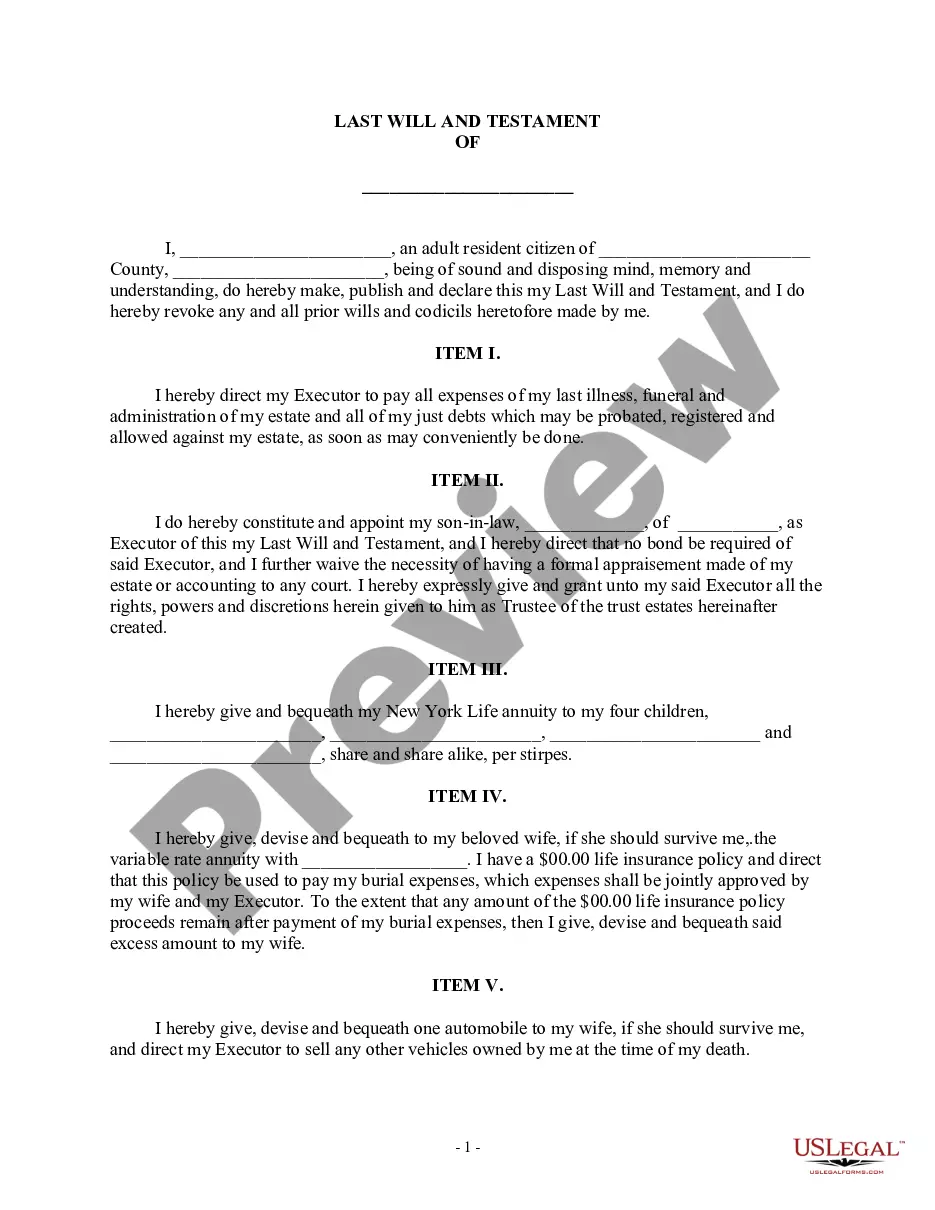
This Last Will and Testament is a legal document specifically designed for a married person with no children. It outlines how your estate will be distributed upon your passing, appoints a personal representative or executor, and includes provisions for your spouse. This form helps ensure that your wishes are formally recorded and will be honored after your death, distinguishing it from similar wills that might cater to individuals with children or other family dynamics.
Key components of this form
- Article One: States your marital status and confirms absence of children.
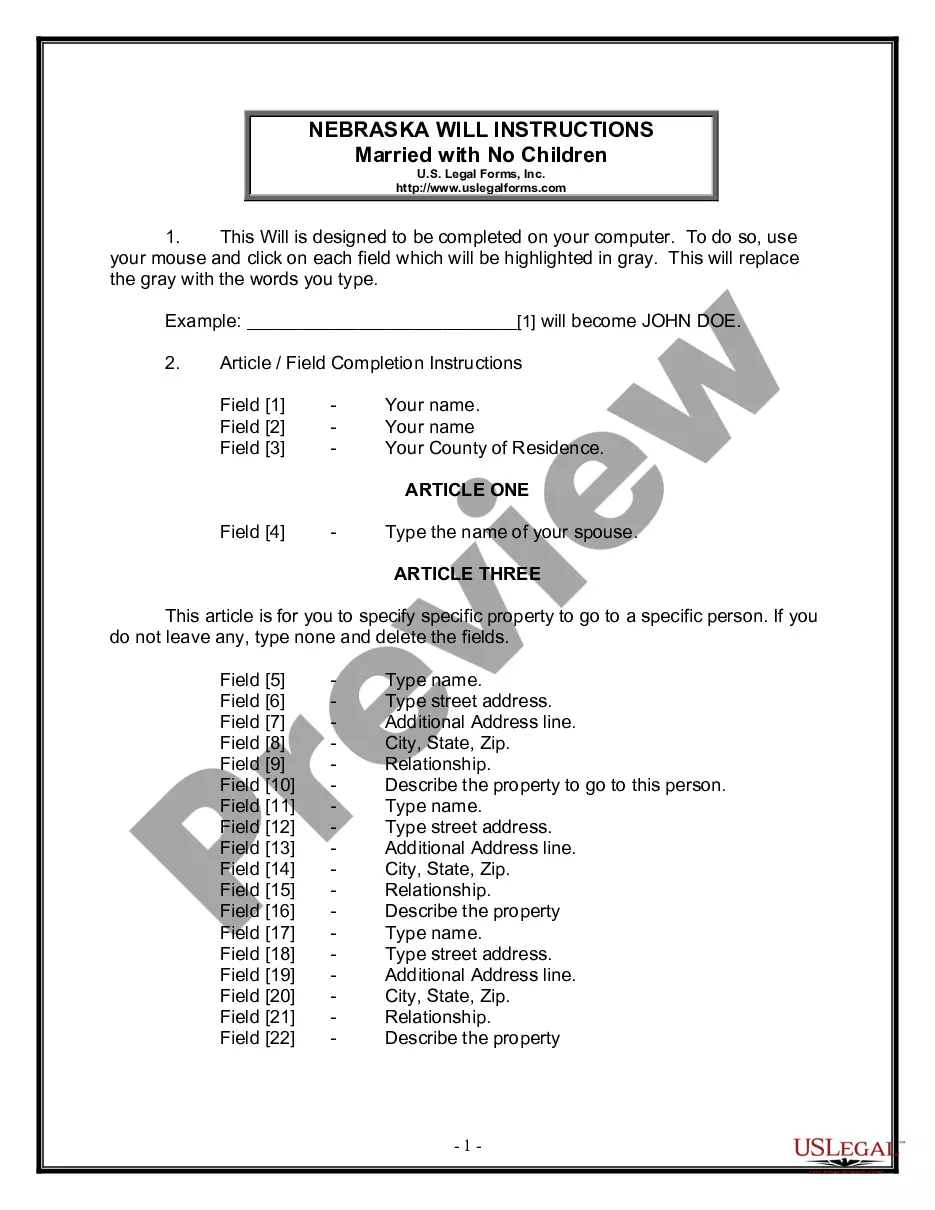
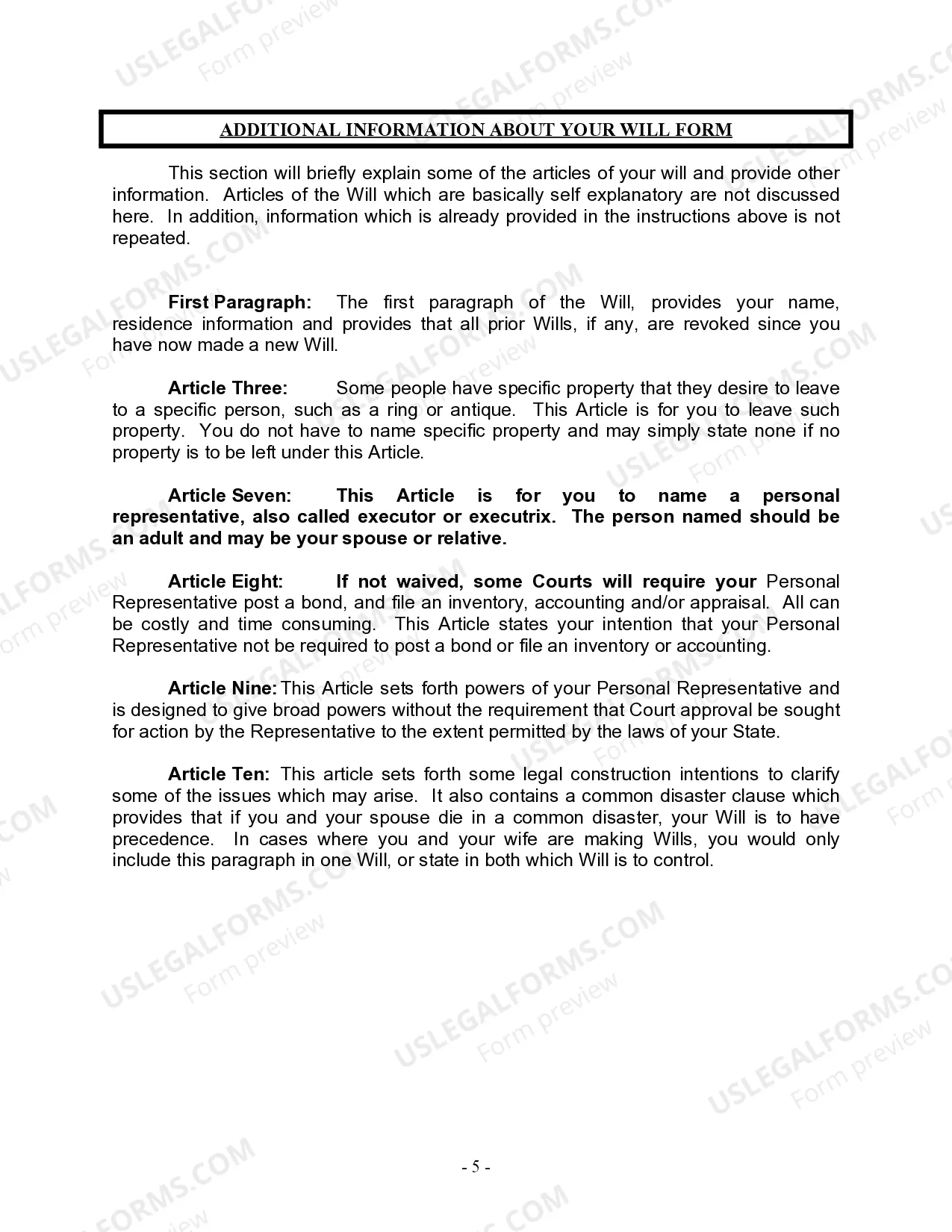
- Article Three: Allows you to specify particular items or properties to beneficiaries.
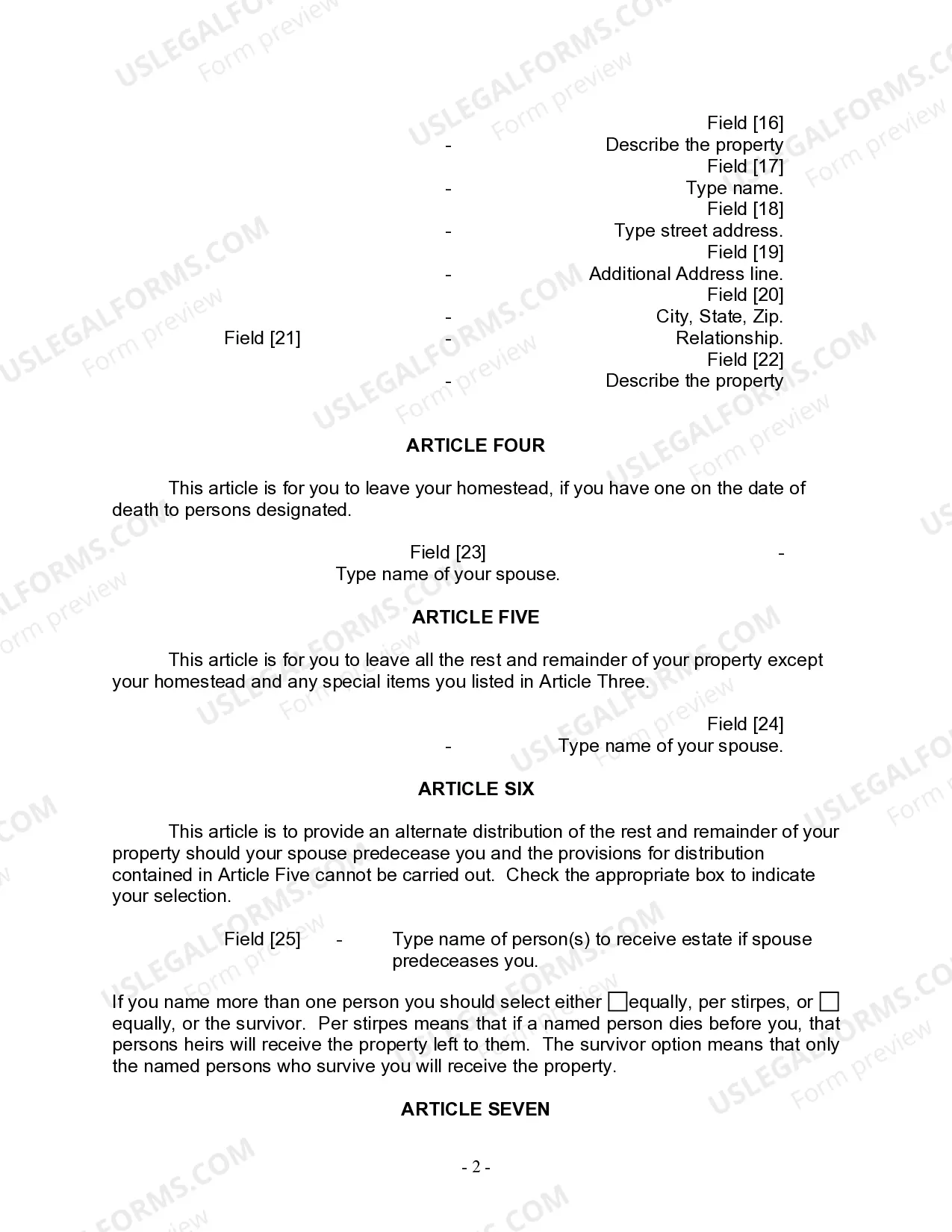
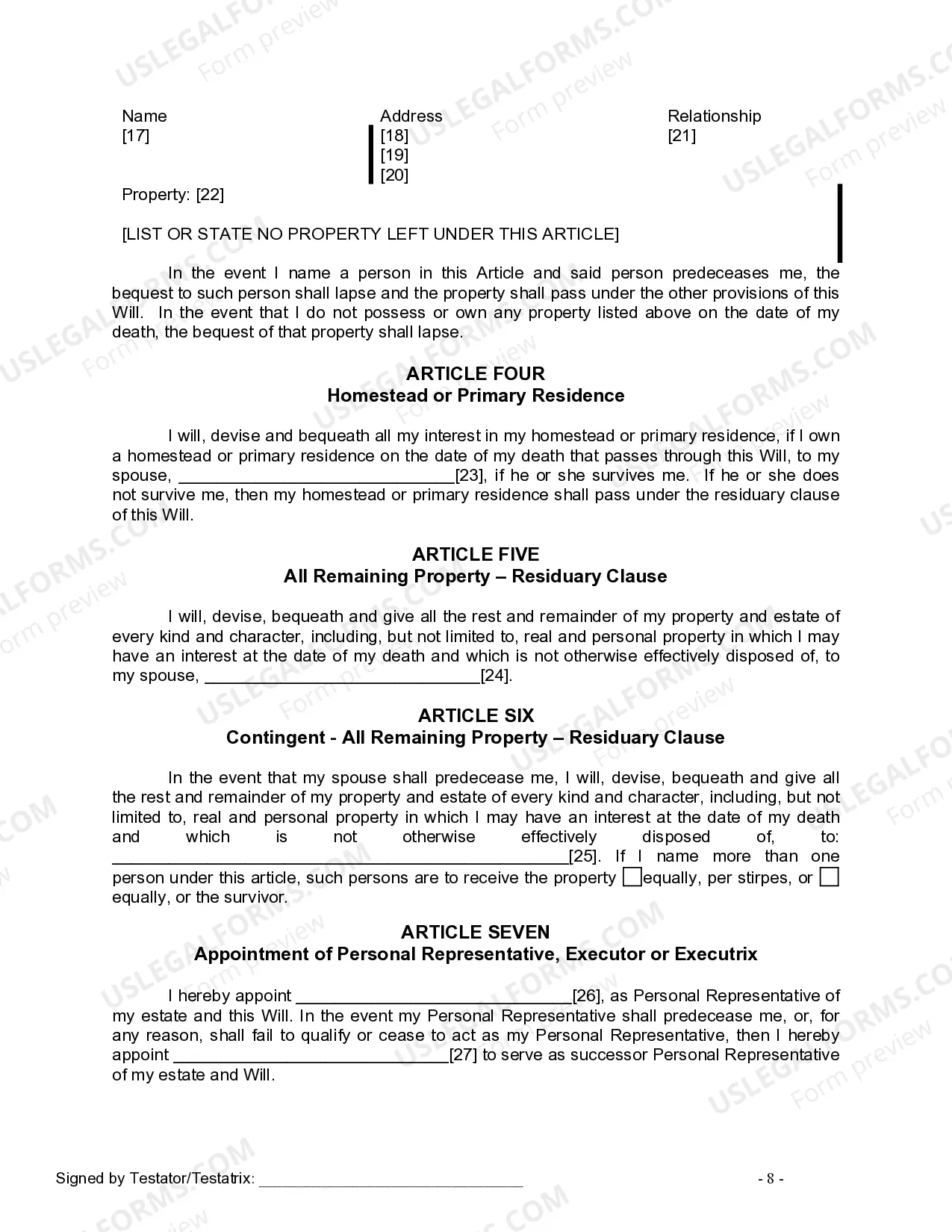
- Article Four: Bequeaths your homestead or primary residence to your spouse.
- Article Five: Designates all remaining property to your spouse.
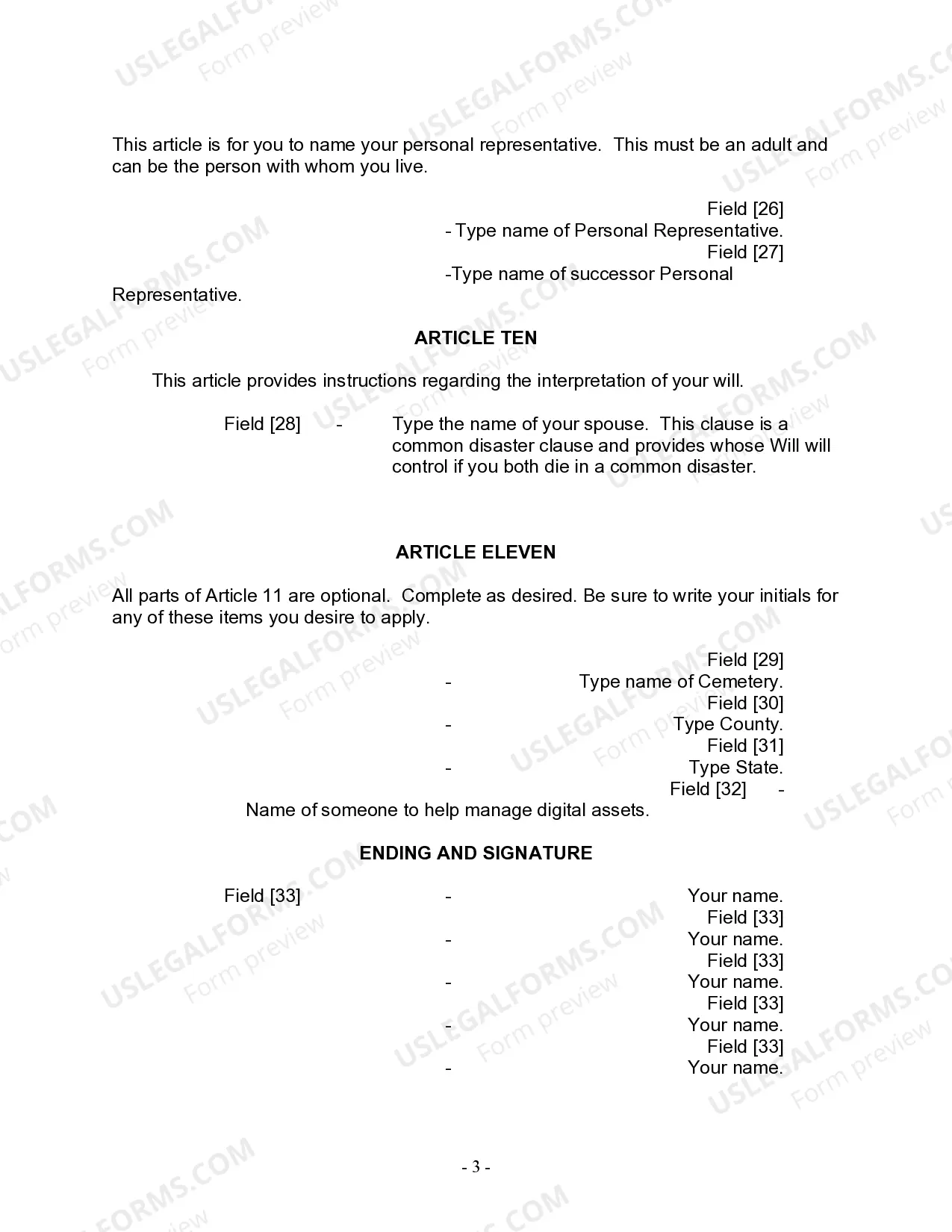
- Article Seven: Appoints a personal representative to administer your estate.
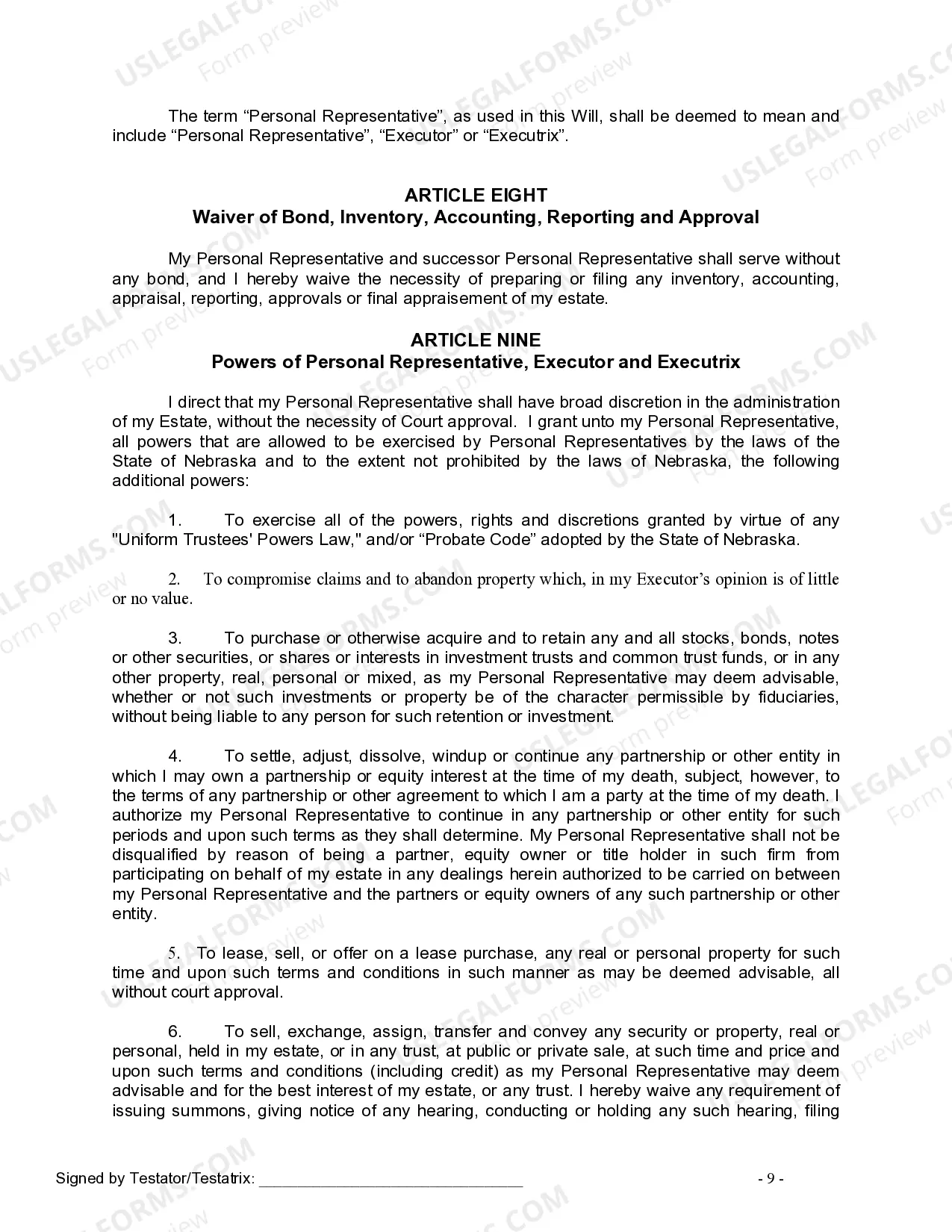
- Article Ten: Clarifies the interpretation of the will and includes a common disaster clause.




When this form is needed
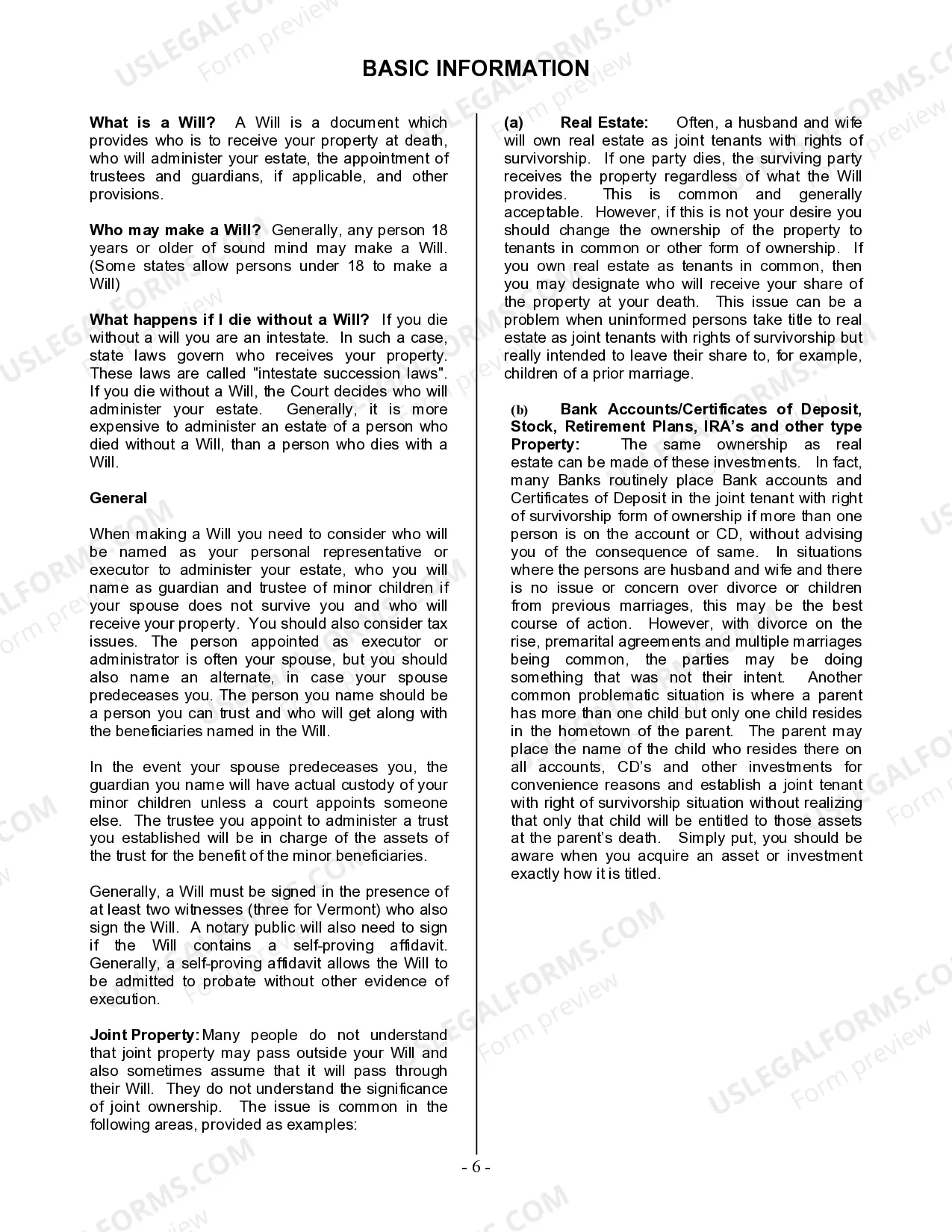
This form is essential for any married person without children who wishes to establish a clear plan for their estate. You should use this last will and testament if you want to ensure that your assets are distributed according to your wishes, particularly if you, your spouse, or any dependents are involved in your estate management. It also functions to reduce the potential for disputes among survivors about the distribution of your assets.
Who can use this document
This last will and testament is suitable for:
- Married individuals with no children.
- Those seeking to clarify asset distribution after death.
- Individuals wanting to appoint a personal representative for estate management.
- Anyone looking to ensure their spouse is taken care of upon their passing.
How to prepare this document
- Begin by entering your name and county of residence.
- Identify your spouse's name and complete the specific bequests section for any personal property you wish to leave to specific individuals.
- Designate your homestead and all remaining property to your spouse.
- Appoint a personal representative for your estate and a successor if necessary.
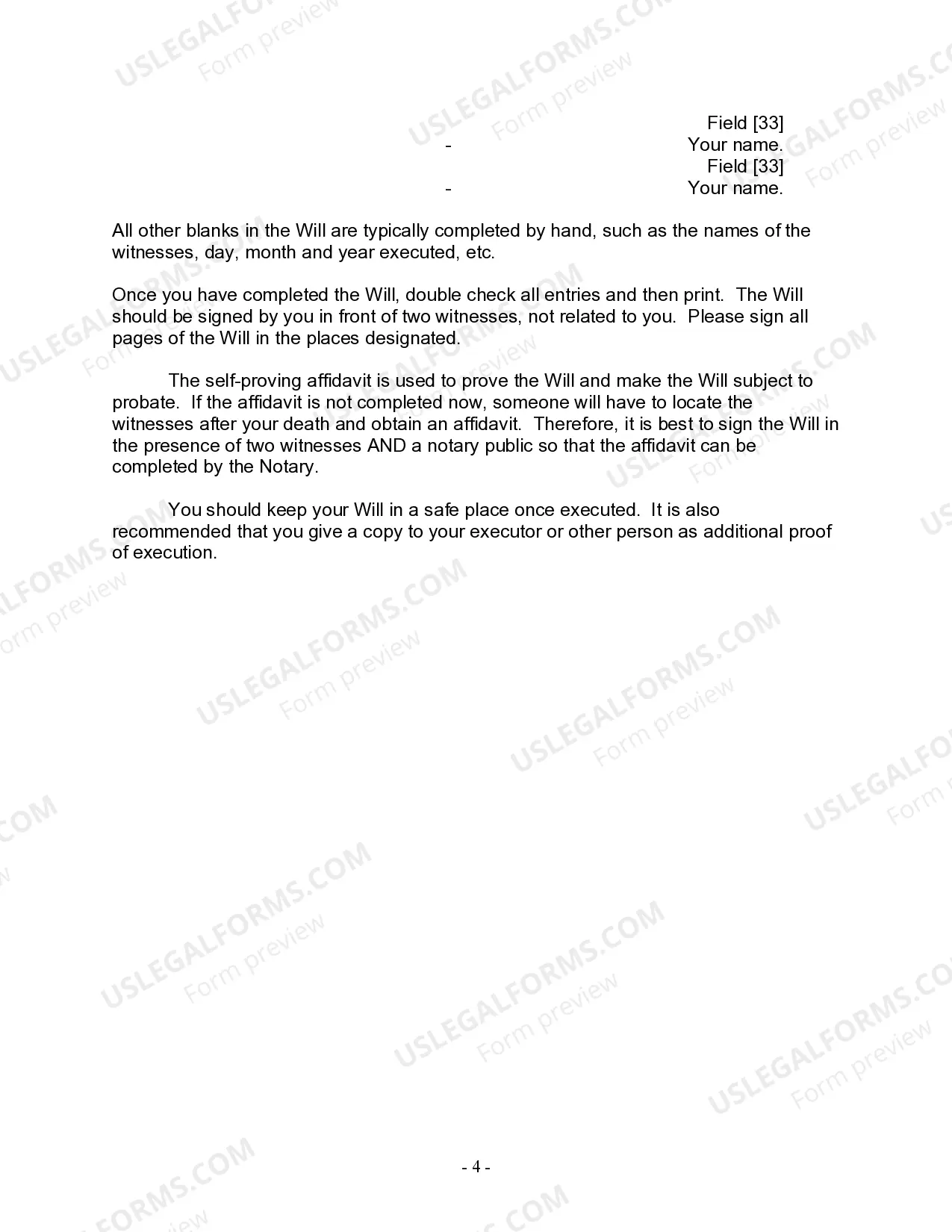
- Print and sign the will in front of two witnesses, ensuring they are not related to you.
- If applicable, have the will notarized to comply with self-proving affidavit requirements.
Notarization requirements for this form
Yes, this form must be notarized to be legally valid in Nebraska if it includes a self-proving affidavit. Using US Legal Forms' integrated online notarization service is straightforward and secure, allowing you to complete the process via a video call without needing to travel.
Get your form ready online
Our built-in tools help you complete, sign, share, and store your documents in one place.
Make edits, fill in missing information, and update formatting in US Legal Forms—just like you would in MS Word.
Download a copy, print it, send it by email, or mail it via USPS—whatever works best for your next step.
Sign and collect signatures with our SignNow integration. Send to multiple recipients, set reminders, and more. Go Premium to unlock E-Sign.
If this form requires notarization, complete it online through a secure video call—no need to meet a notary in person or wait for an appointment.
We protect your documents and personal data by following strict security and privacy standards.

Make edits, fill in missing information, and update formatting in US Legal Forms—just like you would in MS Word.

Download a copy, print it, send it by email, or mail it via USPS—whatever works best for your next step.

Sign and collect signatures with our SignNow integration. Send to multiple recipients, set reminders, and more. Go Premium to unlock E-Sign.

If this form requires notarization, complete it online through a secure video call—no need to meet a notary in person or wait for an appointment.

We protect your documents and personal data by following strict security and privacy standards.
Common mistakes to avoid
- Failing to properly sign the will in the presence of witnesses.
- Naming beneficiaries without specifying their relationship to avoid confusion.
- Not including a self-proving affidavit if required by state law.
- Forgetting to update the will after significant life changes, such as marriage or property acquisition.
Benefits of completing this form online
- Convenient access to the form, allowing you to complete it at your own pace.
- Editable fields ensure your information is accurately captured.
- Reliable legal support with templates drafted by licensed attorneys.
- Reduced need for in-person consultations, saving you time and effort.
What to keep in mind
- A Last Will and Testament is essential for specifying asset distribution for married individuals without children.
- Proper execution requires signatures from witnesses and possibly a notary.
- Digital completion of this form offers flexibility and convenience for users.
- Understanding the specific provisions within the Will can help avoid common legal pitfalls.
Looking for another form?
Form popularity
FAQ
A joint will is one that two people, typically a married couple, sign together. Instead of each spouse having a separate will, they have one document that they've both agreed to. Most joint wills are written such that when one spouse dies, their portion of the estate passes to the other.
If a married couple dies simultaneously, and they have no children, the beneficiaries of the will generally receive the assets of the estate. Each state has laws determining inheritance. If the couple has no will, the state's laws of intestacy determine inheritance.
Effect of marriage on your will When you marry, any existing will is automatically revoked (cancelled) and becomes no longer valid. If you do not make a new one, then when you die the law of intestacy decides how your assets are divided. Usually, your entire estate would go to your wife, husband or civil partner.
If you have multiple wills, your personal representative or loved ones may submit more than one will to probate court.This can make the most recent will the only valid will so that the probate court disregards everything from your former wills.
Joint wills are usually created by married couples. They often state that: After one spouse has died, all the couple's property will be left to the surviving spouse; and. After the surviving spouse dies, the remaining property will be left to the couple's children.
Like most wills, a joint will lets the will-makers name who will get their property and assets after they die. Joint wills are usually created by married couples.After one spouse has died, all the couple's property will be left to the surviving spouse; and.
Making one will for two people is usually not advisable because it's irrevocable after the first spouse's death.Even though married couples often have the same goals in mind when making their estate plan, most attorneys advise against joint wills.