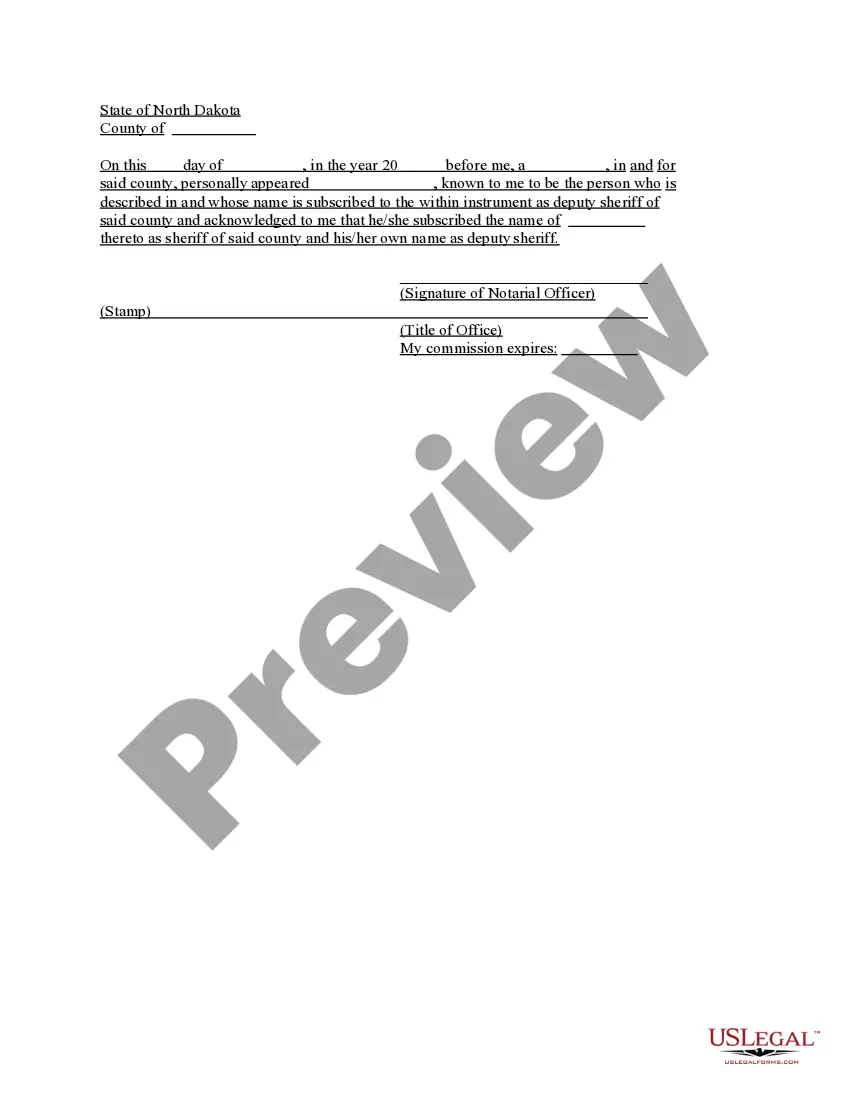
Nebraska Statutory Power of Attorney
What is this form?
The Statutory Power of Attorney is a legal document that grants another person, known as your agent, the authority to make decisions about your property and financial affairs. Unlike a health care power of attorney, which pertains to medical decisions, this form specifically allows your agent to manage financial matters even if you become unable to do so yourself. This form is in compliance with Nebraska's Uniform Power of Attorney Act, ensuring that it meets the necessary legal requirements for use in the state.
Form components explained
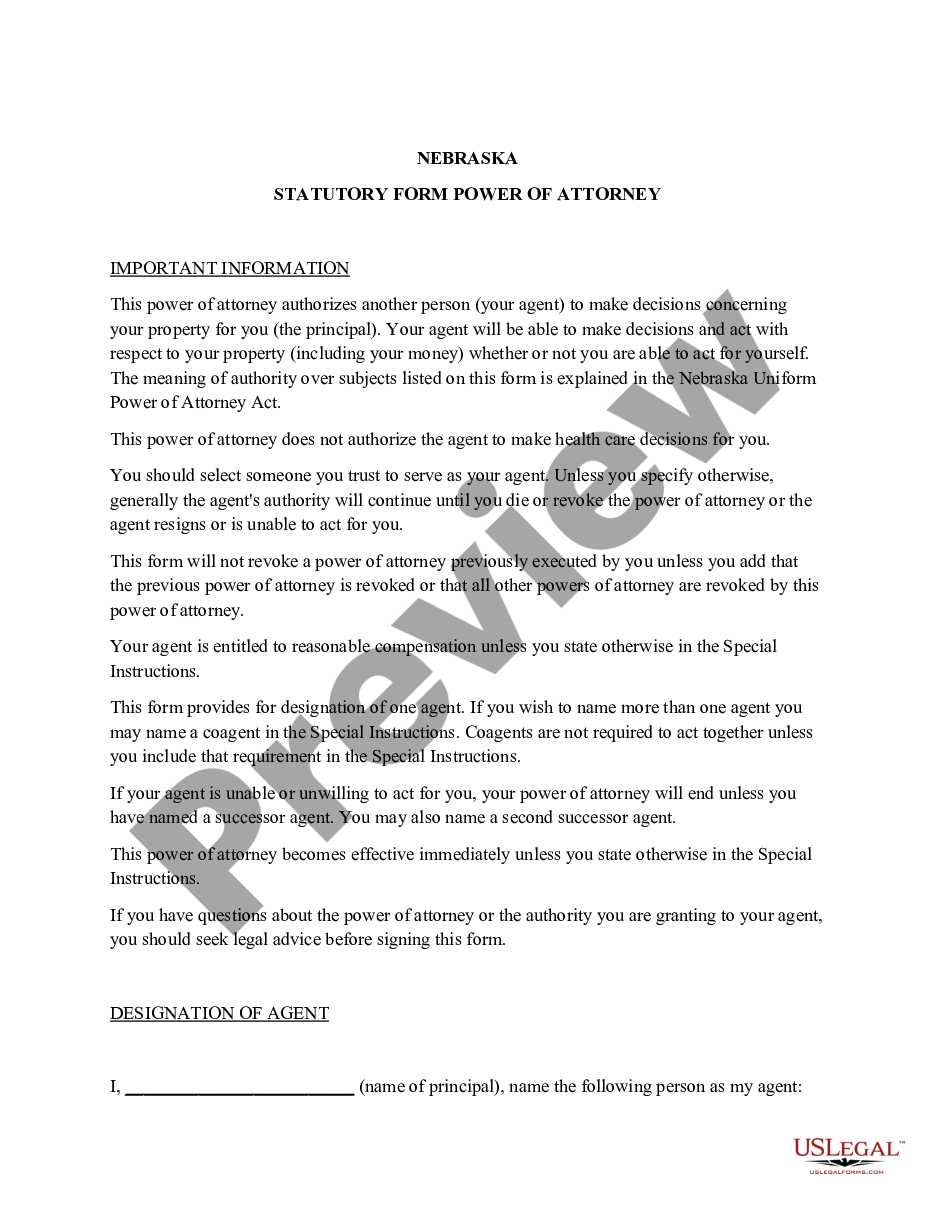
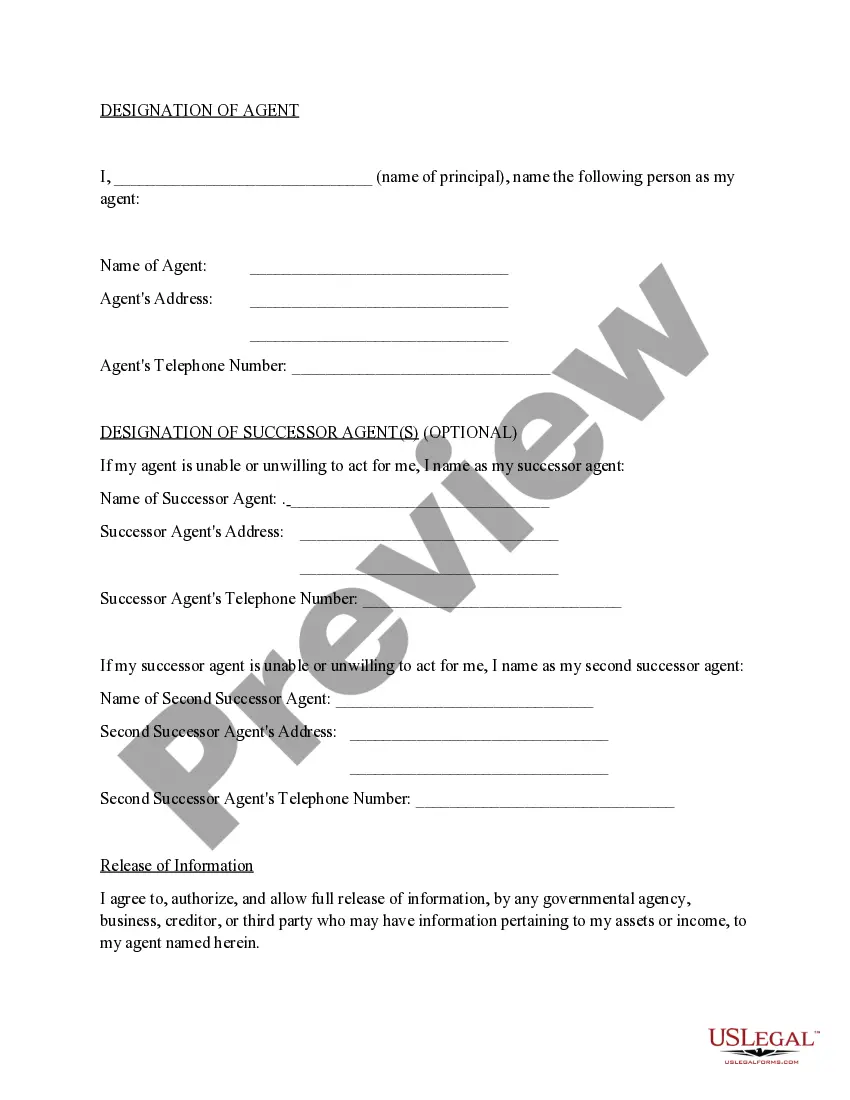
- Designation of Agent: Specifies the individual authorized to act on your behalf.
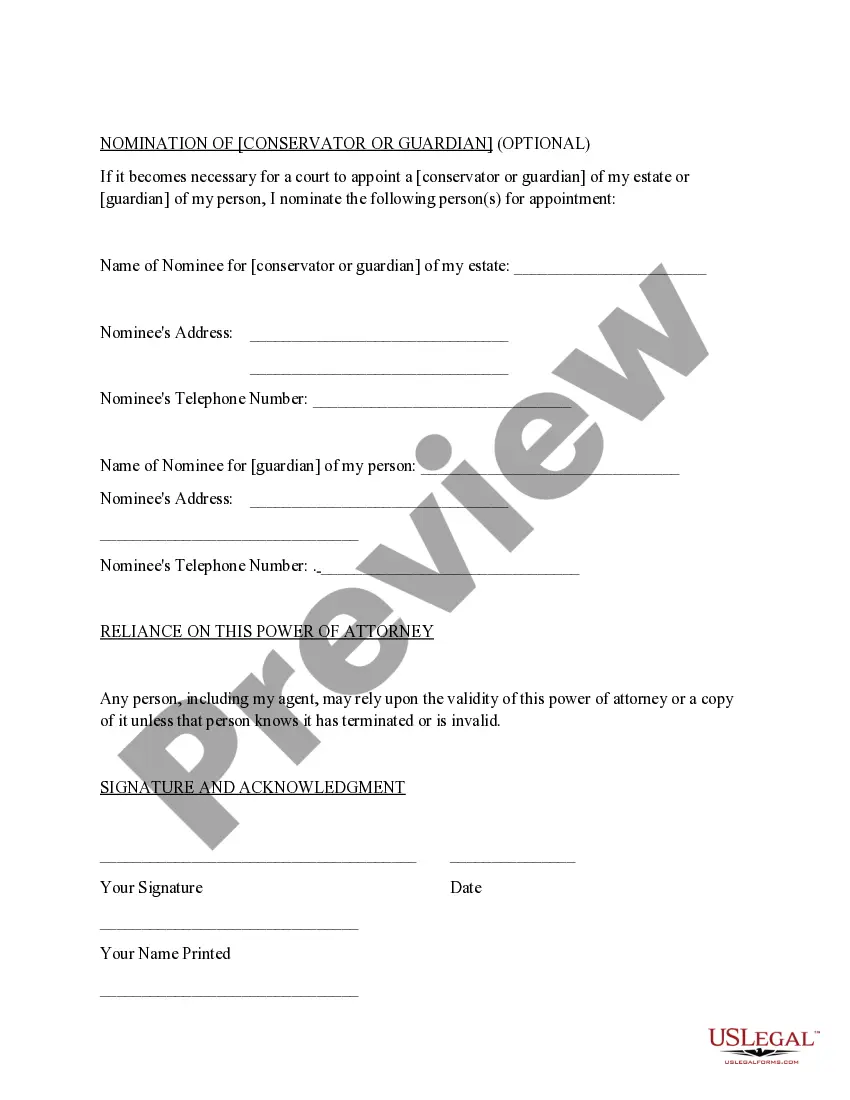
- Successor Agents: Allows the naming of an alternative agent if the primary agent is unable or unwilling to act.
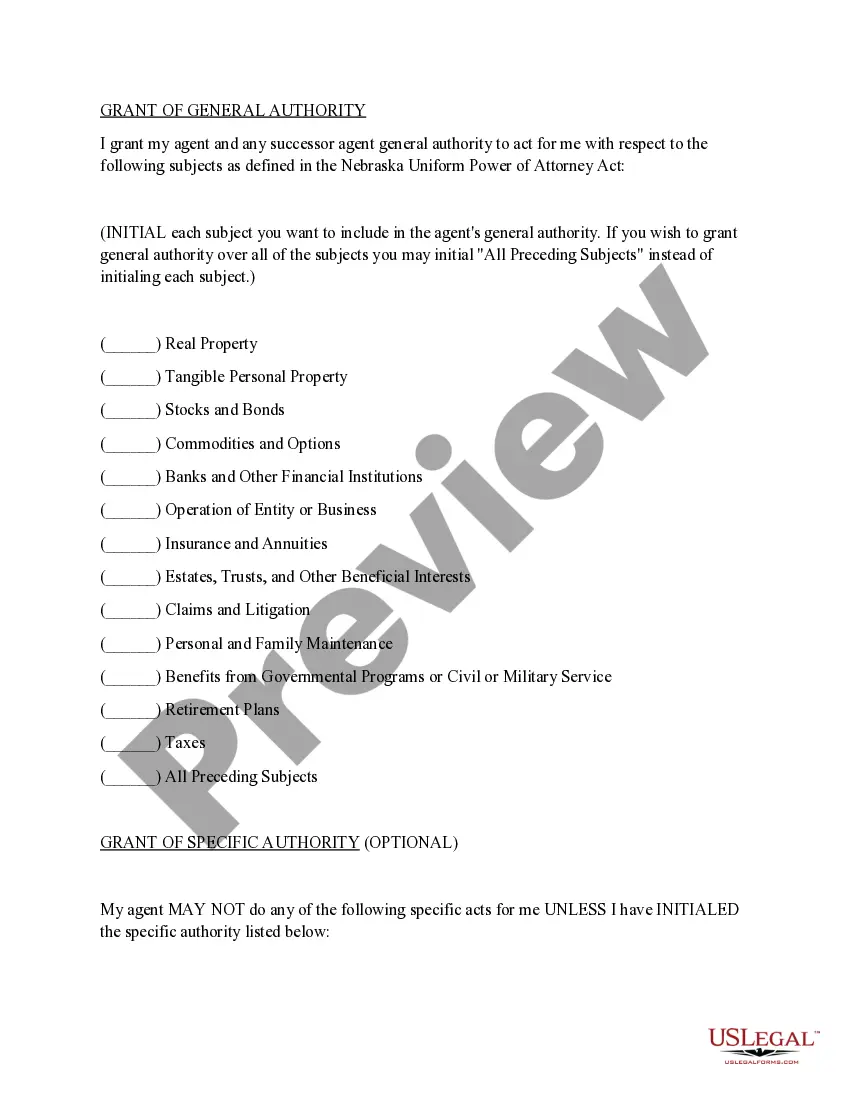
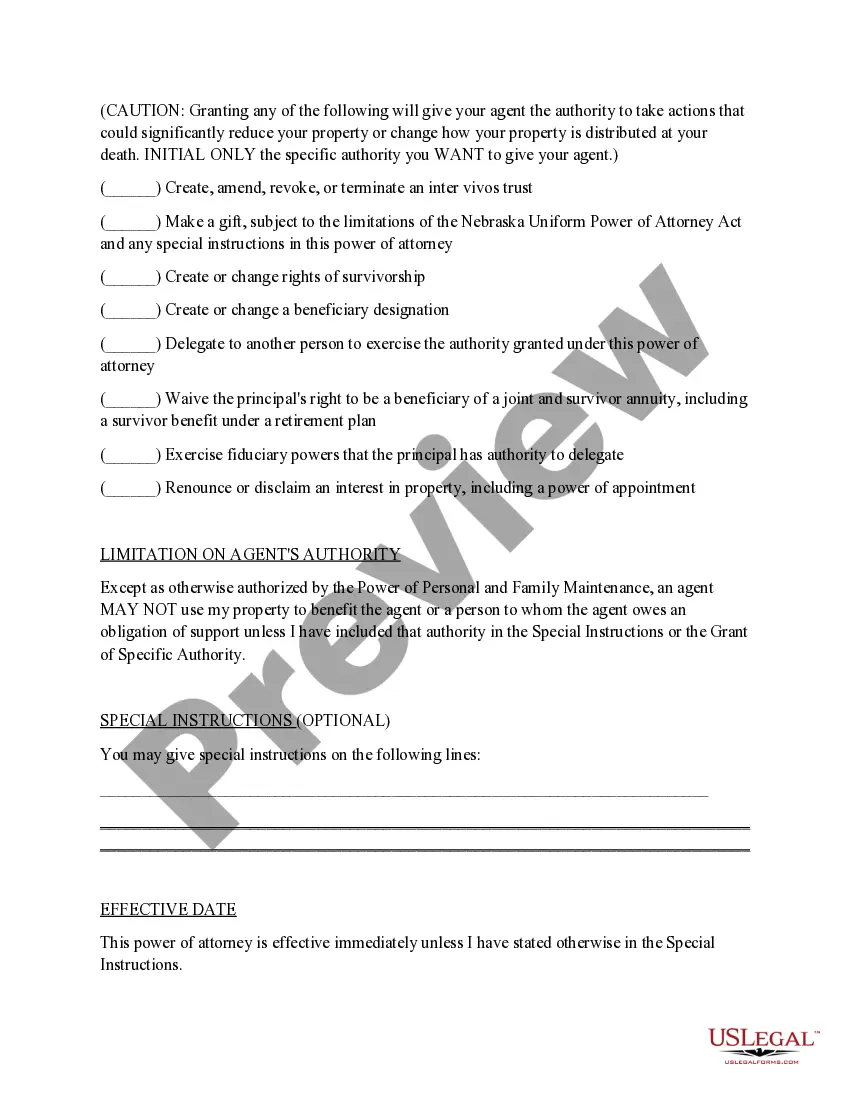
- General Authority Grant: Outlines the scope of authority your agent will have over various financial matters.
- Specific Authority Grant: Indicates any specific actions your agent may not take without explicit permission.
- Effective Date: States when the power of attorney becomes effectiveâimmediately or at a later date.
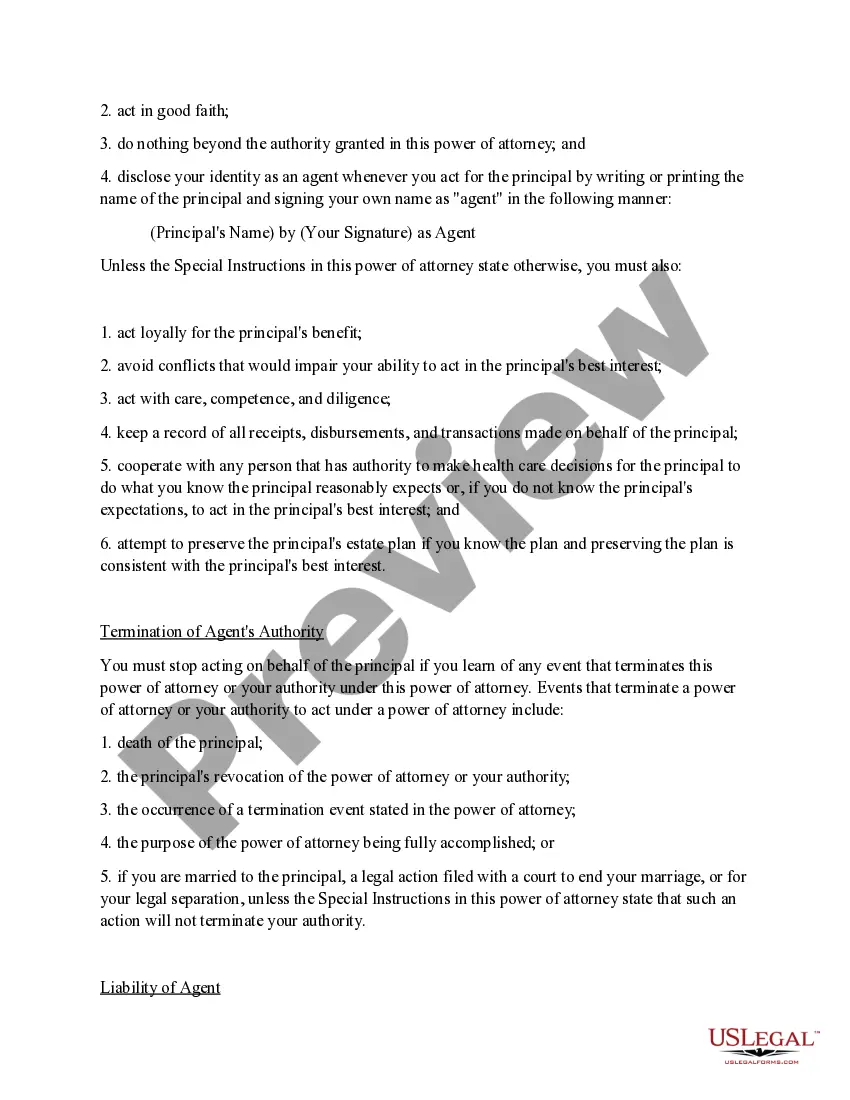
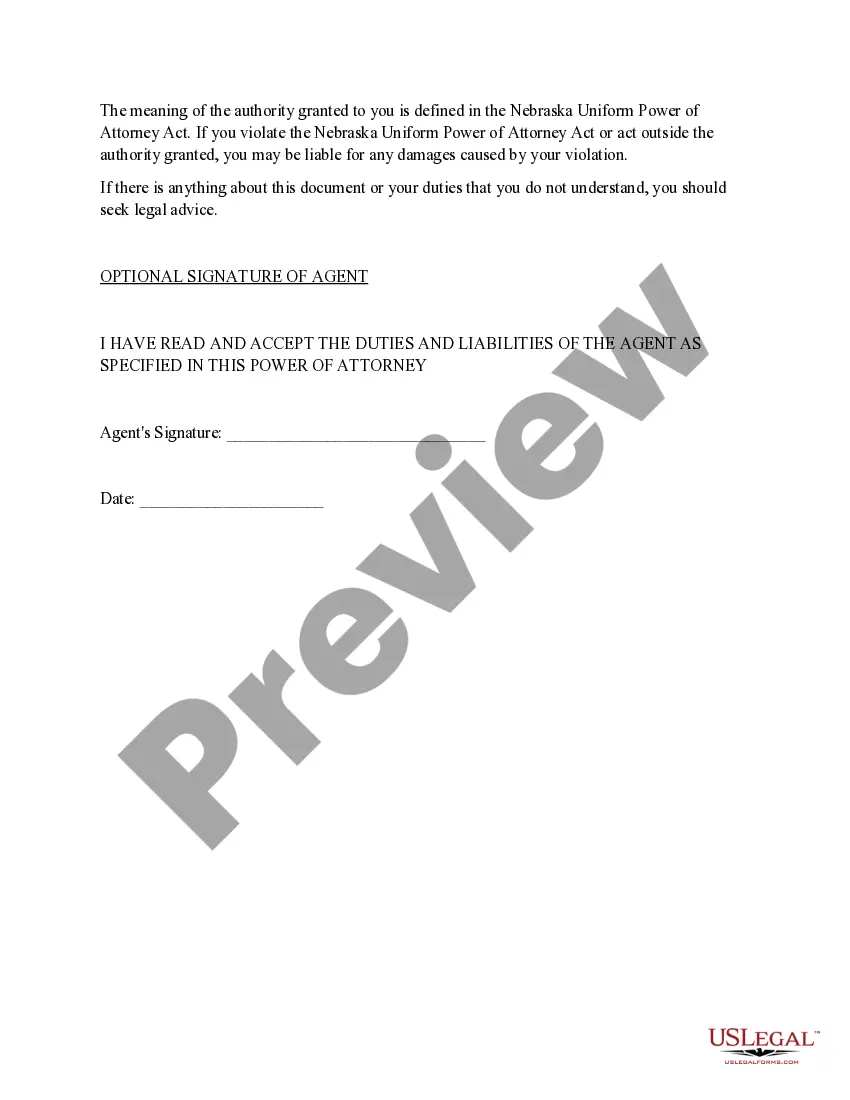
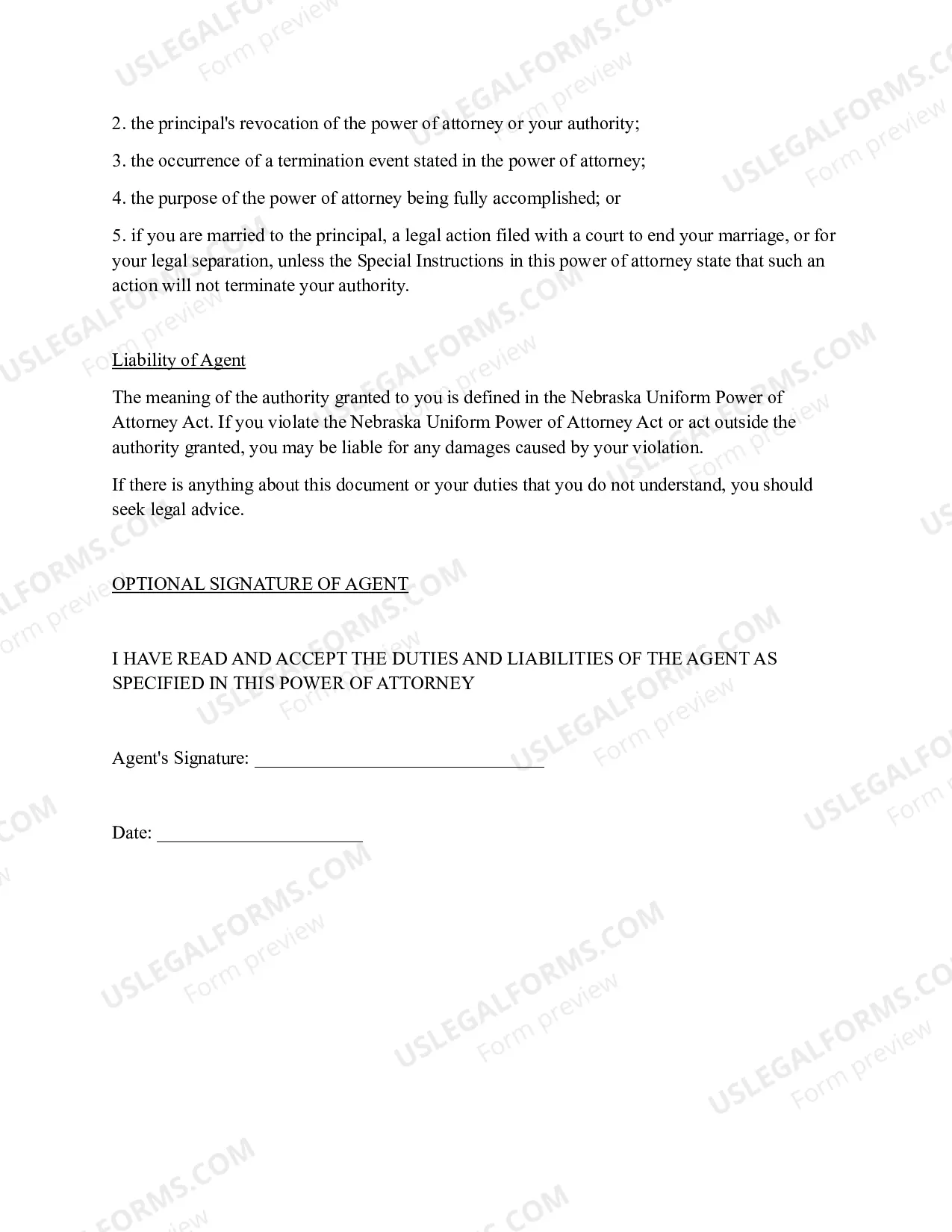
- Agentâs Duties: Clarifies the responsibilities and legal obligations of the agent.
Common use cases
This Statutory Power of Attorney form should be used when you want to assign someone the power to manage your financial affairs, especially if you anticipate being unable to do so in the future. Common situations include planning for potential incapacitation due to health issues, traveling for extended periods, or simply organizing your financial matters for better management. It offers peace of mind that trusted individuals can handle your finances in accordance with your wishes.
Who this form is for
- Individuals who want to ensure their financial matters are managed if they become incapacitated.
- Anyone looking to provide a trusted family member or friend with the authority to handle financial issues on their behalf.
- People who want to make clear the extent of their agent's powers without confusion.
- Residents of Nebraska seeking a legally compliant method to establish a power of attorney.
How to prepare this document
- Identify yourself as the principal and provide your full name and contact information.
- Choose a trusted person to act as your agent and enter their name, address, and phone number.
- Optional: Designate one or two successor agents in case your primary agent cannot serve.
- Grant general authority by initialing the specific financial matters you want your agent to manage.
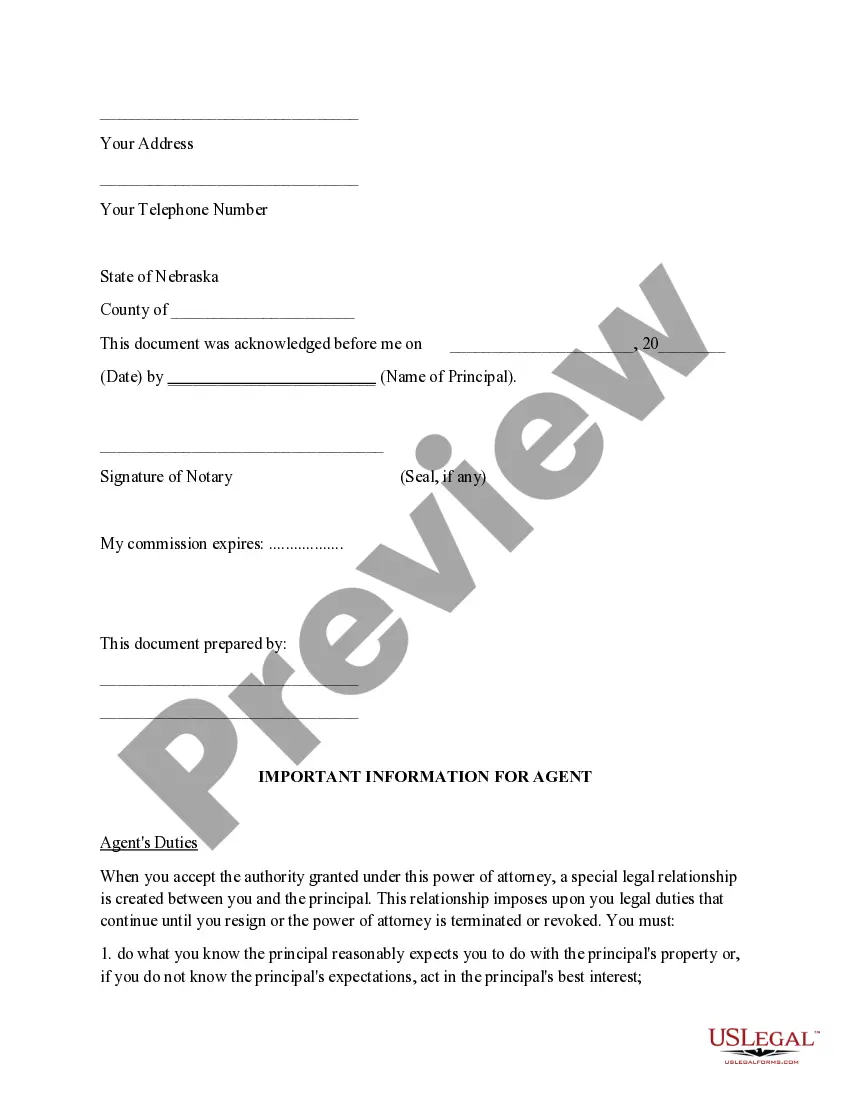
- Sign and date the form in the presence of a notary if required by your situation.
Notarization requirements for this form
This form does not typically require notarization unless specified by local law. However, providing a notarized signature can enhance the document's validity and acceptance in various situations.
Get your form ready online
Our built-in tools help you complete, sign, share, and store your documents in one place.
Make edits, fill in missing information, and update formatting in US Legal Forms—just like you would in MS Word.
Download a copy, print it, send it by email, or mail it via USPS—whatever works best for your next step.
Sign and collect signatures with our SignNow integration. Send to multiple recipients, set reminders, and more. Go Premium to unlock E-Sign.
If this form requires notarization, complete it online through a secure video call—no need to meet a notary in person or wait for an appointment.
We protect your documents and personal data by following strict security and privacy standards.

Make edits, fill in missing information, and update formatting in US Legal Forms—just like you would in MS Word.

Download a copy, print it, send it by email, or mail it via USPS—whatever works best for your next step.

Sign and collect signatures with our SignNow integration. Send to multiple recipients, set reminders, and more. Go Premium to unlock E-Sign.

If this form requires notarization, complete it online through a secure video call—no need to meet a notary in person or wait for an appointment.

We protect your documents and personal data by following strict security and privacy standards.
Typical mistakes to avoid
- Not clearly defining the scope of authority granted to the agent.
- Failing to choose successor agents when the primary agent may be unavailable.
- Omitting to sign and date the form properly, which can render it invalid.
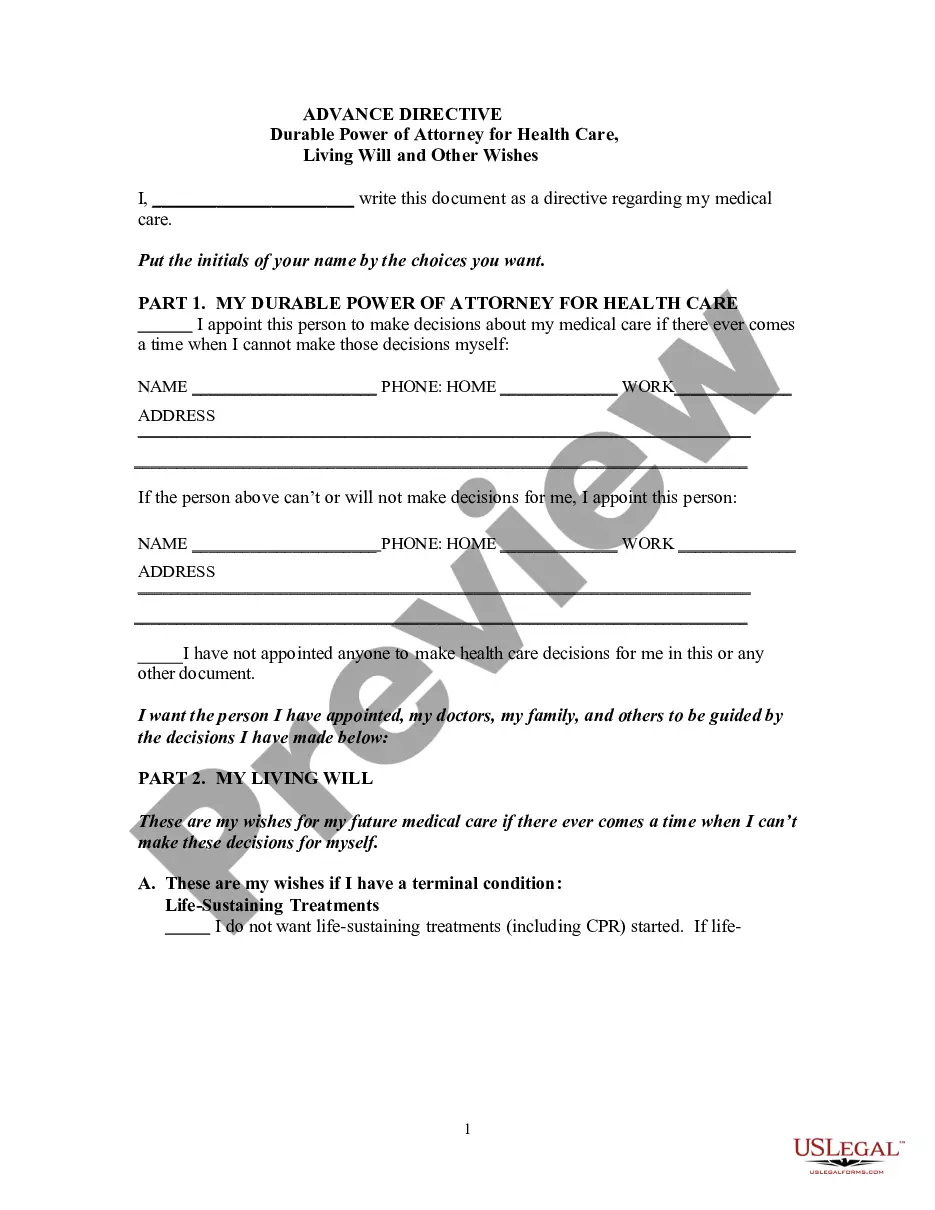
- Confusing a power of attorney with a health care directive, which serve different purposes.
Advantages of online completion
- Convenience of immediate access to legal forms without the wait for in-person consultations.
- The ability to download, complete, and customize your power of attorney at your own pace.
- Access to forms created by licensed attorneys, ensuring legal compliance.
- Reduced cost compared to traditional legal services.
Quick recap
- The Statutory Power of Attorney enables you to appoint an agent for financial matters.
- It is crucial to choose someone you trust as your agent.
- Completing the form properly is essential for legal effectiveness in Nebraska.
- Consider alternative agents to ensure continuity of authority.
Looking for another form?
Form popularity
FAQ
Under HIPAA, only persons named as personal representatives may access PHI to make medical decisions for a patient. Power of attorney documents must match this language to give agents access to PHI.
A statutory power of attorney is a power of attorney that copies the language in a state statute. The provisions of the Statutory Power of Attorney are provided by the laws of the particular state. It also includes an example of a form that may be used.
General Power of Attorney. Durable Power of Attorney. Special or Limited Power of Attorney. Springing Durable Power of Attorney.
In many states, notarization is required by law to make the durable power of attorney valid. But even where law doesn't require it, custom usually does. A durable power of attorney that isn't notarized may not be accepted by people with whom your attorney-in-fact tries to deal.
Nebraska Power of Attorney Forms are used to appoint a trustworthy individual to make health care and/or financial decisions on your behalf.Under the Nebraska Uniform Power of Attorney Act (Statute 30-3408), there must be at least two (2) witnesses or a notary public present when authorizing these documents.
A General power of attorney (GPoA) is a legal document authorising one person (called an agent) to act on behalf of another (the principal).A Special power of attorney (SPoA) is a legal document authorising one person (called an agent) to act on behalf of another (the principal).
Writing your own durable power of attorney is an inexpensive way to deal with end-of-life decision-making because it allows you to appoint a person to make decisions for you after you are incapacitated or legally incompetent.
A unique feature of the new form is that it complies with state legal requirements for a valid power of attorney for health care in almost every state. Only five states have laws so inflexible and cumbersome that the bare bones power will not work: Indiana, New Hampshire, Ohio, Texas, and Wisconsin.
Generally, a power of attorney allows you to designate an agent to perform specific functions on your behalf. Under the Texas Estates Code, statutory durable power of attorney can be used to appoint an agent to make certain financial decisions for you should you be unable to do so.