Nebraska Warranty Deed from Husband and Wife to Husband and Wife
Overview of this form
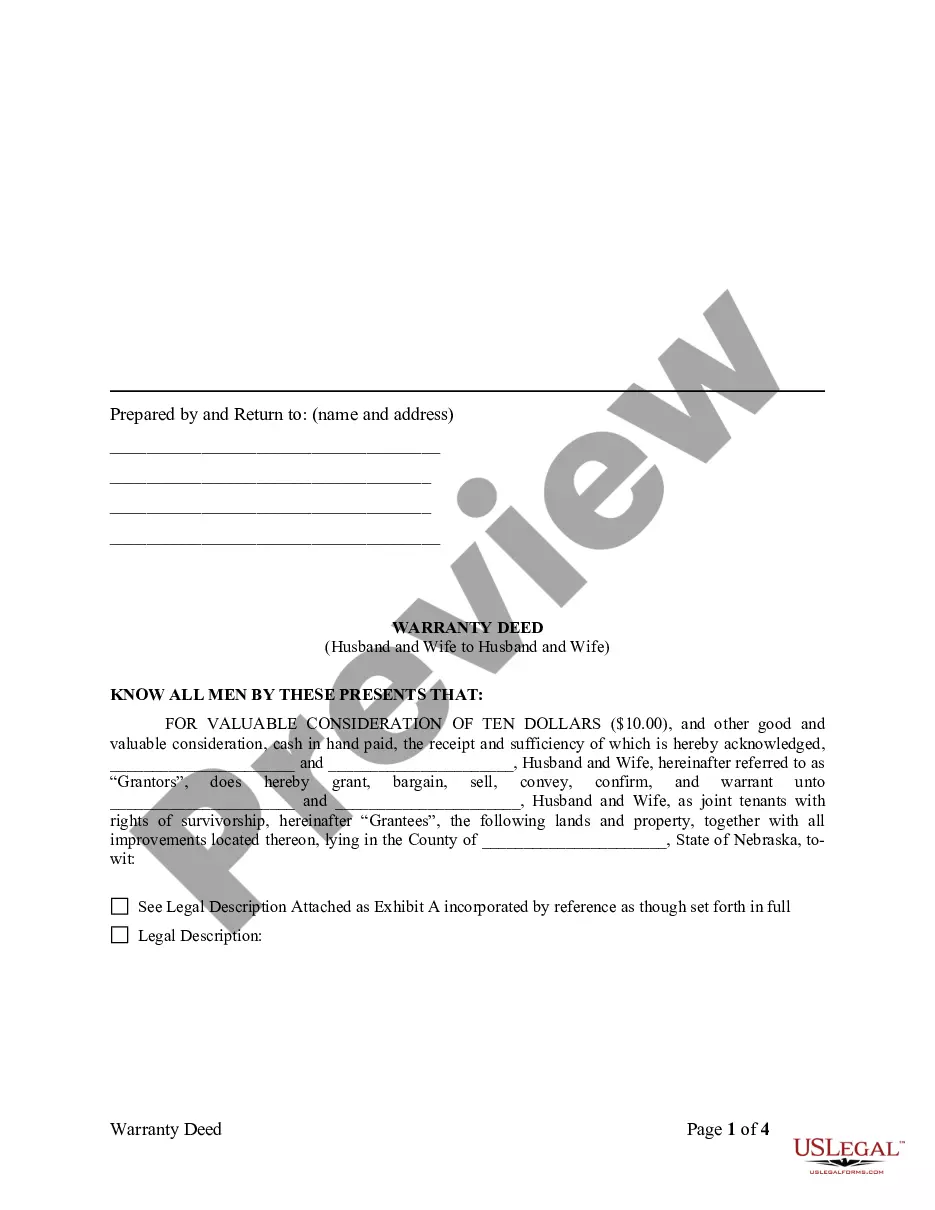
This Warranty Deed from Husband and Wife to Husband and Wife is a legal document used to transfer property ownership between spouses. Unlike other deeds, this form ensures that both parties are equally recognized as grantors and grantees, highlighting the mutual ownership aspect. This deed includes warranties from the grantors that they own the property free of encumbrances, except for specific reservations mentioned. It is legally compliant with state statutes, providing protection and clarity for both parties involved in the transaction.
Key parts of this document
- Prepared by and return sections: Specify the names and addresses for record-keeping.
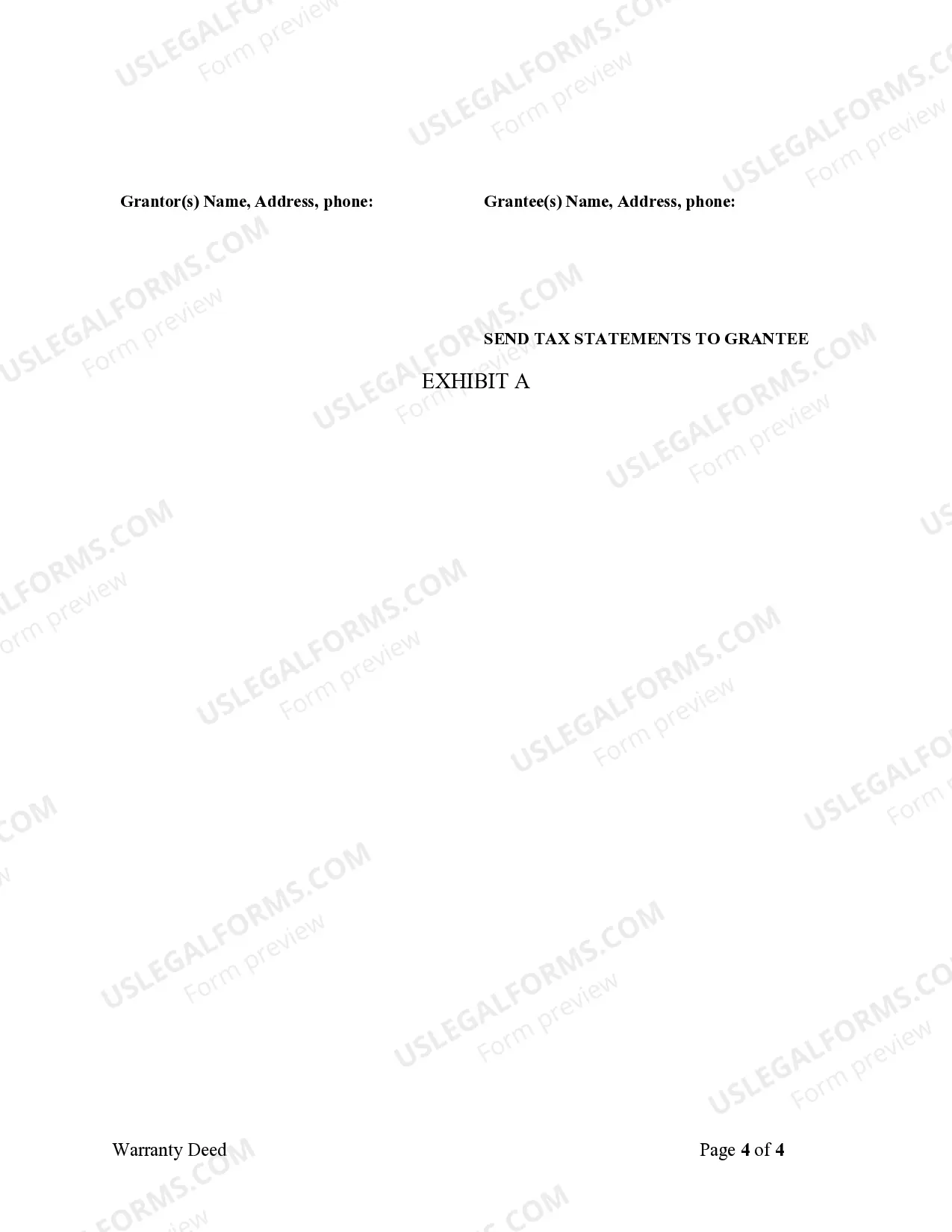
- Legal description of the property: Clearly identifies the real estate being transferred.
- Grantor and grantee details: Names of the spouses involved in the transaction, ensuring clarity on ownership.
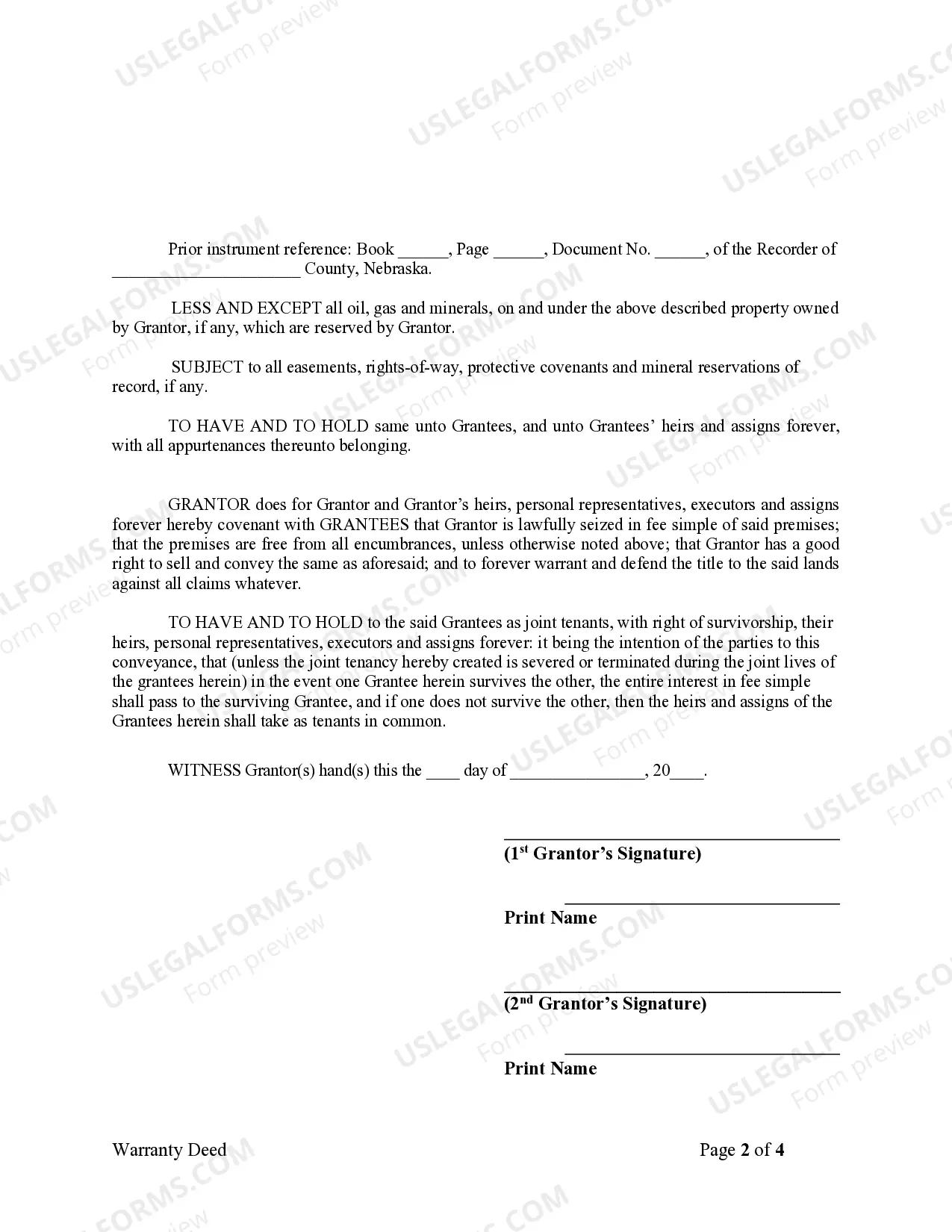
- Covenant of title: Guarantees that the grantors are the rightful owners and have the authority to convey the property.
- Reservation clauses: Details any exceptions, such as oil, gas, and mineral rights reserved by the grantors.
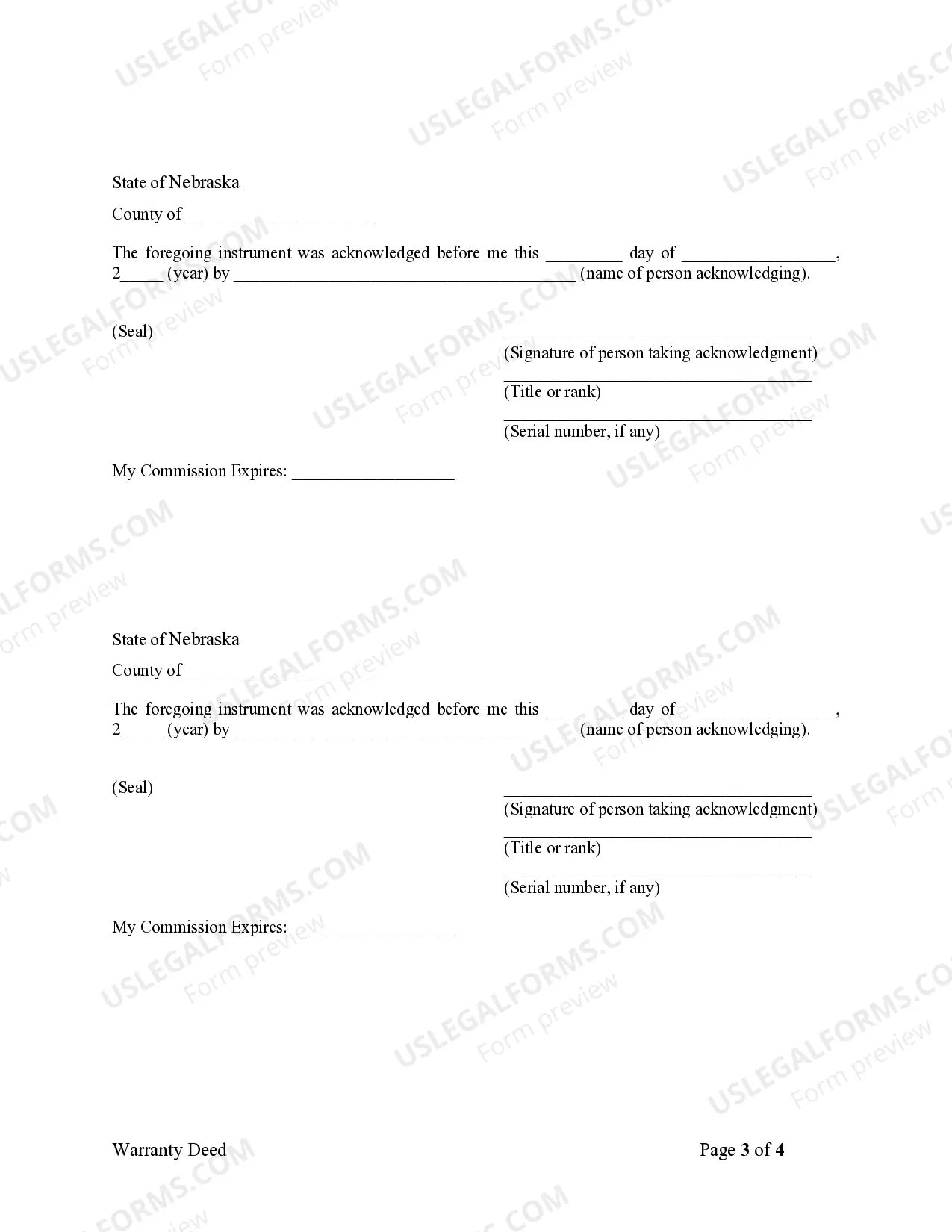
- Notary acknowledgment: Required for validating the document, confirming identities involved in the transaction.





Common use cases
This form is typically used when a married couple wishes to transfer property between themselves, for instance, in cases of estate planning, refinancing, or transferring assets to protect them from potential liabilities. It is also relevant in divorce settlements where one spouse may buy out the other's interest in the property.
Who should use this form
- Married couples looking to formally transfer property ownership.
- Individuals involved in estate planning or asset protection strategies.
- Couples navigating a divorce who need to reassign property interests.
- Legal representatives acting on behalf of spouses in property transactions.
Steps to complete this form
- Identify the parties: Clearly enter the names of the husband and wife as grantors and grantees.
- Specify the property: Provide a detailed legal description of the property being transferred.
- Fill in reservation details: Note any oil, gas, or mineral rights being retained by the grantors.
- Enter the date of acknowledgment: This must reflect when the form is signed in front of a notary.
- Obtain notarization: Ensure all signatures are witnessed and notarized to validate the document.
Does this form need to be notarized?
Yes, this form must be notarized to be legally valid. The notarization process provides an additional layer of protection by confirming the identities of the parties involved. US Legal Forms offers integrated online notarization services, available 24/7 via secure video calls, ensuring you can complete this step conveniently and confidently.
Get your form ready online
Our built-in tools help you complete, sign, share, and store your documents in one place.
Make edits, fill in missing information, and update formatting in US Legal Forms—just like you would in MS Word.
Download a copy, print it, send it by email, or mail it via USPS—whatever works best for your next step.
Sign and collect signatures with our SignNow integration. Send to multiple recipients, set reminders, and more. Go Premium to unlock E-Sign.
If this form requires notarization, complete it online through a secure video call—no need to meet a notary in person or wait for an appointment.
We protect your documents and personal data by following strict security and privacy standards.

Make edits, fill in missing information, and update formatting in US Legal Forms—just like you would in MS Word.

Download a copy, print it, send it by email, or mail it via USPS—whatever works best for your next step.

Sign and collect signatures with our SignNow integration. Send to multiple recipients, set reminders, and more. Go Premium to unlock E-Sign.

If this form requires notarization, complete it online through a secure video call—no need to meet a notary in person or wait for an appointment.

We protect your documents and personal data by following strict security and privacy standards.
Common mistakes to avoid
- Failing to include the full legal description of the property.
- Not properly identifying all parties involved in the transfer.
- Skipping the notarization step, which is essential for the form's validity.
- Overlooking reservation clauses, potentially leading to disputes later.
- Not keeping a copy of the completed form for personal records.
Advantages of online completion
- Convenience of completing and downloading at your own pace.
- Editability allows you to customize the form based on your specific situation.
- Access to templates vetted by licensed attorneys ensures legal compliance.
- Instant availability without the need for visiting a law office.
Looking for another form?



Form popularity
FAQ
It's often easier to qualify for a joint mortgage, because both spouses can contribute income and assets to the application. However, if one spouse can qualify for a mortgage based on his own income and credit, the mortgage does not need to be in both spouses' names unless you live in a community property state.
In cases where a couple shares a home but only one spouse's name is on it, the home will not automatically pass to the surviving pass, if his or her name is not on the title.
In states like California and Florida, the spouses may use a quitclaim deed to transfer the property without warranting title. Other stateslike Texasrecognize a similar type of deed called a deed without warranty.
Can a spouse or partner sign on their spouse's behalf? The short answer is no. This is a legally binding contract that typically must be notarized and is legally binding in court, therefore, all signatures and even initials need to be from the actual person themselves.
It is also crucial that a spouse know about the loan, even if he or she is not on the mortgage. In general, the spouse must sign a deed of trust, the Truth in Lending and Right to Cancel documents. By signing these documents, they are simply acknowledging the existence of the mortgage.
In California, all property bought during the marriage with income that was earned during the marriage is deemed "community property." The law implies that both spouses own this property equally, regardless of which name is on the title deed.
California married couples generally have three options to take title to their community (vs separate) property real estate: community property, joint tenancy or Community Property with Right of Survivorship. The latter coming into play in California July of 2001.
Two of the most common ways to transfer property in a divorce are through an interspousal transfer deed or quitclaim deed. When spouses own property together, but then one spouse executes an interspousal transfer or a quitclaim deed, this is known as transmutation.
The names on the mortgage show who's responsible for paying back the loan, while the title shows who owns the property. You can put your spouse on the title without putting them on the mortgage; this would mean that they share ownership of the home but aren't legally responsible for making mortgage payments.