Nebraska Warranty Deed from Individual to a Trust
About this form
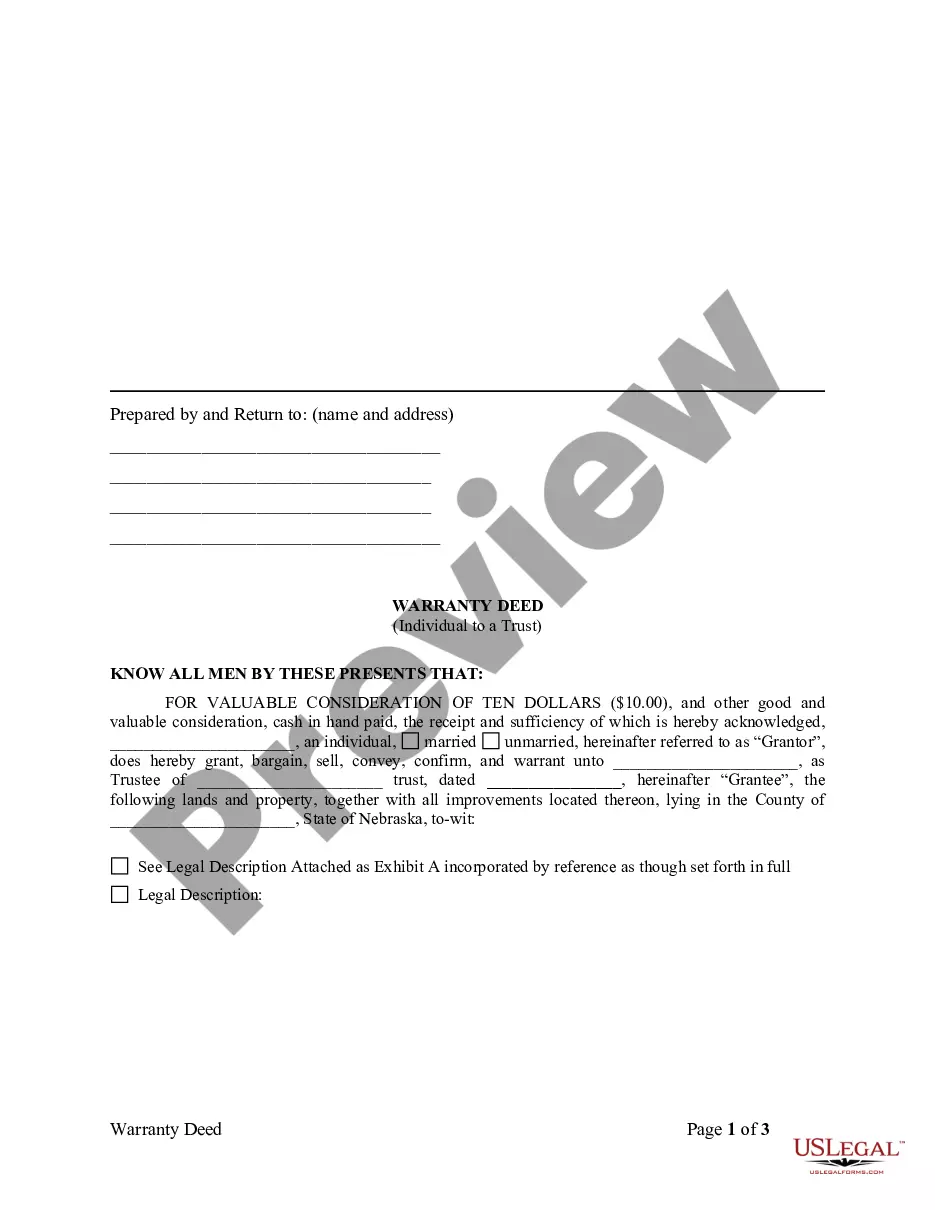
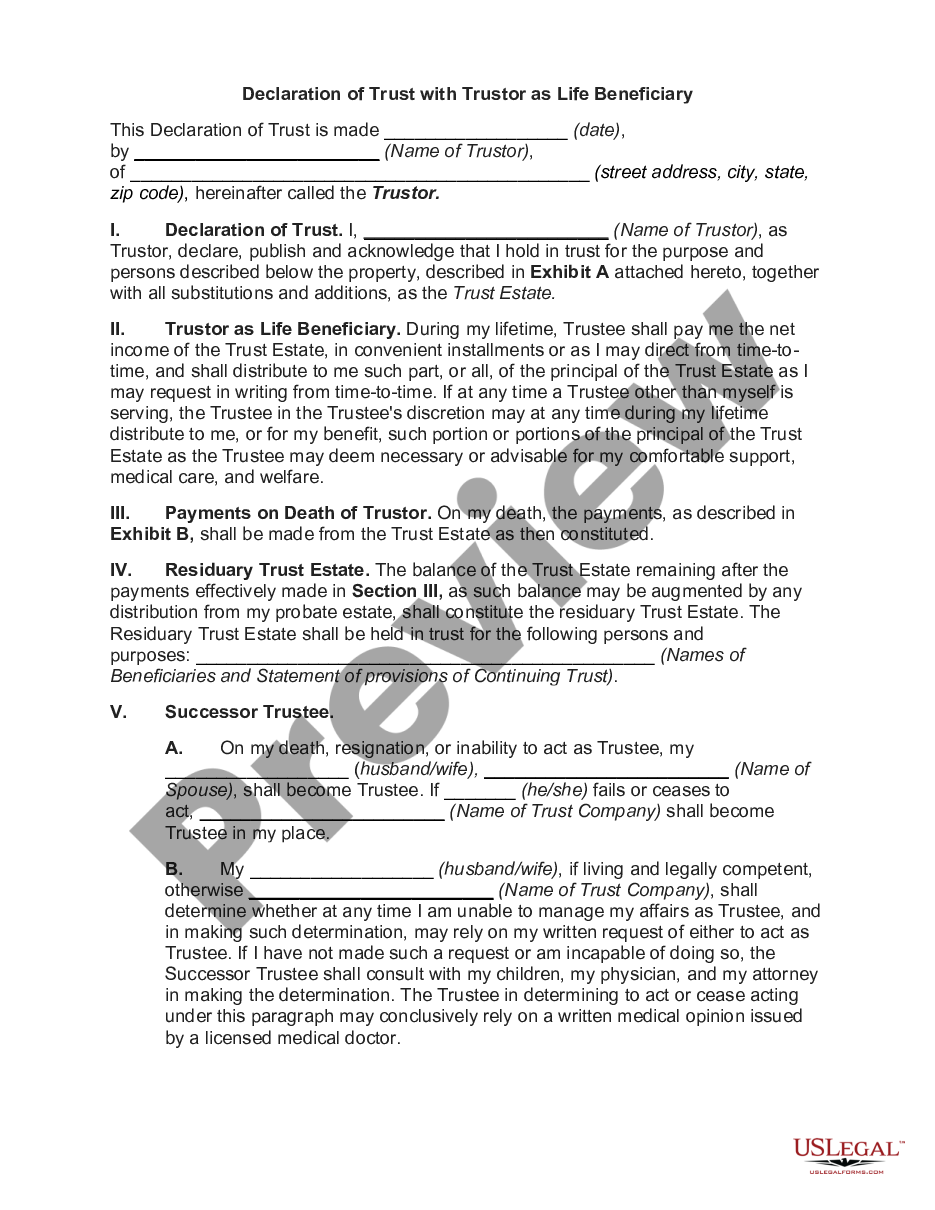
The Warranty Deed from Individual to a Trust is a legal document that transfers ownership of property from an individual (grantor) to a trust (grantee). Unlike other deeds, this form specifically caters to the scenario where the grantor is an individual and the grantee is a trust. This document not only conveys the title of the property but also guarantees that the grantor holds legal title free of encumbrances, except for specified reservations such as minerals, gas, and oil.
Main sections of this form
- Prepared by and return to section: Details where the form should be sent after processing.
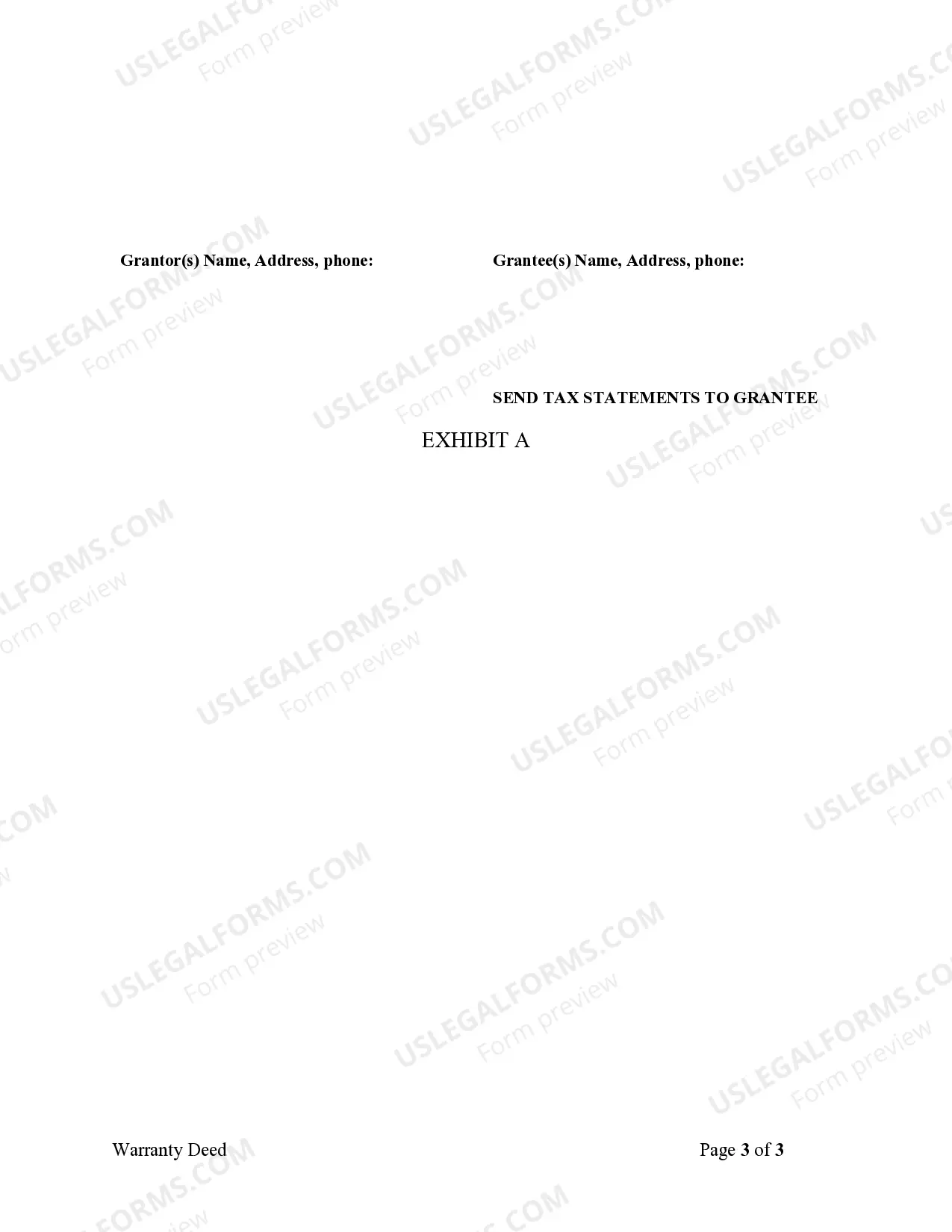
- Grantor information: Includes the name and address of the individual transferring the property.
- Grantee information: Contains the details of the trust receiving the property.
- Property description: Clearly states the details and legal description of the property being transferred.
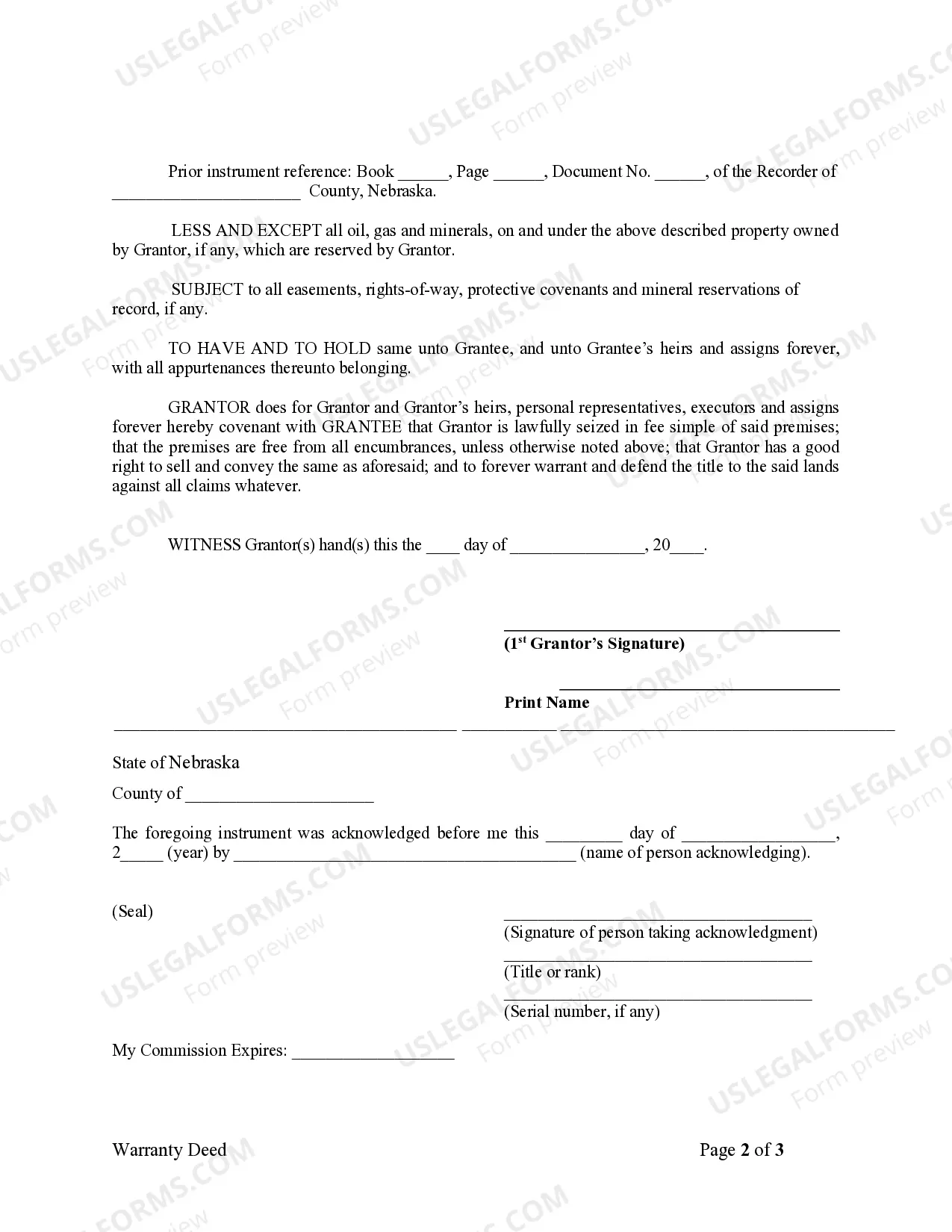
- Reservation clause: Notes any reservations such as rights to oil, gas, and minerals.
- Covenants: Ensures the grantor warrants the title against any claims, providing assurance to the grantee.
- Notary section: Required for legal validation of the deed.





When to use this form
This form is useful when an individual wishes to transfer property into a trust. Common scenarios include estate planning, where property is being placed into a trust to manage for beneficiaries, or when someone wants to simplify the transfer of real estate after their death. It is vital for ensuring that the property is correctly titled in the name of the trust, providing tax benefits and protection against probate.
Who should use this form
- Individuals transferring property into a trust.
- Trustees who need to formalize the acquisition of property for the trust.
- Estate planners seeking to transfer real estate assets as part of a broader estate strategy.
Instructions for completing this form
- Identify the parties involved: Fill in the names and addresses of the grantor and the trust.
- Specify the property: Provide a detailed description of the property being conveyed.
- Include any reservations: Note any oil, gas, or mineral rights that are being reserved by the grantor.
- Sign the document: The grantor must sign to validate the transfer of property.
- Obtain notarization: Have the deed notarized to ensure it meets legal standards.
Notarization guidance
This document requires notarization to meet legal standards. US Legal Forms provides secure online notarization powered by Notarize, allowing you to complete the process through a verified video call, available 24/7.
Get your form ready online
Our built-in tools help you complete, sign, share, and store your documents in one place.
Make edits, fill in missing information, and update formatting in US Legal Forms—just like you would in MS Word.
Download a copy, print it, send it by email, or mail it via USPS—whatever works best for your next step.
Sign and collect signatures with our SignNow integration. Send to multiple recipients, set reminders, and more. Go Premium to unlock E-Sign.
If this form requires notarization, complete it online through a secure video call—no need to meet a notary in person or wait for an appointment.
We protect your documents and personal data by following strict security and privacy standards.

Make edits, fill in missing information, and update formatting in US Legal Forms—just like you would in MS Word.

Download a copy, print it, send it by email, or mail it via USPS—whatever works best for your next step.

Sign and collect signatures with our SignNow integration. Send to multiple recipients, set reminders, and more. Go Premium to unlock E-Sign.

If this form requires notarization, complete it online through a secure video call—no need to meet a notary in person or wait for an appointment.

We protect your documents and personal data by following strict security and privacy standards.
Mistakes to watch out for
- Failing to provide a complete property description.
- Insufficient or unclear reservations regarding mineral rights.
- Not signing the deed or missing notary requirements.
- Using outdated or incorrect state-specific language.
Benefits of completing this form online
- Convenience: Quickly download and complete the form from home.
- Editability: Customize the form to fit specific transaction details before printing.
- Reliability: Templates are drafted by licensed attorneys to ensure legal compliance.
Legal use & context
- This Warranty Deed transfers ownership of property and is legally binding once executed and notarized.
- Proper execution and recording of this deed in the appropriate jurisdiction are critical for enforceability.
- Keep a copy of the completed and notarized deed for your records and for future reference.
What to keep in mind
- This deed facilitates the transfer of property from an individual to a trust.
- Be mindful of reservations and legal description accuracy.
- Ensure notarization to validate the deed's effectiveness.
Looking for another form?

Form popularity
FAQ
A special warranty deed to real estate offers protection to the buyer through the seller's guarantee that the title has been free and clear of encumbrances during their ownership of the property. It does not guarantee clear title beyond their ownership.
A warranty deed guarantees that: The grantor is the rightful owner of the property and has the legal right to transfer the title.The title would withstand third-party claims to ownership of the property. The grantor will do anything to ensure the grantee's title to the property.
A statutory warranty deed is different from a warranty deed because it is a shorter form made available through your state's statutes and it may not outright list the promise that the title is guaranteed to be clear. Instead, because it is a statutory form, this guarantee is implied and is still legally enforceable.
Let's start with the definition of a deed: DEED: A written instrument by which one party, the Grantor, conveys the title of ownership in property to another party, the Grantee. A Warranty Deed contains promises, called covenants, that the Grantor makes to the Grantee.
Both the warranty deed and deed of trust are recorded with the county clerk or recorder. Generally, the lender sends the documents to be recorded after the closing.The original warranty deeds are often mailed to the grantee after they are recorded.
Both a warranty deed and deed of trust are used to transfer the title of a property from one person to another. However, the difference between these two contracts is who is protected. As you now know, a deed of trust protects the beneficiary (lender). A warranty deed, on the other hand, protects the property owner.
A general warranty deed covers the property's entire history.With a special warranty deed, the guarantee covers only the period when the seller held title to the property. Special warranty deeds do not protect against any mistakes in a free-and-clear title that may exist before the seller's ownership.
It's important to note that a warranty deed does not actually prove the grantor has ownership (a title search is the best way to prove that), but it is a promise by the grantor that they are transferring ownership and if it turns out they don't actually own the property, the grantor will be responsible for compensating