Nebraska No-Fault Agreed Uncontested Divorce Package for Dissolution of Marriage for Persons with No Children with or without Property and Debts
Understanding this form package
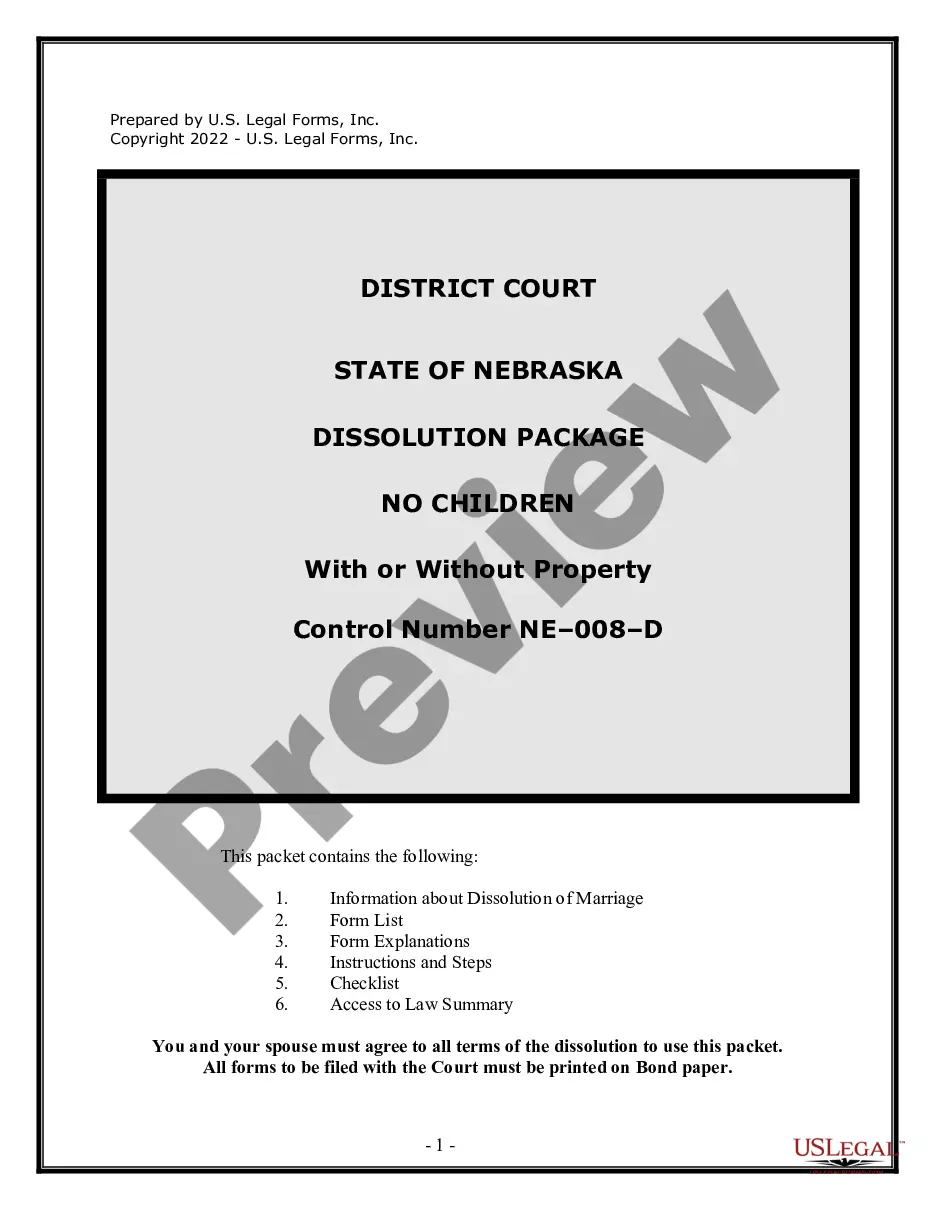
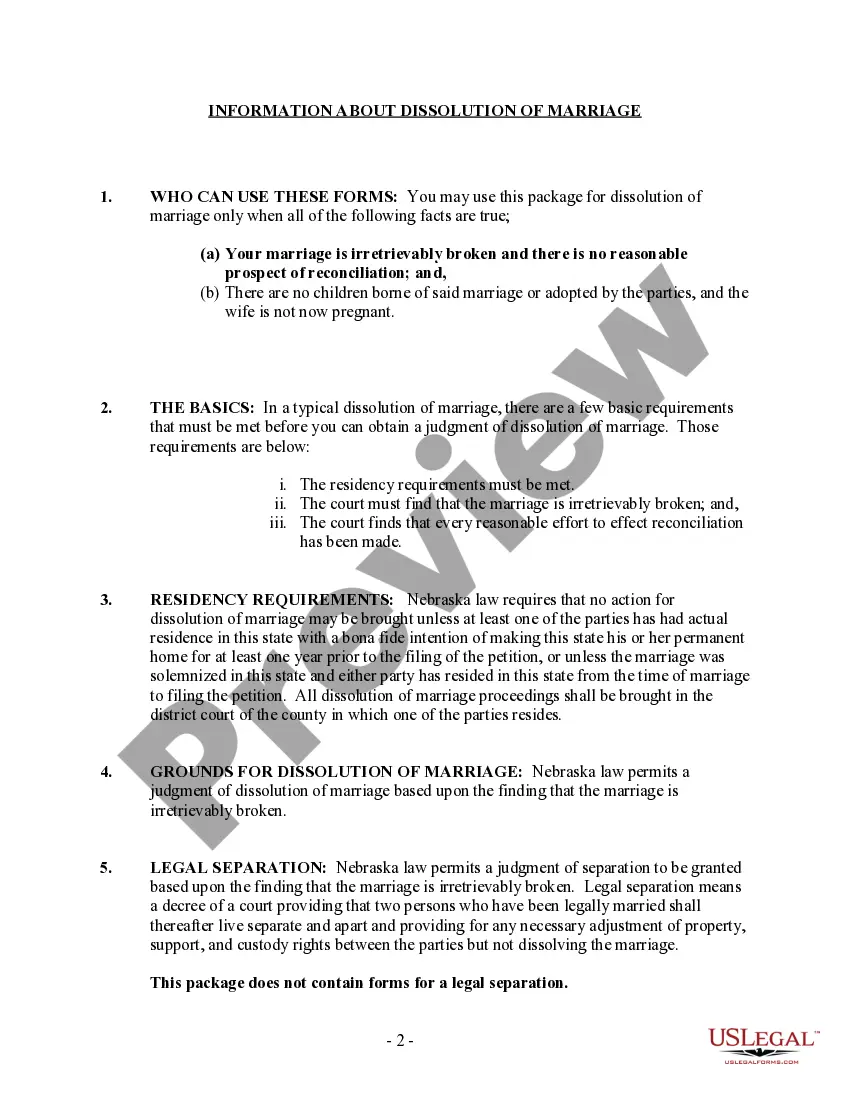
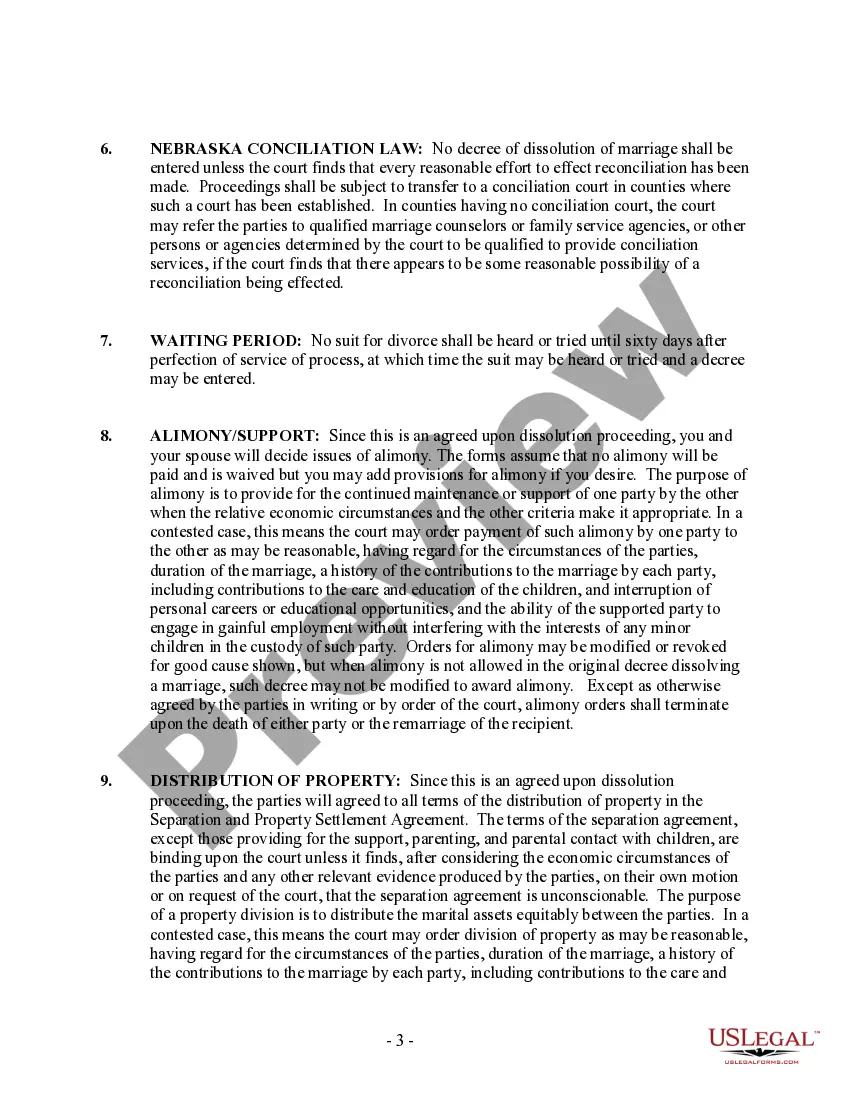
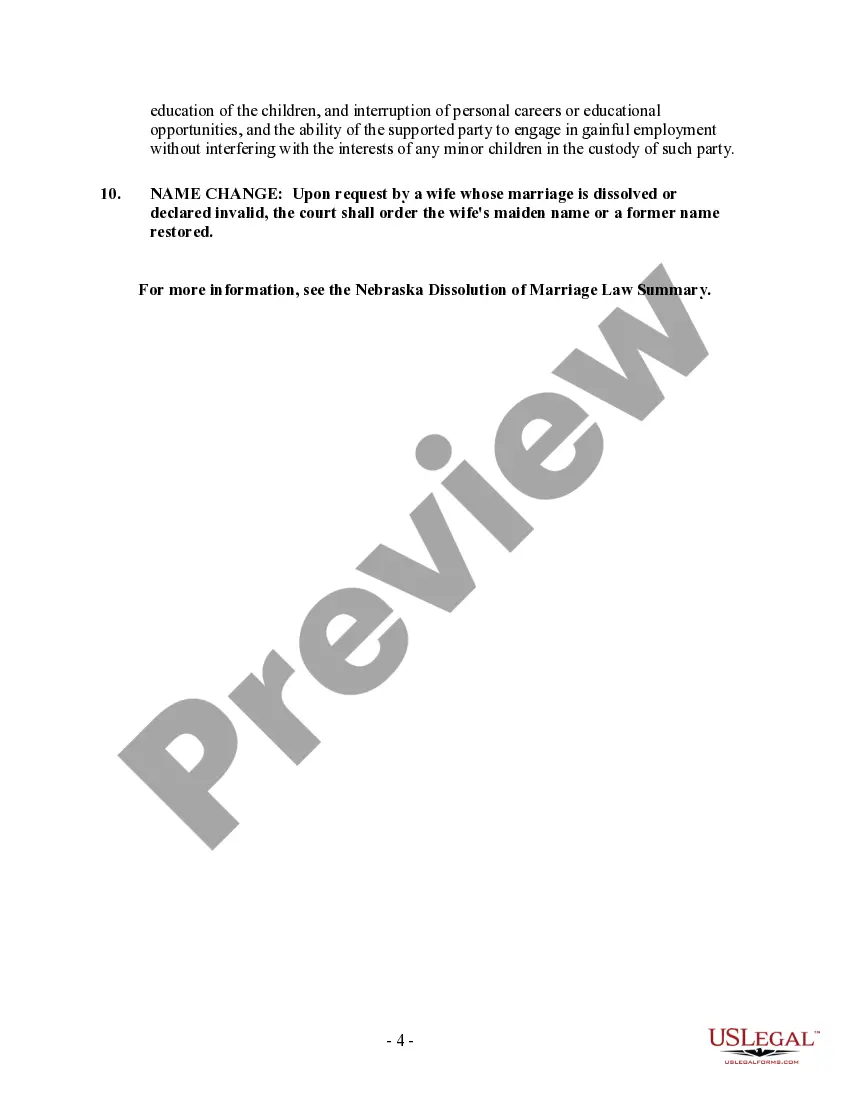
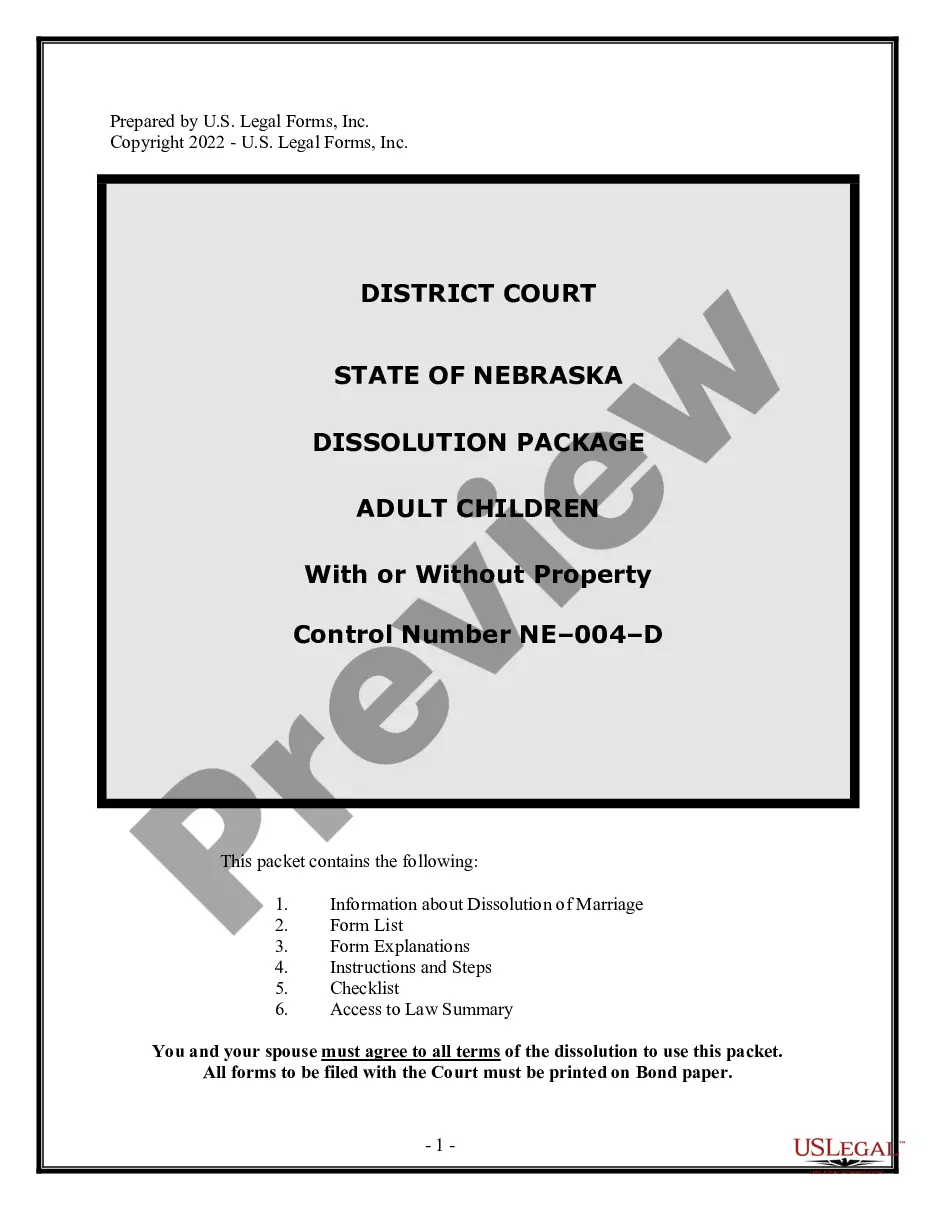
The Nebraska No-Fault Agreed Uncontested Divorce Package is specifically designed for individuals seeking a divorce without children, and with or without property and debts. This comprehensive form package aims to facilitate a smooth and efficient divorce process, allowing both parties to agree on the terms of the dissolution. Unlike contested divorce packages, this package is intended for couples who have no disputes regarding their separation, making it simpler and less time-consuming to finalize the divorce in a Nebraska court.
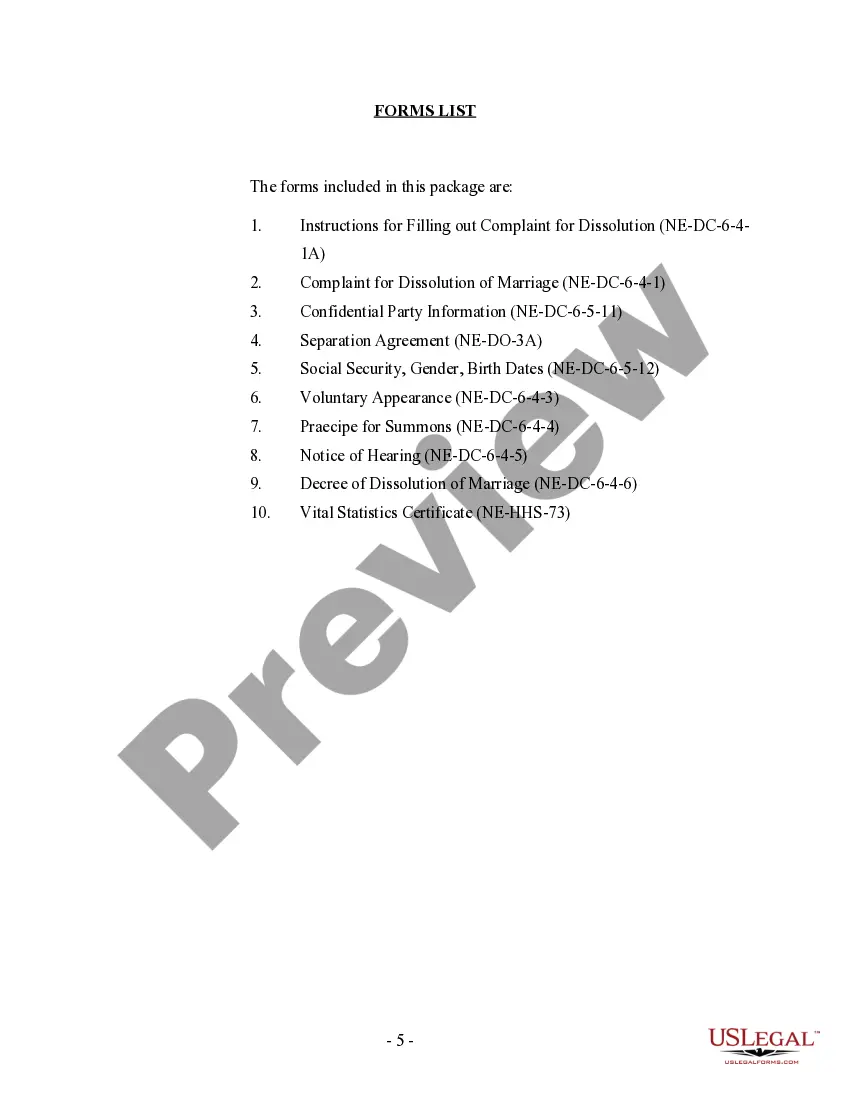
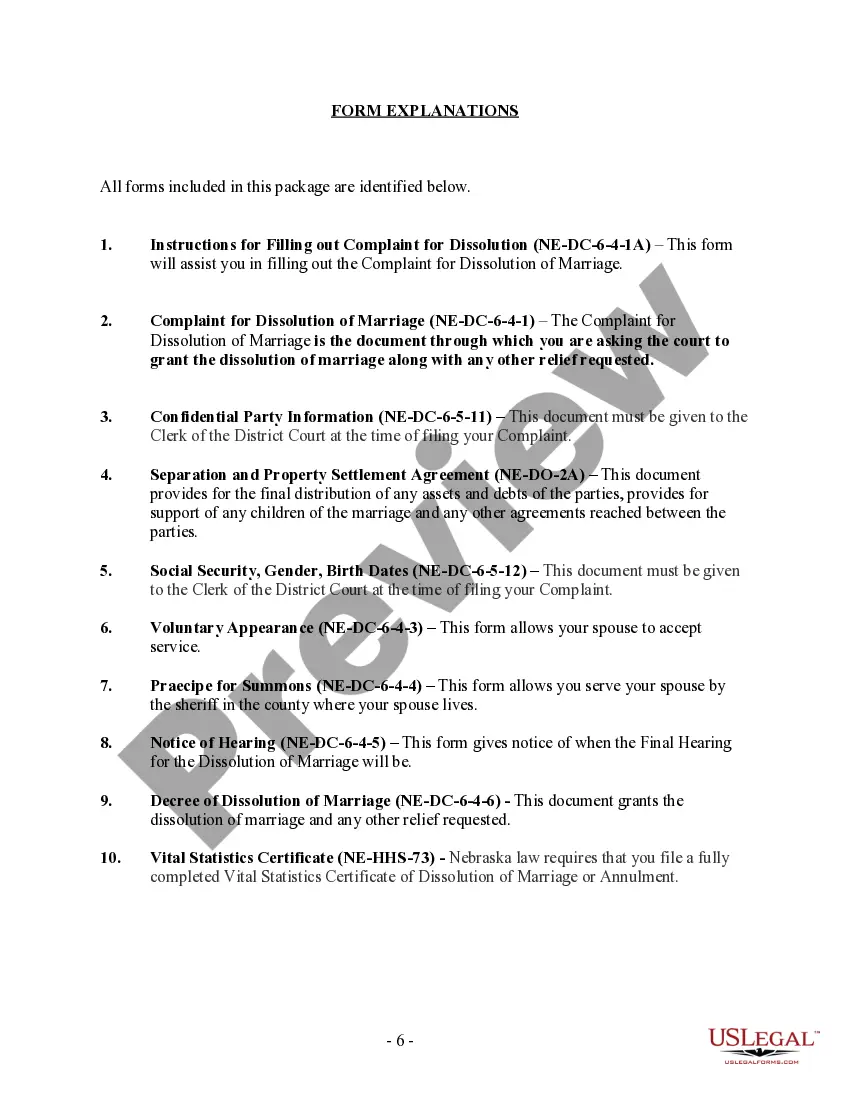
Documents contained in this package
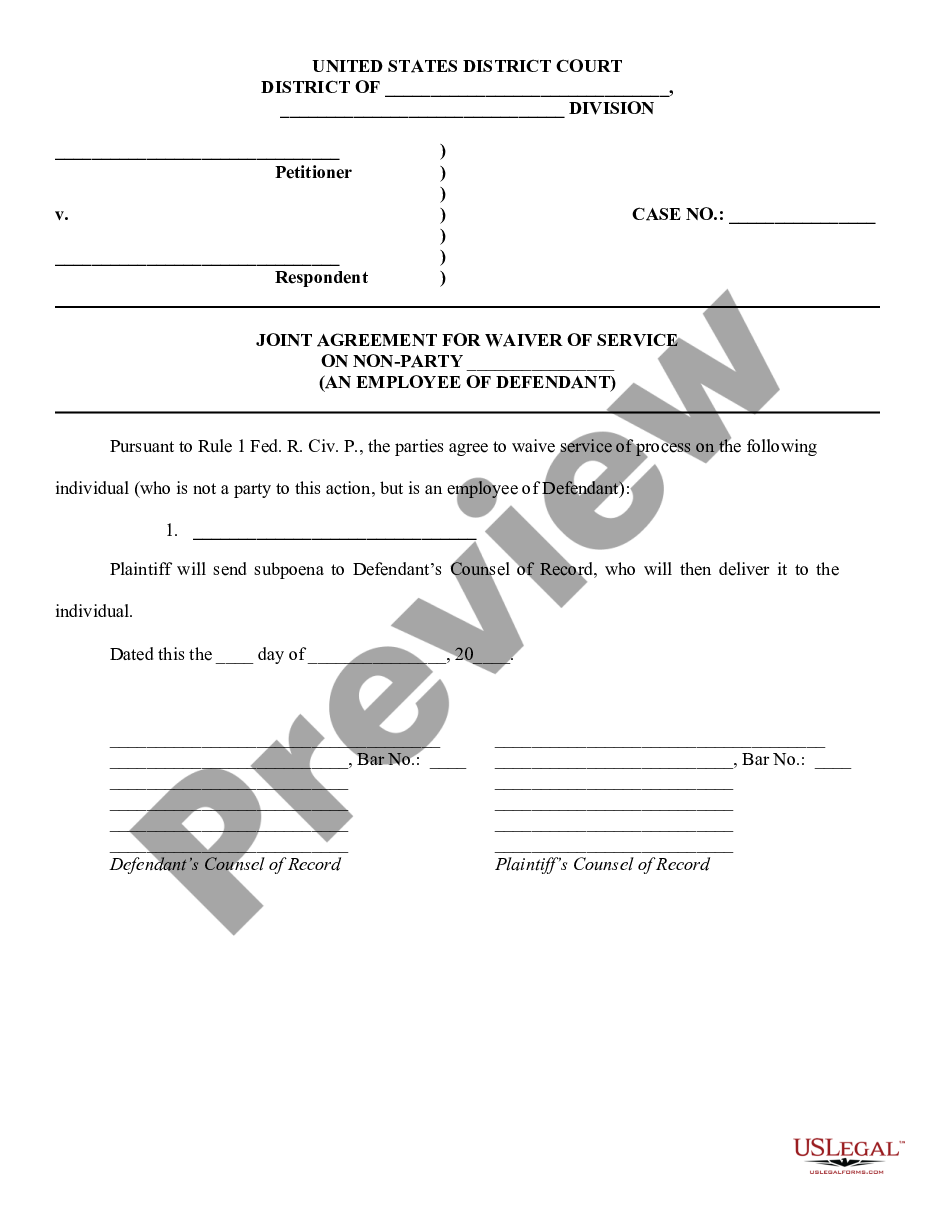
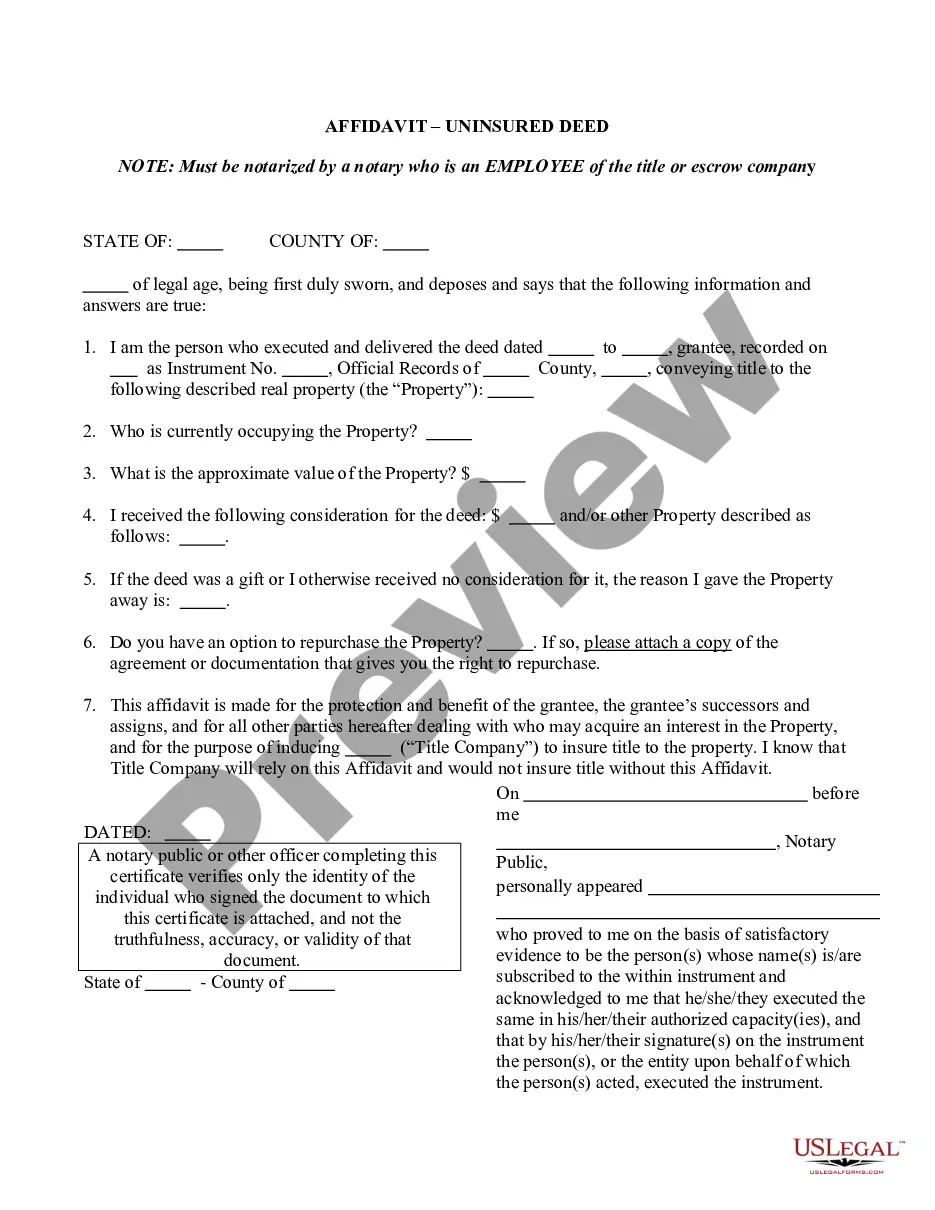
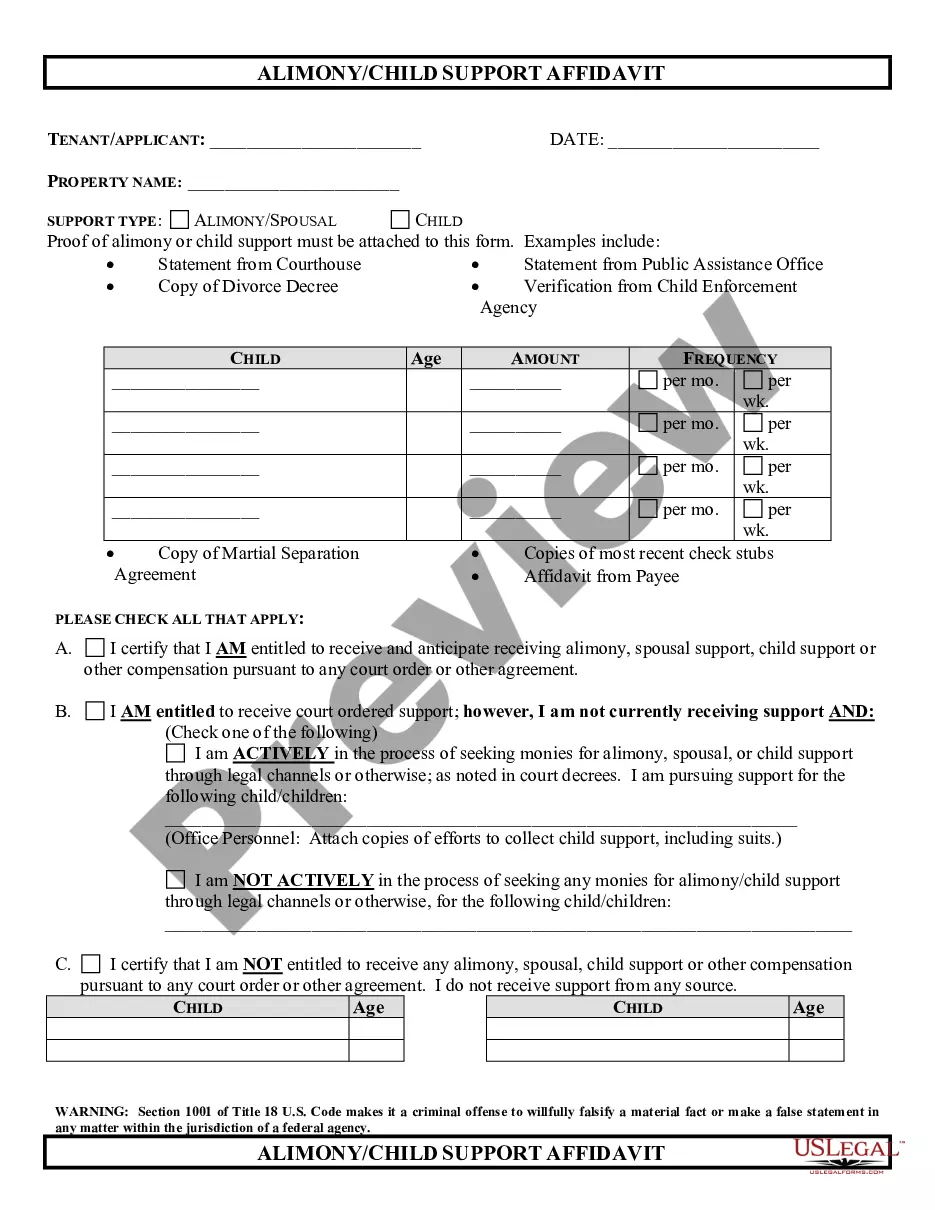
- Marital Domestic Separation and Property Settlement Agreement no Children parties may have Joint Property or Debts Effective Immediately
- Nebraska No-Fault Agreed Uncontested Divorce Package for Dissolution of Marriage for Persons with No Children with or without Property and Debts
- Vital Statistics Form
- Social Security Numbers, Gender and Birth Dates
- Confidential Party Information - With or Without Children
- Decree - Adult or No Children
- Notice of Hearing - With or Without Children
- Praecipe for Summons Personal Service
- Complaint for Dissolution of Marriage - Adult or No Children
- Voluntary Appearance - With or Without Children
- Instructions for Filling Out Complaint for Dissolution of Marriage - Adult or No Children


Common use cases
This package should be used when both spouses agree on the divorce terms and fulfill the following conditions:
- There are no children involved.
- Both parties acknowledge the marriage is irretrievably broken.
- There is mutual consent regarding the division of property and debts, if applicable.
Who this form package is for
- Couples planning to file for divorce in Nebraska.
- Married individuals without children looking for an uncontested divorce.
- Spouses who can cooperate on all terms without legal disputes.
Completing these forms step by step
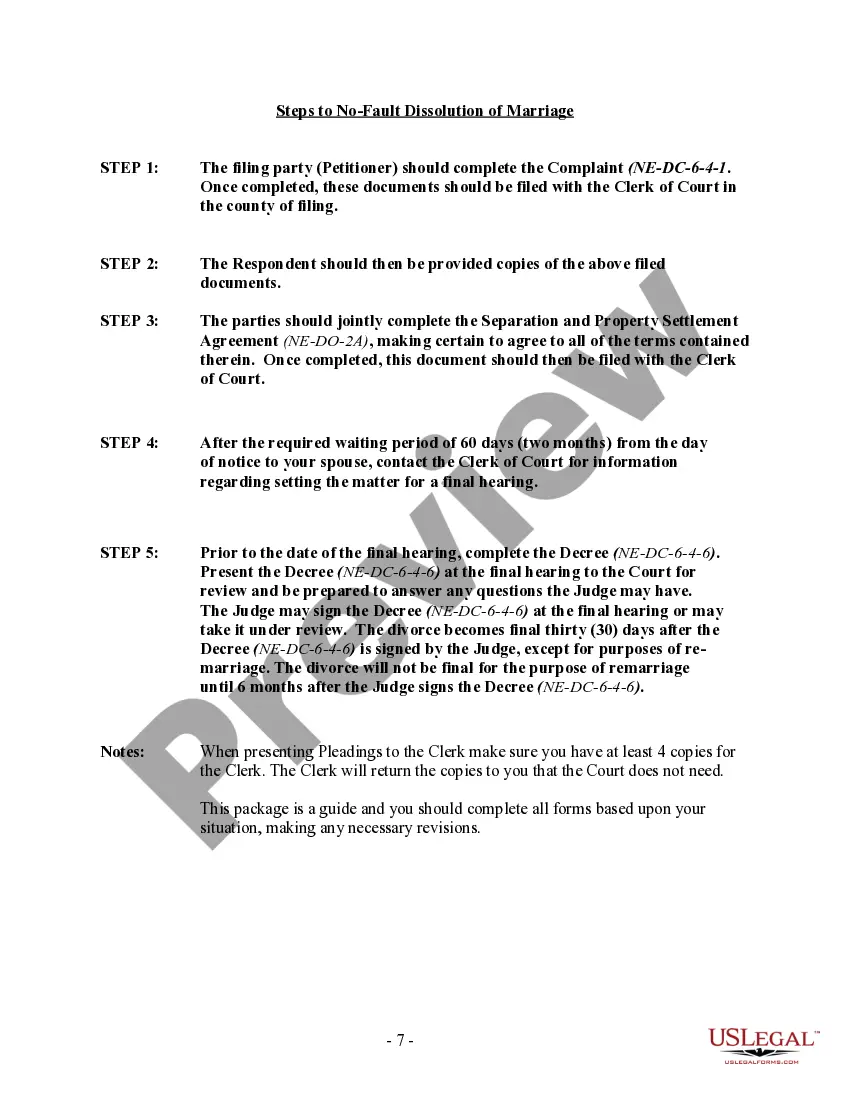
- Review all forms included in the package to understand each requirement.
- Complete the Complaint for Dissolution of Marriage and the Separation Agreement, ensuring all terms are mutually agreed upon.
- File the completed forms with the Clerk of Court in your county along with the required filing fee.
- Provide copies of the filed documents to your spouse and ensure they acknowledge via the Voluntary Appearance form.
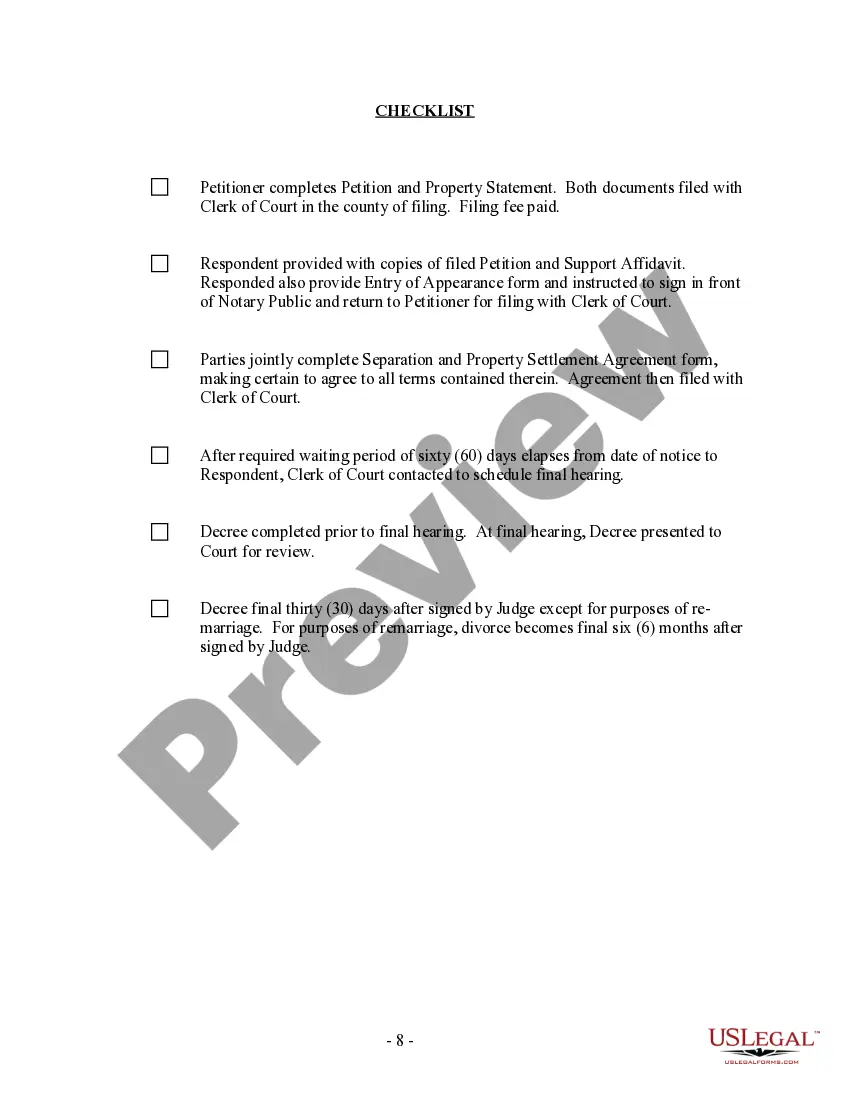
- After the 60-day waiting period, set a final hearing date with the Clerk of Court for the divorce decree approval.
Notarization guidance for this package
Some forms in this package require notarization to be legally valid. US Legal Forms provides secure online notarization powered by Notarize, allowing you to complete the process through a verified video call, available 24/7.
Get your form ready online
Our built-in tools help you complete, sign, share, and store your documents in one place.
Make edits, fill in missing information, and update formatting in US Legal Forms—just like you would in MS Word.
Download a copy, print it, send it by email, or mail it via USPS—whatever works best for your next step.
Sign and collect signatures with our SignNow integration. Send to multiple recipients, set reminders, and more. Go Premium to unlock E-Sign.
If this form requires notarization, complete it online through a secure video call—no need to meet a notary in person or wait for an appointment.
We protect your documents and personal data by following strict security and privacy standards.

Make edits, fill in missing information, and update formatting in US Legal Forms—just like you would in MS Word.

Download a copy, print it, send it by email, or mail it via USPS—whatever works best for your next step.

Sign and collect signatures with our SignNow integration. Send to multiple recipients, set reminders, and more. Go Premium to unlock E-Sign.

If this form requires notarization, complete it online through a secure video call—no need to meet a notary in person or wait for an appointment.

We protect your documents and personal data by following strict security and privacy standards.
Common mistakes
- Not ensuring all required forms are completed and filed.
- Failing to provide a copy of the filed documents to your spouse.
- Overlooking the 60-day waiting period before scheduling the final hearing.
Advantages of online completion
- Convenient access to all necessary forms without the need for in-person legal consultations.
- Forms are editable on your computer, allowing for easy completion.
- Reliability of professionally drafted forms ensures compliance with Nebraska laws.
Looking for another form?

Form popularity
FAQ
No, Nebraska is not a 50/50 community property state.Equity distribution is based on each spouse's individual contribution to the marriage and earning potential following the divorce to determine a fair distribution of marital property between the two parties.
Under former law, in Nebraska, a divorce becomes final six months after it is entered; during this six-month waiting period, the matrimonial tie between the parties is not dissolved.
Because California law views both spouses as one party rather than two, marital assets and debts are split 50/50 between the couple, unless they can agree on another arrangement.
Summary dissolution is the most cost-effective way to get divorced in California. There is less paperwork and only one filing fee. However, the couple must meet very specific requirements. Also, California requires a six-month waiting period to terminate any marriage, so summary dissolution does not expedite a divorce.
If it is equitable and reasonable, the court could give you 90% of the marital property and leave your spouse with the other 10%. Although that's possible, most of the time the court will award a spouse one-third to one-half of the marital property to achieve an equitable result.
In most states, "dissolution of marriage" is just another way of saying divorce, and it refers to the process by which a couple can end their marriage permanently.A no-fault divorce is easier and quicker to obtain than a "fault" divorce, but spouses may be required to live apart for a certain amount of time.
In Nebraska, the divorce will be final 30-days from the date the Decree of Dissolution is entered, however, the parties to the action cannot remarry for a period of 6 months following the entry of the divorce decree. The court may order either spouse to pay spousal support (alimony) to the other party.
The duration of payments is determined by a judge in Nebraska family court. Alimony length is usually based on length of marriage - one commonly used standard for alimony duration is that 1 year of alimony is paid every three years of marriage (however, this is not always the case in every state or with every judge).