North Dakota Last Will and Testament for Single Person with Adult Children
What is this form?
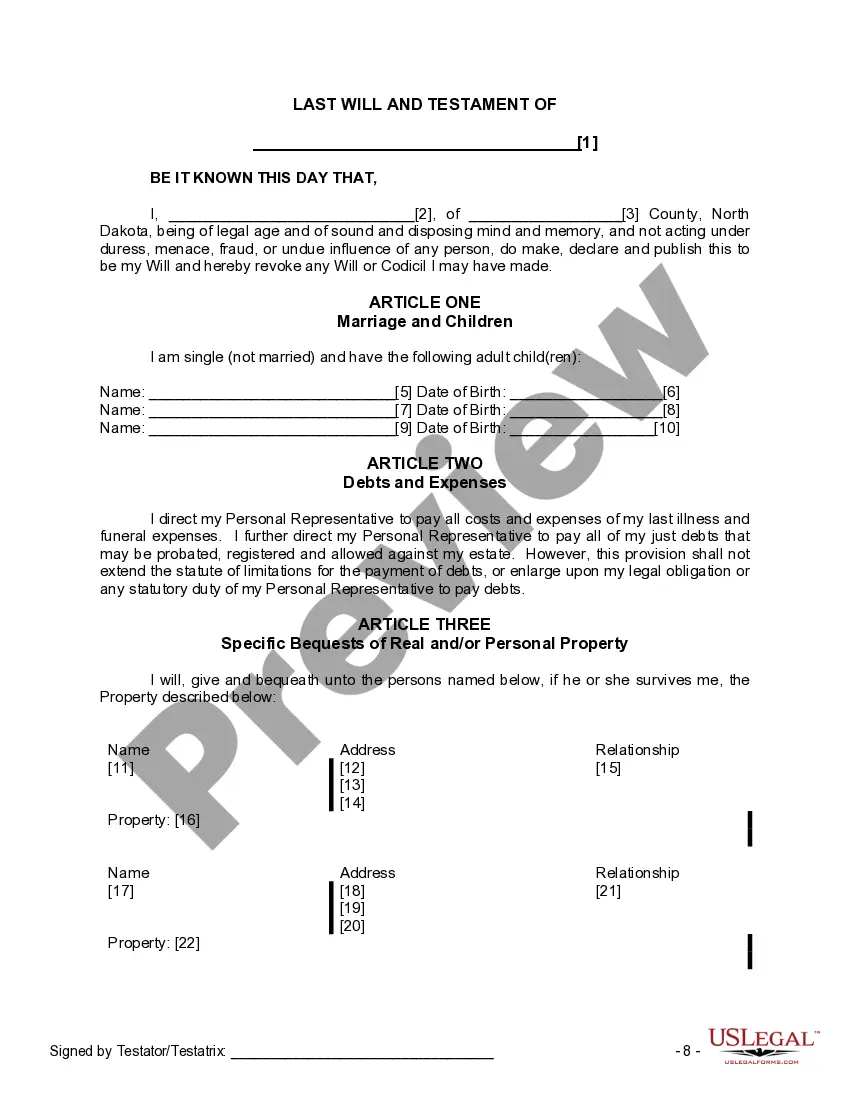
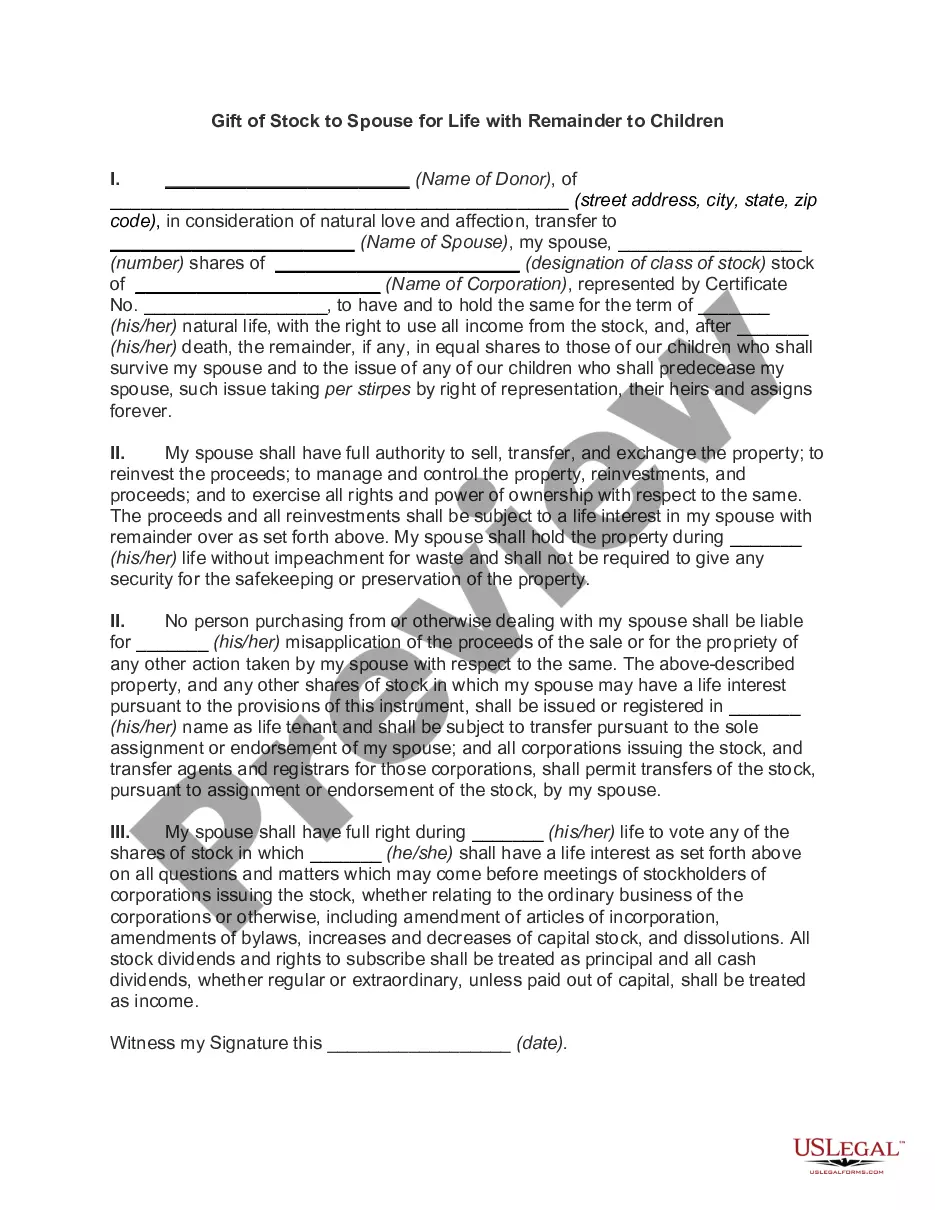
The Last Will and Testament for a Single Person with Adult Children is a legal document that outlines how a single individual wishes to distribute their property after death. This form is specifically designed for those who have never been married and have adult children. It provides clear instructions for appointing an executor, specifying beneficiaries, and detailing any other important requests regarding the estate.
Key components of this form
- Article One: Personal information including the name and residence of the individual.
- Article Two: Instructions for settling debts and funeral expenses.
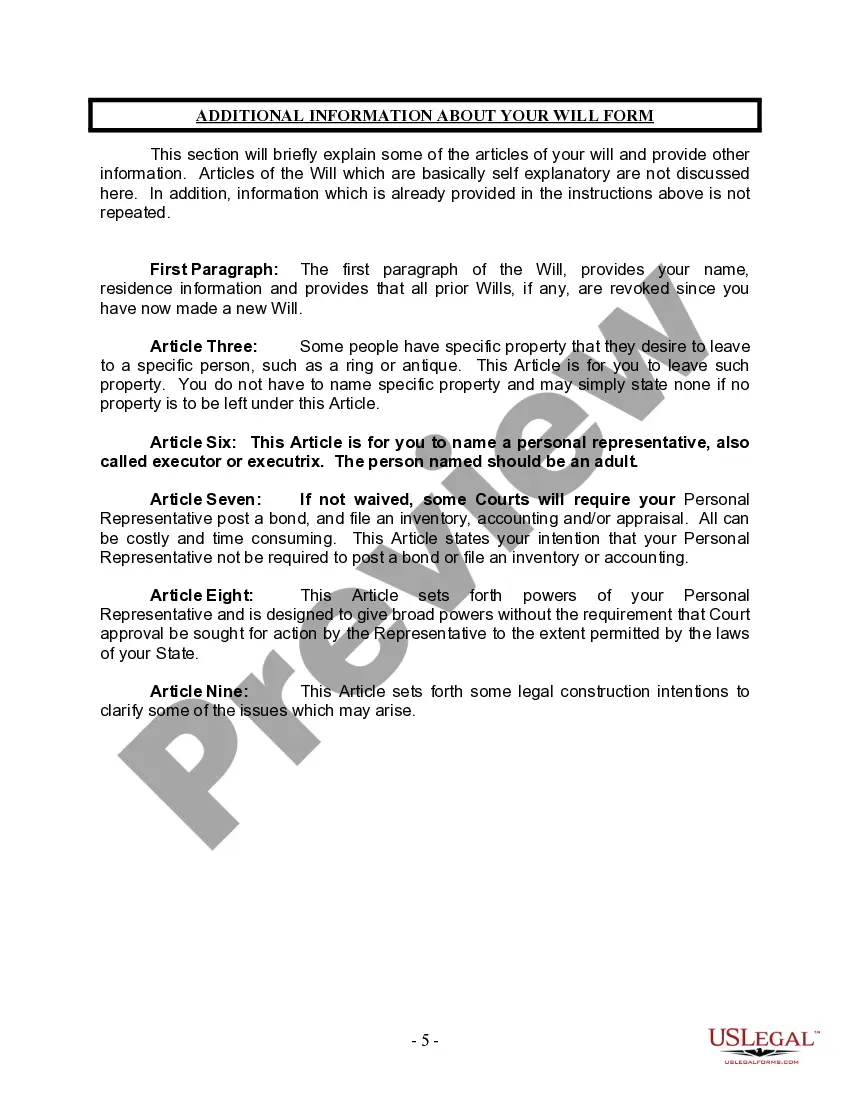
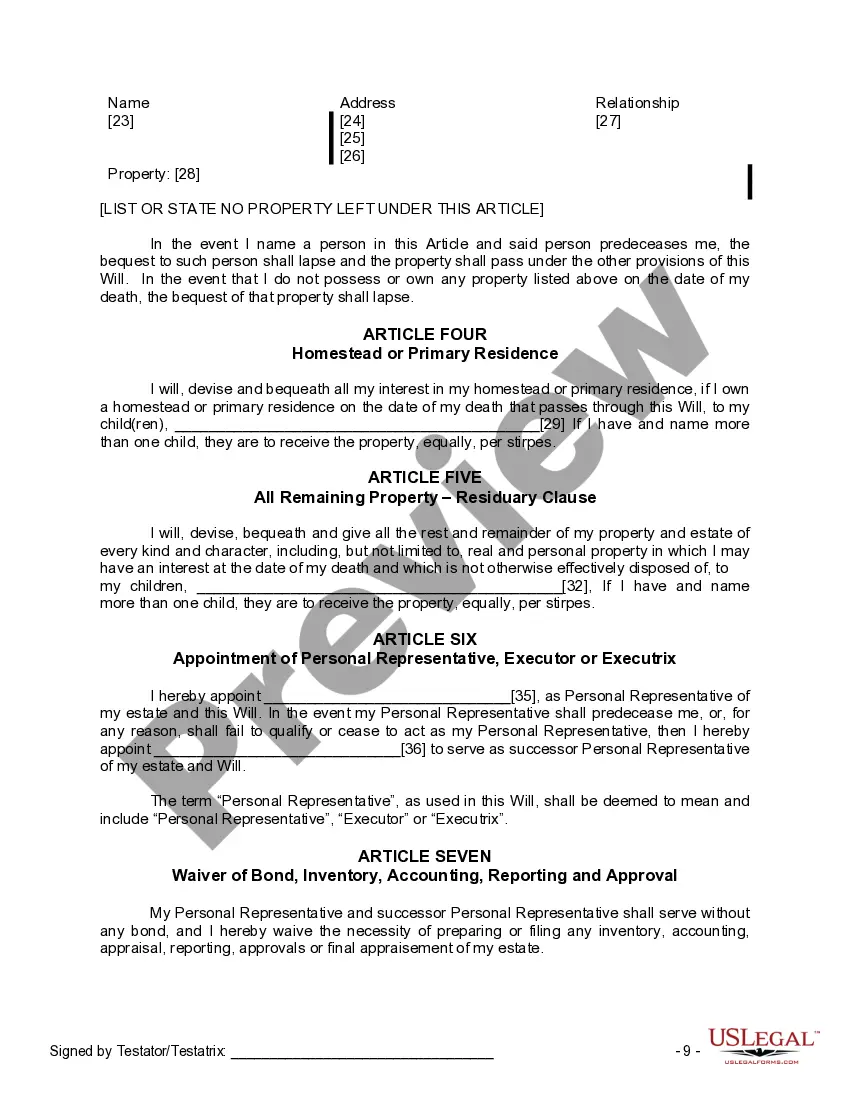
- Article Three: Specification of any individual gifts of property.
- Article Four: Designation of who will inherit the homestead, if applicable.
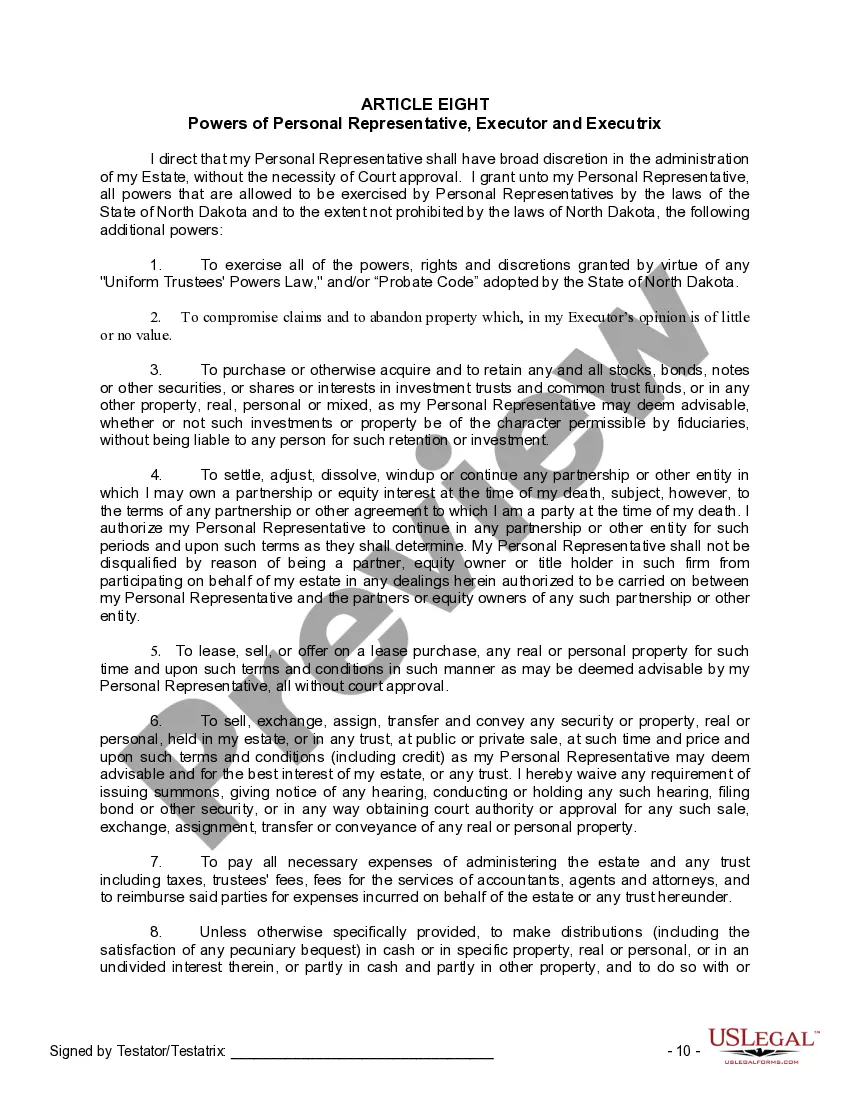
- Article Six: Appointment of a personal representative to handle the estate.
- Witness and notarization requirements to validate the Will.




When this form is needed
This Last Will and Testament is essential for any single person with adult children who wants to ensure their property is distributed according to their wishes. It should be used when creating or updating a will, especially in the following scenarios:- When there are specific items or properties to be bequeathed to certain individuals.- To clarify intentions regarding the homestead or other significant assets.- When appointing an executor for managing the estate posthumously.
Who can use this document
- Individuals who are single and have never been married.
- Parents with adult children looking to distribute their assets.
- People who want to have a clear legal directive regarding their estate after death.
- Those seeking a straightforward way to manage and clarify their estate planning wishes.
Steps to complete this form
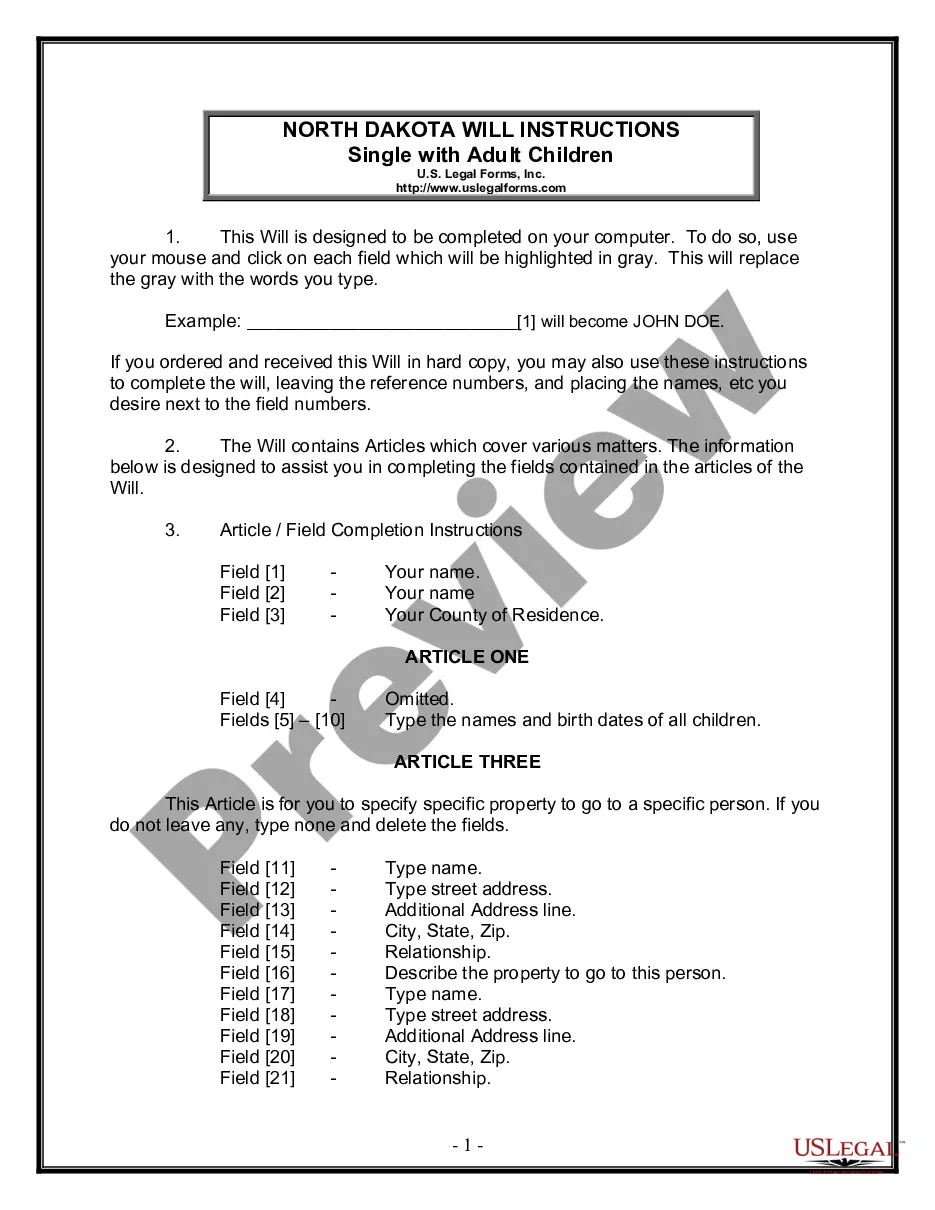
- Begin by entering your full name and county of residence at the top of the form.
- List the names and birthdates of your adult children in the designated fields.
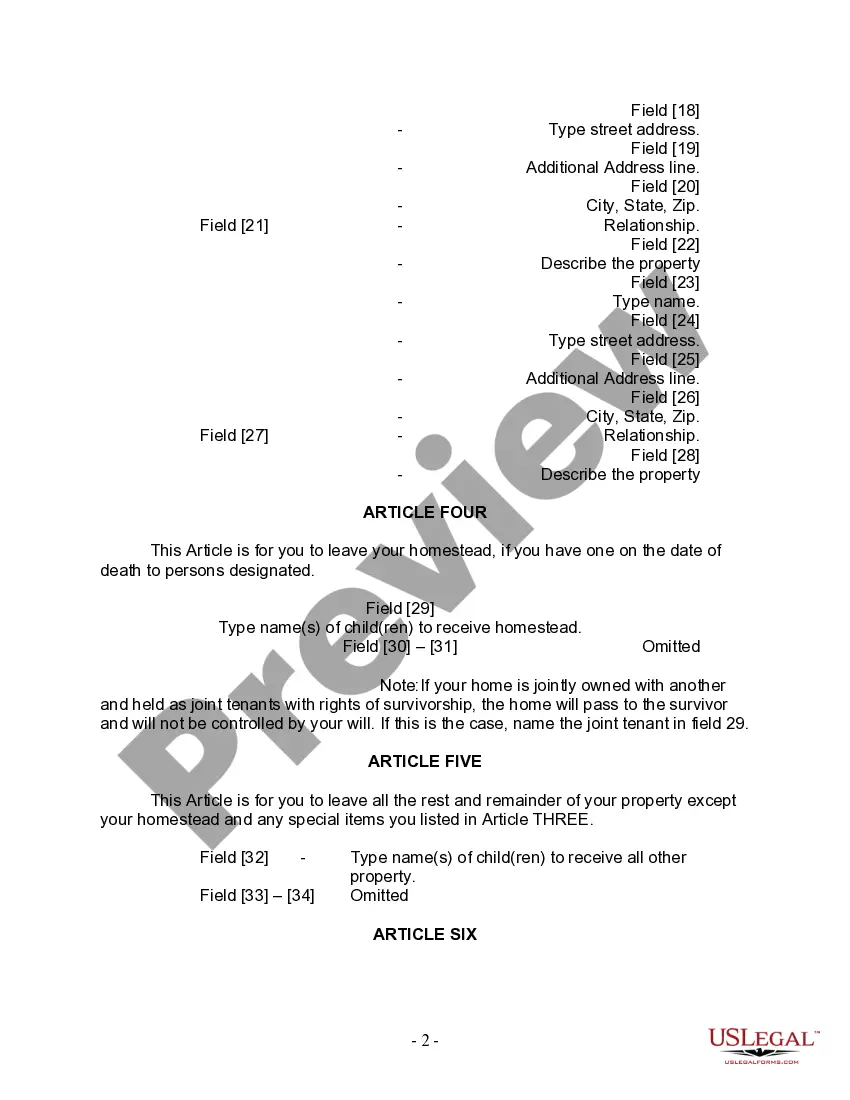
- Specify any specific bequests you wish to make in Article Three, including names and addresses of beneficiaries.
- Indicate your homestead recipient(s) and any other property distribution in Articles Four and Five.
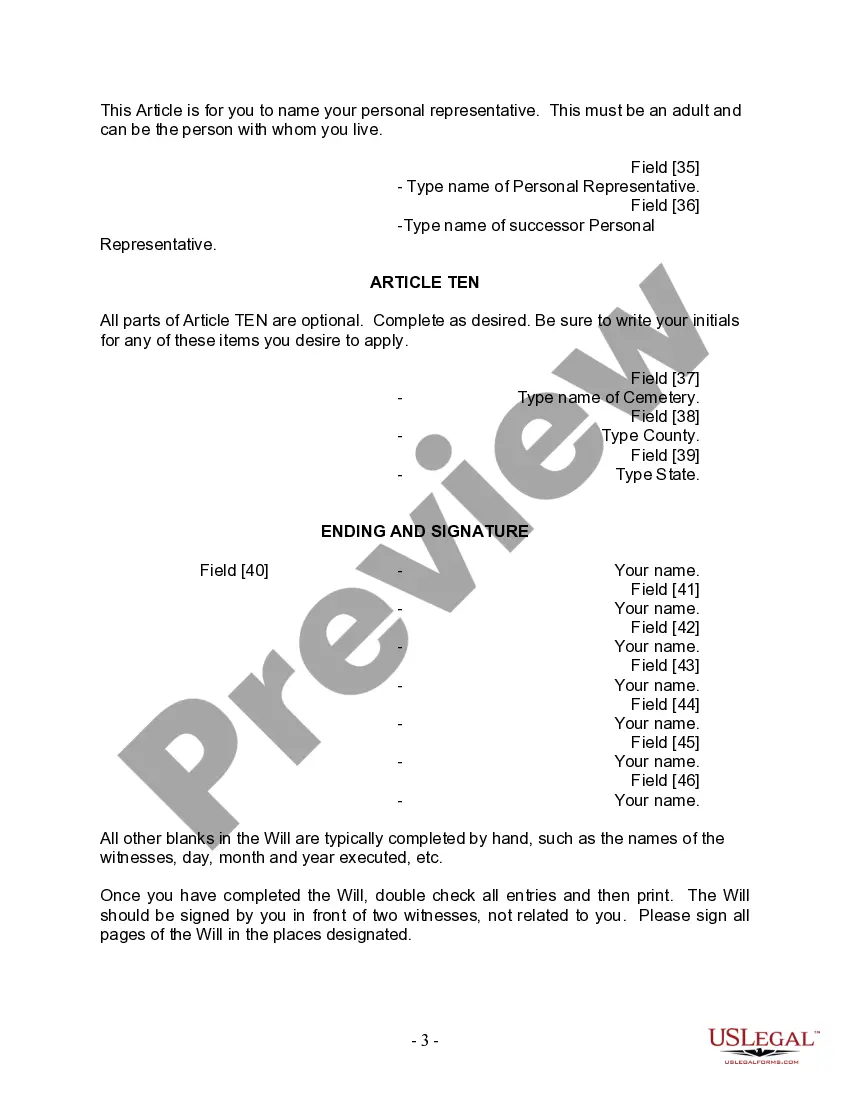
- Complete the sections for appointing a personal representative who will carry out your wishes.
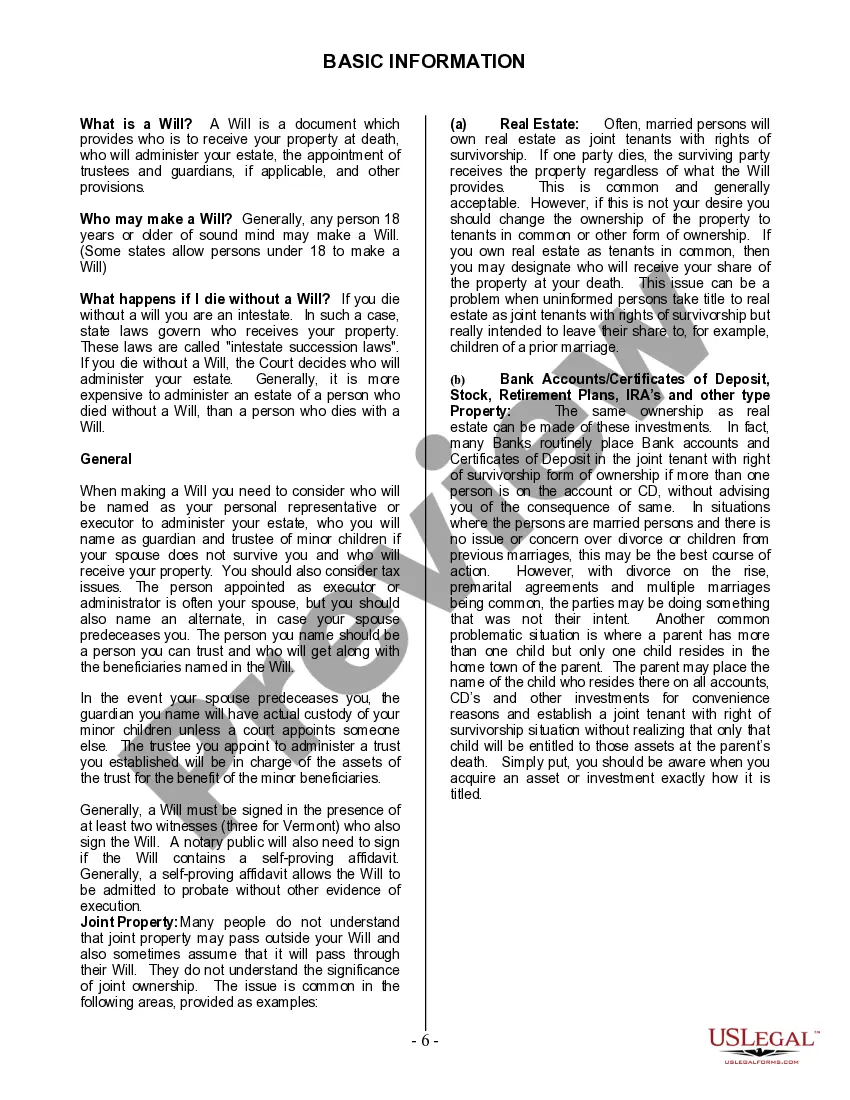
- Ensure the Will is signed in the presence of two witnesses who are not beneficiaries, and consider notarizing the document for added legal standing.
Notarization requirements for this form
Yes, this form must be notarized to be legally valid if state law requires it. The notarization helps confirm your identity and provides an extra layer of authenticity to the document. U.S. Legal Forms offers integrated online notarization options, allowing for a secure video call with a notary, available 24/7.
Get your form ready online
Our built-in tools help you complete, sign, share, and store your documents in one place.
Make edits, fill in missing information, and update formatting in US Legal Forms—just like you would in MS Word.
Download a copy, print it, send it by email, or mail it via USPS—whatever works best for your next step.
Sign and collect signatures with our SignNow integration. Send to multiple recipients, set reminders, and more. Go Premium to unlock E-Sign.
If this form requires notarization, complete it online through a secure video call—no need to meet a notary in person or wait for an appointment.
We protect your documents and personal data by following strict security and privacy standards.

Make edits, fill in missing information, and update formatting in US Legal Forms—just like you would in MS Word.

Download a copy, print it, send it by email, or mail it via USPS—whatever works best for your next step.

Sign and collect signatures with our SignNow integration. Send to multiple recipients, set reminders, and more. Go Premium to unlock E-Sign.

If this form requires notarization, complete it online through a secure video call—no need to meet a notary in person or wait for an appointment.

We protect your documents and personal data by following strict security and privacy standards.
Common mistakes
- Failing to have two disinterested witnesses sign the Will.
- Not specifying a personal representative or an alternative.
- Omitting important details like the relationship of beneficiaries to the testator.
- Not updating the Will after significant life changes (e.g., changes in family status).
Why complete this form online
- Convenient download and completion from the comfort of your home.
- Editable fields allowing for personalization to fit your unique situation.
- Access to attorney-reviewed templates ensuring legal soundness.
- Immediate access to crucial legal documents without the need for in-person consultations.
Quick recap
- The Last Will and Testament for Single Person with Adult Children is essential for ensuring your property is distributed as you wish after your death.
- It is important to follow state-specific witnessing and notarization requirements to ensure the Will is enforceable.
- Completing this form online provides convenience and the ability to customize your wishes efficiently.
- Regularly updating your Will is crucial to reflect any changes in your life circumstances or wishes.
Looking for another form?



Form popularity
FAQ
The following people are disqualified from inheriting under a will: a person or his/her spouse who writes a will or any part thereof on behalf of the testator; and a person or his/her spouse who signs the will on instruction of the testator or as a witness.
A. You don't have to have a lawyer to create a basic will you can prepare one yourself. It must meet your state's legal requirements and should be notarized.A do-it-yourself will that's poorly drafted can save you money but create a mess for your heirs when you're gone.
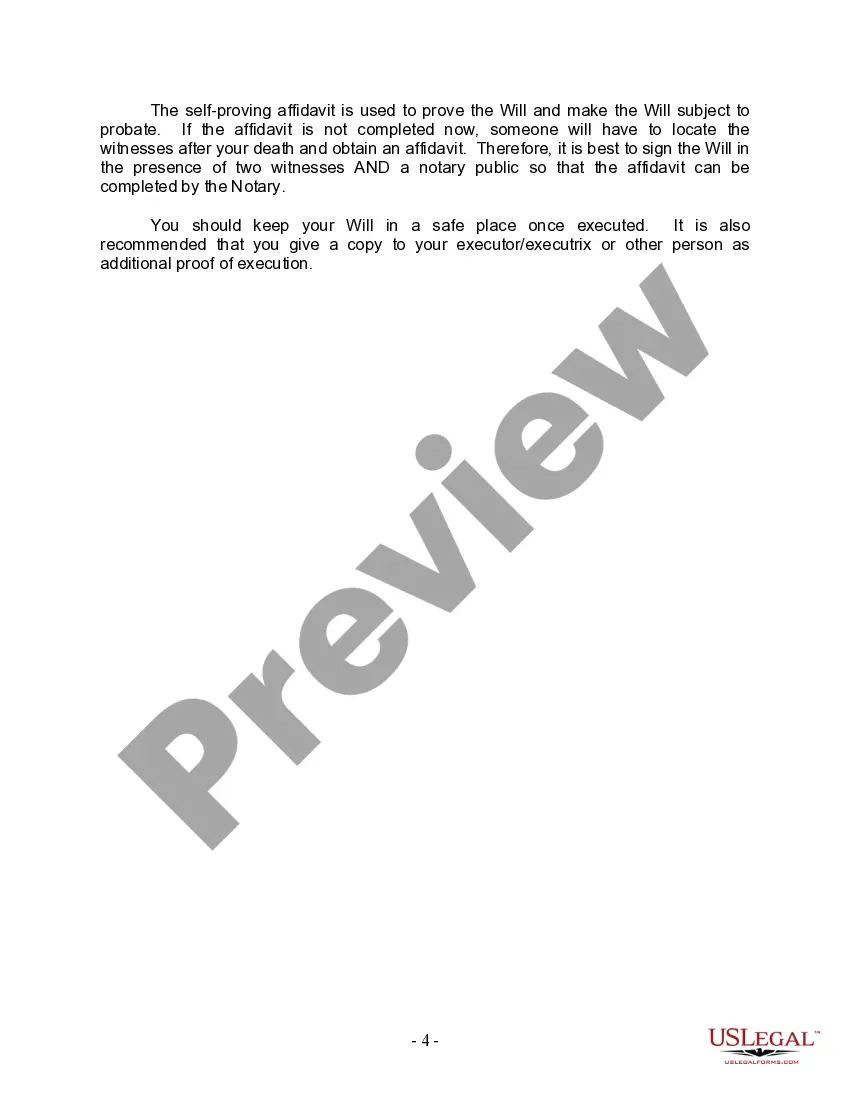
During probate, the court-supervised process of distributing the property of a deceased person, a "self-proving affidavit" could help prove your will is valid. To execute this affidavit, you and your witnesses must appear in front of a notary public to sign this sworn statement.
As long as it was properly signed and witnessed by two adult independent witnesses who are present at the time you sign your will, it should be legally binding.Using the wrong wording could mean that your instructions aren't followed, or even that your will isn't valid.
You don't have to get a lawyer to draft your will. It's perfectly legal to write your own will, and any number of products exist to help you with this, from software programs to will-writing kits to the packet of forms you can pick up at your local drugstore.
In order for a will to be valid, it must be: made by a person who is 18 years old or over and. made voluntarily and without pressure from any other person and.signed by the two witnesses, in the presence of the person making the will, after it has been signed.
Understand the Legal Requirements in Your State. Select an Executor for Your Will. Choose Beneficiaries. Designate Guardians for Your Dependents. Be Specific about Your Wishes. Be Realistic About Distribution. Include Additional Messages in a Letter. Get Witness Signatures.
Contrary to popular belief, you do not need to have an attorney draft a will for you. Anyone can write this document on their own, and as long as it meets all of the legal requirements of the state, courts will recognize one you wrote yourself.