North Dakota Last Will and Testament for Single Person with No Children
About this form
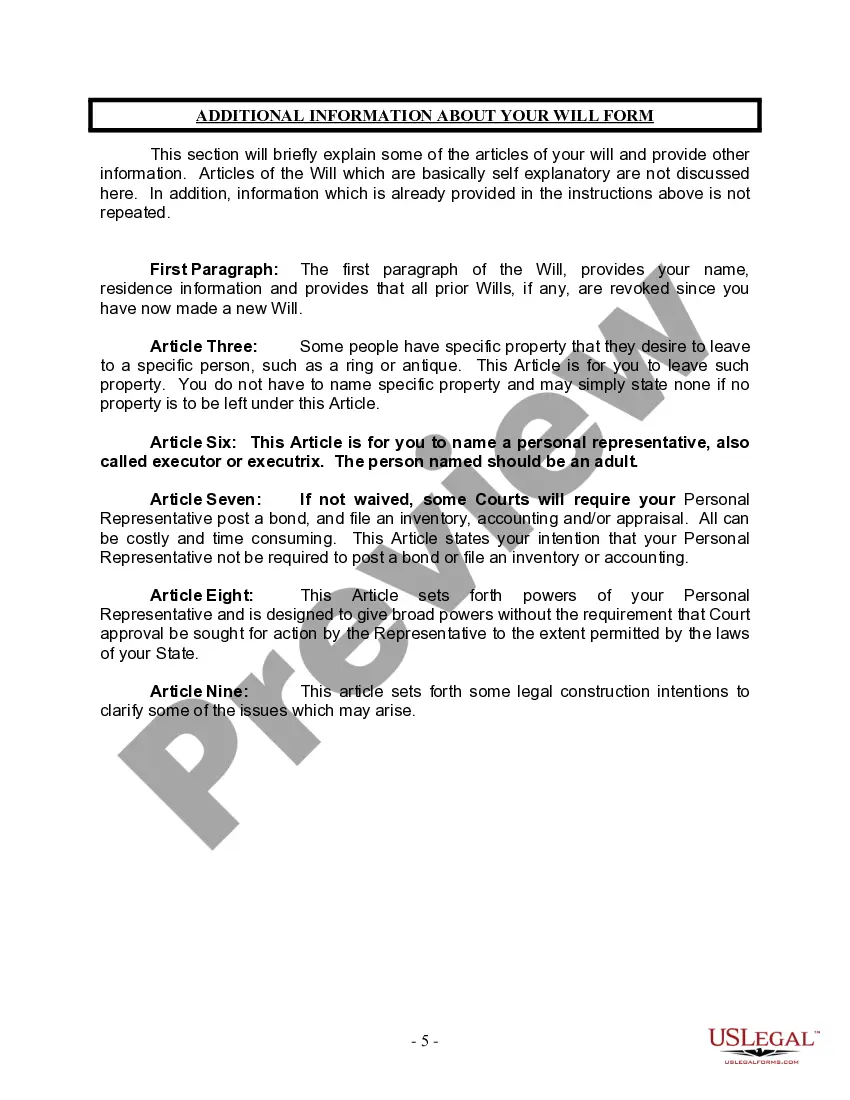
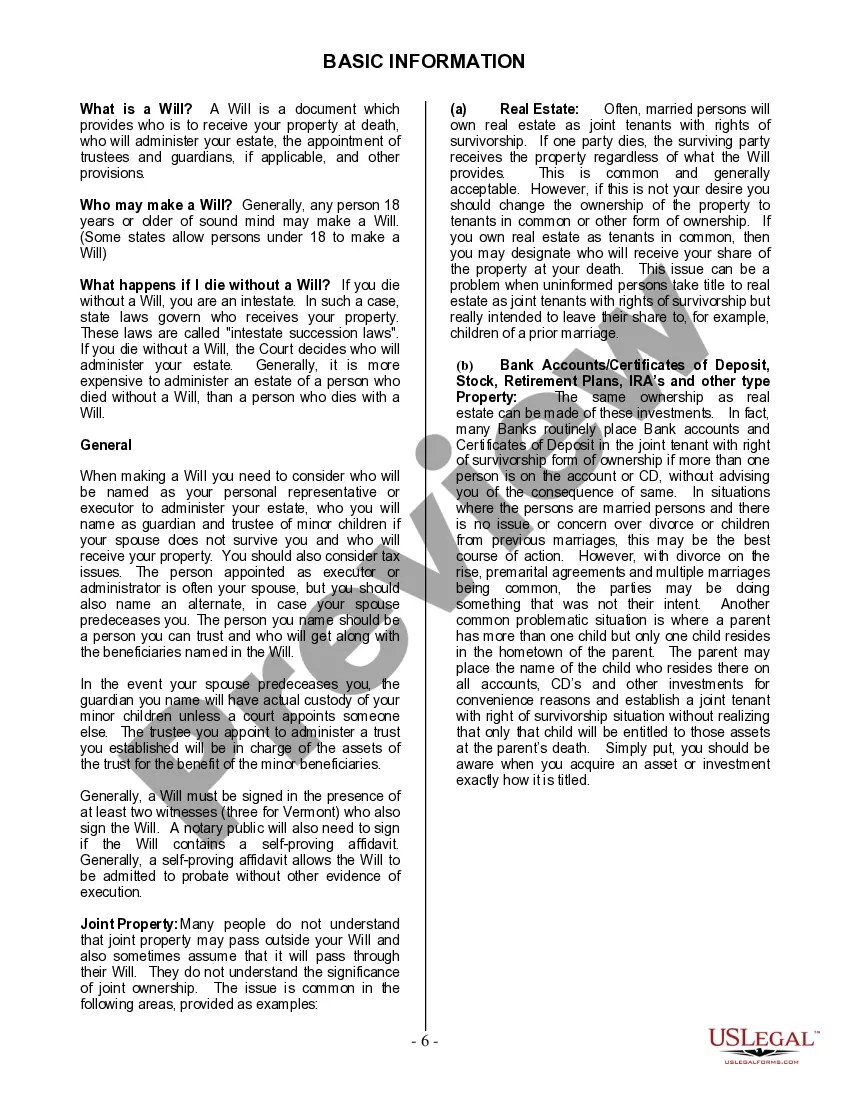
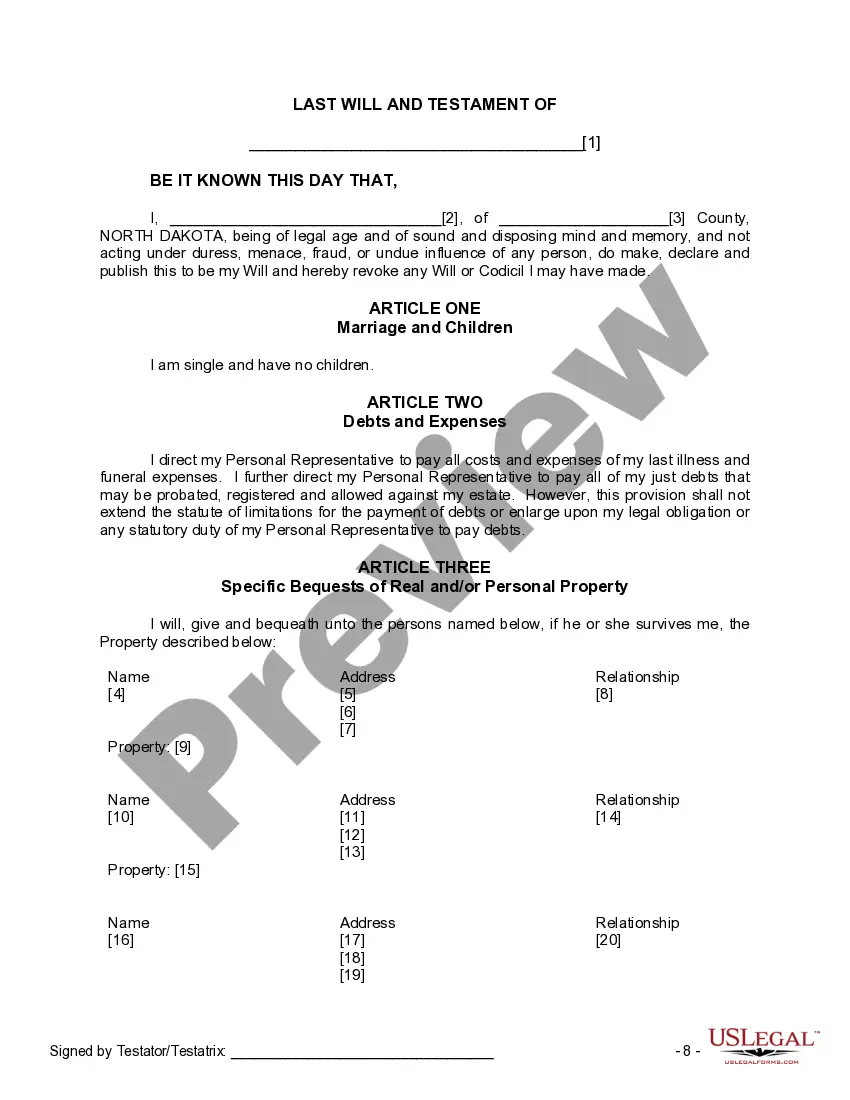
The Last Will and Testament for Single Person with No Children is a legal document that specifies how a person's assets should be distributed after their death. This form is tailored for individuals who are single and do not have children, making it distinct from other wills that include provisions for dependents. It allows users to appoint a personal representative, specify beneficiaries, and make other important decisions regarding their estate.
What’s included in this form
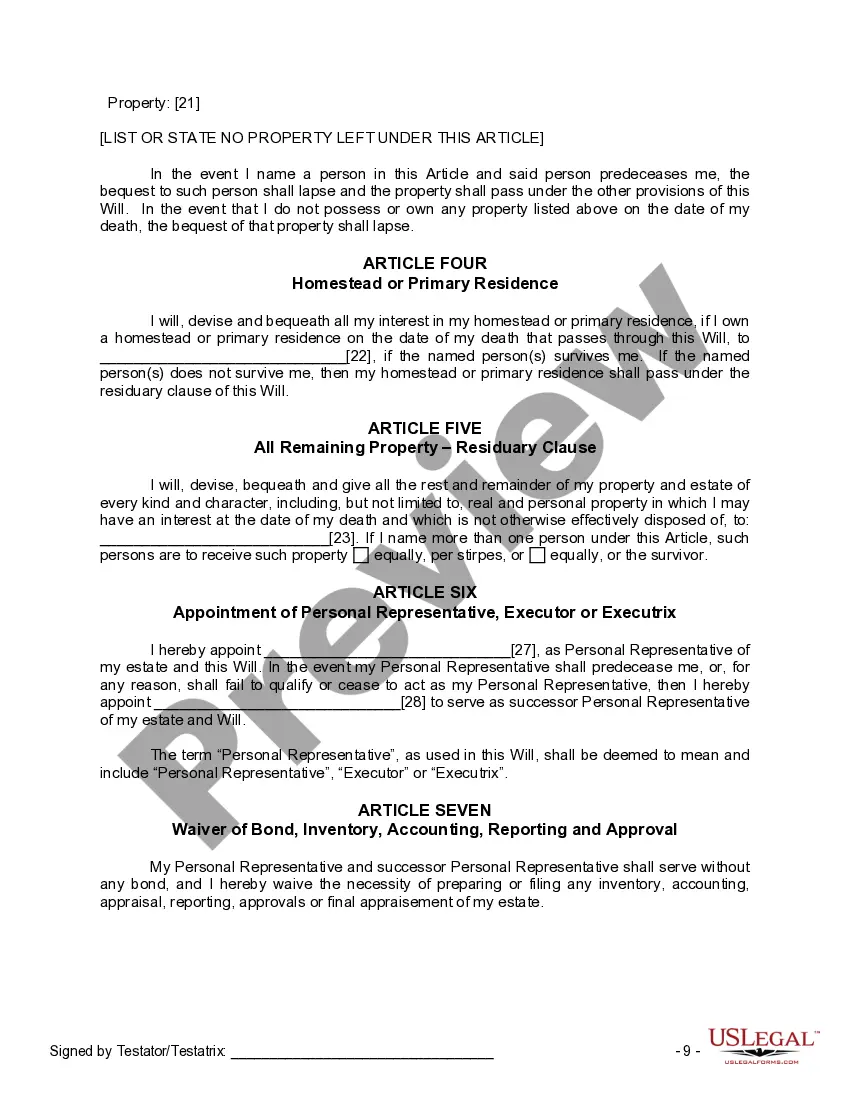
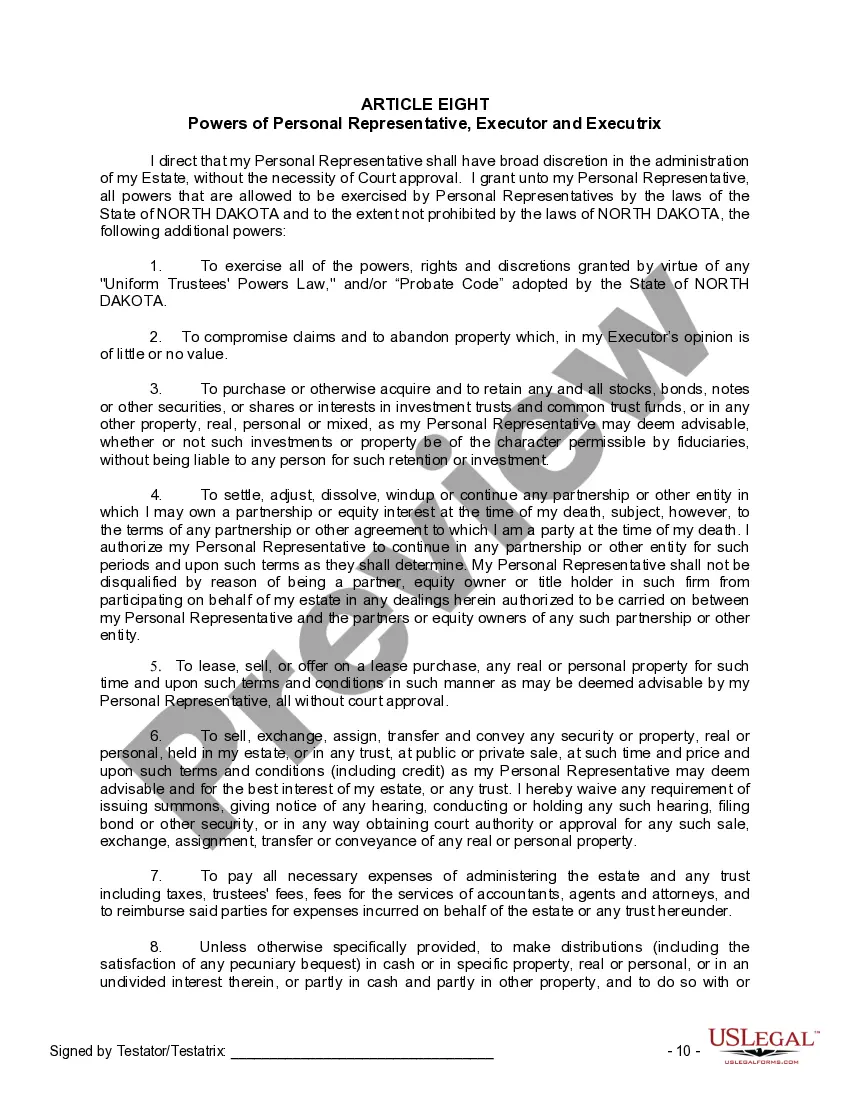
- Appointment of a personal representative to manage the estate.
- Specification of beneficiaries who will receive property and assets.
- Provisions for specific bequests of property to designated individuals.
- Instructions for handling debts and funeral expenses.
- A clause allowing for the disposition of the primary residence if applicable.
- Options for additional provisions regarding the testator's wishes.




When to use this document
This form is essential for individuals who are single and wish to ensure that their assets are distributed according to their wishes after their death. It is particularly useful for those who do not have children and want to designate specific relatives, friends, or organizations as beneficiaries. If you want clarity in your estate's management and distribution, this Last Will and Testament is an important tool.
Who should use this form
- Individuals who are 18 years or older and legally capable of making a will.
- Single persons without children who want to specify how their assets should be handled.
- Those who wish to appoint a personal representative to manage their estate.
- Anyone wanting to ensure that their specific wishes regarding asset distribution are legally documented.
How to prepare this document
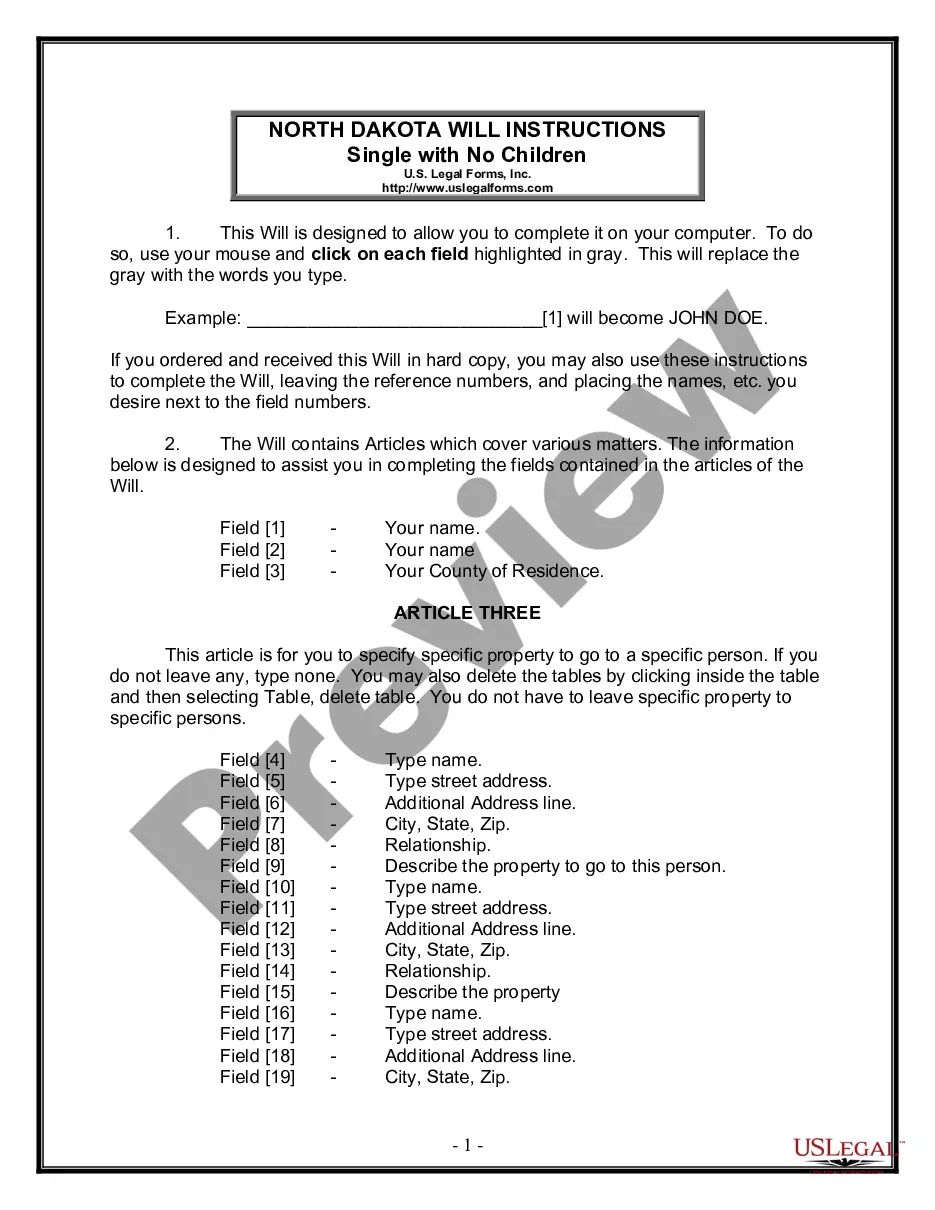
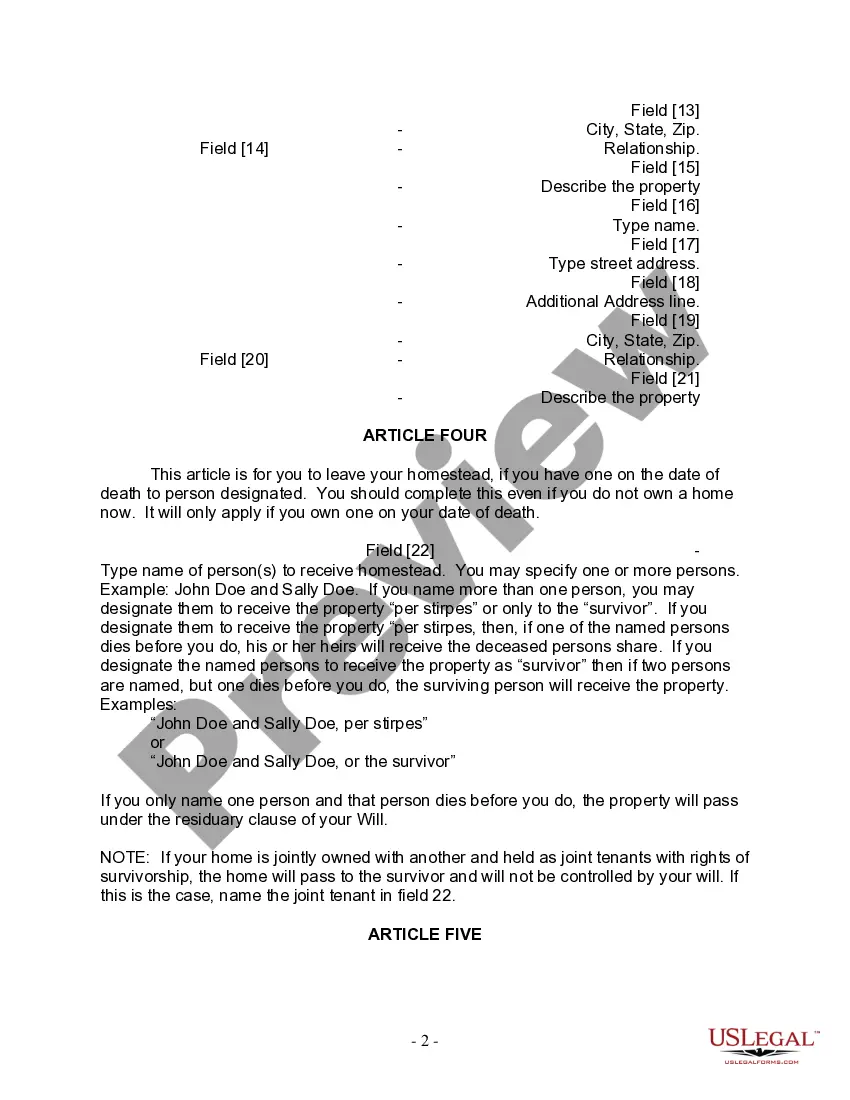
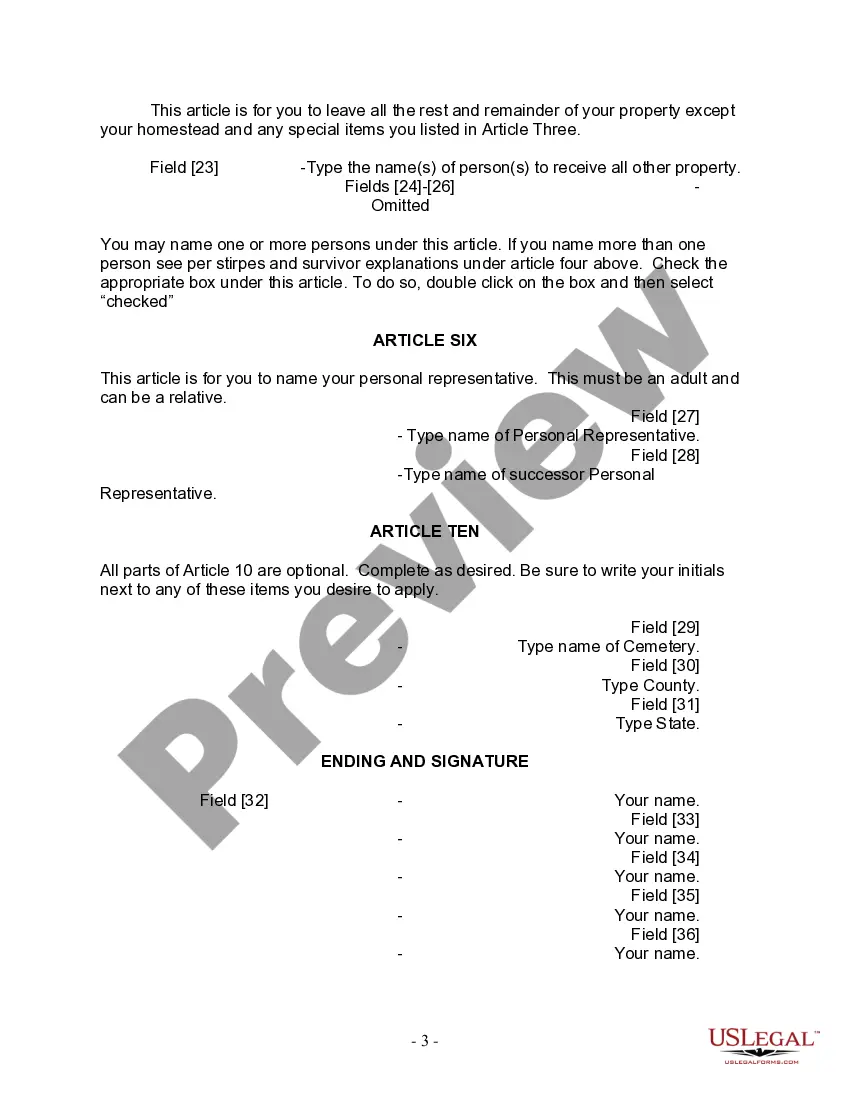
- Enter your full name and county of residence at the designated fields.
- List the names and addresses of beneficiaries who will receive specific property.
- Appoint a personal representative to manage your estate and provide their name and contact information.
- Specify how any debts or funeral expenses will be handled in your estate.
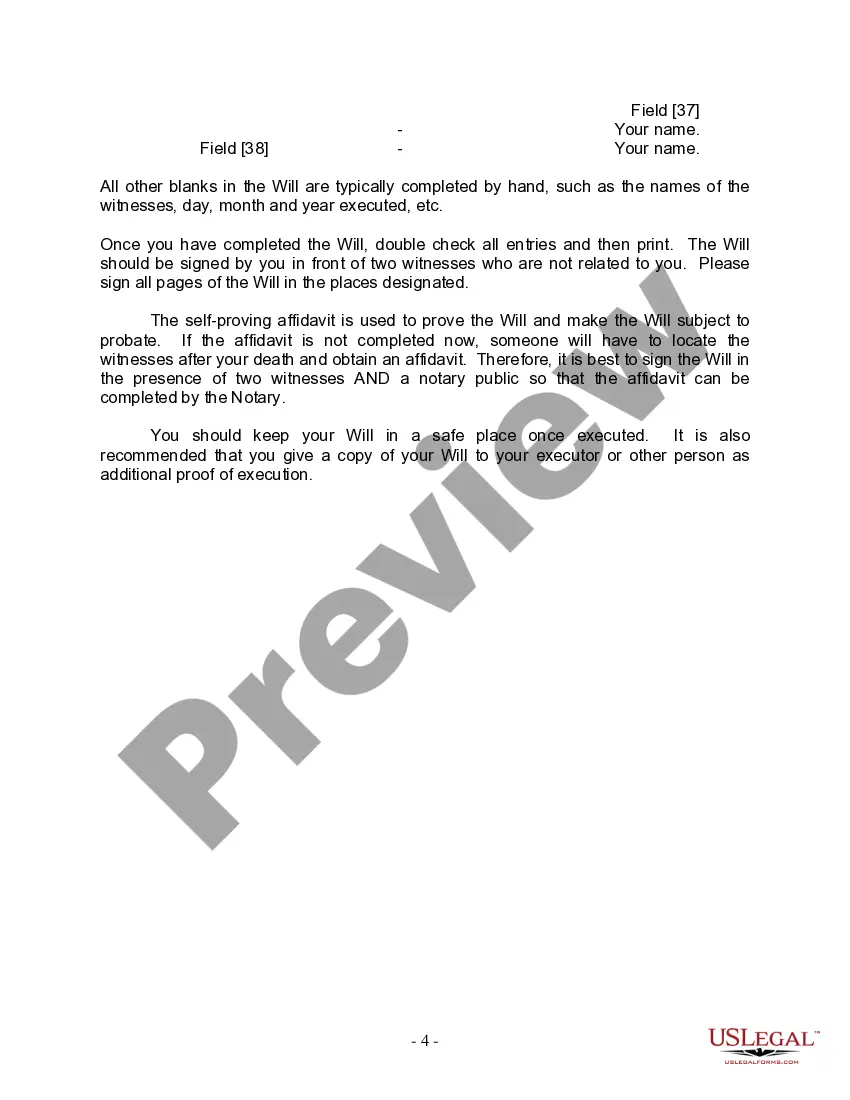
- Ensure the document is signed by you and at least two witnesses who are not beneficiaries.
Does this form need to be notarized?
This form must be notarized to be legally valid. US Legal Forms provides secure online notarization powered by Notarize, allowing you to complete the process through a verified video call.
Get your form ready online
Our built-in tools help you complete, sign, share, and store your documents in one place.
Make edits, fill in missing information, and update formatting in US Legal Forms—just like you would in MS Word.
Download a copy, print it, send it by email, or mail it via USPS—whatever works best for your next step.
Sign and collect signatures with our SignNow integration. Send to multiple recipients, set reminders, and more. Go Premium to unlock E-Sign.
If this form requires notarization, complete it online through a secure video call—no need to meet a notary in person or wait for an appointment.
We protect your documents and personal data by following strict security and privacy standards.

Make edits, fill in missing information, and update formatting in US Legal Forms—just like you would in MS Word.

Download a copy, print it, send it by email, or mail it via USPS—whatever works best for your next step.

Sign and collect signatures with our SignNow integration. Send to multiple recipients, set reminders, and more. Go Premium to unlock E-Sign.

If this form requires notarization, complete it online through a secure video call—no need to meet a notary in person or wait for an appointment.

We protect your documents and personal data by following strict security and privacy standards.
Common mistakes
- Not having the will signed and witnessed correctly, leading to potential invalidation.
- Failing to specify how certain property should be distributed.
- Omitting the appointment of a personal representative, which can lead to complications in administration.
- Not keeping the will in a safe and accessible place.
Benefits of using this form online
- Convenience of completing the form from your own device at your own pace.
- Editability allows for adjustments without rewriting an entire document.
- Access to legal advice from licensed attorneys through the platform for peace of mind.
- Quick and secure download options ensure that you have immediate access to your will.
What to keep in mind
- A Last Will and Testament is essential for outlining how your assets should be distributed after death.
- This specific form is tailored for single individuals with no children, helping to simplify the process of estate planning.
- Ensure the will is executed properly with required signatures and notarization to avoid complications later.
- Regularly review and update your will as circumstances change to ensure it reflects your current wishes.
Looking for another form?



Form popularity
FAQ
Create a will and name beneficiaries for your life insurance policy and retirement accounts. Use a living will to document your medical wishes in the event you can't make your own decisions. Consider a charitable remainder trust to generate income now and leave a legacy.
Do I Need a Will Attorney if I'm Single and Childless? Yes. Without a Will (also known as dying intestate), the California Probate Code will decide who will inherit your assets.Hiring a Will attorney who is experienced with probate is crucial to ensure your Will is properly drafted.
Yes, you can refuse your inheritance.
No, it is not necessary to register a Will, even where it relates to immovable property. The registration is optional, under Section 18 of the Registration Act, 1908. But, is advisable to register a WILL as a registered WILL cannot be tampered with, mutilated, destroyed or stolen.
Property in a living trust. One of the ways to avoid probate is to set up a living trust. Retirement plan proceeds, including money from a pension, IRA, or 401(k) Stocks and bonds held in beneficiary. Proceeds from a payable-on-death bank account.
When a person dies without leaving a valid will, their property (the estate) must be shared out according to certain rules. These are called the rules of intestacy.If someone makes a will but it is not legally valid, the rules of intestacy decide how the estate will be shared out, not the wishes expressed in the will.
A will is a legal document that dictates the distribution of assets when you die. If you die without a will, state law governs. You definitely need a will if you are married, have kids, or have a lot of assets.A will can help your family avoid conflict when you die, and it is not something you should draft yourself.
If there is no surviving spouse and no descendants, then the intestacy law usually dictates that the property is to be distributed to the closest living relative, based upon the Table of Consanguinity.When a person dies intestate and without heirs, then the property could escheat to the state.
Bank accounts. Brokerage or investment accounts. Retirement accounts and pension plans. A life insurance policy.