North Dakota Landlord Tenant Closing Statement to Reconcile Security Deposit
What this document covers
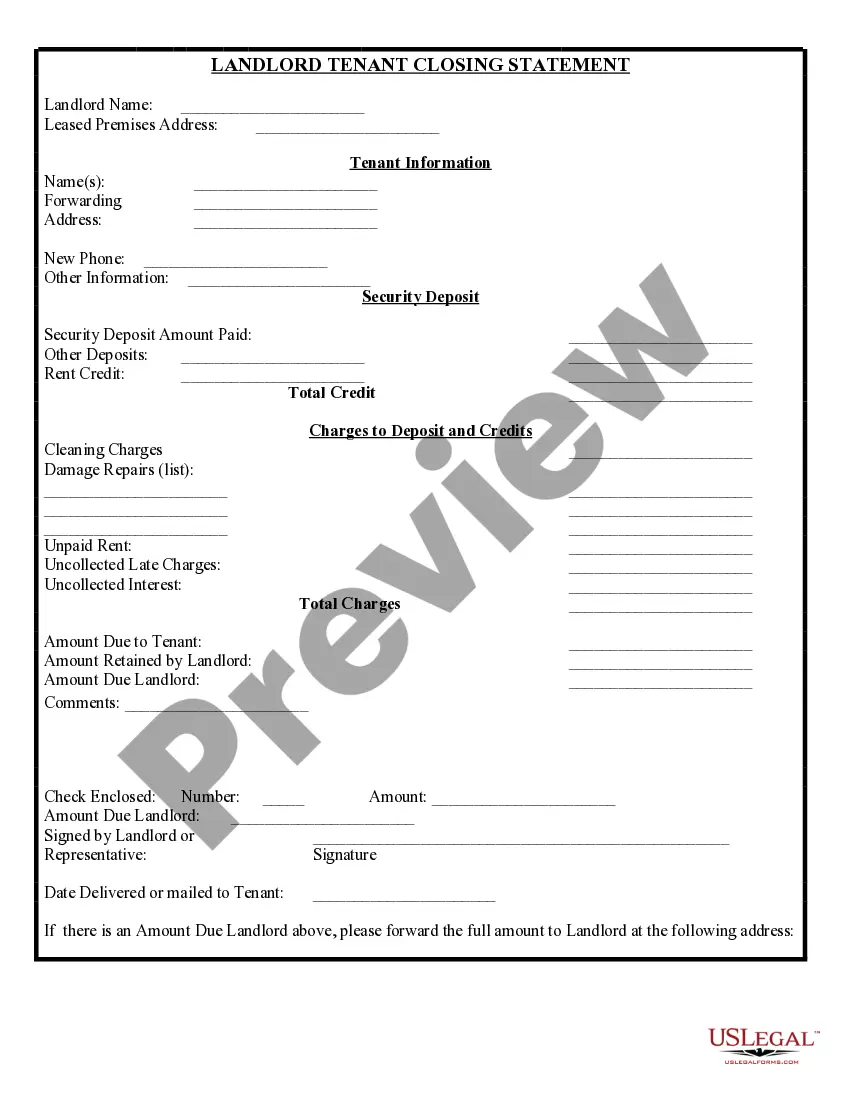
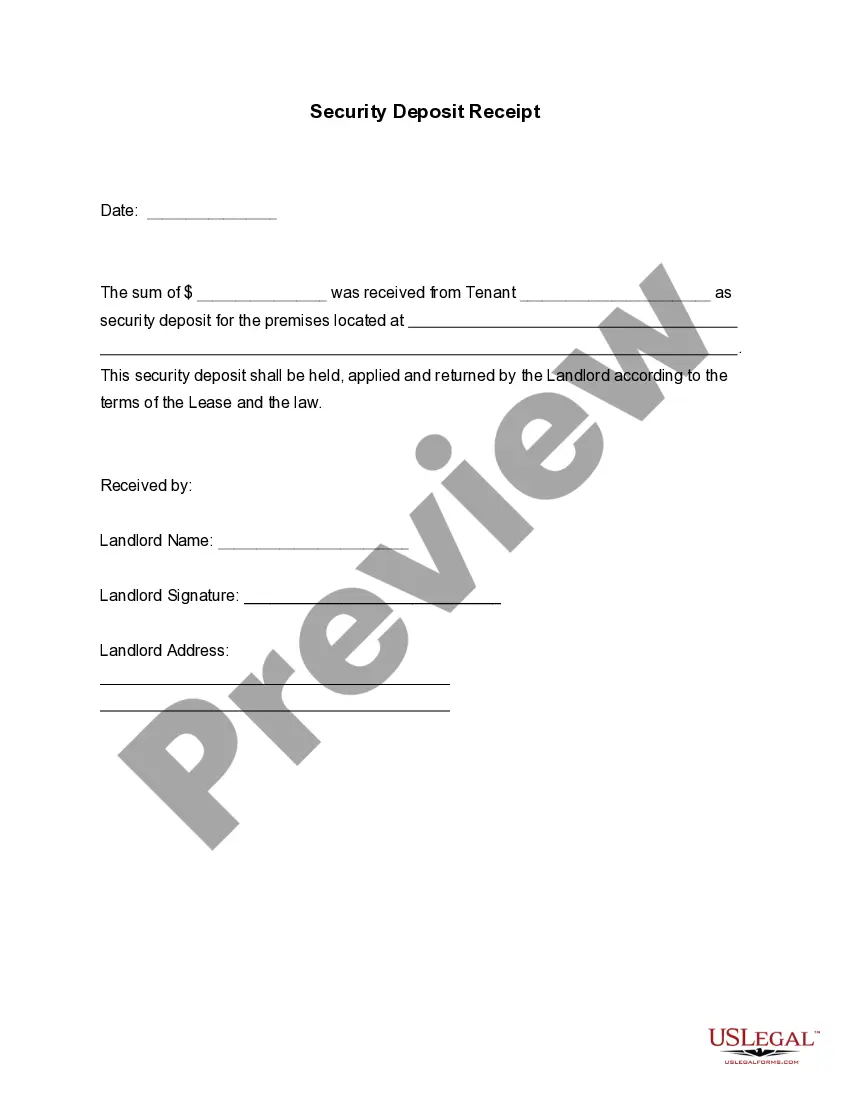
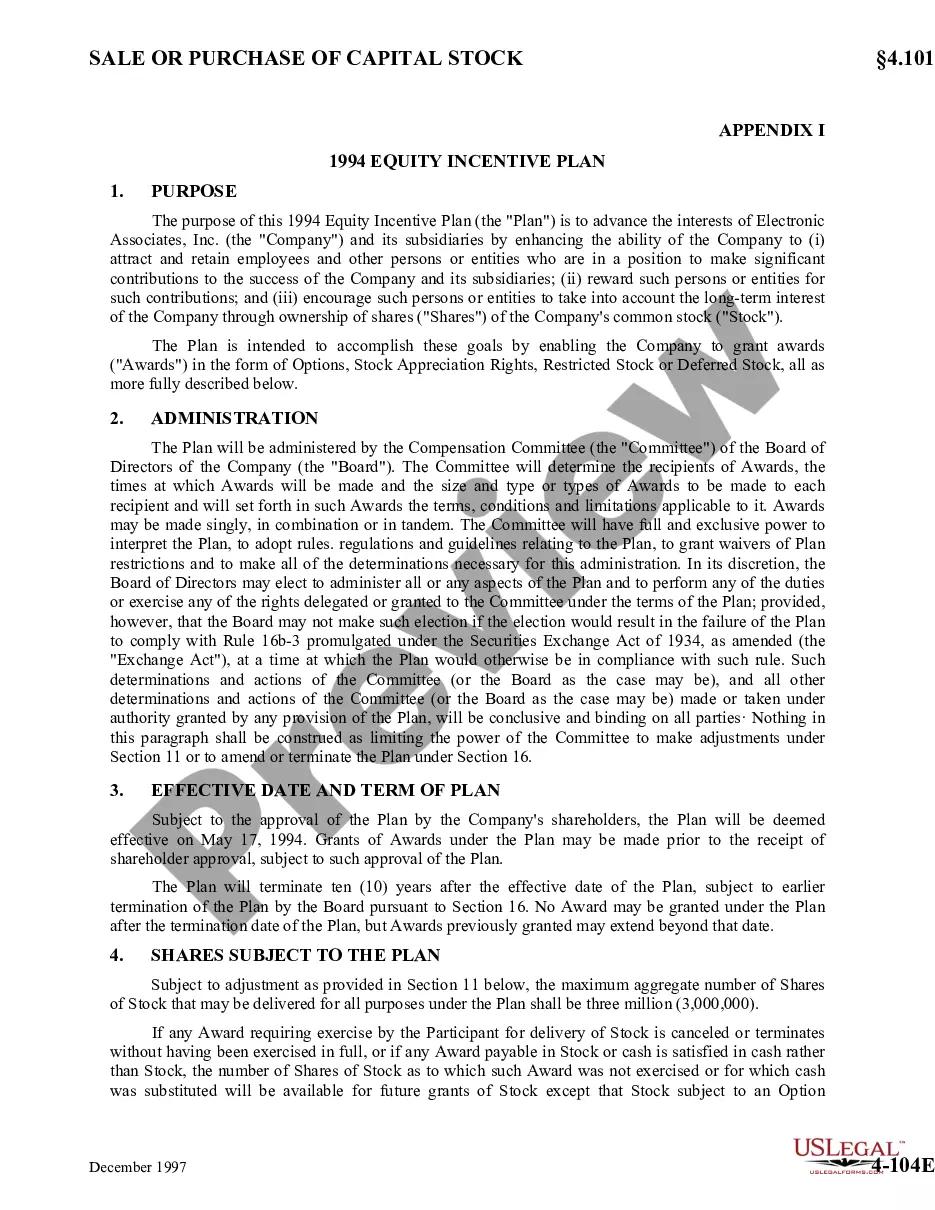
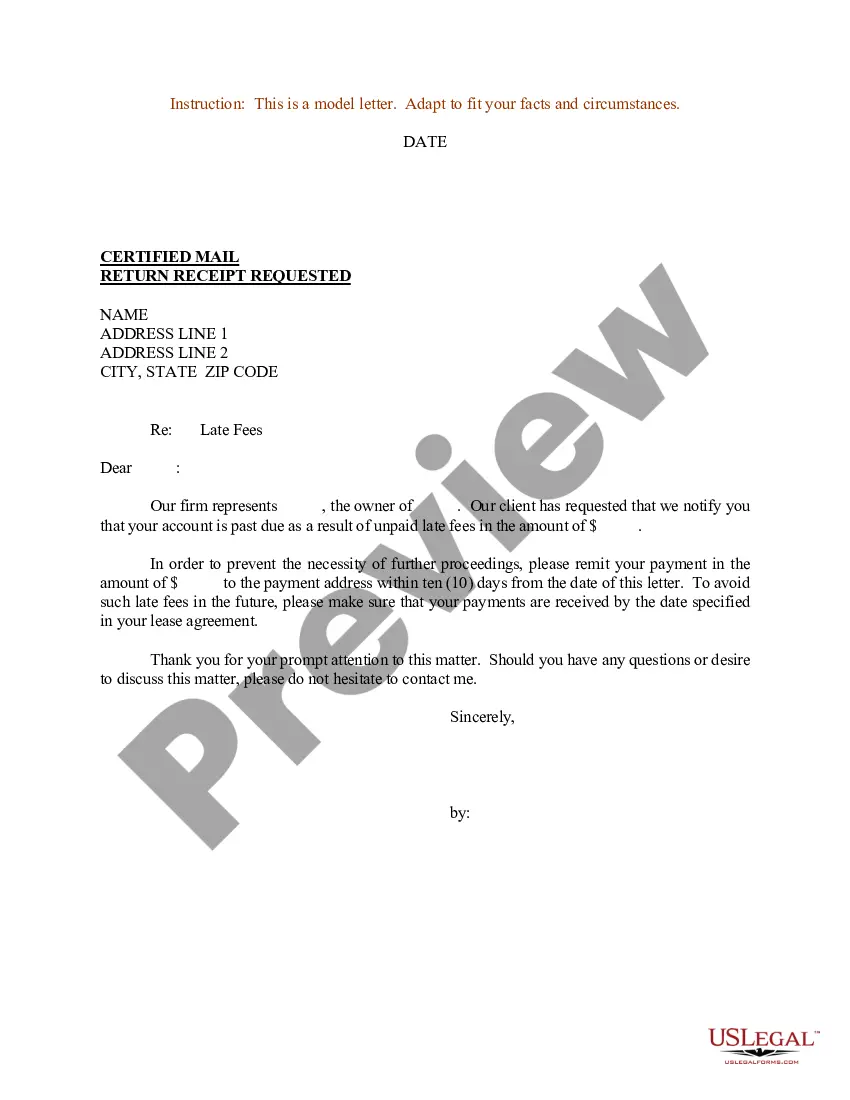
The Landlord Tenant Closing Statement to Reconcile Security Deposit is a legal document used by landlords to itemize and reconcile security deposits held from tenants. This form specifies the deposits and credits, subtracting applicable deductions for damages or unpaid rent. Unlike general rental agreements, this closing statement provides a clear account of financial transactions related to the security deposit, ensuring transparency for both parties.
Key parts of this document
- Details of deposits and any credits applied.
- Itemized deductions for repairs beyond normal wear and tear.
- Amounts due to the landlord after deductions.
- Clear statement of the security deposit's status.
When to use this form
This form should be used at the conclusion of a lease when a tenant vacates the property. It is essential when the landlord needs to provide a record of how the security deposit has been handled, especially if any deductions for repairs or unpaid rent are made. This promotes clarity and accountability, helping to avoid disputes over the return of the security deposit.
Who this form is for
- Landlords managing rental properties.
- Property managers overseeing tenant relations.
- Tenants seeking an accurate account of their security deposit.
How to prepare this document
- Identify the parties involved (landlord and tenant).
- Specify the property address and relevant dates.
- Detail the total amount of the security deposit received.
- List any deductions made for damages or unpaid rent.
- Calculate and state the final amount to be returned to the tenant.
- Both parties should sign the document to acknowledge the final amounts.
Notarization guidance
This form does not typically require notarization unless specified by local law. Ensure all parties understand the terms before signing to avoid future disputes.
Get your form ready online
Our built-in tools help you complete, sign, share, and store your documents in one place.
Make edits, fill in missing information, and update formatting in US Legal Forms—just like you would in MS Word.
Download a copy, print it, send it by email, or mail it via USPS—whatever works best for your next step.
Sign and collect signatures with our SignNow integration. Send to multiple recipients, set reminders, and more. Go Premium to unlock E-Sign.
If this form requires notarization, complete it online through a secure video call—no need to meet a notary in person or wait for an appointment.
We protect your documents and personal data by following strict security and privacy standards.

Make edits, fill in missing information, and update formatting in US Legal Forms—just like you would in MS Word.

Download a copy, print it, send it by email, or mail it via USPS—whatever works best for your next step.

Sign and collect signatures with our SignNow integration. Send to multiple recipients, set reminders, and more. Go Premium to unlock E-Sign.

If this form requires notarization, complete it online through a secure video call—no need to meet a notary in person or wait for an appointment.

We protect your documents and personal data by following strict security and privacy standards.
Typical mistakes to avoid
- Not accurately itemizing deductions, leading to disputes.
- Failing to include signatures from both parties.
- Omitting important details such as the property address.
Benefits of using this form online
- Convenient access to templates drafted by licensed attorneys.
- Editable forms that can be customized to meet specific needs.
- Reliable and secure document handling.
Legal use & context
- Enforceable documentation of financial terms between landlord and tenant.
- Can be used as evidence in disputes around security deposits.
- Helps clarify tenant obligations regarding property condition upon vacating.
What to keep in mind
- The form outlines how security deposits are handled at the end of a tenancy.
- It is crucial for both parties to understand their rights and obligations regarding the deposit.
- Being thorough and accurate in completing this form can help prevent conflicts and misunderstandings.
Looking for another form?
Form popularity
FAQ
A landlord cannot evict a tenant without an adequately obtained eviction notice and sufficient time. A landlord cannot retaliate against a tenant for a complaint. A landlord cannot forego completing necessary repairs or force a tenant to do their own repairs.A landlord cannot remove a tenant's personal belongings.
Notice to terminate a week-to-week lease. One-week written notice (§ 47-16-15(1)) Notice to terminate a month-to-month lease. Notice to terminate a yearly lease with no end date.
The Tenant Doesn't Make Enough Income. The Tenant Smokes. The Tenant Has a Pet. The Tenant's Income Isn't Verified. The Tenant Has Been Convicted of a Crime. The Tenant Does Not Have Rental History. The Tenant Has a History of Damaging Property and Not Paying Rent. The Tenant Provides False Information.
A landlord cannot evict a tenant without an adequately obtained eviction notice and sufficient time. A landlord cannot retaliate against a tenant for a complaint. A landlord cannot forego completing necessary repairs or force a tenant to do their own repairs.A landlord cannot remove a tenant's personal belongings.
As a tenant, you have the right to live in a safe, secure and quiet environment that is managed in accordance with the law. You also have a responsibility to take good care of the property, pay the rent on time, and adhere to the terms of your tenancy agreement.
In some circumstances, a tenant can break a fixed-term agreement early without penalty. A tenant can give 14 days' written notice to end an agreement early without penalty if: they have accepted an offer of social housing (e.g. from DCJ Housing)
This includes keeping the property clean, safe and habitable. The landlord must adhere to all building codes, perform necessary repairs, maintain common areas, keep all vital services, such as plumbing, electricity, and heat, in good working order, must provide proper trash receptacles and must supply running water.
In general, a Landlord, as well as a Tenant, both have the right to give notice to each other, to cancel any lease agreement between them. HOWEVER should the above additional rights of the Tenant be exercised, the Tenant may be obligated to pay a reasonable cancellation fee Up to 3 months rental. 2.
Right to habitable premises As a tenant you are entitled to live in habitable premises, and so if for any reason during the course of your tenancy the premises becomes inhabitable e.g. due to flooding, or damaging to some essential utilities, you can request that the landlord put the premises in a habitable state, if