North Dakota Agreement for Payment of Unpaid Rent
Understanding this form
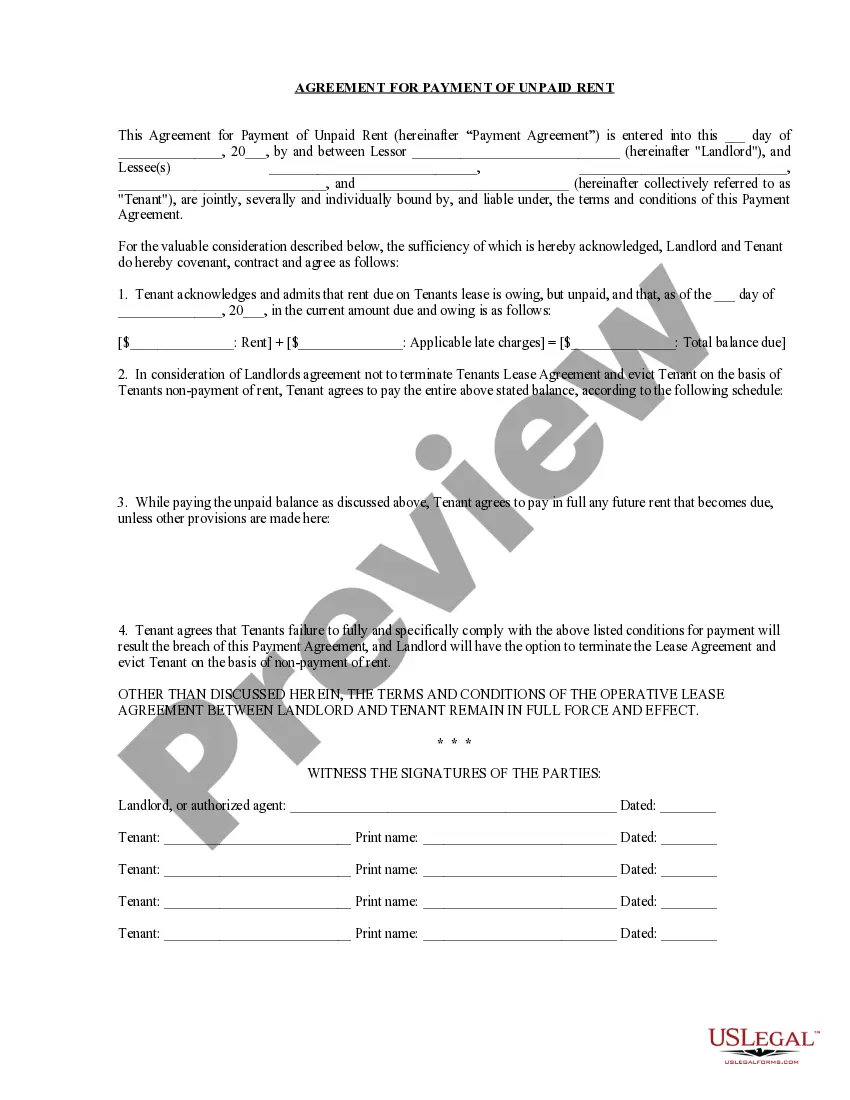
The Agreement for Payment of Unpaid Rent is a legal document between a landlord and tenant that outlines a repayment plan for overdue rent. By using this agreement, landlords can allow tenants to pay back their unpaid rent within a structured timeline, while also agreeing not to evict the tenant during this period. This form is tailored to meet state law specifications, ensuring its legal validity and enforceability.
Key components of this form
- Parties involved: Identification of landlord (lessor) and tenant (lessee).
- Acknowledgment of unpaid rent: A detailed statement of the amount due and any applicable late charges.
- Payment terms: Specific deadlines and structured payments for the owed rent.
- Retention of lease terms: Clarification that existing lease agreement terms remain in effect.
- Signatures: Space for both parties to sign, indicating agreement to the terms.

When to use this document
This Agreement for Payment of Unpaid Rent is used in situations where a tenant is unable to pay rent on time but wishes to avoid eviction. It is particularly helpful when tenants can make partial payments over time, allowing them the opportunity to retain their rental unit while getting back on track financially. Landlords can use this agreement to formalize payment arrangements and maintain clear communication regarding overdue amounts.
Who needs this form
- Landlords who seek to provide tenants with a structured repayment plan for unpaid rent.
- Tenants who need additional time to pay overdue rent and want to avoid eviction.
- Property managers involved in handling rental agreements and tenant relations.
Completing this form step by step
- Identify the parties: Fill in the names of the landlord and tenants involved.
- Specify the rent details: Enter the current amount of unpaid rent and any late charges.
- Outline payment terms: Detail the repayment plan, including deadlines for payments.
- Review the lease terms: Confirm that existing lease terms remain unchanged.
- Sign and date the agreement: Ensure all parties sign and date the document to make it binding.
Notarization requirements for this form
Notarization is not commonly needed for this form. However, certain documents or local rules may make it necessary. Our notarization service, powered by Notarize, allows you to finalize it securely online anytime, day or night.
Get your form ready online
Our built-in tools help you complete, sign, share, and store your documents in one place.
Make edits, fill in missing information, and update formatting in US Legal Forms—just like you would in MS Word.
Download a copy, print it, send it by email, or mail it via USPS—whatever works best for your next step.
Sign and collect signatures with our SignNow integration. Send to multiple recipients, set reminders, and more. Go Premium to unlock E-Sign.
If this form requires notarization, complete it online through a secure video call—no need to meet a notary in person or wait for an appointment.
We protect your documents and personal data by following strict security and privacy standards.

Make edits, fill in missing information, and update formatting in US Legal Forms—just like you would in MS Word.

Download a copy, print it, send it by email, or mail it via USPS—whatever works best for your next step.

Sign and collect signatures with our SignNow integration. Send to multiple recipients, set reminders, and more. Go Premium to unlock E-Sign.

If this form requires notarization, complete it online through a secure video call—no need to meet a notary in person or wait for an appointment.

We protect your documents and personal data by following strict security and privacy standards.
Mistakes to watch out for
- Not providing all tenant names, leading to ambiguities in liability.
- Neglecting to specify the exact amount of unpaid rent and late fees.
- Failing to sign the agreement, which can invalidate it.
Why use this form online
- Convenient download and access from anywhere at any time.
- Customizable fields for specific tenant and landlord information.
- Legal forms drafted by licensed attorneys to ensure compliance with state laws.
Legal use & context
- This agreement protects both landlords and tenants by clearly outlining payment expectations.
- It helps prevent eviction and maintains a collaborative landlord-tenant relationship.
- Properly completed, it provides a legal framework for recovering unpaid rent.
Quick recap
- The Agreement for Payment of Unpaid Rent helps tenants manage overdue payments while avoiding eviction.
- Landlords can formalize repayment plans for clear expectations and legal backing.
- Completion requires accuracy in defining parties, amounts, and terms to ensure enforceability.
Looking for another form?
Form popularity
FAQ
Kindly accept my sincere apologies for paying the rent late by Date/Period. I understand that the rent was supposed to be paid on Date. Due to unforeseen circumstances, I was unable to pay the rent on time. Because we share a good relationship from the beginning, I hope you allow me the extension this time.
Your landlord can't take unreasonable amounts of money from your deposit. They should tell you why they're taking money off - if they don't, ask them. It's best to get your landlord's reasons in writing if you can - that way you can refer back to them if you need to take action to get your deposit back.
5 Times a Landlord Does Not Have to Return a Tenant's Security Deposit. Breaking or Terminating a Lease Early. Nonpayment of Rent. Damage to the Property. Cleaning Costs. Unpaid Utilities.
Your landlord is entitled to deduct any unpaid rent from your deposit. If you owe more than the value of your deposit your landlord may take court action to get the extra money back. You may decide to withhold the last month's rent in case the landlord refuses to return the deposit. This is not advisable.
Include the date at the top of the letter. Acknowledge that you you are behind in paying your rent and apologize for your actions. Explain the situation that has led to your current financial hardship. Stick to the facts, and resist the urge to write emotional appeals or project a negative attitude.
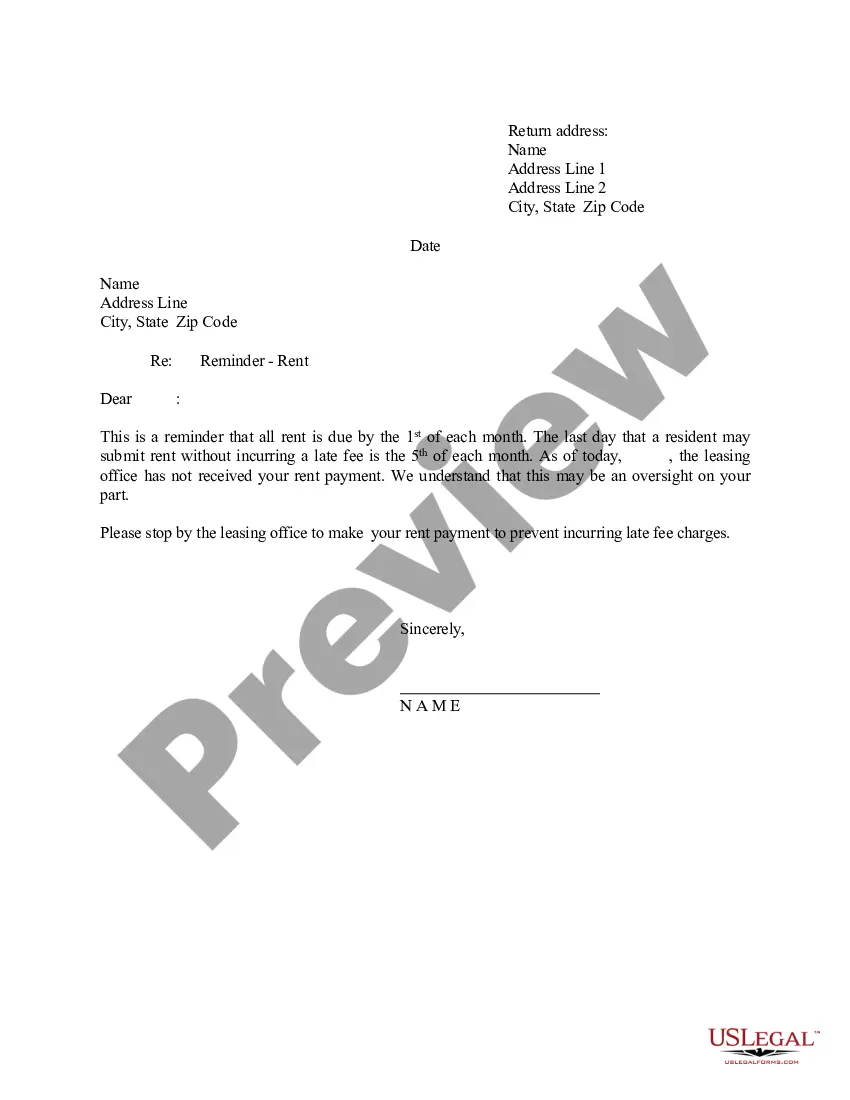
Set Up Rental Payment Reminders The most polite way to ask for payment is to ask before anyone is late! When you send a reminder a few days before the rent is due, you can be very polite. Sending a reminder about an upcoming payment rather than a request for a late payment is always going to be a more welcome message.
Know the Law and Document the Landlord-Tenant Relationship. Before Filing a Lawsuit, Negotiate with the Tenant. Give the Tenant a Formal Eviction Notice. File an Eviction Complaint with the Court. Get Ready for the Eviction Hearing. Evict the Tenant.
When your tenant still can't pay... Let them leave, if they simply can't pay it may be your best option. Simply let them break their contract (if you're still within the fixed term period) and leave your property. Then you can get a new tenant in and not waste any more time.
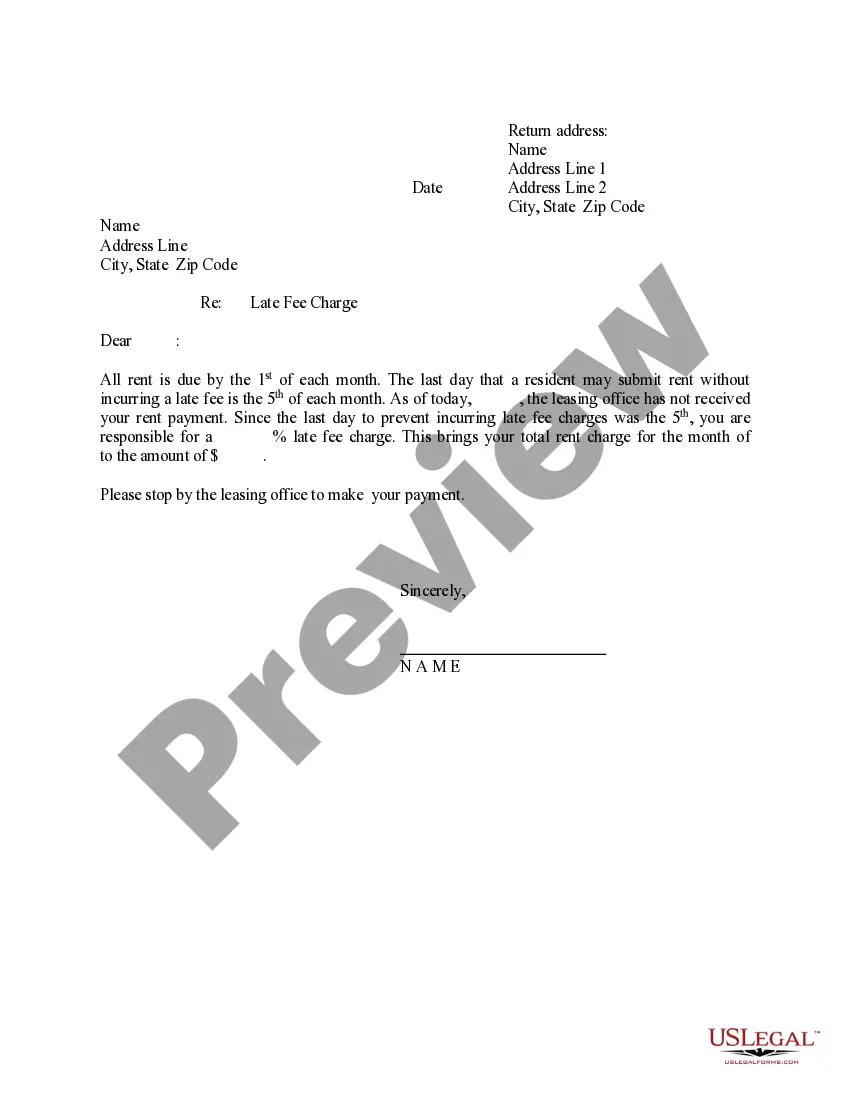
Step 1: Check Your Lease Documents and Payment Records. Step 2: Send a Late Rent Notice. Step 3: Make a Phone Call. Step 4: Send a Pay or Quit Notice. Step 5: Take Legal Action.