North Dakota Letter from Landlord to Tenant as Notice to remove Wild Animals in Premises
What this document covers
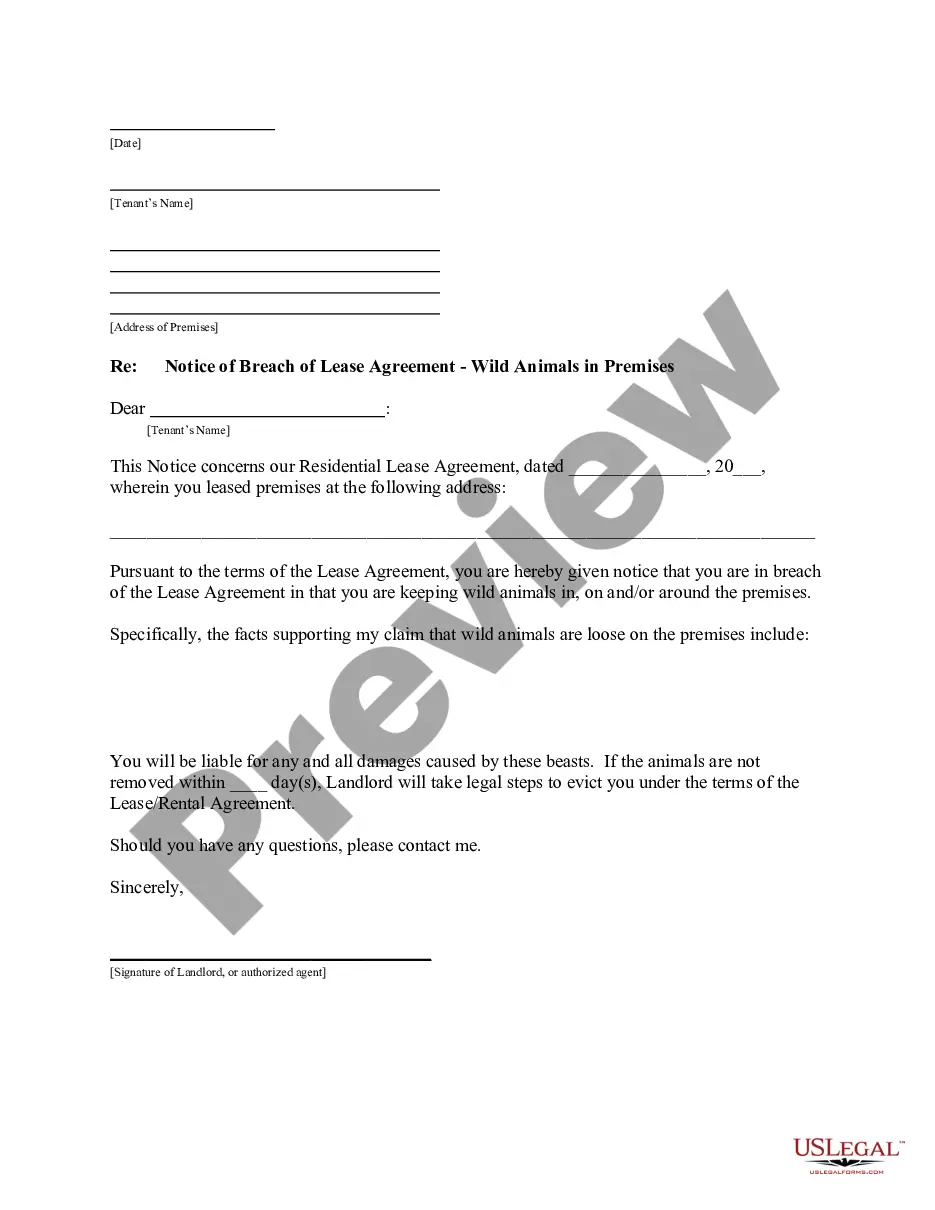
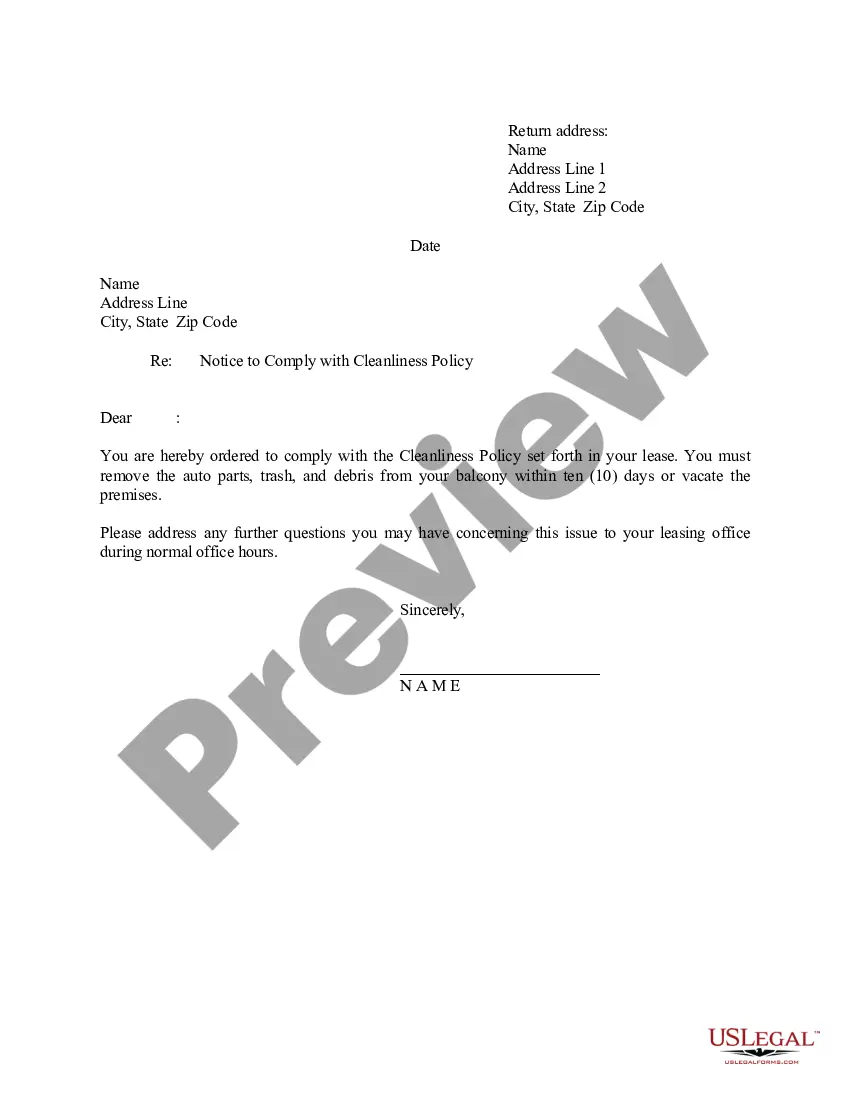
This form serves as a formal notice from a landlord to a tenant regarding the presence of wild animals on the rental property, indicating a violation of the lease agreement. It underscores the breach by specifying which terms were violated, distinguishing it from similar landlord-tenant communication forms that may not address specific breaches. This Letter from Landlord to Tenant as Notice to Remove Wild Animals in Premises is crucial for maintaining the integrity and safety of the rental environment.
What’s included in this form
- Identification of the tenant and landlord.
- Statement of breach related to keeping wild animals.
- Specific reference to the terms of the lease agreement that were violated.
- Signature of the landlord or authorized agent.

When to use this document
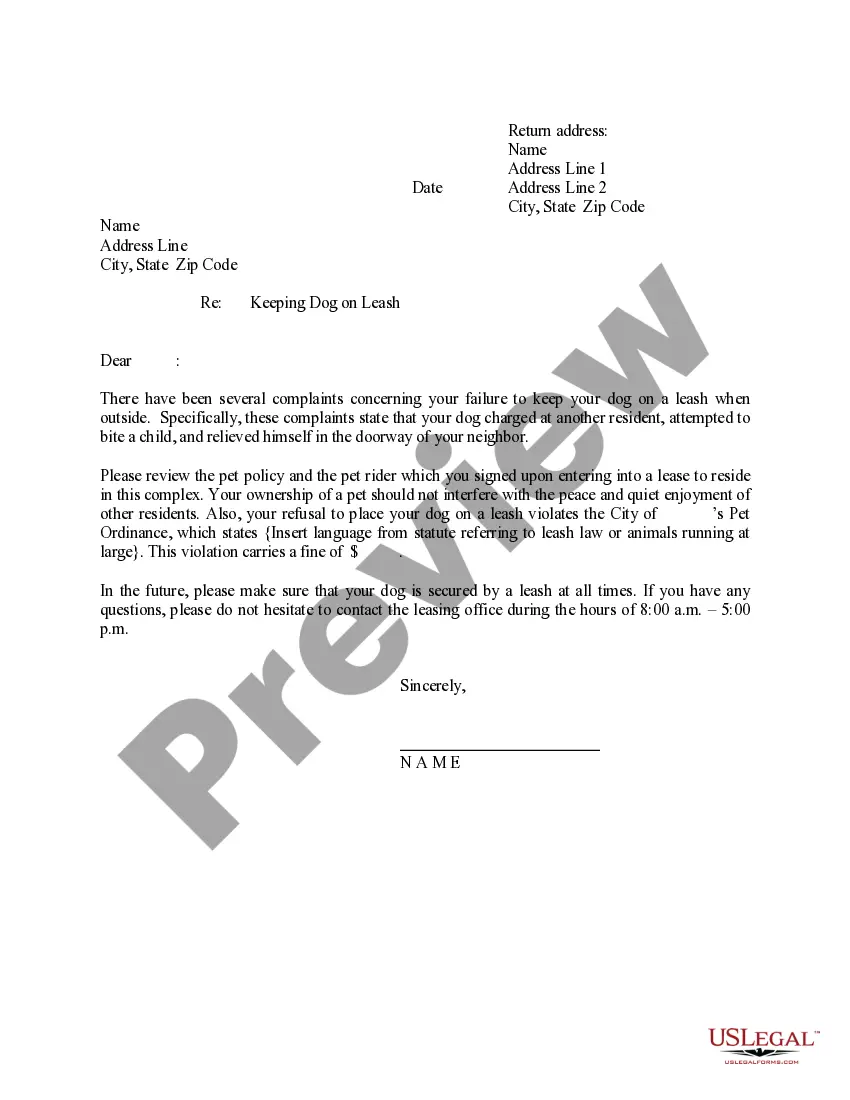
This form is needed when a landlord discovers that a tenant is keeping wild animals on the property, which can pose health risks and safety concerns. It allows the landlord to formally address the issue, outlining the responsibilities of the tenant under the lease agreement and providing the tenant with an opportunity to rectify the situation.
Who should use this form
This form is intended for:
- Landlords who have tenants violating lease terms by harboring wild animals.
- Property managers acting on behalf of landlords to enforce rental agreements.
- Tenants who need to understand their rights and obligations related to this matter.
How to prepare this document
- Identify the tenant and landlord by filling in their names and contact information.
- Clearly state the breach concerning the keeping of wild animals.
- Cite the specific terms of the lease agreement that are being violated.
- Sign the notice, either as the landlord or an authorized agent.
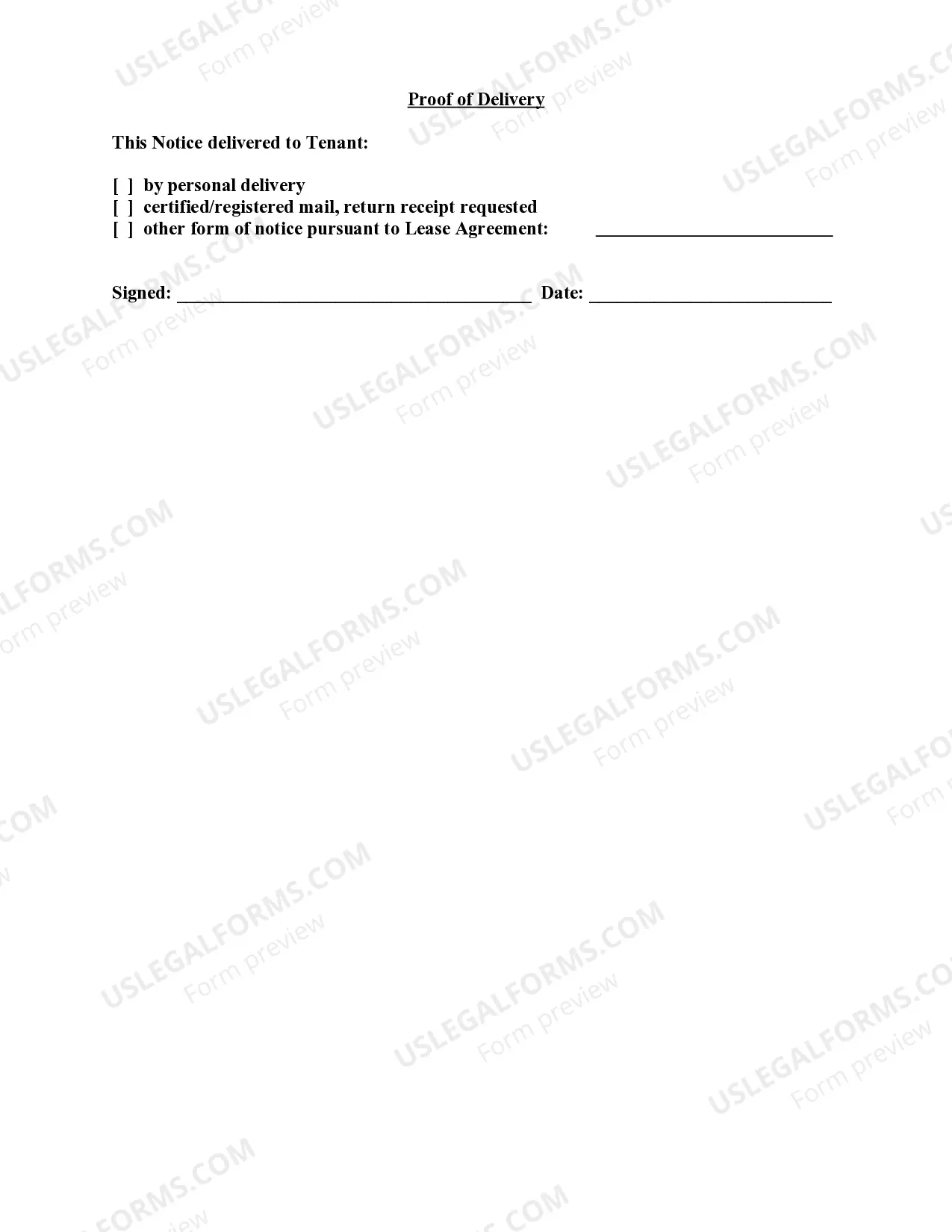
- Deliver the notice to the tenant using the method most suitable (personal delivery or certified mail).
Notarization guidance
This form does not typically require notarization unless specified by local law. It is essential to check local regulations to ensure compliance.
Get your form ready online
Our built-in tools help you complete, sign, share, and store your documents in one place.
Make edits, fill in missing information, and update formatting in US Legal Forms—just like you would in MS Word.
Download a copy, print it, send it by email, or mail it via USPS—whatever works best for your next step.
Sign and collect signatures with our SignNow integration. Send to multiple recipients, set reminders, and more. Go Premium to unlock E-Sign.
If this form requires notarization, complete it online through a secure video call—no need to meet a notary in person or wait for an appointment.
We protect your documents and personal data by following strict security and privacy standards.

Make edits, fill in missing information, and update formatting in US Legal Forms—just like you would in MS Word.

Download a copy, print it, send it by email, or mail it via USPS—whatever works best for your next step.

Sign and collect signatures with our SignNow integration. Send to multiple recipients, set reminders, and more. Go Premium to unlock E-Sign.

If this form requires notarization, complete it online through a secure video call—no need to meet a notary in person or wait for an appointment.

We protect your documents and personal data by following strict security and privacy standards.
Typical mistakes to avoid
- Failing to specify the lease terms violated, which can weaken the notice's effectiveness.
- Not delivering the notice properly, which may affect legal standing.
- Omitting a signature, which can render the notice invalid.
Benefits of using this form online
- Instant access to a legally sound document created by licensed attorneys.
- Convenient download and print options to quickly address urgent situations.
- Editable fields to accommodate specific circumstances and details.
- This notice serves as a formal record of the landlord's communication regarding lease violations.
- Proper documentation can be beneficial in legal proceedings or disputes.
Quick recap
- This form is essential for landlords addressing wild animal breaches in a lease.
- Clear communication is crucial for maintaining tenant relationships and legal compliance.
- Ensure the proper identification of the lease terms violated and delivery methods used.
Looking for another form?

Form popularity
FAQ
If you live in furnished rented accommodation and the problem with pests or vermin was there when you moved in, it's likely that your landlord is responsible for dealing with it. This is because your landlord has a duty to ensure that your home is fit to be lived in on the day they let it to you.
Introductory Letter with Essential Information (such as Emergency Numbers and House Rules) PAT Report (Portable Appliance Test) Current Gas Check. Guide to Utilities. How to Rent Leaflet (Government Document) E.P.C. Copy of Tenancy Agreement.
When is a Landlord Responsible for Pest Control?If you notice any signs of disrepair that could provide access for pests, or is likely to have been caused by pests (this is particularly important in the case of things like chewed wiring), your landlord is obligated to carry out the works needed in good time.
According to NSW Fair Trading, the tenant is usually responsible for the eradication of pests if the infestation occurs after the tenant has moved in and if the infestation was caused by the tenant's activities or lack of cleanliness.That this breach caused the pest problem.
If the property is found to not be in reasonable repair through no negligence or intentional action by the tenant, then it's the landlord's responsibility to fix the problem. The nature of the repairs will determine whether or not they must be fixed urgently, which is generally defined as within three days.
Step 1: Mention the Reason for Giving a Notice. Step 2: Use Formal Language. Step 3: Mention the Date for Vacating. Step 4: Address the Formalities to Be Taken Care Of. Step 5: Proofread the Letter.
In Queensland, the Residential Tenancies Authority states: If the property was free of pests at the start of the tenancy the tenant must ensure the property meets the same standard at the end of the tenancy.
A landlord cannot change the pet policy (or any other part of a lease) mid-lease term without the consent of the tenant. A landlord may only change any material term of the tenancy at the conclusion of a lease, or in offering a new tenancy with the termination of a tenancy at will.
Dear (Name of landlord or manager), This letter constitutes my written (number of days' notice that you need to give based on your lease agreement)-day notice that I will be moving out of my apartment on (date), the end of my current lease. I am leaving because (new job, rent increase, etc.)