North Carolina Last Will and Testament for Divorced and Remarried Person with Mine, Yours and Ours Children
Overview of this form
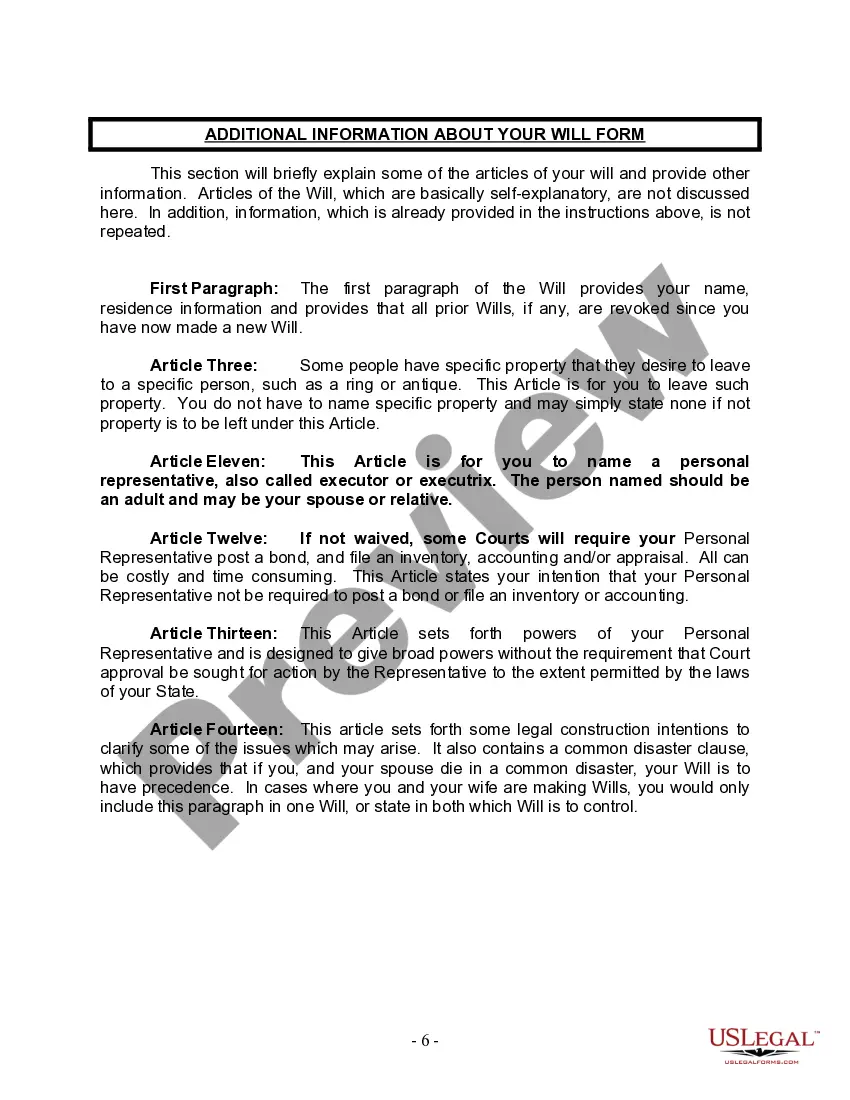
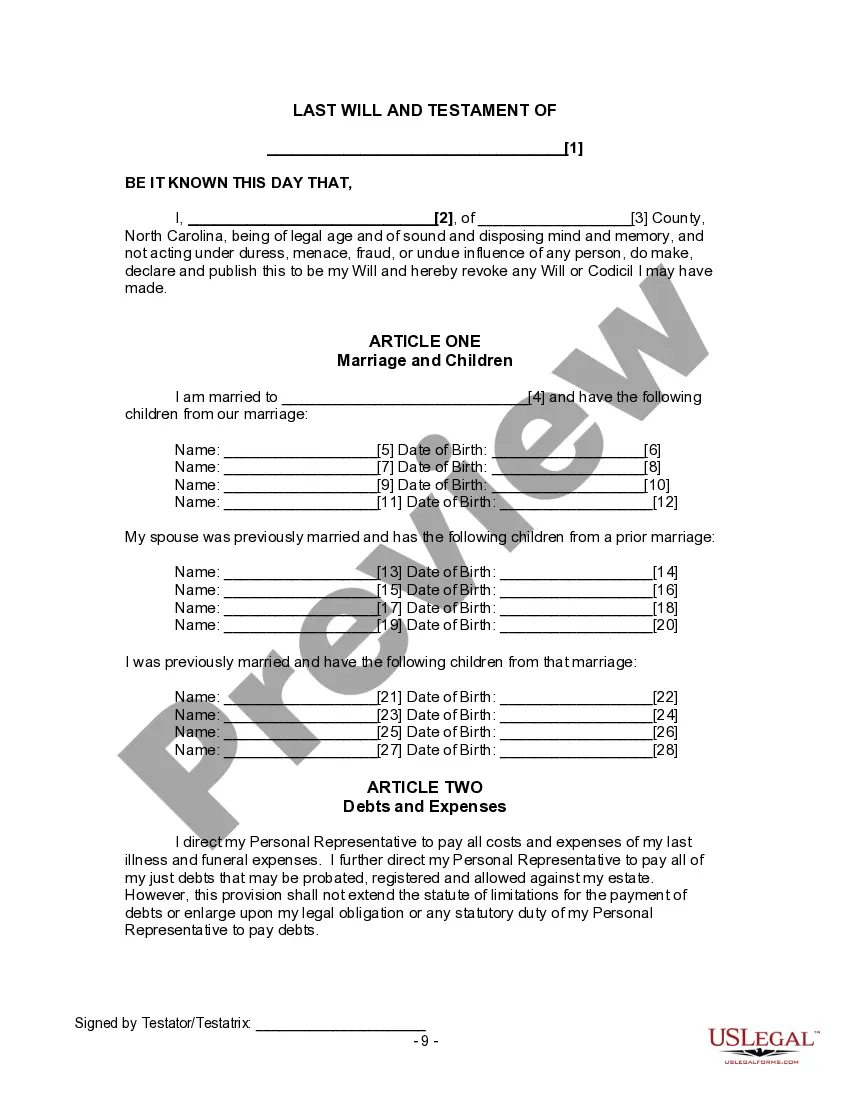
This Last Will and Testament is specifically designed for a divorced and remarried individual with children from both the current and previous marriages. It outlines how your assets will be distributed upon your death and includes instructions for naming a personal representative, guardians for minor children, and establishing trusts for their benefit. This form is distinct in accommodating blended families, ensuring that all childrenâbiological and stepâare considered in your estate planning.
Key parts of this document
- Identification of the testator including their name and county of residence.
- Provision for appointing a personal representative or executor.
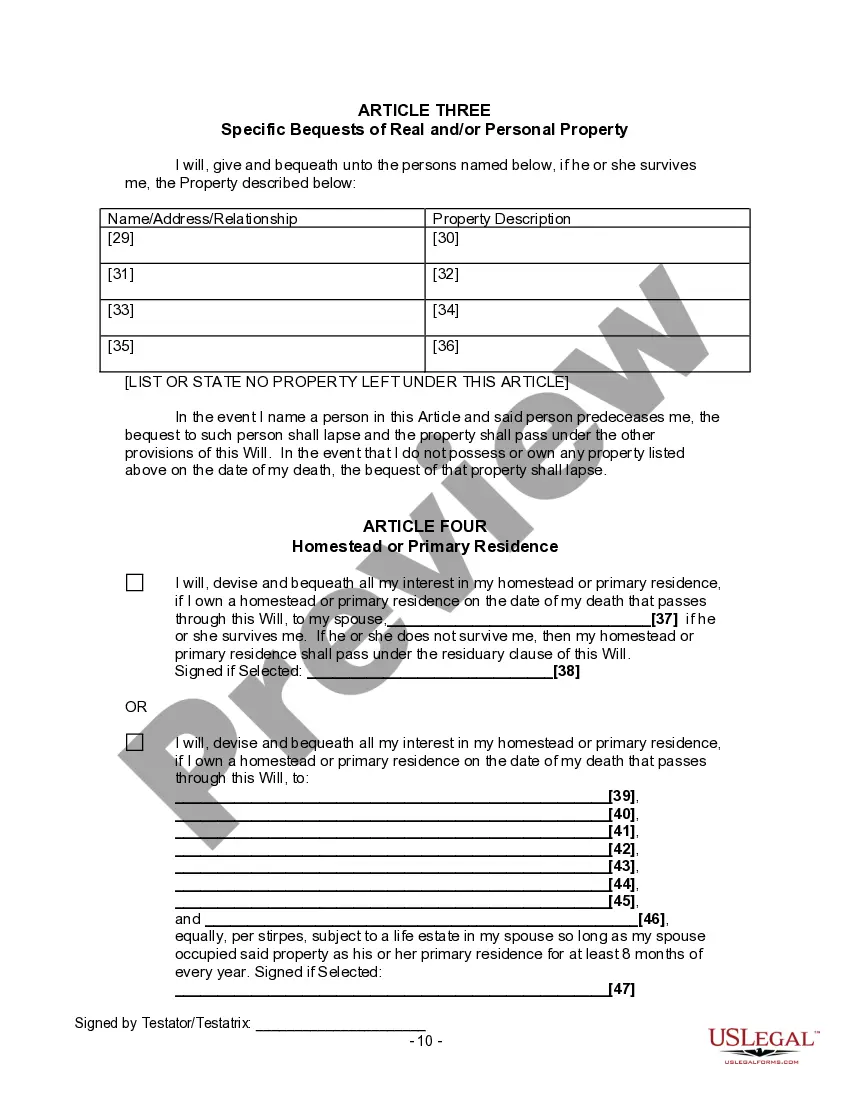
- Specified bequests of real and personal property to designated beneficiaries.
- Creation of a trust for minor children to manage their inheritance until they reach a specified age.
- Appointment of a guardian for minor children if applicable.
- Clauses regarding the distribution of the remainder of the estate after specific bequests.





Situations where this form applies
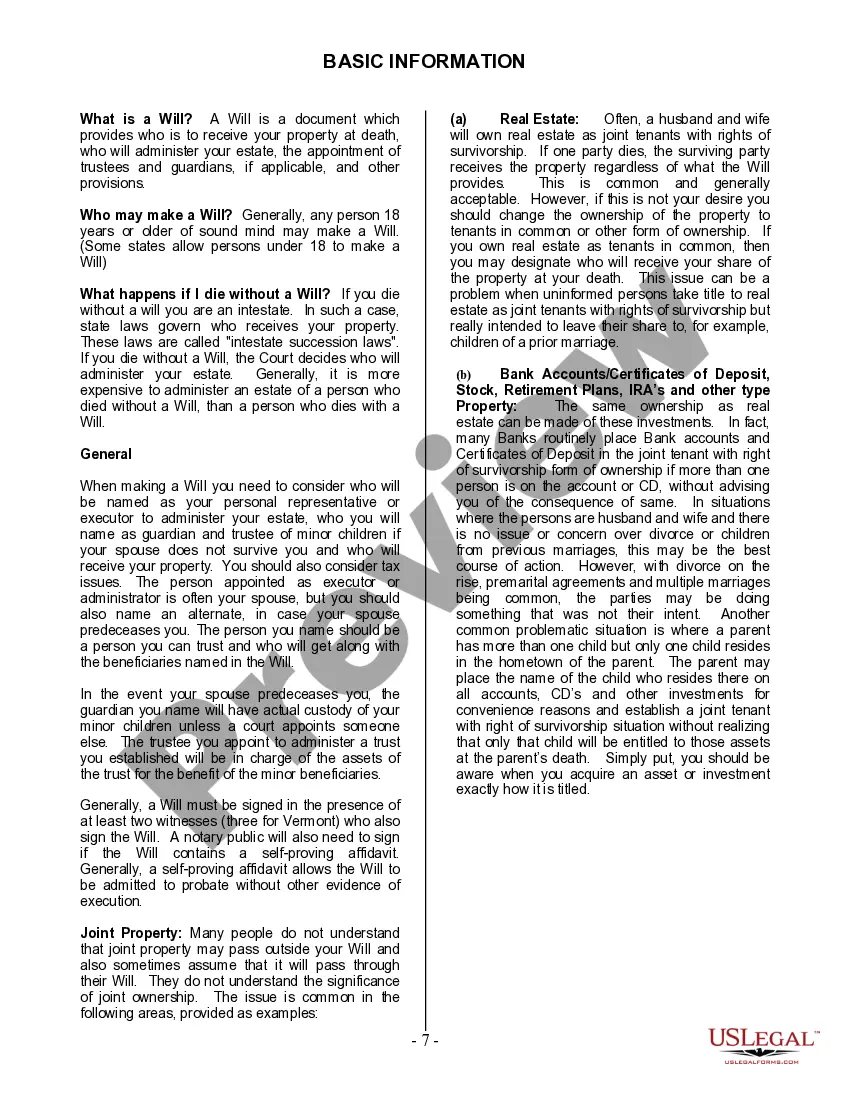
You should use this Last Will and Testament when you want to ensure that your assets are distributed according to your wishes after your death. It is particularly important if you have children from previous relationships and are currently married, as it helps clarify inheritance rights and responsibilities in blended families and protects your minor childrenâs interests.
Who needs this form
- Individuals who are divorced and have remarried.
- Parents with children from previous marriages and joint children.
- Anyone wanting to specify guardians for their minor children.
- Those looking to establish trusts for their children to manage inheritance issues.
Instructions for completing this form
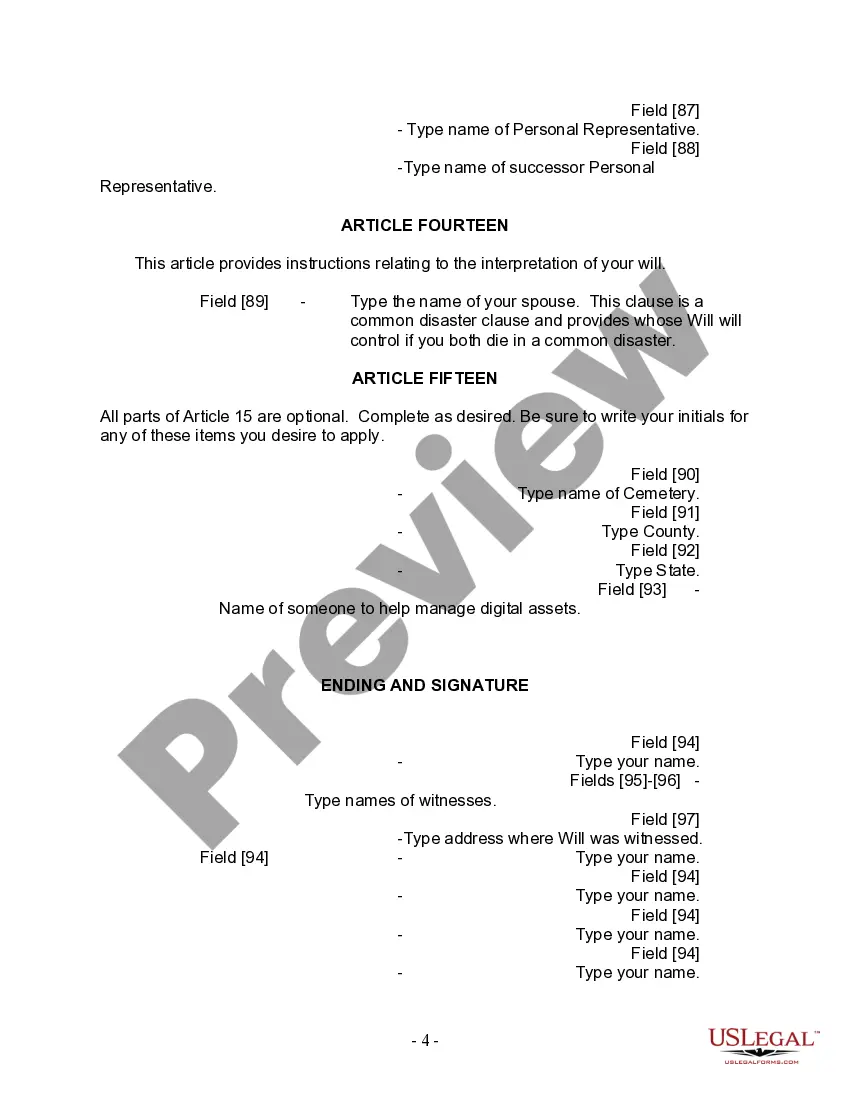
- Begin by entering your full name and county of residence at the top of the form.
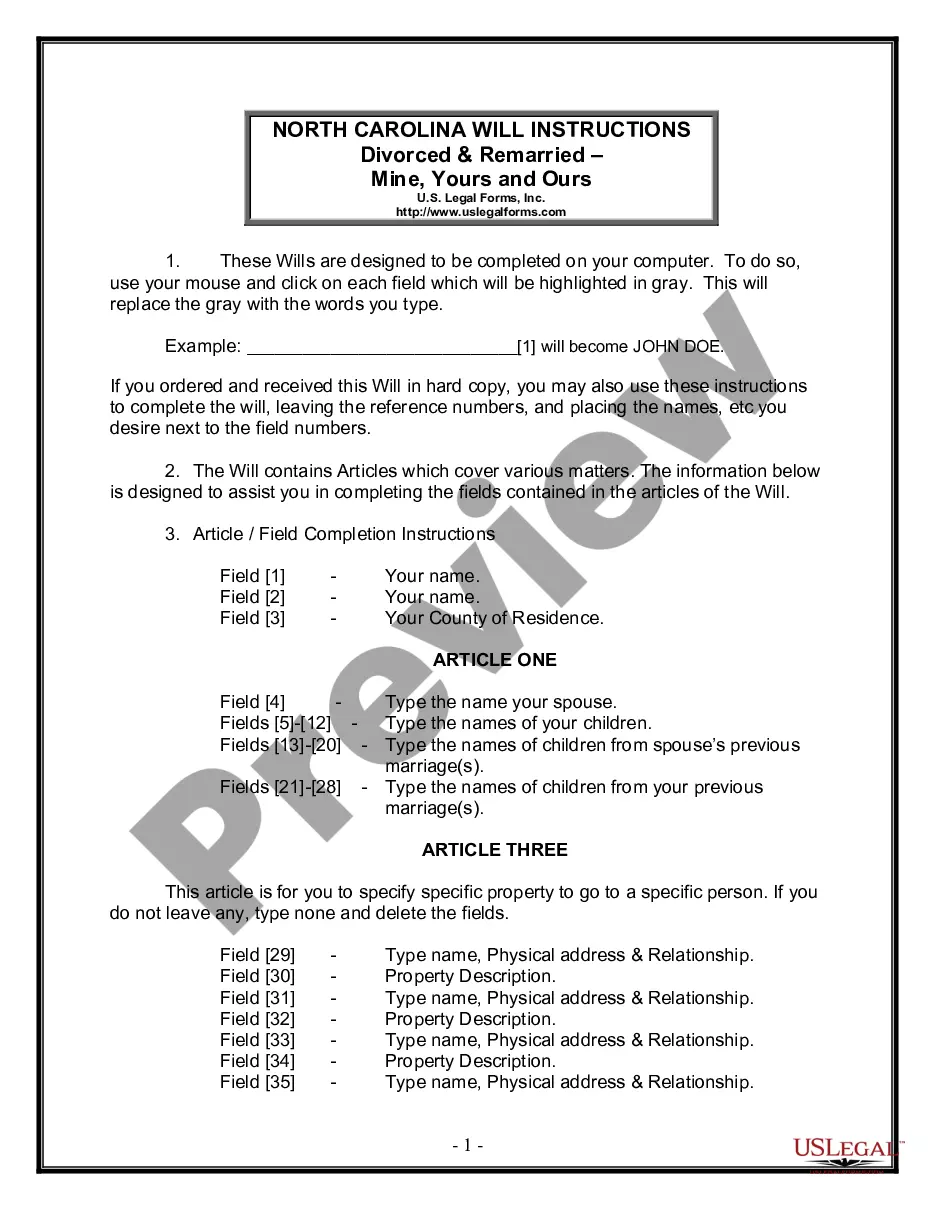
- Specify your current spouse's name and the names of any children from both marriages.
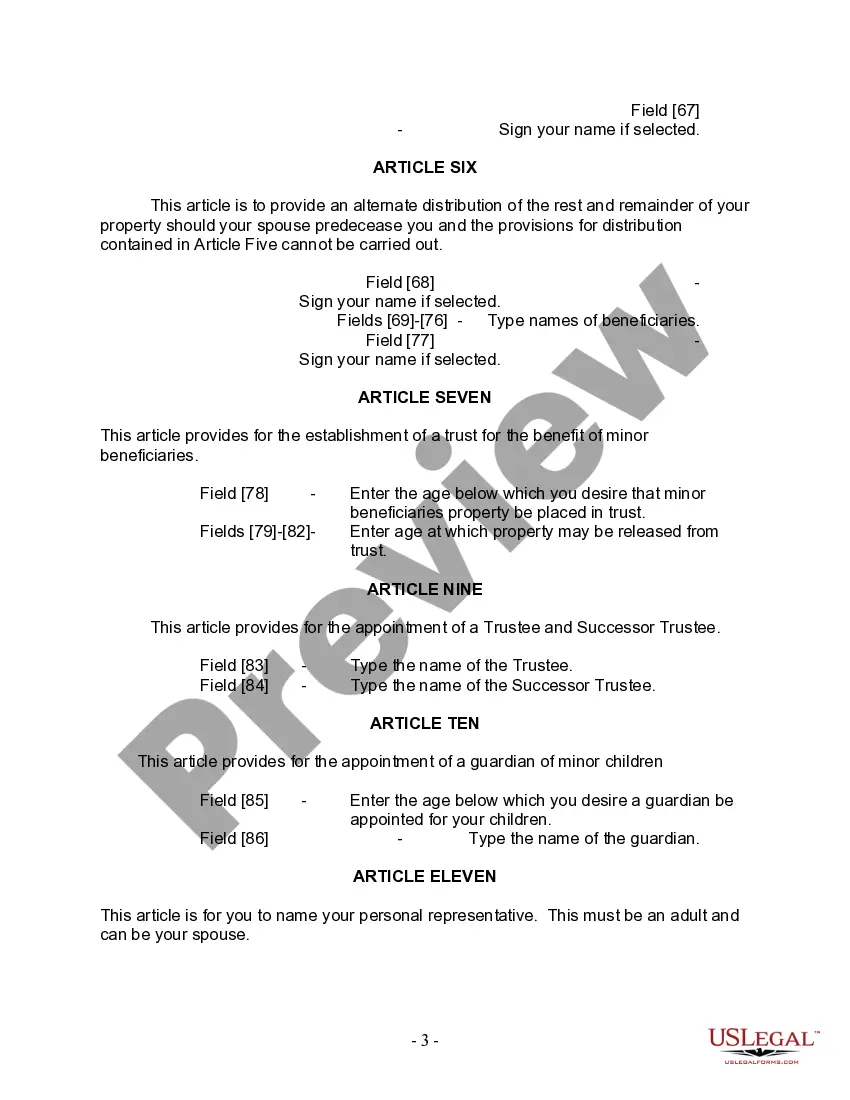
- Designate a personal representative to manage your estate and a guardian for any minor children.
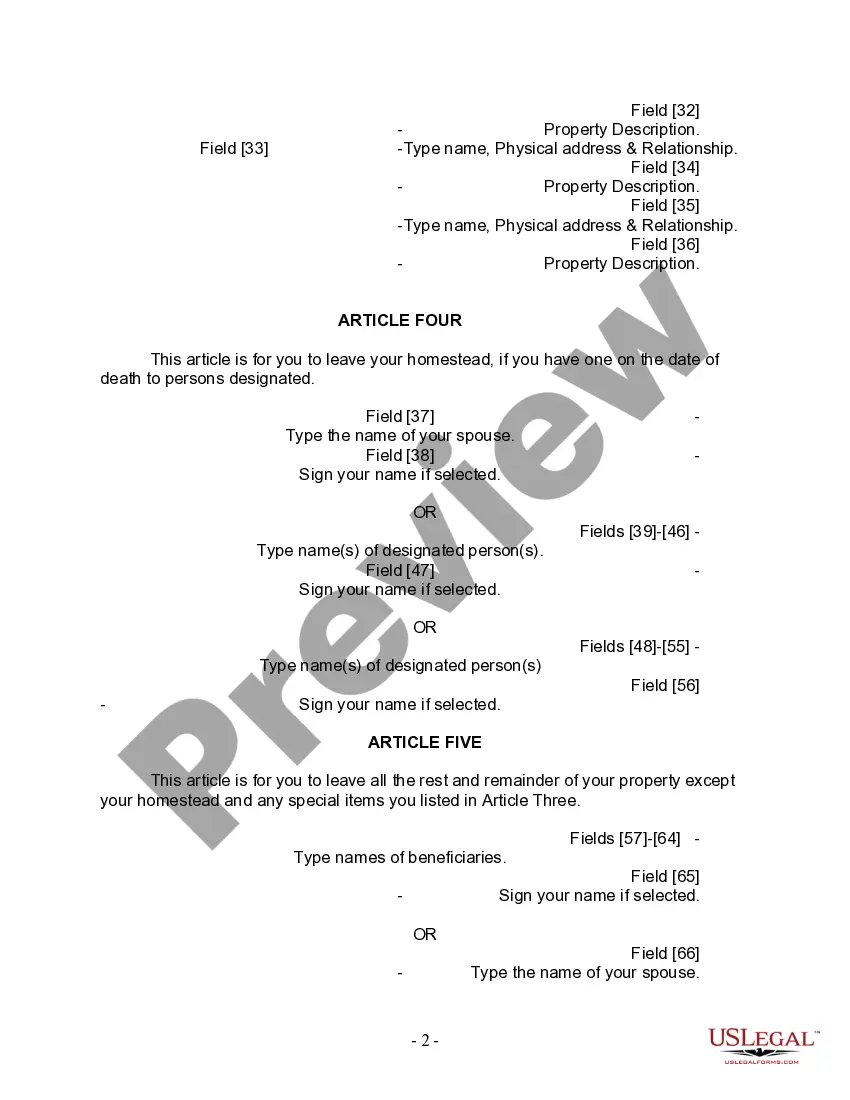
- Detail specific bequests of property and assets to beneficiaries.
- Establish a trust for the benefit of any minor children with conditions for releasing assets.
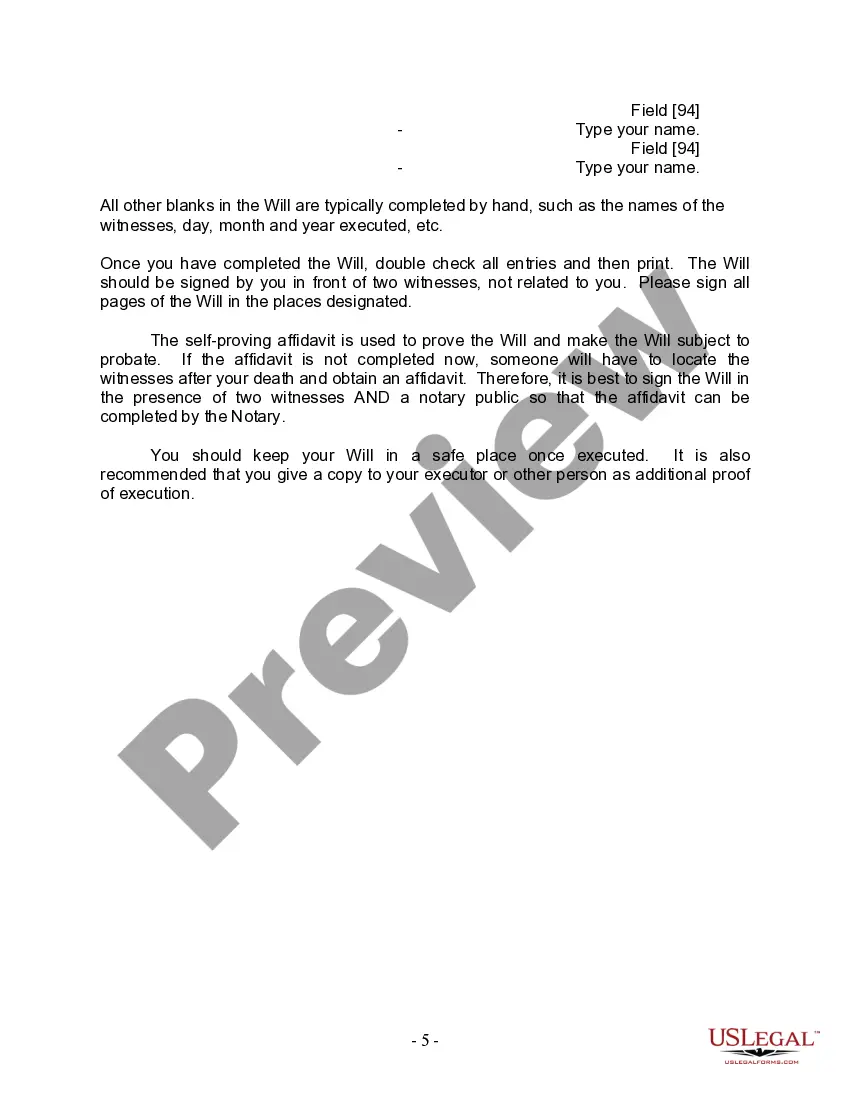
- Ensure the document is signed in front of two witnesses and, if necessary, notarized.
Notarization requirements for this form
Yes, this form must be notarized to be legally valid if it includes a self-proving affidavit. It is recommended to sign the will in the presence of two witnesses and a notary public to facilitate its acceptance in probate court.
Get your form ready online
Our built-in tools help you complete, sign, share, and store your documents in one place.
Make edits, fill in missing information, and update formatting in US Legal Forms—just like you would in MS Word.
Download a copy, print it, send it by email, or mail it via USPS—whatever works best for your next step.
Sign and collect signatures with our SignNow integration. Send to multiple recipients, set reminders, and more. Go Premium to unlock E-Sign.
If this form requires notarization, complete it online through a secure video call—no need to meet a notary in person or wait for an appointment.
We protect your documents and personal data by following strict security and privacy standards.

Make edits, fill in missing information, and update formatting in US Legal Forms—just like you would in MS Word.

Download a copy, print it, send it by email, or mail it via USPS—whatever works best for your next step.

Sign and collect signatures with our SignNow integration. Send to multiple recipients, set reminders, and more. Go Premium to unlock E-Sign.

If this form requires notarization, complete it online through a secure video call—no need to meet a notary in person or wait for an appointment.

We protect your documents and personal data by following strict security and privacy standards.
Common mistakes
- Failing to update the will after significant life changes, such as divorce or remarriage.
- Not signing the will in the presence of the required witnesses.
- Omitting to appoint a guardian for minor children, which can lead to disputes.
- Inadvertently including ambiguous language that could confuse beneficiaries about their inheritances.
Why complete this form online
- Convenience: Easily access and complete your will at any time.
- Editability: Modify the document to reflect your current wishes without starting from scratch.
- Reliability: Legal forms are drafted by licensed attorneys, ensuring compliance with legal standards.
Key takeaways
- This Last Will and Testament is tailored for divorced and remarried individuals with children.
- It includes provisions for property distribution that address the complexities of blended families.
- Proper execution, including notarization, is crucial for the will's legal validity.
- Online form access and editing enhance convenience for users as they prepare essential legal documents.
Looking for another form?
Form popularity
FAQ
Form a Last Will in North Carolina Signature: The will must be signed by the testator with the intent to sign or by another person under his direction and in his presence. Witnesses: At least two witnesses must sign a North Carolina last will and testament in order for it to be valid.
North Carolina recognizes the validity of handwritten wills. Under NC law, a handwritten will must satisfy the following requirements: Written entirely in the handwriting of the testator (the will-maker);Found after the testator's death among his valuable papers or effects or in a place of safekeeping.
No, in North Carolina, you do not need to notarize your will to make it legal.A self-proving will speeds up probate because the court can accept the will without contacting the witnesses who signed it.
Name of each respective beneficiary. Enter an address for each person named. Specify the beneficiary's relationship to the testator. Enter the last four digits of the SSN for all named beneficiaries (required) Provide description(s) of any property bequeathed to each person named in the document.
When Is Probate Required? Probate is generally required in North Carolina only when a decedent owned property in their name alone. Assets that were owned with a spouse, for which beneficiaries were named outside of a will, or held in revocable living trusts, generally do not need to go through probate.
Collect and inventory the deceased person's assets, and keep them safe. have assets professionally appraised, if necessary. sell some assets, if necessary. pay valid debts and taxes, and. give out the remaining property as the will (or if there's no will, state law) directs.
According to North Carolina law, a valid written Will is constituted by several formalities. The testator must be of sound mind and eighteen years of age or older. Essentially, the testator must be found competent at the time the Will is executed.
Cheryl K. David. An application should be filed by the personal representative, or if there is no will, an interested party, within thirty days of the date of death. Failure to do so, may cause the court to forfeit your rights to settle the estate.
North Carolina law does not require a formal reading of the will. How may I get a copy of a will after my loved one has died? After someone has died, the will may be filed with a clerk of court. A decedent's will becomes a public record when it is filed, after the decedent's death, with the clerk of court.