North Carolina Last Will and Testament for Married person with Minor Children from Prior Marriage
Understanding this form
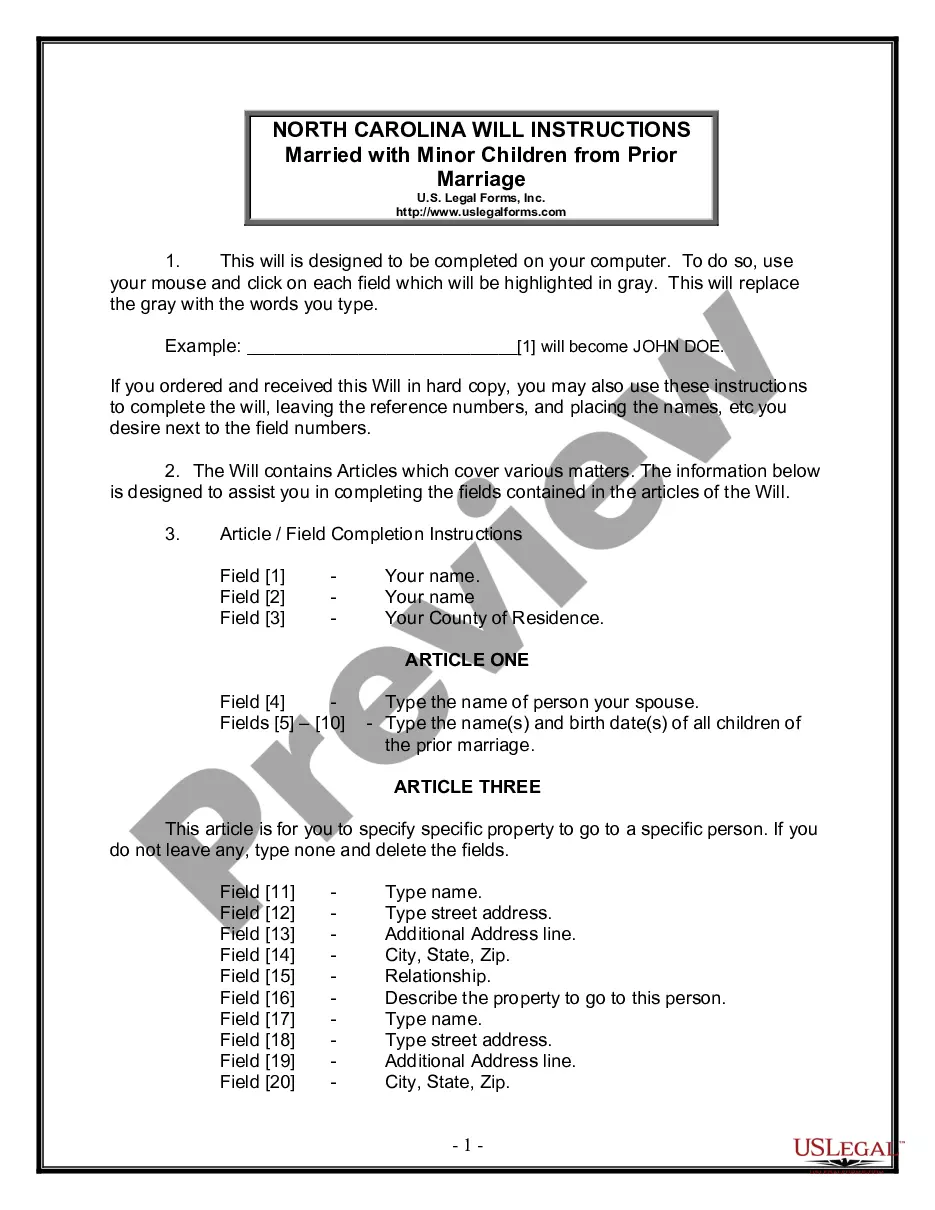
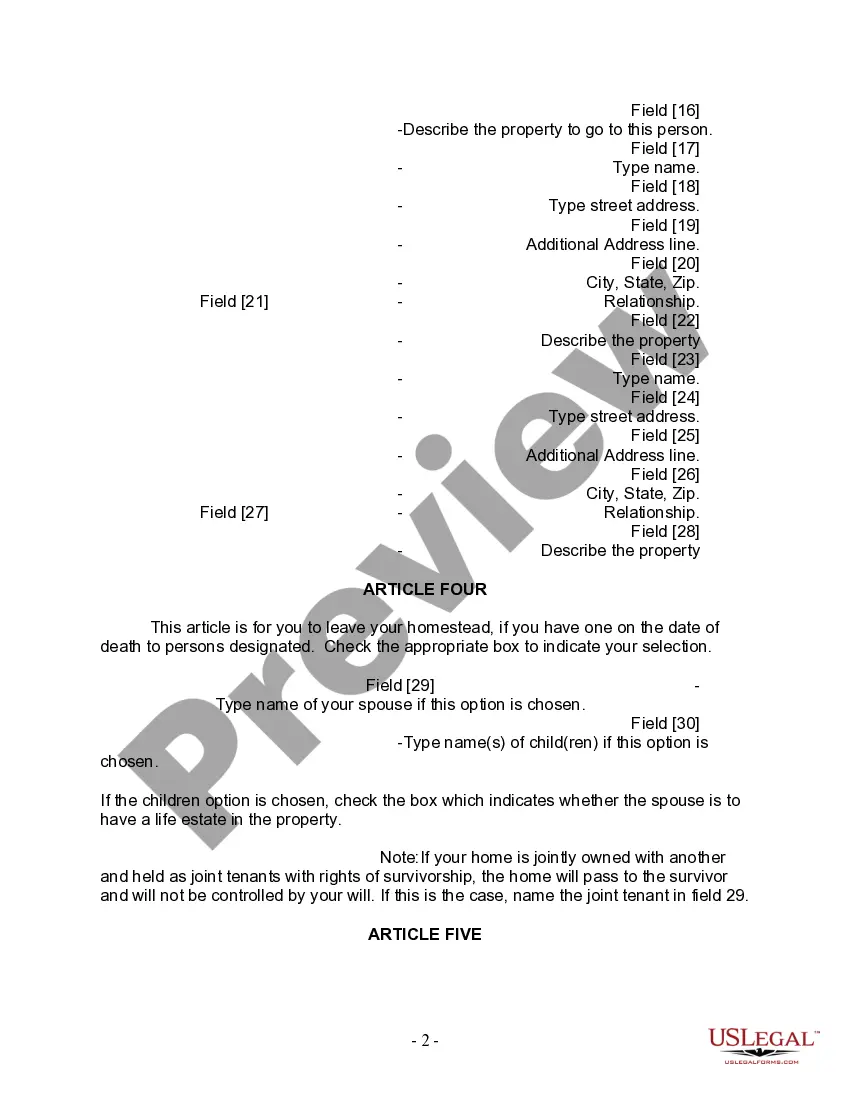
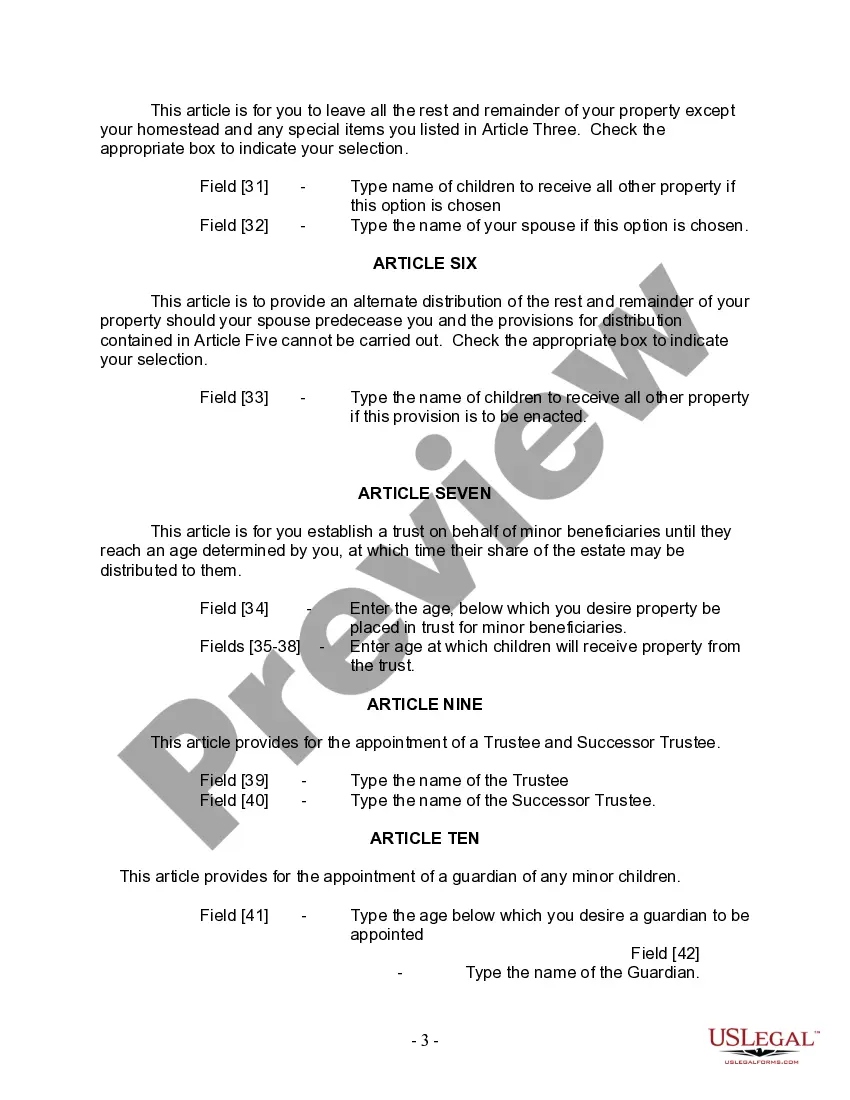
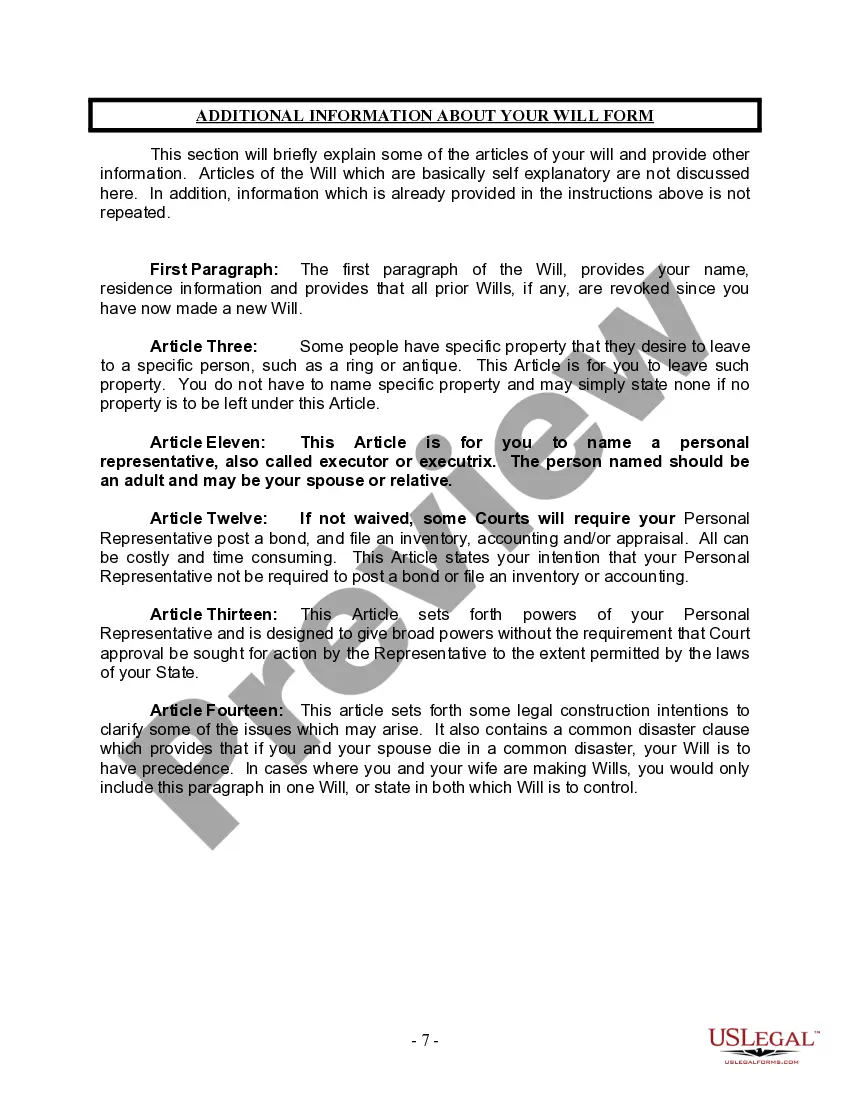
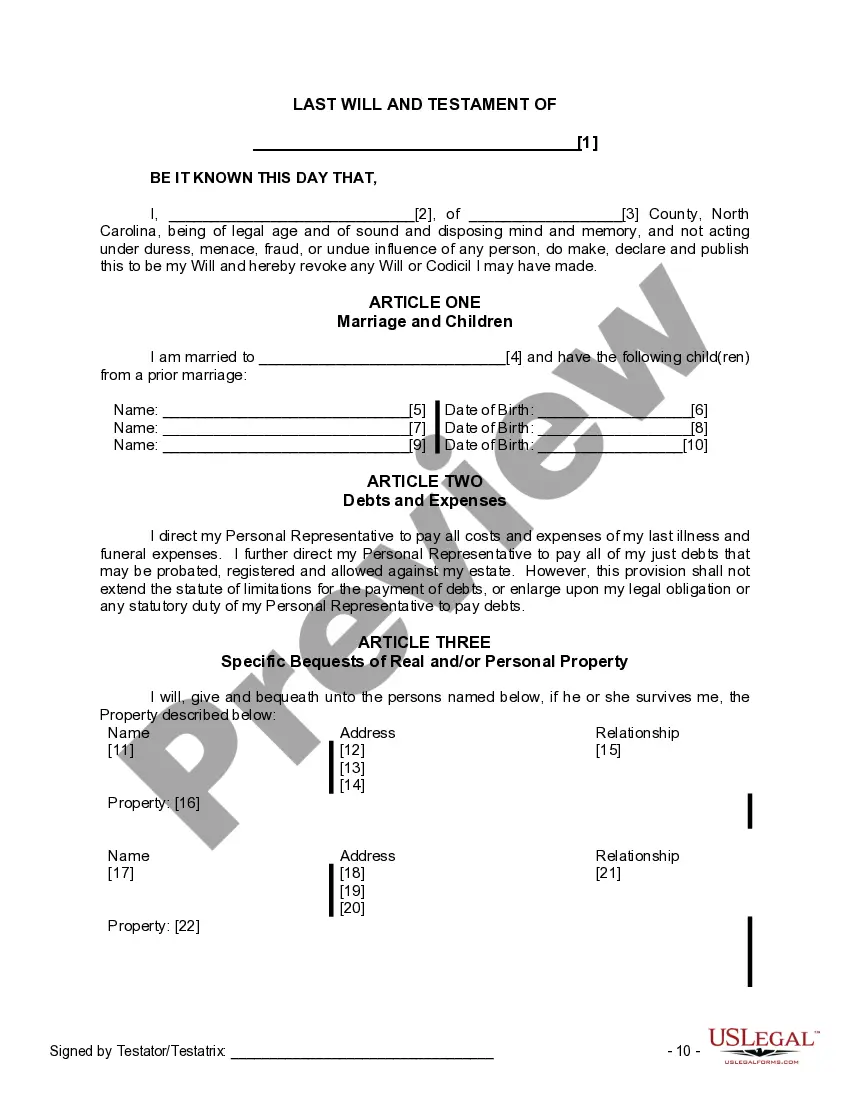
This Last Will and Testament is specifically designed for a married individual with minor children from a prior marriage. It serves to communicate your final wishes regarding the distribution of your estate, the appointment of a personal representative, and the care of your minor children. This form ensures that your assets are allocated according to your intentions and provides specific provisions to protect the interests of your children and spouse.
Main sections of this form
- Appointment of a personal representative to manage and distribute your estate.
- Specific bequests and distribution instructions for your property.
- Provisions for the care and management of assets for minor children.
- Designations of guardianship for any minor children if necessary.
- Options for the distribution of your homestead or primary residence.





When to use this document
This form is essential if you are a married person with children from a previous marriage. You should use this Will to ensure that your assets are distributed according to your wishes after your death, particularly concerning your children and spouse. This form is also crucial if you want to designate a trustee for your minor childrenâs inheritance and if you need to appoint a guardian for their care.
Intended users of this form
- Married individuals with minor children from prior marriages.
- Anyone who wants to specify how their estate should be managed following their passing.
- Individuals looking to ensure their minor children's financial security through appointed trustees.
How to complete this form
- Identify the testator (the person making the Will) and complete their personal information.
- List your spouse's name and provide details about any children from previous marriages.
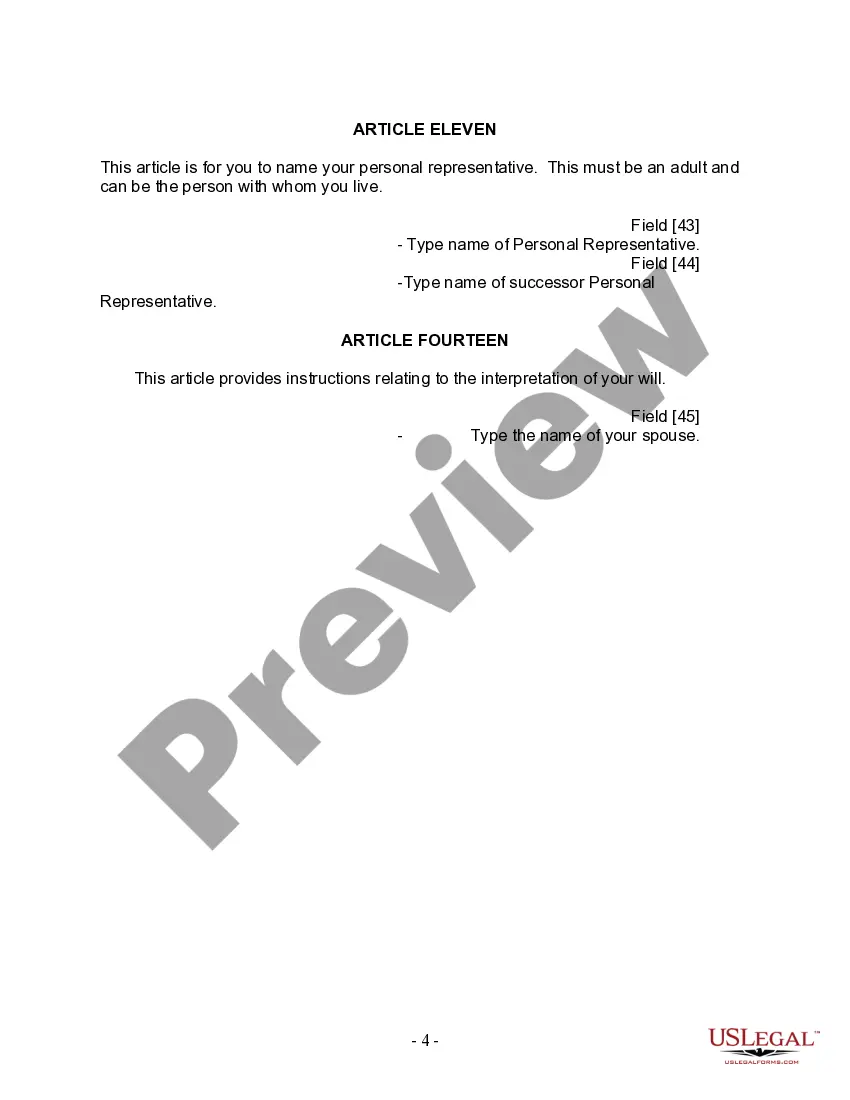
- Designate a personal representative who will administer your estate.
- Specify how you wish to distribute your property and include provisions for your minor children.
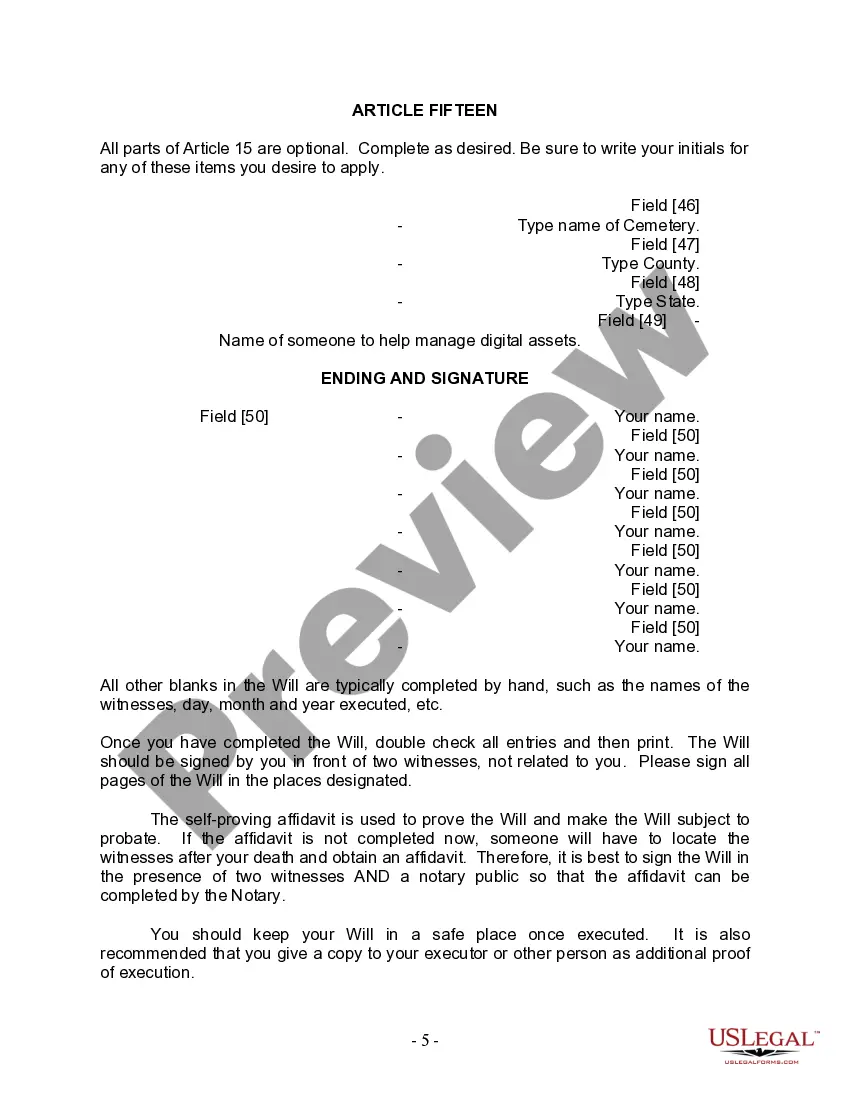
- Sign the Will in the presence of two witnesses and, if required, a notary public.
Notarization requirements for this form
Yes, this form must be notarized to be legally valid. It includes a self-proving affidavit that can streamline the probate process. US Legal Forms offers integrated online notarization, allowing you to notarize your document securely via a video call, making the process more accessible and convenient.
Get your form ready online
Our built-in tools help you complete, sign, share, and store your documents in one place.
Make edits, fill in missing information, and update formatting in US Legal Forms—just like you would in MS Word.
Download a copy, print it, send it by email, or mail it via USPS—whatever works best for your next step.
Sign and collect signatures with our SignNow integration. Send to multiple recipients, set reminders, and more. Go Premium to unlock E-Sign.
If this form requires notarization, complete it online through a secure video call—no need to meet a notary in person or wait for an appointment.
We protect your documents and personal data by following strict security and privacy standards.

Make edits, fill in missing information, and update formatting in US Legal Forms—just like you would in MS Word.

Download a copy, print it, send it by email, or mail it via USPS—whatever works best for your next step.

Sign and collect signatures with our SignNow integration. Send to multiple recipients, set reminders, and more. Go Premium to unlock E-Sign.

If this form requires notarization, complete it online through a secure video call—no need to meet a notary in person or wait for an appointment.

We protect your documents and personal data by following strict security and privacy standards.
Typical mistakes to avoid
- Failing to sign the Will in the presence of two witnesses.
- Not providing clear instructions for the distribution of assets.
- Overlooking to appoint a guardian for minor children.
- Neglecting to update the Will after changes in family status (e.g., remarriage, birth of children).
Benefits of using this form online
- Convenience of filling out the form at your own pace.
- Ability to easily customize and edit the form as needed.
- Access to legally vetted templates created by licensed attorneys.
Quick recap
- The Last Will and Testament outlines the distribution of assets and guardianship of minor children.
- Signing in the presence of witnesses and notarization ensures the will is legally binding.
- Proper use of this form can prevent disputes and provide clear instructions for asset management after death.
Looking for another form?
Form popularity
FAQ
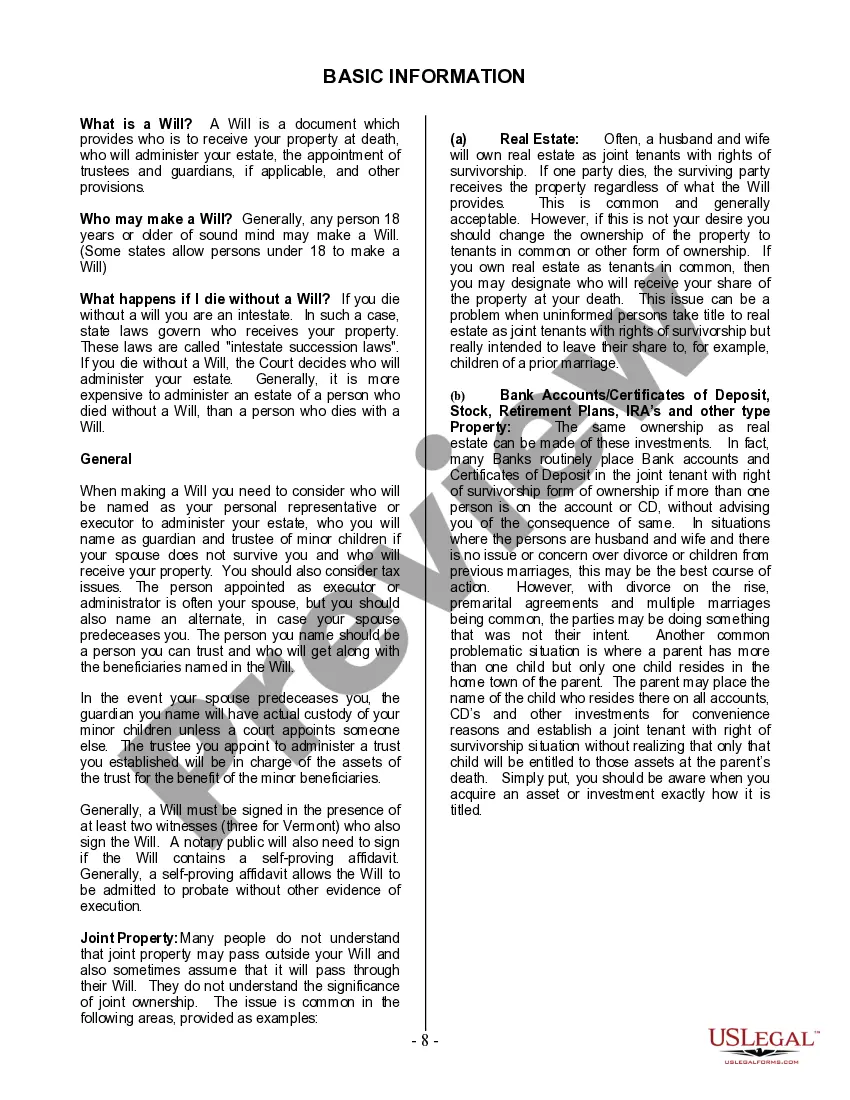
Form a Last Will in North Carolina Signature: The will must be signed by the testator with the intent to sign or by another person under his direction and in his presence. Witnesses: At least two witnesses must sign a North Carolina last will and testament in order for it to be valid.
Anyone who is an immediate family member of the deceased, whether or not he or she is listed in the will, is legally entitled to view a copy.Those are the primary parties who may request access to a will, but there are other less groups of people that also have a legal right to view and receive copies of the document.
Family Law covers issues that can have a major impact on individual's lives. Family involves emotionally charged issues such as child custody battles, division of assets during a divorce as well as wills, and what happens when they are contested.
North Carolina recognizes the validity of handwritten wills. Under NC law, a handwritten will must satisfy the following requirements: Written entirely in the handwriting of the testator (the will-maker);Found after the testator's death among his valuable papers or effects or in a place of safekeeping.
The simple answer is no. There is no automatic entitlement to see a person's will until a grant of probate has been passed. At that point, it is a public document and it is open to anyone to apply to the Probate Office to see a copy. That right is not limited to family or to people named in the will.
You can make your own will in North Carolina, using Nolo's do-it-yourself will software or online will programs. However, you may want to consult a lawyer in some situations. For example, if you think that your will might be contested or if you want to disinherit your spouse, you should talk with an attorney.
As an heir, you are entitled to a copy of the Will, whether you are named as a beneficiary or not. If there is a probate estate, then you should receive a copy of the Will. If you do not, you can always get it from the court. If there is no probate estate, then the Will is not going to do anything.
North Carolina Intestate Succession Laws Under the North Carolina statutes, if you are survived by: 1. No spouse or children, with parent(s) living: Your entire estate will pass to and be divided equally among your parents. If only one parent is still living, then everything will pass to the living parent.
Once filed, the will is a matter of public record. Anyone can see it. Interested parties can also usually learn the name of the executor by getting a copy of the death certificate from the county registrar.