North Carolina Notice of Default on Residential Lease
What this document covers
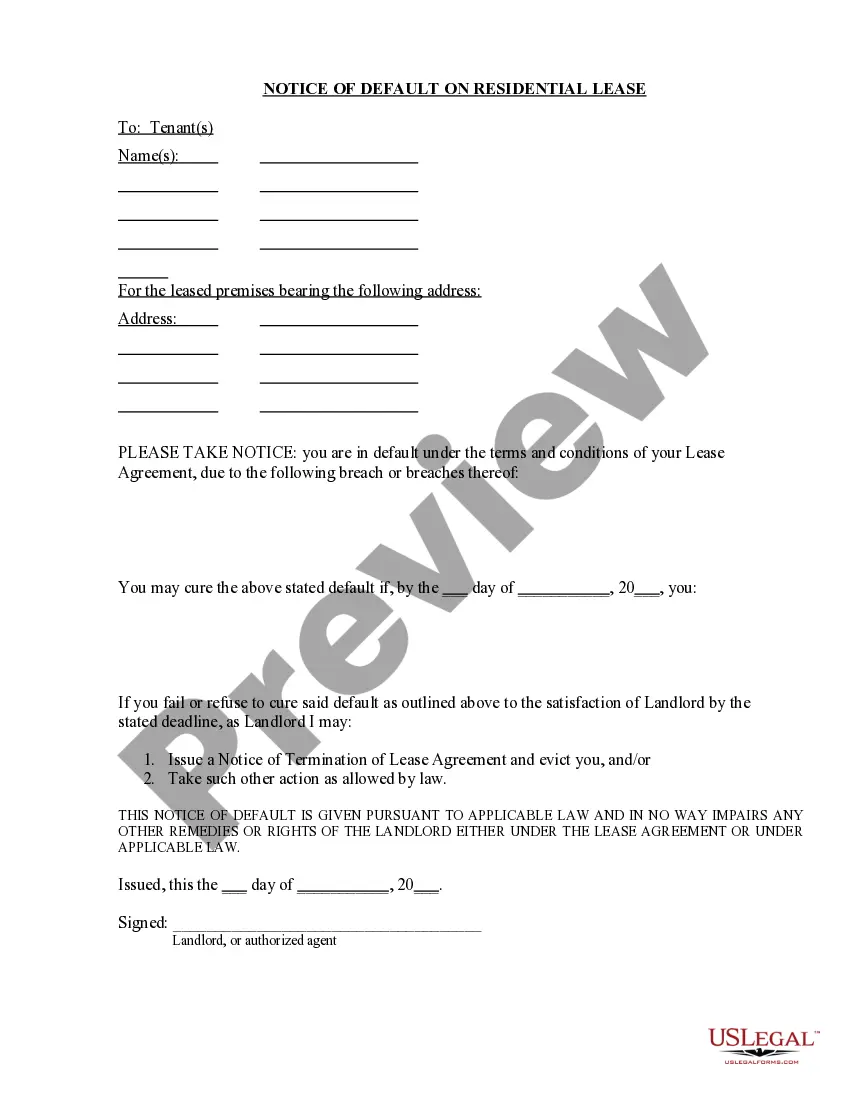
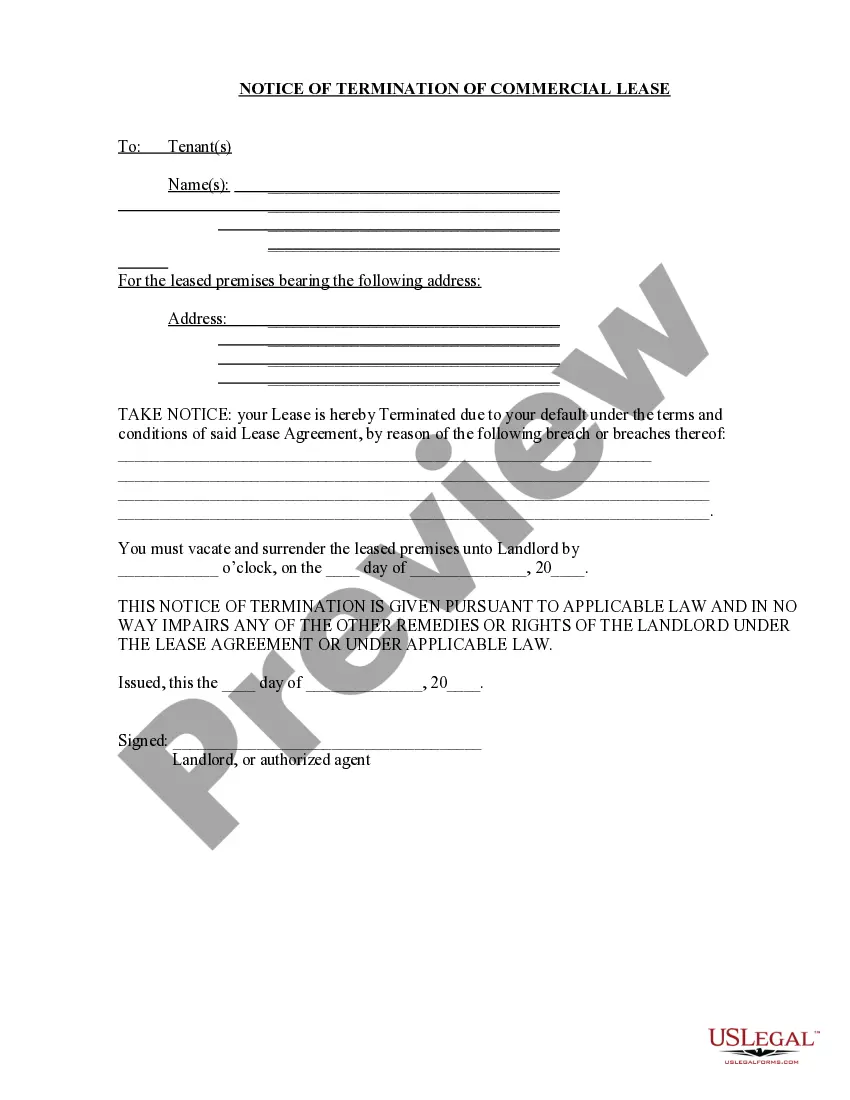
The Notice of Default on Residential Lease is a legal document used by landlords to inform tenants of a failure to meet their rental obligations, specifically regarding timely rent payments. This form notifies the tenant of their default, the reasons for it, and provides a deadline for remedying the situation. It is crucial because it sets the stage for potential eviction proceedings if the tenant does not respond appropriately. This form differs from general eviction notices, as it specifically addresses defaults rather than outright terminations of lease agreements.
Key parts of this document
- Details of the tenant's default, including specific reasons.
- Clear deadline by which the tenant must remedy the default.
- Signature of the landlord or authorized agent, validating the notice.
- Date on which the notice is issued to establish a timeline.
- Legal citation informing tenants of their rights and the landlord's remedies.


When to use this form
This form should be used when a tenant fails to pay rent or violates other terms of the lease, creating a situation of default. It is an essential step for landlords who wish to formalize their notice to the tenant about the default and to initiate potential eviction proceedings if necessary. Additionally, it helps document the timeline of actions taken in response to the lease violation.
Who this form is for
- Residential landlords seeking to address tenant defaults on rental payments.
- Property management companies acting on behalf of landlords.
- Landlords who need a formal notice to initiate eviction proceedings.
- Individuals renting out a room or property to tenants under a lease agreement.
Steps to complete this form
- Identify the tenant's name and the address of the leased property.
- Clearly state the reasons for the default, specifying any missed payment or lease violations.
- Set a deadline date by which the tenant must cure the default, ensuring it complies with local laws.
- Fill in the date of issuance to establish a timeline of actions.
- Sign the form as the landlord or authorized agent to validate the notice.
Does this form need to be notarized?
Notarization is not commonly needed for this form. However, certain documents or local rules may make it necessary. Our notarization service, powered by Notarize, allows you to finalize it securely online anytime, day or night.
Get your form ready online
Our built-in tools help you complete, sign, share, and store your documents in one place.
Make edits, fill in missing information, and update formatting in US Legal Forms—just like you would in MS Word.
Download a copy, print it, send it by email, or mail it via USPS—whatever works best for your next step.
Sign and collect signatures with our SignNow integration. Send to multiple recipients, set reminders, and more. Go Premium to unlock E-Sign.
If this form requires notarization, complete it online through a secure video call—no need to meet a notary in person or wait for an appointment.
We protect your documents and personal data by following strict security and privacy standards.

Make edits, fill in missing information, and update formatting in US Legal Forms—just like you would in MS Word.

Download a copy, print it, send it by email, or mail it via USPS—whatever works best for your next step.

Sign and collect signatures with our SignNow integration. Send to multiple recipients, set reminders, and more. Go Premium to unlock E-Sign.

If this form requires notarization, complete it online through a secure video call—no need to meet a notary in person or wait for an appointment.

We protect your documents and personal data by following strict security and privacy standards.
Common mistakes to avoid
- Failing to provide a clear and specific reason for the default.
- Not including a sufficient cure period, which may not comply with local regulations.
- Missing a signature or date, which can invalidate the notice.
- Not keeping a copy of the notice for record-keeping purposes.
Benefits of completing this form online
- Convenience of downloading and customizing the form at your own pace.
- Editable templates that allow you to fill in specific details relevant to your situation.
- Access to forms drafted by licensed attorneys, ensuring legal accuracy.
- Instant availability for urgent landlord-tenant issues.
Legal use & context
- The Notice of Default is a critical legal document in landlord-tenant law.
- Failure to issue this notice can impede the landlord's ability to pursue eviction effectively.
- Tenant rights vary by state, and landlords must adhere to specific notice requirements.
Summary of main points
- The Notice of Default on Residential Lease is an essential tool for landlords addressing tenant defaults.
- Using this form properly can help avoid legal complications and clarify obligations.
- It is imperative to ensure that the notice complies with local laws to facilitate effective communication and enforcement.
Looking for another form?
Form popularity
FAQ
In short, nothing in the CARES Act or Governor Cooper's Order prohibits evictions for reasons other than late payment or nonpayment of rent, such as evictions related to health, safety, or criminal activity. These types of evictions by a landlord would not violate the Order.
Dear (Name of landlord or manager), This letter constitutes my written (number of days' notice that you need to give based on your lease agreement)-day notice that I will be moving out of my apartment on (date), the end of my current lease. I am leaving because (new job, rent increase, etc.)
Decide Why The Tenant Needs To Be Evicted. Send Notice To The Tenant. Wait For The Notice Period To Pass. File For Eviction. Go To The Court Hearing. Give Writ Of Possession To Local Law Enforcement. Get Your Property Back!
In North Carolina, nonpayment of rent is the most common ground for eviction. In this case, you are required to give the tenant a 10-day "notice to quit." The notice informs the tenant that they need to pay the rent due within 10 days. Otherwise, they will be evicted.
Explain the Situation Tell your tenant in straightforward terms what the problem is, and explain that they cannot stay on the property any longer. Describe the Consequences Calmly explain that they will be evicted with necessary court orders if they remain on the property.
North Carolina law says that your landlord must keep your housing fit and safe. It also says that you, the tenant, must pay your rent, keep your home clean, and not damage your home. To make the law work, both the tenant and the landlord must do their part.
Notice Requirements for North Carolina Landlords A landlord can simply give you a written notice to move, allowing you seven days as required by North Carolina law and specifying the date on which your tenancy will end.
In landlord-tenant law, default refers to the failure of a tenant to timely pay rent due.In general, the landlord is required to give the tenant notice of the default before bringing eviction proceedings or applying security deposit proceeds to the payment in default.
Be in writing; Say the full name of the tenant or tenants; Have the address of the rental property; Say everything that the tenant did to break the lease or deserve a 3-day notice to leave, and include details and dates; and. Say clearly that the tenant has to move out as soon as the 3 days are up.