North Carolina Letter from Tenant to Landlord containing Notice to landlord to cease retaliatory threats to evict or retaliatory eviction
Understanding this form
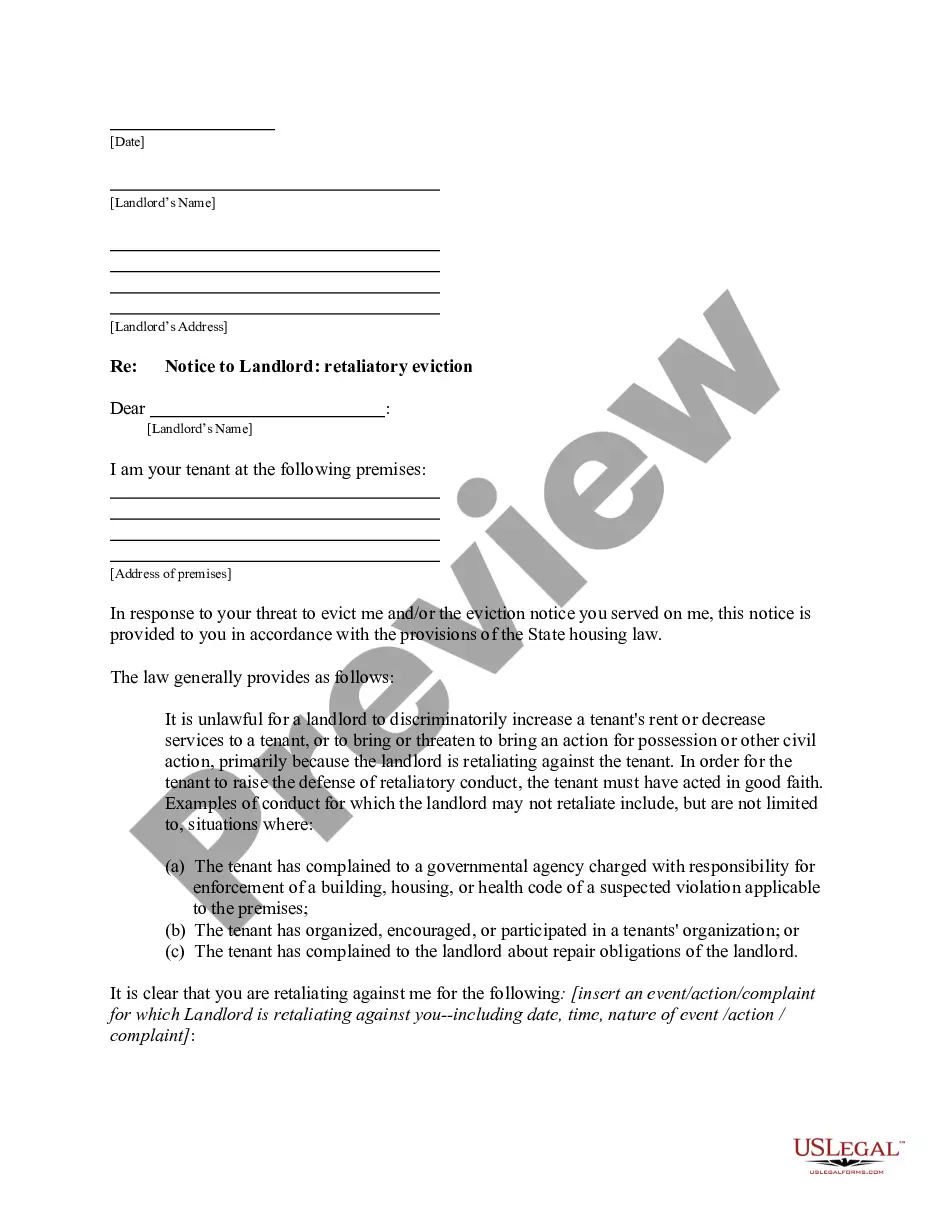
This letter from tenant to landlord serves as a formal notice to the landlord to cease any retaliatory threats related to eviction. It is specifically designed for tenants who believe that their landlord has threatened eviction in retaliation for the tenant's legal actions, such as filing complaints regarding property conditions. This form complies with applicable state housing laws and helps protect tenants from unlawful landlord retaliation, making it distinct from general eviction notices or requests for repairs.
What’s included in this form
- Identification of the tenant and landlord, including contact information.
- A clear statement regarding the landlord's alleged retaliatory actions.
- Details of the specific actions taken by the tenant that prompted the landlord's threats.
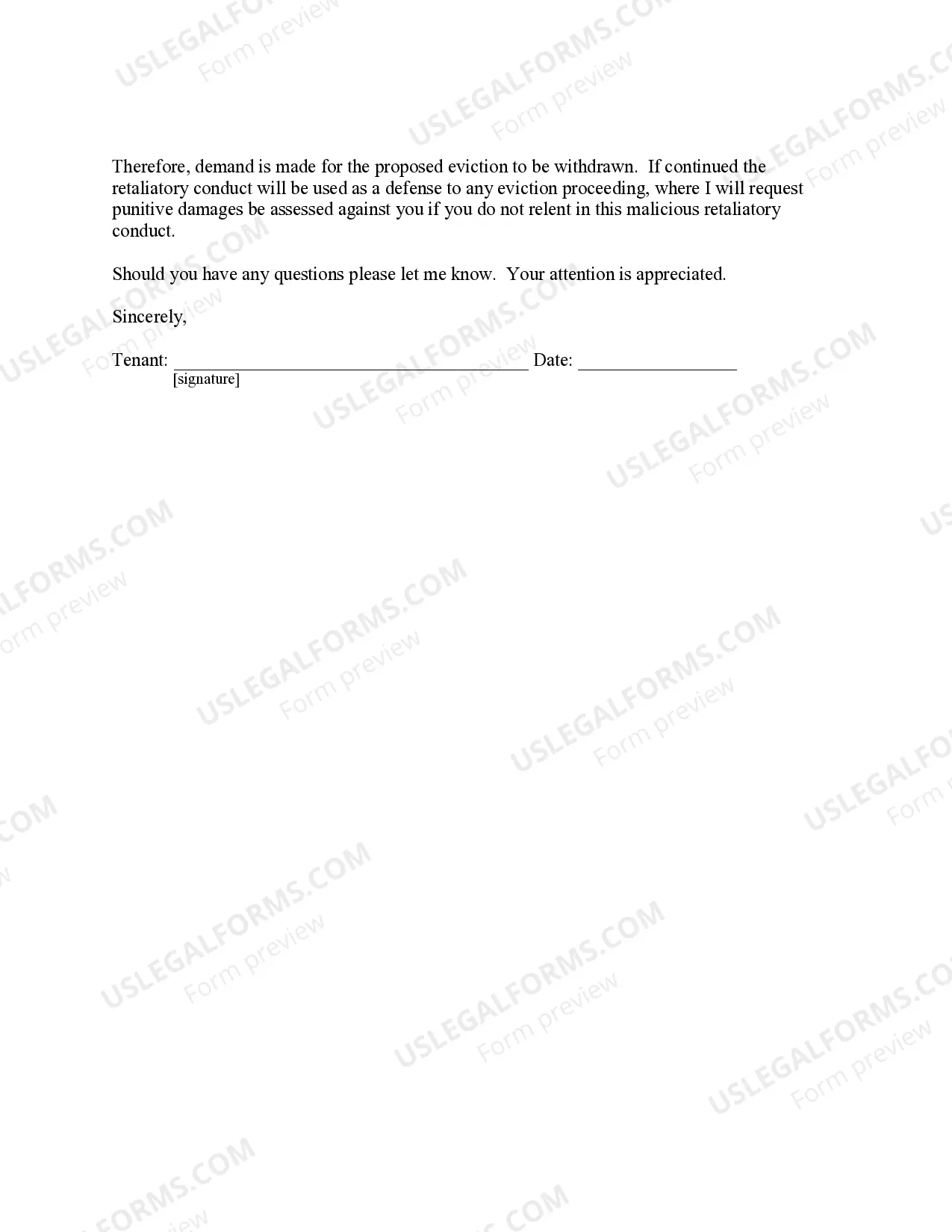
- A request for the landlord to cease these retaliatory threats.
- Date and signature of the tenant to validate the notice.
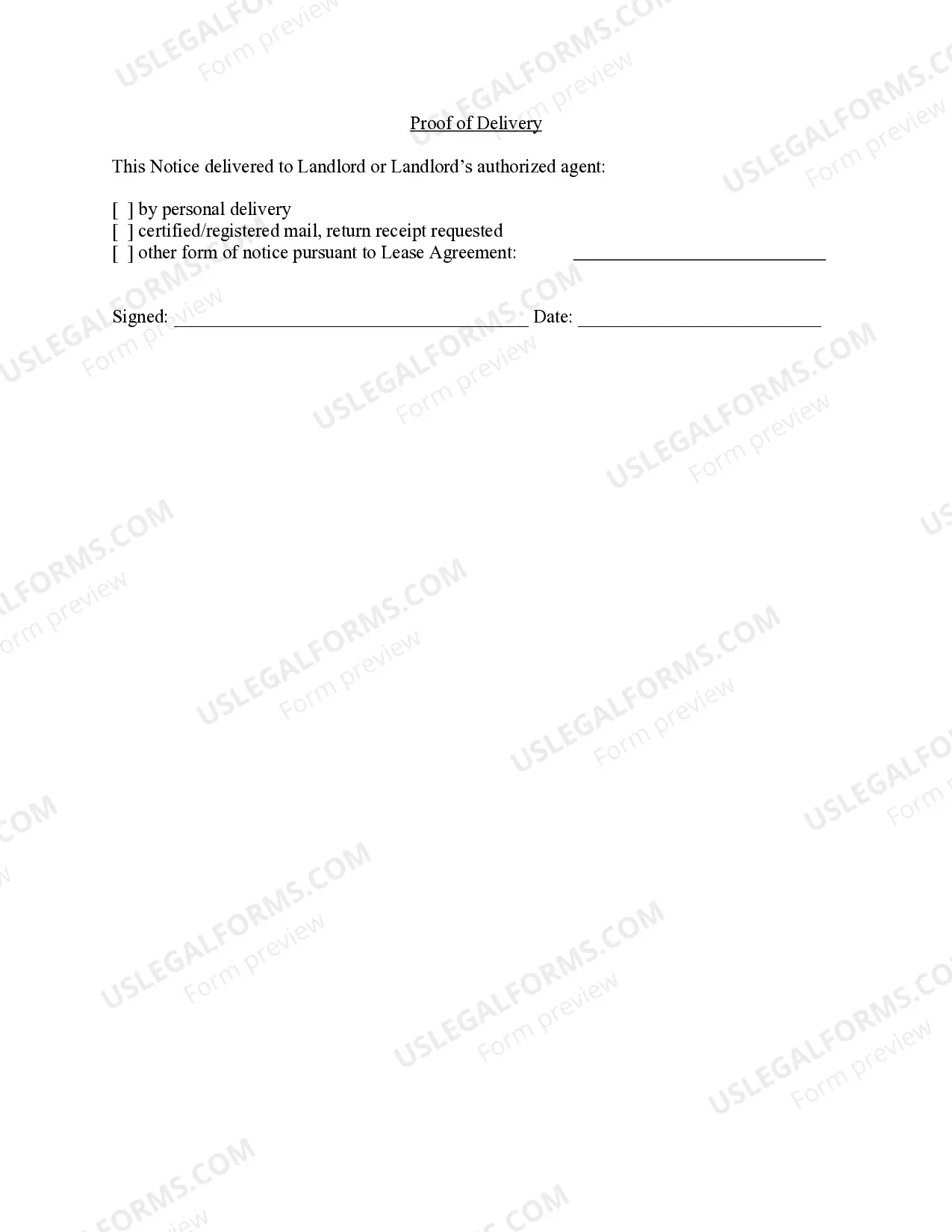
- Proof of delivery section to confirm that the notice was properly delivered to the landlord.



Common use cases
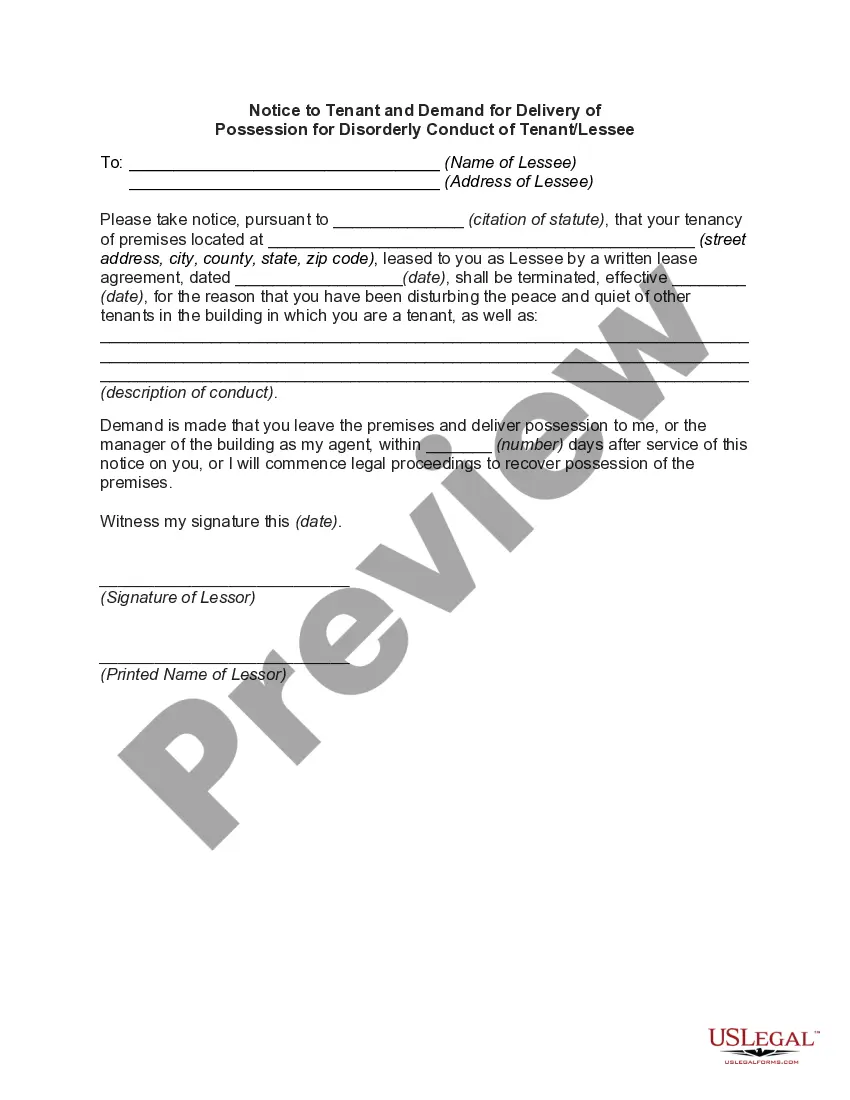
This form is necessary for tenants who have received eviction threats from their landlord that they believe are motivated by retaliatory reasons. It is particularly applicable when a tenant has recently filed a complaint with a local agency about unsafe living conditions, organized or participated in tenant activities, or raised issues regarding needed repairs. By using this form, tenants can formally communicate their position and seek to halt unlawful eviction threats.
Who this form is for
- Tenants who feel threatened with eviction due to their lawful complaints or actions.
- Individuals renting residential properties where landlord retaliation may occur.
- Those seeking to protect their rights under state housing laws against retaliatory actions.
- Tenants who want to formally document their communication with the landlord regarding eviction threats.
Steps to complete this form
- Identify the tenant and landlord by providing full names and contact information.
- Clearly state the retaliatory threats made by the landlord, including dates and specifics.
- Explain the tenant's actions that prompted the landlord's threats, such as complaints or participation in tenant organizations.
- Sign and date the letter to make it official, affirming it as a notice.
- Deliver the form to the landlord or their authorized agent and retain proof of delivery for future reference.
Does this form need to be notarized?
This form does not typically require notarization unless specified by local law. However, always check specific state requirements to ensure compliance.
Get your form ready online
Our built-in tools help you complete, sign, share, and store your documents in one place.
Make edits, fill in missing information, and update formatting in US Legal Forms—just like you would in MS Word.
Download a copy, print it, send it by email, or mail it via USPS—whatever works best for your next step.
Sign and collect signatures with our SignNow integration. Send to multiple recipients, set reminders, and more. Go Premium to unlock E-Sign.
If this form requires notarization, complete it online through a secure video call—no need to meet a notary in person or wait for an appointment.
We protect your documents and personal data by following strict security and privacy standards.

Make edits, fill in missing information, and update formatting in US Legal Forms—just like you would in MS Word.

Download a copy, print it, send it by email, or mail it via USPS—whatever works best for your next step.

Sign and collect signatures with our SignNow integration. Send to multiple recipients, set reminders, and more. Go Premium to unlock E-Sign.

If this form requires notarization, complete it online through a secure video call—no need to meet a notary in person or wait for an appointment.

We protect your documents and personal data by following strict security and privacy standards.
Common mistakes
- Failing to include specific details about the landlord's threats.
- Not providing sufficient explanation of the tenant's actions that led to the retaliation.
- Neglecting to date and sign the letter before sending it to the landlord.
- Using vague language that does not clearly indicate the retaliatory nature of the eviction threat.
- Forgetting to keep a copy for personal records and proof of delivery.
Why use this form online
- Convenience of downloading and customizing the form at any time.
- Access to legally vetted templates drafted by licensed attorneys.
- Ability to easily edit the form to tailor it to specific situations.
- Quickly print or send the form electronically for immediate communication.
- Secure storage of your documents and forms for future reference.
Legal use & context
- This form serves as evidence of the tenant's assertion of their rights against retaliatory eviction.
- It highlights the tenant's good faith actions, such as complaints or participation in tenant rights activities.
- Failure to cease retaliatory threats may expose the landlord to legal liabilities.
What to keep in mind
- Use this letter if you face retaliatory eviction threats from your landlord.
- Ensure to document and deliver the notice properly.
- Consult local laws to understand your rights regarding retaliatory actions.
Looking for another form?
Form popularity
FAQ
Appeal · After the small claims court decision, either party can file an appeal and ask for a new hearing in district court. An appeal must be filed with the court within 10 days after the magistrate's judgment. Breach A· To break an agreement, contract, or lease. Breach of the lease is one of the grounds for eviction.
If you're seeking damages for emotional distress caused by a landlord's discrimination, or punitive damages for especially blatant and intentional discrimination, a lawsuit may well be your best bet. Understand what's involved in suing your landlord. You may file a lawsuit in either federal or state court.
A revenge or retaliatory eviction is when a landlord tries to evict a tenant because they ask for repairs or complain about poor conditions. You're at risk if you are an assured shorthold tenant.If you have these types of tenancy, your landlord must prove to the court that there's a legal reason to evict you.
A landlord cannot legally evict you without a court order, whether or not you have a lease.) How long does it take for a landlord to evict a tenant? A landlord can evict a tenant only by going through a formal eviction proceeding, which can take a few weeks from start to finish.
Appeal · After the small claims court decision, either party can file an appeal and ask for a new hearing in district court. An appeal must be filed with the court within 10 days after the magistrate's judgment. Breach A· To break an agreement, contract, or lease. Breach of the lease is one of the grounds for eviction.
Harassment and illegal evictions. It's a crime for your landlord to harass you or try to force you out of a property without using proper procedures. If this happens, you may have a right to claim damages through the court.
Get a lawyer and tell them you want to oppose your eviction. Your lawyer will draw up legal papers and file them at court. They will submit a Notice of Intention to Oppose. This means you are officially opposing your eviction.
An eviction stay of execution due to hardship under CCP 918 in California may be granted if the tenant satisfies the court that extreme hardship would occur but for the temporary delay. A landlord should oppose the motion and specify why the stay would be prejudicial and harmful to the landlord.
If the NSW Civil and Administrative Tribunal (NCAT) has made final orders for termination of your tenancy you can call the Legal Aid NCAT Appeals Hotline on 9219 5800.