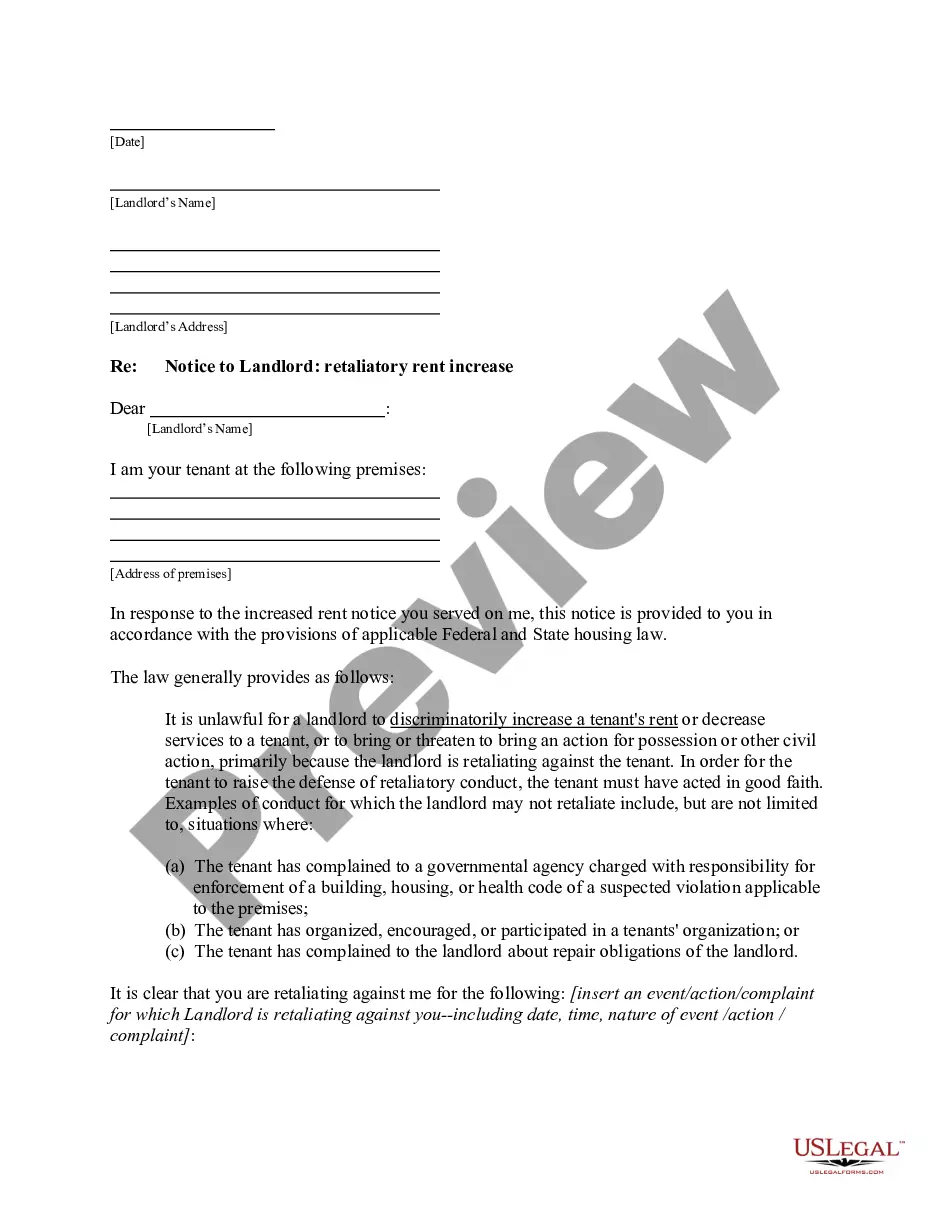
North Carolina Letter from Landlord to Tenant as Notice to Tenant of Tenant's Disturbance of Neighbors' Peaceful Enjoyment to Remedy or Lease Terminates
What this document covers
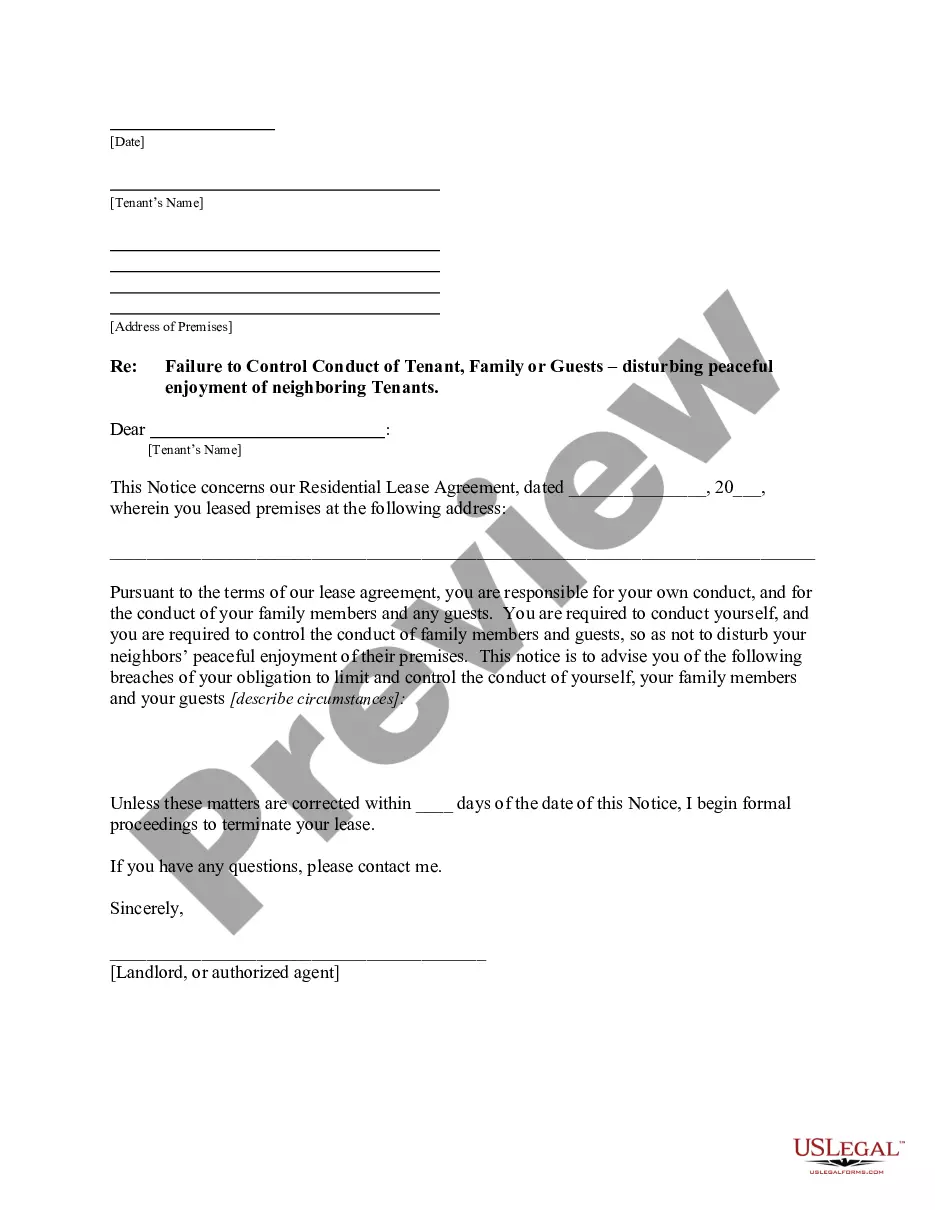
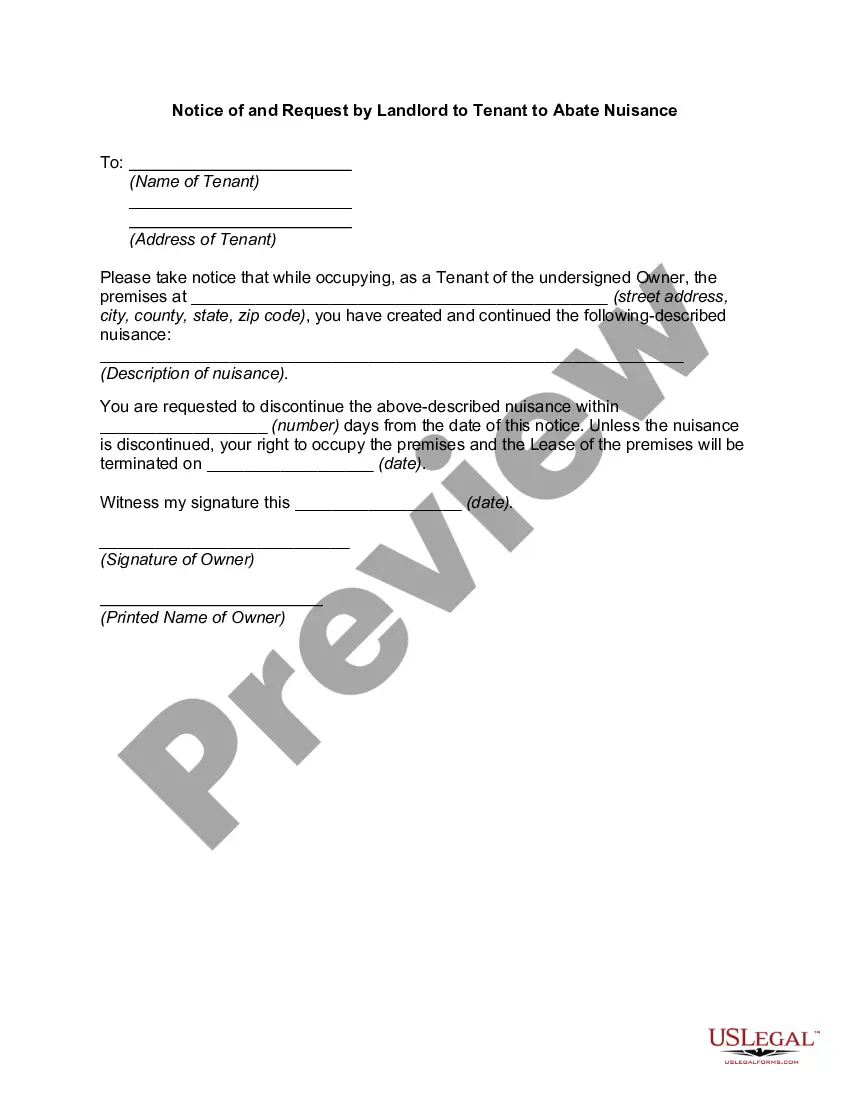
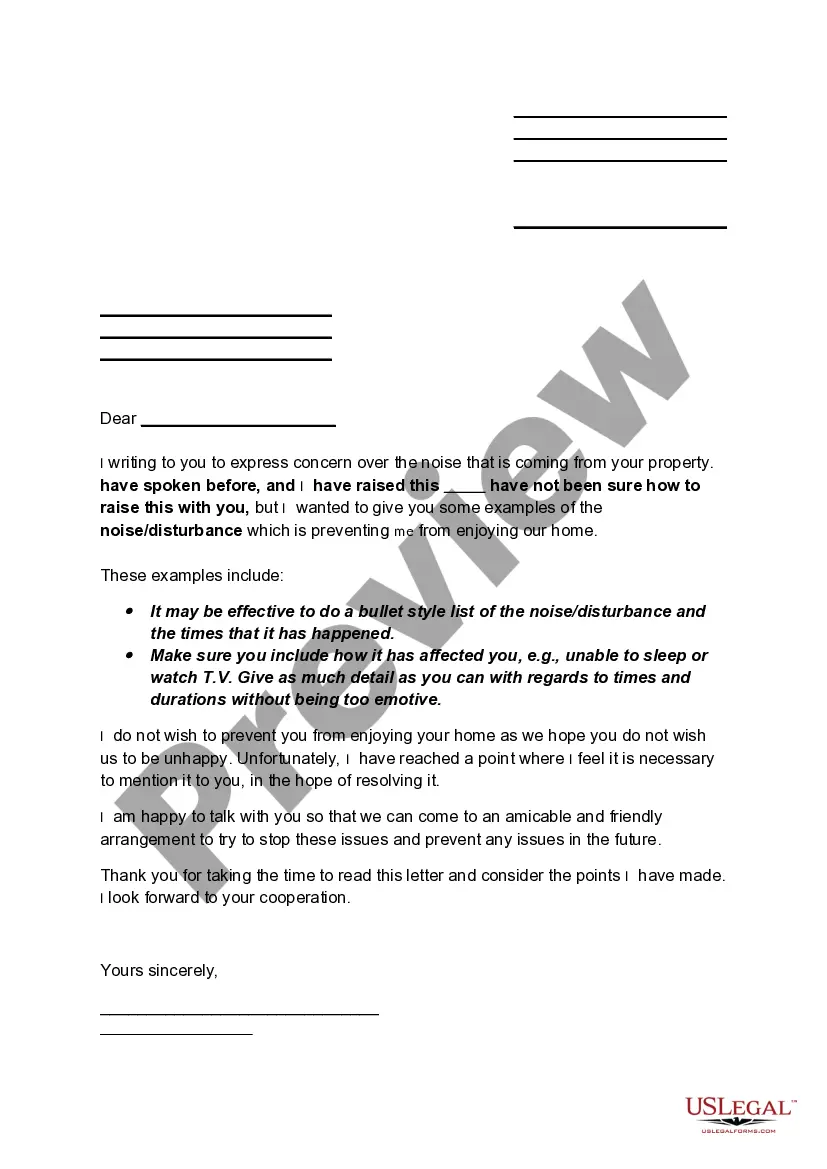
This Letter from Landlord to Tenant serves as an official notice regarding a tenant's disturbance of their neighbors' peaceful enjoyment. The letter notifies the tenant that their actions have violated their obligations to maintain order, which could lead to significant repercussions, including lease termination. This form is important for landlords to ensure compliance with lease terms and to address tenant behavior that disrupts the community.
Key parts of this document
- Identification of the landlord and tenant.
- Description of the specific disturbances or behaviors observed.
- A statement on the tenant's obligations to maintain peaceful enjoyment.
- Details on required remedial actions to correct the issue.
- Consequences of failing to remedy the disturbance, including potential lease termination.


When this form is needed
This form should be used when a landlord observes disturbances caused by a tenant, their family members, or guests that disrupt the peaceful enjoyment of neighbors. Such situations may include loud noises, inappropriate behavior, or activities that threaten the comfort and safety of the surrounding community. Utilizing this notice helps document the issue and provides the tenant with an opportunity to rectify their actions before further steps are taken.
Intended users of this form
This form is intended for:
- Landlords managing residential properties.
- Property managers acting on behalf of landlords.
- Tenants who receive complaints regarding their conduct and wish to understand their legal obligations.
Steps to complete this form
- Identify and enter your name and contact information as the landlord.
- Specify the tenant's details, including their name and address.
- Clearly describe the disturbance and how it violates the tenant's lease obligations.
- Outline the actions the tenant must take to remedy the situation.
- Include a statement regarding the potential consequences of not addressing the issue.
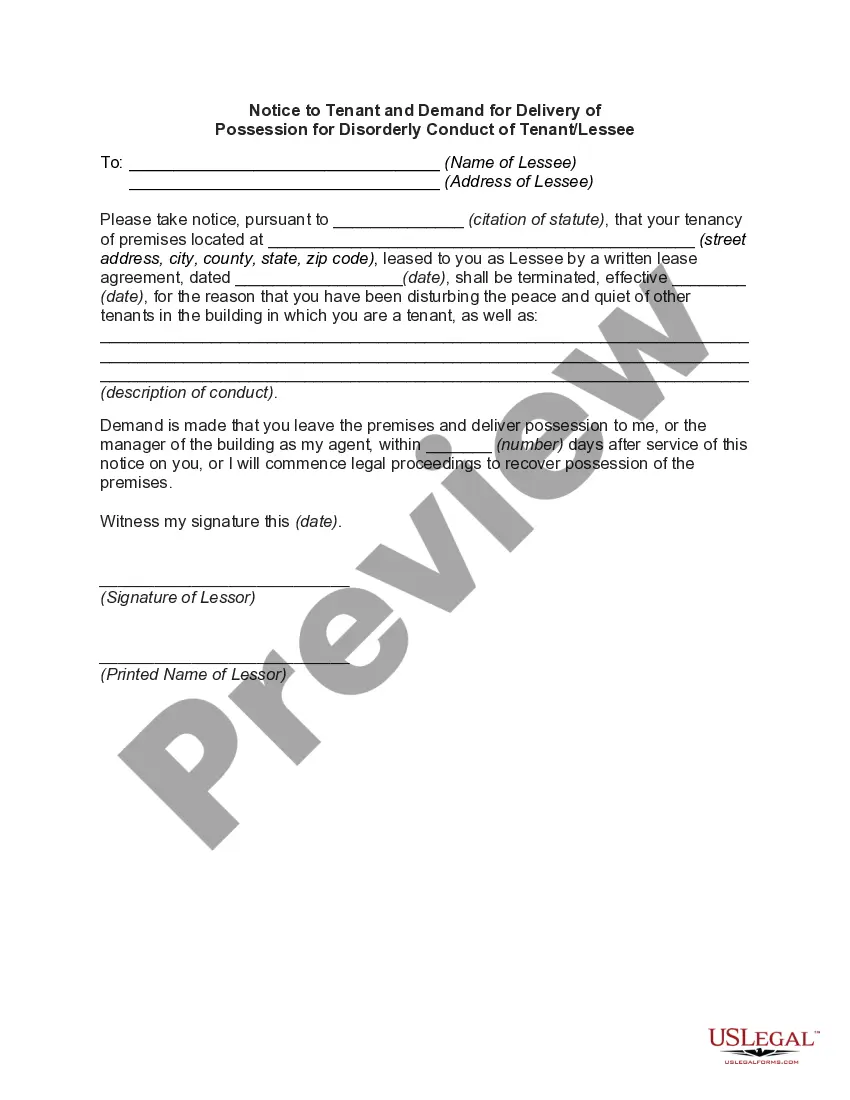
- Sign and date the notice, and provide a method for delivering it to the tenant.
Notarization guidance
This form does not typically require notarization unless specified by local law.
Get your form ready online
Our built-in tools help you complete, sign, share, and store your documents in one place.
Make edits, fill in missing information, and update formatting in US Legal Forms—just like you would in MS Word.
Download a copy, print it, send it by email, or mail it via USPS—whatever works best for your next step.
Sign and collect signatures with our SignNow integration. Send to multiple recipients, set reminders, and more. Go Premium to unlock E-Sign.
If this form requires notarization, complete it online through a secure video call—no need to meet a notary in person or wait for an appointment.
We protect your documents and personal data by following strict security and privacy standards.

Make edits, fill in missing information, and update formatting in US Legal Forms—just like you would in MS Word.

Download a copy, print it, send it by email, or mail it via USPS—whatever works best for your next step.

Sign and collect signatures with our SignNow integration. Send to multiple recipients, set reminders, and more. Go Premium to unlock E-Sign.

If this form requires notarization, complete it online through a secure video call—no need to meet a notary in person or wait for an appointment.

We protect your documents and personal data by following strict security and privacy standards.
Common mistakes to avoid
- Failing to include specific details of the disturbance in the notice.
- Not providing a reasonable timeframe for the tenant to remedy the issue.
- Neglecting to sign the notice before delivery.
- Using informal language that may reduce the notice's legal effect.
Why use this form online
- Convenience of downloading the form at any time, from anywhere.
- Editable fields allow for quick customization to suit your specific situation.
- Access to legally vetted templates drafted by licensed attorneys ensures accuracy and compliance.
Looking for another form?
Form popularity
FAQ
Eviction: If the court finds that there is a breach of lease they will issue an Order of Restitution, which orders the Sherriff to remove the Tenant from the property.
Every California lease includes a covenant of quiet enjoyment, and such a covenant is often an express term in commercial leases. But unlike residential rental agreements, parties to a commercial lease can modify or waive the covenant of quiet enjoyment.
A covenant of quiet enjoyment insures an owner or tenant against a disturbance of his or her right to possess or use property. For example, a covenant of quiet enjoyment could prevent a tenant from being evicted by a person with superior title. Also called covenant for quiet enjoyment.
According to Nolo, quiet enjoyment is The right of a property owner or tenant to enjoy his or her property without interference.Leases and rental agreements often contain a covenant of quiet enjoyment, expressly obligating the landlord to ensure that tenants live undisturbed.
The covenant of quiet enjoyment states that a tenant has the right to enjoy his or her rental unit without substantial interference from the landlord. It ensures that tenants benefit from the full use and enjoyment of their rental unit.
Most jurisdictions read residential leases to include an implied warranty of habitability. This warranty requires landlords to keep their property "habitable," even if the lease does specifically require them to make repairs.Supporters argue that it protects poor tenants from abusive landlords.
The covenant of quiet enjoyment states that a tenant has the right to enjoy his or her rental unit without substantial interference from the landlord. It ensures that tenants benefit from the full use and enjoyment of their rental unit.
Lack of Basic Services - If the landlord is responsible for utility bill payments and fails to pay them and any utilities are turned off, the tenant may claim a breach of the covenant of quiet enjoyment. This also includes any issues within common areas of a property.
Under common law tenants have a right to 'quiet enjoyment' of the property. This is an implied term, or covenant, which has been expressed or implied in conveyances and leases of English land for centuries.'Quiet enjoyment' is a term so often misunderstood.