North Carolina General Warranty Deed from Husband and Wife to Corporation
About this form
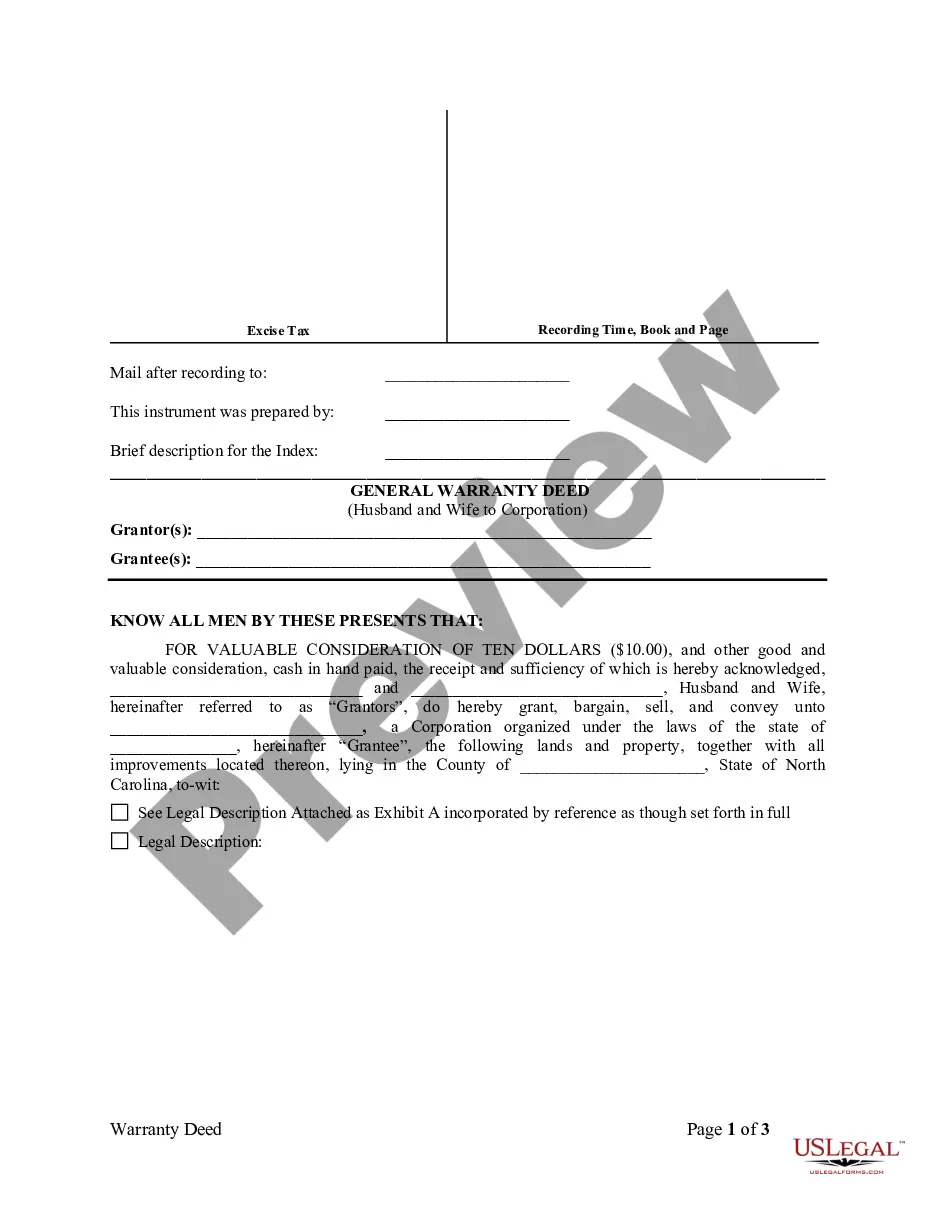
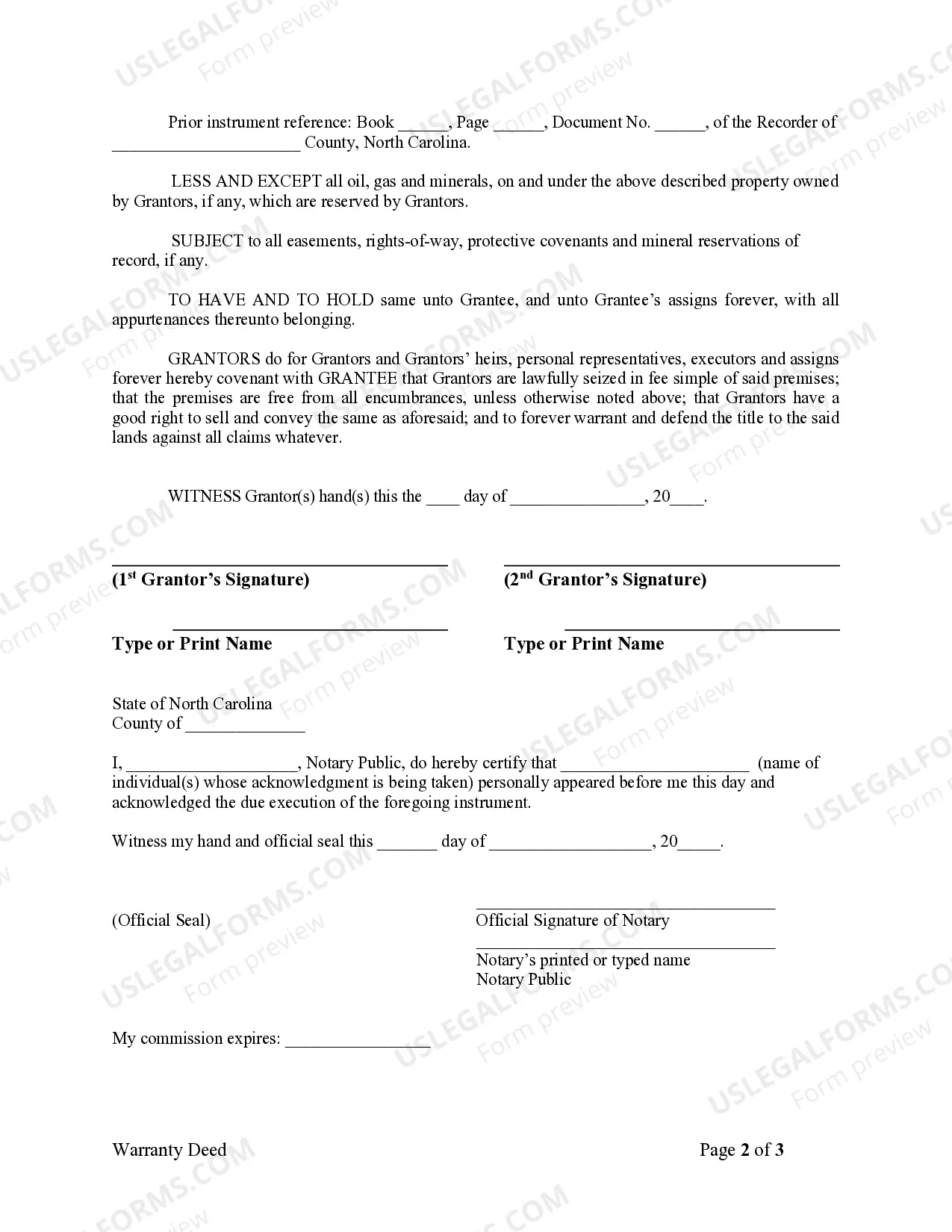
The General Warranty Deed from Husband and Wife to Corporation is a legal document that transfers property ownership from a married couple to a corporate entity. This warranty deed guarantees that the property is free from encumbrances and grants the corporation full rights to the property, subject to any specified exceptions. Importantly, this form is specifically tailored for situations where both grantors are spouses and the grantee is a corporation, differentiating it from other types of property transfer forms.
Main sections of this form
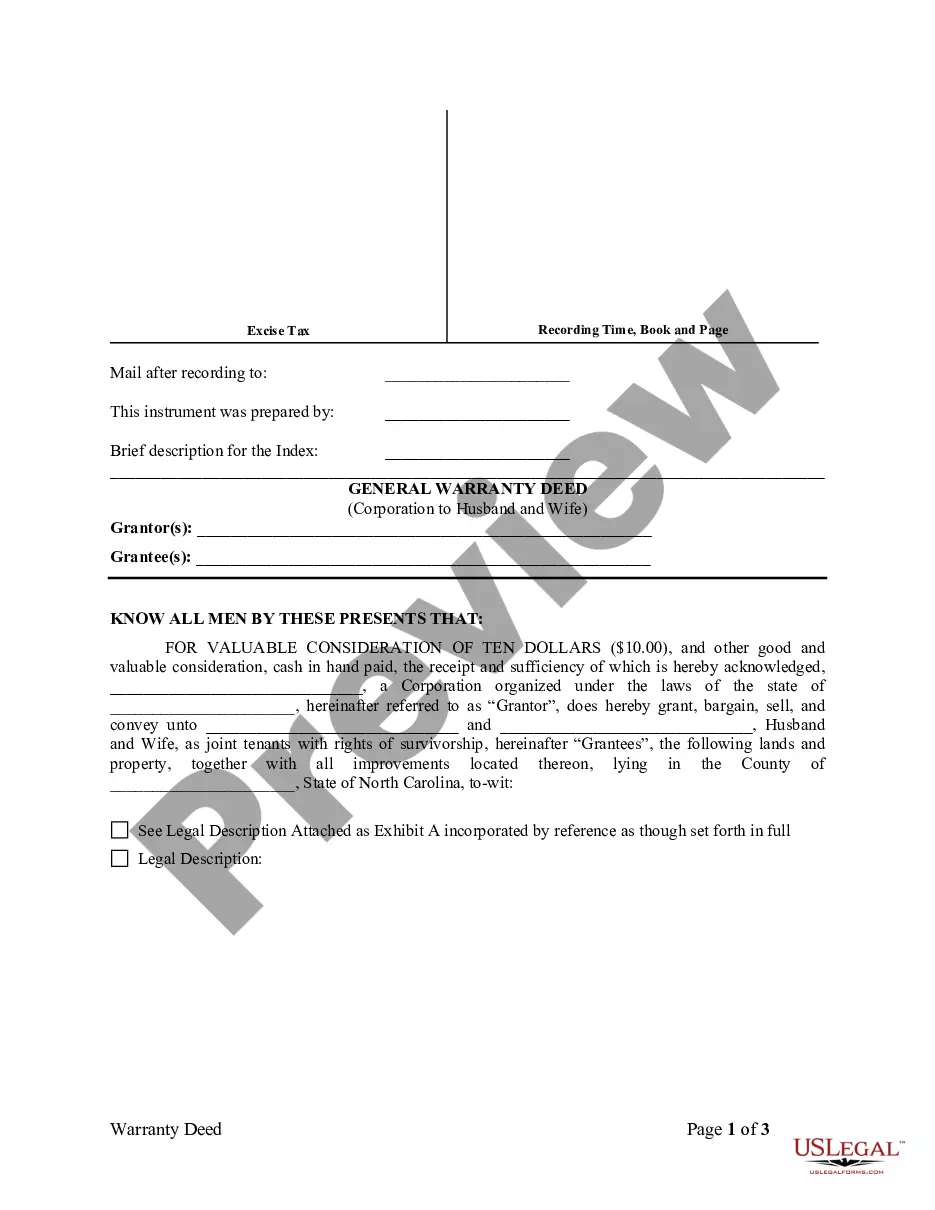
- Identification of grantors (husband and wife) and grantee (corporation).
- Legal description of the property being conveyed.
- Warranties and covenants guaranteeing the title and property condition.
- Specific exceptions, such as mineral rights, that are retained by the grantors.
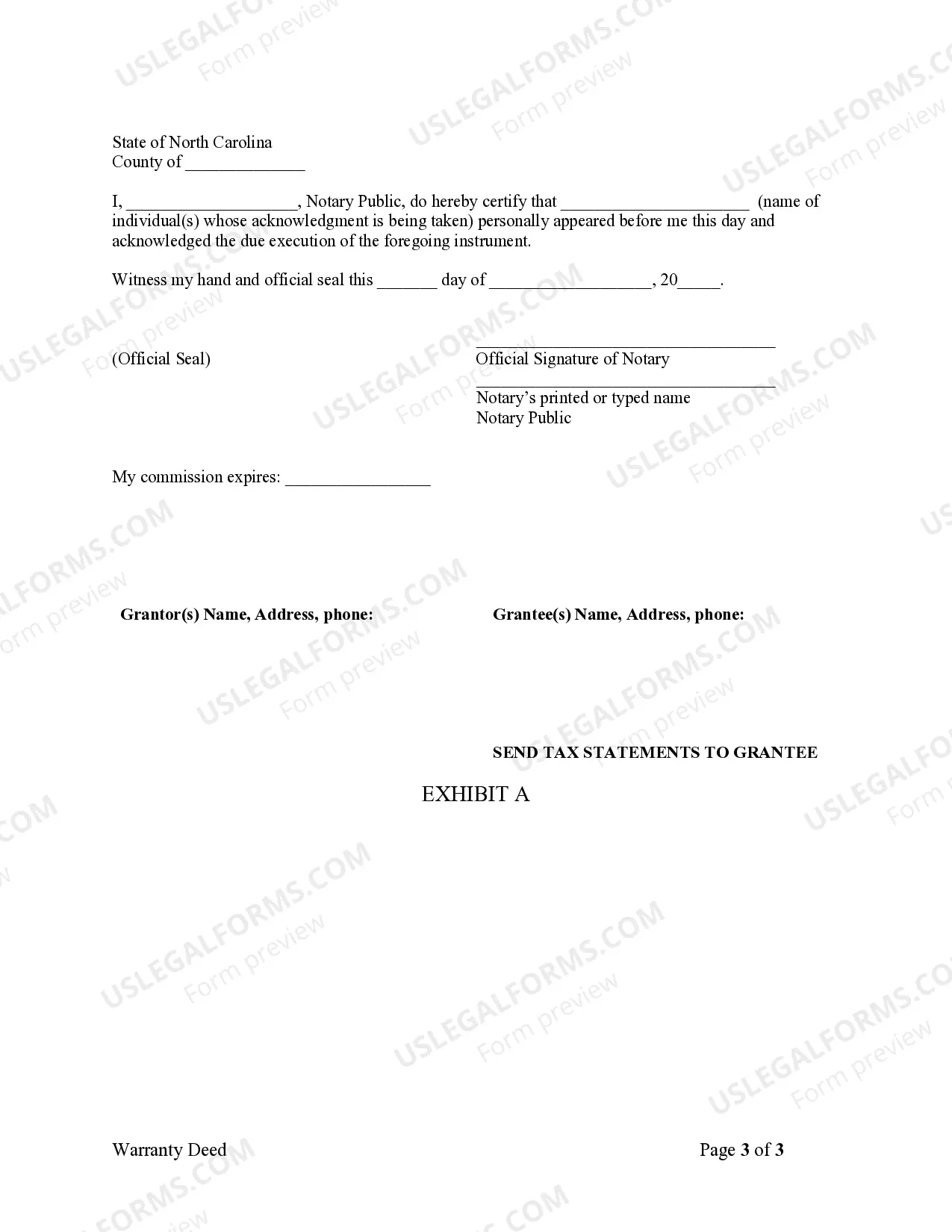
- Signature lines for both grantors, along with a notary public section.





When this form is needed
This form is appropriate in situations where a married couple wishes to transfer their property ownership to a corporation, perhaps as part of a business investment or asset management strategy. It is often used when one or both spouses want to ensure that the corporation holds legal title to the property, ensuring clear ownership and potential liability protection.
Intended users of this form
This form is primarily intended for:
- Married couples who own property and want to transfer it to a corporation.
- Individuals or business owners seeking to simplify property ownership through corporate structures.
- Attorneys or real estate professionals assisting clients in property transfers.
Steps to complete this form
- Identify the grantors: Enter the names of the husband and wife.
- Specify the grantee: Write in the full name of the corporation acquiring the property.
- Detail the property: Include a legal description of the property being transferred.
- Enter the date of execution: Indicate when the deed will be signed.
- Have both grantors sign the deed in the designated signature sections.
- Obtain notarization: Ensure a notary public witnesses the signature and stamps the document properly.
Does this form need to be notarized?
This document requires notarization to meet legal standards. US Legal Forms provides secure online notarization powered by Notarize, allowing you to complete the process through a verified video call, available 24/7.
Get your form ready online
Our built-in tools help you complete, sign, share, and store your documents in one place.
Make edits, fill in missing information, and update formatting in US Legal Forms—just like you would in MS Word.
Download a copy, print it, send it by email, or mail it via USPS—whatever works best for your next step.
Sign and collect signatures with our SignNow integration. Send to multiple recipients, set reminders, and more. Go Premium to unlock E-Sign.
If this form requires notarization, complete it online through a secure video call—no need to meet a notary in person or wait for an appointment.
We protect your documents and personal data by following strict security and privacy standards.

Make edits, fill in missing information, and update formatting in US Legal Forms—just like you would in MS Word.

Download a copy, print it, send it by email, or mail it via USPS—whatever works best for your next step.

Sign and collect signatures with our SignNow integration. Send to multiple recipients, set reminders, and more. Go Premium to unlock E-Sign.

If this form requires notarization, complete it online through a secure video call—no need to meet a notary in person or wait for an appointment.

We protect your documents and personal data by following strict security and privacy standards.
Avoid these common issues
- Failing to clearly identify the property may lead to legal disputes.
- Not including all necessary signatures or notarization, which could invalidate the deed.
- Leaving out exceptions or reservations, such as mineral rights, might cause future ownership issues.
- Using incorrect legal names for the parties involved in the deed.
Benefits of completing this form online
- Convenience of instant access to professionally drafted legal forms.
- Editability allows users to customize the deed as needed for their specific situation.
- Reliability in that the form is drafted by licensed attorneys to ensure legal validity.
Legal use & context
- This warranty deed serves as a legally binding document that asserts the transfer of property ownership.
- It provides specific warranties regarding the title, offering protection against claims from third parties.
- Proper execution and recording of the deed are essential for enforceability in real estate transactions.
Main things to remember
- The General Warranty Deed from Husband and Wife to Corporation is a crucial document for transferring property ownership from a married couple to a corporation.
- Understanding key components, such as warranties and exceptions, is vital for effective use.
- Proper completion and notarization of the form are necessary to ensure legal enforceability.
Looking for another form?
Form popularity
FAQ
A warranty deed, also known as a general warranty deed, is a legal real estate document between the seller (grantor) and the buyer (grantee). The deed protects the buyer by pledging that the seller holds clear title to the property and there are no encumbrances, outstanding liens, or mortgages against it.
A warranty deed is a document often used in real estate that provides the greatest amount of protection to the purchaser of a property. It pledges or warrants that the owner owns the property free and clear of any outstanding liens, mortgages, or other encumbrances against it.
The North Carolina general warranty deed is used to transfer property in North Carolina from one person to another legally.In other words, the seller is liable to the buyer if the buyer finds out there was an undisclosed claim against the property.
To make the form legally binding, you must sign it in front of a notary public. You must then file your signed and notarized deed with the county office that's in charge of recording property documents. Once the grantee signs the warranty deed, he/she legally has ownership and claim to the property.
To transfer ownership of land in North Carolina, the owner must execute and file a new deed with the register of deeds for the North Carolina county where the property is located.
Under the Grantor section of the deed, write the name of the person transferring title. Under Grantee, write the name of the person receiving title. Describe the parcel of land. Use the street address and include the North Carolina County where the land is located.
The answer is yes. Parties to a transaction are always free to prepare their own deeds. If you do so, be sure your deed measures up to your state's legal regulations, to help avert any legal challenge to the deed later.
The name and address of the seller (called the grantor) The name and address of the buyer (called the grantee) A legal description of the property (found on the previous deed) A statement that the grantor is transferring the property to the grantee.
Recording All deeds must be filed in the Register of Deeds in the County where the real estate is located. Signing (§ 47-38) All deeds must be signed with the Grantor(s) signing in front of a Notary Public.