Montana Letter from Landlord to Tenant as Notice to remove unauthorized inhabitants
What this document covers
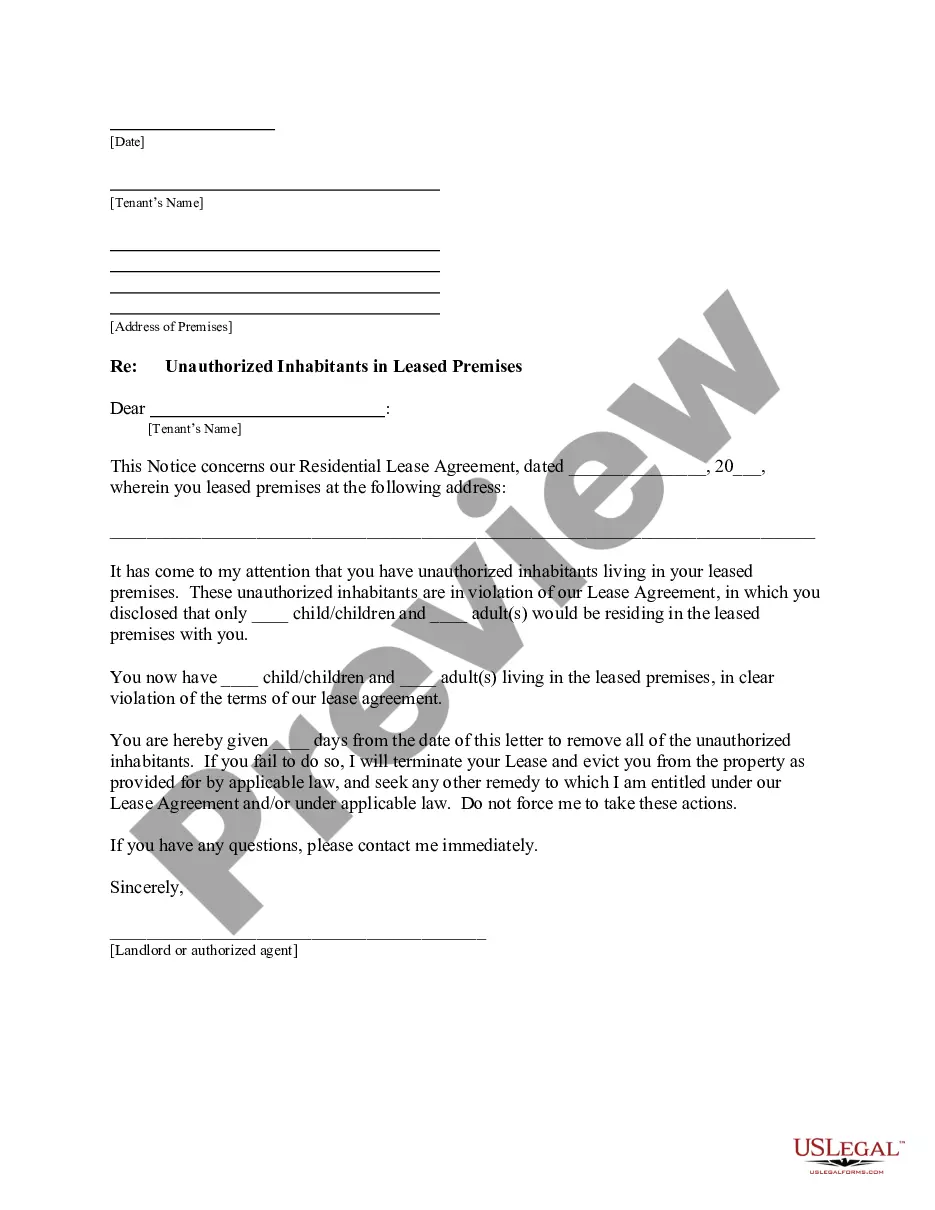
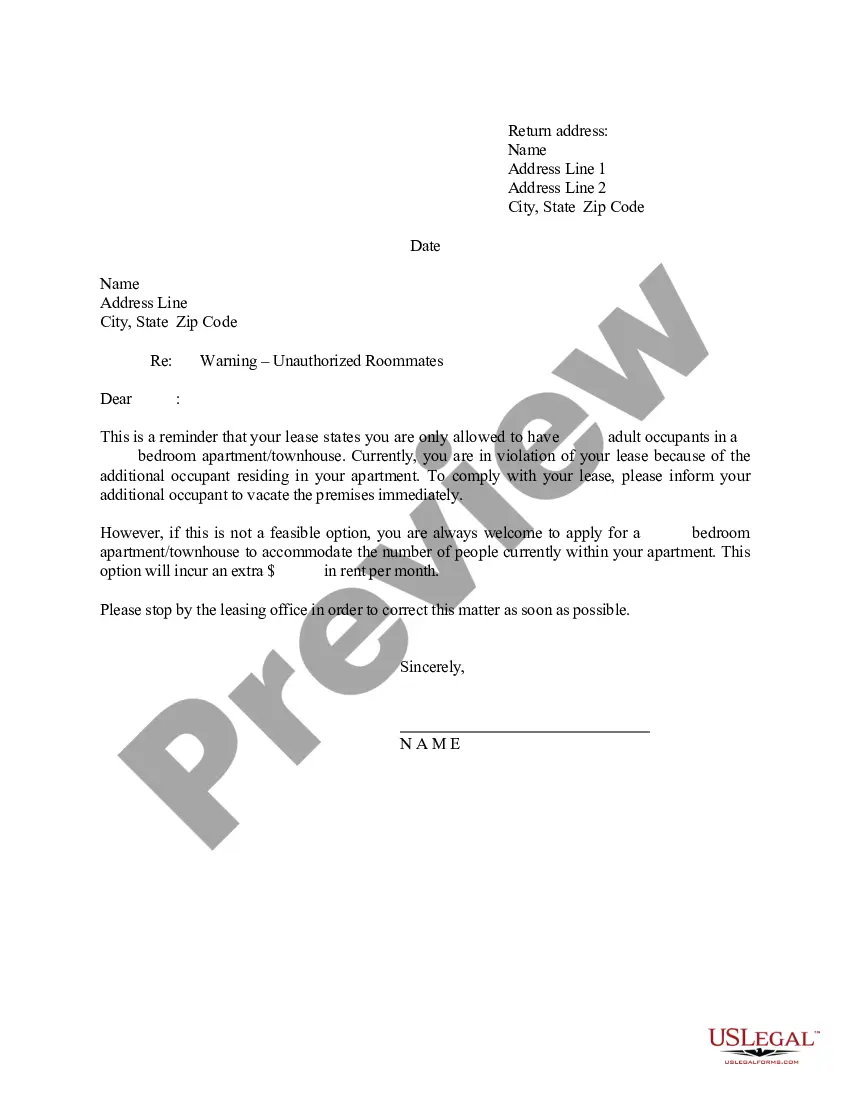
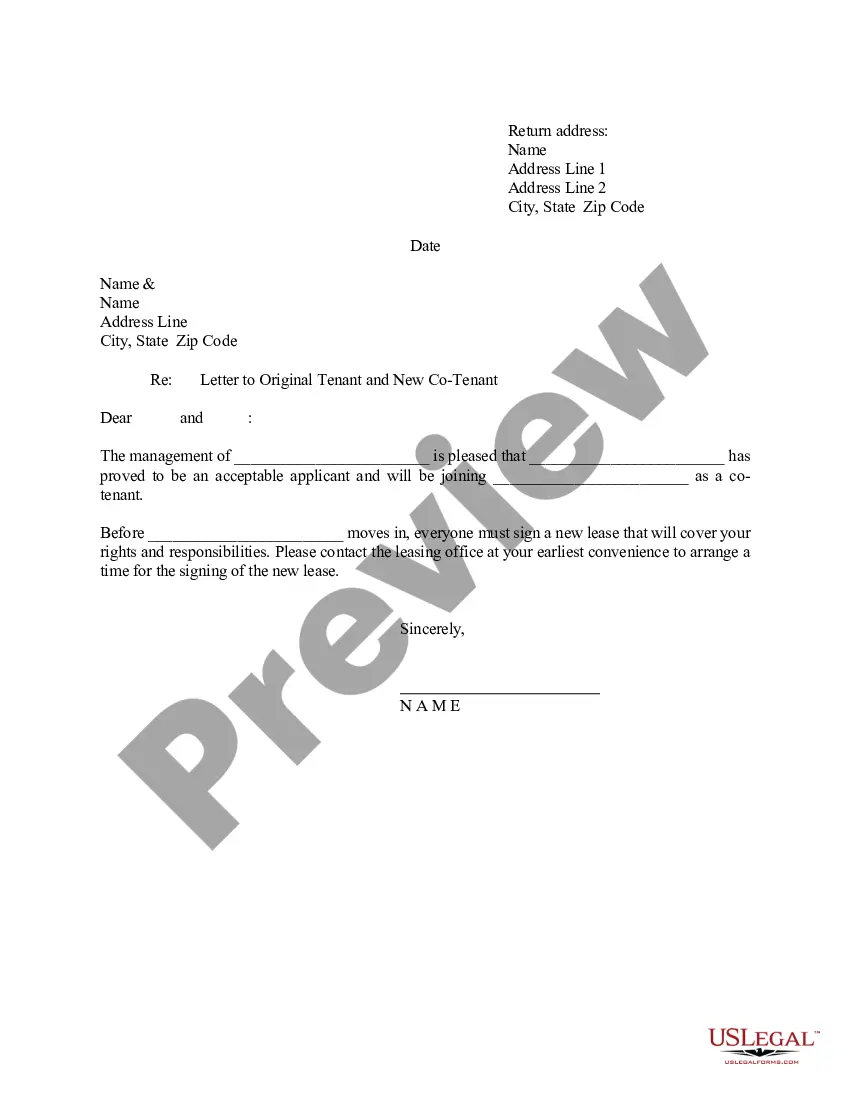
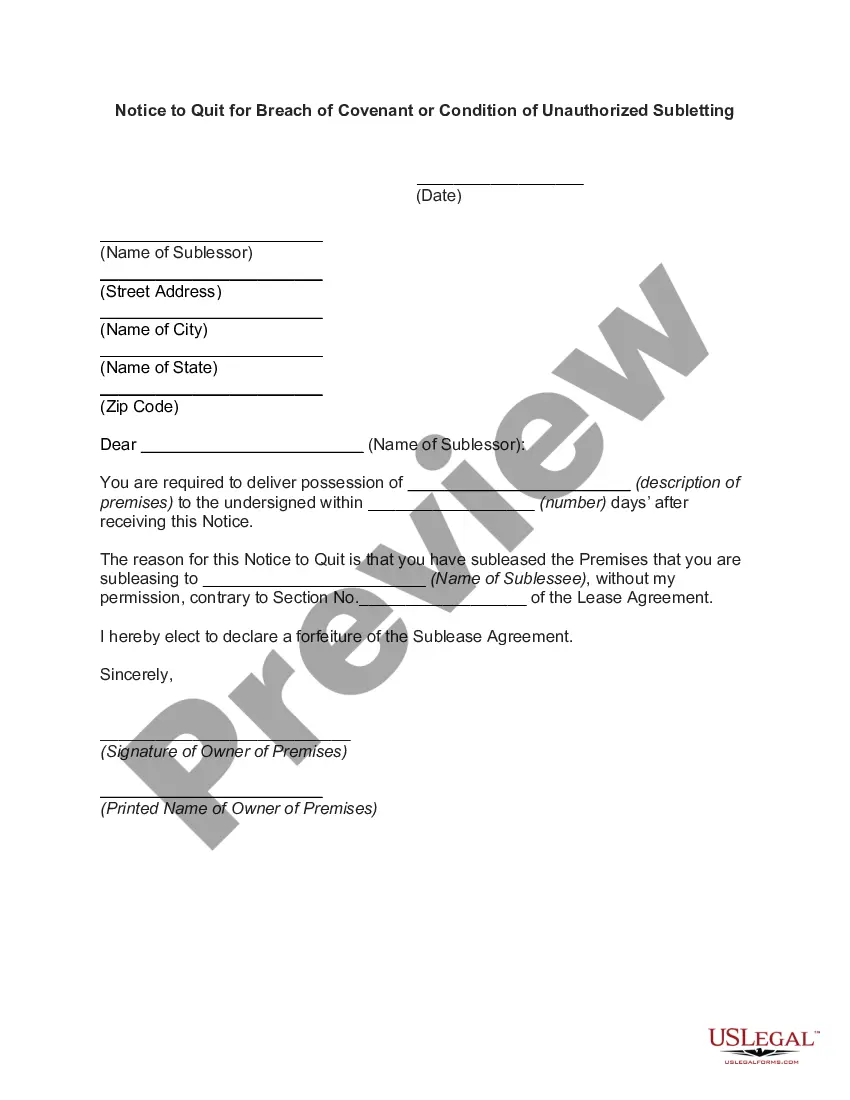
This letter from the landlord to the tenant serves as a notice to remove unauthorized inhabitants from the rental property. It notifies the tenant of the violation of the lease agreement regarding residency and warns that failure to comply may result in lease termination and eviction. This form is crucial in maintaining compliance with the lease terms and protecting the landlord's rights.
What’s included in this form
- Date of the residential lease agreement.
- Property address where the unauthorized inhabitants reside.
- Details of authorized residents as per the lease agreement.
- Number of unauthorized inhabitants residing at the property.
- Notice period given to the tenant for compliance.
- Consequences of ignoring the notice, including eviction rights.
- Landlord's contact information for any inquiries.

Situations where this form applies
This form should be used when a landlord discovers unauthorized occupants residing in a rental property. It is essential when enforcing the lease agreement terms and when the landlord intends to take further action, such as eviction, if the tenant does not comply with the notice.
Who needs this form
- Landlords who wish to address unauthorized inhabitants in their rental property.
- Property managers acting on behalf of landlords in rental agreements.
- Tenants who need to understand their rights and obligations under the lease.
How to prepare this document
- Identify the date of the lease agreement and the property address.
- Mention the number of authorized children and adults living in the property as per the lease.
- Specify the number of unauthorized inhabitants currently occupying the premises.
- Enter the deadline for the tenant to remove unauthorized inhabitants.
- Provide your name and title as the landlord or authorized agent.
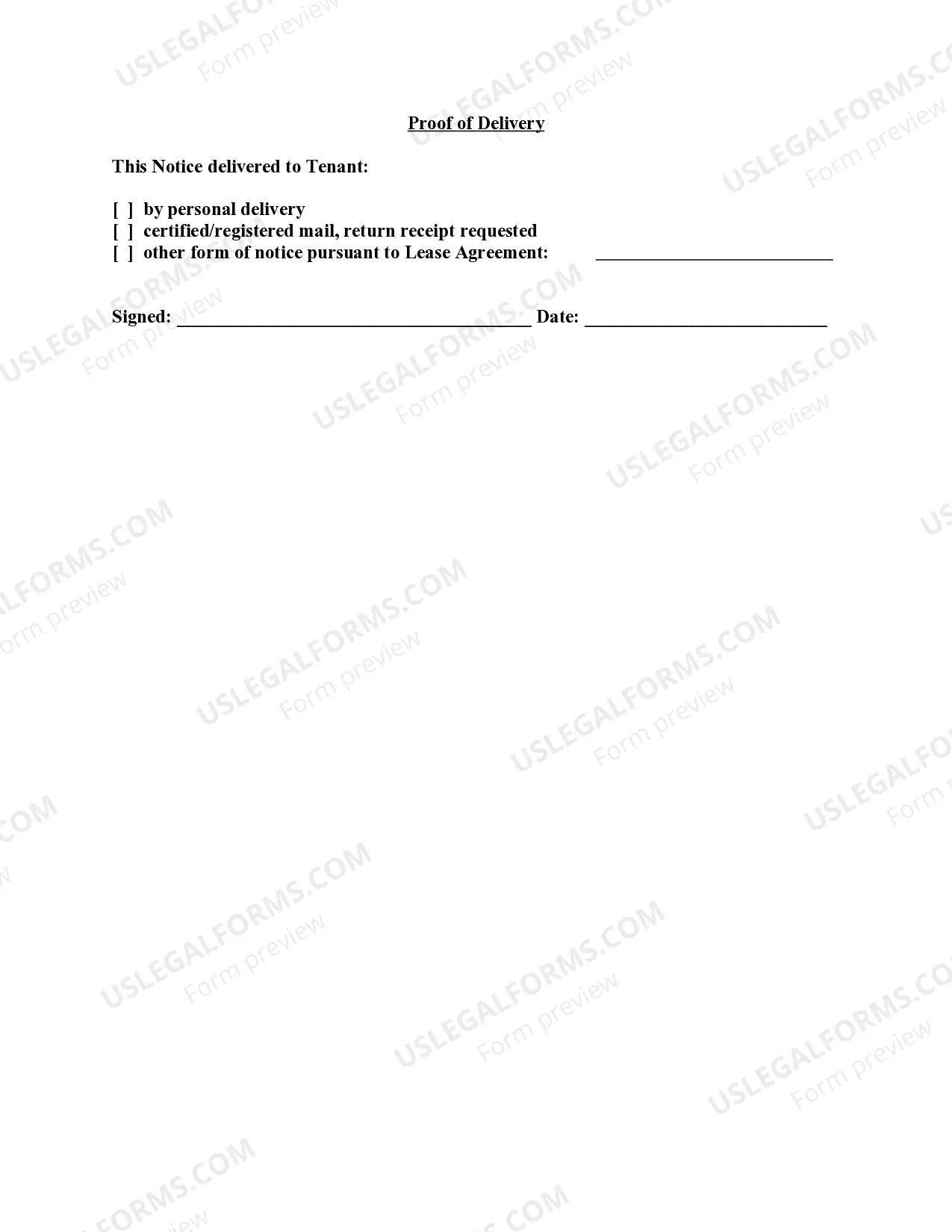
- Proof of delivery should be documented, indicating how the notice was delivered.
Does this document require notarization?
This form does not typically require notarization unless specified by local law. Always check your local regulations to ensure compliance.
Get your form ready online
Our built-in tools help you complete, sign, share, and store your documents in one place.
Make edits, fill in missing information, and update formatting in US Legal Forms—just like you would in MS Word.
Download a copy, print it, send it by email, or mail it via USPS—whatever works best for your next step.
Sign and collect signatures with our SignNow integration. Send to multiple recipients, set reminders, and more. Go Premium to unlock E-Sign.
If this form requires notarization, complete it online through a secure video call—no need to meet a notary in person or wait for an appointment.
We protect your documents and personal data by following strict security and privacy standards.

Make edits, fill in missing information, and update formatting in US Legal Forms—just like you would in MS Word.

Download a copy, print it, send it by email, or mail it via USPS—whatever works best for your next step.

Sign and collect signatures with our SignNow integration. Send to multiple recipients, set reminders, and more. Go Premium to unlock E-Sign.

If this form requires notarization, complete it online through a secure video call—no need to meet a notary in person or wait for an appointment.

We protect your documents and personal data by following strict security and privacy standards.
Typical mistakes to avoid
- Failing to include the correct property address.
- Not specifying the exact number of unauthorized inhabitants.
- Improperly documenting the delivery method for the notice.
- Leaving out the deadline for the tenant to respond.
Why use this form online
- Convenient access to legal documents at any time.
- Editable templates allow customization to specific situations.
- Professionally drafted by licensed attorneys, ensuring compliance with legal standards.
Legal use & context
- This notice is enforceable under the terms of the lease agreement.
- Failure to comply may lead to legal eviction proceedings.
- Consult local laws for specific procedures regarding landlord notices and eviction.
Summary of main points
- This letter is a formal notification for tenants to remove unauthorized inhabitants.
- Failure to comply can result in lease termination and eviction.
- Always provide clear information and a specific timeframe for compliance.
- Understand and comply with your stateâs rental laws while using this form.
Looking for another form?
Form popularity
FAQ
Be in writing, Say the full name of the tenant or tenants, Have the address the notice is about, Say everything that the tenant did to break the lease or deserve a 3 day notice to leave, and include details and dates, Say clearly that the tenant has to move out as soon as the 3 days are up, and.
Dear (Name of landlord or manager), This letter constitutes my written (number of days' notice that you need to give based on your lease agreement)-day notice that I will be moving out of my apartment on (date), the end of my current lease. I am leaving because (new job, rent increase, etc.)
Give you a written notice that says your rental agreement is terminated on a certain date. File an eviction lawsuit against you in court if you don't move out by the date given in the termination notice;
Dear (Name of landlord or manager), This letter constitutes my written (number of days' notice that you need to give based on your lease agreement)-day notice that I will be moving out of my apartment on (date), the end of my current lease. I am leaving because (new job, rent increase, etc.)
All notices between landlord and tenant have to be in writing. The question, as you have clearly stated is whether email is a writing. Practically speaking, probably yes - presuming your landlord can prove you got the notice.
This question is about Montana Landlord Tenant RightsMontana is fairly landlord-friendly as there is not state-wide rent control and landlords have relatively few regulations as far as evictions proceedings are concerned.
Indiana. Indiana laws allow landlords to hold on to security deposits for 45 days to give them time to determine any damages caused by tenants. Colorado. Colorado is one of few states that allow landlords to access the rental property without an advance notice requirement. Georgia.
Write the title for your pay or quit notice across the top of the letter. If not included in the title, the number of days for the notice must be specified. Include the names of each of the tenants. Specify the address of the rental property.
Step 1: Mention the Reason for Giving a Notice. Step 2: Use Formal Language. Step 3: Mention the Date for Vacating. Step 4: Address the Formalities to Be Taken Care Of. Step 5: Proofread the Letter.