Montana Warranty Deed from Corporation to Husband and Wife
What this document covers
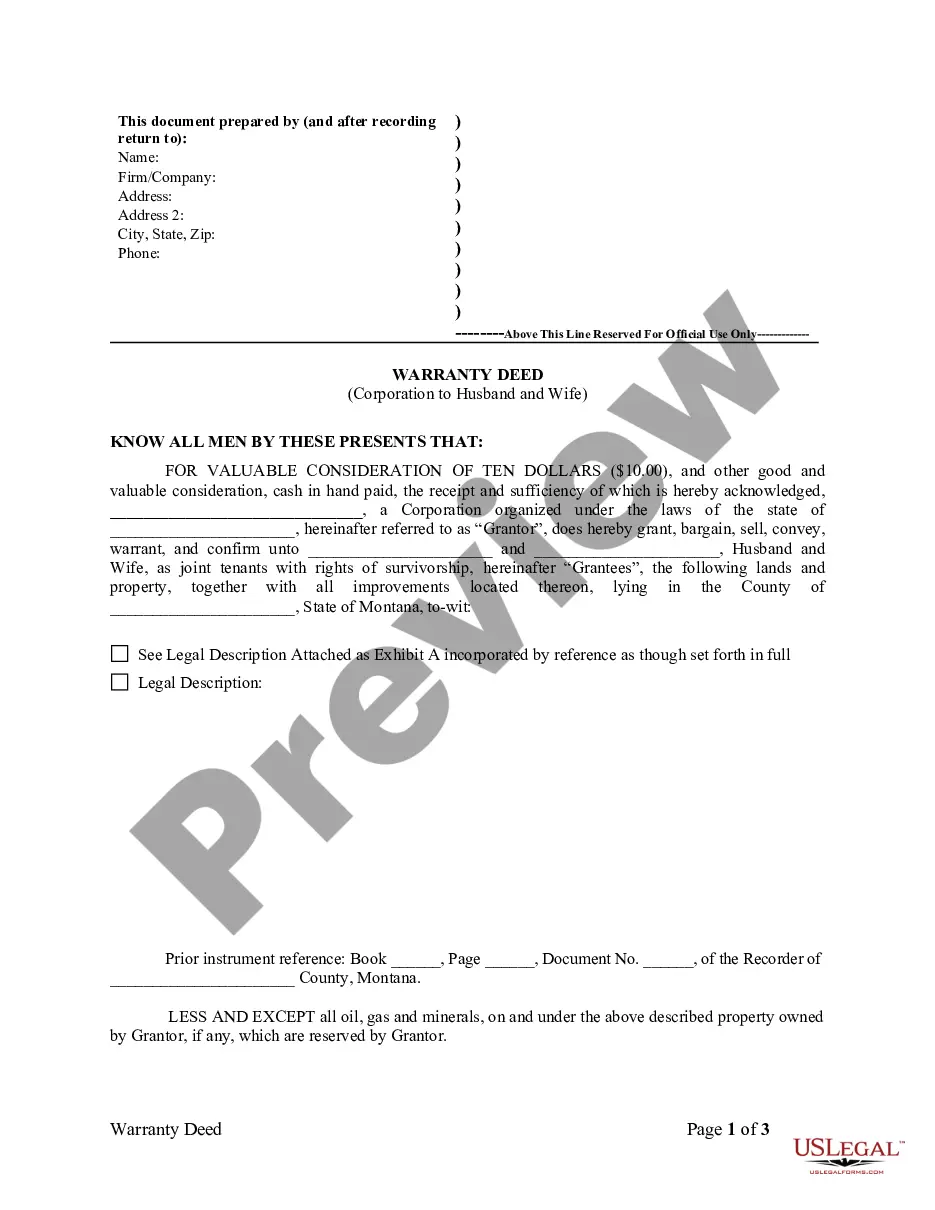
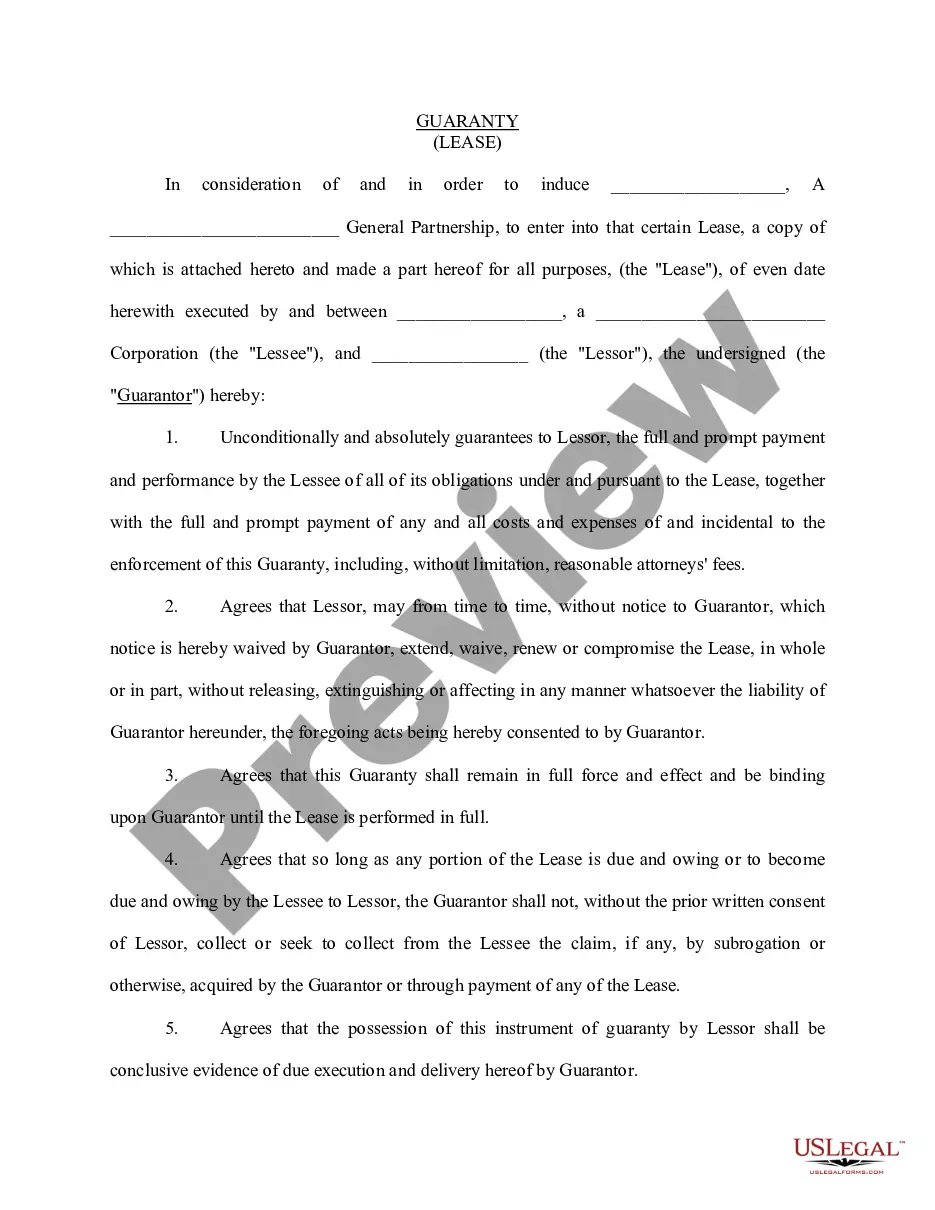
The Warranty Deed from Corporation to Husband and Wife is a legal document used to transfer property ownership from a corporation to a married couple. This deed guarantees that the property is being sold free of encumbrances, except for any noted reservations, such as mineral rights. This form is essential for ensuring that both parties' rights are clearly defined and that the couple receives full ownership of the property in joint tenancy with rights of survivorship.
Key parts of this document
- Identification of Grantor (the corporation) and Grantees (the husband and wife).
- Description of the property being conveyed.
- Legal clauses regarding the warranty of title and any reservations, such as mineral rights.
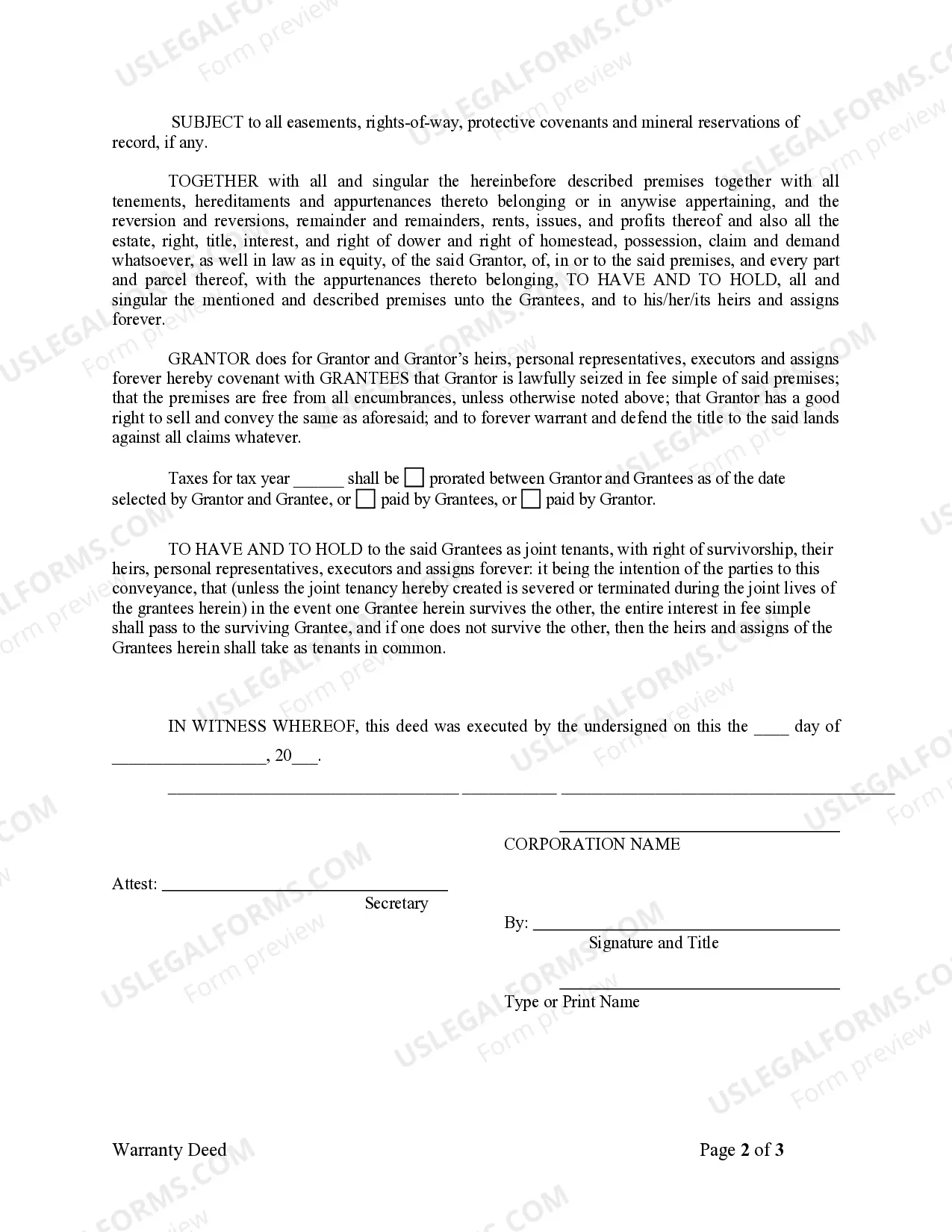
- Terms specifying joint tenancy and rights of survivorship.
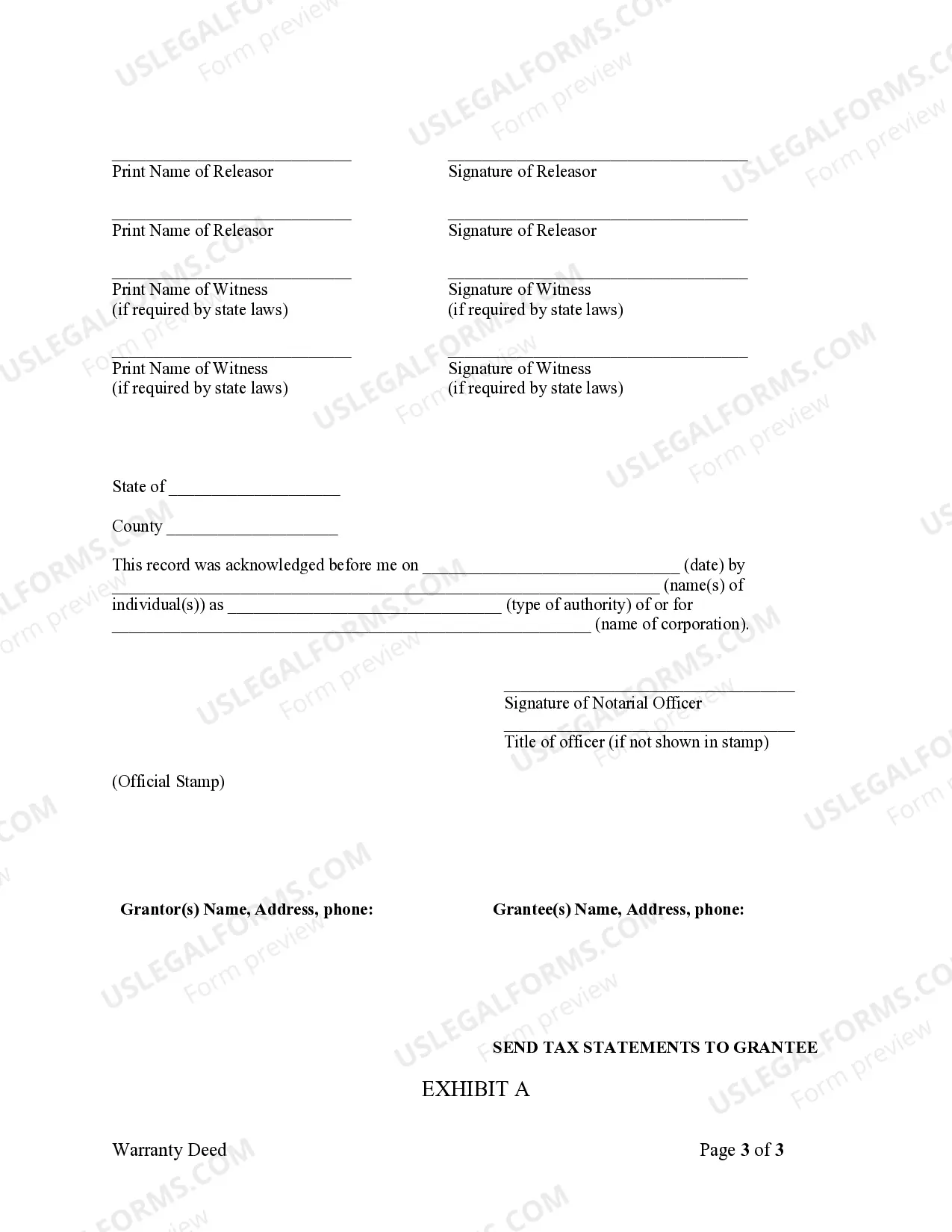
- Notarization and witness signature requirements, if applicable.




Situations where this form applies
This form should be used when a corporation is transferring real estate ownership to a married couple. Common scenarios include a business owning property that is being sold or given to its officers who are also spouses. It is crucial in situations where both parties want to ensure that property rights are protected and clearly documented.
Who should use this form
This form is intended for:
- Corporations looking to transfer property to their employees who are married.
- Husbands and wives receiving property from a corporation.
- Attorneys assisting clients in property transactions between corporations and couples.
How to complete this form
- Identify the parties involved (the corporation and the husband and wife).
- Specify the legal description of the property being transferred.
- Enter the date of transfer and any tax considerations.
- Include signatures of both the Grantor and the Grantees, as well as witnesses if required.
- Ensure the form is notarized if necessary.
Notarization guidance
Yes, this form must be notarized to be legally valid. The notarization process helps ensure that the identities of the signers are verified, adding an extra layer of protection against fraud. US Legal Forms also provides integrated online notarization services, allowing you to secure notarization via a safe and easy video call.
Get your form ready online
Our built-in tools help you complete, sign, share, and store your documents in one place.
Make edits, fill in missing information, and update formatting in US Legal Forms—just like you would in MS Word.
Download a copy, print it, send it by email, or mail it via USPS—whatever works best for your next step.
Sign and collect signatures with our SignNow integration. Send to multiple recipients, set reminders, and more. Go Premium to unlock E-Sign.
If this form requires notarization, complete it online through a secure video call—no need to meet a notary in person or wait for an appointment.
We protect your documents and personal data by following strict security and privacy standards.

Make edits, fill in missing information, and update formatting in US Legal Forms—just like you would in MS Word.

Download a copy, print it, send it by email, or mail it via USPS—whatever works best for your next step.

Sign and collect signatures with our SignNow integration. Send to multiple recipients, set reminders, and more. Go Premium to unlock E-Sign.

If this form requires notarization, complete it online through a secure video call—no need to meet a notary in person or wait for an appointment.

We protect your documents and personal data by following strict security and privacy standards.
Typical mistakes to avoid
- Failing to accurately describe the property can lead to legal issues.
- Not including all required signatures, which may invalidate the deed.
- Overlooking state-specific notarization or witness requirements.
- Not addressing any reservations, such as mineral rights, correctly.
Benefits of using this form online
- Easy access to professionally drafted legal documents.
- Ability to download and complete forms at your own pace.
- Convenience of filling out forms online without the need for in-person visits.
Looking for another form?





Form popularity
FAQ
Quitclaim Deeds are used when the transfer of ownership in the property does not occur as the result of a traditional sale.Under a warranty deed, if it turns out that the property is not what the seller promised or there's an uncleared lien or other block to the title, the buyer can sue the seller and recover damages.
A warranty deed guarantees that: The grantor is the rightful owner of the property and has the legal right to transfer the title.The title would withstand third-party claims to ownership of the property. The grantor will do anything to ensure the grantee's title to the property.
You may be able to transfer your interest in the property through a quitclaim deed, where you relinquish all ownership of the property to someone else. Your lender may also agree to add another name to the mortgage. In this case, someone else would be able to legally make payments on the mortgage.
Identify the donee or recipient. Discuss terms and conditions with that person. Complete a change of ownership form. Change the title on the deed. Hire a real estate attorney to prepare the deed. Notarize and file the deed.
In states like California and Florida, the spouses may use a quitclaim deed to transfer the property without warranting title. Other stateslike Texasrecognize a similar type of deed called a deed without warranty.
Contrary to normal expectations, the Deed DOES NOT have to be recorded to be effective or to show delivery, and because of that, the Deed DOES NOT have to be signed in front of a Notary Public. However, if you plan to record it, then it does have to be notarized as that is a County Recorder requirement.
Two of the most common ways to transfer property in a divorce are through an interspousal transfer deed or quitclaim deed. When spouses own property together, but then one spouse executes an interspousal transfer or a quitclaim deed, this is known as transmutation.
You can gift property to spouse, child or any relative and register the same. Under section 122 of the Transfer of Property Act, 1882, you can transfer immovable property through a gift deed. The deed should contain your details as well as those of the recipient.
Failure to record a deed effectively makes it impossible for the public to know about the transfer of a property. That means the legal owner of the property appears to be someone other than the buyer, a situation that can generate serious ramifications.