Mississippi Special or Limited Power of Attorney for Real Estate Sales Transaction By Seller
Overview of this form
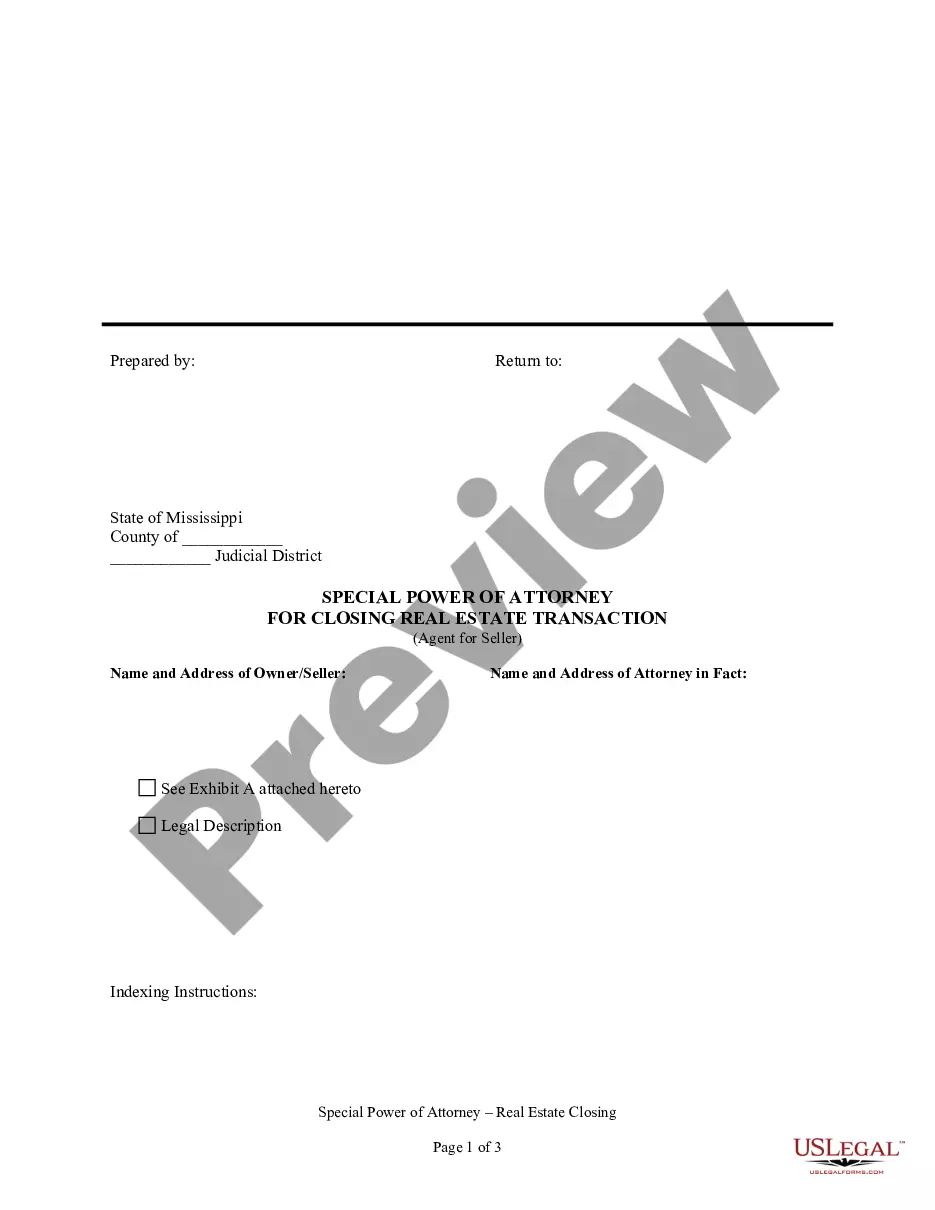
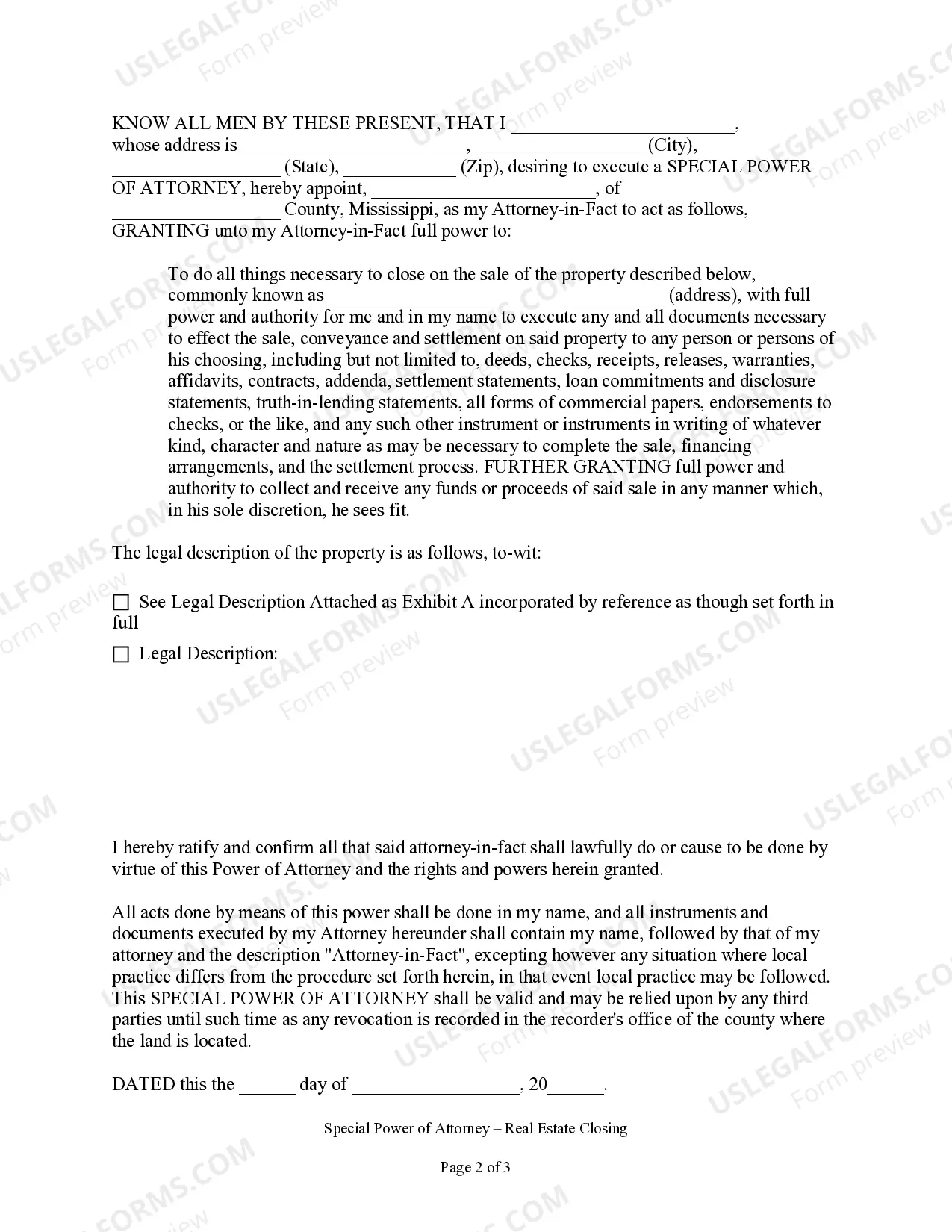
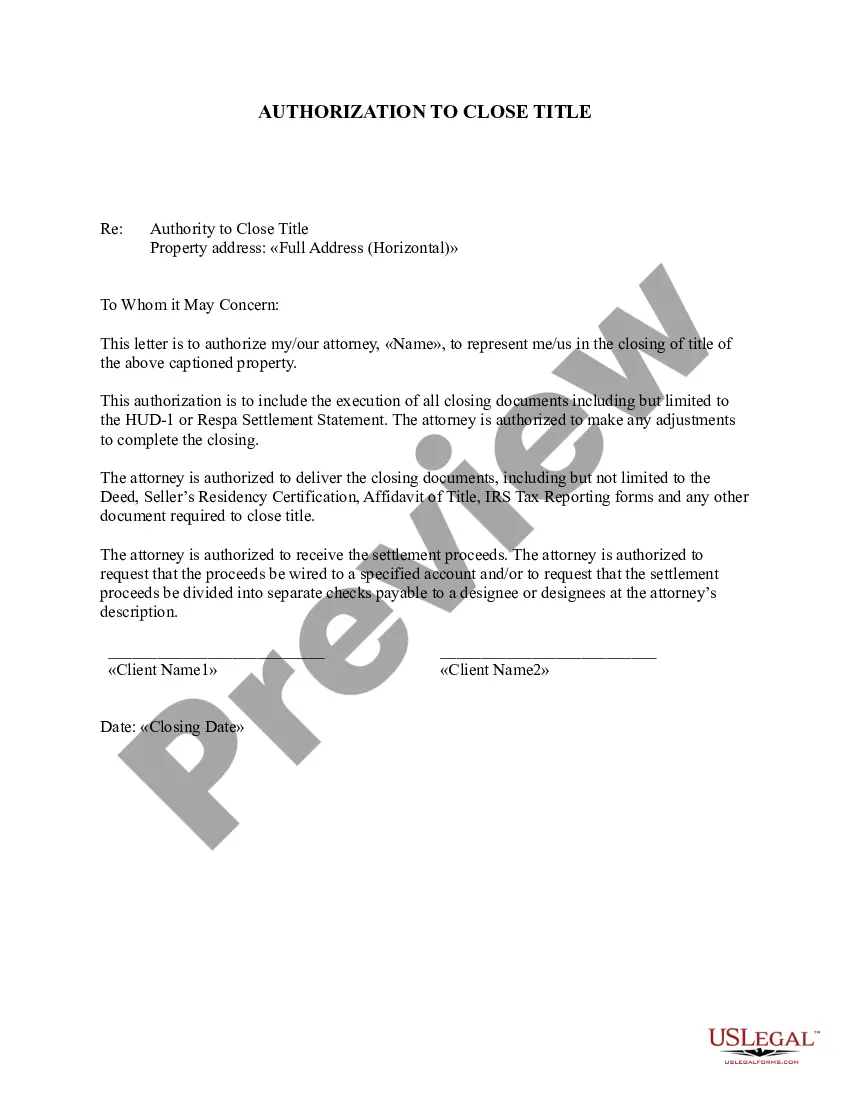
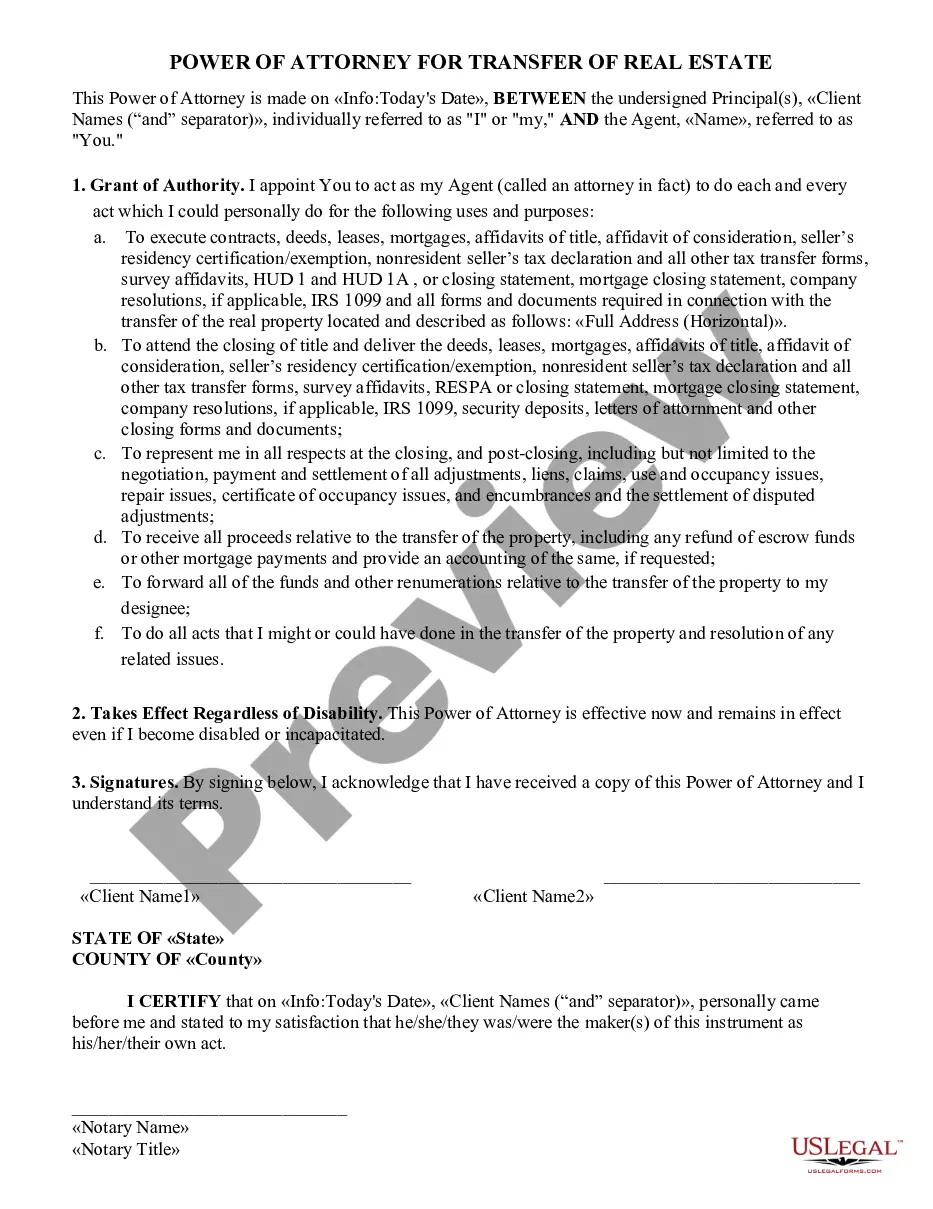
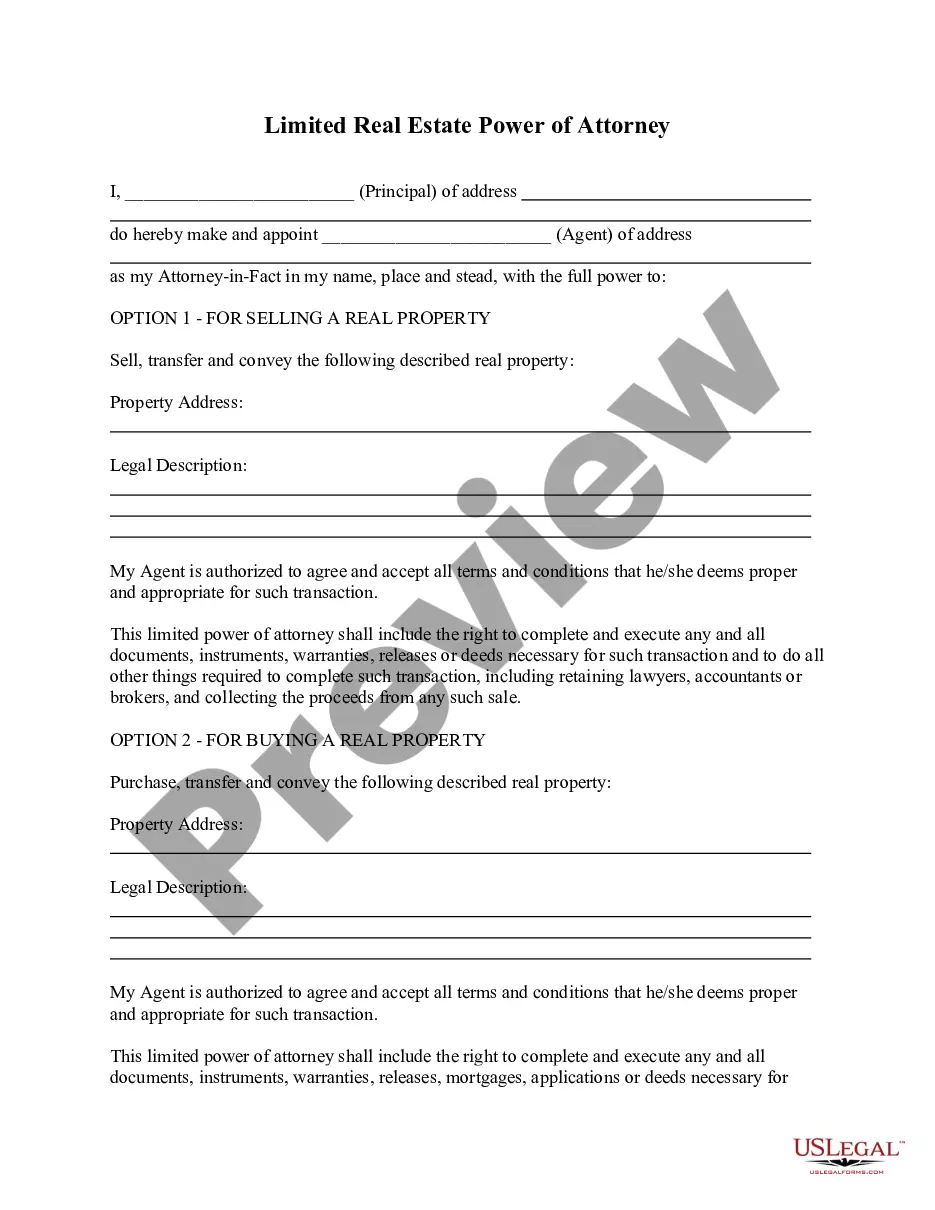
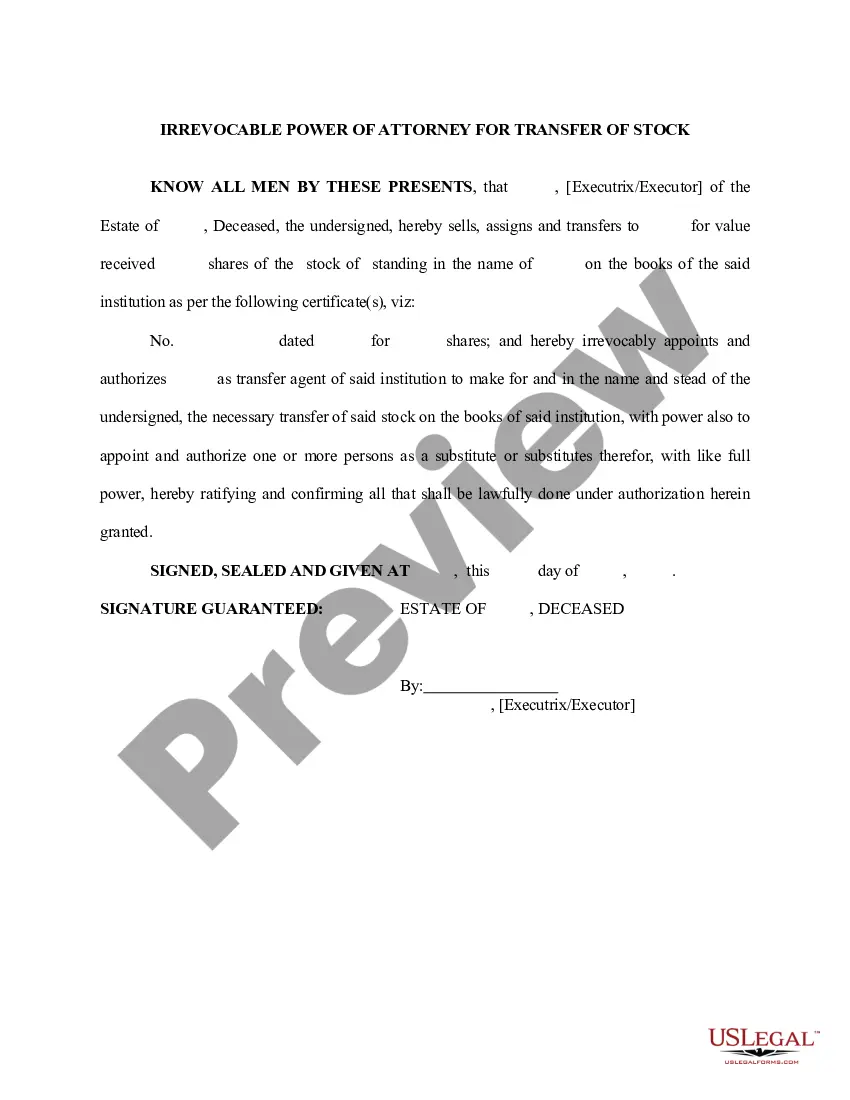
The Special or Limited Power of Attorney for Real Estate Sales Transaction By Seller is a legal document that allows a seller to designate an attorney-in-fact to manage the sale of their real estate property. This form gives the representative the authority to perform all necessary actions to close the transaction, including signing documents and collecting proceeds. Unlike other power of attorney forms, this document is specifically tailored to real estate sales, ensuring that all specific transactional needs are met."
Key parts of this document
- Identification of the principal (seller) and their attorney-in-fact.
- Authorization of the attorney-in-fact to execute all necessary documents for the sale.
- Specific description of the property being sold.
- Provisions for collecting funds and handling transaction-related affairs.
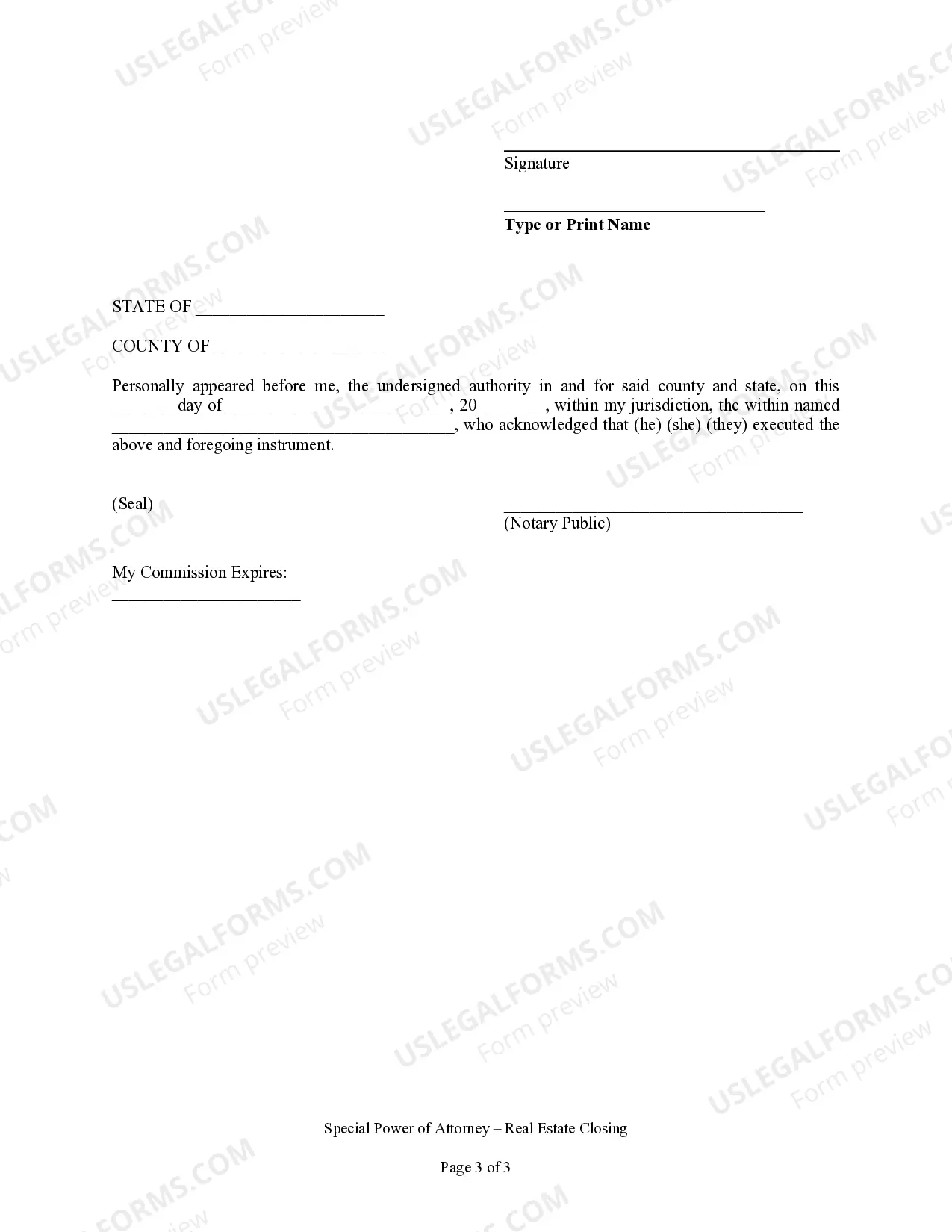
- Area for the seller's signature and date of authorization.

When to use this form
This form should be used when a seller cannot be present during the closing of a real estate transaction but wishes to authorize another person to act on their behalf. Common scenarios include sellers who are out of state, sellers with scheduling conflicts, or those unable to attend due to health reasons. By using this form, the seller ensures that the sale proceeds smoothly without unnecessary delays.
Who should use this form
- Sellers of real estate who need to delegate authority for a property sale.
- Individuals who are incapacitated or unable to attend the closing.
- Those involved in a transaction where time-sensitive decisions must be made.
- Estate executors or individuals managing a trust that includes real estate.
Completing this form step by step
- Identify the seller and their attorney-in-fact clearly at the top of the document.
- Provide the full legal description of the property that is being sold.
- Detail the specific powers being granted to the attorney-in-fact regarding the sale.
- Enter the date and the signature of the seller to validate the document.
- Ensure that any attached legal description is properly referenced.
Does this form need to be notarized?
This form does not typically require notarization unless specified by local law. However, verifying local requirements is essential to ensure its validity during real estate transactions.
Get your form ready online
Our built-in tools help you complete, sign, share, and store your documents in one place.
Make edits, fill in missing information, and update formatting in US Legal Forms—just like you would in MS Word.
Download a copy, print it, send it by email, or mail it via USPS—whatever works best for your next step.
Sign and collect signatures with our SignNow integration. Send to multiple recipients, set reminders, and more. Go Premium to unlock E-Sign.
If this form requires notarization, complete it online through a secure video call—no need to meet a notary in person or wait for an appointment.
We protect your documents and personal data by following strict security and privacy standards.

Make edits, fill in missing information, and update formatting in US Legal Forms—just like you would in MS Word.

Download a copy, print it, send it by email, or mail it via USPS—whatever works best for your next step.

Sign and collect signatures with our SignNow integration. Send to multiple recipients, set reminders, and more. Go Premium to unlock E-Sign.

If this form requires notarization, complete it online through a secure video call—no need to meet a notary in person or wait for an appointment.

We protect your documents and personal data by following strict security and privacy standards.
Mistakes to watch out for
- Failing to provide clear identification of the property being sold.
- Not including a complete legal description as required.
- Leaving the document unsigned or undated.
- Failing to specify the extent of authority given to the attorney-in-fact.
- Providing insufficient identification information for the attorney-in-fact.
Why complete this form online
- Convenience of completing the form from any location.
- Editable format allows for customization to fit specific needs.
- Access to legal templates drafted by licensed attorneys enhances reliability.
- Ease of downloading and printing the form as needed.
What to keep in mind
- The form authorizes an agent to act on behalf of the Seller in a real estate transaction.
- It is specific to sales and should not be used for general powers.
- Proper completion and signature are essential for legal validity.
Looking for another form?
Form popularity
FAQ
What's the difference between durable and general power of attorney? A general power of attorney ends the moment you become incapacitated.A durable power of attorney stays effective until the principle dies or until they act to revoke the power they've granted to their agent.
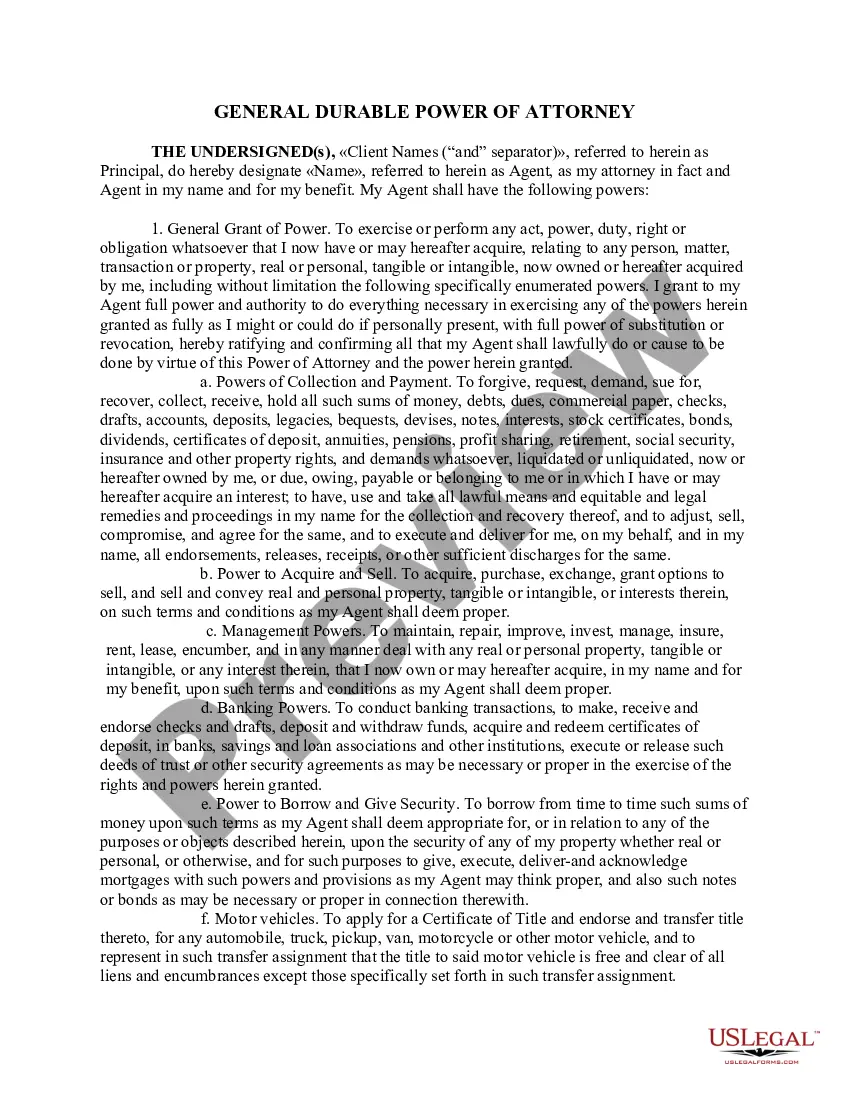
General Power of Attorney. Durable Power of Attorney. Special or Limited Power of Attorney. Springing Durable Power of Attorney.
The durable power of attorney is almost always required. This instrument gives another person specific powers to sign for an individual in a real estate transaction where the exact name and description of the property is stated in the document.
The requirements for a valid durable power of attorney in Mississippi are: Created by an adult or emancipated minor.Signed by two adult witnesses, at least one of whom isn't related to principal OR acknowledged by a notary public. Specifically authorizes the agent to make health care decisions.
In many states, notarization is required by law to make the durable power of attorney valid. But even where law doesn't require it, custom usually does. A durable power of attorney that isn't notarized may not be accepted by people with whom your attorney-in-fact tries to deal.
The non-durable power of attorney is used only for a set period of time and usually for a particular transaction in which you grant your agent authority to act on your behalf. Once the transaction is completed, or should the principal become incapacitated during this time, the non-durable power of attorney ceases.
Name, signature, and address of the principal. Name, signature, and address of the agent. Properties and activities under the authority of the agent. Date of effect and termination of authority. Compensation to services of the agent.
Remember that all of the authorized agents under the power of attorney or representatives in an estate must sign the listing agreement, disclosure documents, etc. For example, when there are two executors in an estate, then they both must sign the Listing Contract.