Mississippi Northern District Bankruptcy Guide and Forms Package for Chapters 7 or 13
What is this form?
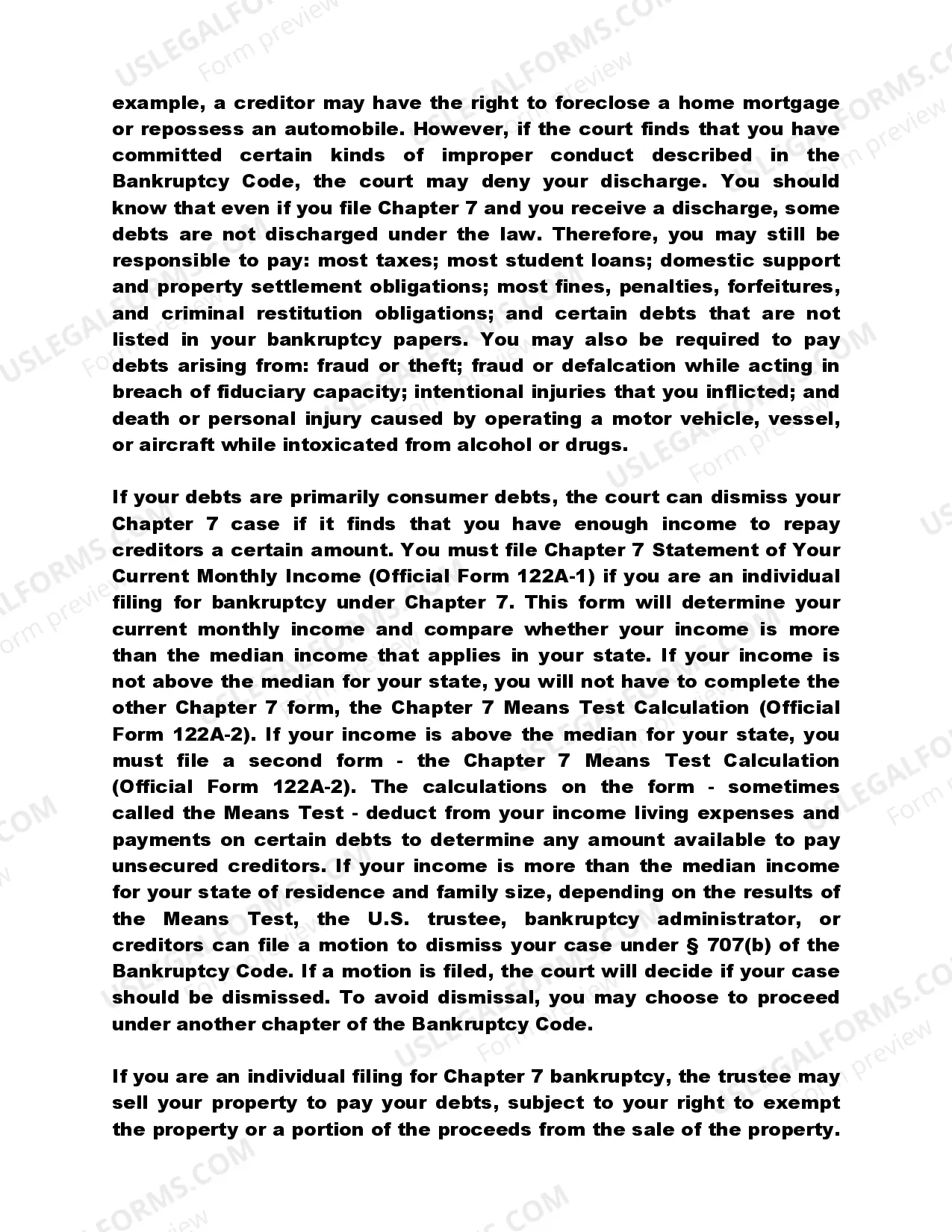
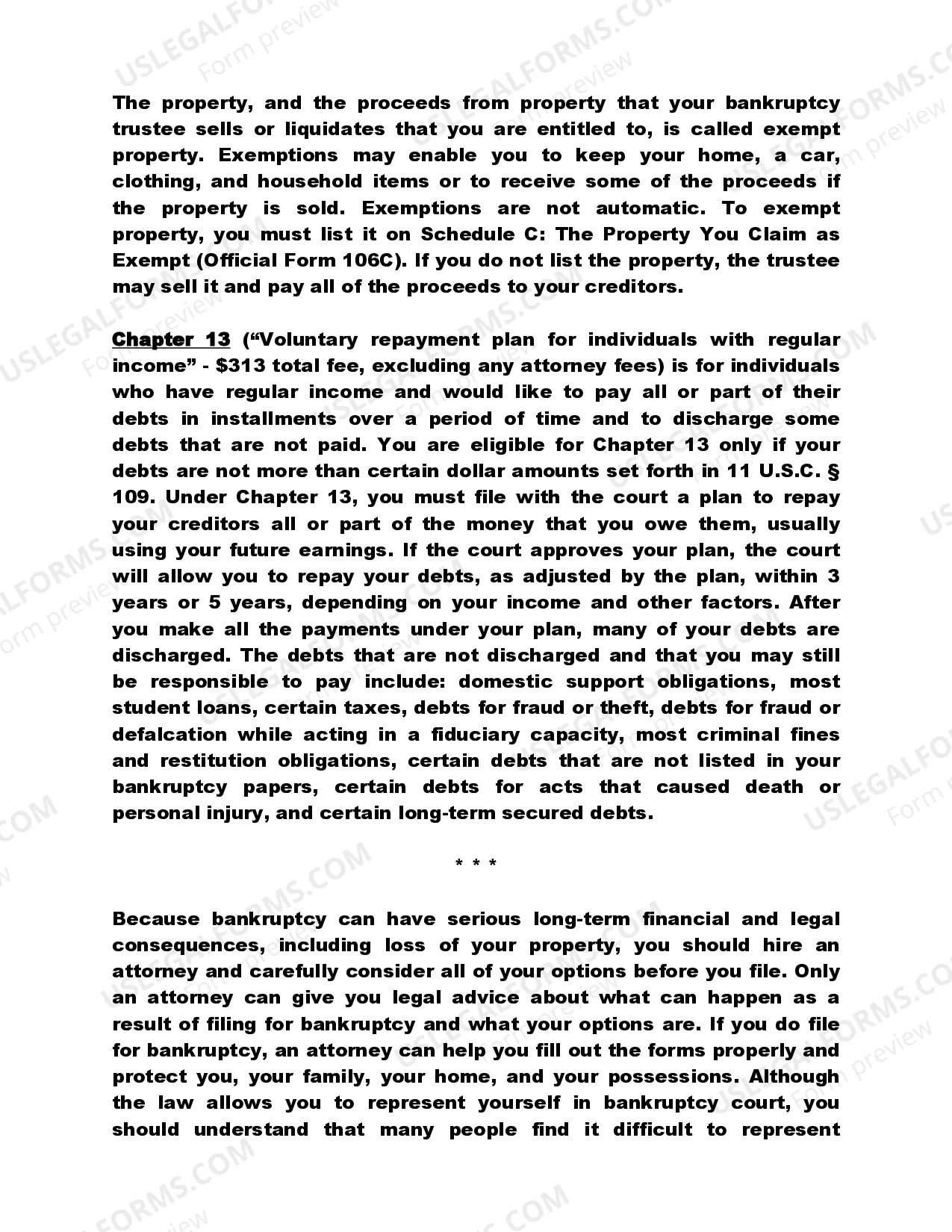
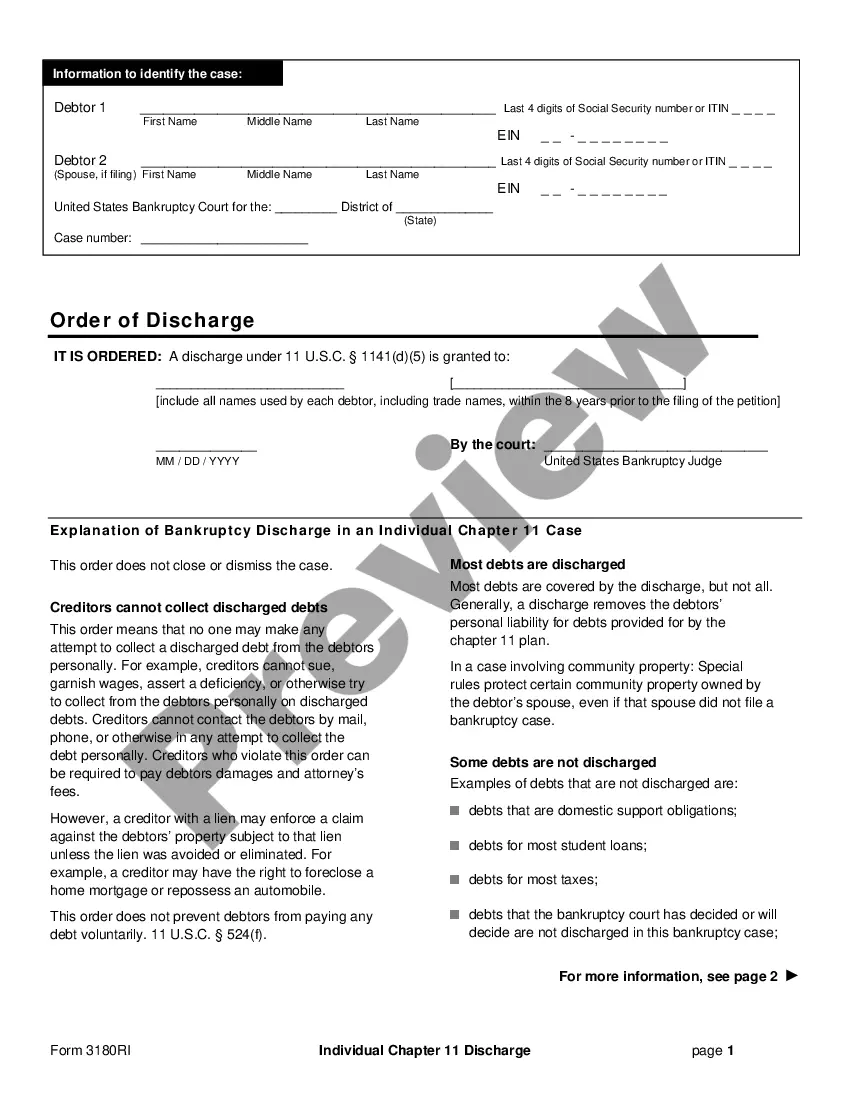
The Mississippi Northern District Bankruptcy Guide and Forms Package for Chapters 7 or 13 provides a comprehensive set of legal documents and instructions necessary for individuals considering bankruptcy. This package is specifically designed for Chapter 7 (Liquidation) and Chapter 13 (Voluntary repayment) bankruptcies, offering tailored resources to help filers navigate their options efficiently.
Key parts of this document
- Instructions for deciding between Chapter 7 and Chapter 13 bankruptcy.
- Forms necessary for filing under Chapter 7, including the Statement of Current Monthly Income.
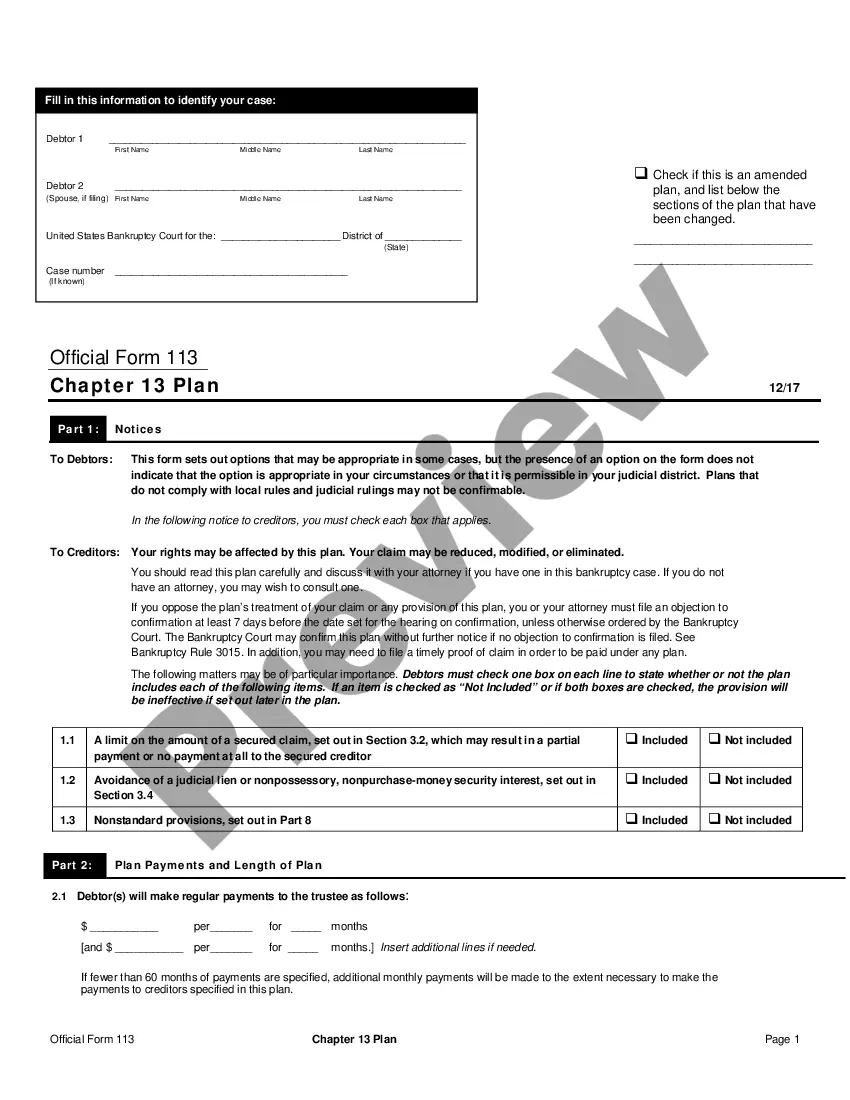
- Forms necessary for a Chapter 13 repayment plan, detailing repayment terms.
- Exemption lists to identify property that may be preserved during bankruptcy.
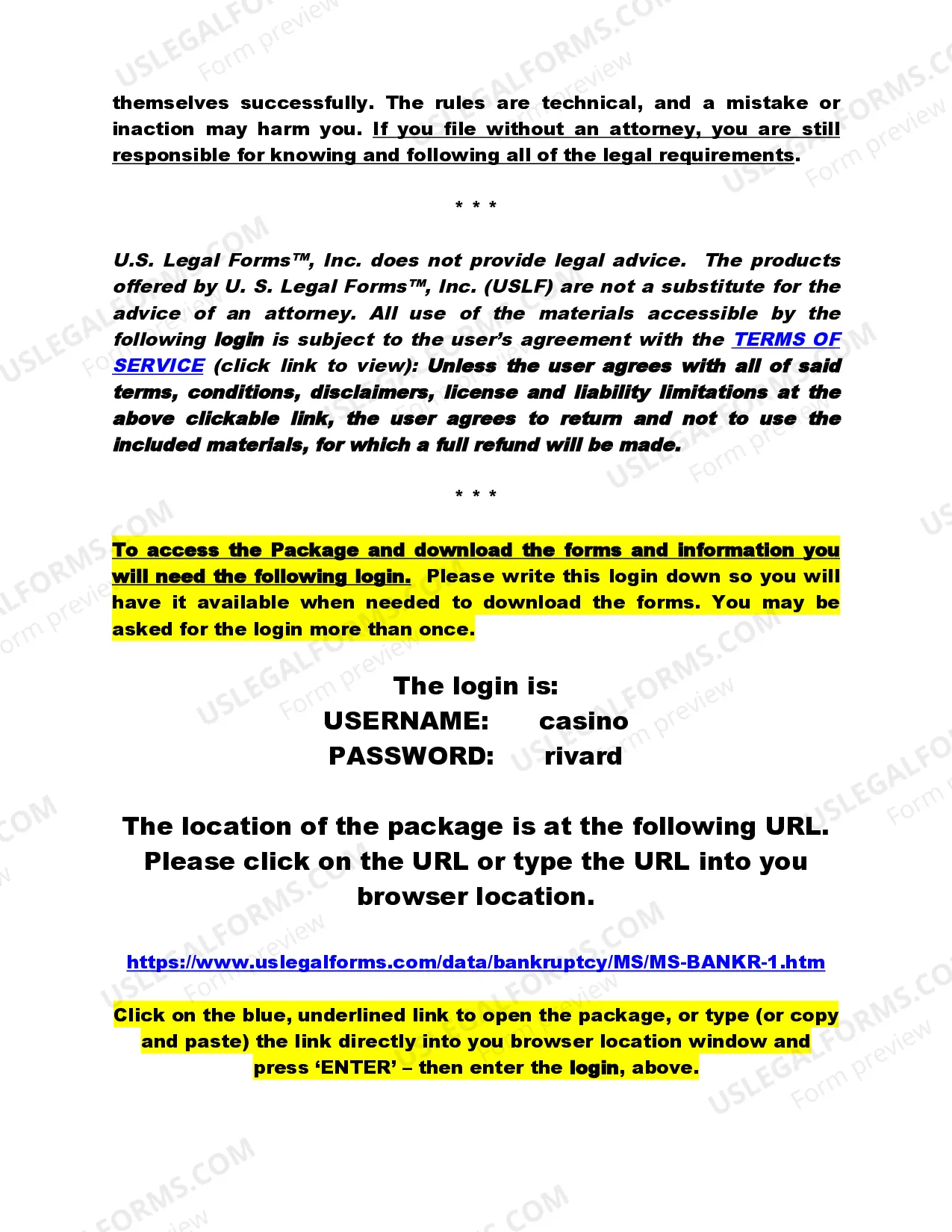
- Login information for accessing the online package of forms.


When this form is needed
This form package should be used when individuals face overwhelming debt and seek to file for bankruptcy. It is suitable for situations such as significant medical expenses, sudden job loss, or unmanageable credit card debt. It provides the necessary tools to file for either Chapter 7 or Chapter 13 bankruptcy, depending on individual circumstances.
Who needs this form
- Individuals filing for personal bankruptcy.
- Married couples seeking joint bankruptcy filing.
- Sole proprietors who have incurred business-related debts but wish to file as individuals.
- Anyone considering bankruptcy as a solution to unmanageable debt.
Completing this form step by step
- Determine your eligibility for Chapter 7 or Chapter 13 bankruptcy based on your income and debt levels.
- Gather necessary documentation detailing your debts, income, and assets.
- Complete the required forms, including the Statement of Current Monthly Income and any necessary exemption claims.
- File the bankruptcy petition and pay the applicable fees.
- Attend any required hearings or meetings with creditors as instructed by the bankruptcy court.
Does this document require notarization?
Notarization is not commonly needed for this form. However, certain documents or local rules may make it necessary. Our notarization service, powered by Notarize, allows you to finalize it securely online anytime, day or night.
Get your form ready online
Our built-in tools help you complete, sign, share, and store your documents in one place.
Make edits, fill in missing information, and update formatting in US Legal Forms—just like you would in MS Word.
Download a copy, print it, send it by email, or mail it via USPS—whatever works best for your next step.
Sign and collect signatures with our SignNow integration. Send to multiple recipients, set reminders, and more. Go Premium to unlock E-Sign.
If this form requires notarization, complete it online through a secure video call—no need to meet a notary in person or wait for an appointment.
We protect your documents and personal data by following strict security and privacy standards.

Make edits, fill in missing information, and update formatting in US Legal Forms—just like you would in MS Word.

Download a copy, print it, send it by email, or mail it via USPS—whatever works best for your next step.

Sign and collect signatures with our SignNow integration. Send to multiple recipients, set reminders, and more. Go Premium to unlock E-Sign.

If this form requires notarization, complete it online through a secure video call—no need to meet a notary in person or wait for an appointment.

We protect your documents and personal data by following strict security and privacy standards.
Avoid these common issues
- Failing to provide accurate financial information, leading to potential dismissal of the case.
- Not listing all creditors and debts in the bankruptcy petition.
- Ignoring deadlines for filing and responding to court instructions.
- Underestimating the importance of legal guidance when choosing the bankruptcy chapter.
Advantages of online completion
- Convenient access to all forms and instructions from any location.
- Easy to edit and customize documents to fit individual circumstances.
- Updated legal content ensures compliance with current laws.
- Immediate downloads allow users to start the process without delays.
Summary of main points
- This package is essential for individuals filing for Chapter 7 or Chapter 13 bankruptcy in Mississippi.
- Understanding the differences between the two chapters is crucial for making an informed decision.
- Legal representation is recommended, especially for complex cases or if filing for a non-individual entity.
- Proper completion of forms can significantly impact the outcome of a bankruptcy case.
Looking for another form?



Form popularity
FAQ
Analyze your debt. Determine your property exemptions. Make sure you are eligible. Redeem or reaffirm secured debts. Fill out the bankruptcy forms. Take a credit counseling course. File the forms. Pay the filing fee or request a fee waiver.
Advise you on whether to file a bankruptcy petition. Advise you under which chapter to file. Advise you on whether your debts can be discharged. Advise you on whether or not you will be able to keep your home, car, or other property after you file. Advise you of the tax consequences of filing.
However, when you file for bankruptcy, you never really have to go to court. The only appearance you are required to make is attending the 341(a) Meeting of Creditors. The 341(a) Hearing is held around 30-35 days after your bankruptcy case is filed.
Identifying Information. The Voluntary Petition for Individuals Filing for Bankruptcy form acts as the cover sheet for your paperwork. Your Property. Your Exempt Property. Your Collateralized Debt. Your Other Debt. Your Contracts and Leases. Your Codebtors. Your Income.
Debts You Must Pay in Full Through Your Plan. Add up the following debts and divide by the number of months your plan will last. Secured Debt Payments on Property You Want to Keep. Unsecured Debts. Length of Your Repayment Plan.
Chapter 7 is the most common type of bankruptcy and is often referred to as a straight bankruptcy. Under Chapter 7, you can eliminate most of your unsecured debts and some secured debts by surrendering your assets. Unsecured debts are debts not secured with collateral, including most personal loans and credit cards.
There is no minimum amount of debt you must have in order to file for bankruptcy relief. While the amount of your debt is an important factor to consider, there are other more important factors to take into account in determining if a bankruptcy filing is in your best interest.
The Overall Chapter 13 Average Payment. The average payment for a Chapter 13 case overall is probably about $500 to $600 per month. This information, however, may not be very helpful for your particular situation.
What Documents Do You Need to File for Bankruptcy? Tax Returns. Income Documentation. Vehicle Registration, Proof of Value & Insurance. Retirement And Bank Account Statements. Identification. What Information Do You Need to Complete the Bankruptcy Forms? Credit Counseling Requirement.