Mississippi Quitclaim Deed from Husband to Himself and Wife
What is this form?
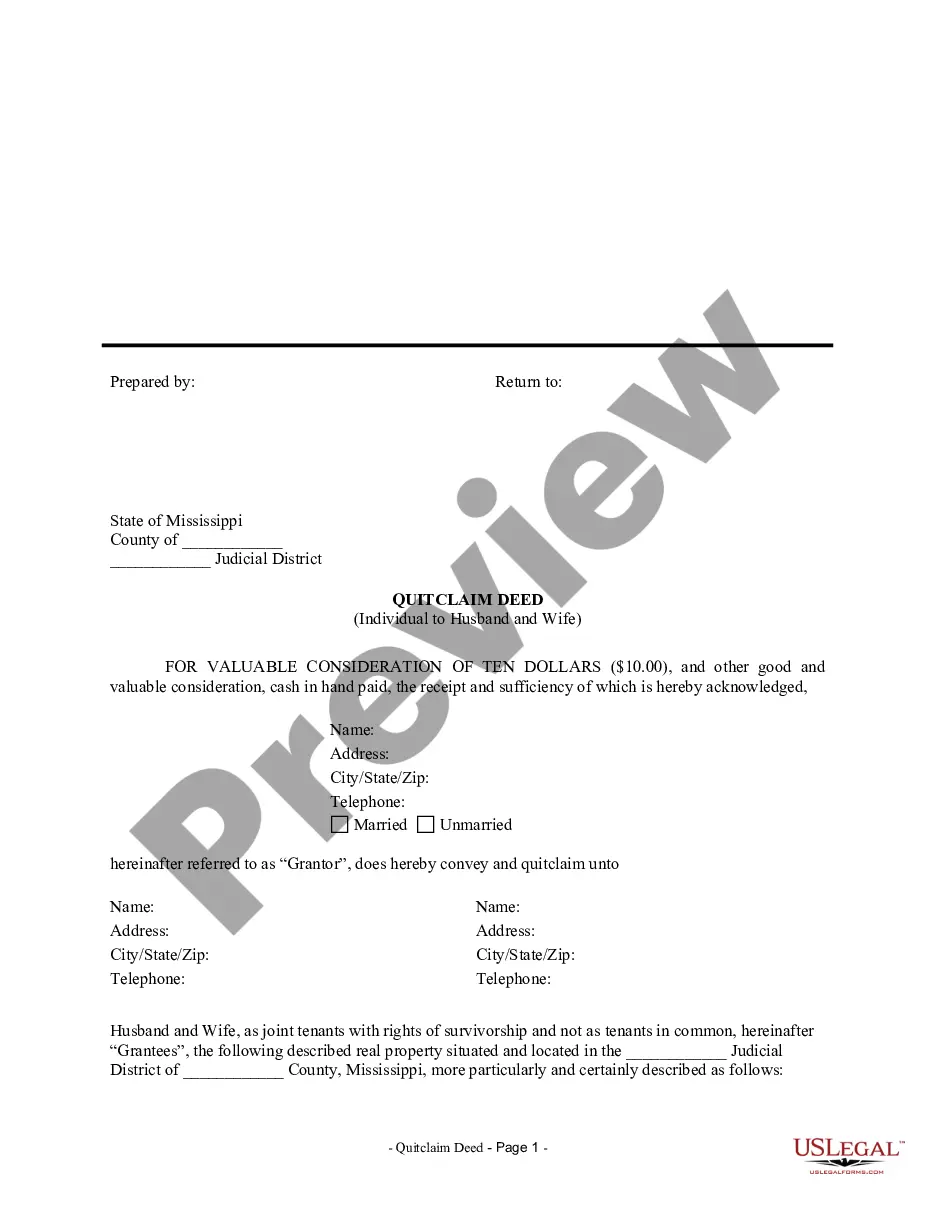
The Quitclaim Deed from Husband to Himself and Wife is a legal document used to transfer ownership of property without guaranteeing a clear title. In this specific deed, the husband acts as the grantor, transferring the property to himself and his wife as co-grantees. This form is particularly useful for couples wishing to clarify ownership in their names and does not require proving ownership to complete the transfer, setting it apart from warranty deeds.
Key parts of this document
- Identification of the grantor (husband) and grantees (husband and wife).
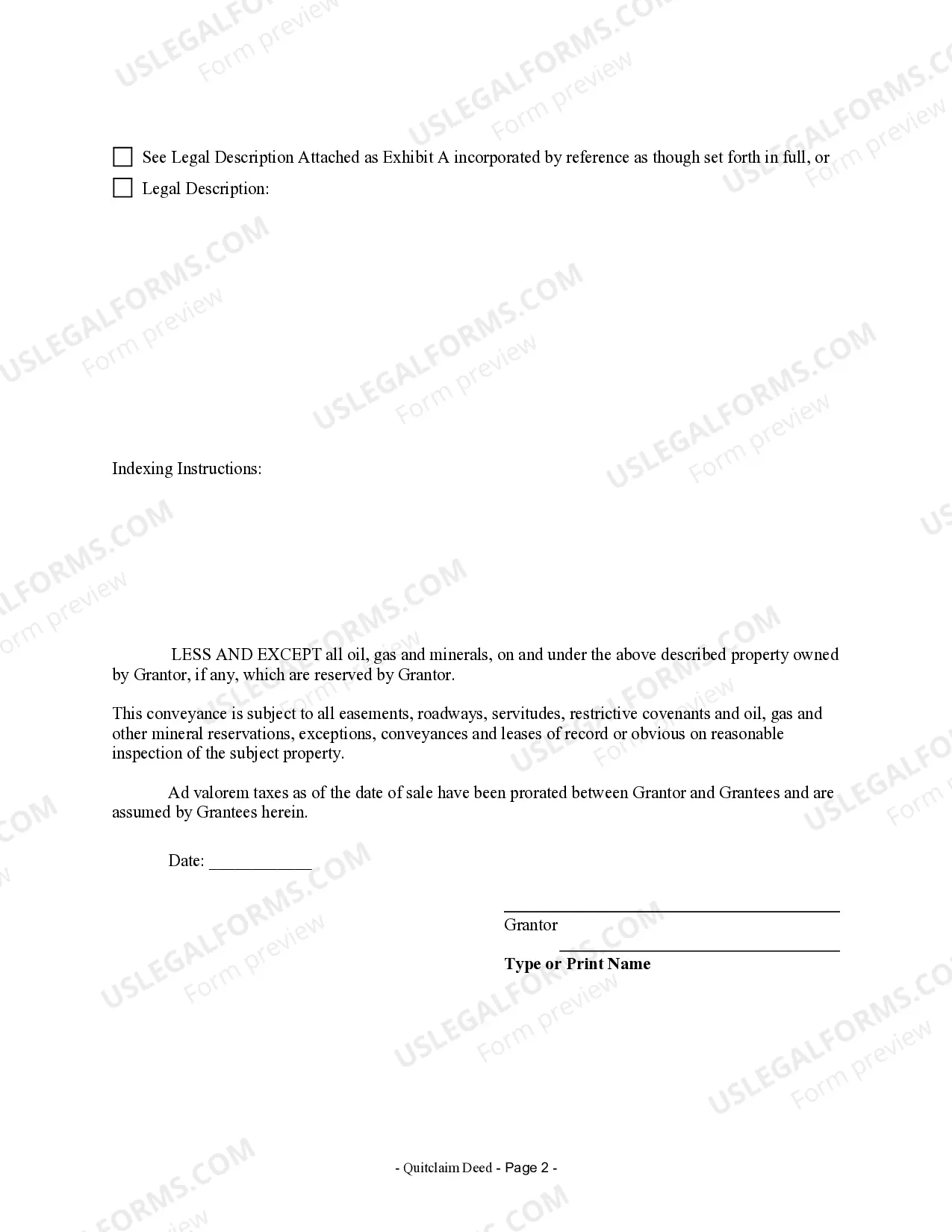
- Legal description of the property being transferred.
- Declaration of valuable consideration, typically ten dollars.
- Statement reserving all oil, gas, and minerals under the property if applicable.
- Signatures of the grantor and witnesses, if required by state law.






Common use cases
This form should be used when a husband wishes to transfer property ownership to himself and his wife, for instance, when adding the spouse to the property title. It is often used after marriage, during estate planning, or when clarifying property ownership for tax purposes.
Who this form is for
- Married couples wanting to officially document joint ownership of property.
- Individuals who wish to simplify the process of transferring property between spouses.
- Anyone looking to consolidate property ownership titles for clarity or tax reasons.
Completing this form step by step
- Identify the grantor (husband) and grantees (husband and wife) in the designated fields.
- Provide the legal description of the property being conveyed as outlined in Exhibit A.
- State the amount of valuable consideration, typically ten dollars.
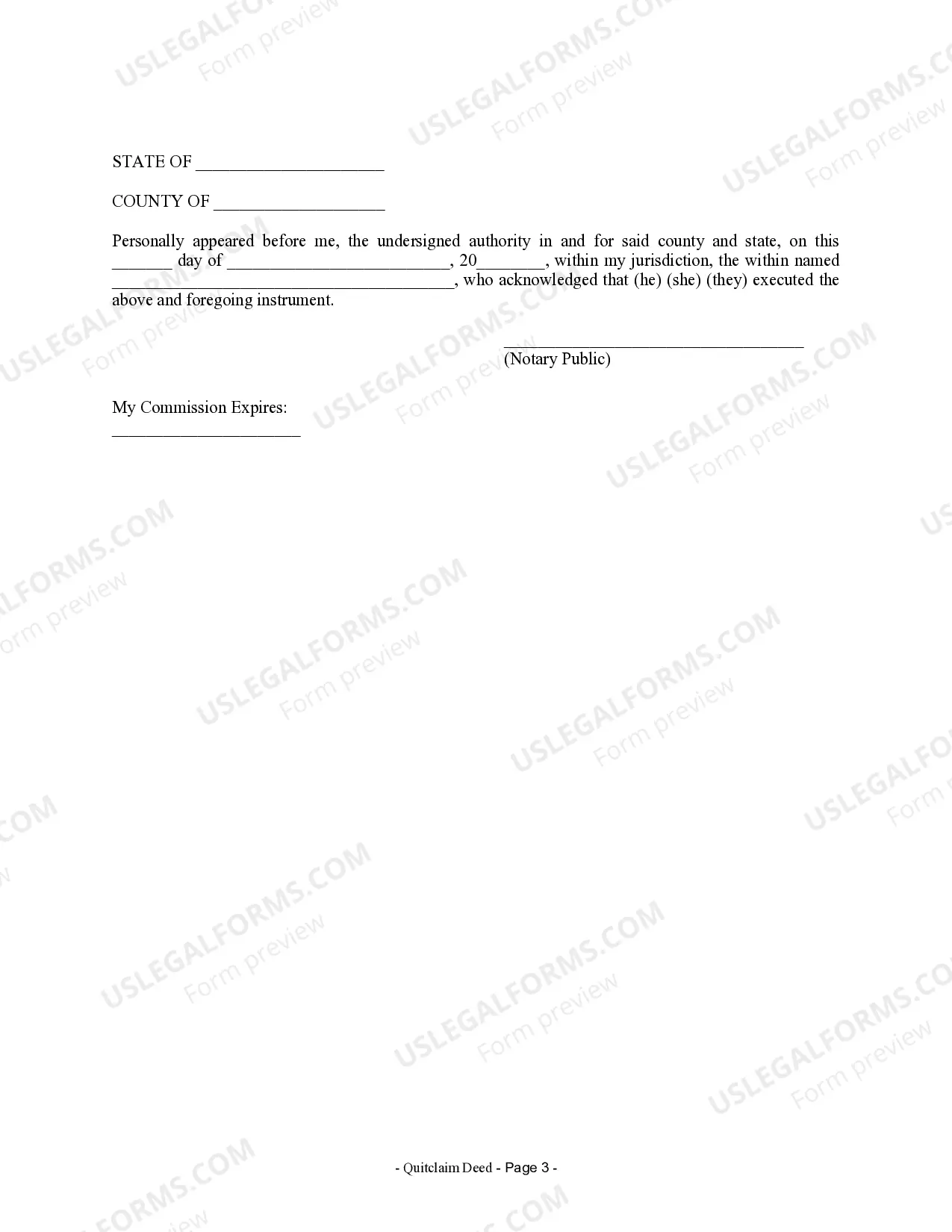
- Sign and date the document in front of a notary public if required by local law.
- Obtain any necessary witness signatures to fulfill state requirements.
Is notarization required?
Notarization is required for this form to take effect. Our online notarization service, powered by Notarize, lets you verify and sign documents remotely through an encrypted video session, available 24/7.
Get your form ready online
Our built-in tools help you complete, sign, share, and store your documents in one place.
Make edits, fill in missing information, and update formatting in US Legal Forms—just like you would in MS Word.
Download a copy, print it, send it by email, or mail it via USPS—whatever works best for your next step.
Sign and collect signatures with our SignNow integration. Send to multiple recipients, set reminders, and more. Go Premium to unlock E-Sign.
If this form requires notarization, complete it online through a secure video call—no need to meet a notary in person or wait for an appointment.
We protect your documents and personal data by following strict security and privacy standards.

Make edits, fill in missing information, and update formatting in US Legal Forms—just like you would in MS Word.

Download a copy, print it, send it by email, or mail it via USPS—whatever works best for your next step.

Sign and collect signatures with our SignNow integration. Send to multiple recipients, set reminders, and more. Go Premium to unlock E-Sign.

If this form requires notarization, complete it online through a secure video call—no need to meet a notary in person or wait for an appointment.

We protect your documents and personal data by following strict security and privacy standards.
Typical mistakes to avoid
- Failing to include a legal description of the property.
- Not obtaining the required signatures or notarization.
- Using the form without checking specific state requirements.
Benefits of completing this form online
- Convenient access to the form at any time for immediate use.
- Editable templates allow users to fill in their information with ease.
- Reliable and compliant with state laws, ensuring proper documentation.
Looking for another form?





Form popularity
FAQ
When done properly, a deed is recorded anywhere from two weeks to three months after closing. However, there are many instances where deeds are not properly recorded. Title agents commit errors, lose deeds, and even go out of business. Even county offices sometimes fail to record deeds that were properly submitted.
To use a Quitclaim Deed to add someone to a property deed or title, you would need to create a Quitclaim Deed and list all of the current owners in the grantor section. In the grantee section, you would list all of the current owners as well as the person you would like to add.
A person who signs a quitclaim deed to transfer property they do not own results in no title at all being transferred since there is no actual ownership interest. The quitclaim deed only transfers the type of title you own.
Before a quitclaim deed can be recorded with a county recorder in Mississippi, the grantor must sign and acknowledge it. The names, addresses, and telephone numbers of the grantors and grantees to the quit claim deed, along with a legal description of the real property should be provided on the first page (89-5-24).
Fill out the quit claim deed form, which can be obtained online, or write your own using the form as a guide. The person giving up the interest in the property is the grantor, and the person receiving the interest is the grantee.
They are commonly used to add/remove someone to/from real estate title or deed (divorce, name changes, family and trust transfers). The quitclaim deed is a legal document (deed) used to transfer interest in real estate from one person or entity (grantor) to another (grantee).
But you might be wondering if an owner can transfer a deed to another person without a real estate lawyer. The answer is yes. Parties to a transaction are always free to prepare their own deeds.A quitclaim deed, for example, is far simpler than a warranty deed.