Mississippi Warranty Deed from Corporation to Individual
Understanding this form
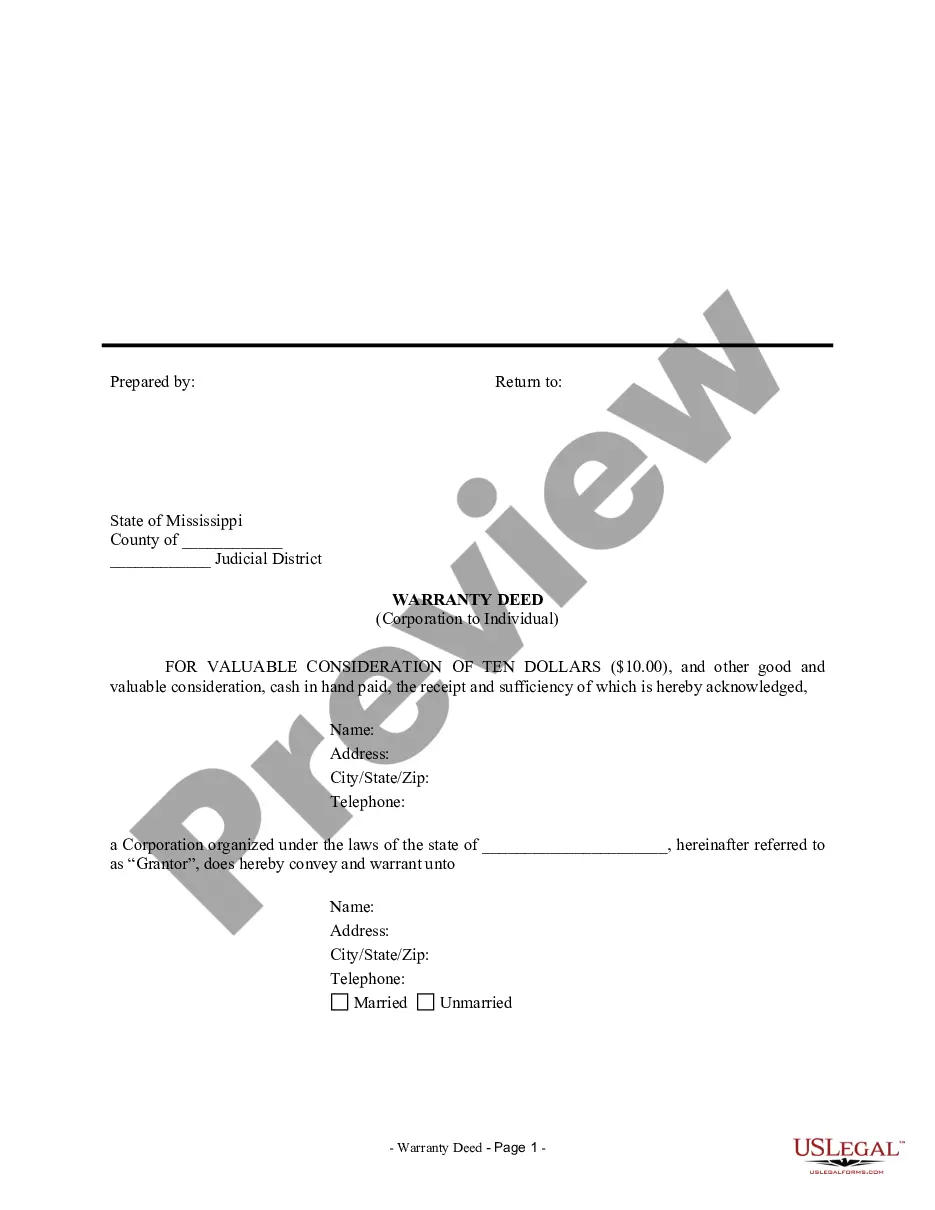
The Warranty Deed from Corporation to Individual is a legal document used to transfer property ownership from a corporation to an individual. This form ensures that the corporation, as the Grantor, conveys the title of the property clearly, while also reserving rights to minerals, oil, and gas beneath the property. It stands out from other deeds since it specifically involves a corporation as the transferor, ensuring compliance with state laws regarding property transfer.
Key parts of this document
- Identification of the Grantor (Corporation) and Grantee (Individual).
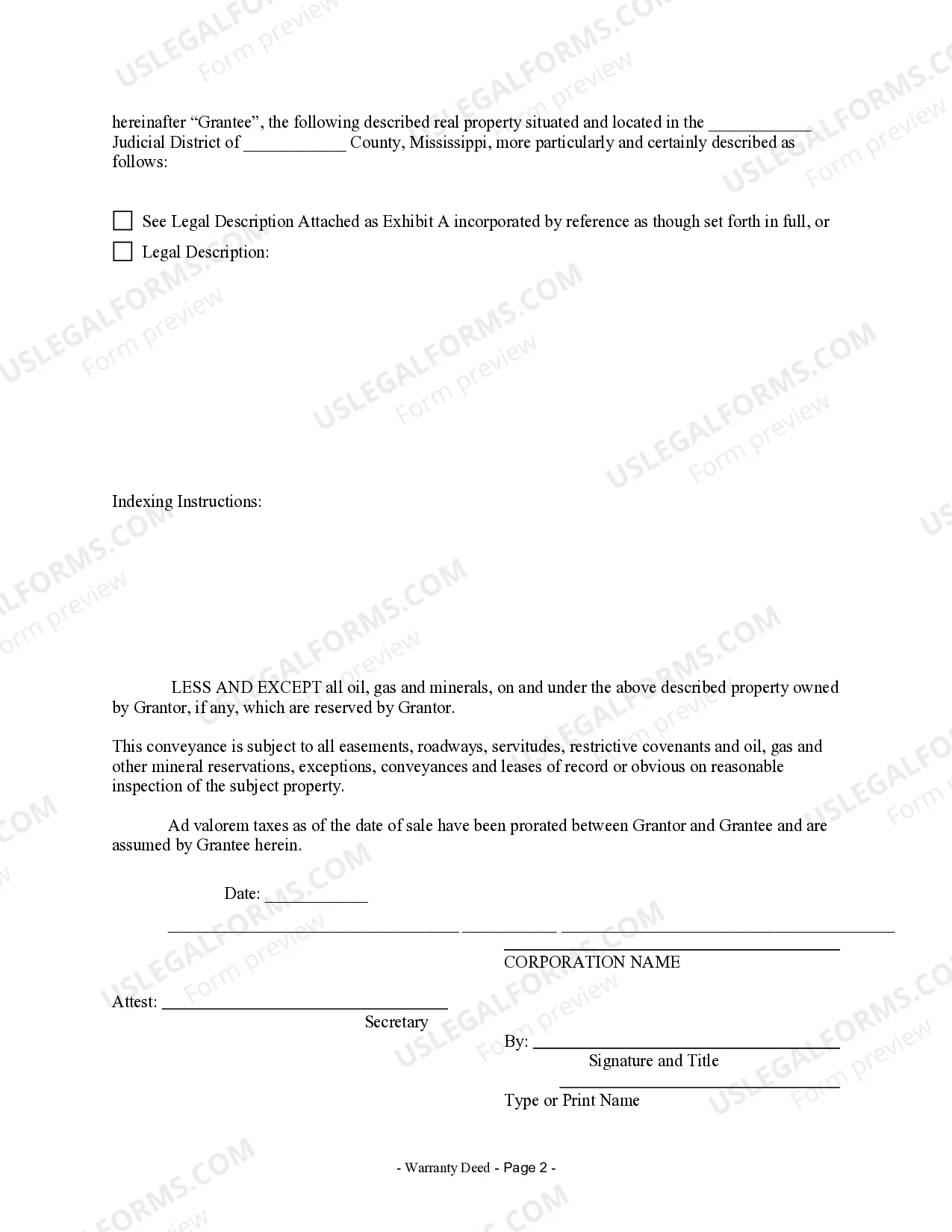
- Legal description of the property being conveyed.
- Statement of consideration (e.g., the amount paid for the property).
- Assumption of prorated ad valorem taxes by the Grantee.
- Signature space for the corporation with proper titles.



When this form is needed
This form is typically used when a corporation wishes to sell or transfer property to an individual. It's essential in real estate transactions to provide legal clarity and formal acknowledgment of the ownership transfer. Examples include corporate real estate liquidation, transferring assets to employees, or divesting non-core property holdings.
Who this form is for
- Corporations looking to transfer property to a specific individual.
- Individuals purchasing property from a corporation.
- Real estate professionals involved in corporate property transactions.
Steps to complete this form
- Identify the parties involved: the corporation and the individual.
- Provide a clear legal description of the property in the designated section.
- Enter the date of the transaction and the amount of consideration paid.
- Indicate who will assume the prorated ad valorem taxes.
- Ensure that the corporation's representative signs the document, adding their title.
Notarization guidance
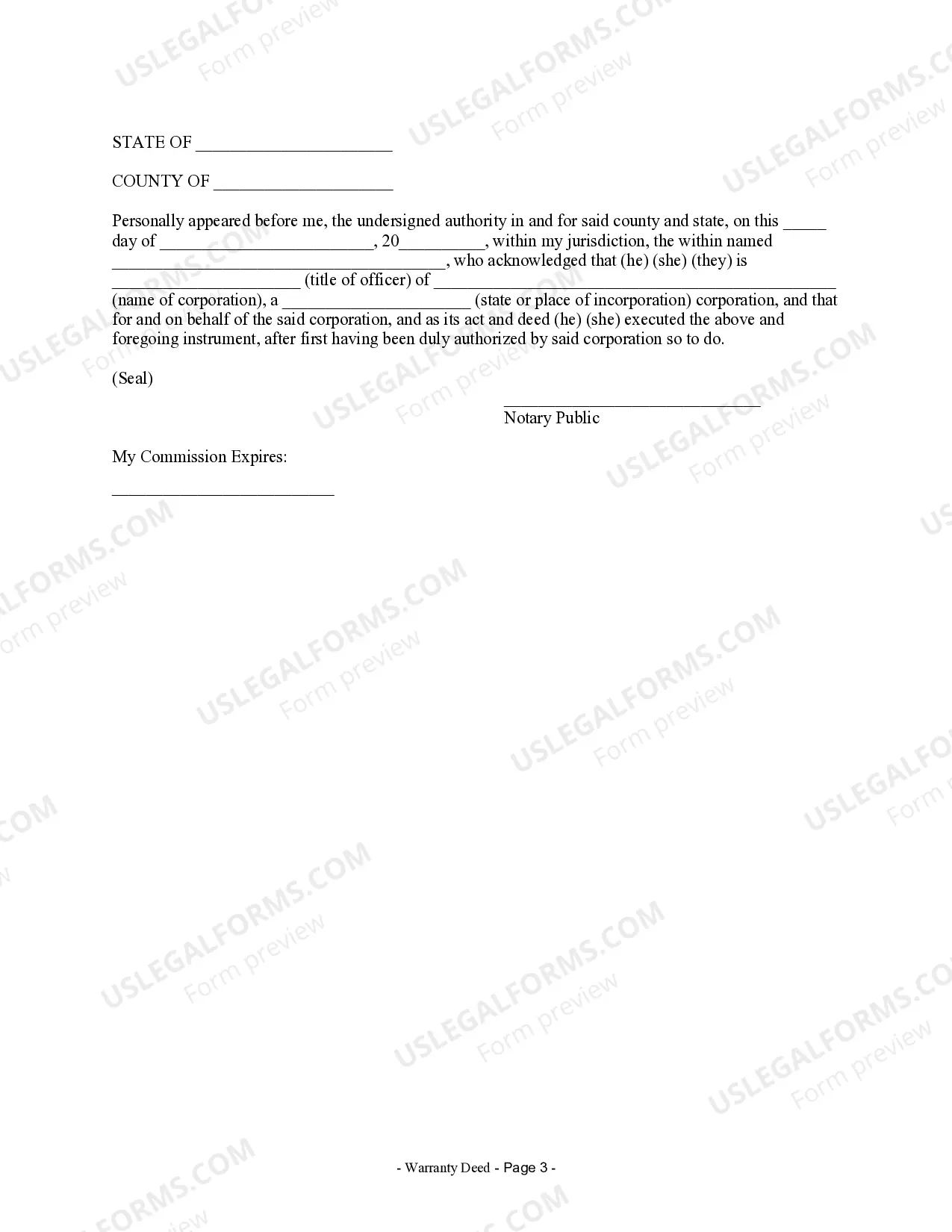
To make this form legally binding, it must be notarized. Our online notarization service, powered by Notarize, lets you verify and sign documents remotely through an encrypted video session.
Get your form ready online
Our built-in tools help you complete, sign, share, and store your documents in one place.
Make edits, fill in missing information, and update formatting in US Legal Forms—just like you would in MS Word.
Download a copy, print it, send it by email, or mail it via USPS—whatever works best for your next step.
Sign and collect signatures with our SignNow integration. Send to multiple recipients, set reminders, and more. Go Premium to unlock E-Sign.
If this form requires notarization, complete it online through a secure video call—no need to meet a notary in person or wait for an appointment.
We protect your documents and personal data by following strict security and privacy standards.

Make edits, fill in missing information, and update formatting in US Legal Forms—just like you would in MS Word.

Download a copy, print it, send it by email, or mail it via USPS—whatever works best for your next step.

Sign and collect signatures with our SignNow integration. Send to multiple recipients, set reminders, and more. Go Premium to unlock E-Sign.

If this form requires notarization, complete it online through a secure video call—no need to meet a notary in person or wait for an appointment.

We protect your documents and personal data by following strict security and privacy standards.
Avoid these common issues
- Failing to include a clear legal description of the property.
- Not properly signing the form by an authorized corporate representative.
- Leaving out the consideration amount or using incorrect figures.
Benefits of using this form online
- Convenient access to legal forms anytime and anywhere.
- Easy to download and fill out at your own pace.
- Forms drafted by licensed attorneys ensure compliance with current laws.
Quick recap
- A Warranty Deed is crucial for transferring property from a corporation to an individual.
- Ensure all required signatures and property descriptions are accurately completed.
- Understand local laws to confirm notarization and tax obligations.
Looking for another form?




Form popularity
FAQ
Corporate warranty deeds offer the seller's guarantee to the buyer in regards to the validity of the chain of title. Generally, special warranty deeds only protect against problems occurring since the seller purchased the property.
The Mississippi general warranty deed is used to transfer real property in Mississippi with a guarantee from the seller or grantor that the property is free from hidden claims against the title and that the grantor has the legal authority to sell the property.
Once signed and notarized, a Mississippi deed must be recorded. The deed must be presented to the Recorder of Deeds in the county where the property is located. The transfer takes effect when signed and accepted by the grantee. However, recording provides notice to the public that the property was transferred.
Generally, someone else cannot remove you from title without your consent and/or knowledge. You should speak to a local real estate attorney to see how to return your name to title and how it was removed in the first place.
A warranty deed, also known as a general warranty deed, is a legal real estate document between the seller (grantor) and the buyer (grantee). The deed protects the buyer by pledging that the seller holds clear title to the property and there are no encumbrances, outstanding liens, or mortgages against it.
Once signed and notarized, a Mississippi deed must be recorded. The deed must be presented to the Recorder of Deeds in the county where the property is located. The transfer takes effect when signed and accepted by the grantee. However, recording provides notice to the public that the property was transferred.
Retrieve your original deed. Get the appropriate deed form. Draft the deed. Sign the deed before a notary. Record the deed with the county recorder. Obtain the new original deed.
Before a quitclaim deed can be recorded with a county recorder in Mississippi, the grantor must sign and acknowledge it. The names, addresses, and telephone numbers of the grantors and grantees to the quit claim deed, along with a legal description of the real property should be provided on the first page (89-5-24).