Missouri Letter from Tenant to Landlord containing Notice to landlord to cease retaliatory threats to evict or retaliatory eviction
What is this form?
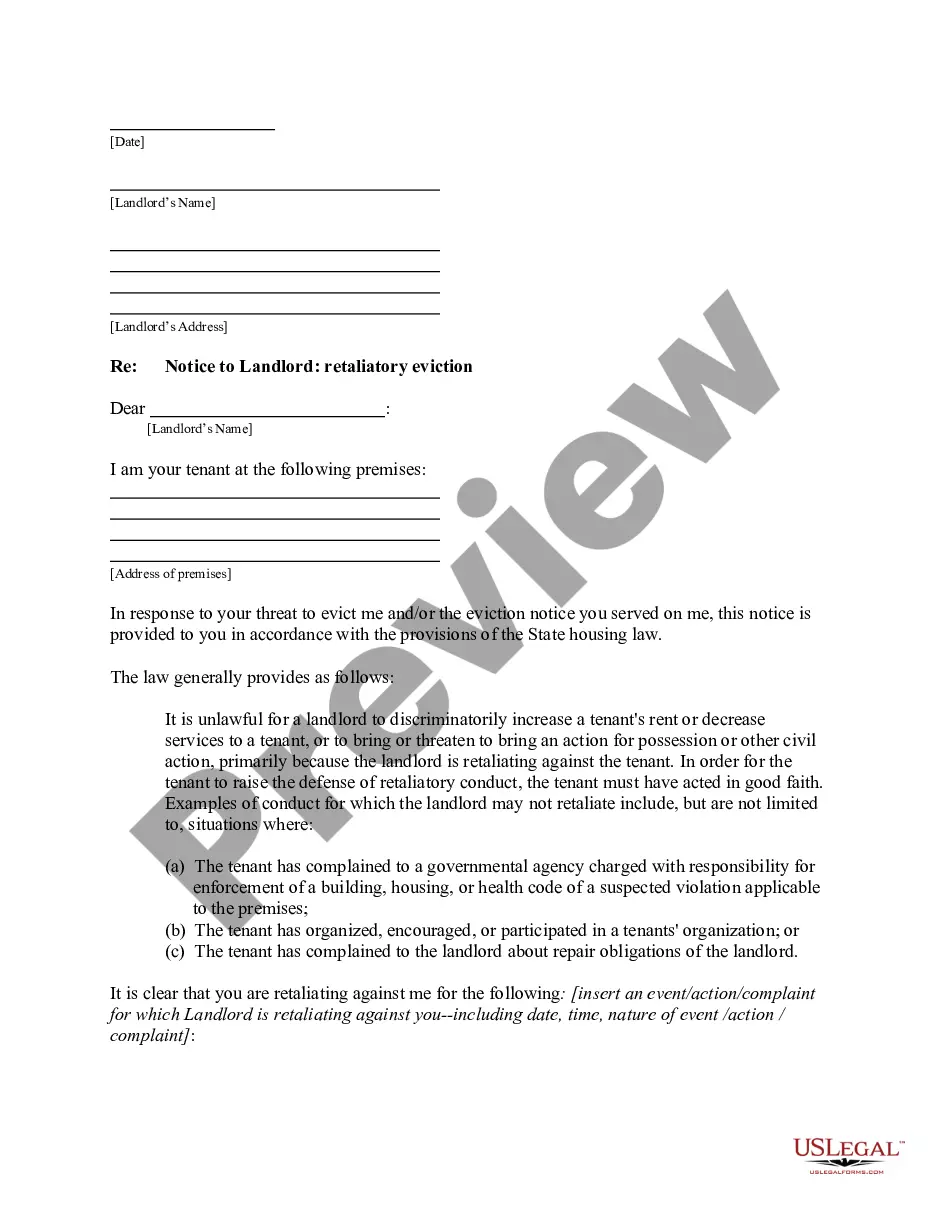
This Letter from Tenant to Landlord containing Notice to landlord to cease retaliatory threats to evict or retaliatory eviction is a document used by tenants to address and contest threats of eviction made by landlords. This form is specifically designed to assert that such threats are retaliatory, stemming from the tenant's protected actions, such as complaints about health and safety violations. By using this form, tenants can formally notify their landlords of their rights under state housing laws.
Main sections of this form
- Identification of the tenant and landlord.
- A statement outlining the landlord's retaliatory threat to evict.
- Details of the tenant's protected actions that prompted the landlord's threats.
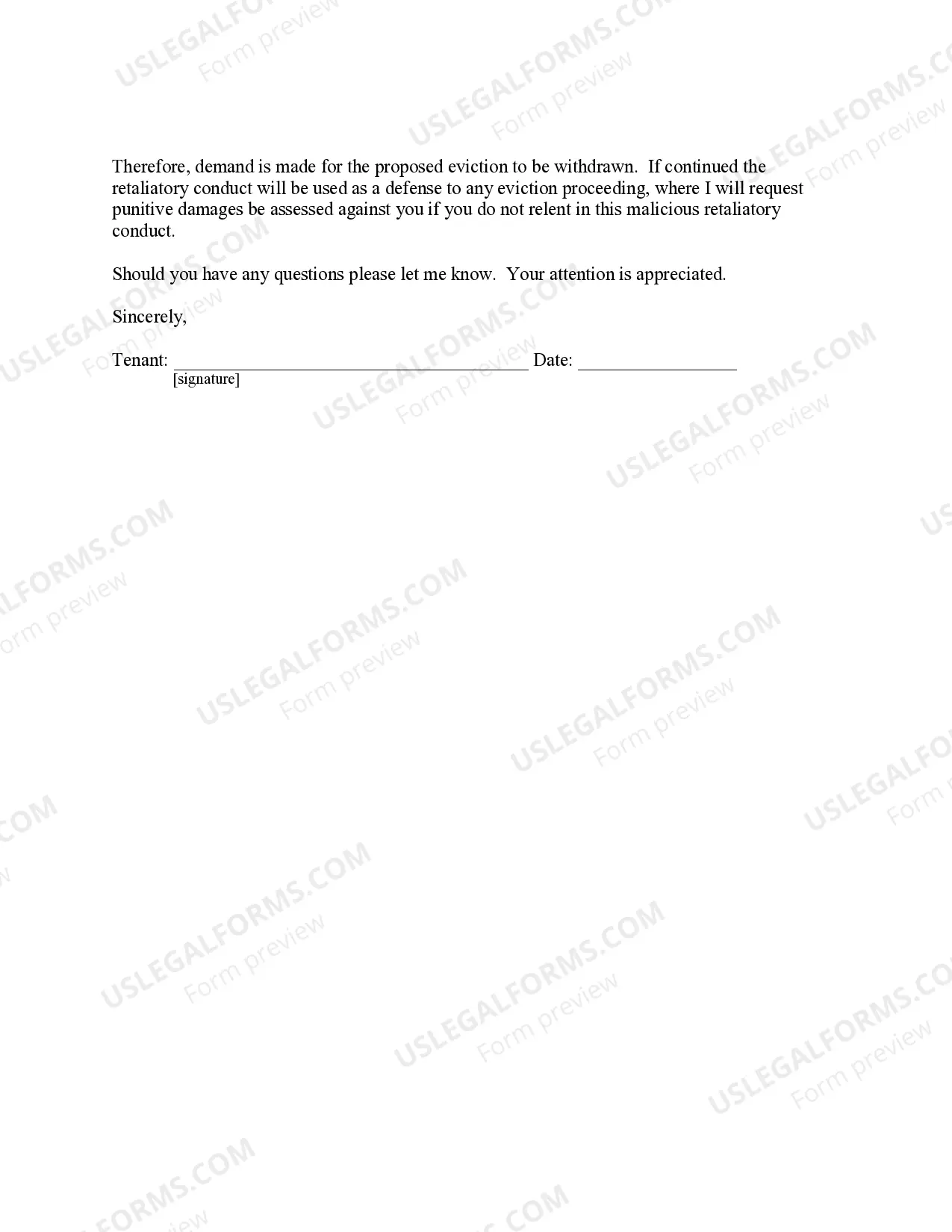
- A request for the landlord to cease retaliatory actions.
- Signature and date fields for the tenant.
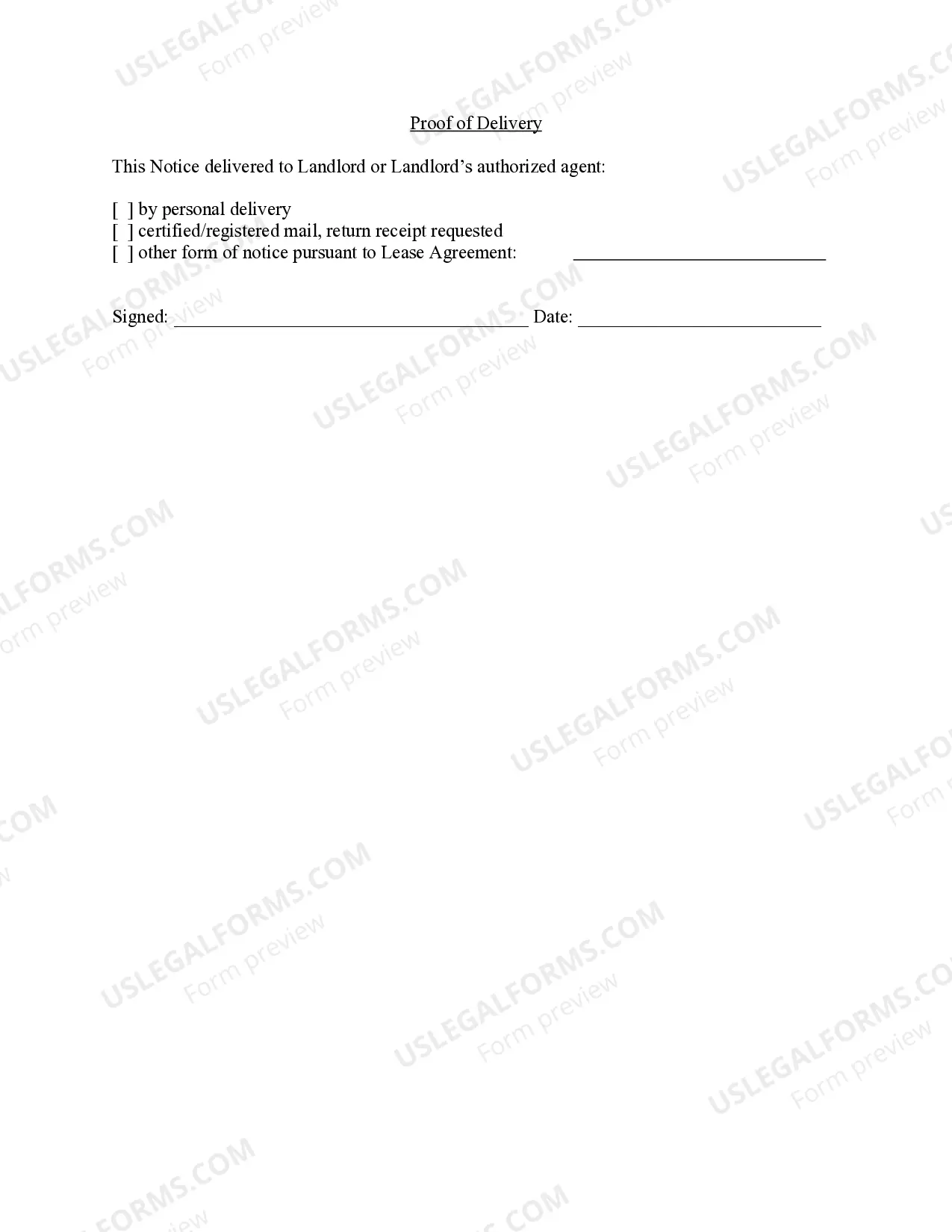
- Proof of delivery section to record how the notice was delivered.




Common use cases
This form should be used when a tenant receives a threat of eviction from their landlord that they suspect is retaliatory. Common scenarios include situations where the tenant has recently made complaints about unsafe living conditions, organized or participated in tenant unions, or requested necessary repairs. Utilizing this form can help protect the tenant's rights and document their response to the landlord's actions.
Who can use this document
- Tenants who have faced eviction threats that may be retaliation for asserting their legal rights.
- Individuals who have filed complaints regarding housing or health code violations.
- Members of tenant organizations seeking to protect against landlord intimidation.
Instructions for completing this form
- Identify the parties involved, including your name and the landlord's name.
- Clearly state the date of the eviction threat and describe the threat.
- Document your actions that prompted this response, such as complaints made.
- Include a request for the landlord to cease any retaliatory threats.
- Sign and date the document before sending it to your landlord.
- Deliver the notice personally or through a method that provides proof of delivery.
Does this form need to be notarized?
This form does not typically require notarization unless specified by local law. However, having a notarized document can provide additional legal weight and ensure the authenticity of the document.
Get your form ready online
Our built-in tools help you complete, sign, share, and store your documents in one place.
Make edits, fill in missing information, and update formatting in US Legal Forms—just like you would in MS Word.
Download a copy, print it, send it by email, or mail it via USPS—whatever works best for your next step.
Sign and collect signatures with our SignNow integration. Send to multiple recipients, set reminders, and more. Go Premium to unlock E-Sign.
If this form requires notarization, complete it online through a secure video call—no need to meet a notary in person or wait for an appointment.
We protect your documents and personal data by following strict security and privacy standards.

Make edits, fill in missing information, and update formatting in US Legal Forms—just like you would in MS Word.

Download a copy, print it, send it by email, or mail it via USPS—whatever works best for your next step.

Sign and collect signatures with our SignNow integration. Send to multiple recipients, set reminders, and more. Go Premium to unlock E-Sign.

If this form requires notarization, complete it online through a secure video call—no need to meet a notary in person or wait for an appointment.

We protect your documents and personal data by following strict security and privacy standards.
Common mistakes to avoid
- Failing to specify the retaliatory action of the landlord.
- Not documenting the delivery method, which can leave the tenant unprotected.
- Overlooking the inclusion of necessary dates and signatures.
Advantages of online completion
- Convenient access to customizable legal templates.
- Editable fields allow users to tailor the form to their specific situation.
- Reliable documents prepared by licensed attorneys to ensure legal compliance.
Legal use & context
- This form provides legal protection against retaliatory eviction threats.
- It reinforces a tenant's right to complain about hazardous living conditions.
- Utilizing this form helps establish a record of communication with the landlord.
What to keep in mind
- Use this form to respond to retaliatory eviction threats effectively.
- Document your actions and the landlord's threats clearly.
- Understand your rights as a tenant and protect yourself against illegal eviction.
Looking for another form?



Form popularity
FAQ
To write a letter to evict, begin by clearly stating the reason for eviction and the date by which the tenant must vacate the property. Include any relevant details about the lease agreement and the notice period. If you are a tenant facing eviction threats, consider using a Missouri Letter from Tenant to Landlord containing Notice to landlord to cease retaliatory threats to evict as a protective measure.
A 14/30 notice in Missouri refers to the notice period landlords must give before evicting tenants for non-payment of rent, which is typically 14 days. For other lease violations, the notice period can extend to 30 days. Tenants facing eviction can respond effectively with a Missouri Letter from Tenant to Landlord containing Notice to landlord to cease retaliatory threats to evict.
In Missouri, tenants can report their landlords to the local housing authority or the Attorney General's office if they believe they are victims of harassment or retaliation. Additionally, tenants may seek legal advice or assistance from organizations that specialize in tenant rights. Using a Missouri Letter from Tenant to Landlord containing Notice to landlord to cease retaliatory threats to evict can also be a proactive step.
Legally, landlord harassment includes actions that deny a tenant their rights, such as intimidation, threats of eviction, or unapproved entry into the rental unit. It can also involve failure to provide essential services or maintenance. To combat harassment, tenants may use a Missouri Letter from Tenant to Landlord containing Notice to landlord to cease retaliatory threats to evict.
Yes, landlord retaliation is illegal in Missouri. If a landlord tries to evict a tenant for exercising their rights, such as reporting unsafe conditions, it qualifies as retaliation. Tenants can protect themselves by using a Missouri Letter from Tenant to Landlord containing Notice to landlord to cease retaliatory threats to evict or retaliatory eviction.
Landlord harassment in Missouri includes behaviors like entering a tenant's home without permission, making threats of eviction without cause, or shutting off utilities. These actions create an uncomfortable living environment and are often unlawful. A Missouri Letter from Tenant to Landlord containing Notice to landlord to cease retaliatory threats to evict can help address these issues formally.
Landlord harassment in Missouri refers to actions taken by a landlord that interfere with a tenant's right to enjoy their rental property. This can include threats, excessive communication, or attempts to control when or how a tenant uses their home. If you face such issues, consider drafting a Missouri Letter from Tenant to Landlord containing Notice to landlord to cease retaliatory threats to evict or retaliatory eviction.
To write an effective letter to a landlord to stop harassment, begin by clearly stating your concerns and the specific behaviors that you find unacceptable. Include a request for the landlord to cease any form of harassment, referencing the Missouri Letter from Tenant to Landlord containing Notice to landlord to cease retaliatory threats to evict or retaliatory eviction, which can serve as a formal notice. Be concise and professional, while ensuring you keep a copy for your records. Utilizing a platform like US Legal Forms can simplify this process, providing templates that ensure you cover all necessary points.
A retaliatory eviction notice is a communication from a landlord that indicates they intend to evict a tenant in response to the tenant exercising their legal rights, such as reporting unsafe living conditions. In Missouri, a tenant can respond to this notice by using a Missouri Letter from Tenant to Landlord containing Notice to landlord to cease retaliatory threats to evict or retaliatory eviction. This document helps protect tenants from unjust eviction and asserts their rights. By addressing the issue directly, tenants can create a record of their concerns and seek a resolution.