Missouri Letter from Tenant to Landlord about Fair Housing Reduction or Denial of services to Family with Children
Understanding this form
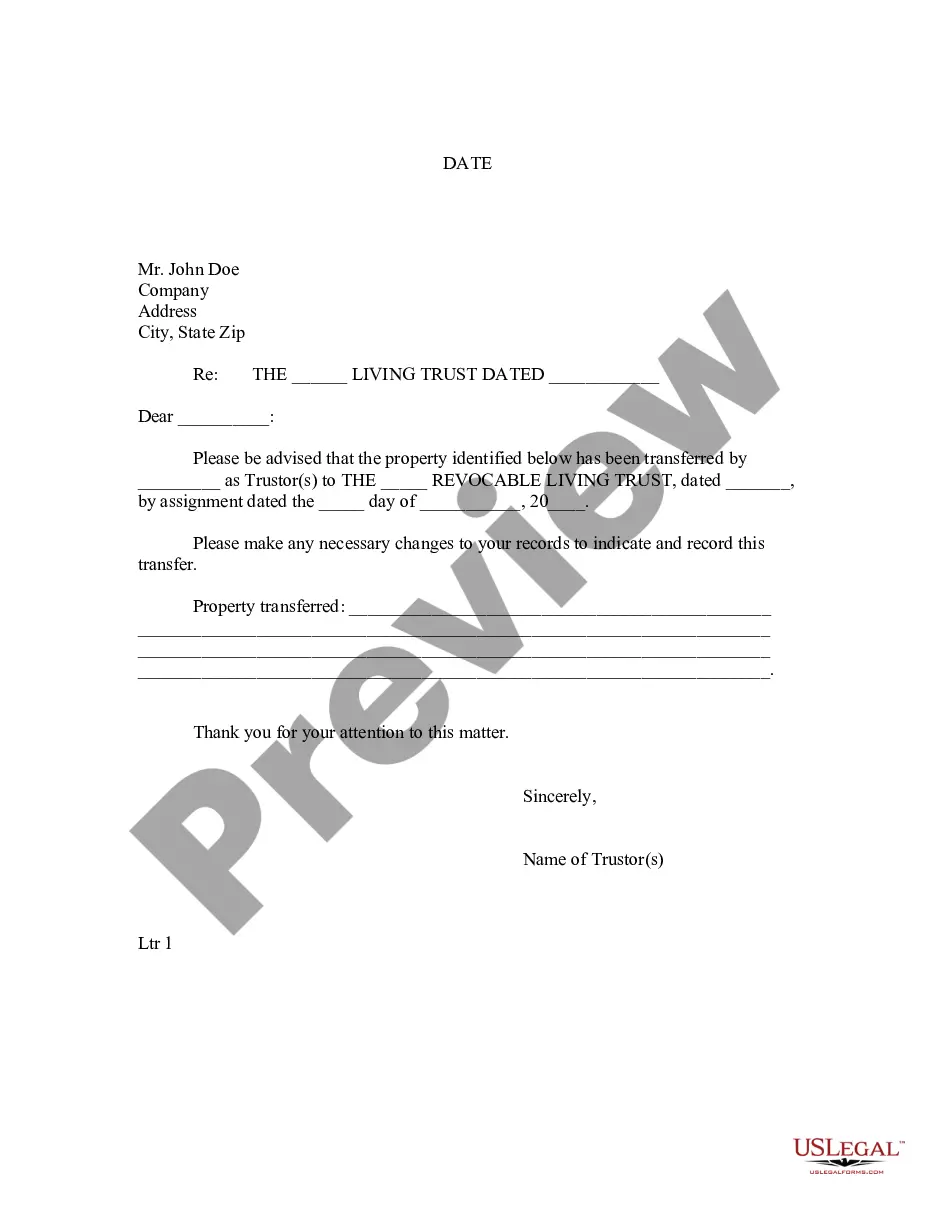
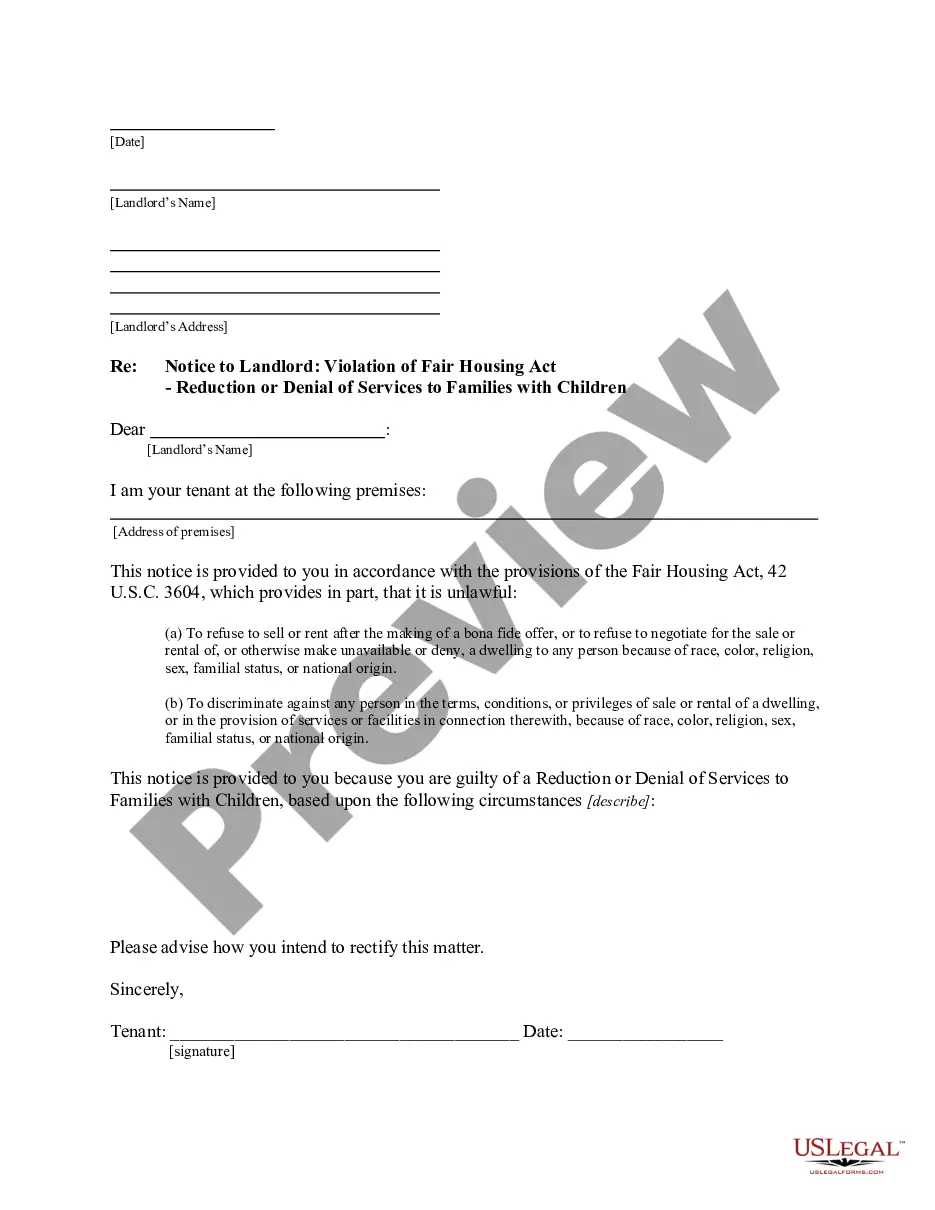
This form is a Letter from Tenant to Landlord about Fair Housing Reduction or Denial of services to Family with Children. It informs your landlord of a violation of the Fair Housing Act when they deny or reduce services to families with children. Unlike other rental agreements or notices, this letter specifically addresses discrimination based on familial status, ensuring that tenants advocate for their rights in a lawful manner.
Key parts of this document
- Identification of the tenant and landlord involved in the tenancy.
- Description of the specific reduction or denial of services concerning families with children.
- Reference to the Fair Housing Act and relevant discriminatory practices.
- Request for immediate action or remedy from the landlord.
- Documentation of the circumstances leading to the alleged violation.

When this form is needed
This form should be used when a tenant experiences reduced or denied services from their landlord because of having children in the household. Examples include refusing to make necessary repairs that directly affect a child's living environment or denying access to communal amenities that are important for family activities. If you believe your landlord is violating the Fair Housing Act, send this letter to formally document the issue and seek a resolution.
Who this form is for
- Tenants with children who believe they have been discriminated against by their landlord.
- Individuals seeking to enforce their rights under the Fair Housing Act.
- Families looking for a formal way to notify landlords of potential violations.
How to complete this form
- Identify the tenant and landlord's names and contact information.
- Clearly describe the reduction or denial of services related to your family situation.
- Cite the specific provisions of the Fair Housing Act that have been violated.
- Request a specific remedy or action from the landlord to rectify the situation.
- Sign and date the letter and consider sending it via certified mail for acknowledgment.
Does this form need to be notarized?
This form does not typically require notarization unless specified by local law. However, sending it via certified mail is recommended to ensure there is a record of delivery and receipt.
Get your form ready online
Our built-in tools help you complete, sign, share, and store your documents in one place.
Make edits, fill in missing information, and update formatting in US Legal Forms—just like you would in MS Word.
Download a copy, print it, send it by email, or mail it via USPS—whatever works best for your next step.
Sign and collect signatures with our SignNow integration. Send to multiple recipients, set reminders, and more. Go Premium to unlock E-Sign.
If this form requires notarization, complete it online through a secure video call—no need to meet a notary in person or wait for an appointment.
We protect your documents and personal data by following strict security and privacy standards.

Make edits, fill in missing information, and update formatting in US Legal Forms—just like you would in MS Word.

Download a copy, print it, send it by email, or mail it via USPS—whatever works best for your next step.

Sign and collect signatures with our SignNow integration. Send to multiple recipients, set reminders, and more. Go Premium to unlock E-Sign.

If this form requires notarization, complete it online through a secure video call—no need to meet a notary in person or wait for an appointment.

We protect your documents and personal data by following strict security and privacy standards.
Mistakes to watch out for
- Failing to provide specific examples of the discrimination experienced.
- Not citing the relevant laws or regulations adequately.
- Omitting the date and signature, which may invalidate the notice.
- Sending the letter without keeping a copy for personal records.
Why use this form online
- Convenient access to professionally drafted legal templates.
- Editable format allows customization to fit personal circumstances.
- Reliable legal language ensuring compliance with current laws.
Legal use & context
- This form serves as a formal notice and may be used as evidence in legal proceedings if the situation escalates.
- It is essential to retain a copy for your records for future reference.
- Understanding the Fair Housing Act strengthens the tenant's position against discrimination.
Summary of main points
- This letter provides a formal method to address housing discrimination regarding families with children.
- Using this form ensures you are aware of your rights under the Fair Housing Act.
- Be precise and thorough when detailing incidents of discrimination to strengthen your case.
Looking for another form?




Form popularity
FAQ
The most common fair housing complaint relates to discrimination against families with children. This includes scenarios where landlords deny housing or impose unfair conditions based on the presence of children. If you find yourself in this situation, it is crucial to document your concerns and communicate effectively. A Missouri Letter from Tenant to Landlord about Fair Housing Reduction or Denial of services to Family with Children can help you assert your rights and seek a resolution.
Discrimination in housing can take many forms, including refusing to rent to a family because they have children, charging higher rent based on family status, or not providing necessary services to families with children. Such actions violate the rights of tenants and may require a Missouri Letter from Tenant to Landlord about Fair Housing Reduction or Denial of services to Family with Children. If you believe you are facing discrimination, it is important to document these experiences and seek legal guidance.
To successfully file a fair housing complaint, you must prove that discrimination occurred based on protected characteristics, such as family status. This often involves showing that a landlord's actions negatively impacted your rights, like denying services to families with children. When drafting a Missouri Letter from Tenant to Landlord about Fair Housing Reduction or Denial of services to Family with Children, it is essential to include specific details and evidence to support your case. Utilizing resources like uslegalforms can help you structure your complaint effectively.
A 14/30 notice in Missouri refers to a specific type of eviction notice that a landlord can issue to a tenant. It allows landlords to terminate a lease for non-payment of rent or other lease violations. If you receive this notice, it is important to respond promptly, especially if you are considering sending a Missouri Letter from Tenant to Landlord about Fair Housing Reduction or Denial of services to Family with Children. Understanding your rights and options is crucial in this situation.
It's fair to be angry and scaredthe direct federal fines for violations of the Fair Housing Act are usually $17,000 per violation; total settlements on race, familial status, age and sex discrimination cases often reach well into the six figuresbut those overwhelming emotions are why you should go straight to your
The person can establish a case against the landlord by proving four things: that the plaintiff is a member of a protected group; that the plaintiff applied for and was qualified to rent a certain property; that the plaintiff was rejected by the landlord; and that the property remained unrented thereafter.
The parties have entered into this Initial Decision and Consent Order ("'Consent Order") to avoid the risks. expenses. and burdens of litigation and to voluntarily resolve the claims in the Charge of the Respondents' alleged violations of federal fair housing laws.
Yes, there are four important exceptions to the Fair Housing Act: Single family homes, as long as the home is also rented or sold by the owner, the owner does not own more than 3 such homes at a time, the advertising for the sale or rental was not discriminatory, and the owner did not use a real estate agent or broker.
Punitive damages are appropriate in a federal civil rights action "when the defendant's conduct is shown to be motivated by evil motive or intent, or when it involves reckless or callous indifference to the federally protected rights of others." Smith v.
HUD Settles Disability Discrimination Fair Housing Act Case For $80,000.