Minnesota Last Will and Testament for Married person with Adult Children from Prior Marriage
What is this form?
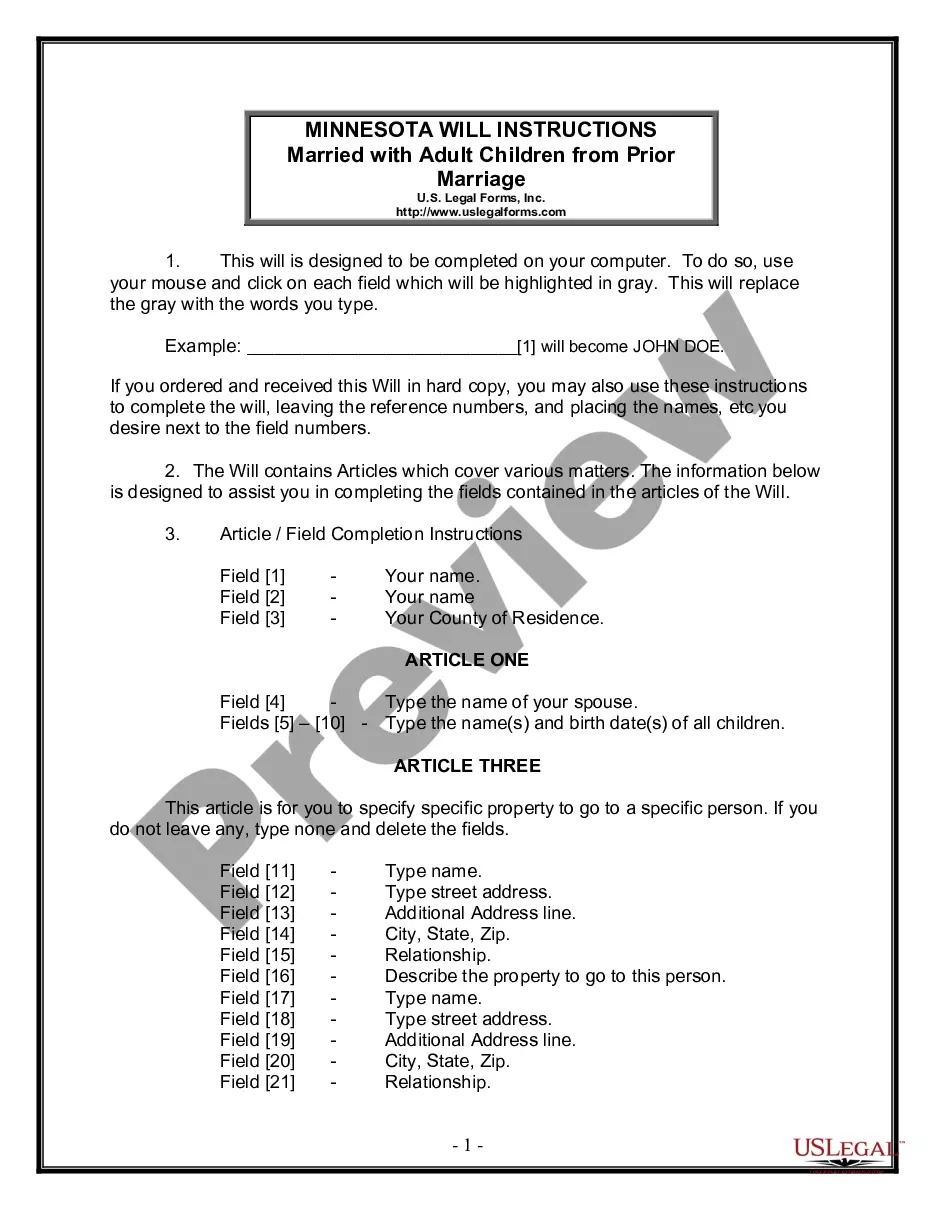
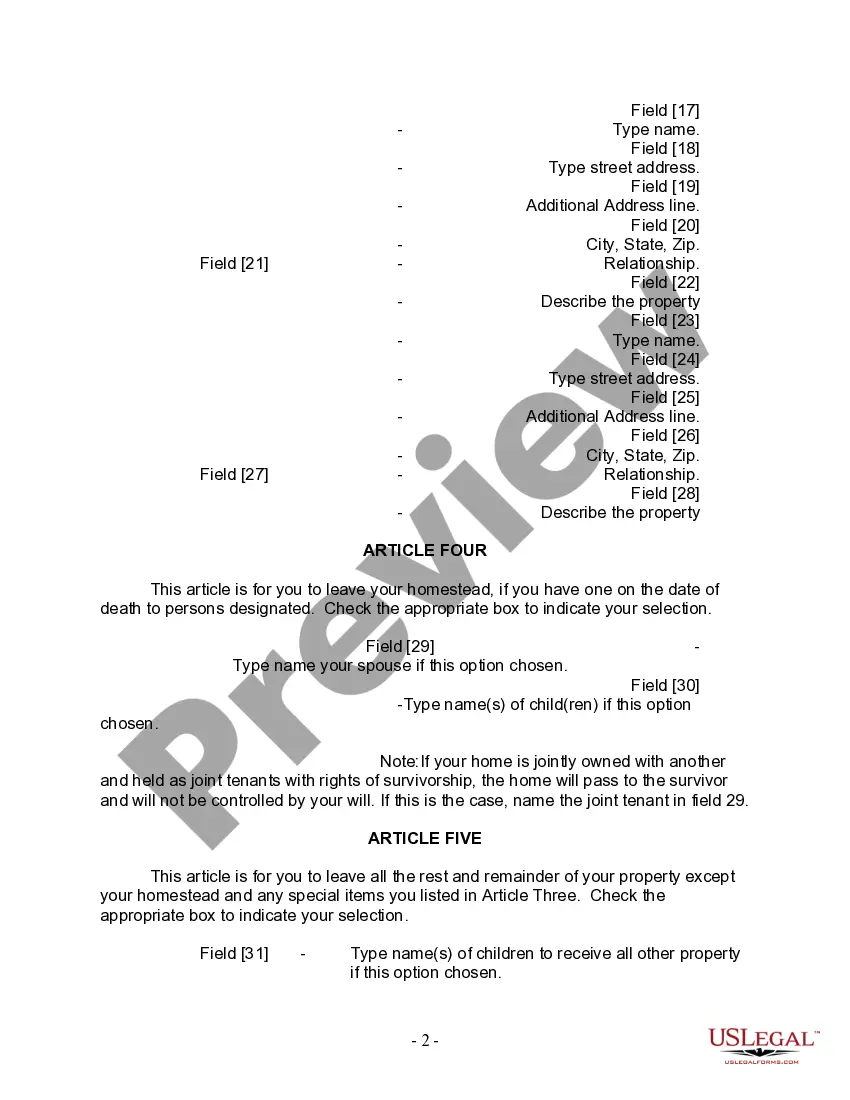
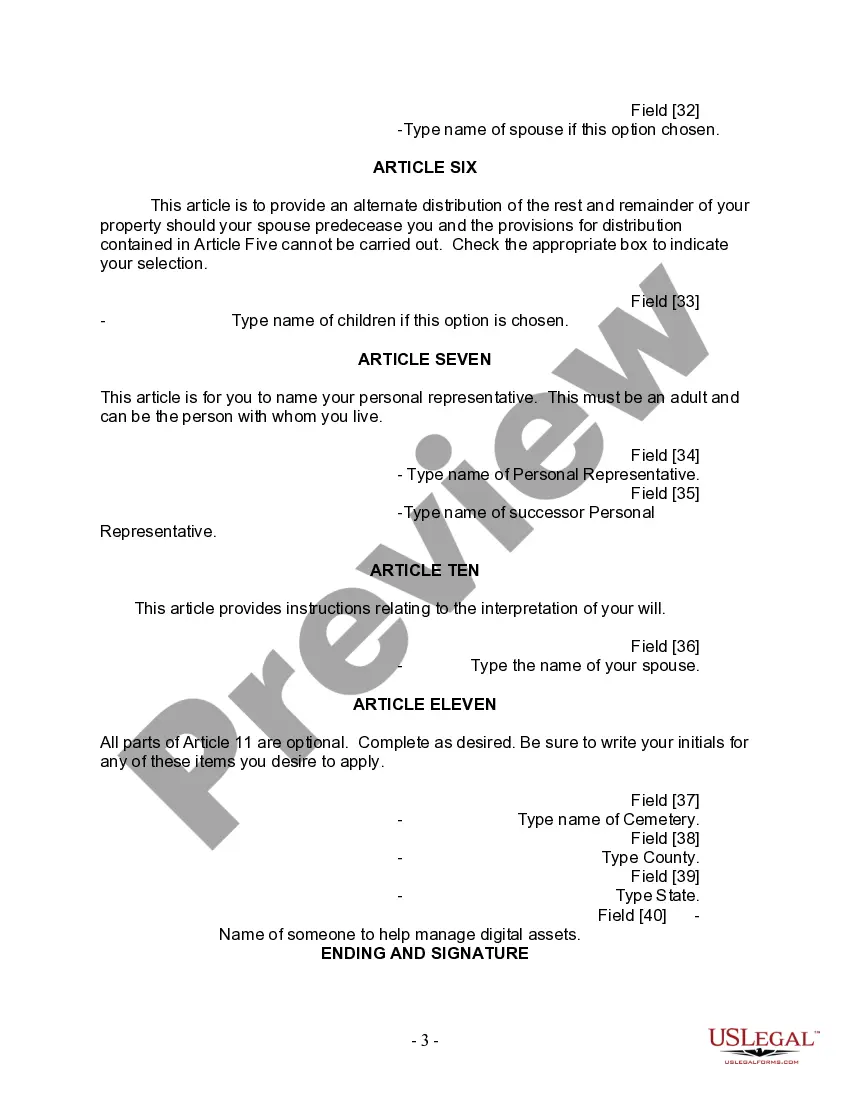
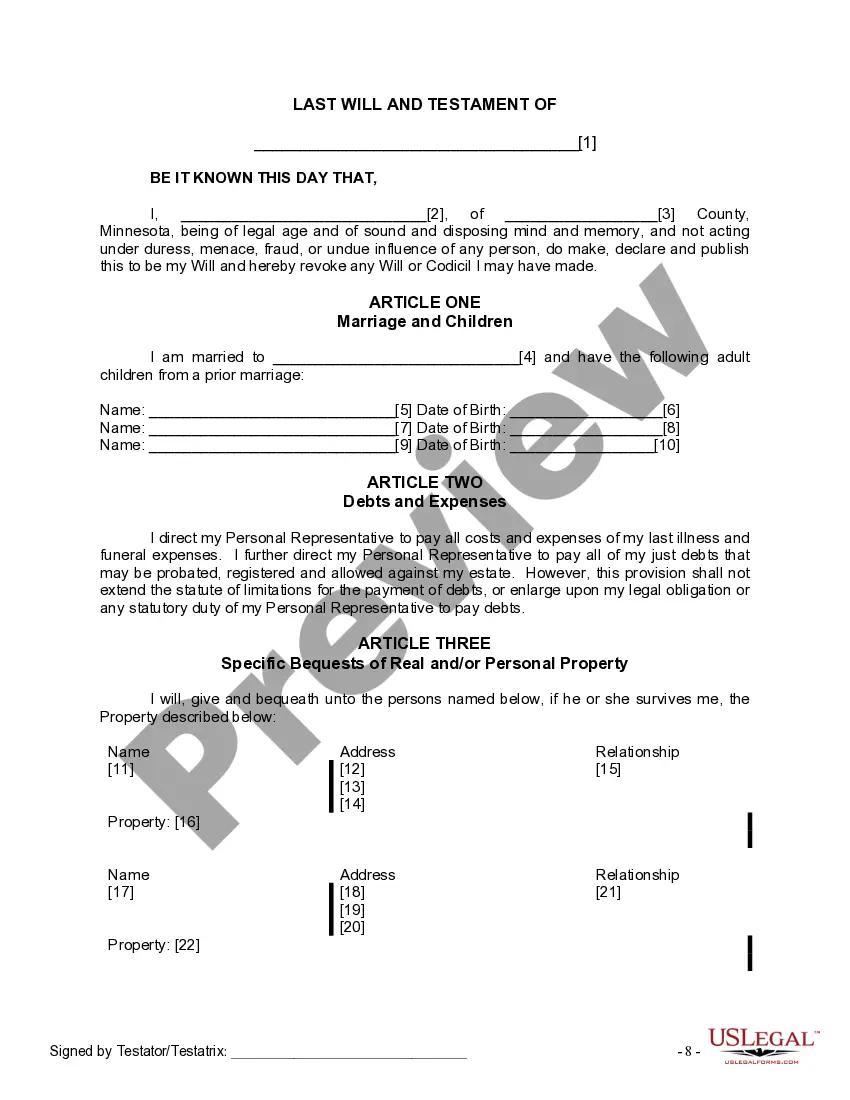
The Last Will and Testament for a married person with adult children from a prior marriage is a legal document that outlines how your property and assets will be distributed upon your death. This form specifically caters to individuals who are married and have adult children from a previous relationship, ensuring that all family dynamics are properly addressed. It includes appointing a personal representative (executor) to manage your estate, specifying beneficiaries, and making special provisions for children from prior marriages. This will is designed to provide clarity and legal assurance regarding your final wishes, distinguishing it from a standard will without consideration of previous marriages or children.
Key components of this form
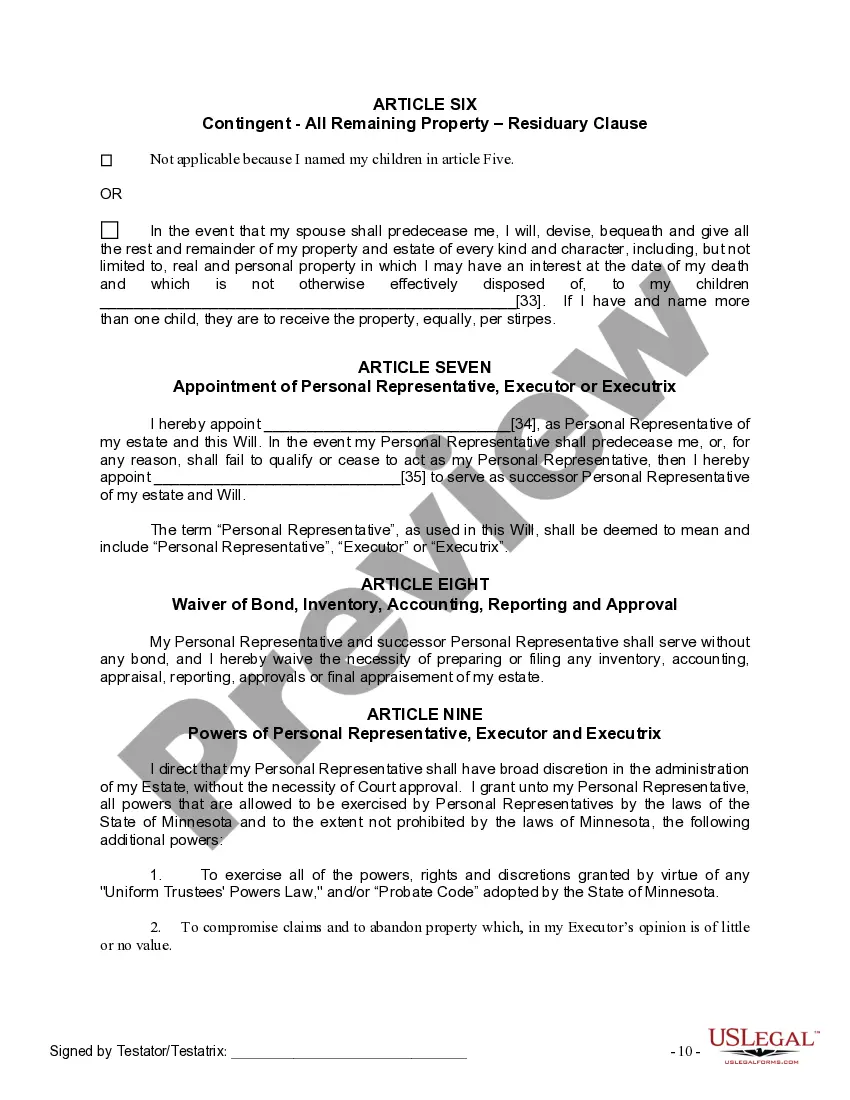
- Appointment of a Personal Representative to manage the estate.
- Specification of beneficiaries, including your spouse and adult children.
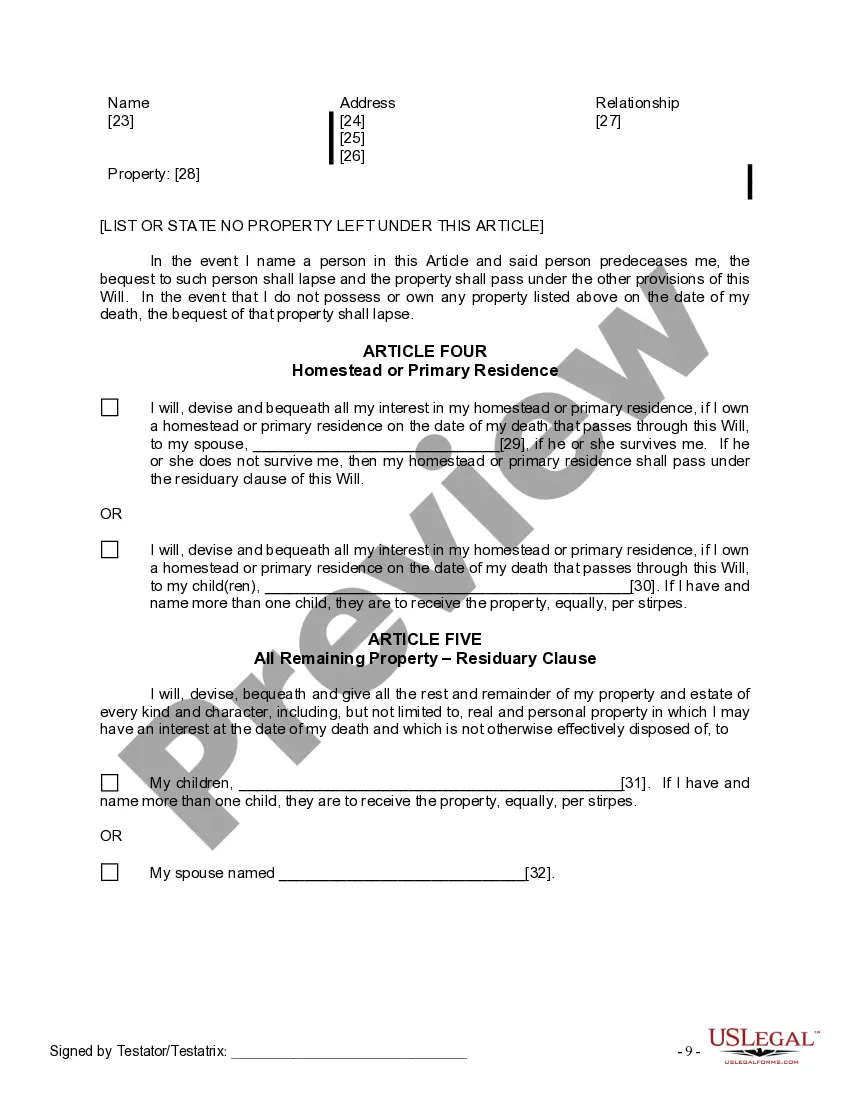
- Articles addressing specific property bequests and distribution of assets.
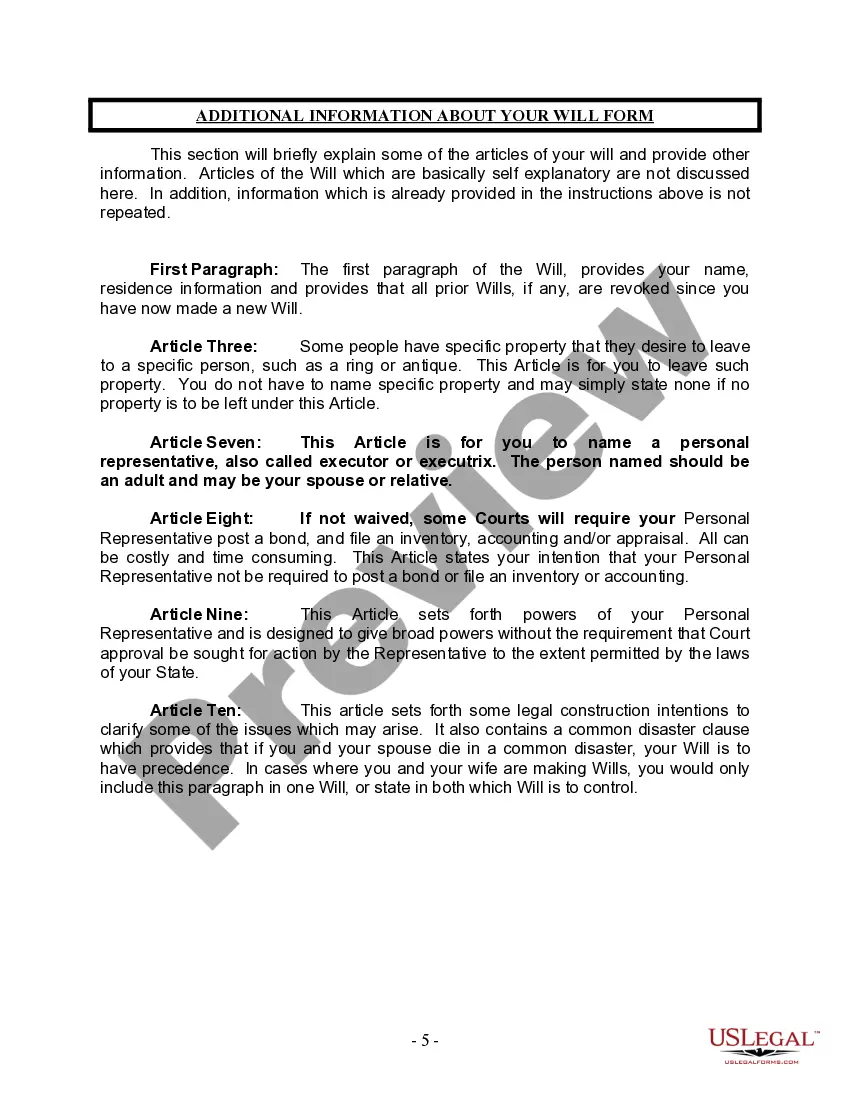
- Homestead provisions for your primary residence.
- Contingent distribution instructions in case your spouse predeceases you.
- Legal language for clarity on the administration of your estate.





When to use this form
This form is ideal for individuals who are married and want to ensure that their adult children from a prior marriage are included in their estate planning. It is particularly useful when you have specific wishes regarding property distribution and want to avoid potential conflicts among family members. Use this will if you wish to legally document your distribution preferences, safeguarding your intentions and providing peace of mind for both your current spouse and adult children.
Who needs this form
- Married individuals who have adult children from a previous relationship.
- People who wish to specify how their property should be distributed after death.
- Those looking to establish a clear estate plan to minimize family disputes.
- Anyone wanting to appoint a trusted personal representative to handle their affairs.
Completing this form step by step
- Begin by entering your full name and residence information at the beginning of the document.
- Appoint your spouse and list all adult children, including their names and birth dates.
- Specify any particular bequests of property to beneficiaries as desired in the relevant sections.
- Identify your personal representative and any successor representatives.
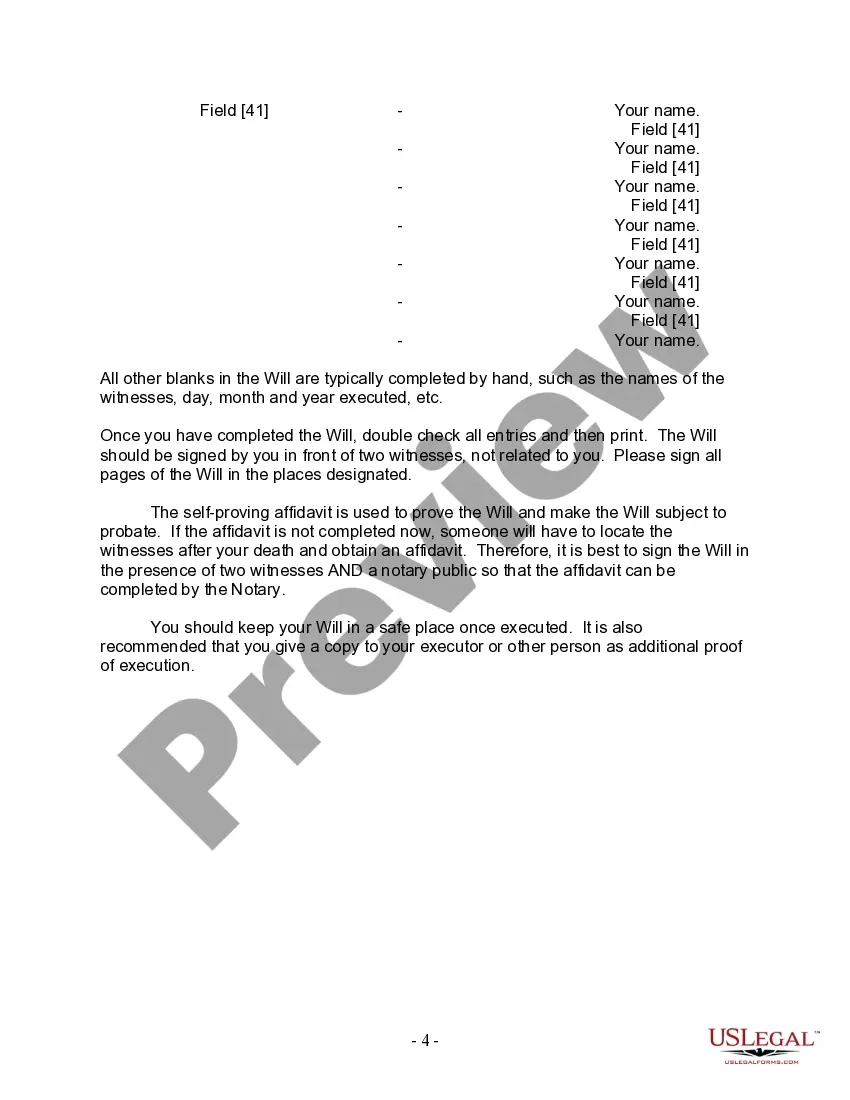
- Sign the will in the presence of two witnesses who are not named in the document, along with a notary if necessary.
- Keep the signed will in a safe location and provide a copy to your executor for reference.
Does this form need to be notarized?
Yes, this form must be notarized to be legally valid if your state has a self-proving affidavit provision. It is recommended to sign the document in the presence of a notary public to streamline the probate process later, ensuring your wishes are carried out smoothly.
Get your form ready online
Our built-in tools help you complete, sign, share, and store your documents in one place.
Make edits, fill in missing information, and update formatting in US Legal Forms—just like you would in MS Word.
Download a copy, print it, send it by email, or mail it via USPS—whatever works best for your next step.
Sign and collect signatures with our SignNow integration. Send to multiple recipients, set reminders, and more. Go Premium to unlock E-Sign.
If this form requires notarization, complete it online through a secure video call—no need to meet a notary in person or wait for an appointment.
We protect your documents and personal data by following strict security and privacy standards.

Make edits, fill in missing information, and update formatting in US Legal Forms—just like you would in MS Word.

Download a copy, print it, send it by email, or mail it via USPS—whatever works best for your next step.

Sign and collect signatures with our SignNow integration. Send to multiple recipients, set reminders, and more. Go Premium to unlock E-Sign.

If this form requires notarization, complete it online through a secure video call—no need to meet a notary in person or wait for an appointment.

We protect your documents and personal data by following strict security and privacy standards.
Common mistakes
- Failing to have the will signed in front of the required witnesses.
- Not updating the will when personal circumstances change, such as marriage or the birth of new children.
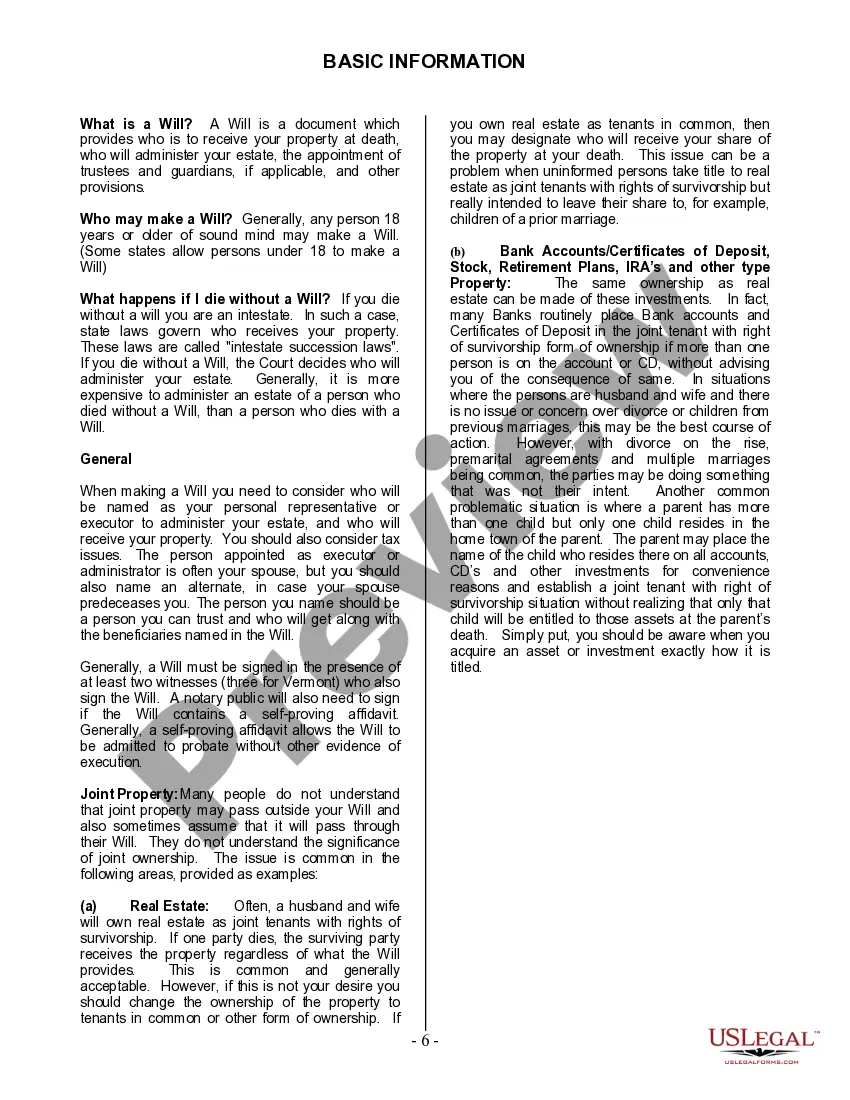
- Assuming that joint accounts and property automatically pass as intended without specifying in the will.
Why complete this form online
- Convenience of completing the form at your own pace from home.
- Editability allows for easy updates and changes to your preferences.
- Guidance provided through clear instructions simplifying the process.
Main things to remember
- A Last Will and Testament outlines your wishes regarding asset distribution upon death.
- It's crucial for married individuals with children from prior marriages to include provisions for all parties involved.
- Notarization is often required to enhance the Willâs legitimacy during probate.
- Failing to properly complete or witness your Will can lead to unintended results in how your estate is handled.
Looking for another form?
Form popularity
FAQ
This will outlines how your property is distributed after death for someone who is married and has adult children from a prior marriage, naming a personal representative, beneficiaries (including your spouse and the adult children), and specific bequests or homestead provisions. Use it to create a clear estate plan that accounts for both your current spouse and adult children from a prior relationship.
Non-probate assets in Minnesota—such as jointly owned property, accounts with designated beneficiaries, and life insurance or retirement benefits—pass outside the probate process. This form works with those assets by clearly listing beneficiaries and bequests within the will, while non-probate assets stay outside probate.
The form allows you to specify beneficiaries, including your adult children, and to describe specific bequests. To leave inheritance to your children while excluding their spouses, clearly name each child as a beneficiary and provide direct bequests or contingent distributions. Consult an attorney for precise drafting.
The form includes a provision to appoint a Personal Representative to manage the estate. This person collects assets, pays debts, and distributes property according to the will’s instructions, ensuring your spouse and adult children receive the intended bequests and that the estate is administered smoothly.
Review the form’s key components—the Personal Representative appointment, beneficiary designations (spouse and adult children), property bequests, homestead provisions, and contingent distributions. After completing, sign and execute the will in accordance with Minnesota formalities, with witnesses as required; consult an attorney if you need precise execution steps.
This form is tailored for a married person with adult children from a prior marriage. It explicitly includes homestead provisions and contingent distribution instructions if the spouse predeceases, ensuring clearer treatment of the current spouse and children from a prior relationship compared with standard wills that don’t address prior-marriage families.