Minnesota Letter from Tenant to Landlord containing Notice to landlord to cease retaliatory threats to evict or retaliatory eviction
What is this form?
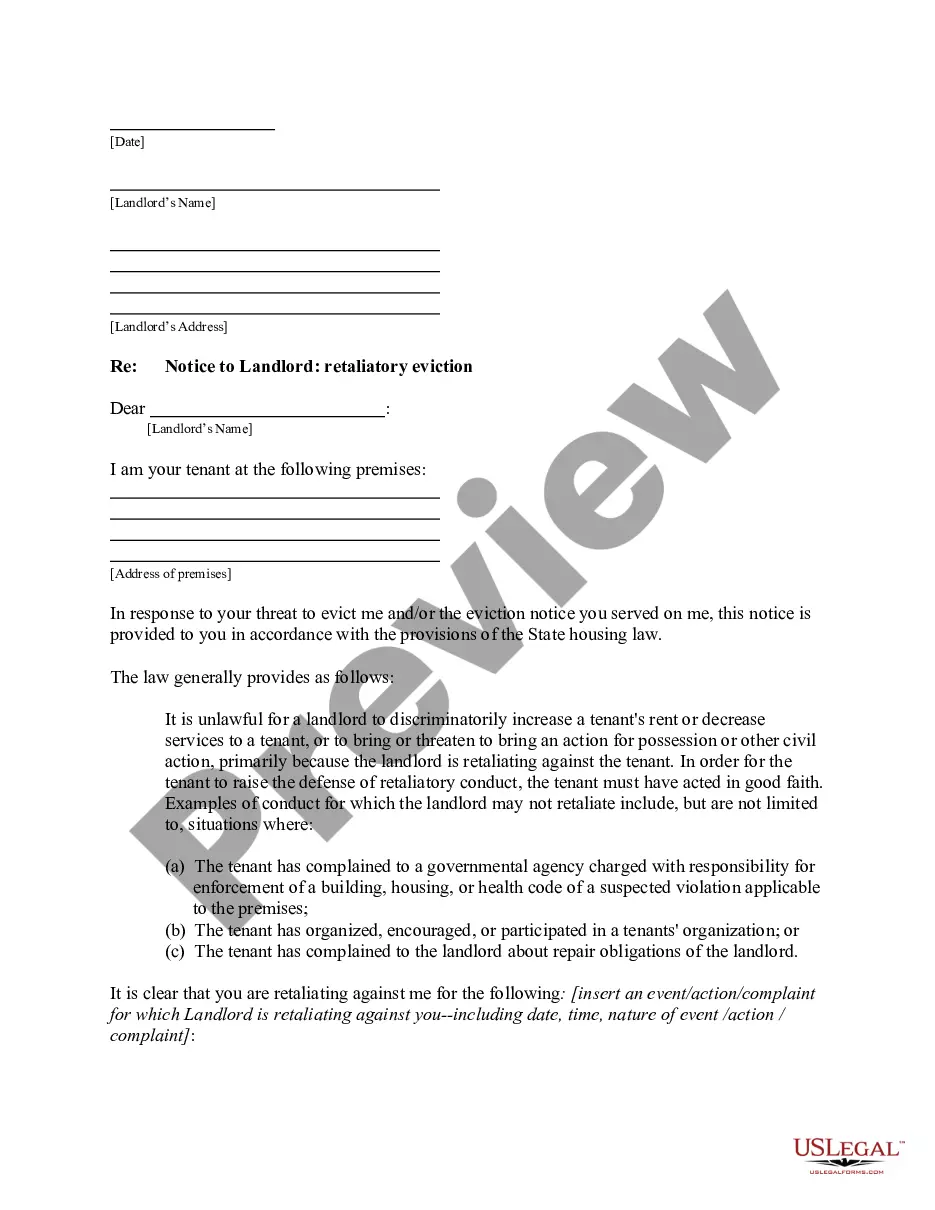
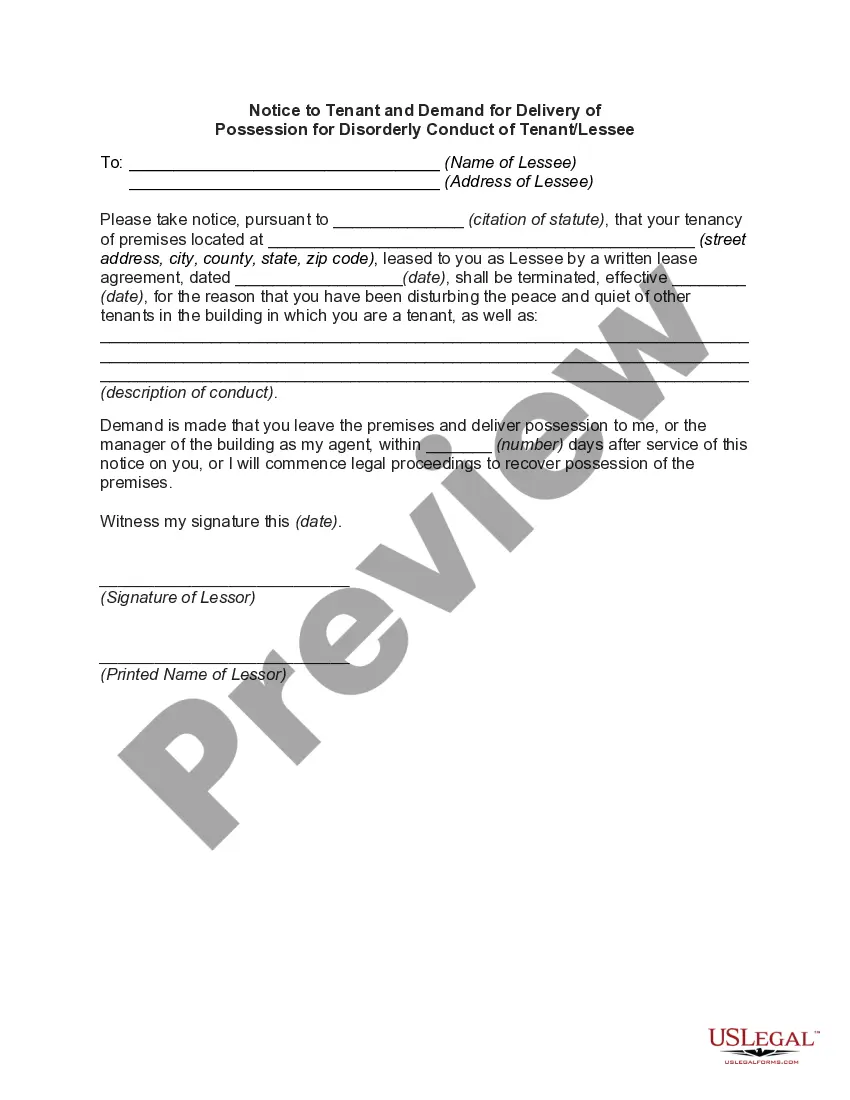
This Letter from Tenant to Landlord contains a Notice to the landlord, instructing them to cease retaliatory threats of eviction against the tenant. The purpose of this form is to formally contest unlawful eviction threats made by the landlord, asserting that such threats are retaliatory and arise from the tenant's protected actions. Unlike other forms, this document emphasizes the tenant's rights under state housing laws against retaliatory behavior by landlords.
Main sections of this form
- Identification of the tenant and landlord involved in the tenancy.
- Statement of the landlord's threats and the tenant's response.
- Citation of relevant state housing laws regarding retaliatory eviction.
- Examples of tenant actions that cannot be subjected to retaliation.
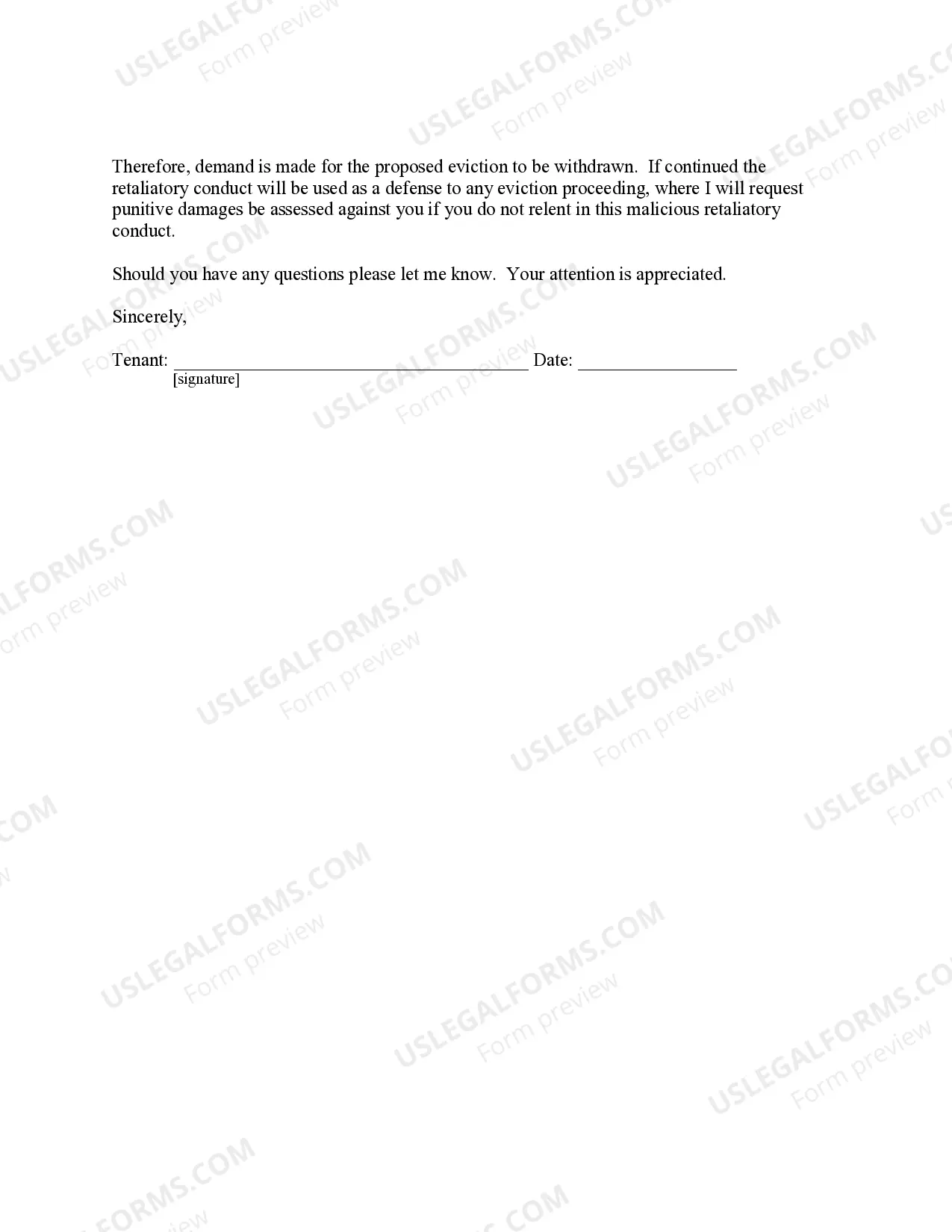
- Signature section for the tenant, along with a date.
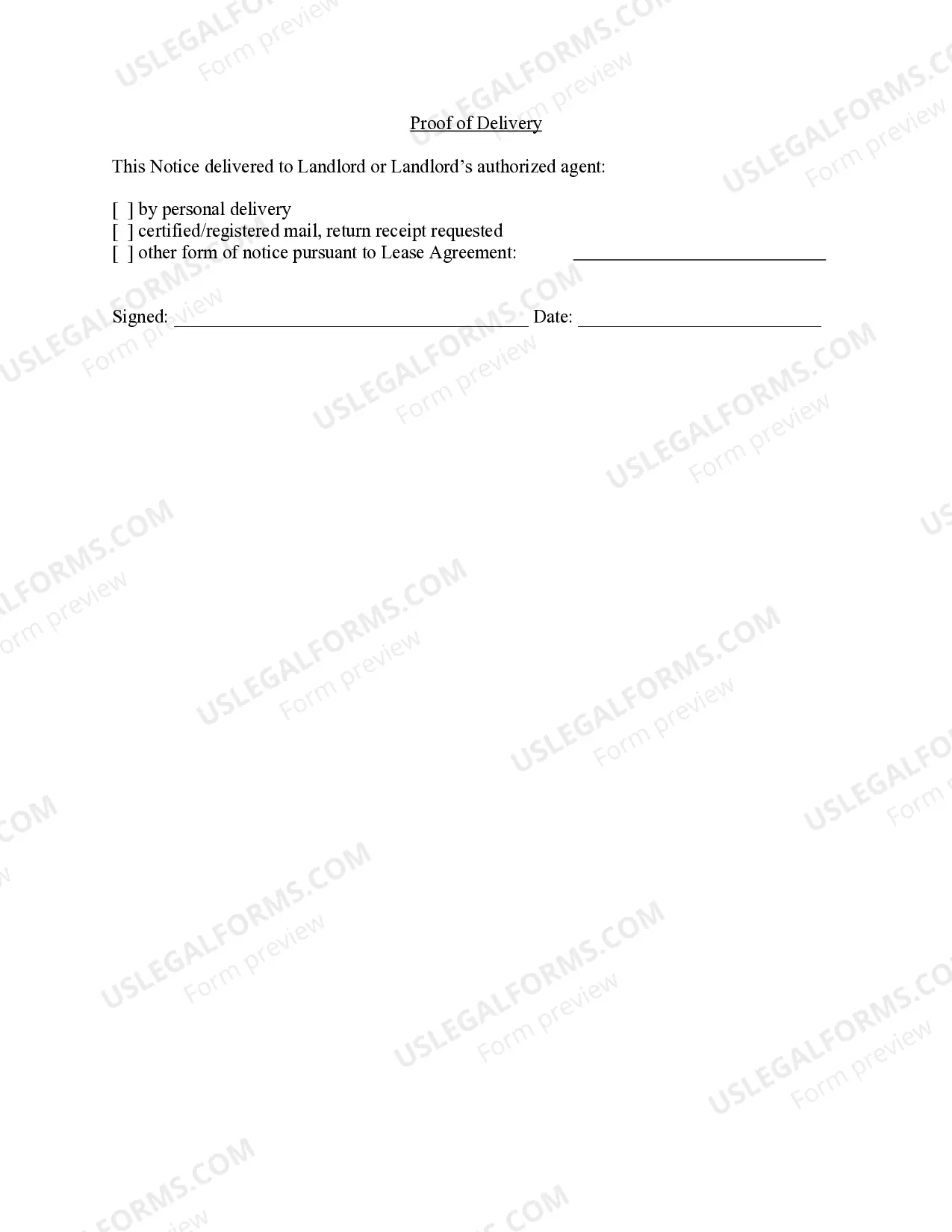
- Proof of delivery instructions for notifying the landlord.


Situations where this form applies
This form should be used when a tenant has received threats of eviction from their landlord that they believe are retaliatory. Common scenarios include instances where a tenant has reported a violation of health or safety codes, joined a tenants' organization, or requested necessary repairs. It serves to protect the tenant's rights and formally notify the landlord of the unlawful nature of their actions.
Who can use this document
- Tenants facing eviction threats from their landlord.
- Individuals who have engaged in protected tenant activities, such as filing complaints or requesting repairs.
- Those needing to assert their rights under state housing laws against retaliatory landlords.
Instructions for completing this form
- Identify the names and addresses of both the tenant and the landlord.
- Describe the alleged retaliatory threats made by the landlord.
- Include details of any actions taken by the tenant that may have prompted the threats.
- Sign and date the form to affirm the validity of the notice.
- Deliver the notice to the landlord personally or through their authorized agent, ensuring proof of delivery.
Does this document require notarization?
Notarization is not commonly needed for this form. However, certain documents or local rules may make it necessary. Our notarization service, powered by Notarize, allows you to finalize it securely online anytime, day or night.
Get your form ready online
Our built-in tools help you complete, sign, share, and store your documents in one place.
Make edits, fill in missing information, and update formatting in US Legal Forms—just like you would in MS Word.
Download a copy, print it, send it by email, or mail it via USPS—whatever works best for your next step.
Sign and collect signatures with our SignNow integration. Send to multiple recipients, set reminders, and more. Go Premium to unlock E-Sign.
If this form requires notarization, complete it online through a secure video call—no need to meet a notary in person or wait for an appointment.
We protect your documents and personal data by following strict security and privacy standards.

Make edits, fill in missing information, and update formatting in US Legal Forms—just like you would in MS Word.

Download a copy, print it, send it by email, or mail it via USPS—whatever works best for your next step.

Sign and collect signatures with our SignNow integration. Send to multiple recipients, set reminders, and more. Go Premium to unlock E-Sign.

If this form requires notarization, complete it online through a secure video call—no need to meet a notary in person or wait for an appointment.

We protect your documents and personal data by following strict security and privacy standards.
Common mistakes to avoid
- Failing to provide specific details about the retaliatory threats.
- Not signing and dating the form, which may render it invalid.
- Neglecting to keep proof of delivery when notifying the landlord.
- Using vague language that does not clearly outline the tenant's position.
Advantages of online completion
- Convenient access to legal forms that can be downloaded at any time.
- Editability allows customization to fit specific situations.
- Reliability, as the forms are drafted by licensed attorneys to ensure compliance with state laws.
Legal use & context
- This form serves as a formal declaration that can be used in case of legal disputes over eviction.
- It ensures that tenants are protected under state housing laws against retaliatory actions.
- The form stands as evidence of the tenant's efforts to address the landlord's threats legally.
Summary of main points
- This form is essential for any tenant facing retaliatory eviction threats.
- Completing the form accurately can help protect your rights and clarify your position.
- Always keep a copy of your correspondence with the landlord for your records.
Looking for another form?




Form popularity
FAQ
A landlord eviction letter typically outlines the reasons for eviction and includes important details about the tenant's lease. For instance, a Minnesota Letter from Tenant to Landlord containing Notice to landlord to cease retaliatory threats to evict or retaliatory eviction should clearly state any retaliatory actions taken by the landlord. This letter serves as a formal notice, urging the landlord to stop any unlawful eviction threats. Using platforms like US Legal Forms can help you create such letters easily, ensuring you have the right format and legal language.
In a retaliation case, you will need evidence such as communication records, copies of eviction notices, and documentation of your complaints or requests made to your landlord. Witness statements from neighbors or other tenants can also support your claims. Utilizing a Minnesota Letter from Tenant to Landlord containing Notice to landlord to cease retaliatory threats to evict or retaliatory eviction can bolster your case by demonstrating your proactive approach to the issue.
Retaliation by a landlord includes actions taken against a tenant for exercising their legal rights, such as filing complaints, requesting repairs, or joining tenant unions. Common retaliatory actions include eviction notices, rent increases, or harassment. Understanding what constitutes retaliation can help you recognize your rights and prepare a Minnesota Letter from Tenant to Landlord containing Notice to landlord to cease retaliatory threats to evict or retaliatory eviction.
To establish a case of retaliatory eviction, you must show that your landlord acted against you due to your lawful actions, such as reporting health violations or requesting repairs. Keep a detailed record of interactions with your landlord and any correspondence related to your tenancy. A Minnesota Letter from Tenant to Landlord containing Notice to landlord to cease retaliatory threats to evict or retaliatory eviction can be instrumental in demonstrating your position.
Proving retaliatory eviction requires you to gather evidence that links your actions as a tenant to the landlord's decision to evict you. Document any complaints made to authorities or requests for repairs, as well as the timeline of your eviction notice. A Minnesota Letter from Tenant to Landlord containing Notice to landlord to cease retaliatory threats to evict or retaliatory eviction can serve as crucial documentation to support your case.
To write an effective Minnesota Letter from Tenant to Landlord containing Notice to landlord to cease retaliatory threats to evict or retaliatory eviction, start by clearly stating your concerns about the harassment. Include specific examples of the behavior, and express your expectation for it to stop. Additionally, be sure to mention that you are aware of your rights as a tenant and that you may seek legal recourse if the harassment continues.
The landlord and tenant Act in Minnesota prohibits landlords from retaliating against tenants for exercising their rights. This means that if a tenant files a complaint or reports issues, a landlord cannot threaten eviction in response. Using a Minnesota Letter from Tenant to Landlord containing Notice to landlord to cease retaliatory threats to evict or retaliatory eviction is an effective way for tenants to assert their rights and prevent unlawful eviction actions. Familiarizing yourself with these protections can empower you as a tenant.
In Minnesota, recent changes to eviction laws aim to protect tenants from unfair practices. These laws require landlords to provide proper notice before initiating eviction proceedings. Additionally, the Minnesota Letter from Tenant to Landlord containing Notice to landlord to cease retaliatory threats to evict or retaliatory eviction can be a crucial tool for tenants facing such threats. By understanding these laws, tenants can better defend their rights and ensure fair treatment.
Minnesota law protects tenants from retaliatory actions by landlords. Specifically, landlords cannot evict tenants or take other adverse actions based on the tenant's exercise of legal rights, such as filing complaints about unsafe conditions. If you believe you are facing retaliation, consider using a Minnesota Letter from Tenant to Landlord containing Notice to landlord to cease retaliatory threats to evict or retaliatory eviction to assert your legal protections.
A retaliatory eviction is considered when a landlord seeks to remove a tenant as a response to the tenant taking legal action or standing up for their rights. Instances may include eviction after a tenant has requested repairs or filed a complaint with housing authorities. In such cases, a Minnesota Letter from Tenant to Landlord containing Notice to landlord to cease retaliatory threats to evict or retaliatory eviction can be an effective way to communicate your concerns.