Minnesota Warranty Deed from two Individuals to LLC
What this document covers
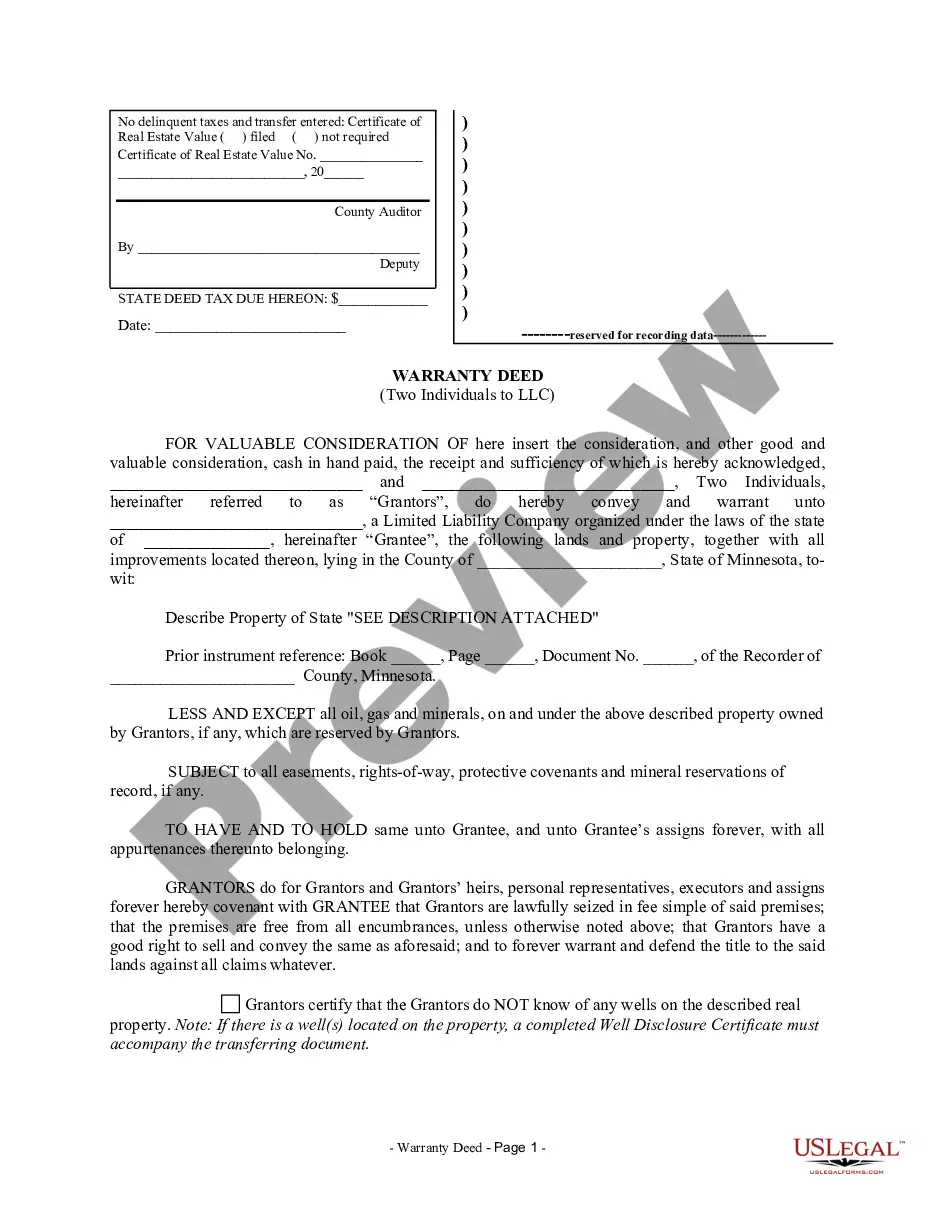
The Warranty Deed from two Individuals to LLC is a legal document that transfers ownership of real estate from two individuals (the Grantors) to a limited liability company (the Grantee). This form specifically conveys the property described while excluding rights to any oil, gas, or minerals that may be present beneath the land. It is distinct from other deed types since it includes specific warranties regarding the title and the condition of the property, ensuring the Grantee receives clear ownership free from undisclosed encumbrances.
Key components of this form
- Certificate of Real Estate Value: A section designated for necessary real estate documentation and recording data.
- Grantors and Grantee: Identifies the individuals transferring the property and the LLC receiving it.
- Property Description: Details the specific land and improvements included in the deed transfer.
- Consideration Clause: States the value exchanged for the property, necessary for the transaction's legality.
- Covenants: Assurances regarding the ownership status and title of the property, including existing encumbrances.
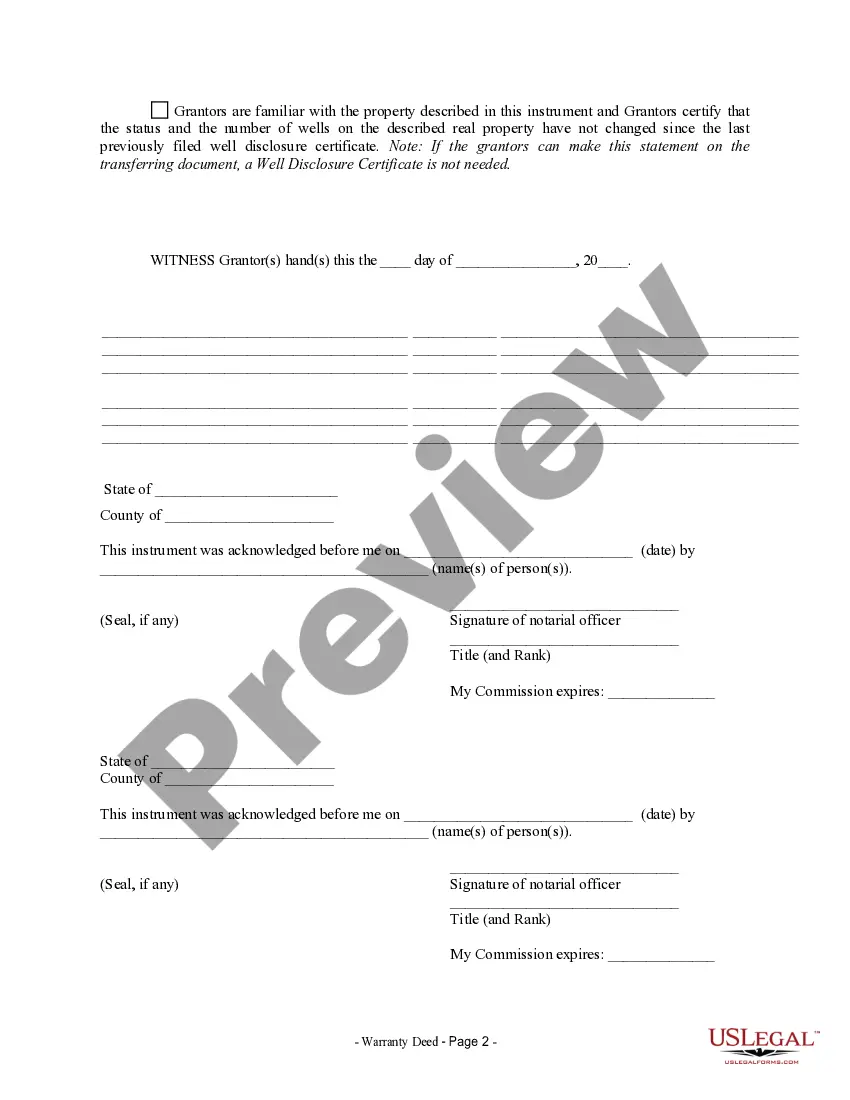
- Notarization Section: Provides space for a notary public to acknowledge the legitimacy of the document.




When to use this form
This form is used when two individuals wish to transfer real estate into an LLC for various reasons, such as asset protection or business structuring. It is essential in situations where the property will be held by the LLC for operational, investment, or liability purposes. Common scenarios include real estate investments or when business owners want to formalize property holdings under their business entity.
Who this form is for
This form is appropriate for:
- Individuals who jointly own property and want to transfer it to their LLC.
- Business owners seeking to formalize asset ownership under a limited liability company.
- Real estate investors looking to consolidate properties within a corporate structure.
Completing this form step by step
Follow these steps to effectively complete the Warranty Deed:
- Identify the Grantors (the two individuals) and the Grantee (the LLC).
- Describe the property being transferred, including its legal description.
- State the amount of consideration for the transfer.
- Sign the document in the presence of a notary public.
- Complete the notarization section to ensure the deed's legal validity.
Notarization guidance
This form needs to be notarized to ensure legal validity. US Legal Forms provides secure online notarization powered by Notarize, allowing you to complete the process through a verified video call, available anytime.
Get your form ready online
Our built-in tools help you complete, sign, share, and store your documents in one place.
Make edits, fill in missing information, and update formatting in US Legal Forms—just like you would in MS Word.
Download a copy, print it, send it by email, or mail it via USPS—whatever works best for your next step.
Sign and collect signatures with our SignNow integration. Send to multiple recipients, set reminders, and more. Go Premium to unlock E-Sign.
If this form requires notarization, complete it online through a secure video call—no need to meet a notary in person or wait for an appointment.
We protect your documents and personal data by following strict security and privacy standards.

Make edits, fill in missing information, and update formatting in US Legal Forms—just like you would in MS Word.

Download a copy, print it, send it by email, or mail it via USPS—whatever works best for your next step.

Sign and collect signatures with our SignNow integration. Send to multiple recipients, set reminders, and more. Go Premium to unlock E-Sign.

If this form requires notarization, complete it online through a secure video call—no need to meet a notary in person or wait for an appointment.

We protect your documents and personal data by following strict security and privacy standards.
Mistakes to watch out for
- Failing to provide a complete and accurate property description.
- Not specifying the consideration amount, which can invalidate the deed.
- Neglecting to include all required signatures or notarization.
- Omitting to disclose existing encumbrances or liens on the property.
Advantages of online completion
- Convenience of completing the form from any device at any time.
- Editable format allows for quick adjustments without complicated paperwork.
- Access to templates drafted by licensed attorneys ensures legal compliance.
- Easy downloads provide you with a physical copy for your records.
Quick recap
- The Warranty Deed from two Individuals to LLC is essential for transferring property ownership into a limited liability company.
- Proper completion includes accurate details about the property, the Grantors, and the Grantee.
- Notarization is a critical step for legal validation of this document.
Looking for another form?
Form popularity
FAQ
To transfer ownership of a property in Minnesota, you typically need to prepare a Minnesota Warranty Deed from two Individuals to LLC or another type of deed, depending on your situation. Ensure that the deed includes all necessary information, such as the legal description and signatures. After preparing the deed, file it with the local county recorder’s office to ensure the transfer is legally recognized.
Yes, you can complete a warranty deed without an attorney, but it is essential to understand the legal requirements. By using a Minnesota Warranty Deed from two Individuals to LLC form, you can simplify the process. However, reviewing your deed for accuracy and compliance with state laws is crucial to avoid potential issues down the road.
To transfer a deed to an LLC, start by creating a Minnesota Warranty Deed from two Individuals to LLC. Fill out the deed with accurate property details and signatures from both individuals involved in the transfer. After that, file the completed deed with your local county office to finalize the transfer and make it legally binding.
Transferring property to an LLC offers several benefits, including asset protection and potential tax advantages. By using a Minnesota Warranty Deed from two Individuals to LLC, you can shield your personal assets from liabilities associated with the property. Additionally, an LLC can provide better management and operational flexibility for your real estate investments.
To transfer property to an LLC, you must execute a Minnesota Warranty Deed from two Individuals to LLC. This process involves completing the deed form, including the necessary legal descriptions of the property. After signing the deed, you must record it with the county recorder's office. This ensures that the transfer is official and recognized by law.
A warranty deed may be deemed invalid if it lacks essential elements such as proper signatures, legal descriptions, or if it has not been properly notarized and recorded. Additionally, if the grantor does not have the legal authority to transfer the property, the deed can also be invalid. It is crucial to ensure all requirements are met when executing a Minnesota Warranty Deed from two Individuals to LLC.
To transfer a deed to an LLC, start by drafting a new deed that clearly states the transfer of the property to the LLC. You will need to include essential details, such as the property's legal description and the names of the individuals transferring the property. After signing the deed, file it with the county recorder's office to complete the transfer. Platforms like uslegalforms can guide you through this process efficiently.
Typically, the designated members or managers of the LLC sign the deed on behalf of the company. This ensures that the LLC is legally bound by the transaction and can hold the property. It is essential to follow your state’s specific requirements for signatures when executing a Minnesota Warranty Deed from two Individuals to LLC.
A warranty deed provides the highest level of protection, ensuring that the seller guarantees clear title to the property and will defend the title against any claims. In contrast, a limited warranty deed only guarantees the title against issues that occurred during the seller's ownership. Understanding these differences is crucial when transferring property using a Minnesota Warranty Deed from two Individuals to LLC.
Generally, transferring property to an LLC is not considered a taxable event if the individuals transferring the property maintain the same ownership interest in the LLC. However, specific circumstances may trigger taxes, such as when a mortgage is involved or if the property has appreciated significantly. It is advisable to consult a tax professional to understand any potential tax implications when executing a Minnesota Warranty Deed from two Individuals to LLC.