Minnesota General Notice of Default for Contract for Deed
About this form
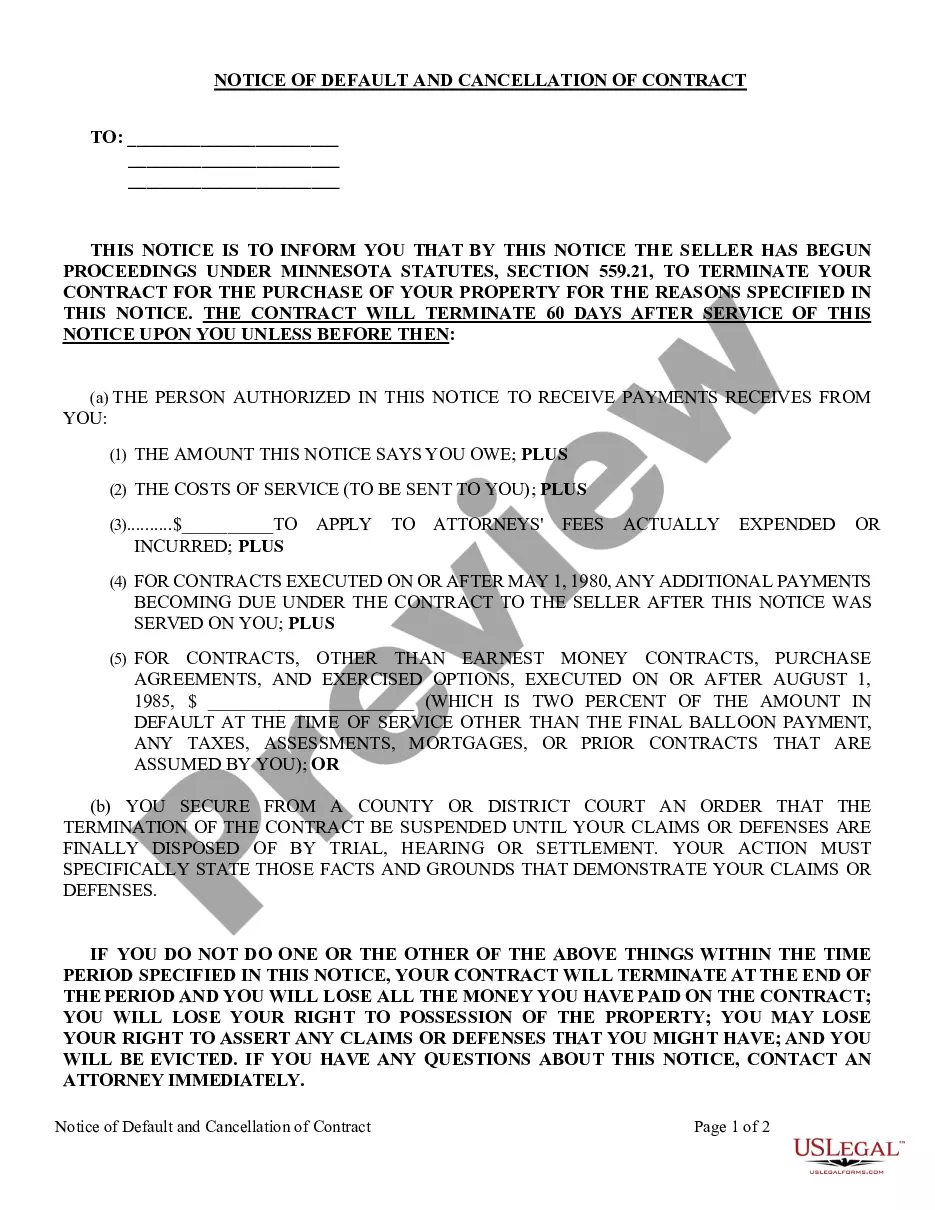
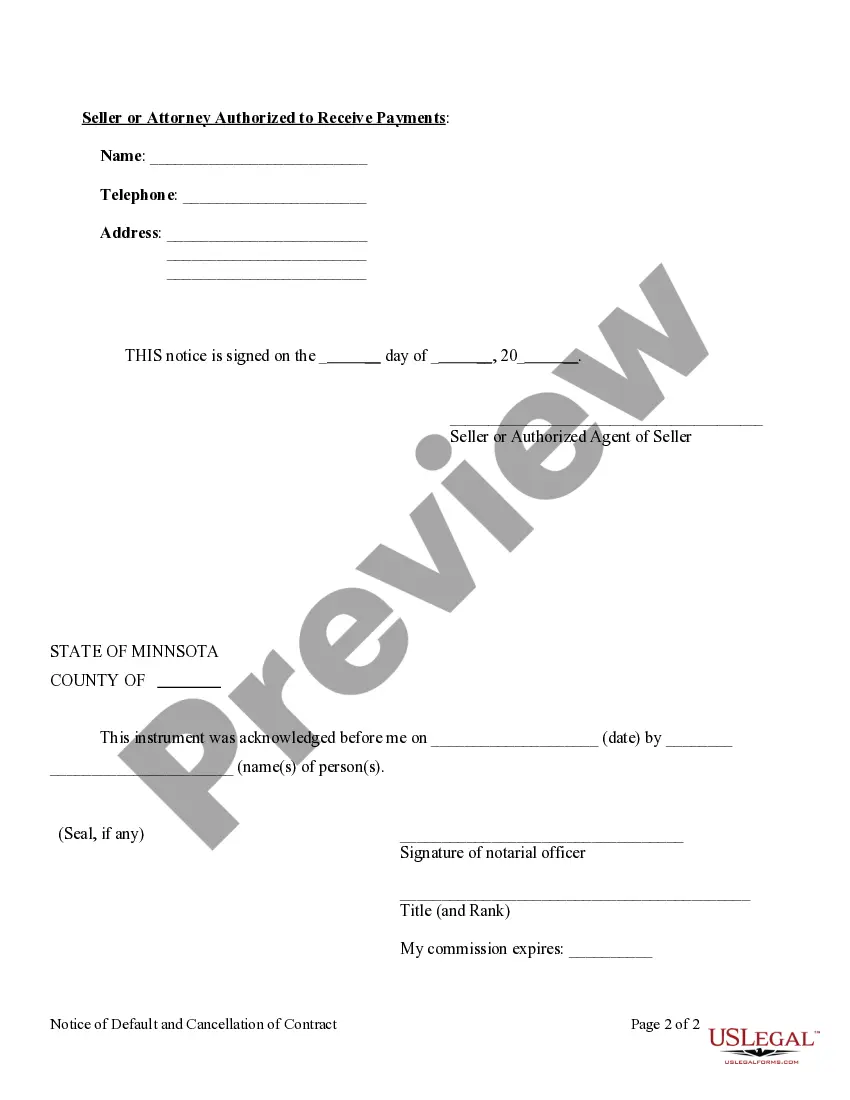
The General Notice of Default for Contract for Deed is a legal document that allows a Seller to formally notify a Purchaser of their default under a contract for deed. This form not only specifies the reasons for the default but also outlines the performance required to remedy the situation, along with the Seller's planned course of action if the default is not cured. This form is essential for ensuring proper communication between the parties and moving forward in a legally compliant manner.
Key components of this form
- Details of the Seller and Purchaser involved in the contract.
- Specific reasons for the default under the contract for deed.
- Description of what the Purchaser must do to cure the default.
- Outline of the Seller's remedies if the Purchaser fails to rectify the default.
- Signatures of the Seller and authorized representatives.
When to use this document
This form should be used when a Purchaser has failed to meet the terms of a contract for deed, such as missing payments or failing to fulfill other obligations. It is a critical step for Sellers who wish to formally notify the Purchaser of these defaults and provide them with an opportunity to remedy the situation before taking further action.
Intended users of this form
- Individuals or entities acting as the Seller in a contract for deed.
- Real estate professionals managing contracts for deed on behalf of Sellers.
- Legal representatives supporting Sellers in enforcing contract terms.
Completing this form step by step
- Identify and enter the full names and addresses of both the Seller and Purchaser.
- Clearly state the reasons for the default.
- Specify the performance required from the Purchaser to cure the default.
- Outline the Seller's intended remedy if the default is not cured.
- Sign and date the notice to formalize the communication.
Does this document require notarization?
This form does not typically require notarization unless specified by local law. However, notarization may enhance the form's legal validity by providing an additional layer of authenticity.
Get your form ready online
Our built-in tools help you complete, sign, share, and store your documents in one place.
Make edits, fill in missing information, and update formatting in US Legal Forms—just like you would in MS Word.
Download a copy, print it, send it by email, or mail it via USPS—whatever works best for your next step.
Sign and collect signatures with our SignNow integration. Send to multiple recipients, set reminders, and more. Go Premium to unlock E-Sign.
If this form requires notarization, complete it online through a secure video call—no need to meet a notary in person or wait for an appointment.
We protect your documents and personal data by following strict security and privacy standards.

Make edits, fill in missing information, and update formatting in US Legal Forms—just like you would in MS Word.

Download a copy, print it, send it by email, or mail it via USPS—whatever works best for your next step.

Sign and collect signatures with our SignNow integration. Send to multiple recipients, set reminders, and more. Go Premium to unlock E-Sign.

If this form requires notarization, complete it online through a secure video call—no need to meet a notary in person or wait for an appointment.

We protect your documents and personal data by following strict security and privacy standards.
Mistakes to watch out for
- Failing to accurately describe the reasons for the default.
- Not providing adequate time for the Purchaser to respond or cure the default.
- Omitting signatures from the Seller or authorized representatives.
- Using vague language that could lead to misunderstandings.
Why use this form online
- Convenience of accessing and downloading the form anytime.
- Easy editing options for customization according to your specific situation.
- Reliable templates drafted by licensed attorneys to ensure legal compliance.
Summary of main points
- The General Notice of Default is essential for notifying a Purchaser of their default under a contract for deed.
- It provides a clear framework for the necessary steps the Purchaser must take to remedy the situation.
- Proper completion and delivery of the form can help prevent future disputes.
Looking for another form?
Form popularity
FAQ
To properly execute a contract for deed in Minnesota, you must first ensure that both parties agree on the terms, including payment details and the property's condition. Next, create a written agreement that outlines the responsibilities of both the buyer and the seller. It is essential to include a Minnesota General Notice of Default for Contract for Deed, which informs the buyer of any potential defaults on payments. Utilizing platforms like US Legal Forms can help you find the right templates and guidance to ensure that your contract for deed is legally sound.
If you default on a real estate contract, such as a Contract for Deed, you may face serious consequences. The seller can issue a Minnesota General Notice of Default for Contract for Deed, which formally notifies you of your default. This notice typically gives you a specific timeframe to remedy the situation or face further legal action, which may include foreclosure. To navigate this challenging situation, consider using the resources available on the US Legal Forms platform, which can help you understand your options and rights.
The penalty for late recordation of a contract for deed in Minnesota can vary based on local regulations. Failing to record on time may result in complications or additional fees, affecting the buyer's legal rights. To avoid these issues, it is advisable to record the contract promptly upon execution. Consider utilizing USLegalForms to navigate this process efficiently.
A key danger in a contract for deed is the risk of losing the property upon default. Unlike traditional mortgages, buyers may not build equity while making payments. Sellers can also face challenges if buyers fail to fulfill their obligations. It's important to fully understand these risks and consider using resources like USLegalForms for guidance.
If a person defaults on a contract, the other party may seek legal remedies, including the Minnesota General Notice of Default for Contract for Deed. This notice outlines the default and provides an opportunity for the defaulting party to correct the issue. If unresolved, the non-defaulting party could initiate foreclosure proceedings. Awareness of these consequences is crucial for all parties involved.
In Minnesota, a buyer generally has four months to record a contract for deed. Recording the contract protects the buyer's interest in the property and provides legal evidence of the transaction. It's important to complete this process promptly to ensure your rights are safeguarded. Utilizing platforms like USLegalForms can streamline the recording process.
If you default on a contract for deed, the seller can issue a Minnesota General Notice of Default for Contract for Deed. This notice serves as a formal warning, allowing you a chance to remedy the default. Failure to resolve the issue may lead to foreclosure, where the seller can reclaim the property. It is vital to communicate with the seller to explore potential solutions.
The new contract for deed law in Minnesota enhances protections for buyers and sellers. It requires more transparency and establishes clear procedures for handling defaults. This law aims to reduce disputes and ensure that both parties understand their rights and responsibilities. Staying informed about these changes is essential for anyone engaging in such transactions.
When someone defaults on a contract for deed, the seller can initiate the Minnesota General Notice of Default for Contract for Deed. This legal notice informs the buyer of their failure to meet payment obligations. If the buyer does not rectify the situation, the seller may proceed with foreclosure. Understanding this process is crucial for both parties involved.
Defaulting on a contract is generally a civil matter rather than a criminal offense. However, it can lead to significant financial and legal consequences, including foreclosure through a Minnesota General Notice of Default for Contract for Deed. It is important to understand your rights and responsibilities under the contract. If you find yourself in this situation, consulting with a legal expert or using services from US Legal Forms can help you address the issues effectively.