Michigan Last Will and Testament with All Property to Trust called a Pour Over Will
Overview of this form
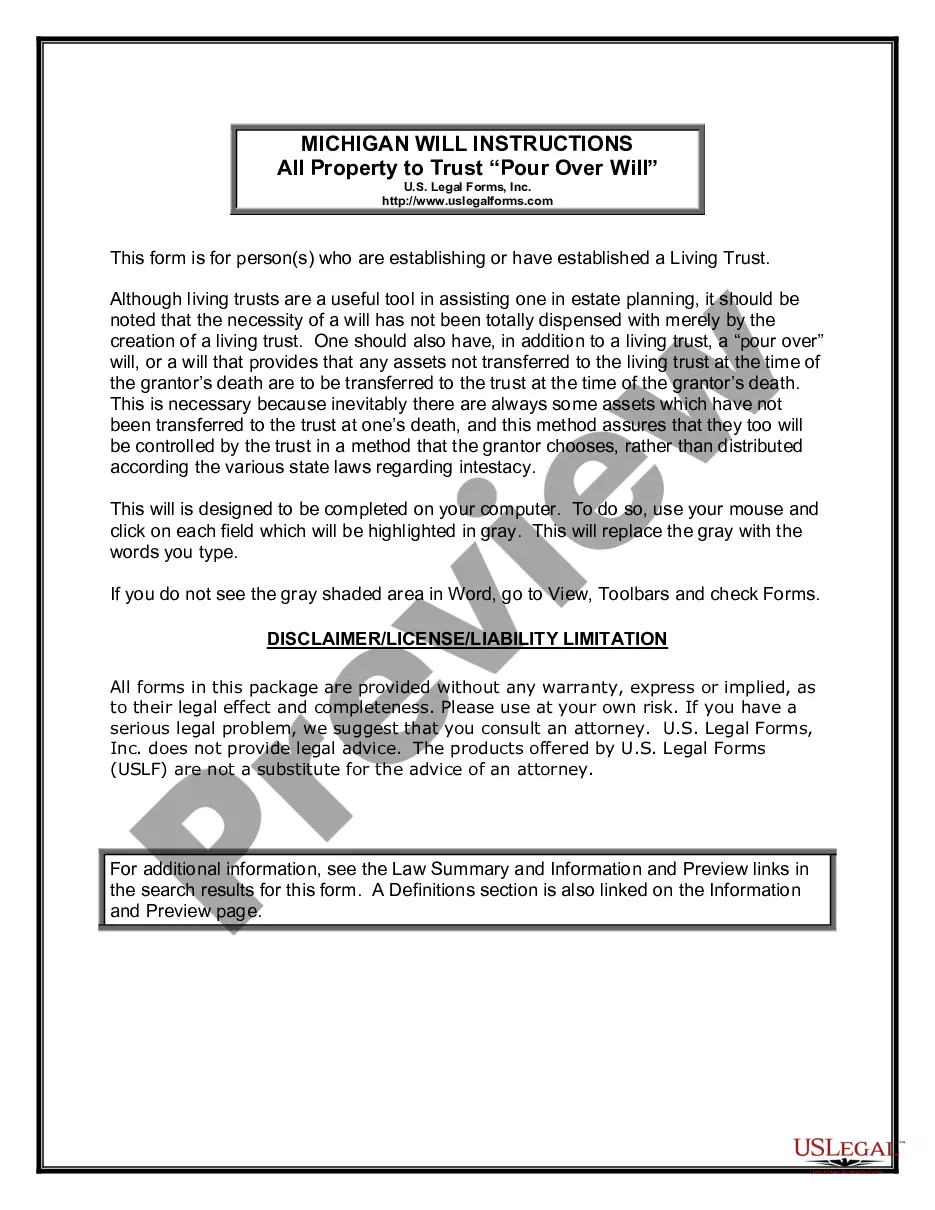
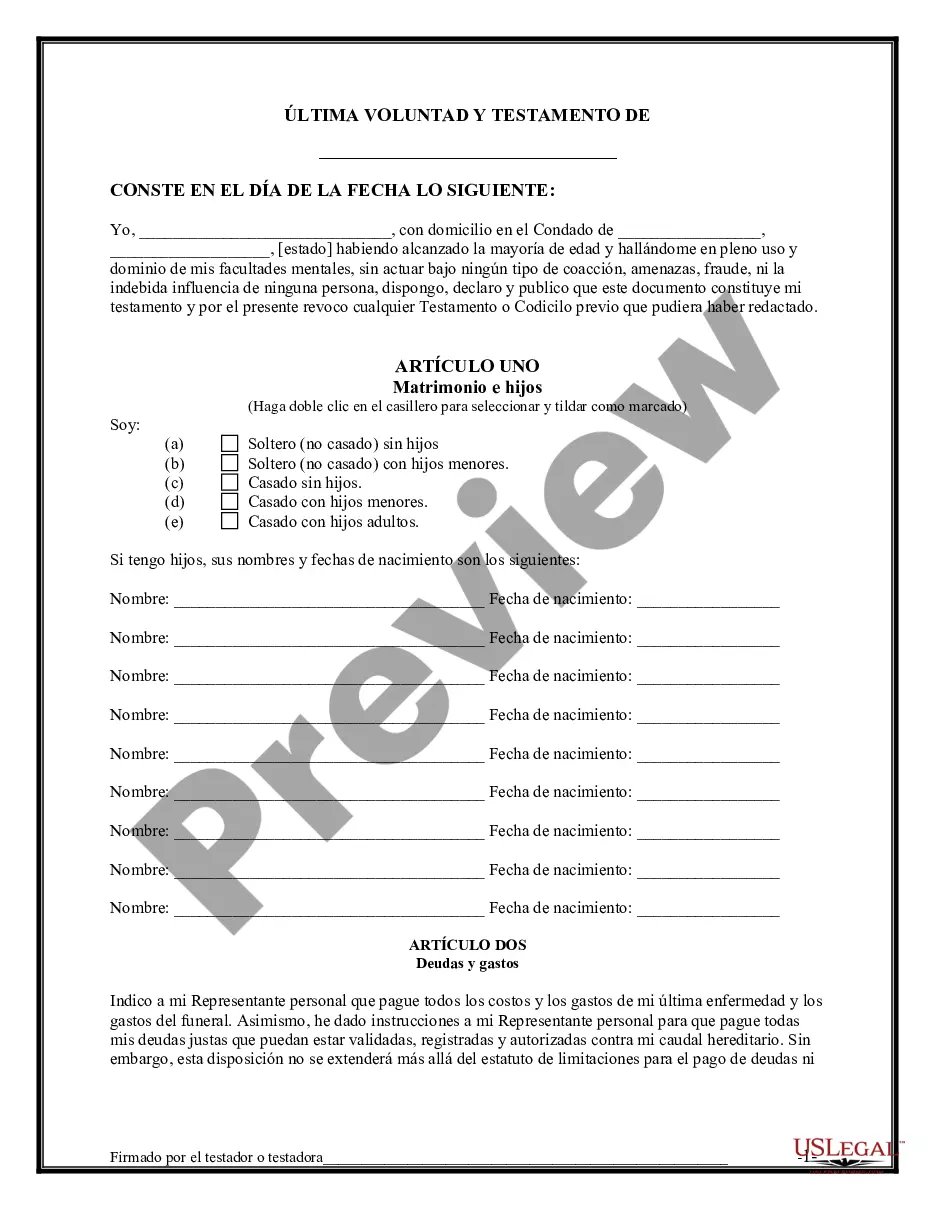
The Last Will and Testament with All Property to Trust, known as a Pour Over Will, is a legal document that facilitates the transfer of assets into a living trust upon the death of the testator (the person making the will). Unlike a standard will, a pour over will ensures that any property not already transferred to the trust during the testator's lifetime will be directed to the trust upon death, allowing for controlled distribution in accordance with the terms of the trust. This type of will is essential for individuals who have established a living trust as part of their estate planning.
Key components of this form
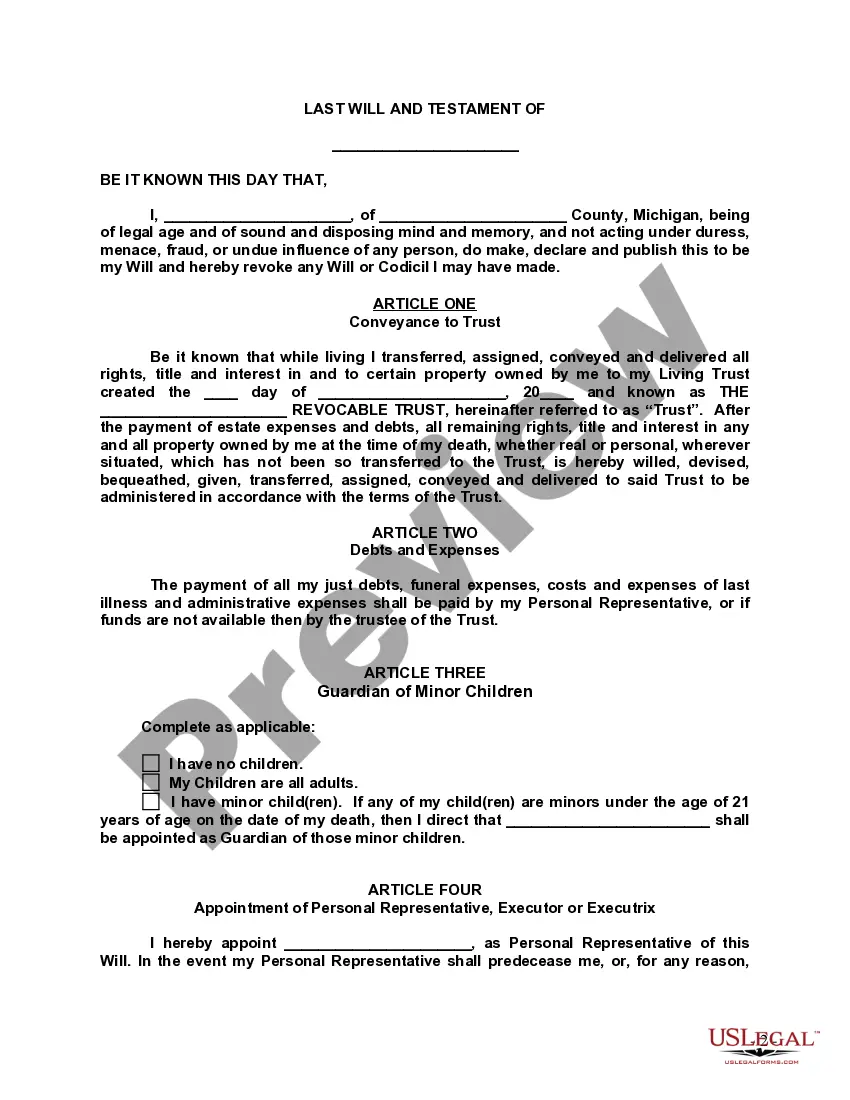
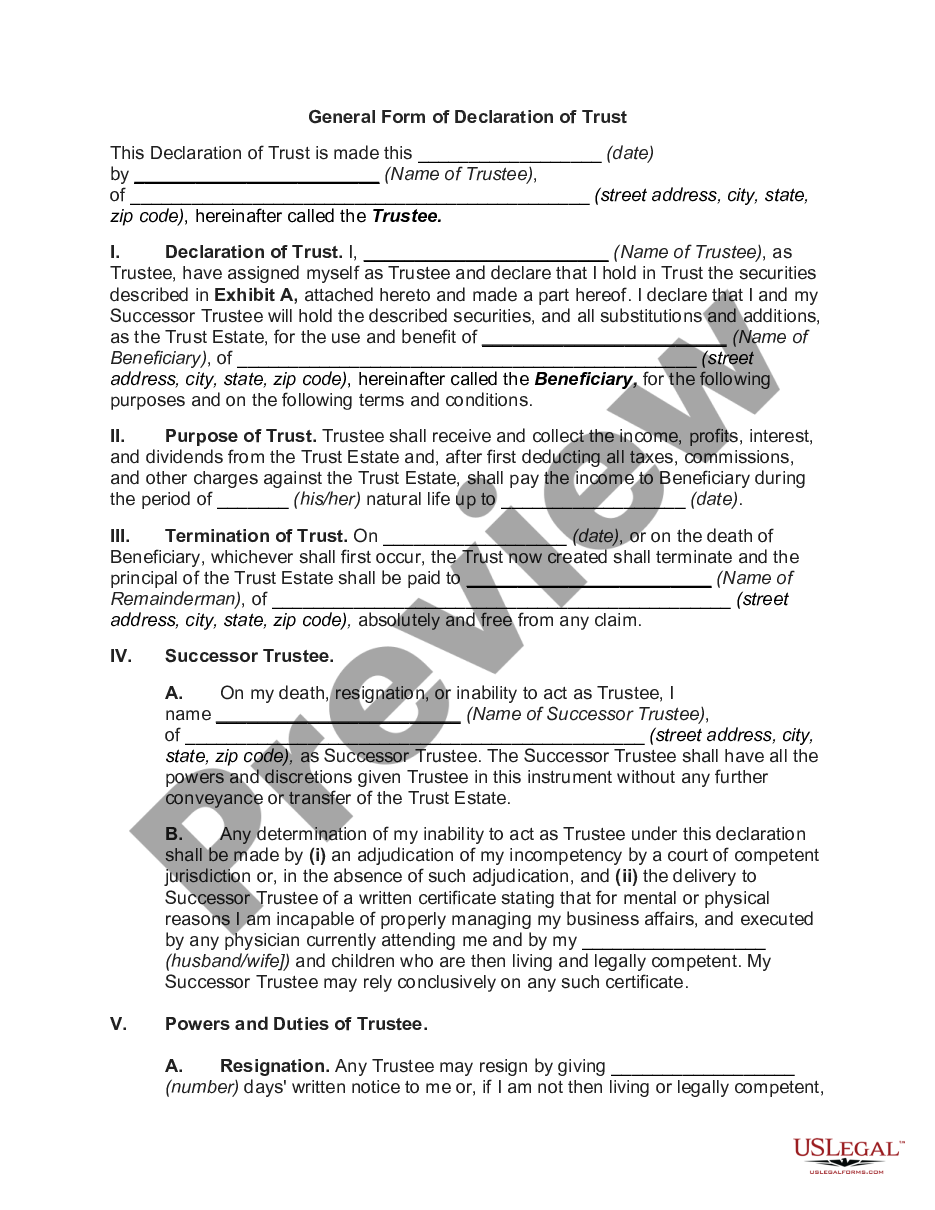
- Conveyance to Trust: Outlines property transferred to the living trust, as well as details on assets that should be transferred upon death.
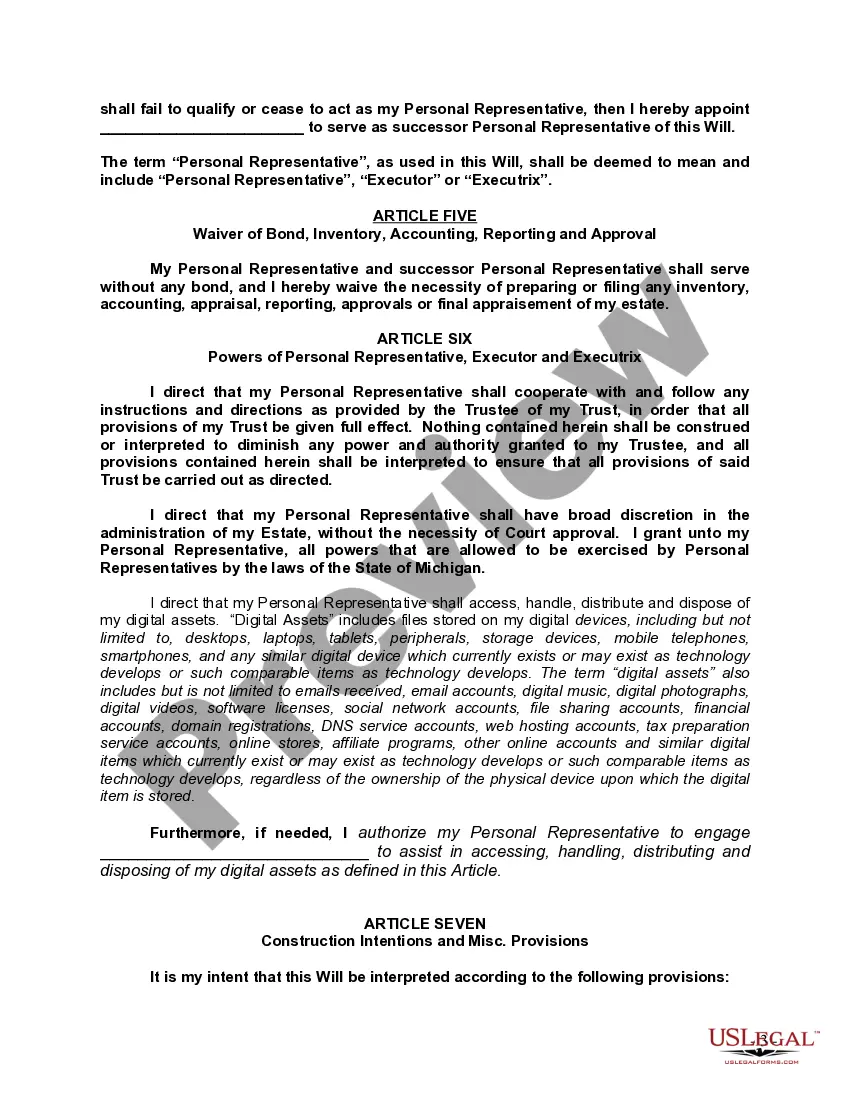
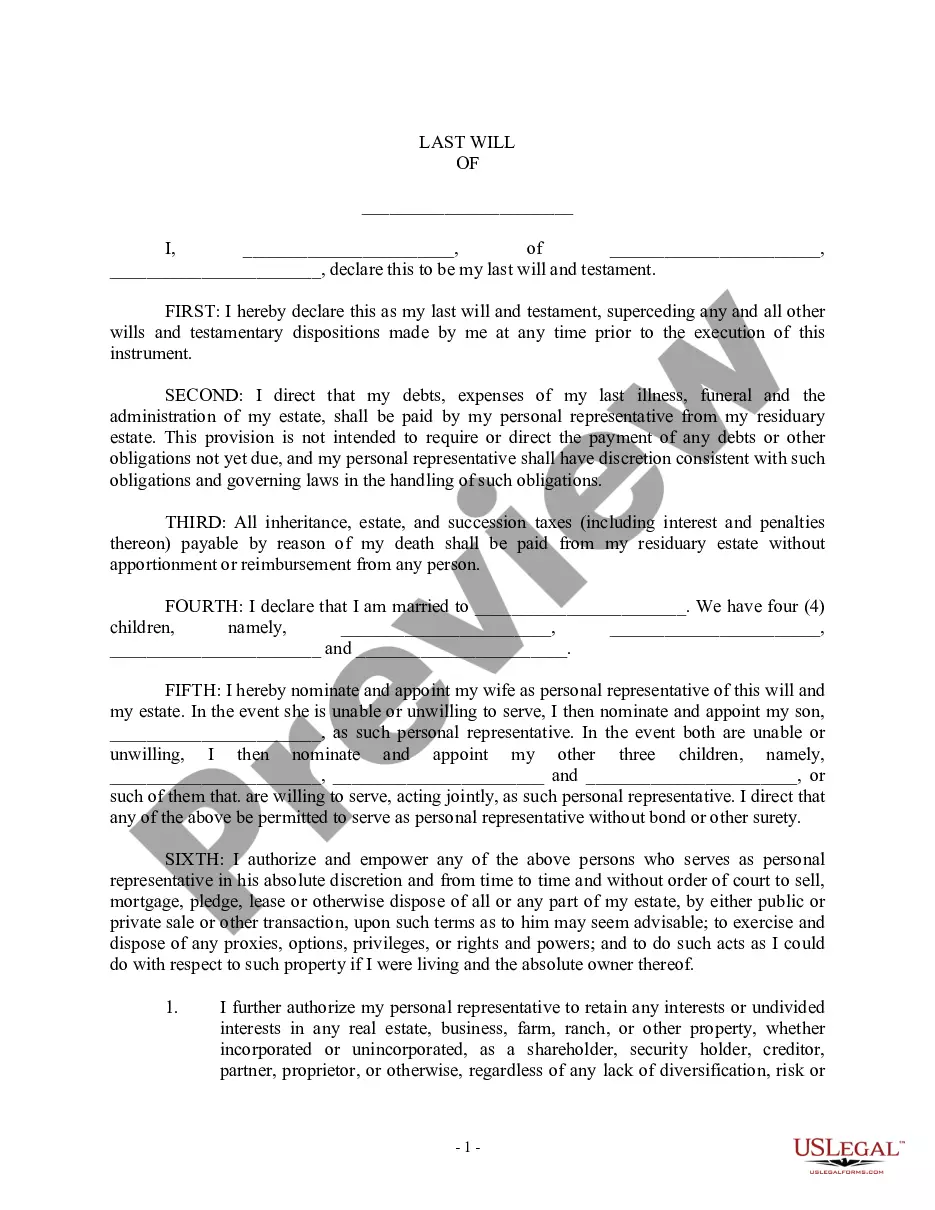
- Appointment of Personal Representative: Names the individual responsible for executing the will and overseeing the estate.
- Guardian of Minor Children: Instructions for appointing a guardian for any minor children, if applicable.
- Debts and Expenses: Provides for the payment of debts and funeral expenses from the estate.
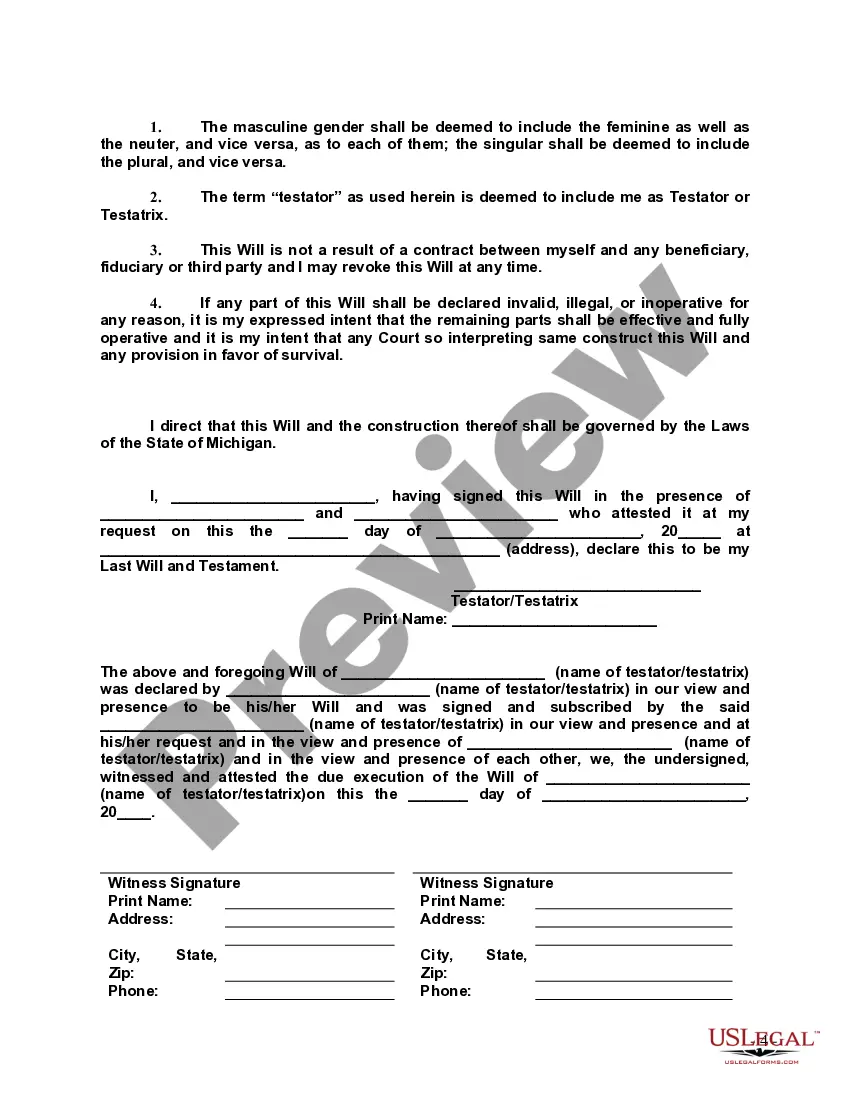
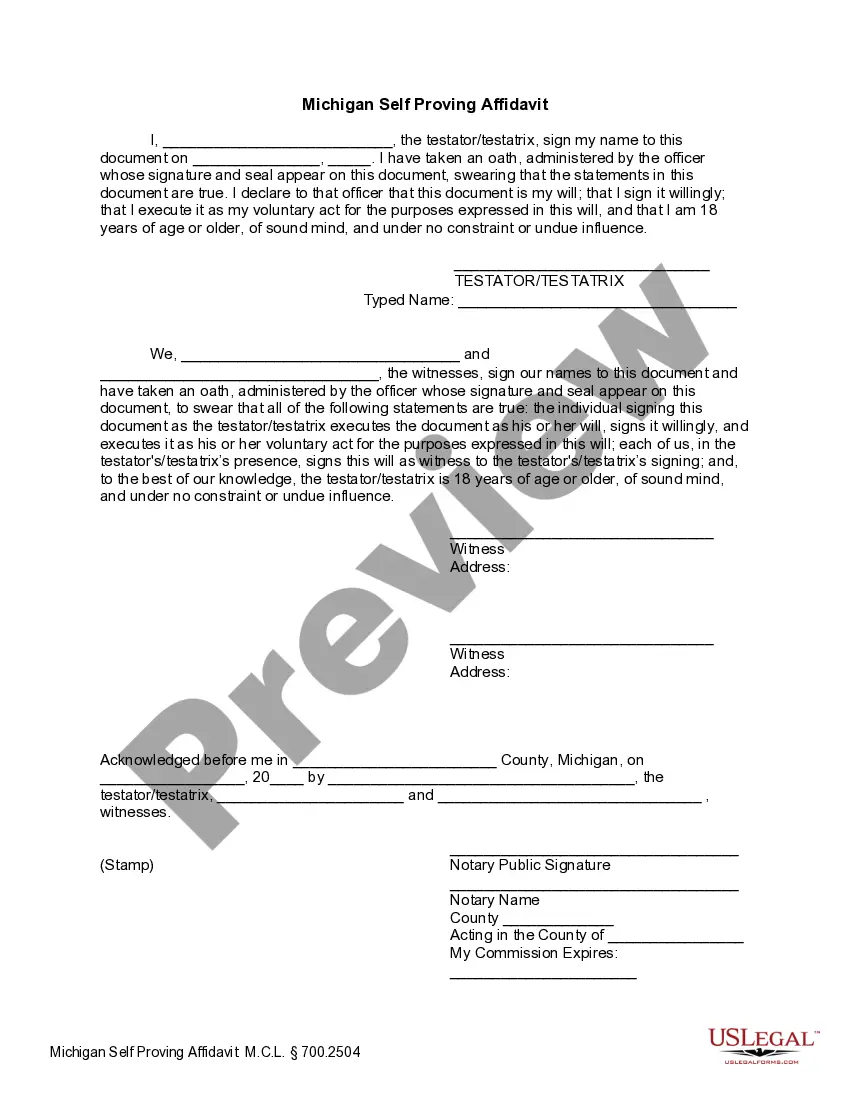
- Self-Proving Affidavit: Section allowing for verification of the will's execution, often required for probate.



When to use this form
You should use the Pour Over Will when you have created or are planning to create a living trust for your estate planning needs. This form is applicable if you want all your assets that have not yet been transferred to your living trust to automatically be included in that trust after your death. It is also beneficial if you have minor children and need to designate a guardian in your will.
Who can use this document
- Individuals establishing or who have established a living trust.
- Persons with minor children needing to appoint a guardian.
- Individuals seeking to ensure that their assets are managed according to their wishes after death.
- People looking to simplify the probate process by ensuring all assets transfer to a trust.
How to complete this form
- Identify and enter your name, address, and county of residence in the designated fields.
- Specify the name and date of your living trust where indicated.
- Designate a personal representative responsible for administering your estate.
- If applicable, indicate guardians for your minor children.
- Secure signatures from two witnesses and a notary, if necessary, to validate the will.
Is notarization required?
Yes, this form must be notarized to be legally valid. Having the will notarized provides an additional layer of confirmation regarding the authenticity of the signatures and the intent of the testator. U.S. Legal Forms offers integrated online notarization for your convenience, available 24/7 through secure video calls.
Get your form ready online
Our built-in tools help you complete, sign, share, and store your documents in one place.
Make edits, fill in missing information, and update formatting in US Legal Forms—just like you would in MS Word.
Download a copy, print it, send it by email, or mail it via USPS—whatever works best for your next step.
Sign and collect signatures with our SignNow integration. Send to multiple recipients, set reminders, and more. Go Premium to unlock E-Sign.
If this form requires notarization, complete it online through a secure video call—no need to meet a notary in person or wait for an appointment.
We protect your documents and personal data by following strict security and privacy standards.

Make edits, fill in missing information, and update formatting in US Legal Forms—just like you would in MS Word.

Download a copy, print it, send it by email, or mail it via USPS—whatever works best for your next step.

Sign and collect signatures with our SignNow integration. Send to multiple recipients, set reminders, and more. Go Premium to unlock E-Sign.

If this form requires notarization, complete it online through a secure video call—no need to meet a notary in person or wait for an appointment.

We protect your documents and personal data by following strict security and privacy standards.
Avoid these common issues
- Failing to execute the will in front of witnesses, which may invalidate the document.
- Not updating the will after significant life changes, such as marriage or having children.
- Omitting assets that should be conveyed to the trust, leading to potential complications during probate.
- Neglecting to appoint a guardian for minor children, resulting in uncertainty about their care.
Benefits of completing this form online
- Convenience of completing the form from home without needing to visit a lawyer's office.
- Editable fields allow you to tailor the document according to your specific needs and circumstances.
- Access to instructions and guidance throughout the form to ensure proper completion.
- Quick access to legal documents without lengthy delays.
What to keep in mind
- A pour-over will ensures assets not transferred to your trust will merge into it upon death.
- Essential for effective estate planning when utilizing a Living Trust.
- Be mindful of specific state laws regarding the execution and witnessing of wills.
Looking for another form?


Form popularity
FAQ
A Michigan Last Will and Testament with All Property to Trust called a Pour Over Will serves a specific purpose. While a traditional last will distributes assets directly to beneficiaries upon your death, a pour-over will transfers any remaining assets into your trust. This means any property not previously included in the trust will be directed there, ensuring all your assets are managed according to your trust's terms. By using uslegalforms, you can easily create a pour-over will that complements your estate plan and protects your assets.
You might want a pour-over will to ensure that all your assets are managed according to your wishes after your death. This tool helps streamline the transfer of assets into your trust, reducing the chances of leaving behind an unintentional mess. Moreover, it provides peace of mind, knowing that any assets not already in the trust will be included. Utilizing platforms like uslegalforms can help you create a comprehensive Michigan Last Will and Testament with All Property to Trust called a Pour Over Will, tailored to your specific needs.
One drawback of a pour-over will is that it still requires probate for the will itself to be validated in Michigan. This can introduce delays and additional costs during the estate settlement process. Additionally, if your assets are not properly transferred to the trust during your lifetime, they will be subject to probate. It’s essential to ensure that your estate planning is comprehensive to mitigate these challenges.
over will does not entirely avoid probate in Michigan, as the will itself must be probated. However, it simplifies the process by directing assets into a trust, which typically avoids the drawnout probate process once the trust is established. This can lead to a faster and more efficient distribution of your assets. By using a Michigan Last Will and Testament with All Property to Trust called a Pour Over Will, you can minimize the complications associated with probate.
In Michigan, a pour-over will is a specific type of last will and testament that directs your assets into a trust upon your death. This document serves to ensure that all property not already placed in the trust will be transferred seamlessly. Essentially, it acts as a bridge between your estate and your trust, making the estate planning process more straightforward. It is particularly useful for those who want to manage their assets effectively after passing.
over will works by transferring any remaining assets you own at the time of your death into your trust. This means that, if you have not transferred certain assets into the trust during your lifetime, the pourover will ensures they are included. In Michigan, this legal instrument acts as a safety net, capturing assets and directing them to your trust. The process helps maintain your estate plan's coherence and effectiveness.
over trust example typically involves a scenario where an individual creates a trust during their lifetime and designates it to receive remaining assets through a Michigan Last Will and Testament with All Property to Trust called a Pour Over Will. For instance, if someone has a home and investments, they may transfer these assets into the trust after their death. This process simplifies asset distribution and ensures that all properties are managed according to the trust’s terms.
Drafting a Michigan Last Will and Testament with All Property to Trust called a Pour Over Will involves a few key steps. First, you need to identify and list your assets clearly. Next, specify that these assets will transfer to your trust upon your passing. Finally, it’s advisable to consult a legal professional or use a reliable service like USLegalForms to ensure compliance with Michigan laws.