Michigan Last Will and Testament for Divorced and Remarried Person with Mine, Yours and Ours Children
Overview of this form
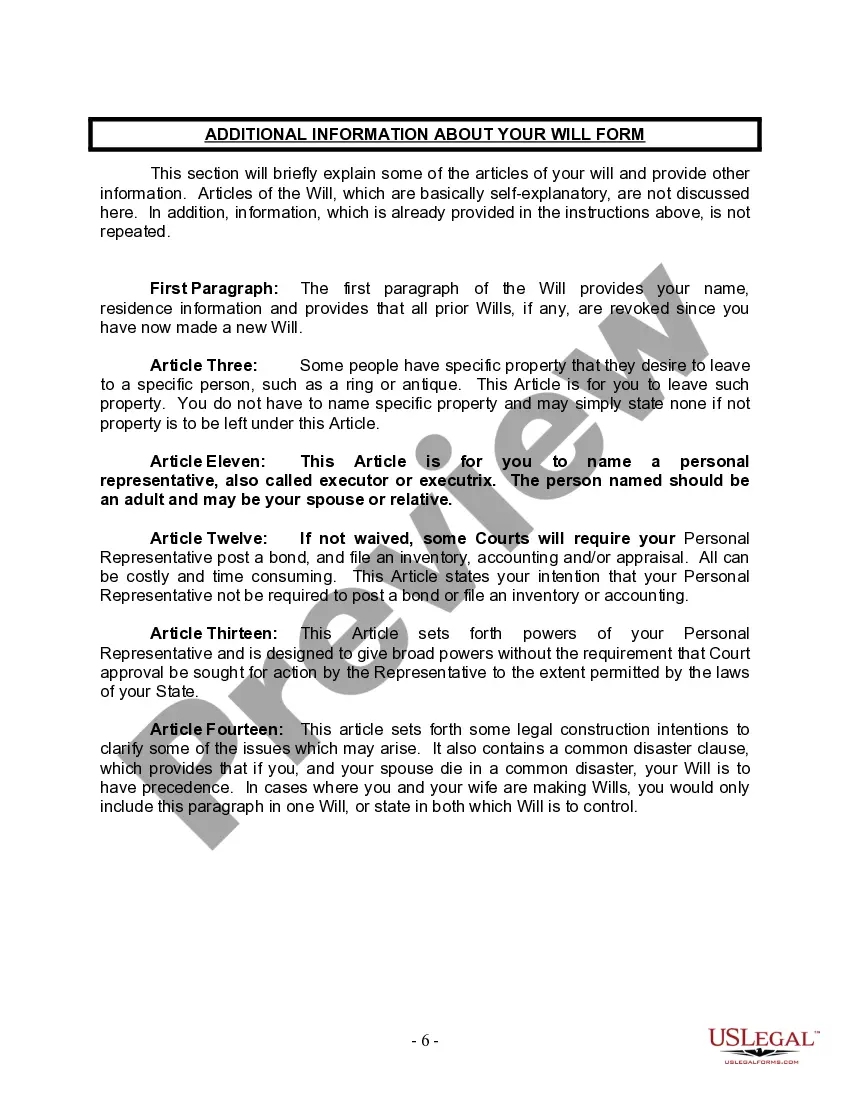
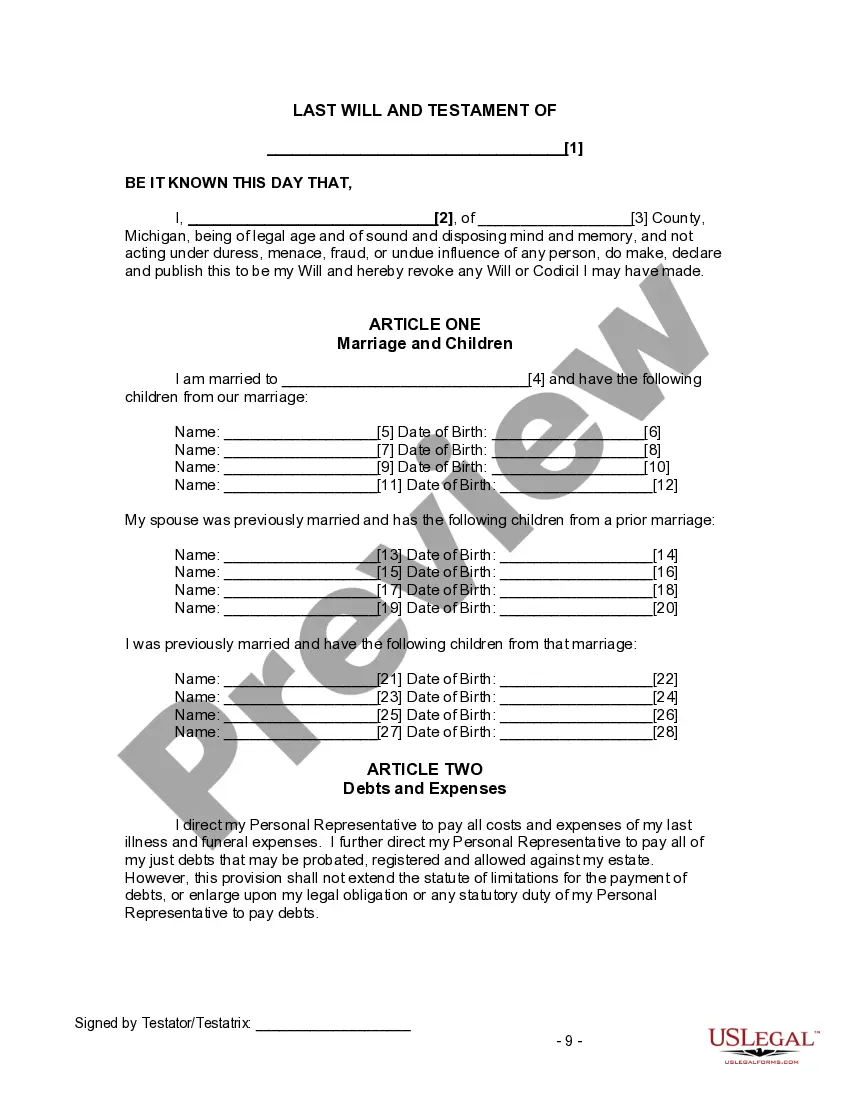
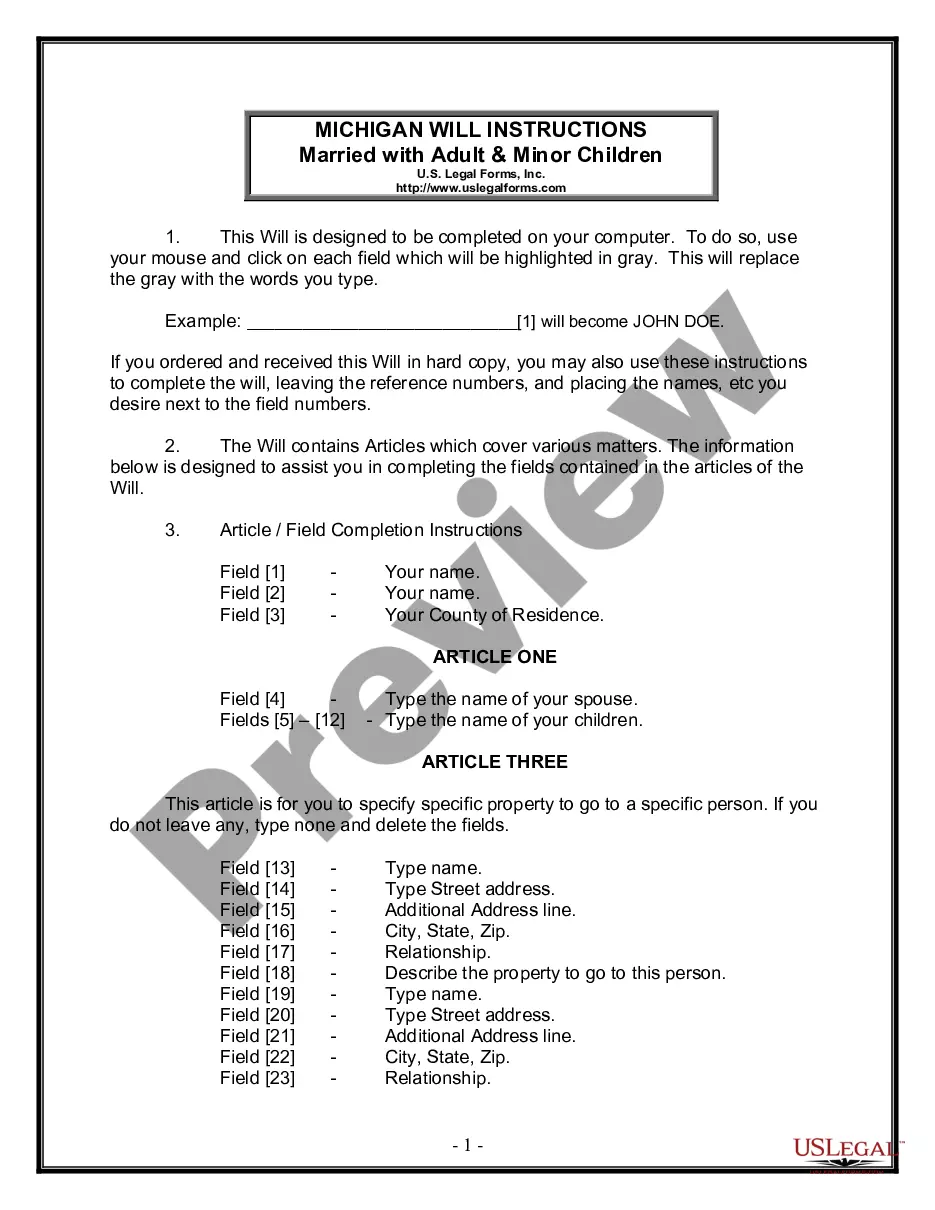
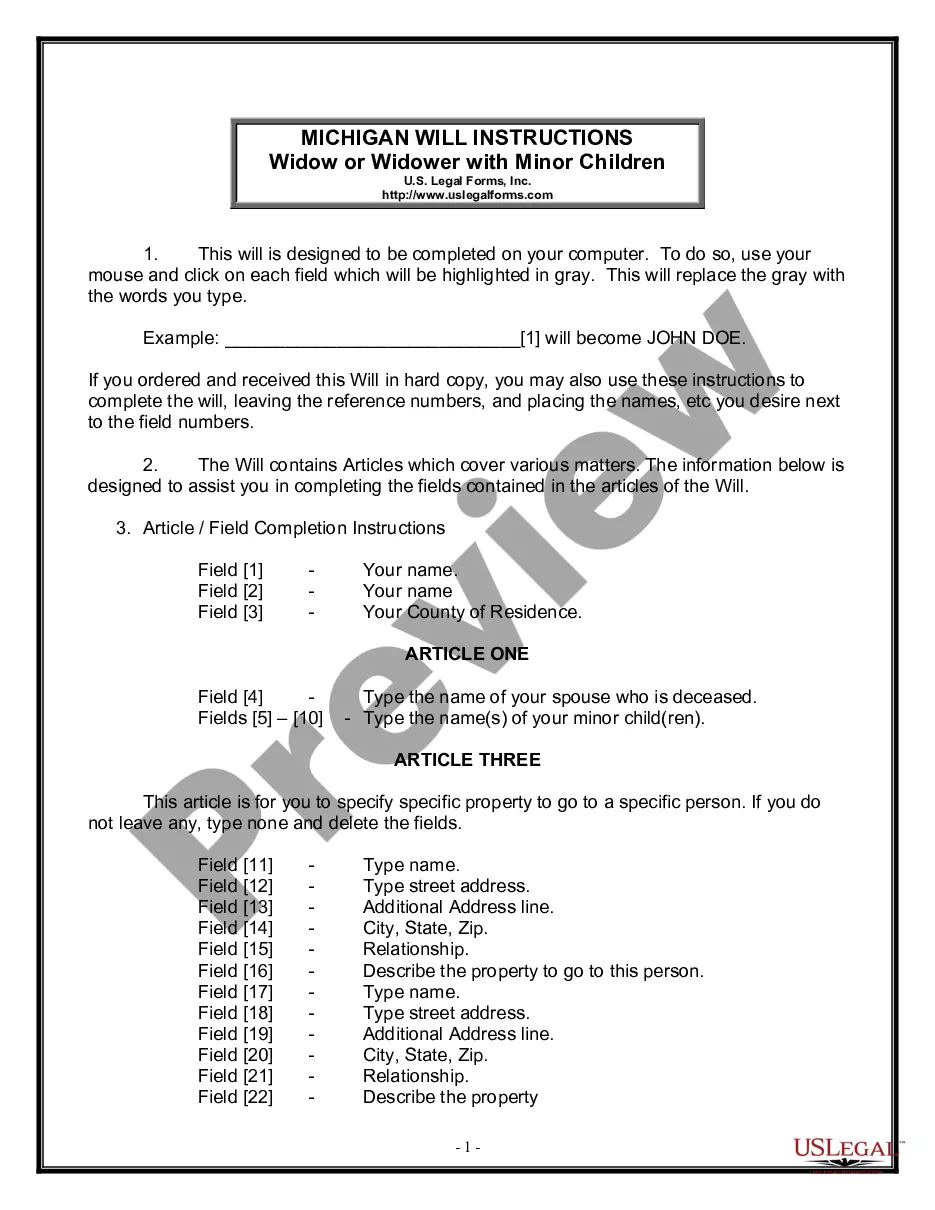
This form is a Last Will and Testament specifically designed for a divorced and remarried individual who has children from both current and previous marriages. It clearly outlines how your assets will be divided among your children, spouse, and any other beneficiaries. This will also provides guidelines on appointing a personal representative, creating a trust for minor children, and other important estate planning decisions. Unlike simpler wills, this document addresses complex family dynamics and helps ensure that your wishes are honored after your passing.
Key parts of this document
- Appointment of a personal representative or executor for your estate.
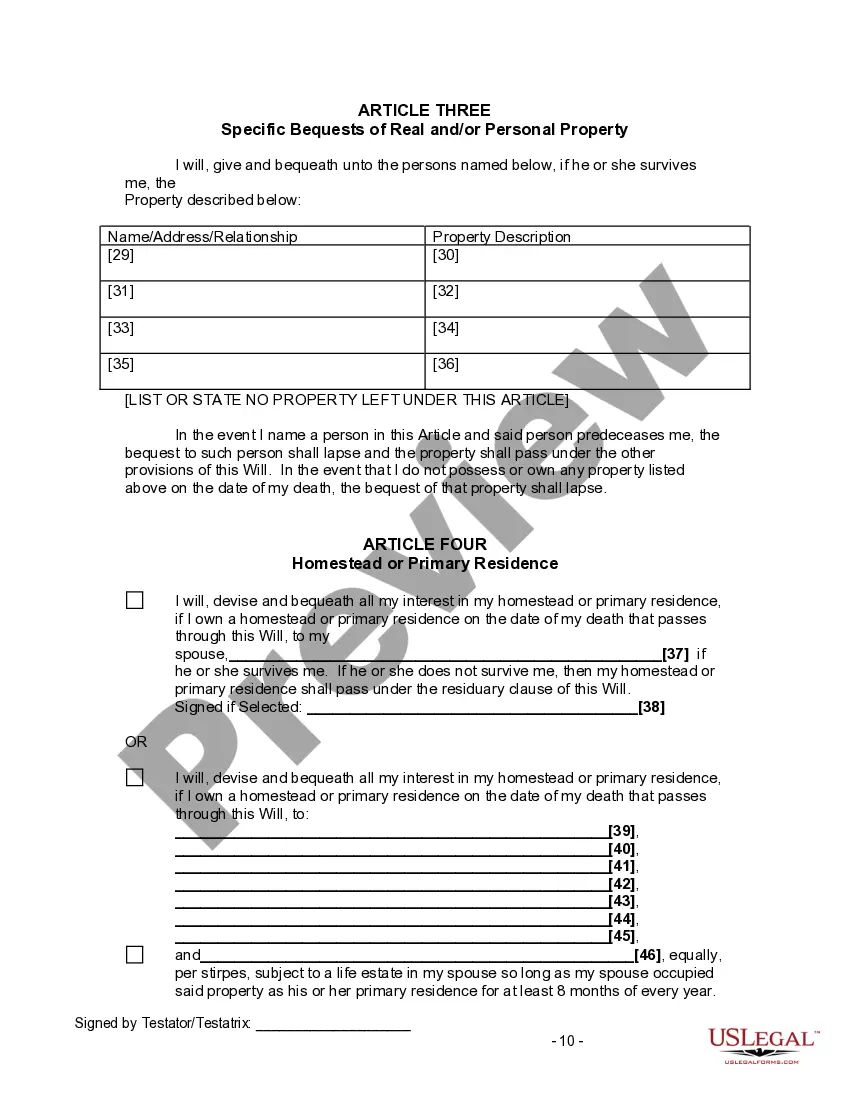
- Specific bequests of property to chosen individuals or entities.
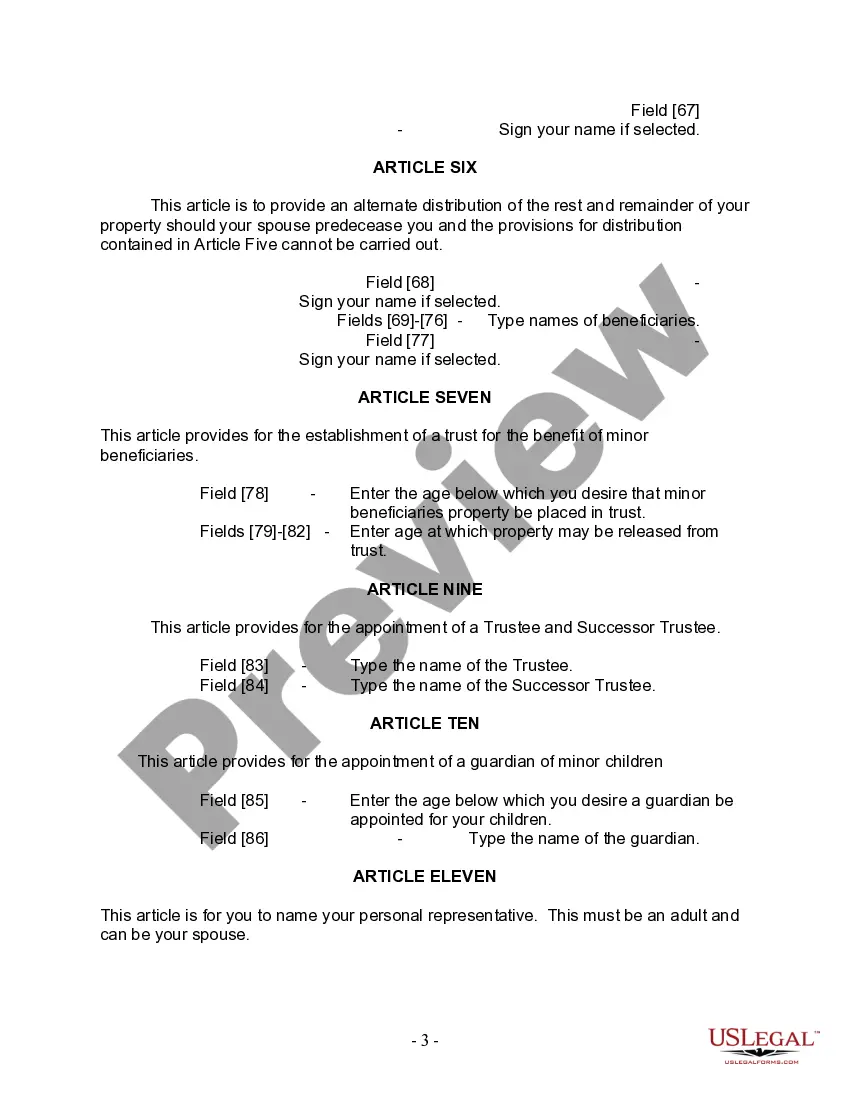
- Provisions for minor children, including the establishment of a trust.
- Designations for guardianship of any minor children.
- Instructions for the distribution of your assets among your spouse, children, and other beneficiaries.
- Legal provisions regarding the interpretation and execution of the will.





Common use cases
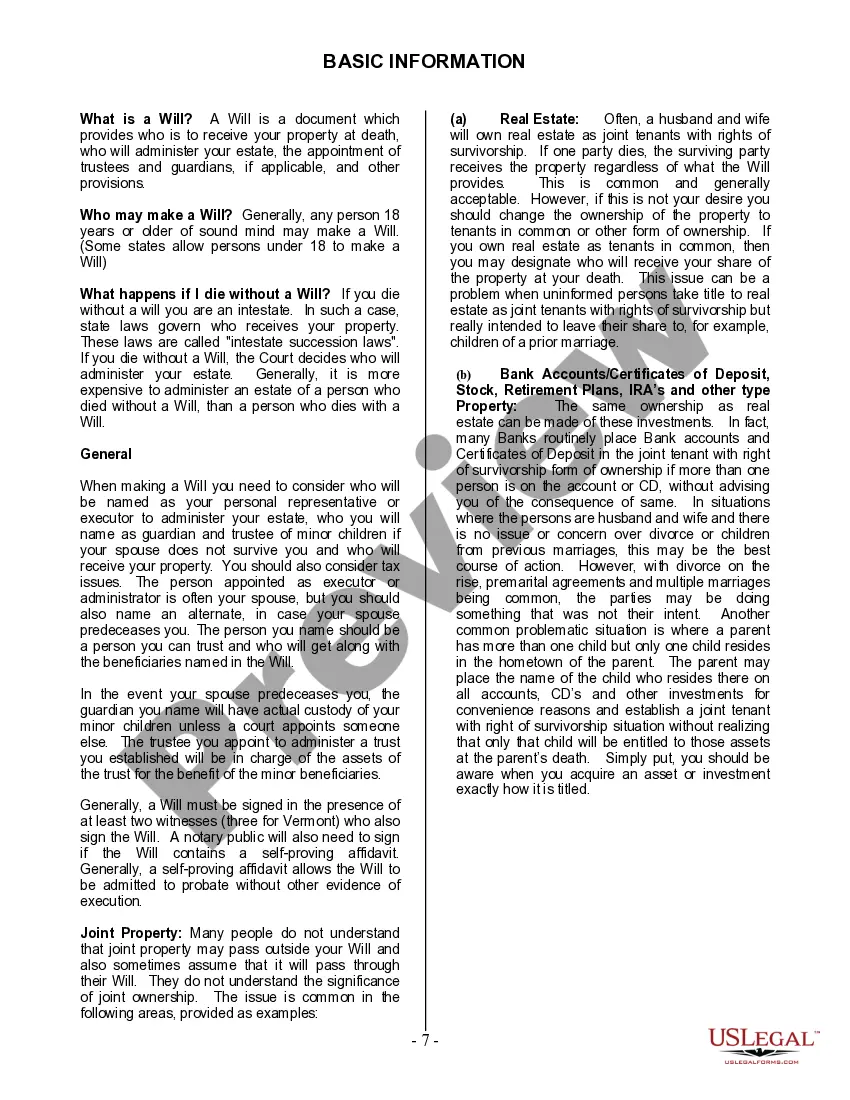
You should use this Last Will and Testament if you are a divorced and remarried individual with children from previous marriages, as well as children from your current marriage. This form is particularly useful if you want to detail your wishes regarding asset distribution, appoint guardians for minor children, or create a trust for their benefit. It is also essential if you wish to avoid potential conflicts among family members regarding inheritance after your passing.
Who should use this form
- Divorced individuals who have remarried.
- Parents with children from multiple relationships.
- Individuals wanting to clearly outline their wishes for asset distribution.
- Anyone seeking to ensure their minor children are cared for after their death.
How to prepare this document
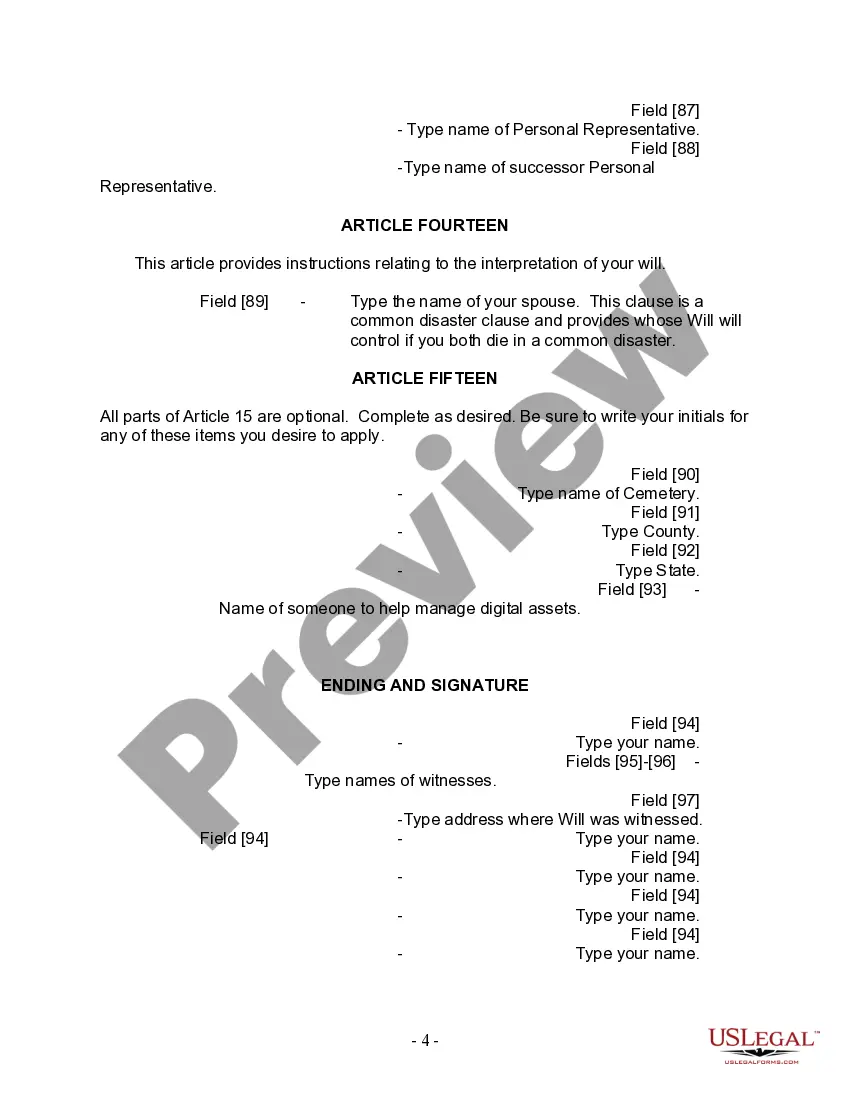
- Begin by entering your full name and county of residence at the top of the document.
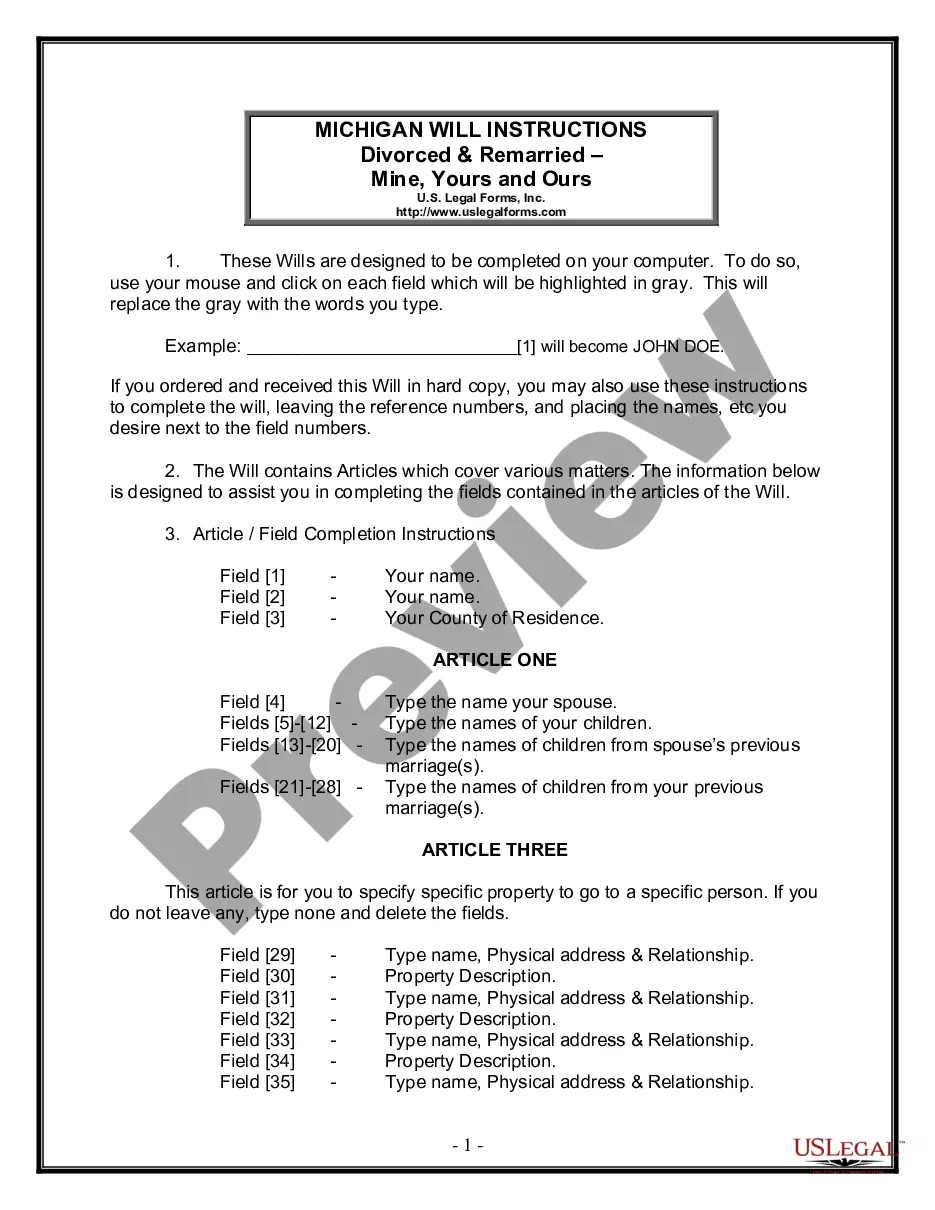
- Fill in the names of your spouse and children in the designated fields, including those from previous marriages.
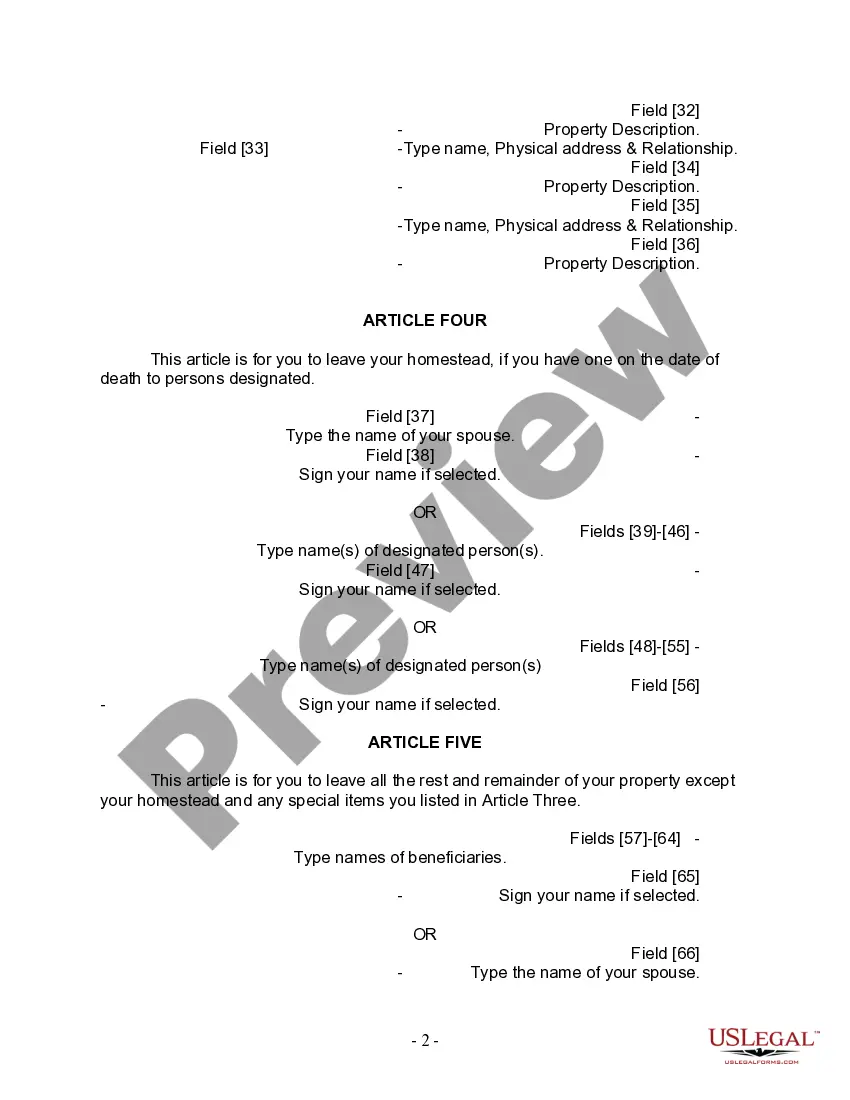
- Specify any specific property you wish to bequeath, including descriptions and the beneficiaries' details.
- Designate a personal representative and a successor representative for your estate.
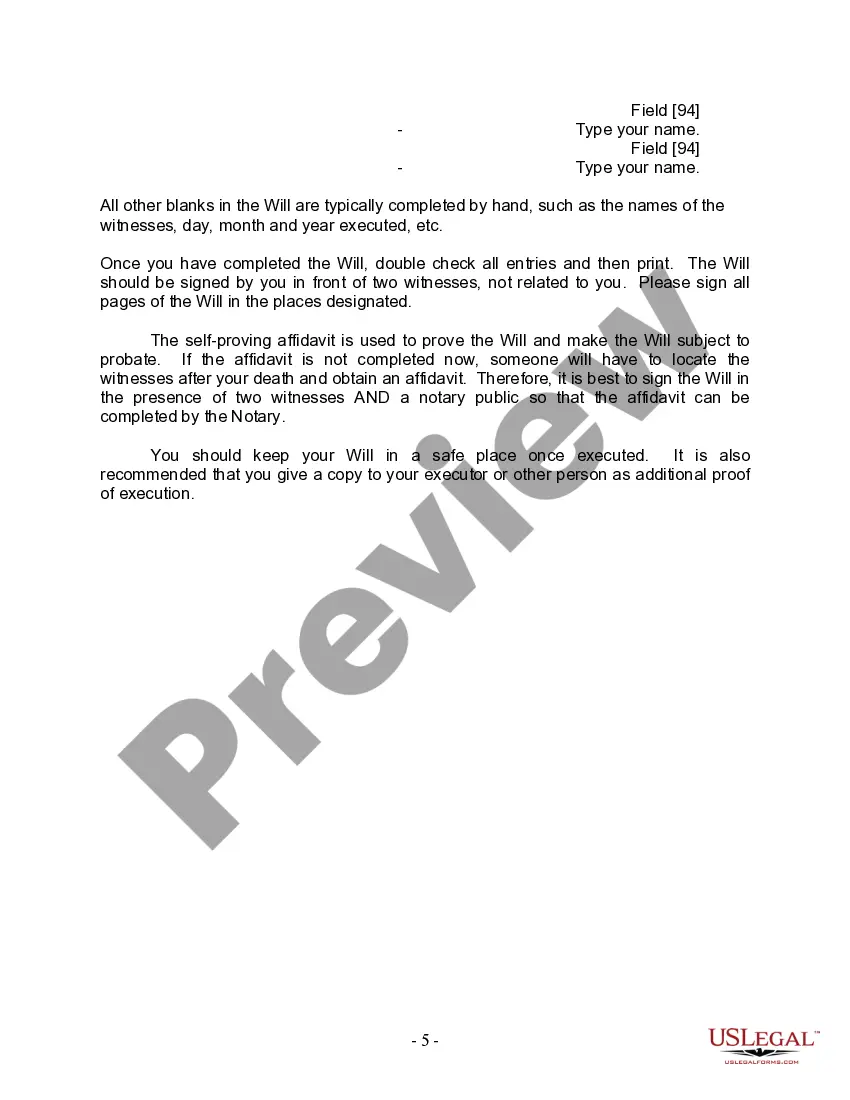
- Review all entries for accuracy and completeness before printing.
- Sign the document in the presence of two witnesses and, if applicable, a notary public.
Does this form need to be notarized?
Yes, this form must be notarized to be legally valid in Michigan. It is advisable to complete the self-proving affidavit in the presence of a notary to avoid any potential issues during the probate process.
Get your form ready online
Our built-in tools help you complete, sign, share, and store your documents in one place.
Make edits, fill in missing information, and update formatting in US Legal Forms—just like you would in MS Word.
Download a copy, print it, send it by email, or mail it via USPS—whatever works best for your next step.
Sign and collect signatures with our SignNow integration. Send to multiple recipients, set reminders, and more. Go Premium to unlock E-Sign.
If this form requires notarization, complete it online through a secure video call—no need to meet a notary in person or wait for an appointment.
We protect your documents and personal data by following strict security and privacy standards.

Make edits, fill in missing information, and update formatting in US Legal Forms—just like you would in MS Word.

Download a copy, print it, send it by email, or mail it via USPS—whatever works best for your next step.

Sign and collect signatures with our SignNow integration. Send to multiple recipients, set reminders, and more. Go Premium to unlock E-Sign.

If this form requires notarization, complete it online through a secure video call—no need to meet a notary in person or wait for an appointment.

We protect your documents and personal data by following strict security and privacy standards.
Common mistakes to avoid
- Failing to have the will signed in front of the required number of witnesses.
- Not updating the will after changes in marital status or family circumstances.
- Providing vague descriptions of property, leading to ambiguity.
- Not including provisions for the care of minor children or guardianship.
Benefits of using this form online
- You can complete the form from the comfort of your home, tailoring it to your specific needs.
- The form is designed for easy editing, allowing you to make updates as necessary.
- Utilizing this form ensures that it meets state-specific legal requirements.
- Instant access to the documentation saves time compared to traditional methods.
Summary of main points
- The will is tailored for individuals with children from prior marriages and is designed to address the complexities of blended families.
- Proper execution requires signatures from you and two witnesses, with notarization recommended.
- This form incorporates provisions that protect minor children through trusts, ensuring their inheritance is managed appropriately.
Looking for another form?


Form popularity
FAQ
Yes, you can look up a will online in Michigan, but the process may vary. Generally, wills are filed with the probate court in the county where the deceased lived. To find a Michigan Last Will and Testament for Divorced and Remarried Persons with Mine, Yours, and Ours Children, you may need to visit the court's website or contact the court directly for access. Additionally, using platforms like USLegalForms can streamline your search and provide helpful resources for understanding the probate process.
Yes, wills remain valid after a divorce in Michigan, but the divorce can alter the terms of your will. Certain provisions may become void, particularly those that name your ex-spouse as a beneficiary. Therefore, it’s wise to revise your Michigan Last Will and Testament for Divorced and Remarried Person with Mine, Yours and Ours Children after a divorce to reflect your current family structure and intentions. Utilizing resources like uslegalforms can make this process straightforward.
In Michigan, the order of inheritance follows a specific hierarchy. If you pass away without a will, your assets typically go to your spouse and children first, according to Michigan law. For those with a Michigan Last Will and Testament for Divorced and Remarried Person with Mine, Yours and Ours Children, you can dictate the distribution of your estate. This allows you to ensure that all family members are considered according to your preferred arrangement.
The 10 year rule in Michigan refers to the way property is divided after a divorce. If you have been married for ten years or longer, the division of assets may differ compared to shorter marriages. This rule can influence how you draft your Michigan Last Will and Testament for Divorced and Remarried Person with Mine, Yours and Ours Children, especially regarding asset distribution. Consulting with a legal expert can clarify how this rule applies to your situation.
In Michigan, a new marriage can impact the validity of a will. If you create a Michigan Last Will and Testament for Divorced and Remarried Person with Mine, Yours and Ours Children, it’s important to note that your previous will may become invalid upon marriage. However, if you wish to include your new spouse and children, updating your will is essential. This ensures your wishes are clearly reflected.
In Michigan, a last will and testament does not need to be notarized to be valid. However, having your Michigan Last Will and Testament for Divorced and Remarried Person with Mine, Yours and Ours Children notarized can provide an additional layer of authenticity and help avoid challenges in probate. It's a good practice to have witnesses sign your will, as this can strengthen its validity. Utilizing resources like US Legal Forms can guide you through the process to ensure your will meets all legal requirements.
One of the biggest mistakes people make with their Michigan Last Will and Testament for Divorced and Remarried Person with Mine, Yours and Ours Children is failing to update it after significant life changes. Events such as divorce, remarriage, or the birth of new children can greatly affect your estate planning. It's crucial to ensure that your will reflects your current family dynamics and intentions. Using a reliable platform like US Legal Forms can help you easily update your will to avoid confusion and ensure that your wishes are honored.
In Michigan, you are not required to file your will with the court while you are alive. However, upon your passing, your Michigan Last Will and Testament for Divorced and Remarried Persons with Mine, Yours and Ours Children must be filed for probate. This process ensures your wishes are honored and that your assets are distributed according to your instructions. To simplify this process, you can rely on uslegalforms, which offers resources to help you prepare your will correctly.
Yes, in Michigan, a divorce typically revokes any provisions in a will that benefit a former spouse. This means that if you created a Michigan Last Will and Testament for Divorced and Remarried Persons with Mine, Yours and Ours Children, it may need to be updated after a divorce to ensure your current wishes are reflected. It's essential to review your will regularly, especially after significant life changes like divorce or remarriage. For personalized assistance, consider using uslegalforms to help navigate these updates.