Michigan Notice of Default on Residential Lease
About this form
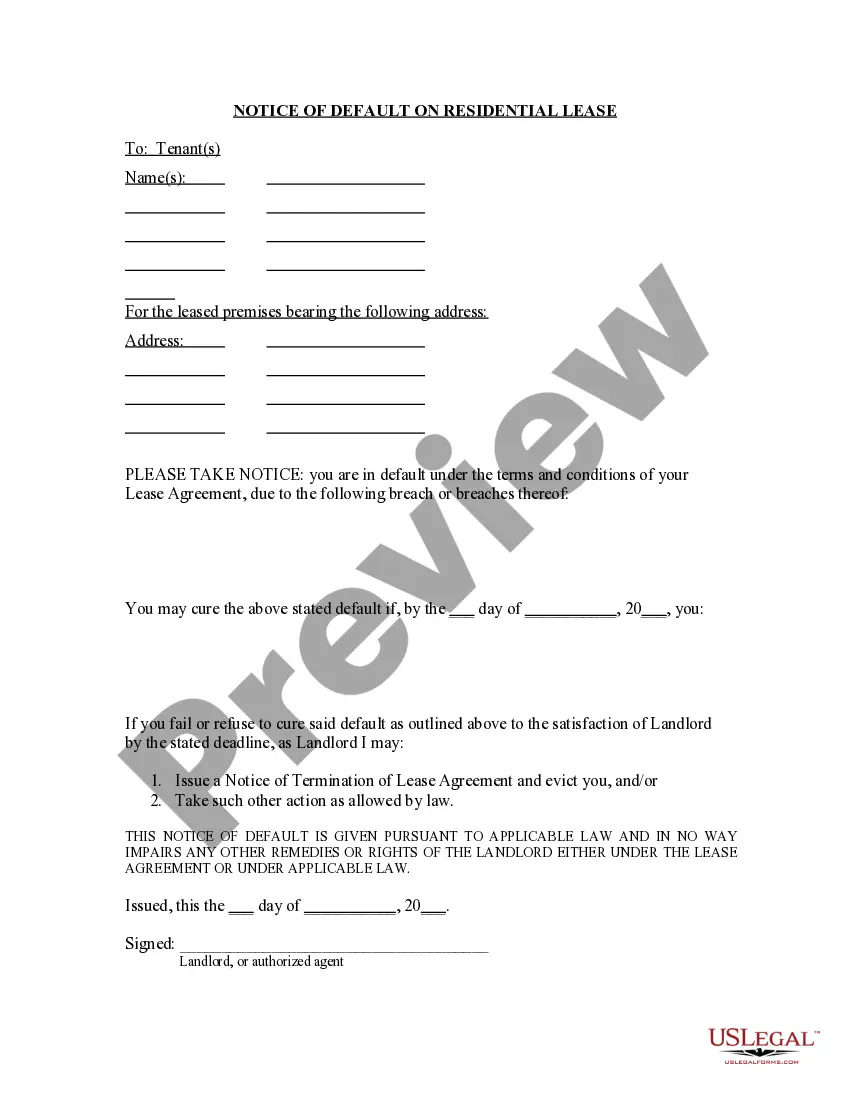
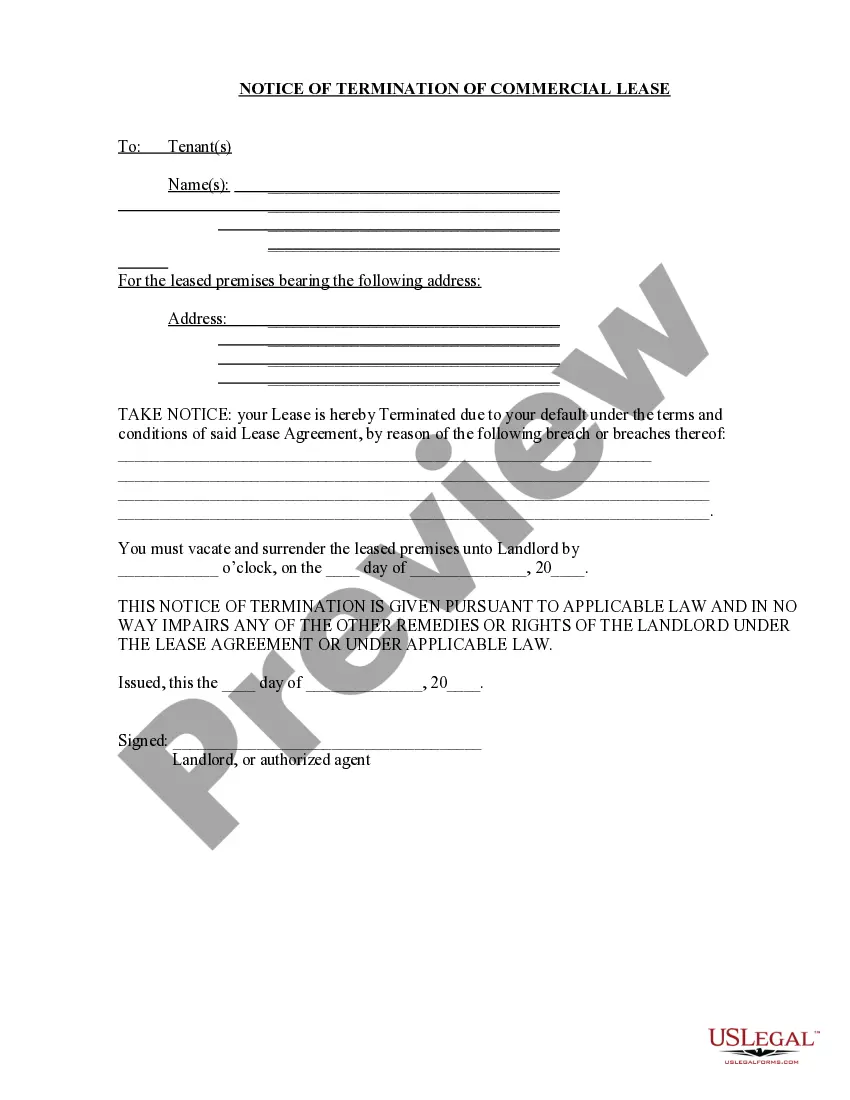
The Notice of Default on Residential Lease is a legal document used by landlords to formally notify tenants that they have failed to meet the obligations of their rental agreement, typically related to non-payment of rent. This notice specifies the reasons for the default and includes a deadline for the tenant to address the issue. Unlike other notices, this particular form establishes a clear cause for eviction proceedings if the tenant does not comply. It is crucial for landlords and tenants to understand this document as it lays the foundation for potential eviction actions.
Key parts of this document
- Issuing date: The date when the notice is issued.
- Reasons for default: Specific details outlining the tenant's failure to fulfill lease obligations.
- Deadline date: A clearly stated date by which the tenant must remedy the default.
- Landlord's signature: The signature of the landlord or their authorized agent confirming the notice.
- Legal jurisdiction: A statement that the notice is compliant with applicable laws.


When to use this form
This form should be used when a tenant has not paid rent or has otherwise defaulted on their lease obligations. It is essential for landlords to notify tenants properly before taking steps such as eviction or recovering amounts from the security deposit. It ensures compliance with the law by providing the tenant with a specified period to correct the default.
Who this form is for
- Landlords: Individuals or companies renting out residential property.
- Property managers: Representatives handling rental agreements on behalf of landlords.
- Tenants: Those wishing to understand their rights if a notice has been served on them.
Steps to complete this form
- Identify the parties: Enter the names of the landlord and tenant.
- Specify the property: Provide the address of the rental property involved.
- Enter the date of issue: Fill in the date the notice is being issued.
- Detail the reasons for default: Clearly outline the reasons for the notice, such as unpaid rent.
- Set a deadline date: Indicate the date by which the tenant must cure the default.
- Obtain the signature: Ensure the landlord or authorized agent signs the form to validate it.
Does this document require notarization?
This form usually doesn’t need to be notarized. However, local laws or specific transactions may require it. Our online notarization service, powered by Notarize, lets you complete it remotely through a secure video session, available 24/7.
Get your form ready online
Our built-in tools help you complete, sign, share, and store your documents in one place.
Make edits, fill in missing information, and update formatting in US Legal Forms—just like you would in MS Word.
Download a copy, print it, send it by email, or mail it via USPS—whatever works best for your next step.
Sign and collect signatures with our SignNow integration. Send to multiple recipients, set reminders, and more. Go Premium to unlock E-Sign.
If this form requires notarization, complete it online through a secure video call—no need to meet a notary in person or wait for an appointment.
We protect your documents and personal data by following strict security and privacy standards.

Make edits, fill in missing information, and update formatting in US Legal Forms—just like you would in MS Word.

Download a copy, print it, send it by email, or mail it via USPS—whatever works best for your next step.

Sign and collect signatures with our SignNow integration. Send to multiple recipients, set reminders, and more. Go Premium to unlock E-Sign.

If this form requires notarization, complete it online through a secure video call—no need to meet a notary in person or wait for an appointment.

We protect your documents and personal data by following strict security and privacy standards.
Typical mistakes to avoid
- Failing to specify the reasons for default, which can lead to confusion.
- Not providing a clear deadline, making it harder to enforce the notice.
- Missing the landlord's signature, which is required to validate the notice.
- Using ambiguous language that could be misinterpreted in a legal context.
Benefits of using this form online
- Convenience: Downloadable and customizable, enabling immediate use.
- Editability: Allows for easy updates to fit specific cases.
- Reliability: Drafted by licensed attorneys to ensure compliance with legal standards.
Legal use & context
- This notice serves as an official warning to tenants about their lease violations.
- Landlords must follow legal procedures after issuing the notice for eviction to be enforceable.
- The notice is an essential step in protecting the landlord's rights under the lease agreement.
Main things to remember
- The Notice of Default on Residential Lease is critical for initiating eviction processes.
- Providing a clear deadline and specifying defaults can prevent legal issues later.
- Understanding and properly using this form can help landlords maintain their rights.
Looking for another form?
Form popularity
FAQ
A motion for entry of default in Michigan is a legal request made when a defendant fails to respond to a complaint within a specified time frame. In landlord-tenant disputes, such as those involving a Michigan Notice of Default on Residential Lease, this motion allows landlords to move forward with eviction proceedings without the tenant’s participation. Filing this motion streamlines the process and helps landlords regain possession of their property swiftly.
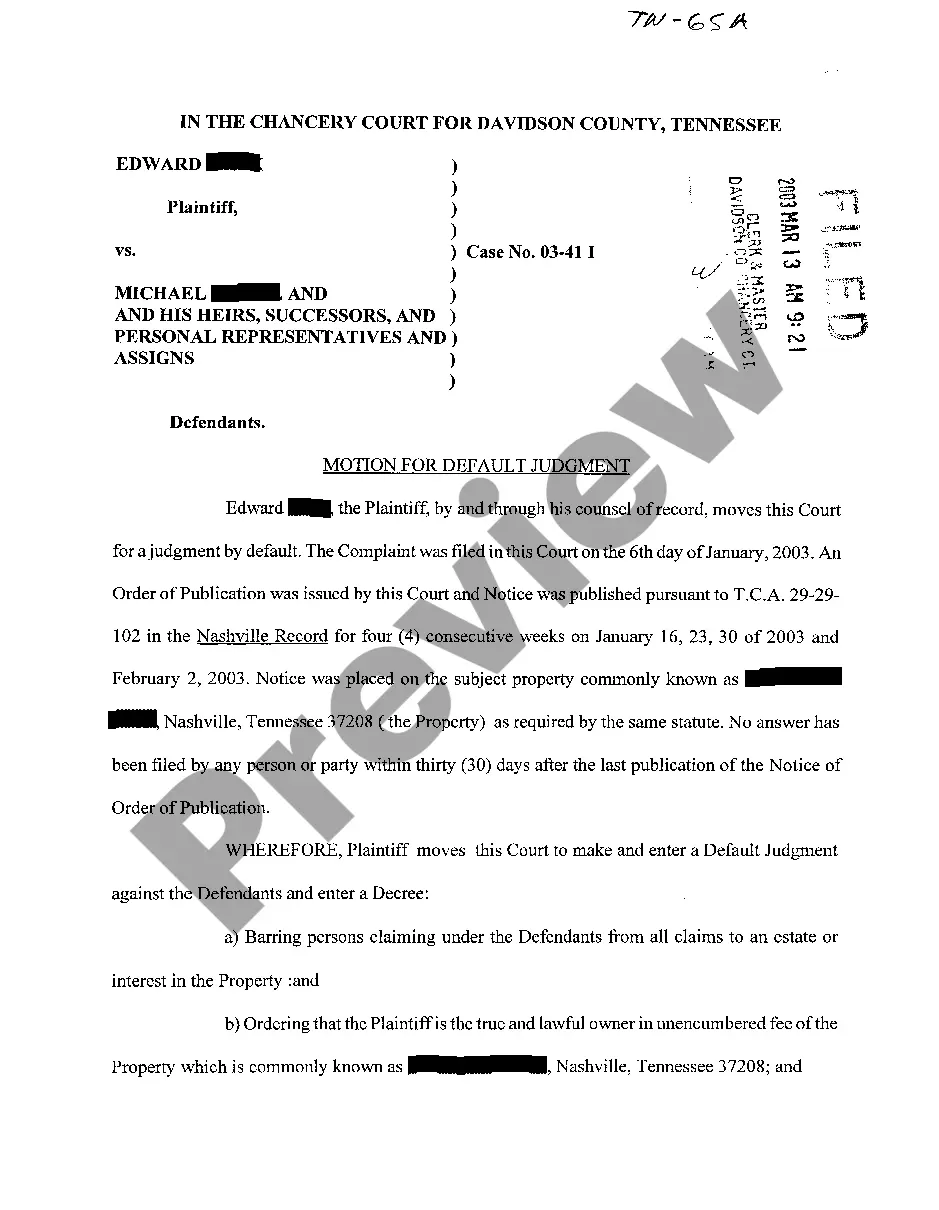
To write a motion for default judgment, begin by clearly stating the basis for the motion, identifying parties involved, and summarizing why you believe the court should grant your request. Include key details, such as any Michigan Notice of Default on Residential Lease you issued, along with supporting documentation that shows the tenant's default. This structured approach ensures clarity and supports your case effectively in court.
A motion by default occurs when one party in a legal case fails to respond to a complaint or motion, allowing the other party to seek a judgment in their favor. In the context of the Michigan Notice of Default on Residential Lease, this can happen if a tenant does not respond to eviction proceedings. By understanding this process, landlords can take appropriate action to protect their property rights.
To remove someone who isn’t named on the lease, you must follow the legal eviction process in Michigan. First, you should issue a Michigan Notice of Default on Residential Lease to inform them of their violation of tenancy rules. If they fail to vacate, you may need to file for eviction in your local court, ensuring to gather all necessary documentation to support your case.
The 554.134 law in Michigan pertains to the rights and obligations of landlords and tenants in rental agreements. This law outlines the procedures for handling a Michigan Notice of Default on Residential Lease, focusing on the legal steps landlords must follow to address lease breaches. Understanding this law is crucial for both landlords and tenants to ensure compliance and protect their rights.
After a default judgment is issued in Michigan, the landlord can commence the process of regaining possession of the property. The tenant will receive a notice that outlines the judgment and next steps, allowing them to respond or challenge the ruling. It’s crucial to understand the implications of a Michigan Notice of Default on Residential Lease, as this document plays a significant role in the eviction process. If you need assistance navigating these legal waters, consider using uslegalforms to find templates and guides tailored to your situation.
When filling out a notice to quit in Michigan, begin by identifying the tenant and the property address. Clearly state the reason for the notice and reference the Michigan Notice of Default on Residential Lease to inform the tenant of their rights. Specify the deadline by which the tenant must leave the property or remedy the issue, reinforcing applicable state laws. Using a structured and clear format will help ensure the notice is legally sound and effective.
To fill out an eviction notice template effectively, start by clearly stating the tenant's name and the rental property's address. Include the specific reason for the eviction, whether it's due to non-payment of rent or another breach of lease terms. Be sure to reference the Michigan Notice of Default on Residential Lease for context on state laws governing the eviction process. Lastly, provide the date by which the tenant must respond or vacate the property, ensuring you are compliant with Michigan regulations.
In Michigan, a landlord cannot evict you without a court order. The process begins with a Michigan Notice of Default on Residential Lease, which informs you of the lease violation. After this notice, the landlord must file an eviction lawsuit. Only the court can issue an official eviction order, ensuring that your rights as a tenant are protected throughout the legal process.
In Michigan, landlords must provide tenants with written notice before terminating a lease or proceeding with eviction. For rent payments, typically, a seven-day notice is required, while other lease breaches usually require a 30-day notice. Issuing a Michigan Notice of Default on Residential Lease is essential in this process, as it formally informs tenants of their non-compliance. Knowing the right notice periods can significantly impact the resolution process and maintain positive landlord-tenant relationships.