Michigan Prenuptial Premarital Agreement with Financial Statements
Overview of this form
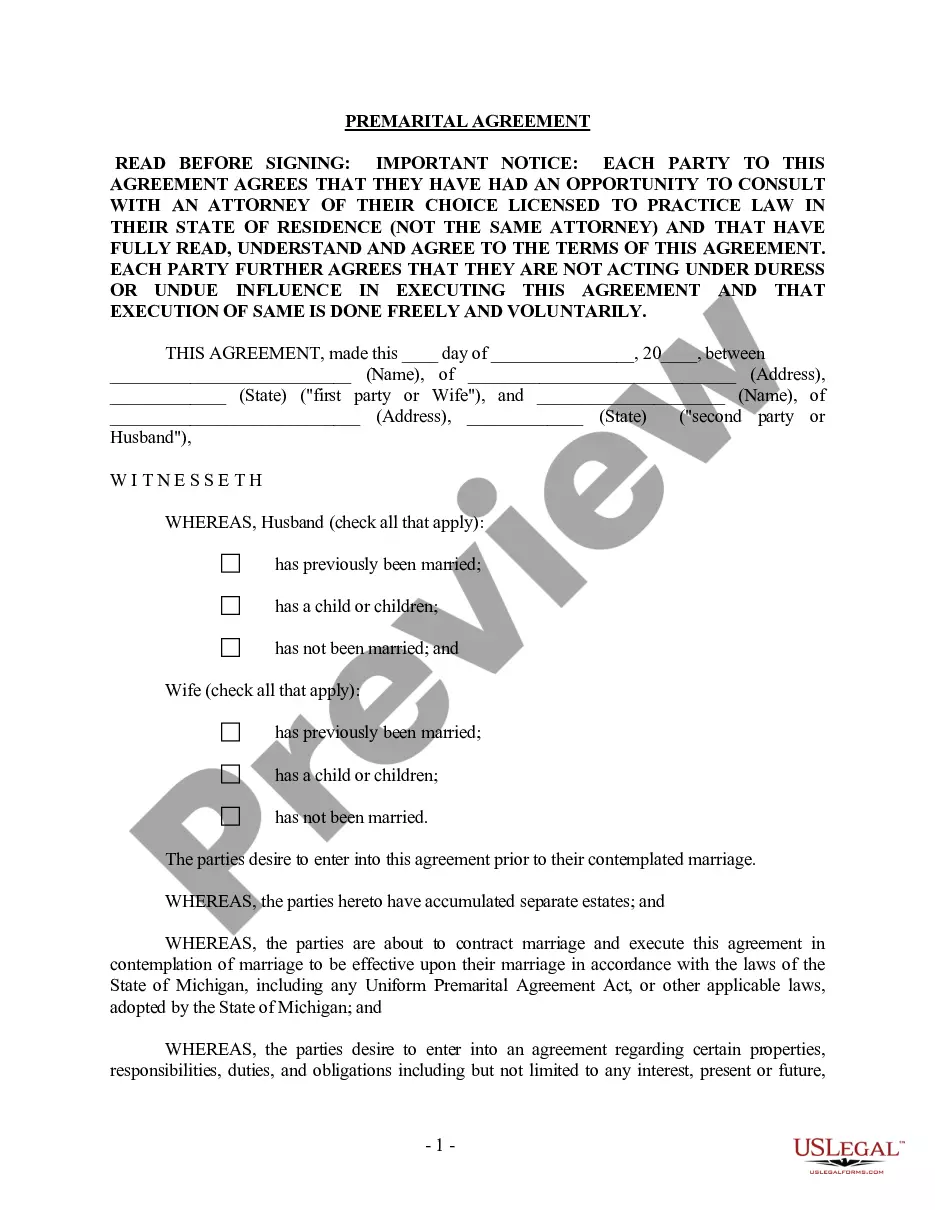
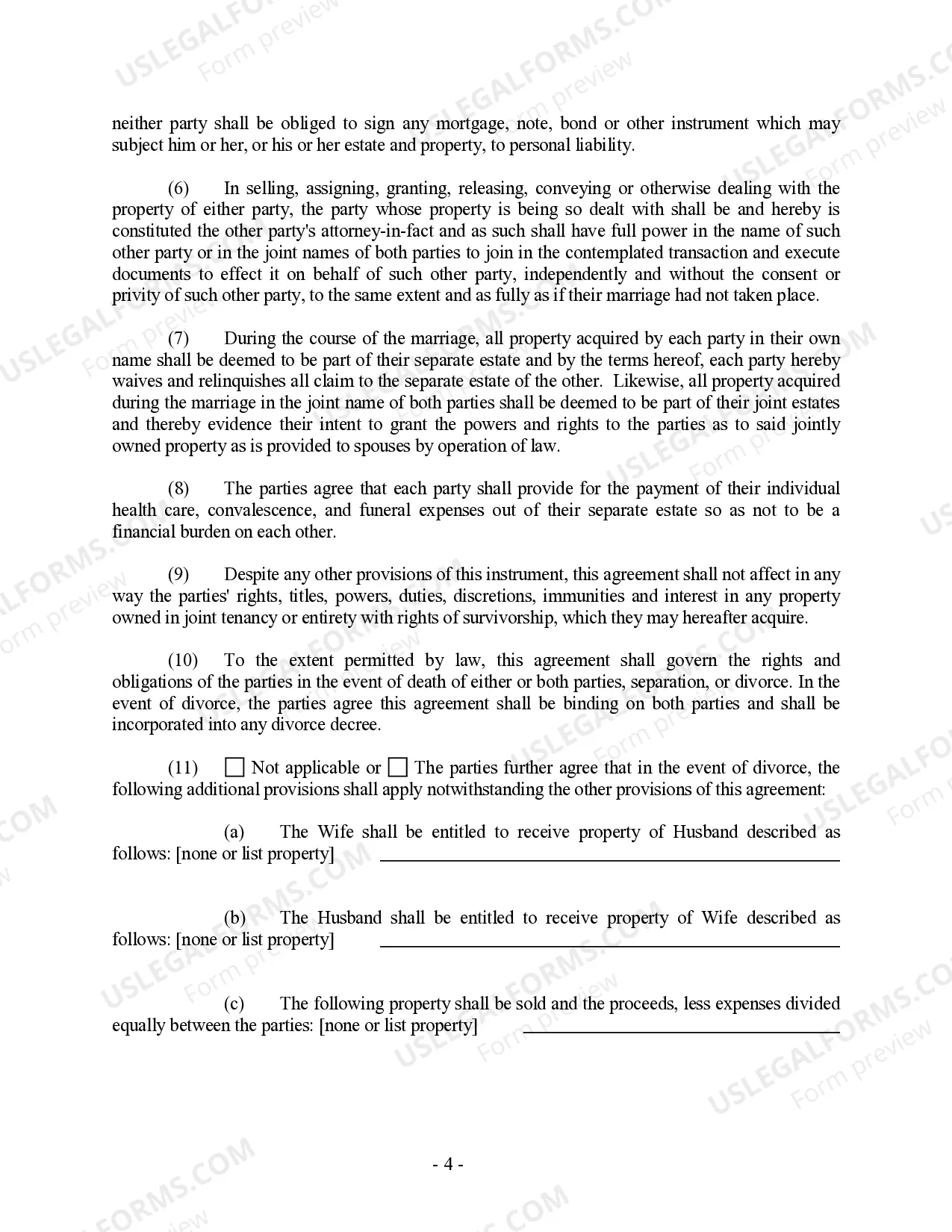
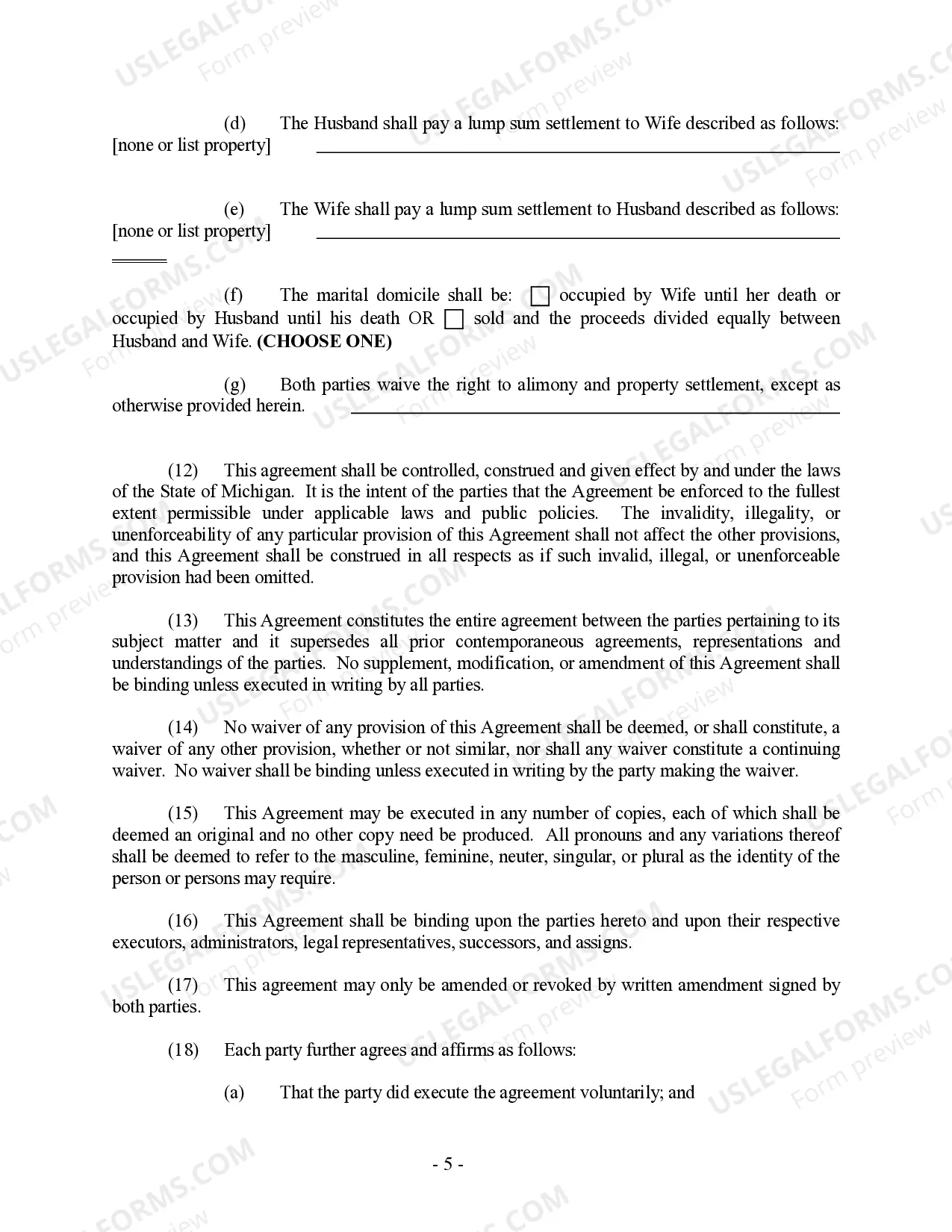
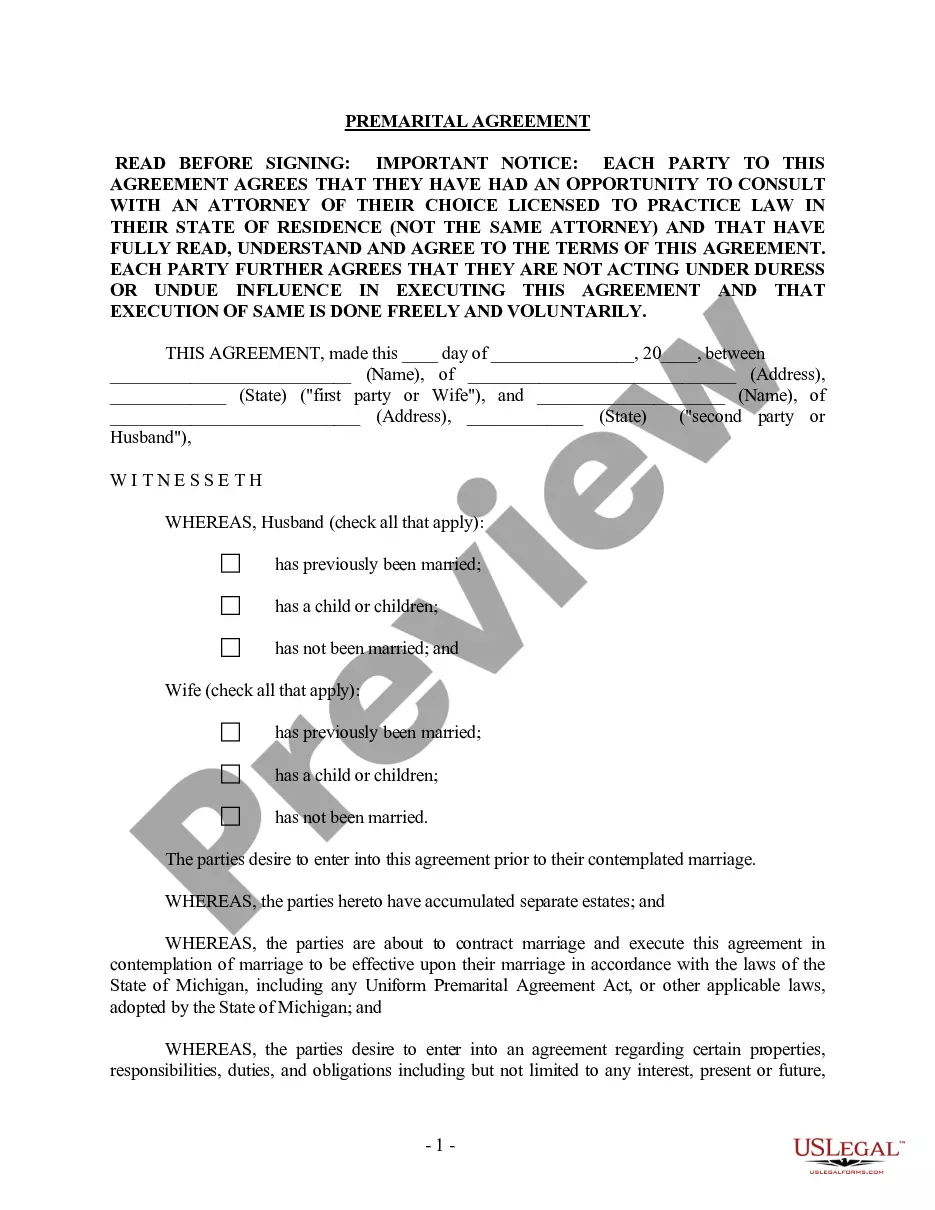
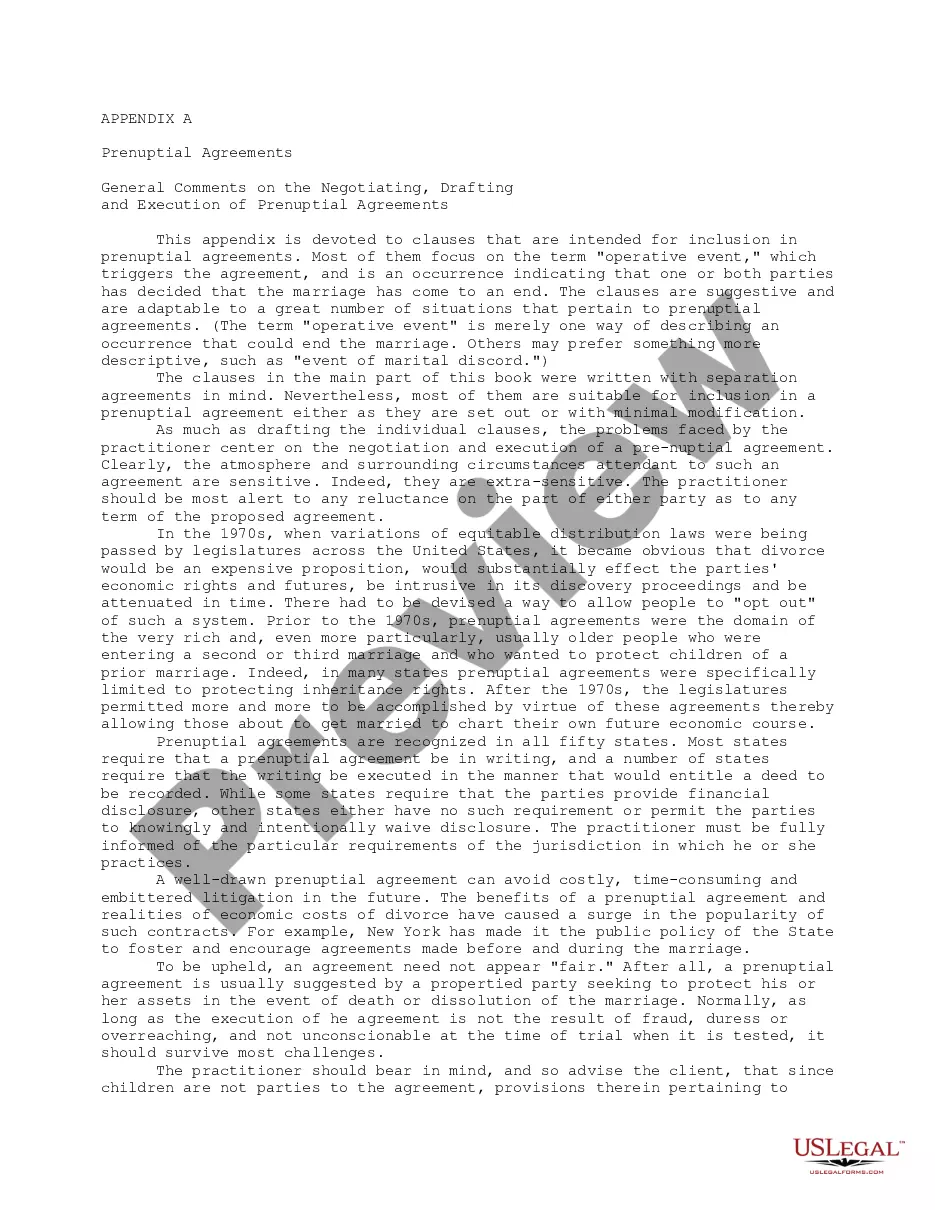
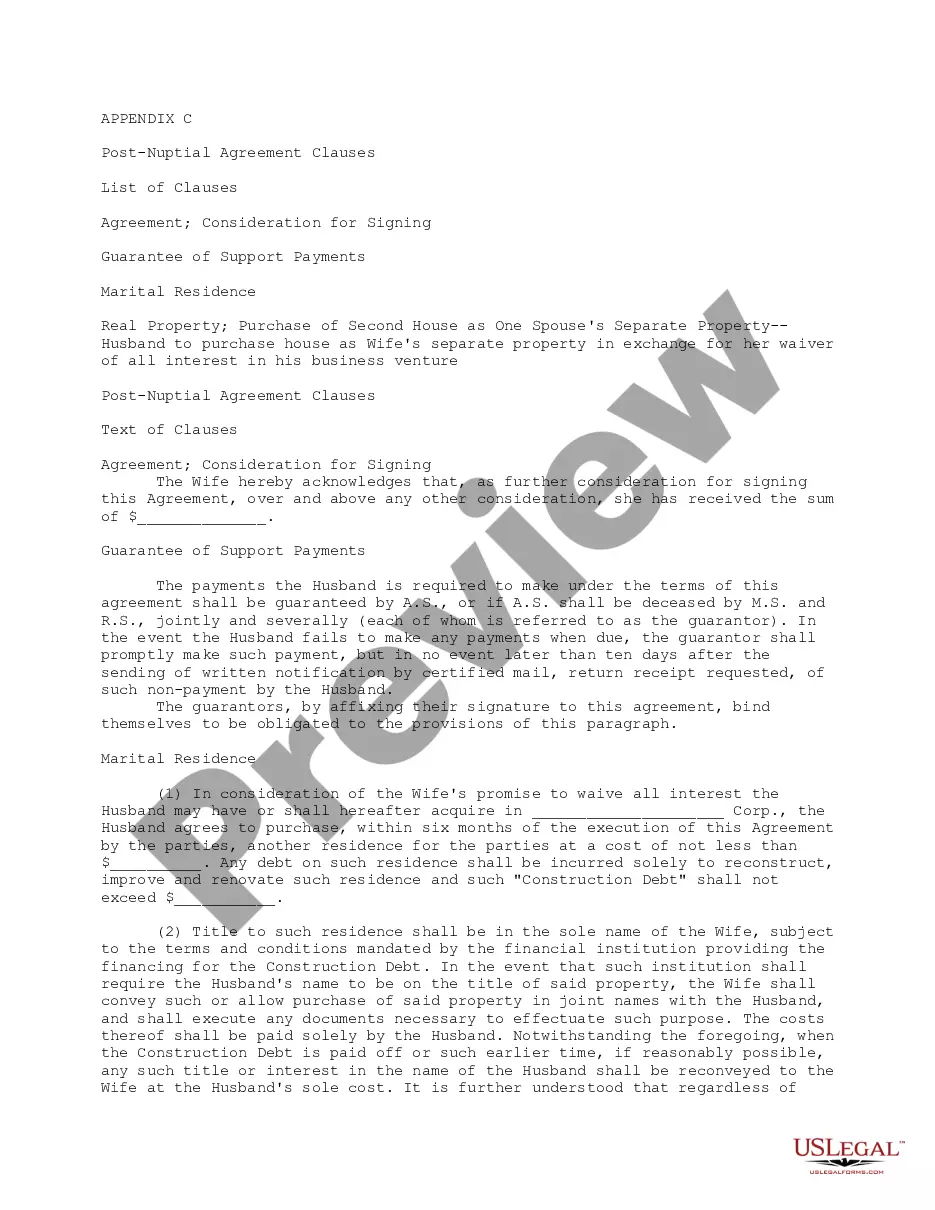
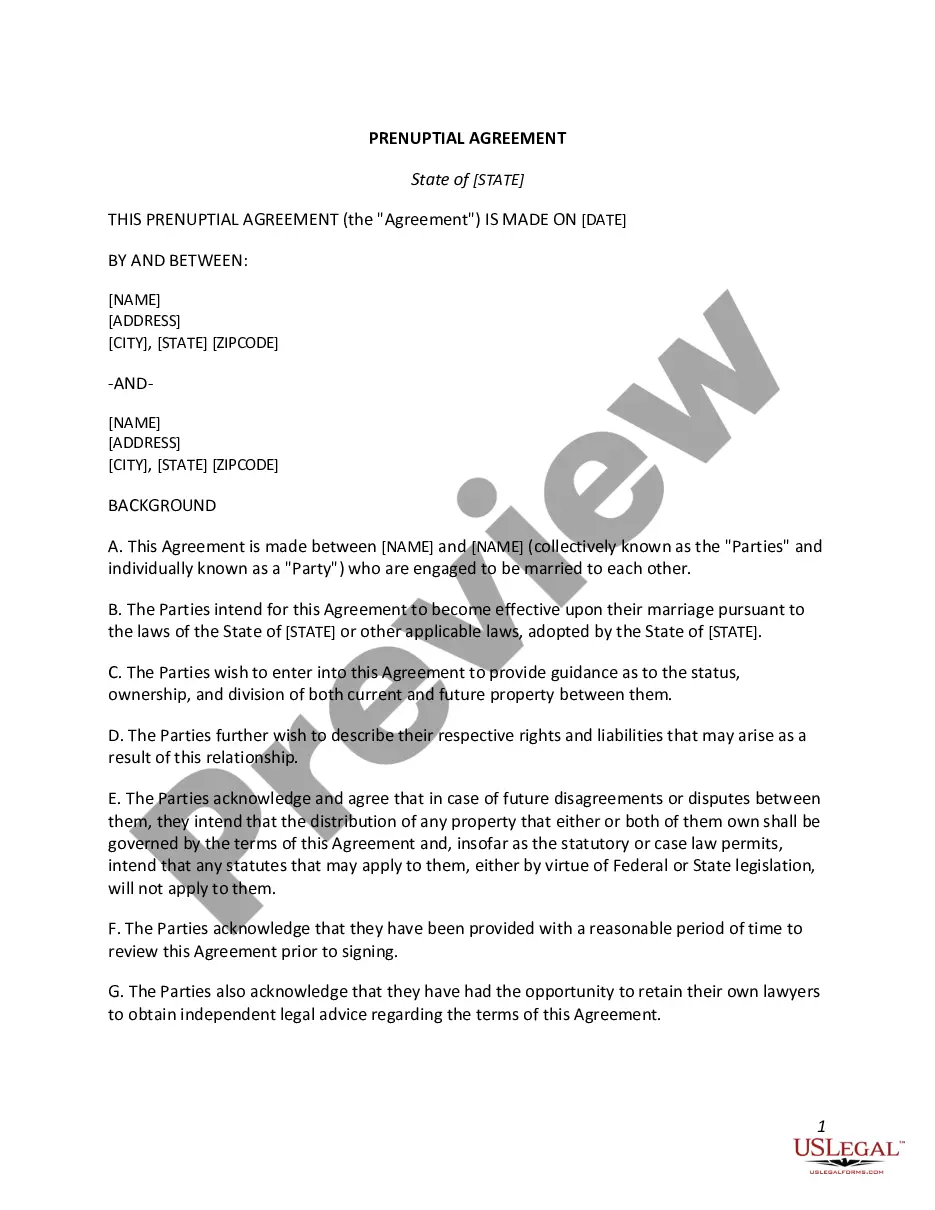
The Michigan Prenuptial Premarital Agreement with Financial Statements is a legal document that establishes the rights and responsibilities of both parties before entering marriage. This agreement is particularly useful for individuals with prior marriages or significant assets, as it details asset and debt disclosures, property rights, and provisions related to the marriage. Unlike standard marital agreements, this form includes financial statements that ensure transparency about financial obligations and assets.
Form components explained
- Identification of both parties involved in the agreement.
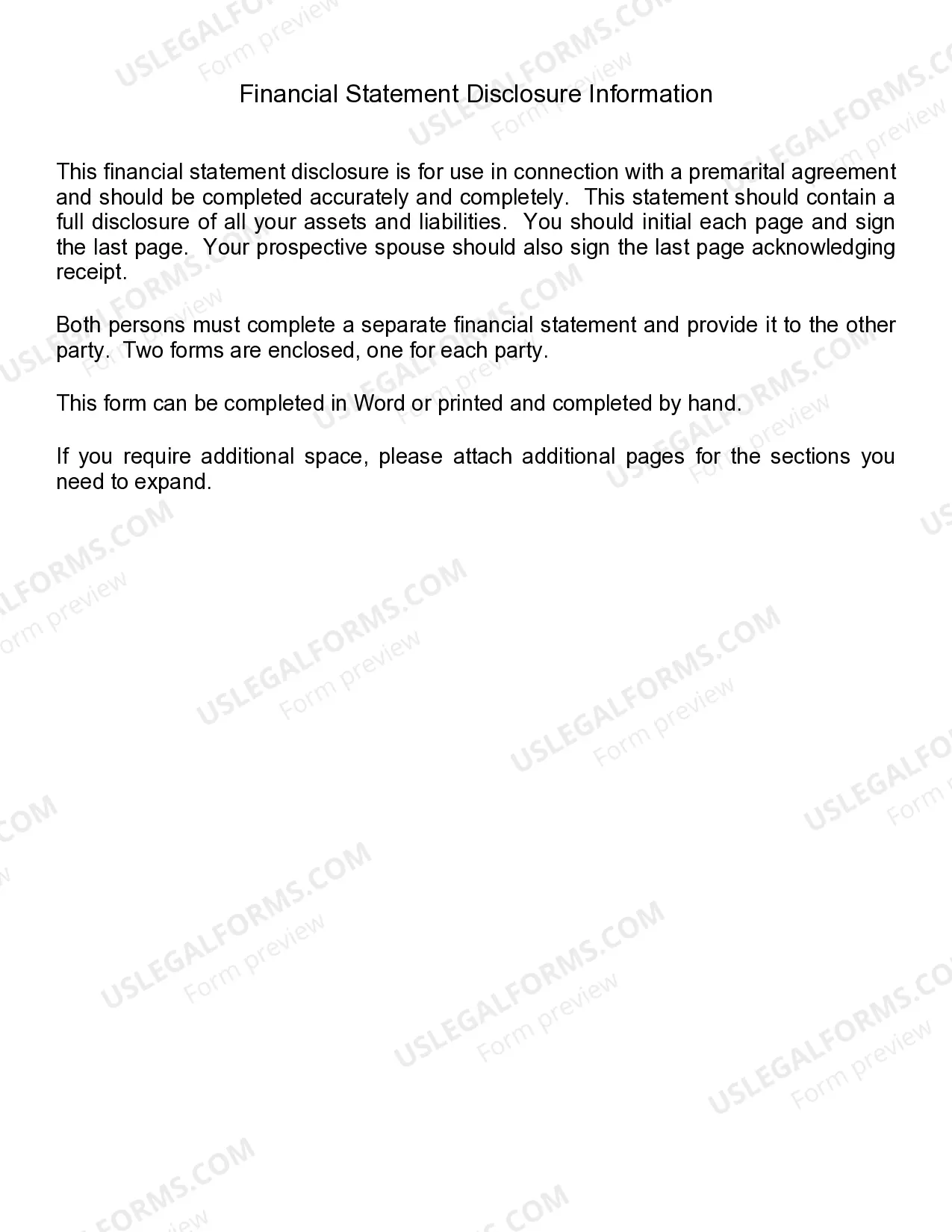
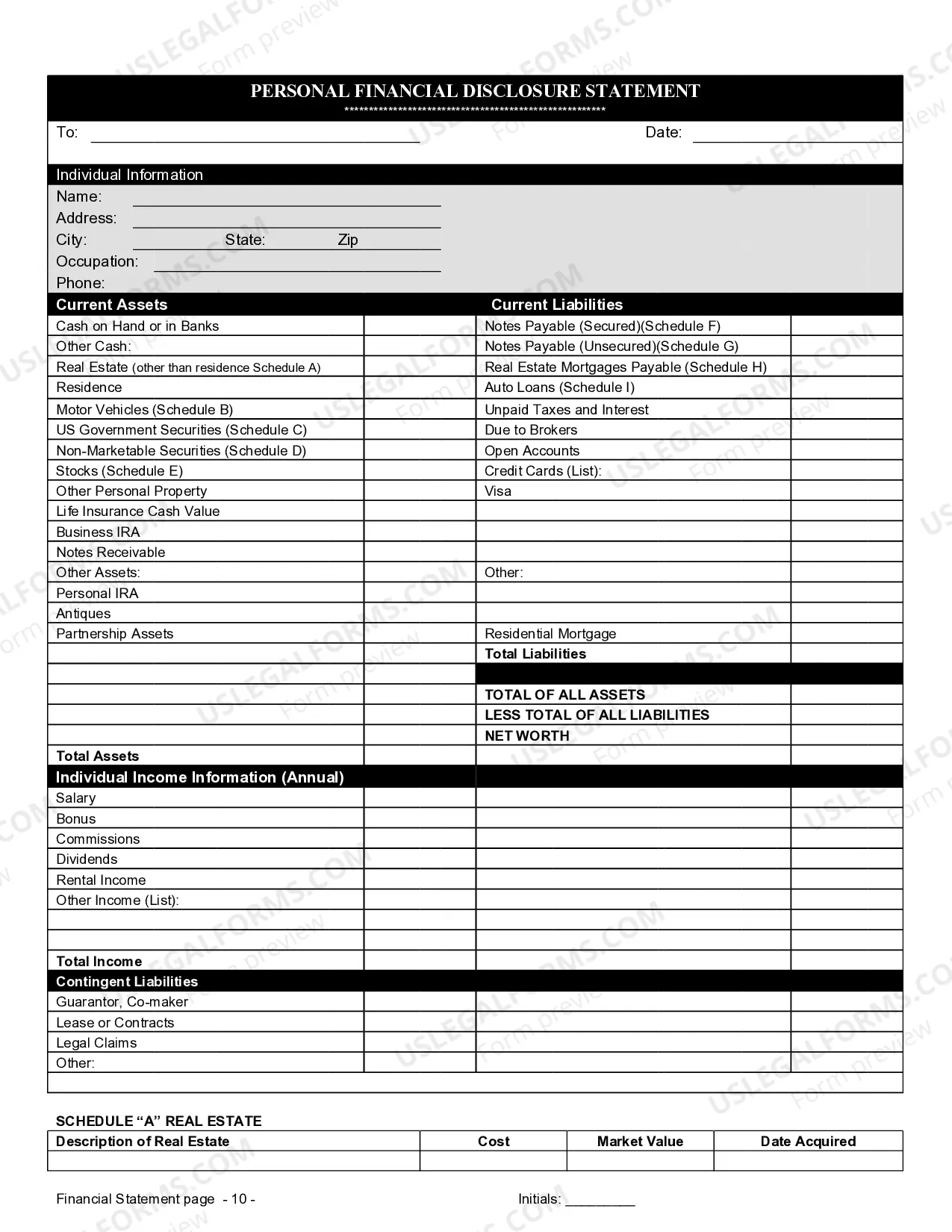
- Disclosure of individual financial statements, including assets and debts.
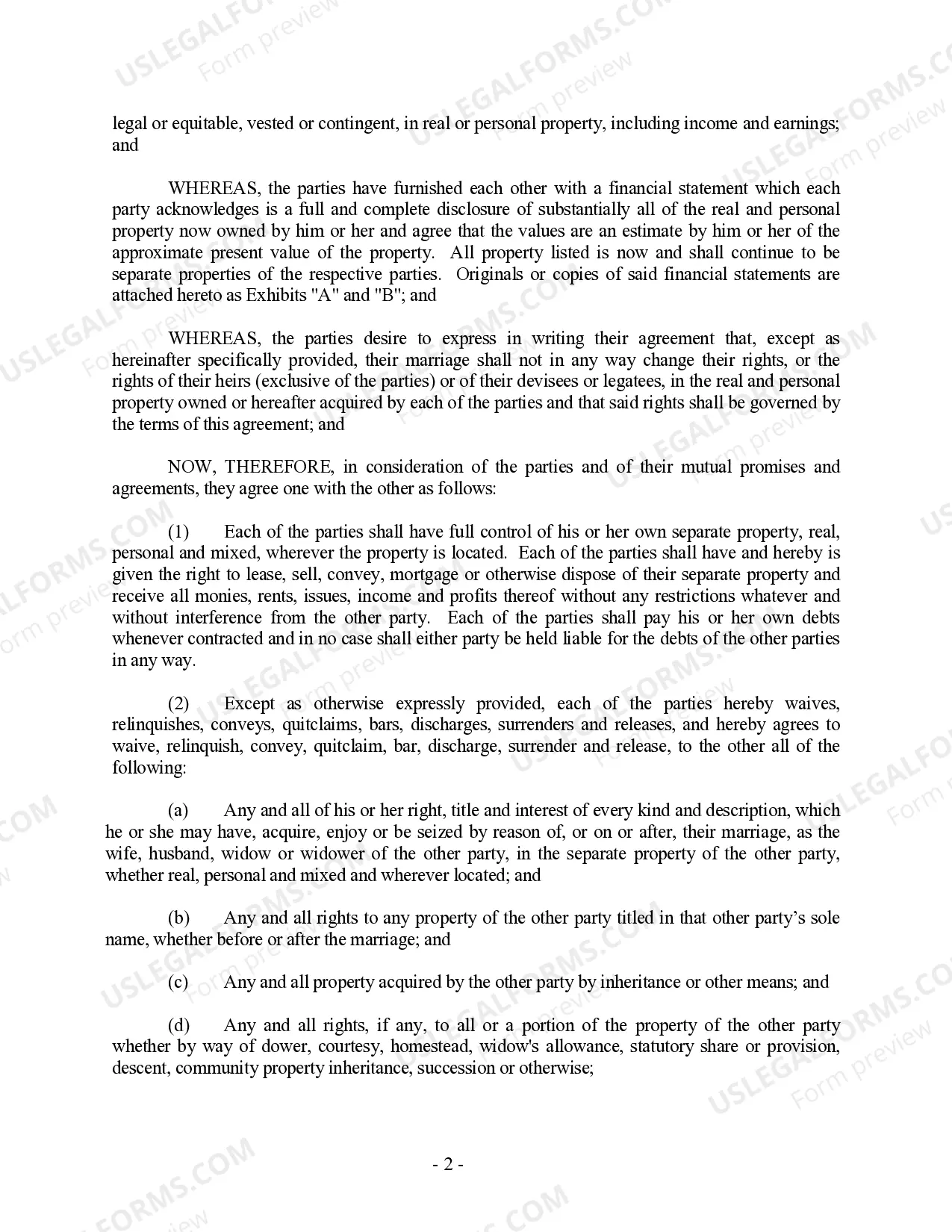
- Provisions regarding the control and management of separate property.
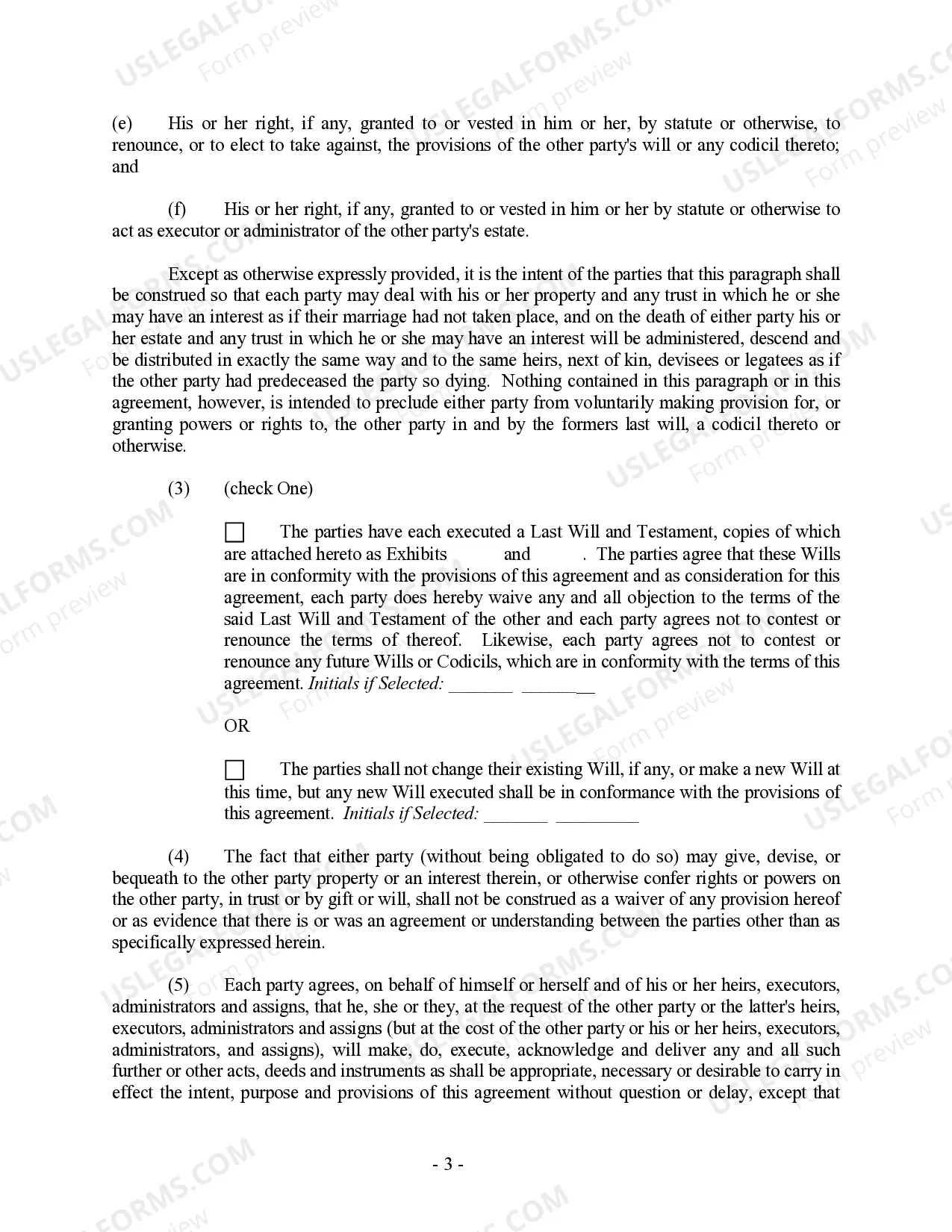
- Waivers of rights to each other's property acquired before and during the marriage.
- Conditions under which the agreement may be modified or revoked.


Situations where this form applies
This form is useful in various situations, such as:
- When either party has significant personal assets or debts.
- When either party has been previously married and wants to protect their existing estate.
- When the couple wishes to define financial expectations and management prior to marriage.
- When clarity is needed regarding property rights after death or divorce.
Who needs this form
This form is intended for:
- Couples planning to marry, particularly those with children from previous relationships.
- Individuals who own significant assets and wish to protect them.
- Individuals who want to clarify financial rights and responsibilities before marriage.
How to complete this form
- Begin by identifying both parties' names and addresses at the top of the form.
- Each party should complete their respective financial statement, detailing all assets and liabilities.
- Review the agreement terms to ensure understanding and agreement by both parties.
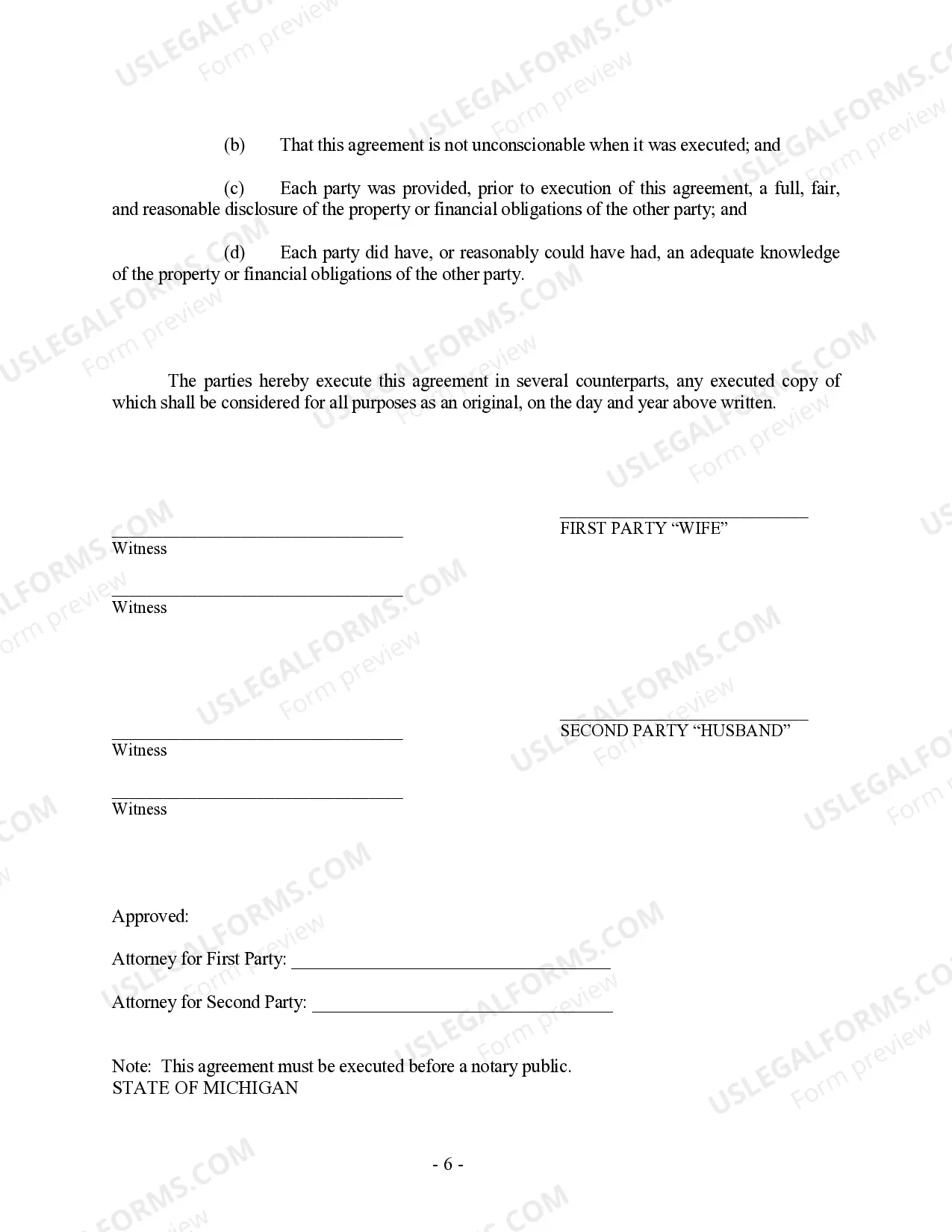
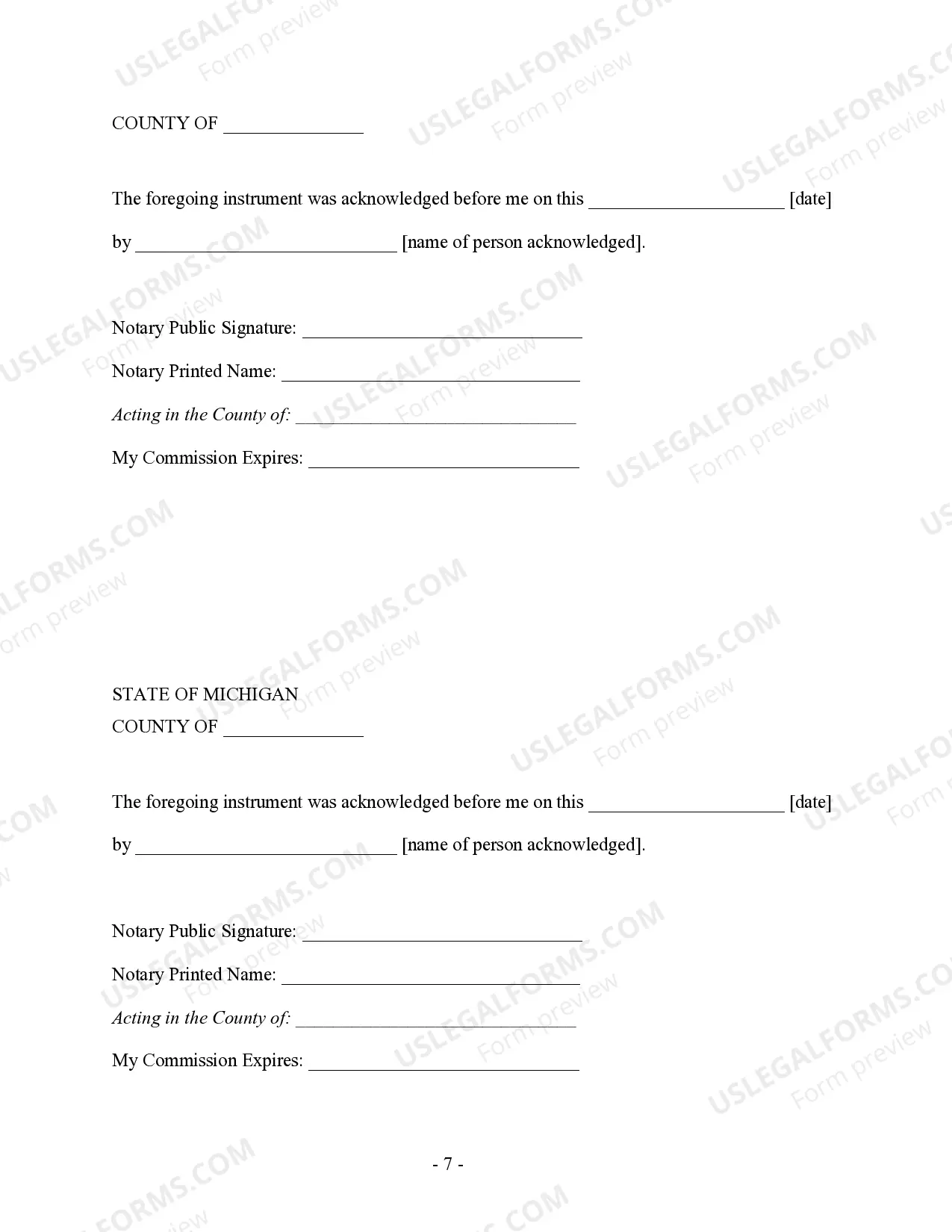
- Sign the agreement in the presence of a notary public to validate it.
- Both parties should retain a signed copy of the agreement for their records.
Is notarization required?
Notarization is required for this form to take effect. Our online notarization service, powered by Notarize, lets you verify and sign documents remotely through an encrypted video session, available 24/7.
Get your form ready online
Our built-in tools help you complete, sign, share, and store your documents in one place.
Make edits, fill in missing information, and update formatting in US Legal Forms—just like you would in MS Word.
Download a copy, print it, send it by email, or mail it via USPS—whatever works best for your next step.
Sign and collect signatures with our SignNow integration. Send to multiple recipients, set reminders, and more. Go Premium to unlock E-Sign.
If this form requires notarization, complete it online through a secure video call—no need to meet a notary in person or wait for an appointment.
We protect your documents and personal data by following strict security and privacy standards.

Make edits, fill in missing information, and update formatting in US Legal Forms—just like you would in MS Word.

Download a copy, print it, send it by email, or mail it via USPS—whatever works best for your next step.

Sign and collect signatures with our SignNow integration. Send to multiple recipients, set reminders, and more. Go Premium to unlock E-Sign.

If this form requires notarization, complete it online through a secure video call—no need to meet a notary in person or wait for an appointment.

We protect your documents and personal data by following strict security and privacy standards.
Typical mistakes to avoid
- Failing to provide complete and accurate financial disclosures.
- Not having both parties consult separate legal counsel prior to signing.
- Neglecting to notarize the agreement, which is crucial for enforceability.
- Overlooking terms that could lead to misunderstandings in case of divorce or death.
Advantages of online completion
- Convenient access to legally drafted forms tailored to Michigan law.
- Edit and personalize the agreement to fit your specific circumstances.
- Instant downloads allow for immediate use and further processing.
- Avoid lengthy legal consultations by starting with this comprehensive template.
Looking for another form?




Form popularity
FAQ
Prenups aren't just for the rich or famous more millennials are signing them before getting married, and you probably should too.Prenups set expectations for a division of assets and finances in the event of divorce. They may not be romantic to bring up, but most couples will benefit from having one.
One formality that many do not realize the importance of is a full and fair disclosure of assets and debts prior to the prenuptial agreement being signed. In other words, both parties are supposed to disclosure all the assets and debts that they are bringing into the marriage.
A prenuptial agreement, commonly referred to as a prenup, is a written contract you and your spouse enter into before getting legally married. It details exactly what happens to finances and assets during your marriage and, of course, in the event of divorce.
Here are the top 10 reasons why a prenup could be invalid: There Isn't A Written Agreement: Premarital agreements are required to be in writing to be enforced. Not Correctly Executed: Each party is required to sign a premarital agreement prior to the wedding for the agreement to be deemed valid.
Just as a future asset can be protected by a prenup if adequately described, future income can also be treated as belonging to one partner but not both.
2. Prenups make you think less of your spouse. And at their root, prenups show a lack of commitment to the marriage and a lack of faith in the partnership.Ironically, the marriage becomes more concerned with money after a prenup than it would have been without the prenup.
In the event of divorce, a prenup can protect a spouse from being liable for any debt the other spouse brought into the marriage.A prenup can also protect any income or assets you earn during the marriage, as well as unearned income from a bequest or a trust distribution.
Omitting an asset, even if just by accident, can void the entire agreement. The prenup loophole is that, should the agreement come into a court setting, the only thing one side has to do is find a legitimate asset that was excluded when the agreement was executed. As the law goes, ignorance is no excuse.
Despite the fact that a prenup is arranged before a marriage, you can still sign one after exchanging "I do's." This contract, known as a post-nuptial agreement, is drafted after marriage by those who are still married and either are contemplating separation or divorce or simply want to protect themselves from the