Maine Last Will and Testament for Divorced person not Remarried with Minor Children
About this form
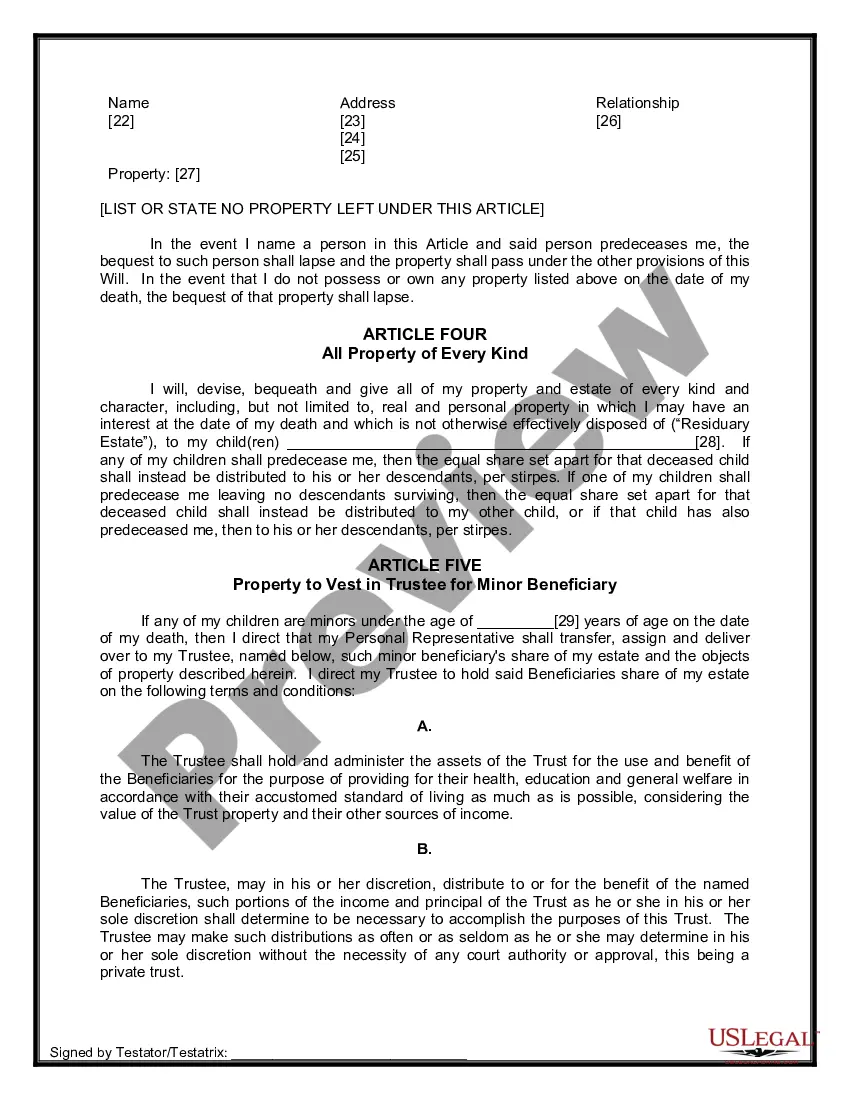
This Last Will and Testament is specifically designed for divorced individuals who have not remarried and have minor children. Its purpose is to clearly outline how your assets will be distributed upon your death, ensure the appointment of a personal representative or executor, and establish guardianship provisions for minor children. This form is tailored to accommodate the unique circumstances of divorced parents, setting it apart from general wills or those meant for single individuals.
What’s included in this form
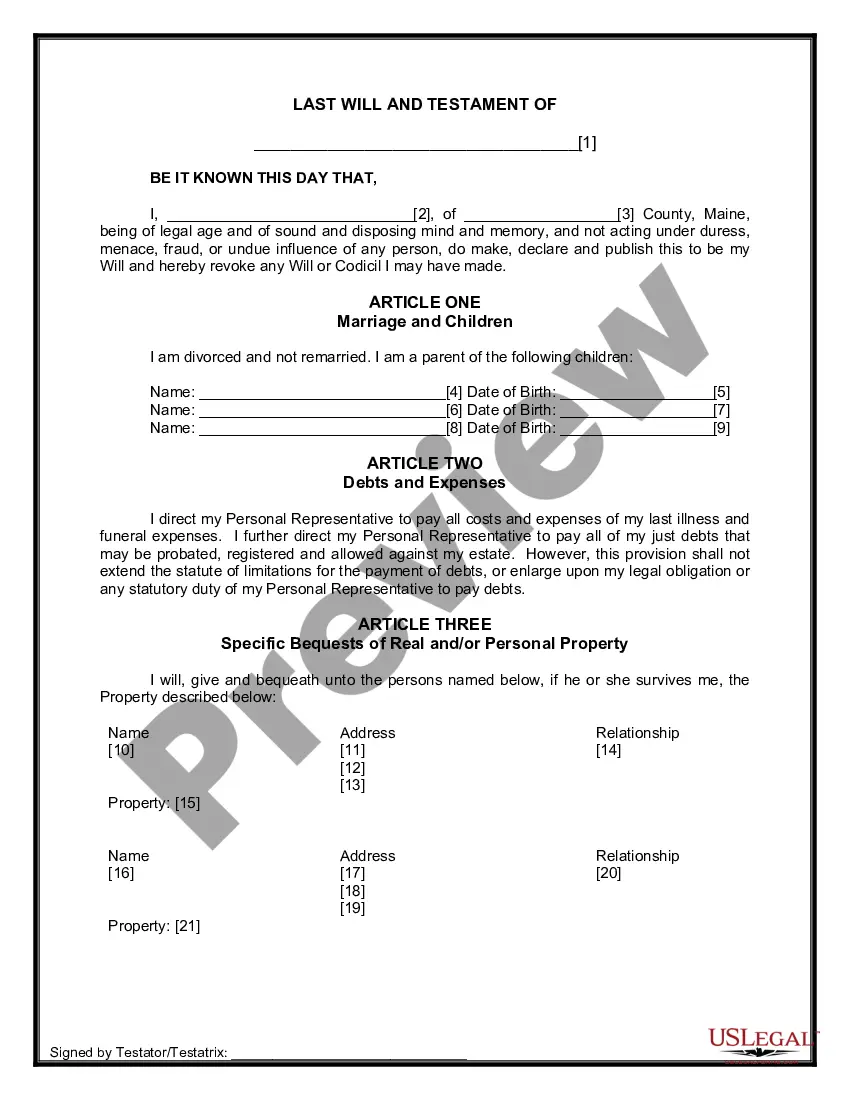
- Declaration of personal representative to manage the estate.
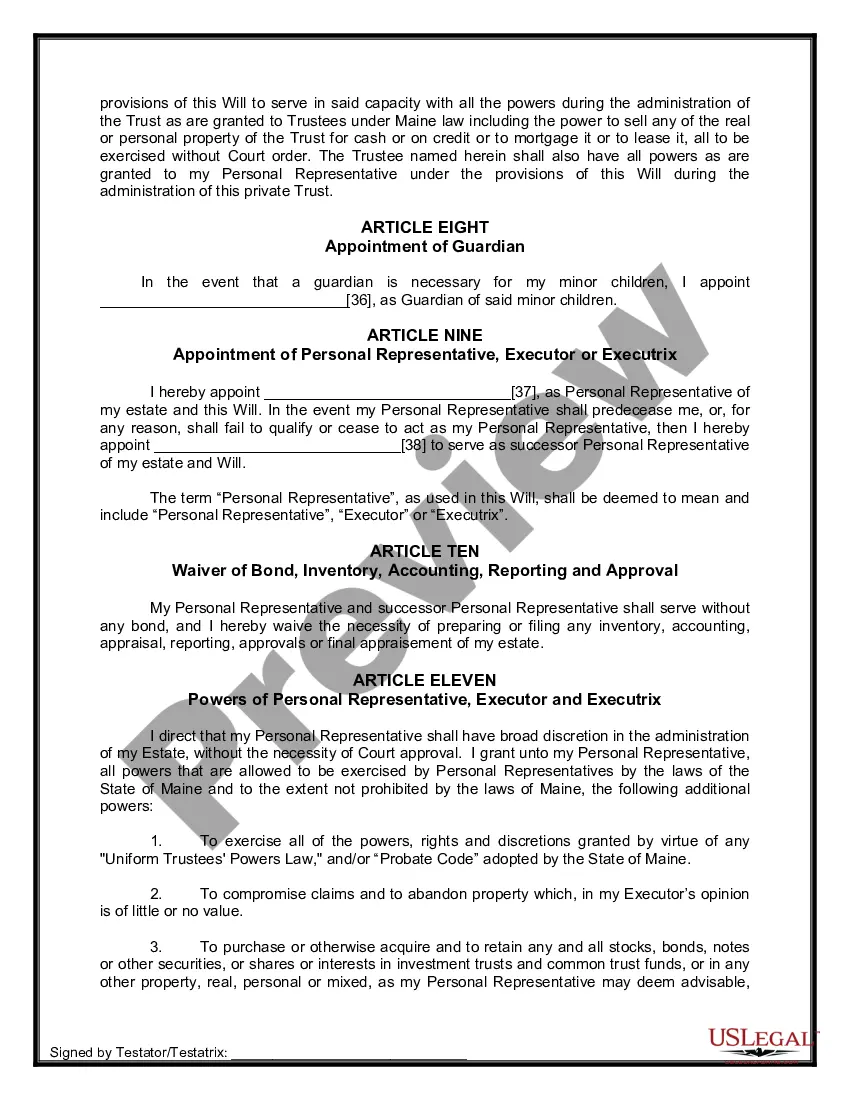
- Detailed listing of minor children and appointment of a guardian.
- Instructions for paying debts and funeral expenses.
- Specific bequests of personal and real property to designated beneficiaries.
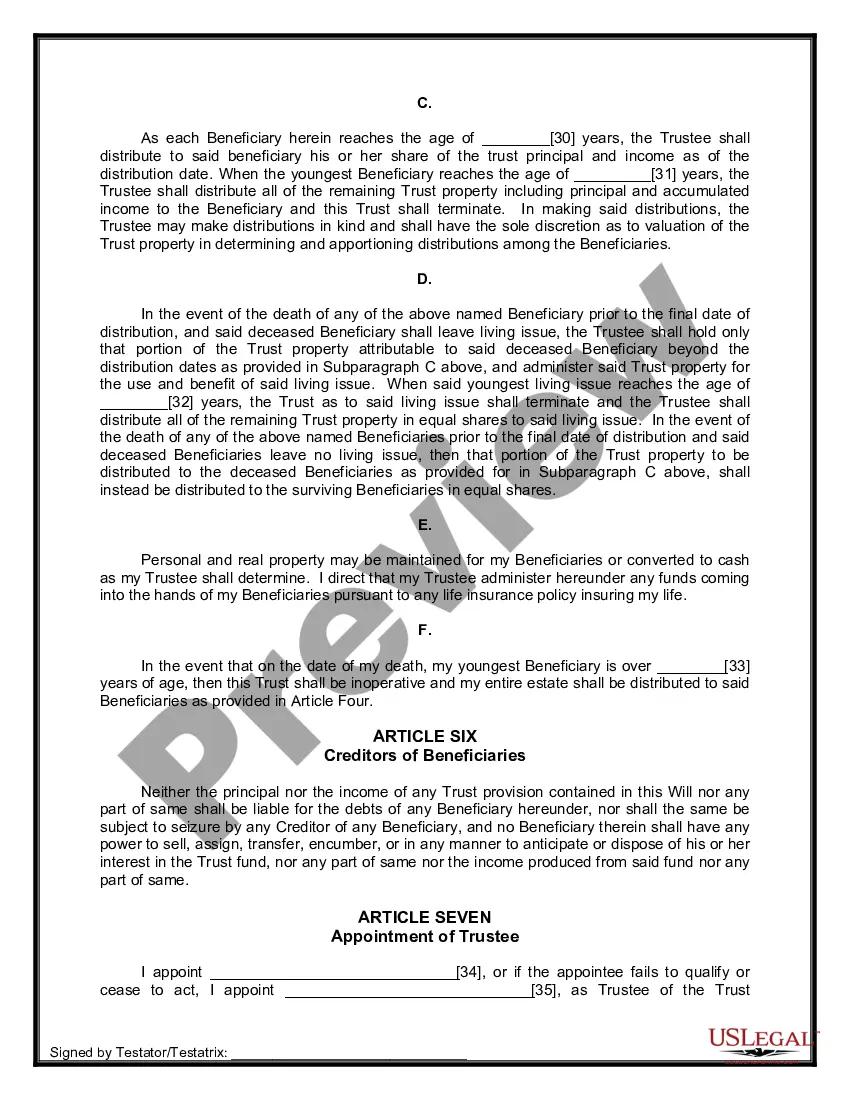
- Provisions for holding property in trust for minor beneficiaries.
- Appointment of a successor personal representative, if necessary.




Common use cases
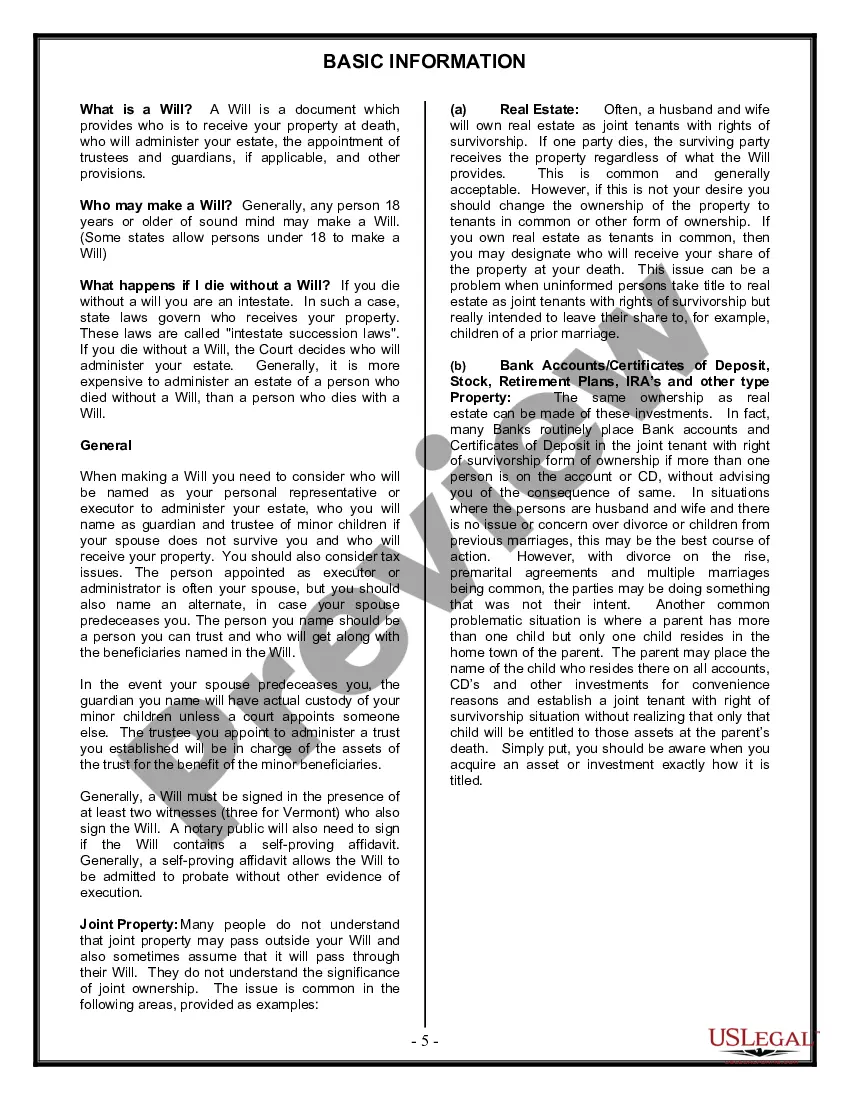
This form is essential when a divorced person with minor children wishes to establish a clear plan for their estate. It should be used when one wants to ensure that children are provided for, designate who will assume guardianship, and dictate how remaining assets will be distributed after death. This will helps prevent future disputes and ensures that personal wishes are respected.
Who can use this document
This Last Will and Testament is appropriate for:
- Divorced parents who have not remarried.
- Individuals with minor children needing specific guardianship instructions.
- Those seeking to ensure their property is distributed according to their wishes.
- Anyone looking to simplify the probate process for their beneficiaries.
Instructions for completing this form
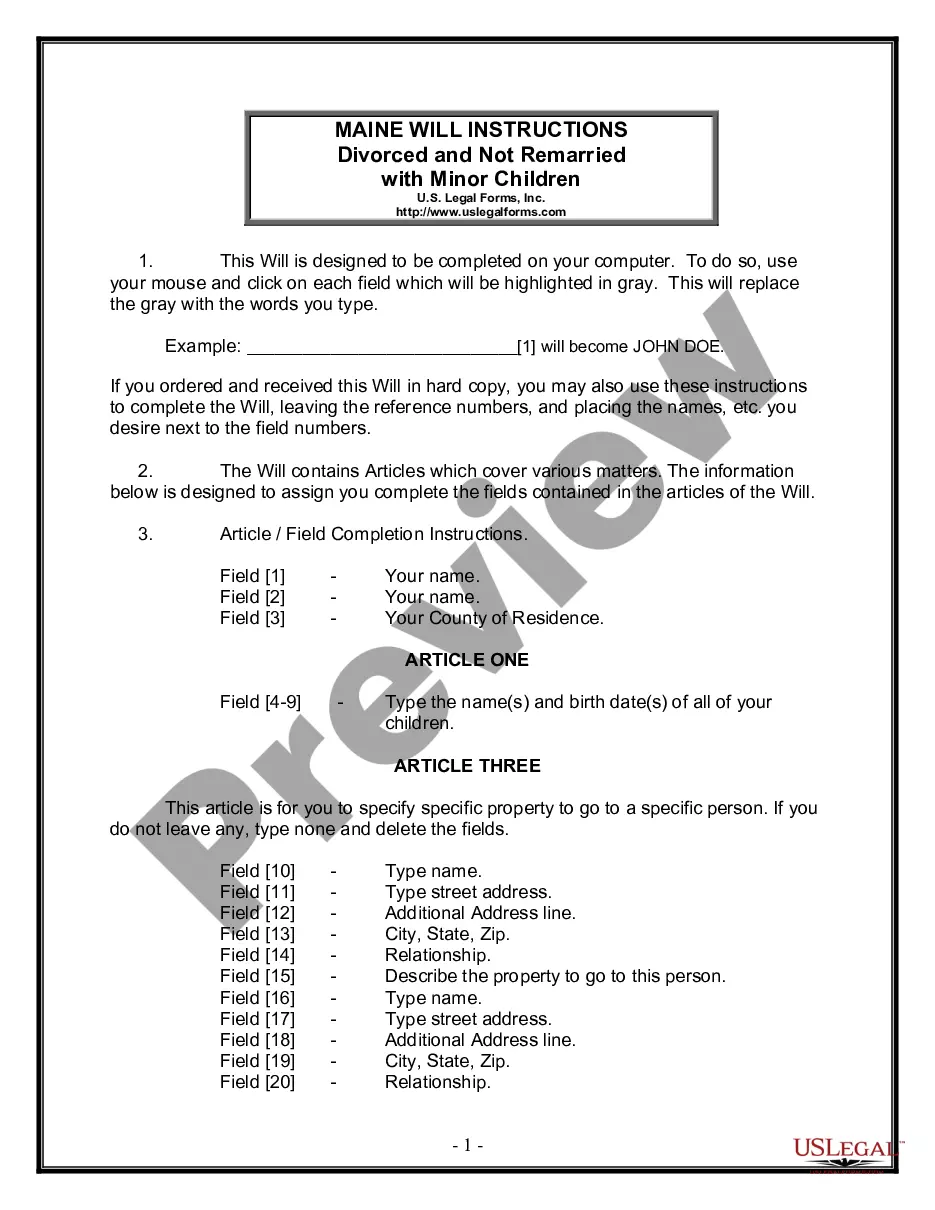
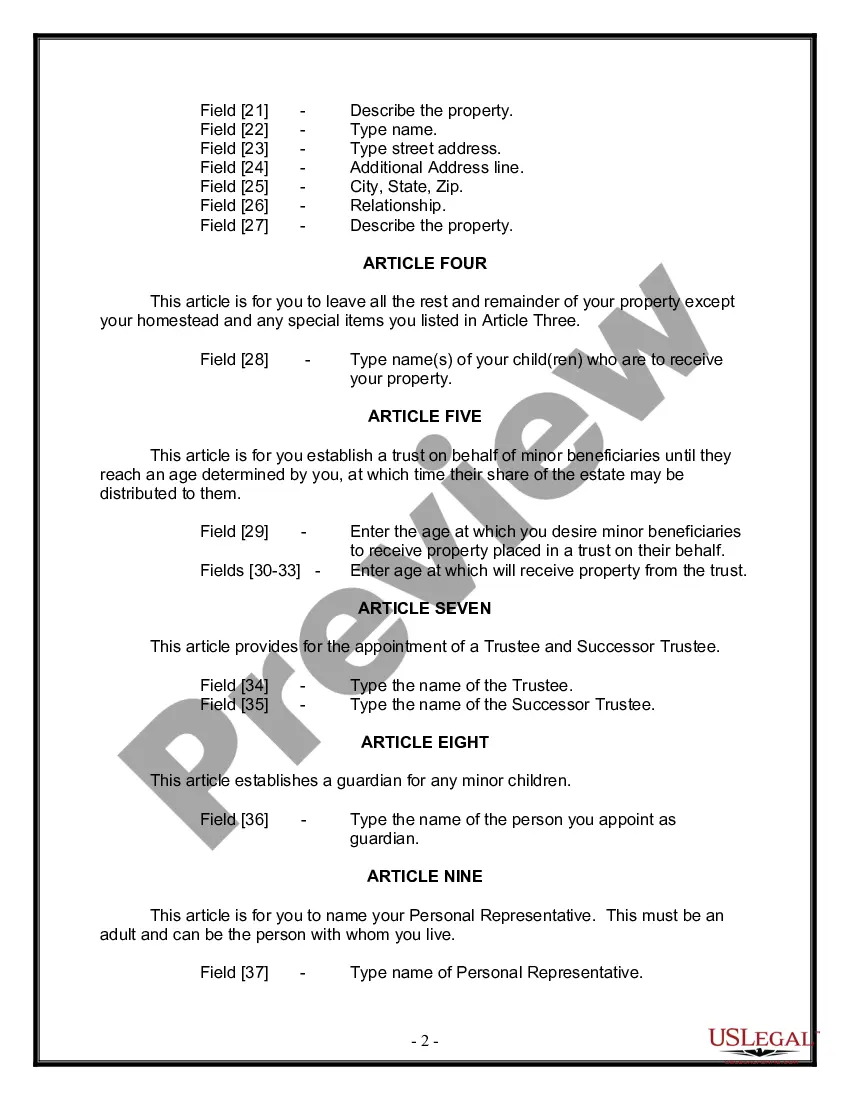
- Identify yourself as the testator and provide your county and state of residence.
- List your minor children and their dates of birth accurately.
- Specify debts, expenses, and how they should be paid after your passing.
- Detail any specific bequests you wish to make regarding your property.
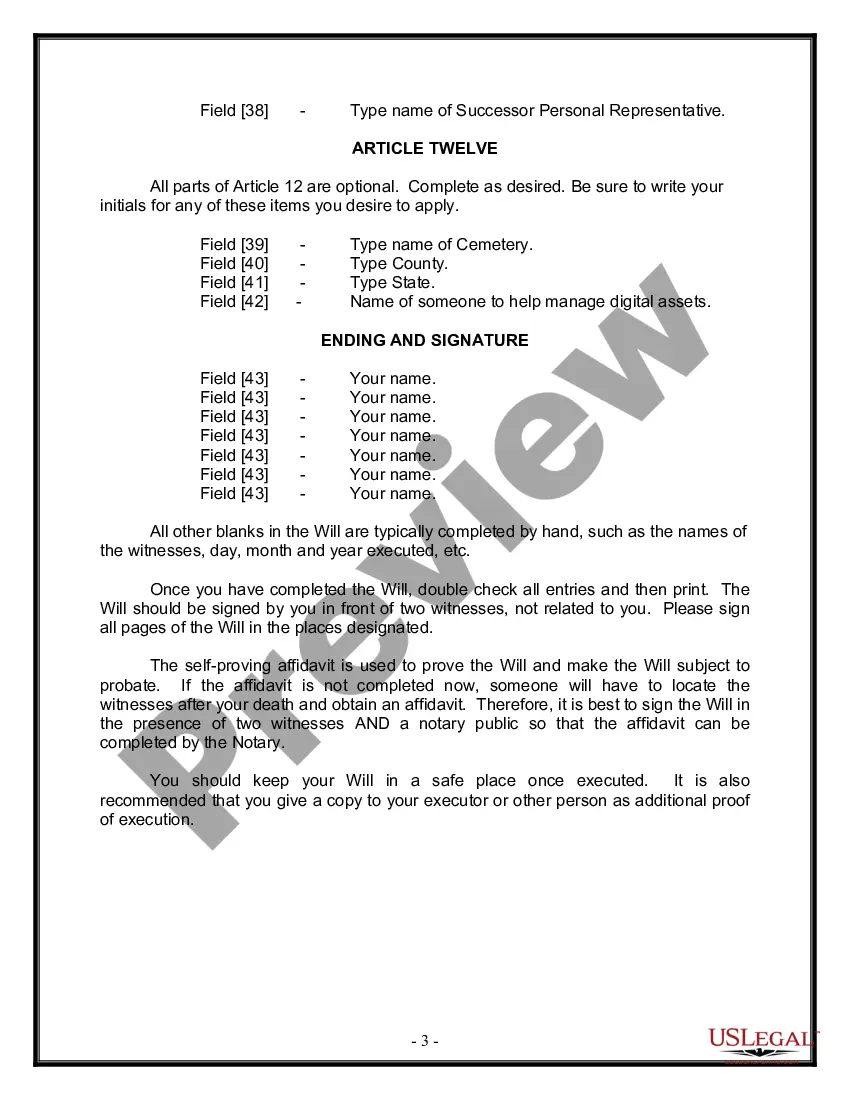
- Appoint a guardian for your minor children and a personal representative for your estate.
- Sign the will in the presence of two witnesses and, if applicable, complete the notarization process.
Does this document require notarization?
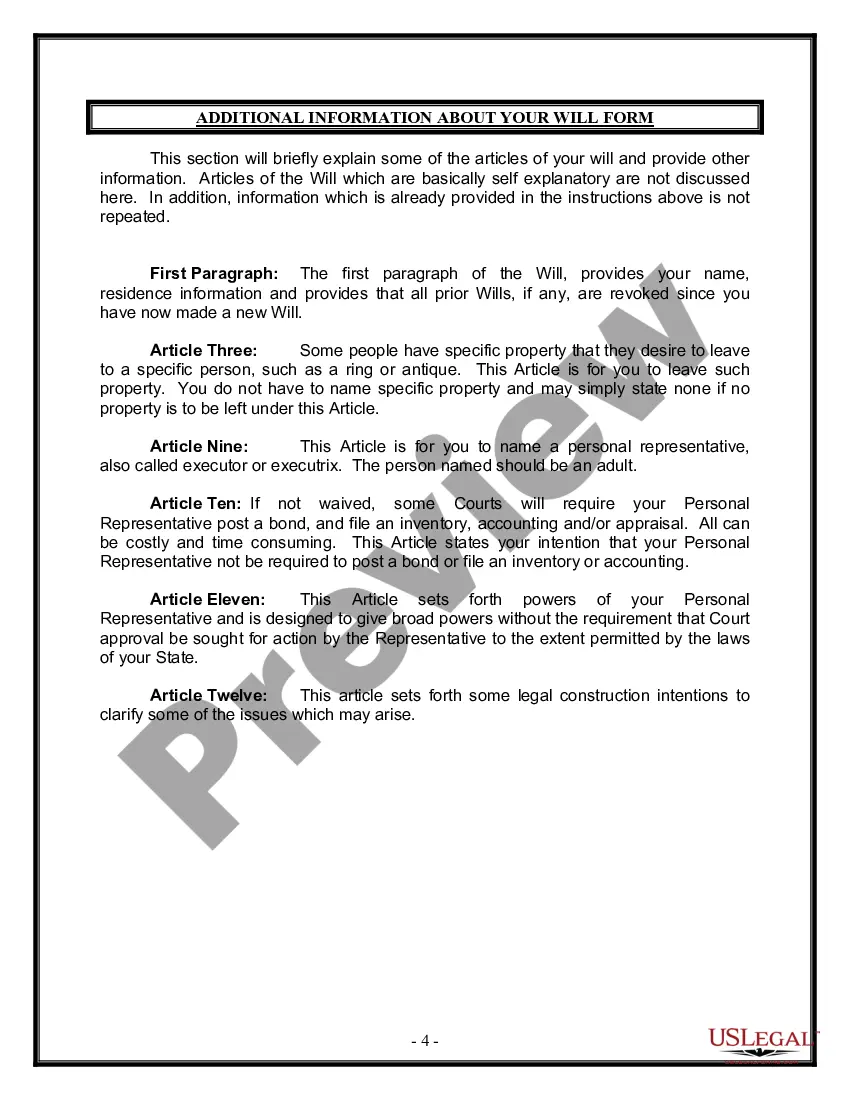
Yes, this form must be notarized to be legally valid in Maine. It is crucial to have a notary public witness your signature to help affirm the authenticity of the will. With US Legal Forms, you can benefit from integrated online notarization services available 24/7, allowing for secure video calls without the need for travel.
Get your form ready online
Our built-in tools help you complete, sign, share, and store your documents in one place.
Make edits, fill in missing information, and update formatting in US Legal Forms—just like you would in MS Word.
Download a copy, print it, send it by email, or mail it via USPS—whatever works best for your next step.
Sign and collect signatures with our SignNow integration. Send to multiple recipients, set reminders, and more. Go Premium to unlock E-Sign.
If this form requires notarization, complete it online through a secure video call—no need to meet a notary in person or wait for an appointment.
We protect your documents and personal data by following strict security and privacy standards.

Make edits, fill in missing information, and update formatting in US Legal Forms—just like you would in MS Word.

Download a copy, print it, send it by email, or mail it via USPS—whatever works best for your next step.

Sign and collect signatures with our SignNow integration. Send to multiple recipients, set reminders, and more. Go Premium to unlock E-Sign.

If this form requires notarization, complete it online through a secure video call—no need to meet a notary in person or wait for an appointment.

We protect your documents and personal data by following strict security and privacy standards.
Typical mistakes to avoid
- Not having the document signed in the presence of the required witnesses.
- Failing to list all minor children or incorrectly stating their information.
- Neglecting to appoint a guardian for the children.
- Leaving out important personal belongings or assets from the will.
- Assuming that verbal agreements about the will are sufficient.
Benefits of using this form online
- Convenience of completing the form from anywhere at any time.
- Editable templates that allow customization to fit personal needs.
- Access to guidance on legal terminology and form requirements.
- Guaranteed compliance with state laws to ensure legitimacy.
- Ability to save and revisit the form as needed before finalizing.
Key takeaways
- This Last Will and Testament is designed for divorced individuals with minor children.
- It outlines critical elements such as property distribution, guardianship, and appointment of an executor.
- Proper completion and notarization of the form ensure its enforceability.
- Using an online service provides a convenient and reliable way to create and manage your Will.
Looking for another form?
Form popularity
FAQ
Loss. As their parents date, develop serious relationships, and eventually decide to remarry, children may be reminded of their original family and of the life they once had with their mother and father.Some children may show signs of increased attachment to the parent who is getting married.
In most states, if you have a will while you are married and then end the marriage, the will is automatically revoked. It's possible to leave an inheritance to your ex, but you have to write a new will that specifically states you are doing so. Disinheriting your spouse.
Community Property in California Inheritance LawsCalifornia is a community property state, which is a policy that only applies to spouses and domestic partners.The only property that doesn't become community property automatically are gifts and inheritances that one spouse receives.
If you do not want your son-in-law or daughter-in-law to get any portion of your child's inheritance, consider creating an on-going descendants trust for their benefit. This is often a sensitive subject for many families.