Maine Tenant Consent to Background and Reference Check
What this document covers
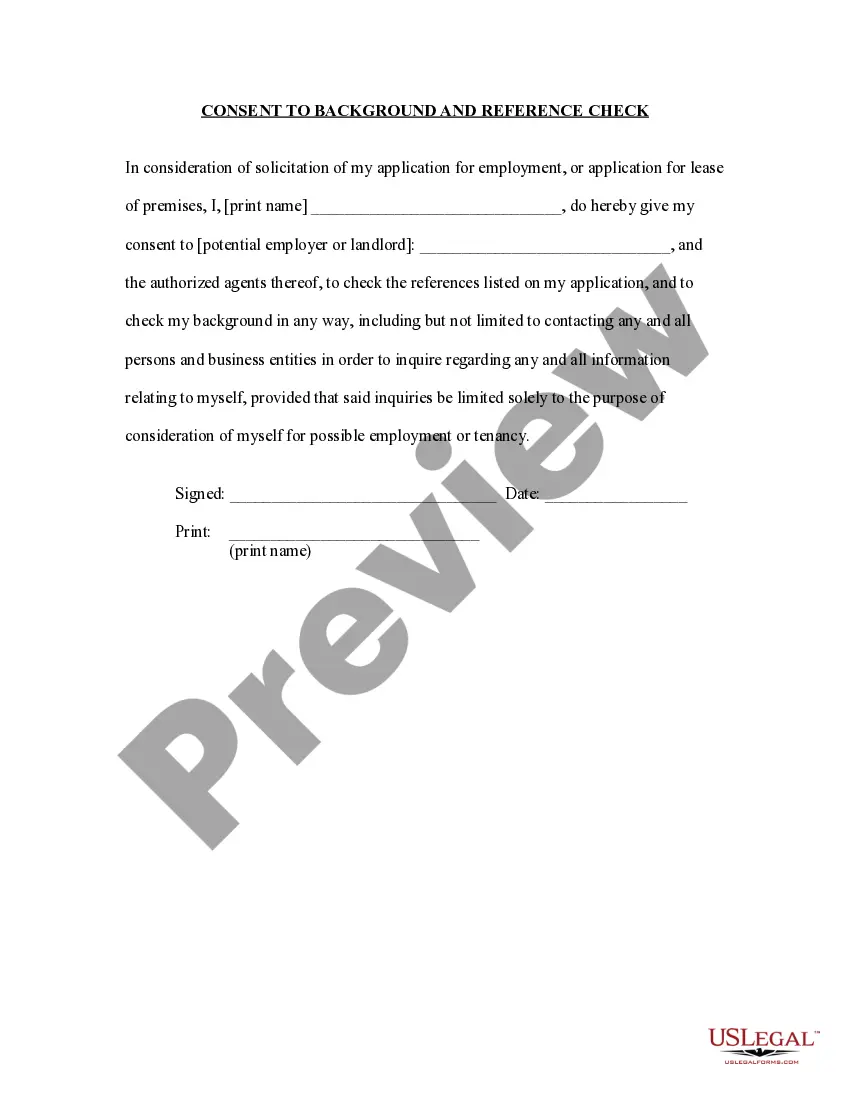
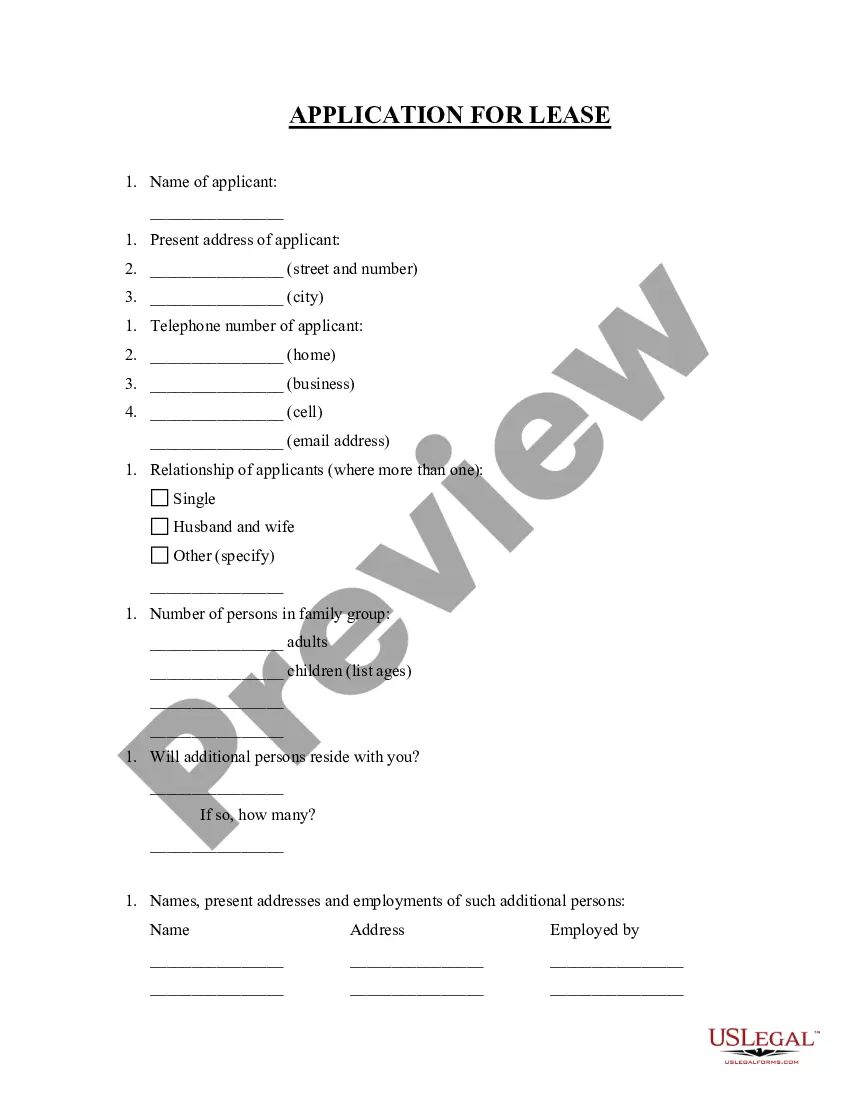
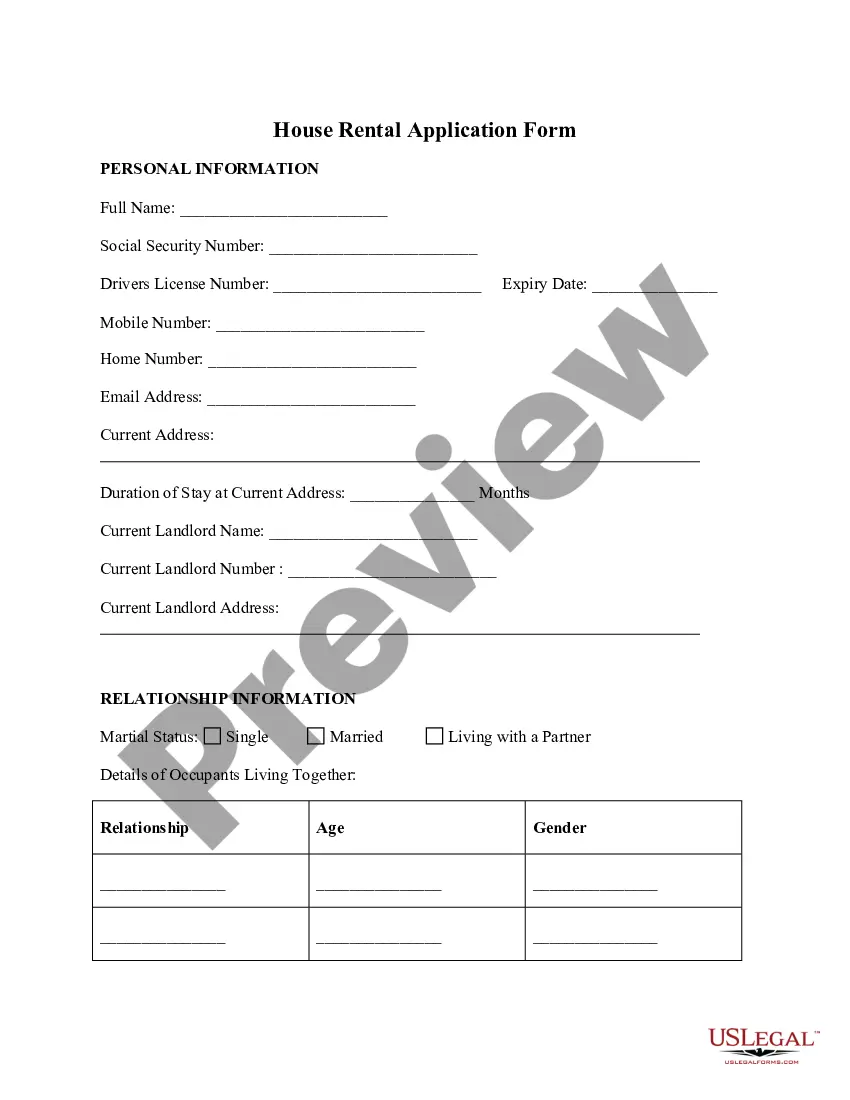
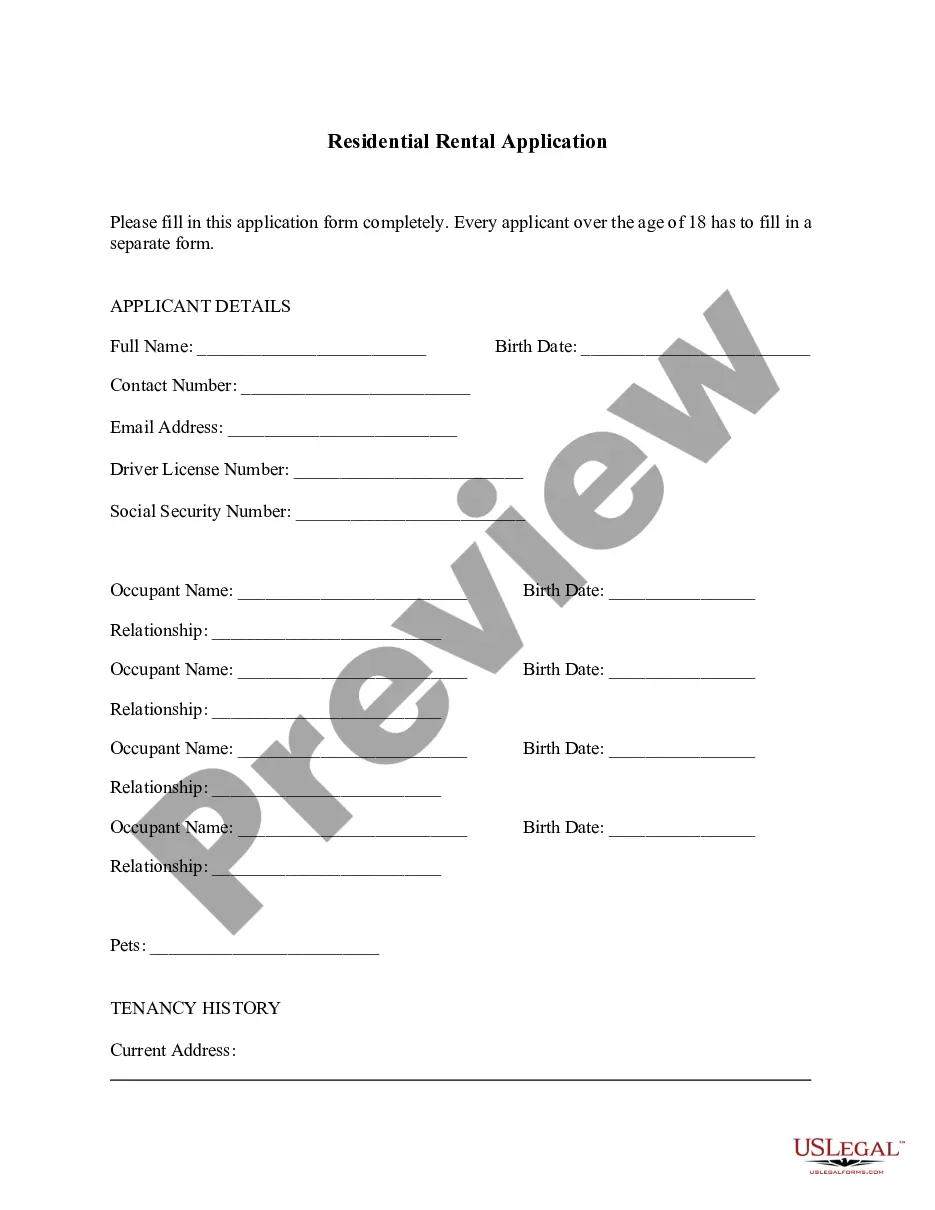
The Tenant Consent to Background and Reference Check is a legal document that allows landlords to conduct background checks on prospective tenants. This form is essential for landlords to verify the rental history, employment status, and criminal background of applicants, ensuring that they find responsible tenants. Unlike other forms that may solely focus on rental agreements, this consent form specifically authorizes the landlord to obtain detailed background information required for tenant screening.
Form components explained
- Tenantâs full name for identification.
- Landlordâs name to whom the consent is given.
- Statement of consent for conducting reference and background checks.
- Signatures of the tenant, along with a date for record-keeping.
- Print name line for clarity and verification of the signee.
When this form is needed
This form is used when a tenant applies for a rental property and the landlord needs to review their background. It is particularly relevant in circumstances where thorough vetting is required to assess the suitability of a tenant. For instance, if you are a landlord evaluating multiple applicants for a lease, using this consent form allows you to obtain necessary information to make an informed decision.
Who needs this form
This form is intended for:
- Landlords seeking to conduct background checks on potential tenants.
- Property management companies responsible for screening tenants.
- Tenants applying for rental properties who need to provide consent for background checks.
Completing this form step by step
- Identify the parties: Enter your full name as the tenant and the landlordâs name.
- Provide consent: Read through the consent statement carefully before agreeing.
- Sign the form: Ensure to sign and date the document to validate your consent.
- Print your name: Clearly print your name where indicated for verification purposes.
Notarization requirements for this form
This form does not typically require notarization unless specified by local law.
Get your form ready online
Our built-in tools help you complete, sign, share, and store your documents in one place.
Make edits, fill in missing information, and update formatting in US Legal Forms—just like you would in MS Word.
Download a copy, print it, send it by email, or mail it via USPS—whatever works best for your next step.
Sign and collect signatures with our SignNow integration. Send to multiple recipients, set reminders, and more. Go Premium to unlock E-Sign.
If this form requires notarization, complete it online through a secure video call—no need to meet a notary in person or wait for an appointment.
We protect your documents and personal data by following strict security and privacy standards.

Make edits, fill in missing information, and update formatting in US Legal Forms—just like you would in MS Word.

Download a copy, print it, send it by email, or mail it via USPS—whatever works best for your next step.

Sign and collect signatures with our SignNow integration. Send to multiple recipients, set reminders, and more. Go Premium to unlock E-Sign.

If this form requires notarization, complete it online through a secure video call—no need to meet a notary in person or wait for an appointment.

We protect your documents and personal data by following strict security and privacy standards.
Typical mistakes to avoid
- Failing to read the consent statement thoroughly before signing.
- Not including the date of signature.
- Entering incorrect names or details for the landlord or tenant.
- Leaving out the printed name, which can cause verification issues.
Why complete this form online
- Immediate access to a legally drafted form that simplifies the rental process.
- Easy download and editing capabilities to personalize for specific needs.
- Reliable and up-to-date forms that comply with legal standards.
Legal use & context
- This form serves as a legal agreement permitting a landlord to conduct background checks, which is enforceable in most jurisdictions.
- It is advisable for landlords to retain a copy of the signed consent for their records.
- The form protects both the landlord's right to screen tenants and the tenant's privacy rights.
Quick recap
- The Tenant Consent to Background and Reference Check is crucial for tenant screening.
- Ensure to fill it out accurately to avoid processing delays.
- Both landlords and tenants have specific responsibilities when using this form.
Looking for another form?
Form popularity
FAQ
A background check authorization form is a release given to allow someone else to perform credit and criminal background checks. A person that is agreeing to have their information looked-up must provide consent to the requesting party.The requestor, at their option, may ask for additional information.
The form used for any national security investigation is the SF-86 (Questionnaire for National Security Positions).
There are plenty of reasons a person may not pass a background check, including criminal history, education discrepancies, poor credit history, damaged driving record, false employment history, and a failed drug test.
Yep! When you get your instant tenant background check free, you'll see a button at the bottom of the free screening report to request a rental application and/or other tenant screening reports. All you need to do is enter their email address and we'll send them a request to complete the rental application.
Do I have to consent to an employer's request for a background check? An employer cannot force you to sign a consent form. You can always refuse to give permission. However, if the employer is entitled to the information it seeks, the employer is also entitled to take you out of the running if you won't consent.
Request an Application. Start by having every prospective tenant complete an application. Run a Credit Check. Run a Background Check. Contact the Previous Landlords. Contact the Tenant's Employer. Interview the Tenant.
A compliant FCRA authorization form is an acknowledgement that a pre-employment background check will be conducted. It can be presented as a self-contained document or jointly with an FCRA disclosure form.
Create a high quality document online now! The FBI criminal background check form, otherwise known as 'Form I-783', allows an individual to obtain a certificate of their criminal history.
To deny a tenant application, you need to let the prospective tenant know that you will not be selecting their application by sending them an adverse action letter. This letter informs the tenant why they are being denied, and if there is any way that their application can be reconsidered.