Maine Notice of Default in Payment of Rent as Warning Prior to Demand to Pay or Terminate for Nonresidential or Commercial Property
Overview of this form
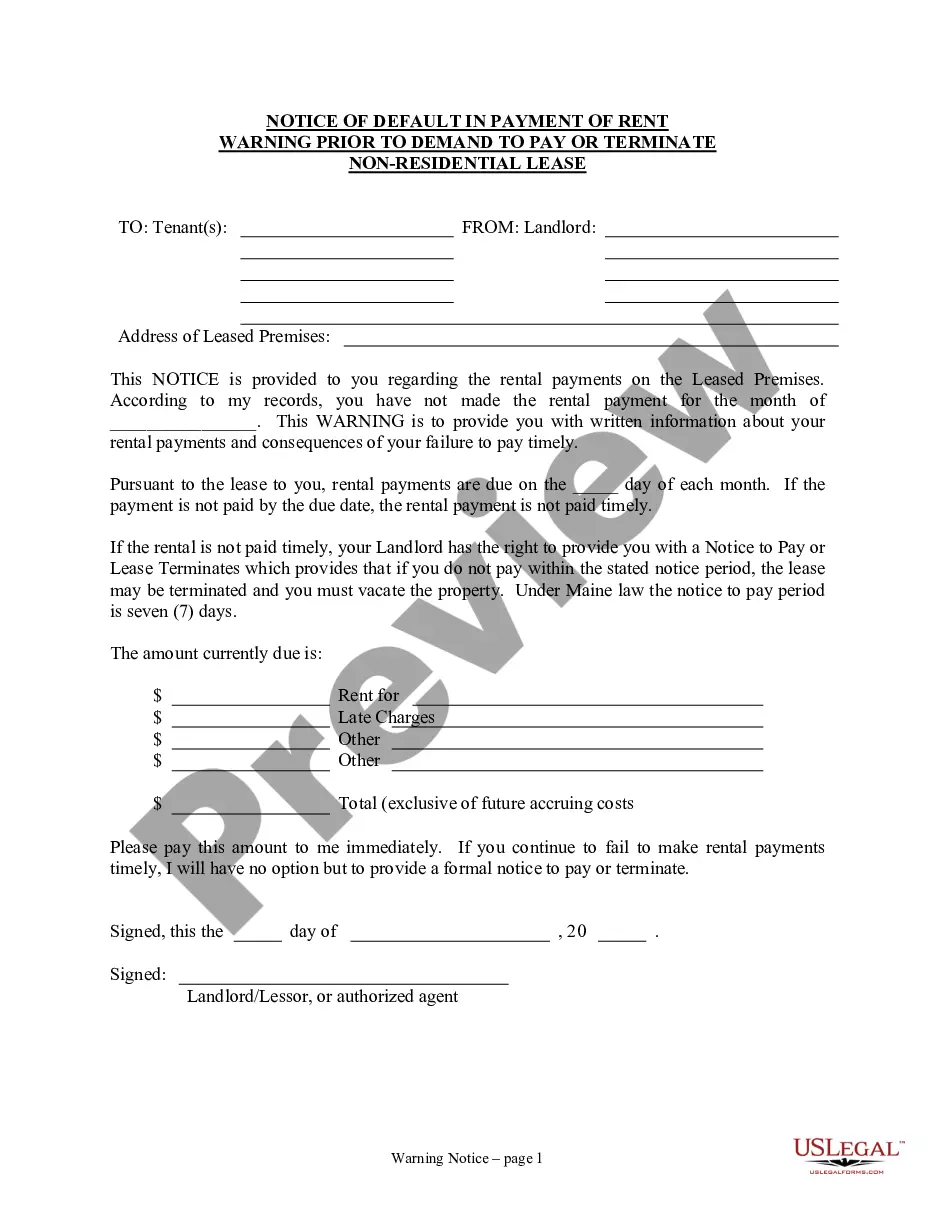
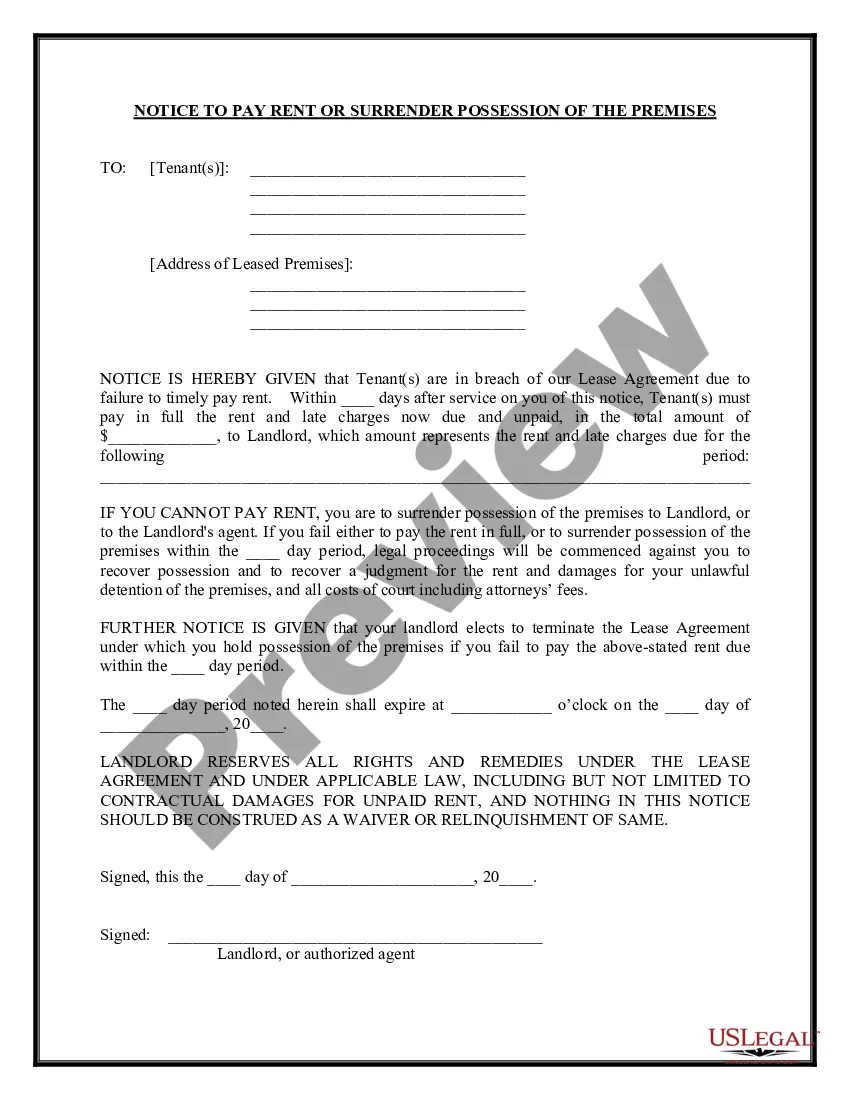
This Notice of Default in Payment of Rent as Warning Prior to Demand to Pay or Terminate for Nonresidential or Commercial Property is a legal document used by landlords to notify tenants of overdue rent payments. This form serves as a warning prior to issuing a formal pay or terminate notice. Unlike other notification forms, this one specifically addresses nonresidential or commercial leases, making its purpose clear for both parties involved.
Main sections of this form
- Identification of landlord and tenant, including addresses.
- Details of the leased premises involved.
- Statement of overdue rent, including the amount due and any late charges.
- Explanation of the consequences of failing to pay rent on time.
- Signature section for the landlord or authorized agent.
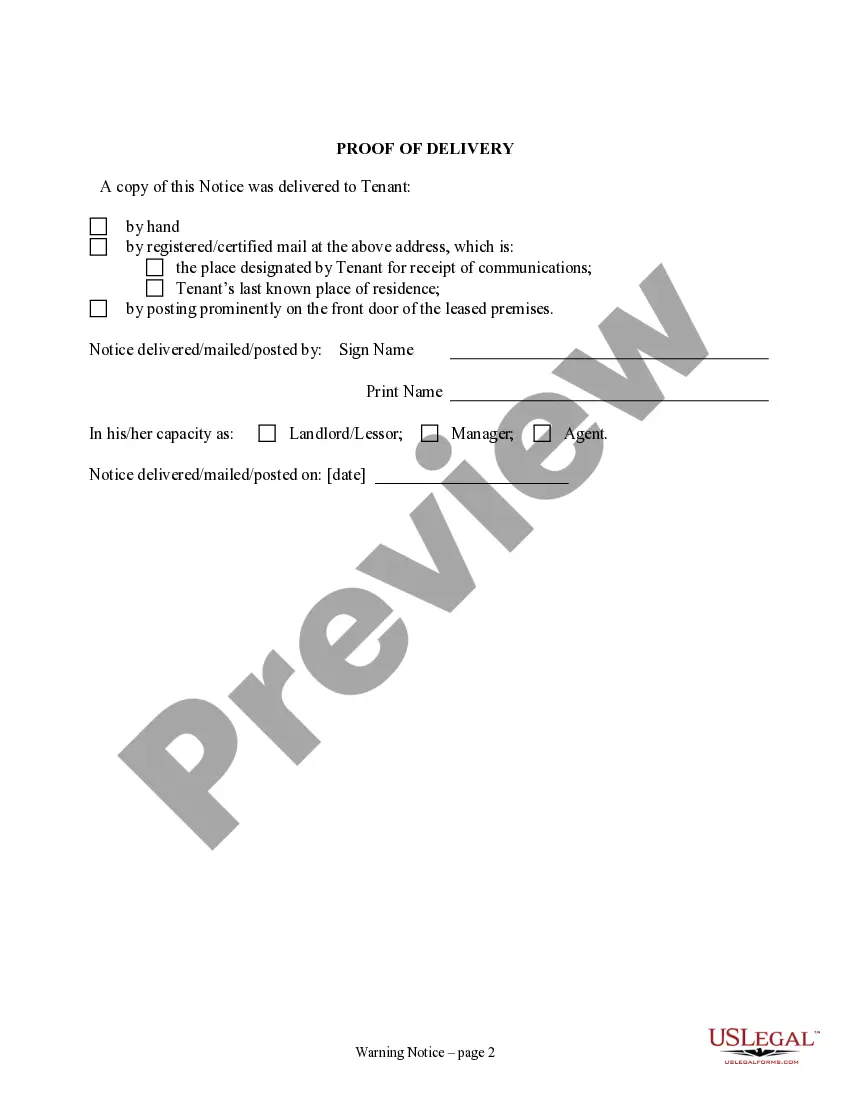
- Proof of delivery options for notifying the tenant.
Situations where this form applies
This form should be used when a landlord needs to formally inform a tenant that their rent payment is overdue. It serves to remind the tenant of the payment terms outlined in their lease and to indicate the landlord's right to pursue further action, such as terminating the lease, if payments are not made promptly. This is especially important in commercial leasing scenarios where timely rent payments are crucial for business operations.
Intended users of this form
- Landlords of nonresidential or commercial properties.
- Property managers acting on behalf of landlords.
- Real estate agents managing leases for commercial properties.
Steps to complete this form
- Identify and enter the names and addresses of both the landlord and tenant.
- Specify the address of the leased premises.
- Fill in the month for which the rent payment is overdue.
- Indicate the due date and the total amount owed, including any late charges.
- Sign the form and include the date of signing.
- Ensure proper delivery to the tenant by one of the accepted methods outlined in the form.
Does this form need to be notarized?
This form usually doesn’t need to be notarized. However, local laws or specific transactions may require it. Our online notarization service, powered by Notarize, lets you complete it remotely through a secure video session, available 24/7.
Get your form ready online
Our built-in tools help you complete, sign, share, and store your documents in one place.
Make edits, fill in missing information, and update formatting in US Legal Forms—just like you would in MS Word.
Download a copy, print it, send it by email, or mail it via USPS—whatever works best for your next step.
Sign and collect signatures with our SignNow integration. Send to multiple recipients, set reminders, and more. Go Premium to unlock E-Sign.
If this form requires notarization, complete it online through a secure video call—no need to meet a notary in person or wait for an appointment.
We protect your documents and personal data by following strict security and privacy standards.

Make edits, fill in missing information, and update formatting in US Legal Forms—just like you would in MS Word.

Download a copy, print it, send it by email, or mail it via USPS—whatever works best for your next step.

Sign and collect signatures with our SignNow integration. Send to multiple recipients, set reminders, and more. Go Premium to unlock E-Sign.

If this form requires notarization, complete it online through a secure video call—no need to meet a notary in person or wait for an appointment.

We protect your documents and personal data by following strict security and privacy standards.
Common mistakes to avoid
- Failing to provide the correct rental amount due.
- Not specifying the exact overdue month clearly.
- Neglecting to keep a copy of the notice for records.
- Using incorrect or outdated addresses for the tenant.
- Omitting the proof of delivery section.
Why complete this form online
- Easy to download and customize for your specific needs.
- Access to legal templates drafted by licensed attorneys, ensuring reliability.
- Convenience of online editing to suit the specific details of your lease.
- Secure storage options for your legal documents.
Legal use & context
This notice serves as a crucial initial step in the eviction process for non-payment of rent. It helps establish clear communication regarding payment obligations and can be used as evidence in court if further action is required.
What to keep in mind
- The Notice of Default is a crucial first step in addressing late rent payments.
- Completing the form accurately helps protect landlords' rights under the lease.
- Timely delivery of this notice is essential to ensure legal compliance.
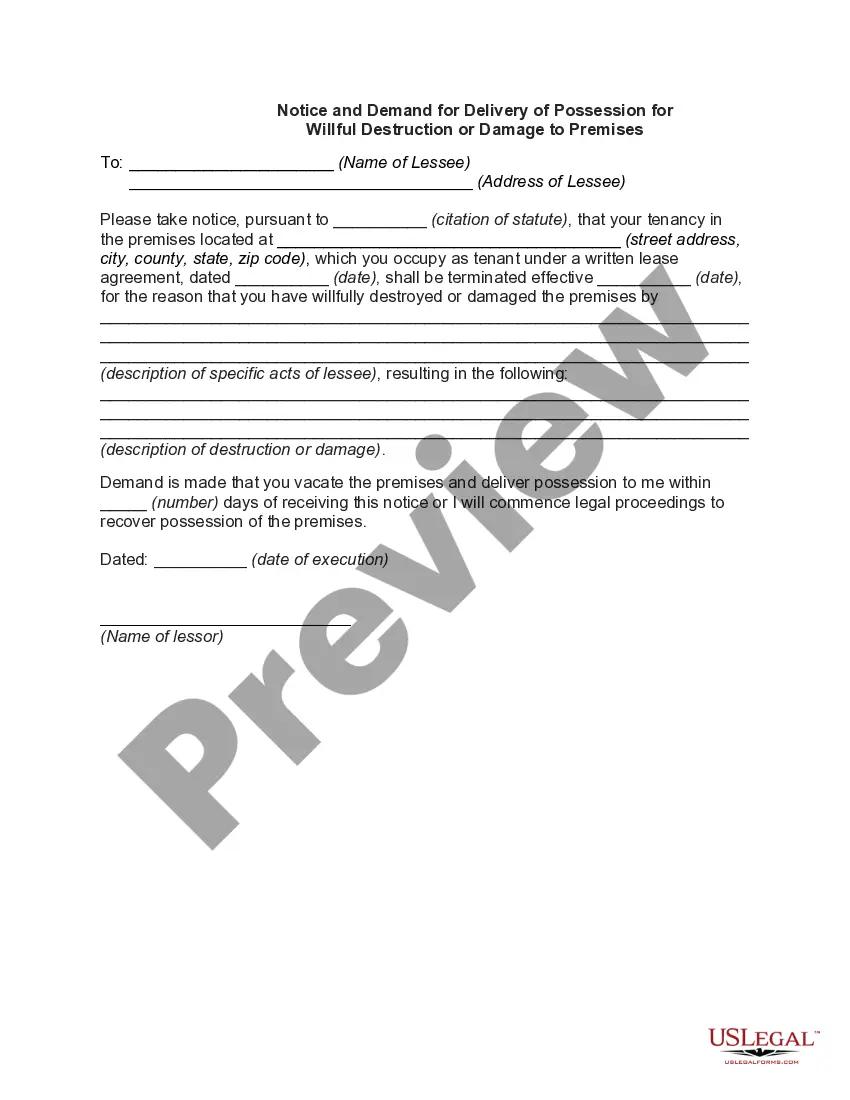
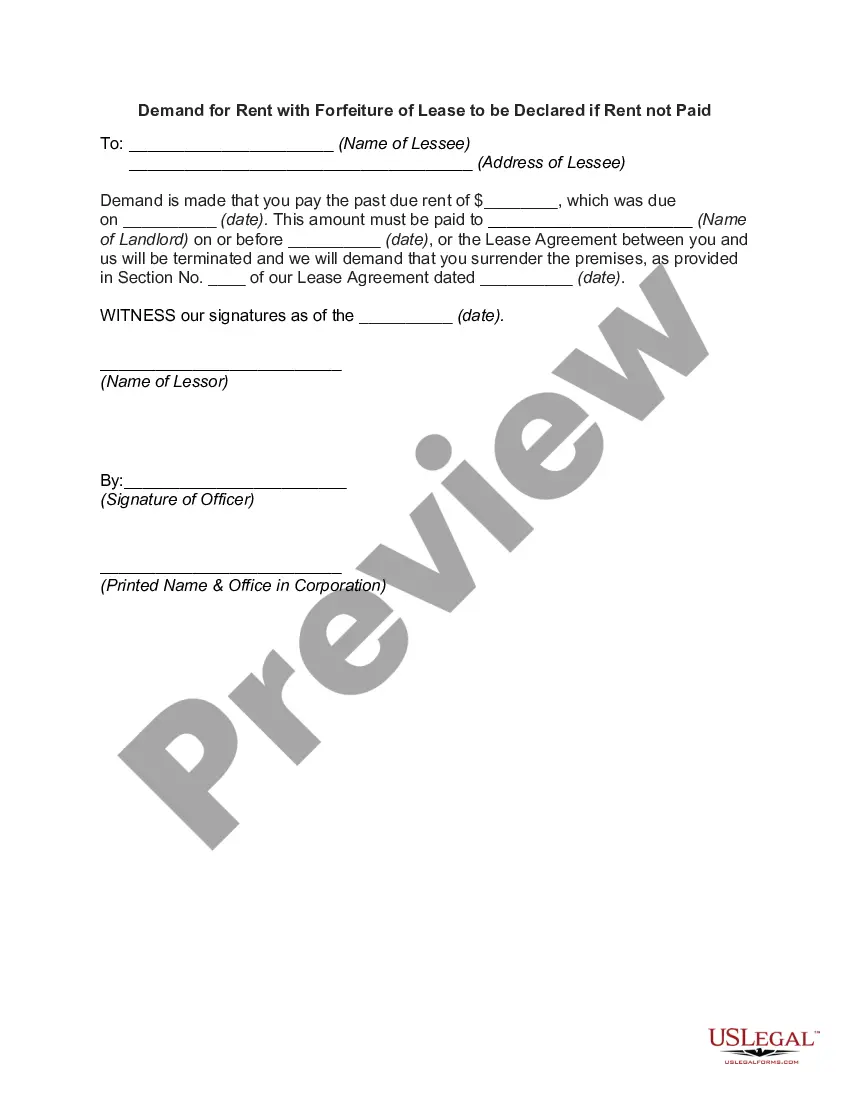
Looking for another form?

Form popularity
FAQ
New rental laws in Maine aim to enhance tenant protections and clarify landlord responsibilities. These laws include updates to eviction processes and requirements for notices, such as the Maine Notice of Default in Payment of Rent as Warning Prior to Demand to Pay or Terminate for Nonresidential or Commercial Property. Staying informed about these changes is vital for both tenants and landlords to navigate the rental landscape successfully and ensure compliance with state laws.
A rent arrears warning notice informs tenants that they are behind on rent payments. It typically states the amount due and provides a deadline for payment, referencing the Maine Notice of Default in Payment of Rent as Warning Prior to Demand to Pay or Terminate for Nonresidential or Commercial Property. This notice serves as an important step in the eviction process, ensuring tenants understand their obligations and the actions that may follow non-payment.
In Maine, landlords can increase rent, but they must comply with specific regulations. Generally, they must provide tenants with written notice at least 45 days in advance of the increase. It's essential for landlords to understand how the Maine Notice of Default in Payment of Rent as Warning Prior to Demand to Pay or Terminate for Nonresidential or Commercial Property interacts with rent increases, ensuring compliance with both notice requirements and rental agreements.
To write an effective warning notice to a tenant, start with a clear statement of the issue, citing the specific parts of the lease agreement. Referencing the Maine Notice of Default in Payment of Rent as Warning Prior to Demand to Pay or Terminate for Nonresidential or Commercial Property can guide the tone and urgency of the notice. Be sure to state the amount owed, the deadline for payment, and the potential consequences of non-compliance, ensuring the notice reflects professionalism and clarity.
In Maine, the minimum time for an eviction notice depends on the specific reason for the eviction. For nonpayment of rent under the Maine Notice of Default in Payment of Rent as Warning Prior to Demand to Pay or Terminate for Nonresidential or Commercial Property, landlords typically must provide a seven-day notice. This gives tenants a brief opportunity to address the issue before further actions are taken, ensuring that both parties have a chance to find a resolution.
The new 3 times the rent rule allows landlords to demand payment for rents that are three months past due before they can initiate eviction proceedings under the Maine Notice of Default in Payment of Rent as Warning Prior to Demand to Pay or Terminate for Nonresidential or Commercial Property. This rule provides tenants a clearer timeline for addressing unpaid rent, aiming for better resolution without immediate eviction. Understanding this rule is crucial for both landlords and tenants, as it creates a structured approach to handling rent payments.
A lease default notice is a written notification that a tenant has failed to adhere to the lease terms, typically regarding rent payment. This notice is often the first step a landlord must take before initiating an eviction process. Understanding the Maine Notice of Default in Payment of Rent as Warning Prior to Demand to Pay or Terminate for Nonresidential or Commercial Property can help you respond appropriately to such notices.
Defaulting on your rent means failing to pay your agreed-upon rent amount by the due date. It can have serious implications for your housing stability, potentially leading to eviction procedures. Being informed about the Maine Notice of Default in Payment of Rent as Warning Prior to Demand to Pay or Terminate for Nonresidential or Commercial Property is essential for managing your rental obligations.
Defaulting on a lease indicates a tenant's failure to comply with the lease terms, such as timely rent payment or adhering to property rules. This can lead to penalties, including eviction. Understanding the implications of the Maine Notice of Default in Payment of Rent as Warning Prior to Demand to Pay or Terminate for Nonresidential or Commercial Property will prepare you for possible outcomes.
As a tenant without a lease in Maine, you still hold certain rights under state law. You have the right to a safe and habitable living environment, and landlords must follow legal procedures for eviction if you fail to pay rent. Learning about the Maine Notice of Default in Payment of Rent as Warning Prior to Demand to Pay or Terminate for Nonresidential or Commercial Property can help protect your rights during any disputes.