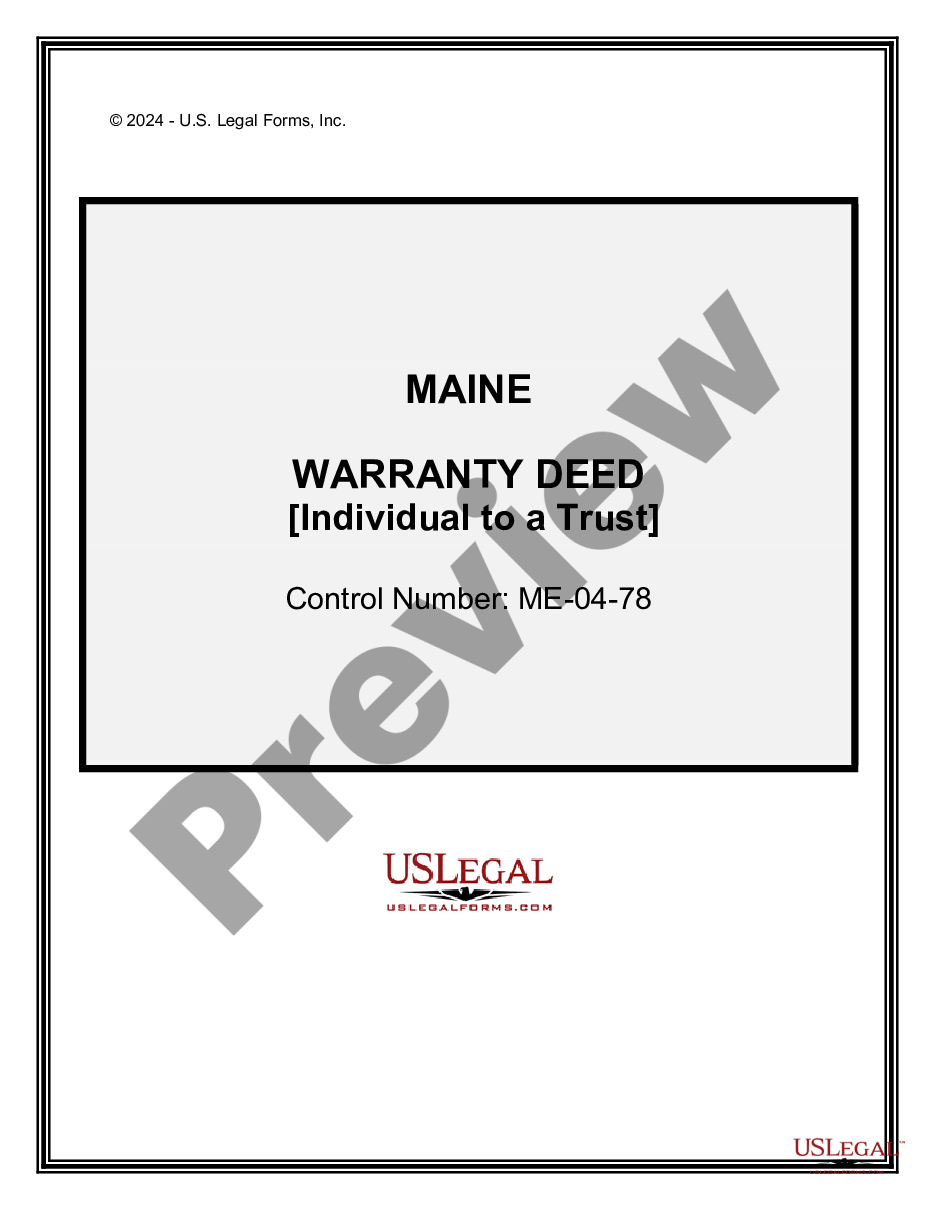
Maine Warranty Deed - Individual to a Trust
About this form
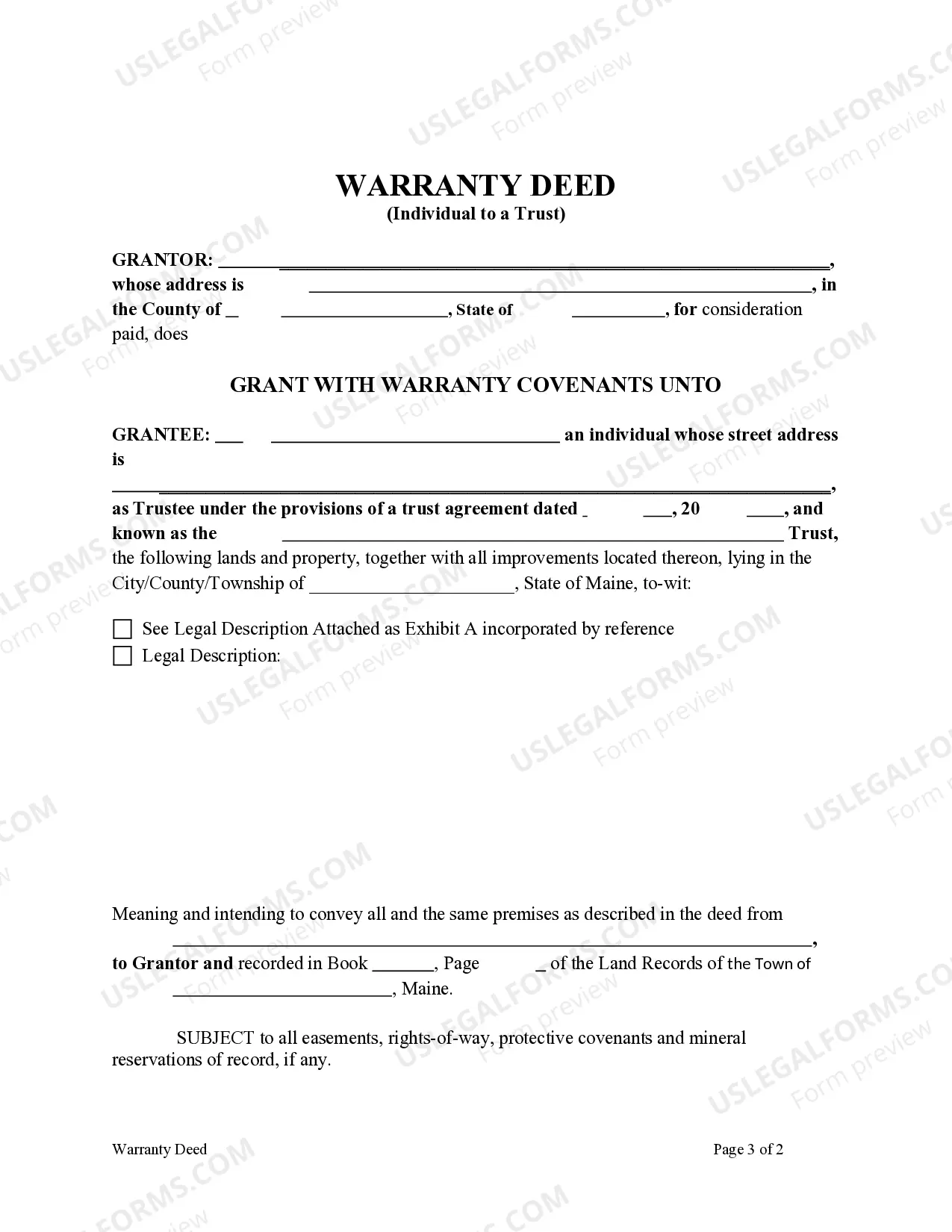
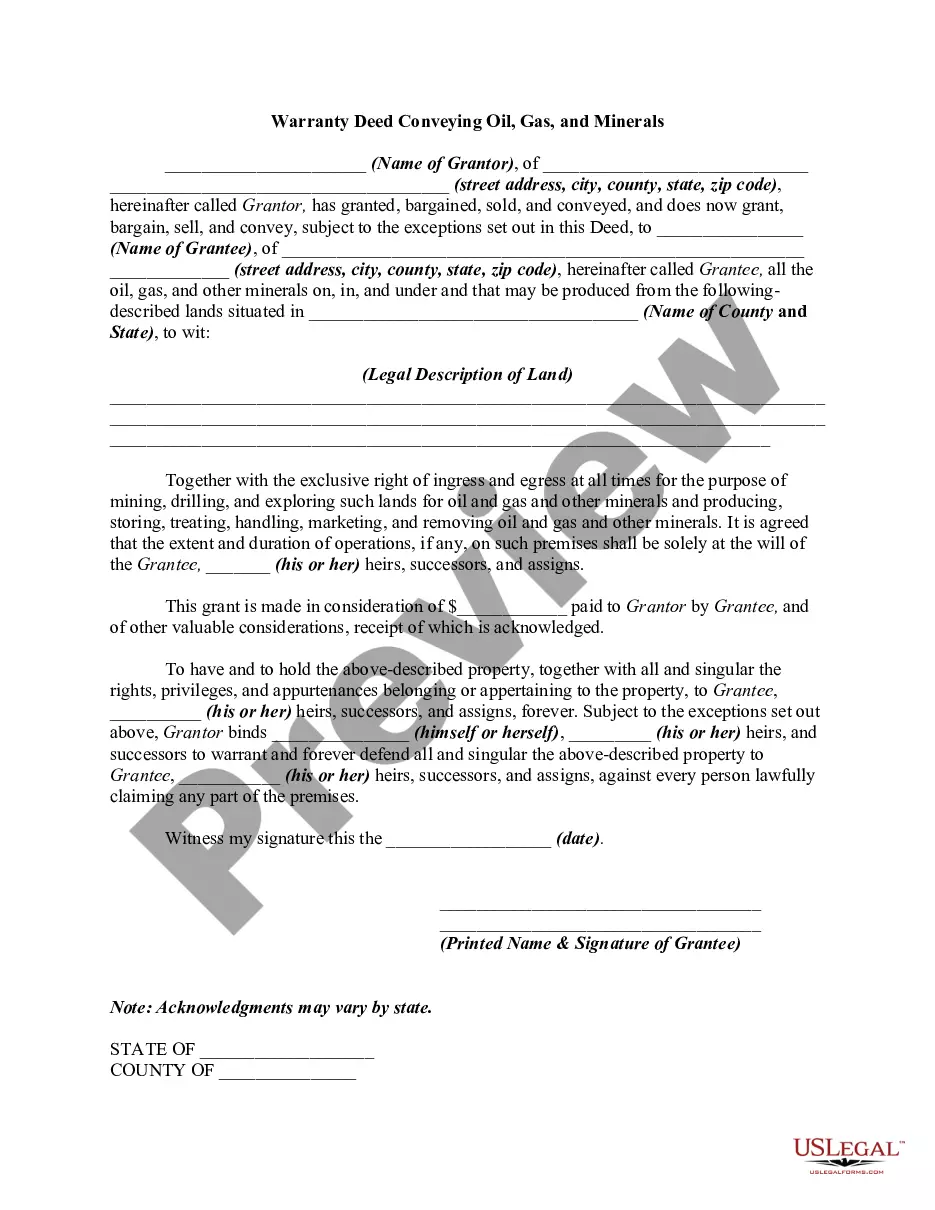
This Warranty Deed form allows an individual (Grantor) to transfer ownership of property to a Trust (Grantee). It provides legal assurances regarding the propertyâs title and guarantees that the Grantor holds the right to convey this property. Unlike other types of deeds, such as quitclaim deeds, a Warranty Deed offers a stronger legal protection to the Grantee by including warranties against future claims on the property.
Key components of this form
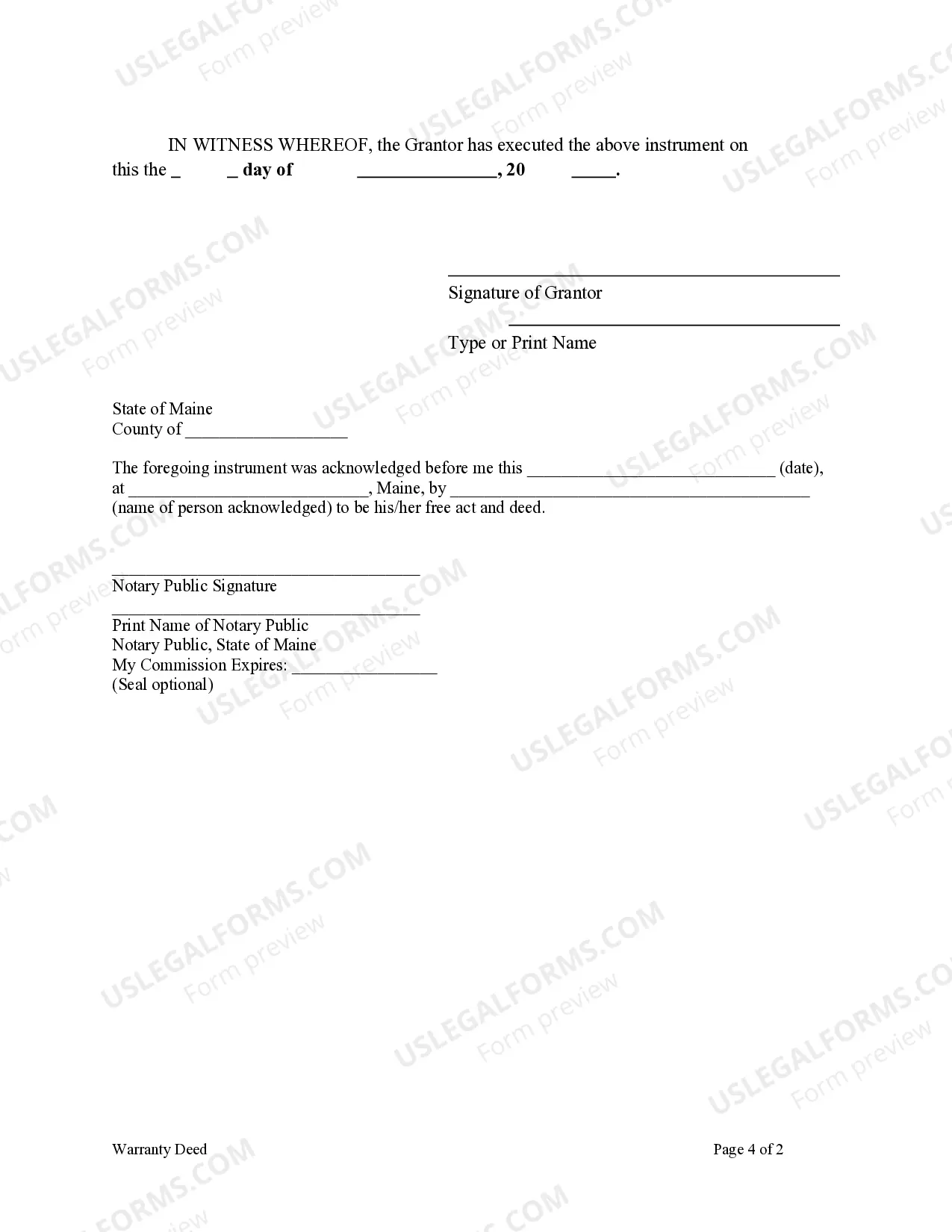
- Grantor and Grantee information: Names and contact details for both parties.
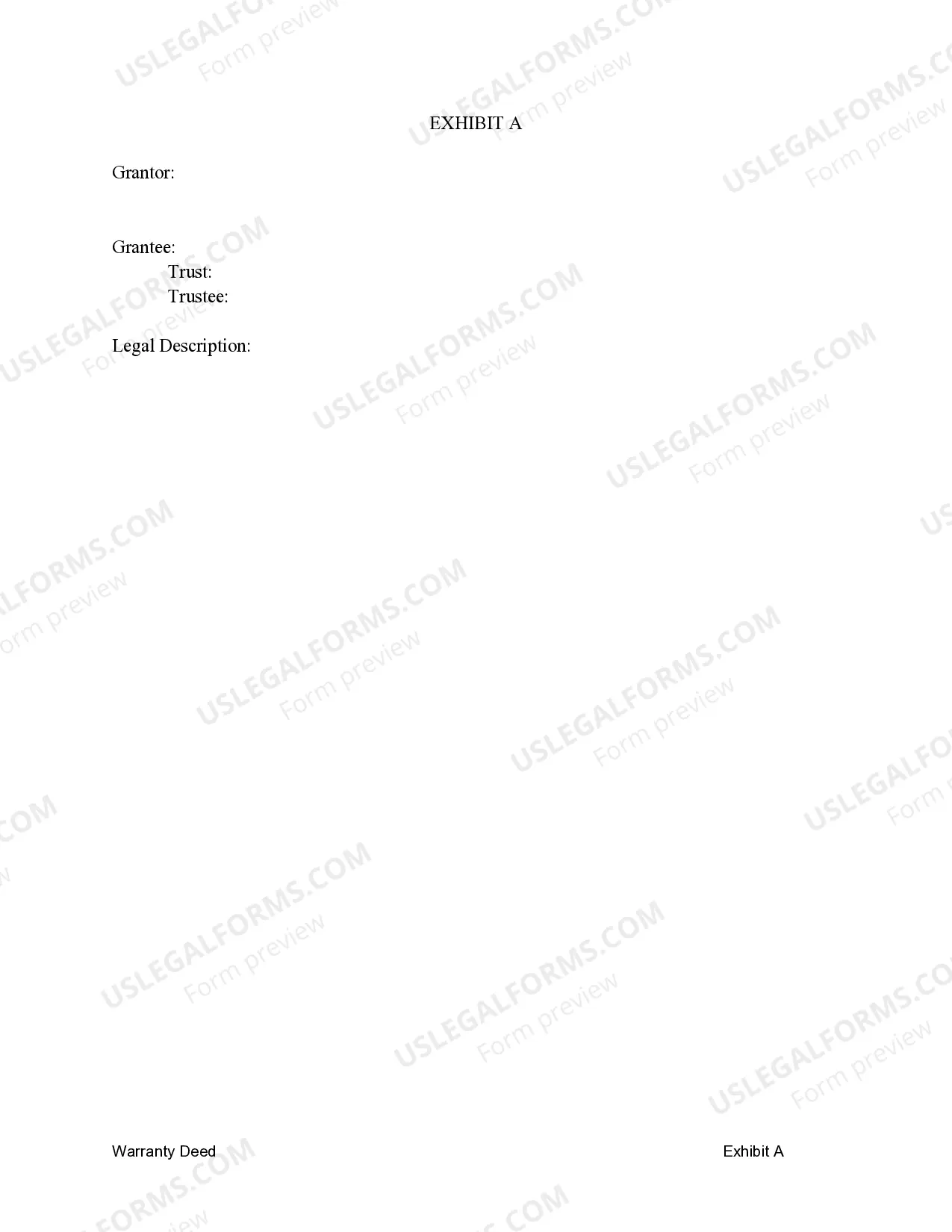
- Legal description of the property: A detailed outline of the property being transferred.
- Warranties: Clauses affirming the Grantor's ownership and freedom from liens.
- Signatures: Signatures of the Grantor, and possibly a witness or notary.
- Exhibit A: Attachment for the legal description of the property.


Situations where this form applies
This Warranty Deed is commonly used when an individual wishes to transfer real estate into a Trust. This might occur during estate planning, when setting up a living trust, or after a significant life event, such as marriage or the birth of a child, where the individual wants to ensure the property is managed according to the Trust's guidelines.
Intended users of this form
This form is intended for:
- Individuals transferring real estate to a Trust.
- Trustees managing assets within a Trust.
- Anyone seeking to provide legal protection on property ownership.
Steps to complete this form
- Identify the parties: Enter the names and addresses of the Grantor and the Trust.
- Specify the property: Provide a detailed legal description of the property being transferred.
- Fill out the warranties: Complete the sections outlining the Grantor's assurances regarding the title.
- Sign the document: The Grantor must sign the deed in the presence of a notary or witness if required.
- Attach Exhibit A: Include the attachment with the property description.
Does this form need to be notarized?
Yes, this form must be notarized to be legally valid. U.S. Legal Forms provides integrated online notarization, available 24/7 via a secure video call, allowing you to complete the process without traveling.
Get your form ready online
Our built-in tools help you complete, sign, share, and store your documents in one place.
Make edits, fill in missing information, and update formatting in US Legal Forms—just like you would in MS Word.
Download a copy, print it, send it by email, or mail it via USPS—whatever works best for your next step.
Sign and collect signatures with our SignNow integration. Send to multiple recipients, set reminders, and more. Go Premium to unlock E-Sign.
If this form requires notarization, complete it online through a secure video call—no need to meet a notary in person or wait for an appointment.
We protect your documents and personal data by following strict security and privacy standards.

Make edits, fill in missing information, and update formatting in US Legal Forms—just like you would in MS Word.

Download a copy, print it, send it by email, or mail it via USPS—whatever works best for your next step.

Sign and collect signatures with our SignNow integration. Send to multiple recipients, set reminders, and more. Go Premium to unlock E-Sign.

If this form requires notarization, complete it online through a secure video call—no need to meet a notary in person or wait for an appointment.

We protect your documents and personal data by following strict security and privacy standards.
Mistakes to watch out for
- Failing to provide a complete legal description of the property.
- Not obtaining the required signatures or notarization.
- Omitting to attach Exhibit A with the necessary details.
- Using incorrect information for the Trust name or Grantor details.
Benefits of completing this form online
- Convenient access: Download legally compliant forms anytime, anywhere.
- Editability: Easily fill out forms on your computer, reducing errors.
- Comprehensive support: Forms are designed to comply with legal standards.
Using a Warranty Deed is an important step in property transactions, ensuring legal ownership is transferred clearly. This form can help prevent future claims against the title and establish the legitimacy of the transfer. However, it is essential to confirm compliance with all local regulations.
Summary of main points
- The Warranty Deed enables the transfer of property from an individual to a Trust.
- It includes strong legal provisions that protect the Grantee's interest.
- Proper completion and notarization are essential for the deed's validity.
Looking for another form?
Form popularity
FAQ
Locate your current deed. Use the proper deed. Check with your title insurance company and lender. Prepare a new deed. Sign in the presence of a notary. Record the deed in the county clerk's office. Locate the deed that's in trust. Use the proper deed.
Transferring Real Property to a Trust You can transfer your home (or any real property) to the trust with a deed, a document that transfers ownership to the trust. A quitclaim deed is the most common and simplest method (and one you can do yourself).
How To Establish A Trust. You will need to retain an estate attorney to draft and execute your trust document. For a simple revocable or irrevocable trust, it may cost anywhere from $2,000 $5,000.
Retrieve your original deed. Get the appropriate deed form. Draft the deed. Sign the deed before a notary. Record the deed with the county recorder. Obtain the new original deed.
A warranty deed protects property owners from future claims that someone else actually owns a portion (or all) of their property, while trustee deeds protect lenders when borrowers default on their mortgage loans.
The act of transferring a property that is owned by an individual into a trust, will see the trust liable to pay stamp duty on acquisition of the asset. Additionally, the individual who is transferring ownership to the trust, will be liable to pay capital gains tax on the disposal of the asset.
A trustee deed offers no such warranties about the title.
Take the signed and notarized quitclaim deed to your county recorder's office to complete the transfer of title into your revocable trust. Check in two to four weeks to ensure it has been recorded. Include the address of the property on the asset list addendum attached to your trust.
No. And unless the deed identifies the trust as an owner, then father is the owner of an interest. It is a common mistake to set up a trust and then fail to deed property into the trust. However, you cannot force him to make the changes you are...