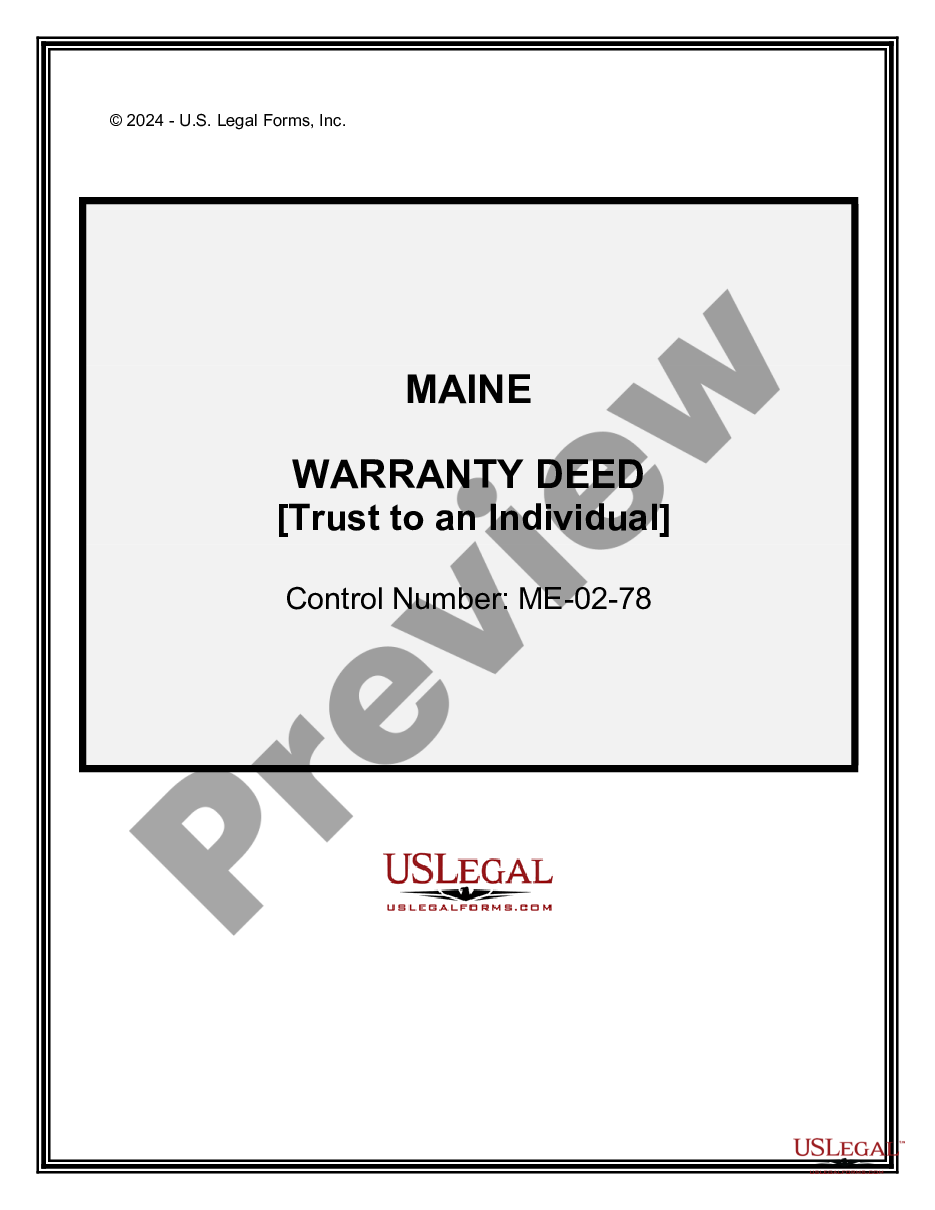
Maine Warranty Deed from a Trust to an Individual

What is this form?
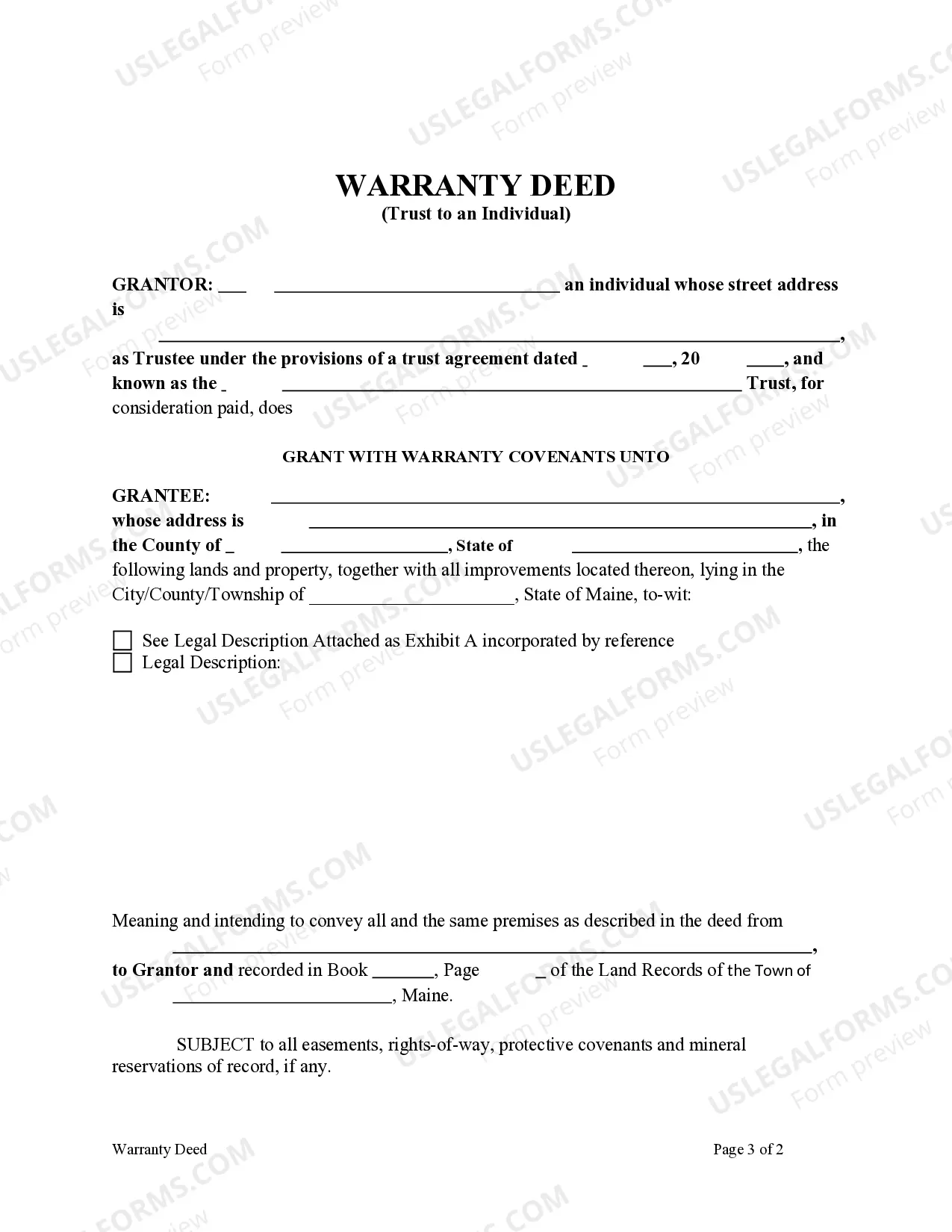
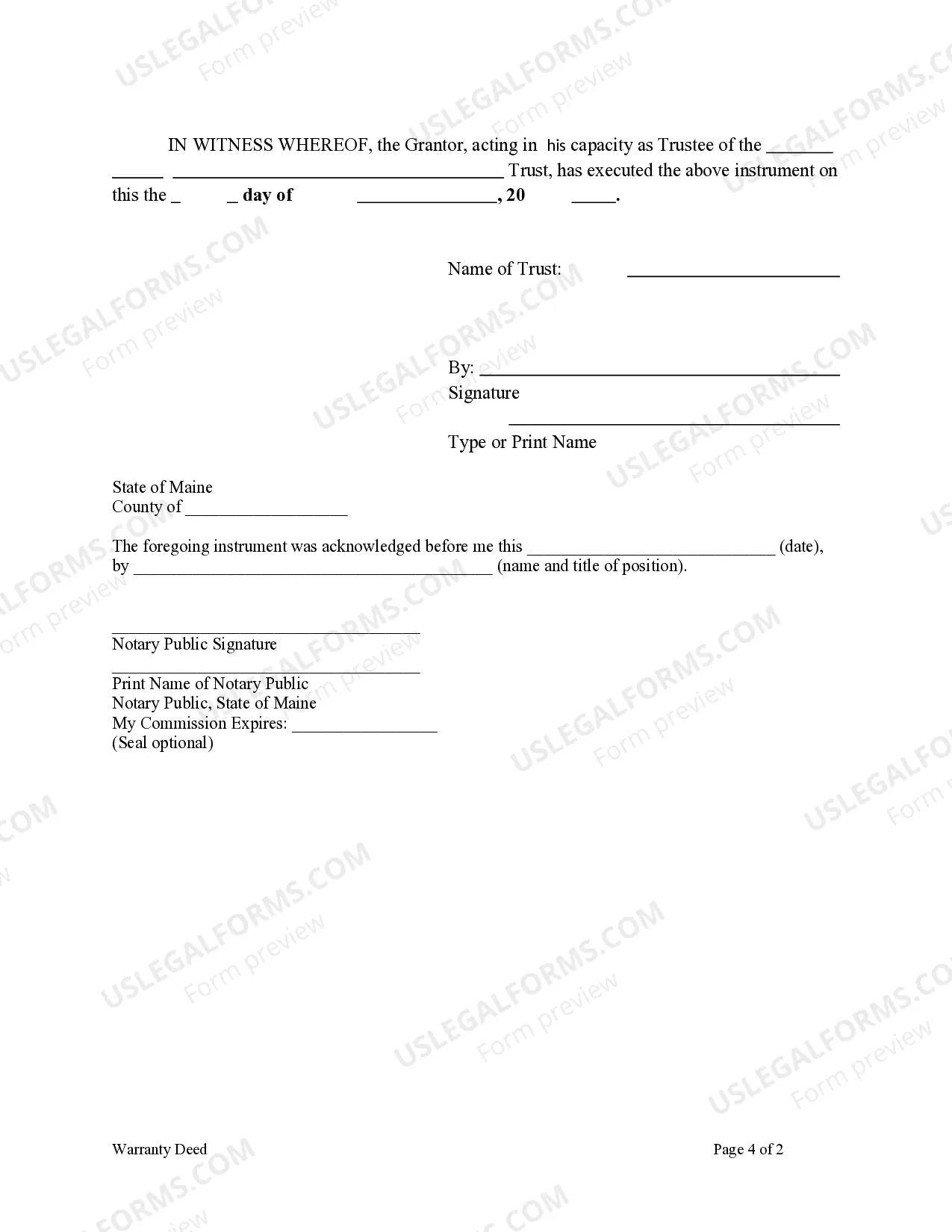
This Warranty Deed from a Trust to an Individual transfers property ownership from a trust (the Grantor) to an individual (the Grantee). This form ensures that the Grantor conveys and warrants the property, providing the Grantee with protection against any future claims. Unlike other types of deeds, a warranty deed offers the highest level of protection to the Grantee, as it guarantees that the title is clear and the properties are free from any encumbrances except those which are explicitly listed.
Form components explained
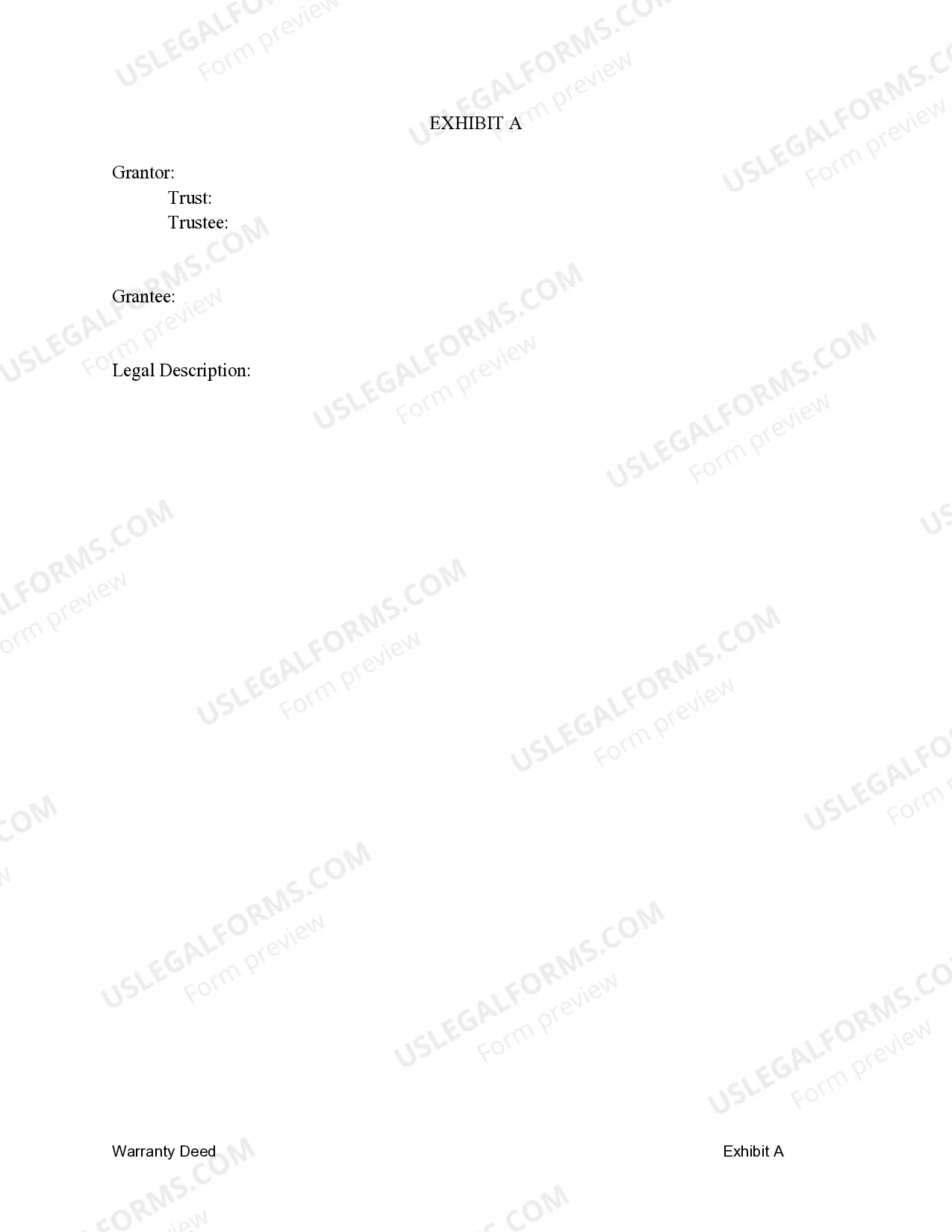
- Identification of the Grantor (Trust) and Grantee (Individual).
- Legal description of the property being transferred.
- Warranties of title and covenants from the Grantor.
- Signatures of the Grantor and witnesses (if applicable).
- Notarization section for legal validation.





Situations where this form applies
This form is used when a property holder wants to transfer property from a trust to an individual. It is commonly utilized in situations such as estate planning, where the property is held in trust and needs to be conveyed to a beneficiary, or when a trust is being dissolved and its assets distributed.
Who this form is for
- Individuals or trustees looking to transfer property held in a trust.
- Beneficiaries of a trust who are receiving property.
- Estate planners and legal representatives involved in asset distribution.
How to complete this form
- Identify the parties involved: clearly state the full name of the trust as the Grantor and the name of the individual as the Grantee.
- Specify the property: provide a detailed legal description of the property being transferred.
- Warrant the property: include any warranties regarding the title.
- Sign the form where indicated: ensure that the Grantor (trustee) and witnesses (if required) sign the document.
- Have the form notarized: if required, ensure it is notarized to make it legally valid.
Is notarization required?
Yes, this form must be notarized to be legally valid. Notarization ensures the authenticity of the signatures and the documentâs legal standing. US Legal Forms offers an integrated online notarization service, providing secure video calls for notarization without the need for travel.
Get your form ready online
Our built-in tools help you complete, sign, share, and store your documents in one place.
Make edits, fill in missing information, and update formatting in US Legal Forms—just like you would in MS Word.
Download a copy, print it, send it by email, or mail it via USPS—whatever works best for your next step.
Sign and collect signatures with our SignNow integration. Send to multiple recipients, set reminders, and more. Go Premium to unlock E-Sign.
If this form requires notarization, complete it online through a secure video call—no need to meet a notary in person or wait for an appointment.
We protect your documents and personal data by following strict security and privacy standards.

Make edits, fill in missing information, and update formatting in US Legal Forms—just like you would in MS Word.

Download a copy, print it, send it by email, or mail it via USPS—whatever works best for your next step.

Sign and collect signatures with our SignNow integration. Send to multiple recipients, set reminders, and more. Go Premium to unlock E-Sign.

If this form requires notarization, complete it online through a secure video call—no need to meet a notary in person or wait for an appointment.

We protect your documents and personal data by following strict security and privacy standards.
Common mistakes to avoid
- Failing to provide an accurate legal description of the property.
- Not securing the necessary signatures or notarization.
- Using outdated forms that do not comply with current state laws.
Advantages of online completion
- Convenient access to legally vetted templates.
- Editability allows users to fill out the form at their own pace.
- Compliance and reliability with up-to-date legal formatting.
Legal use & context
- This Warranty Deed provides a legally binding way to transfer property ownership from a trust to an individual.
- It is enforceable under state laws as long as it is properly completed and filed.
- Without this form, property ownership transfers may face legal complications or disputes over title claims.
What to keep in mind
- A Warranty Deed from a Trust to an Individual transfers property ownership with warranties against future claims.
- Accurate property description and proper execution are crucial for legality.
- Notarization is usually required for the deed to be enforceable.
Looking for another form?
Form popularity
FAQ
A quitclaim deed can be used to transfer property from a trust, but a Special Warranty Deed seems to be a more common way to do this.
Locate the deed that's in trust. Use the proper deed. Check with your title insurance company and lender. Prepare a new deed. Sign in the presence of a notary. Record the deed in the county clerk's office.
California Property TaxesTransferring real property to yourself as trustee of your own revocable living trust -- or back to yourself -- does not trigger a reassessment for property tax purposes. (Cal. Rev. & Tax Code § 62(d).)
A warranty deed protects property owners from future claims that someone else actually owns a portion (or all) of their property, while trustee deeds protect lenders when borrowers default on their mortgage loans.
In the context of a California mortgage transaction, a trust deed also transfer ownership. Only this time, the title is being placed in the hands of a third-party trustee, who holds the property on behalf of the lender and the homeowner-borrower until the mortgage is paid.
In the context of a California mortgage transaction, a trust deed also transfer ownership. Only this time, the title is being placed in the hands of a third-party trustee, who holds the property on behalf of the lender and the homeowner-borrower until the mortgage is paid.
A trustee deed offers no such warranties about the title.
When you're ready to transfer trust real estate to the beneficiary who is named in the trust document to receive it, you'll need to prepare, sign, and record a deed. That's the document that transfers title to the property from you, the trustee, to the new owner.