Maryland Last Will and Testament for Married person with Adult Children from Prior Marriage
Understanding this form
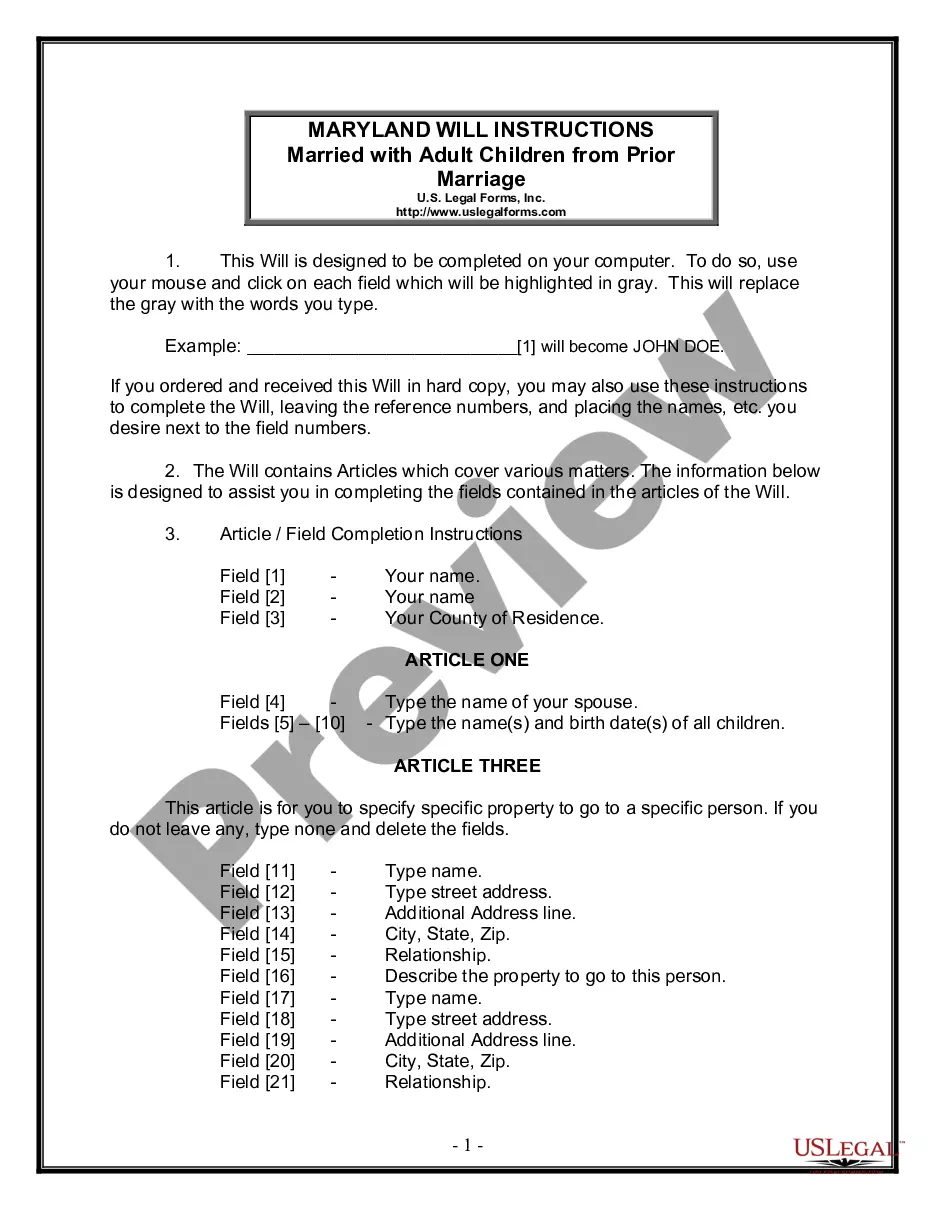
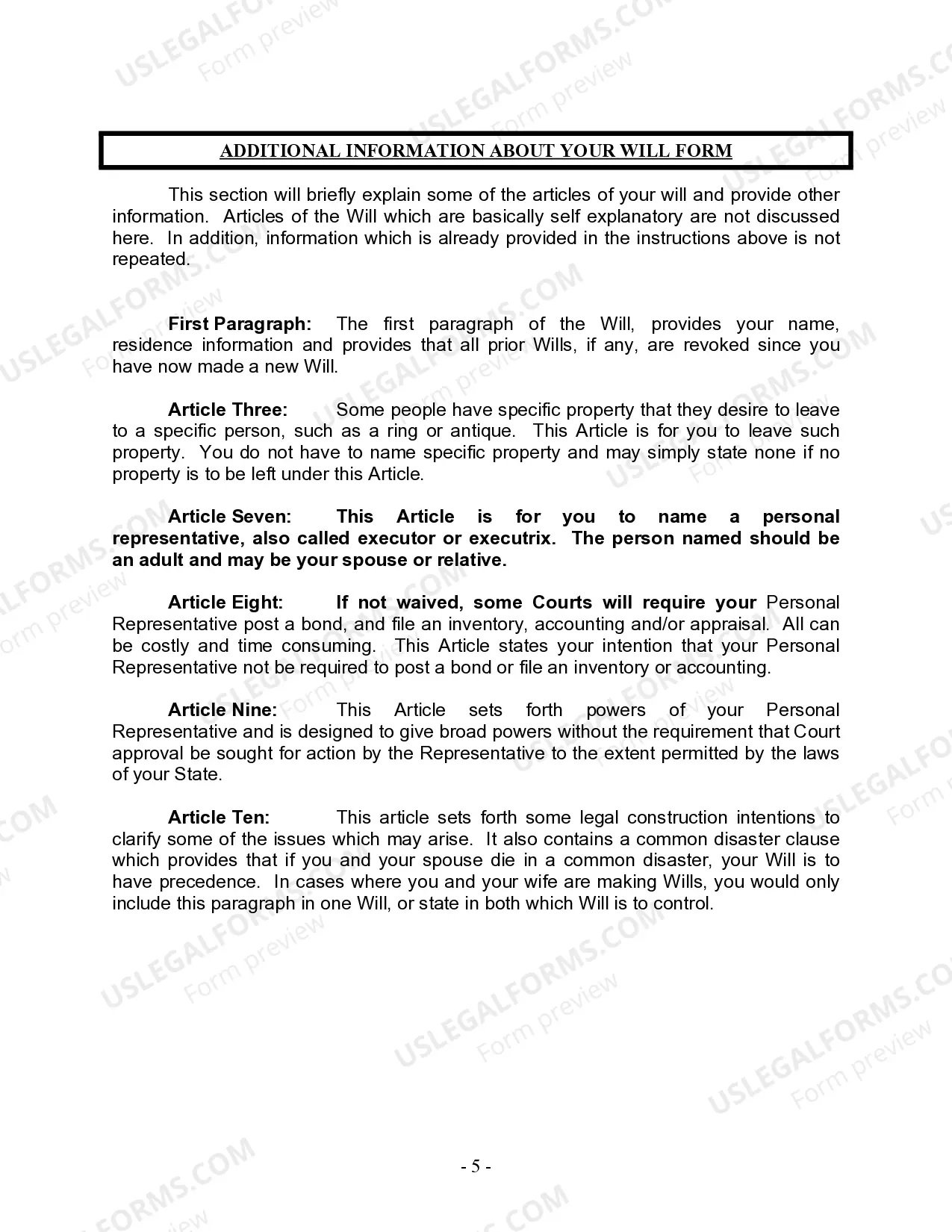
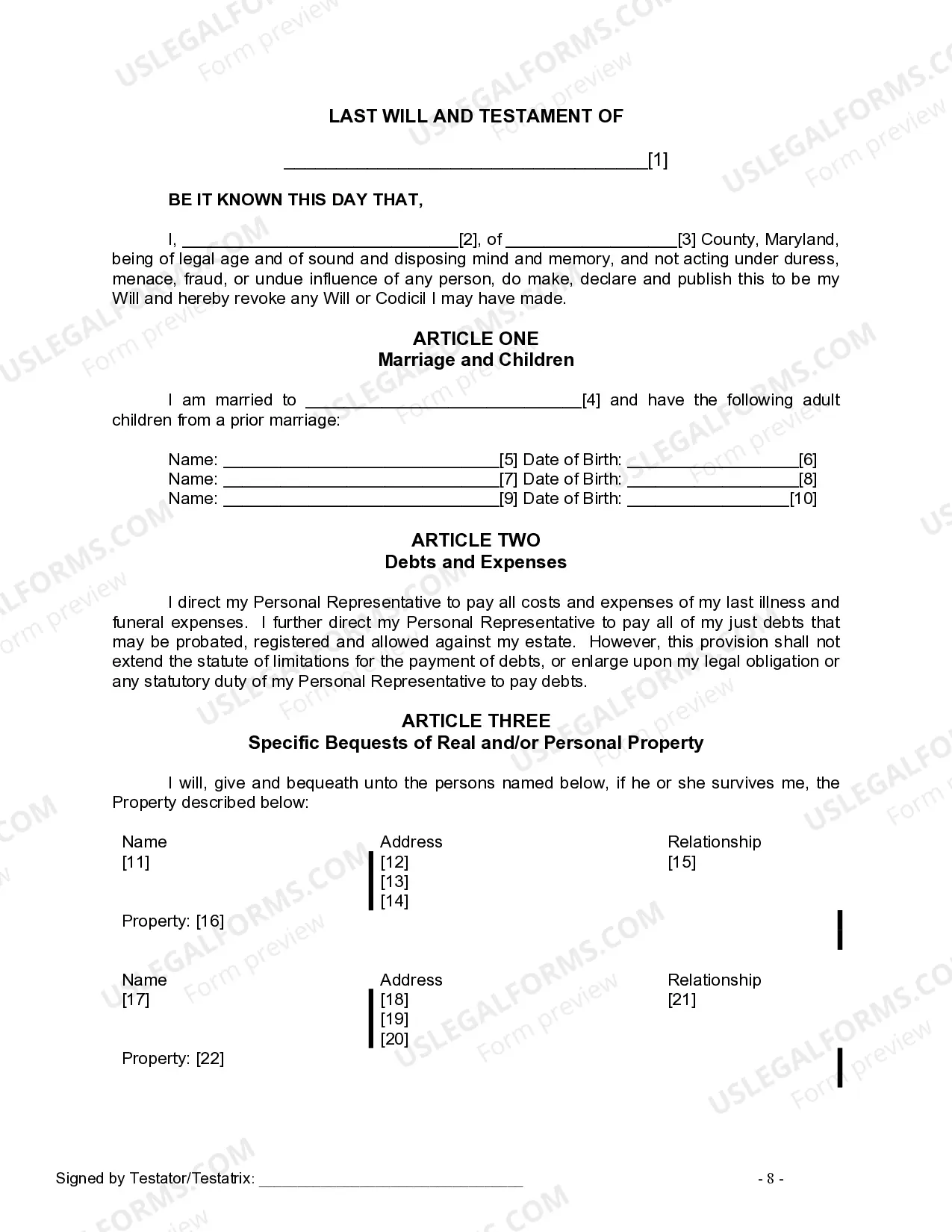
This Last Will and Testament is specifically designed for a married person who has adult children from a prior marriage. It serves as a legal document to outline how your assets will be distributed upon your death, who will manage your estate, and specific provisions for your property and loved ones. Unlike general wills, this form addresses unique family dynamics associated with blended families, ensuring that all parties are considered in your testamentary wishes.
Form components explained
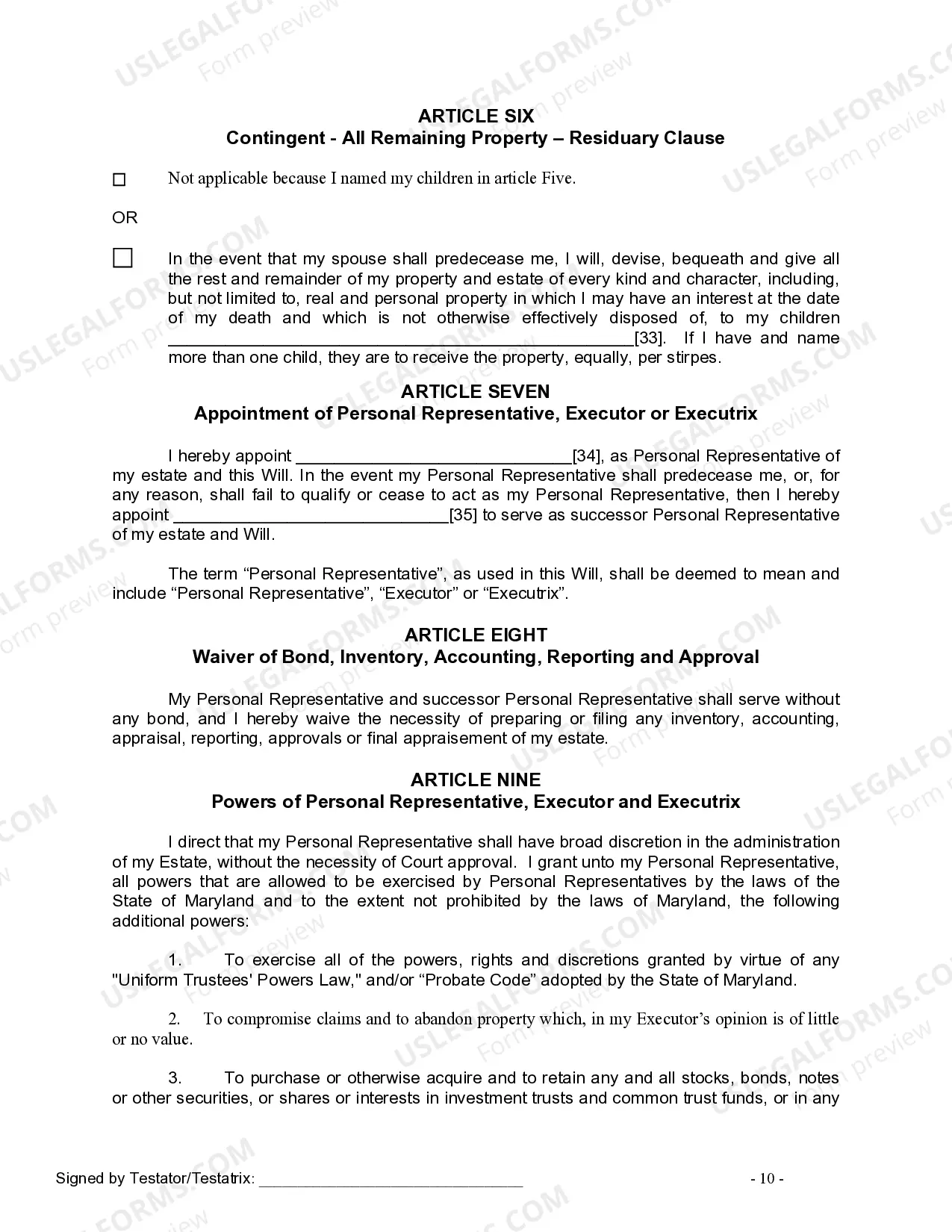
- Personal representative or executor appointment
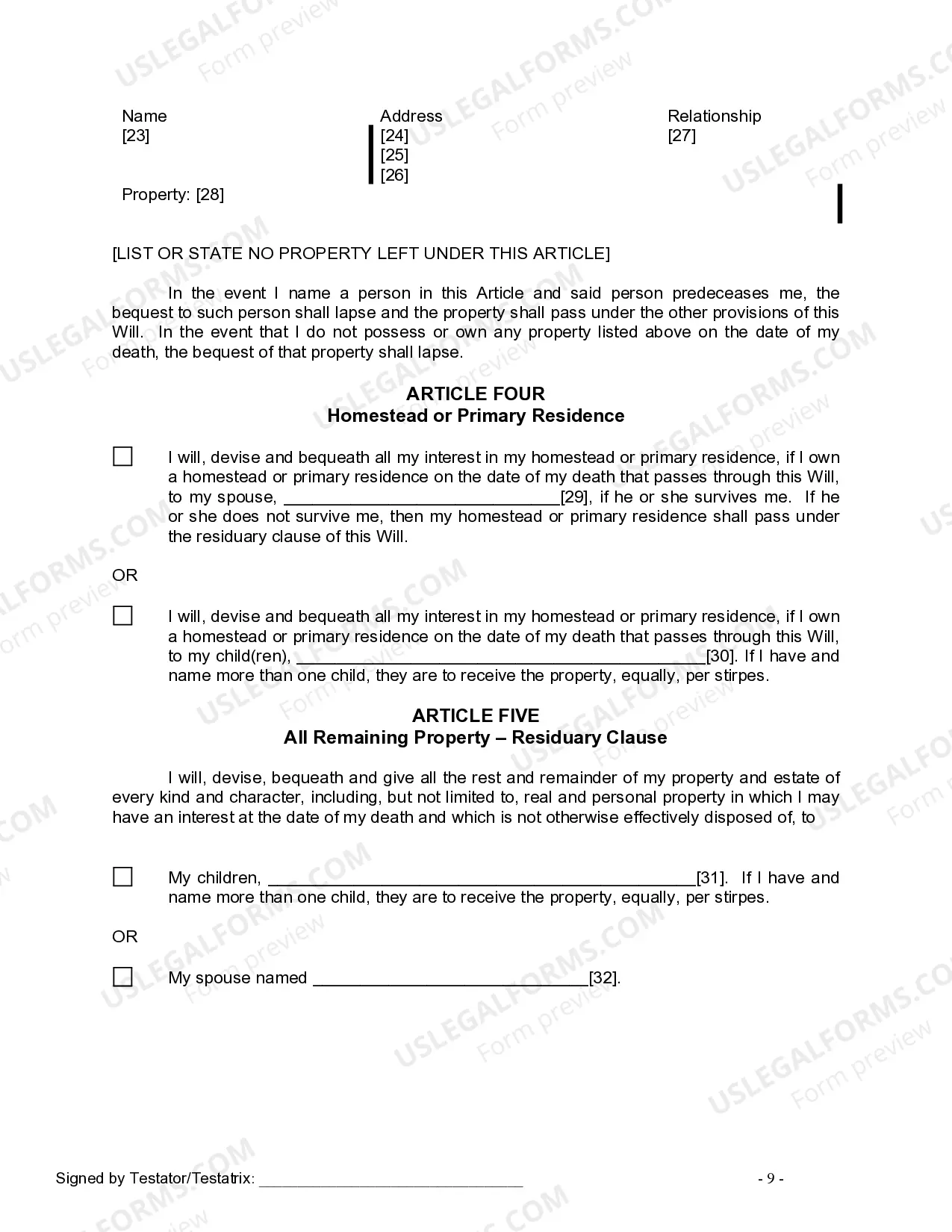
- Designation of beneficiaries, including provisions for children from prior marriages
- Specific bequests of property
- Instructions regarding debts and expenses
- Homestead allocation to spouse or children
- General distribution of remaining assets




When this form is needed
This form is ideal for individuals who are married and have children from a previous marriage. Use it to clearly define how you intend to distribute your assets, name guardians for your children, and specify any specific items you wish to leave to particular individuals. This ensures that your estate plan reflects your unique family situation and wishes, minimizing potential conflicts among heirs.
Intended users of this form
- Married individuals with adult children from a previous relationship
- Those wanting to ensure specific property distribution among their beneficiaries
- Individuals seeking to appoint a personal representative for their estate
- People looking to minimize disputes among heirs and clarify their final wishes
Completing this form step by step
- Begin by entering your personal details, including your name and county of residence.
- Specify your spouse's name and the names and birth dates of your adult children from prior marriages.
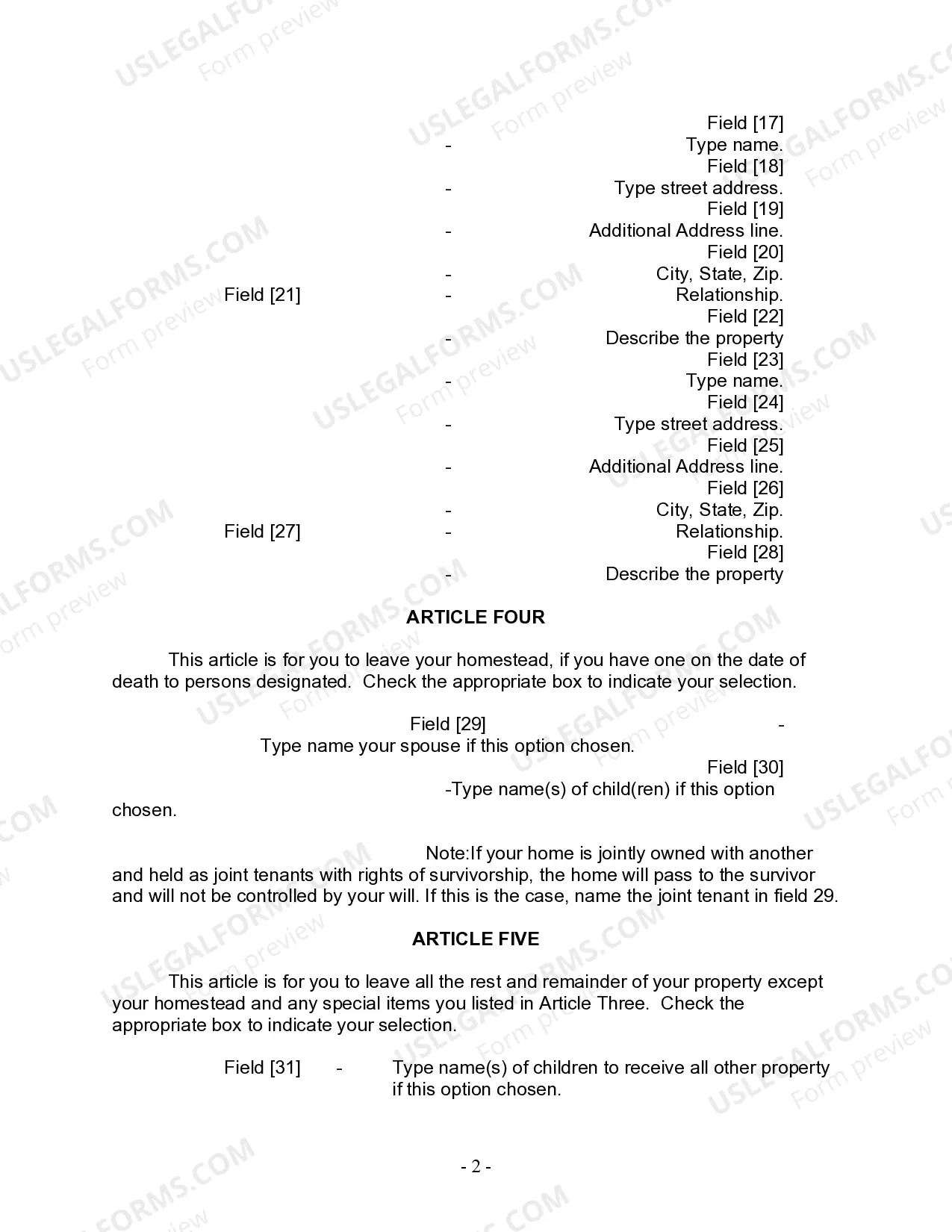
- Identify specific properties you wish to bequeath to individuals by detailing their names and descriptions of the property.
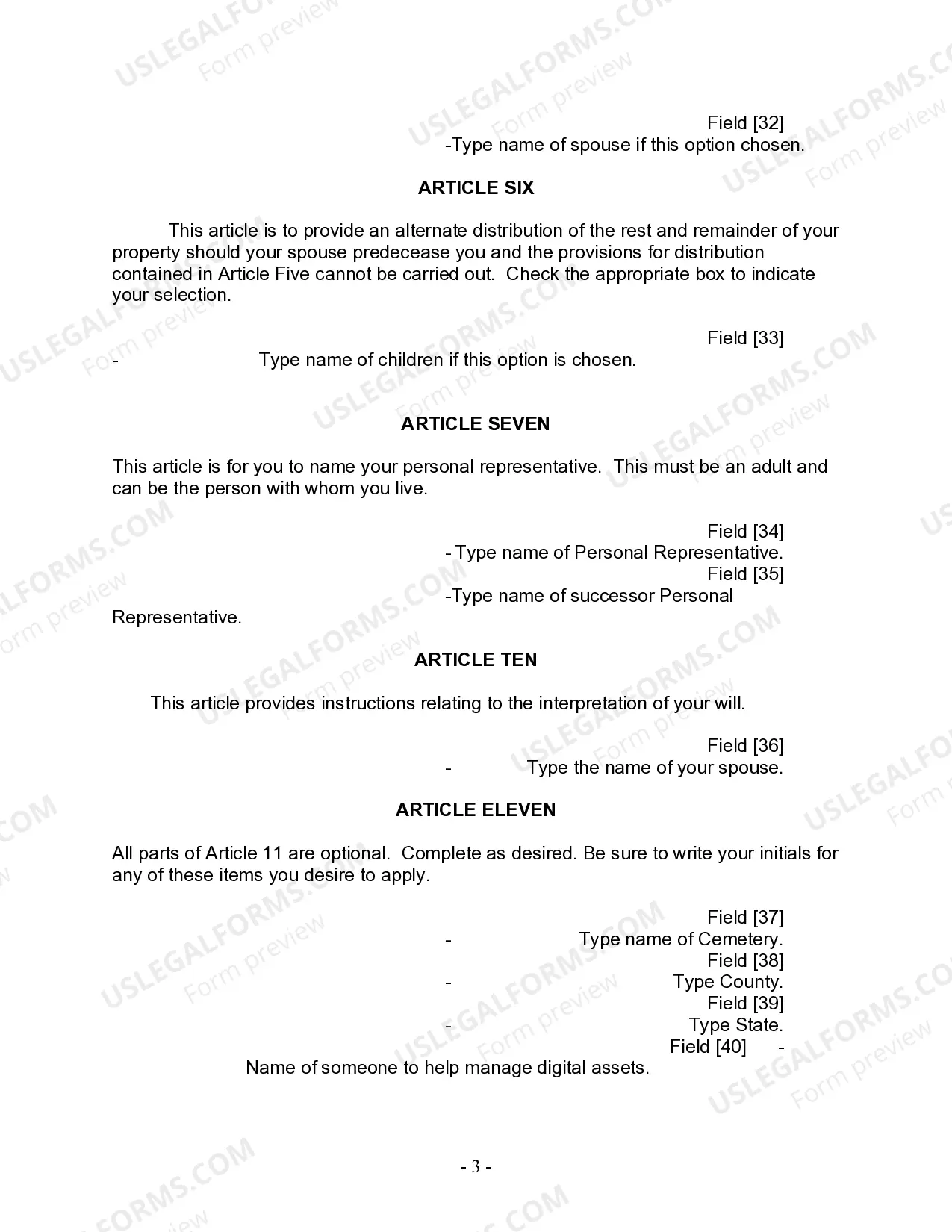
- Designate your personal representative or executor responsible for carrying out your wishes, including a successor if needed.
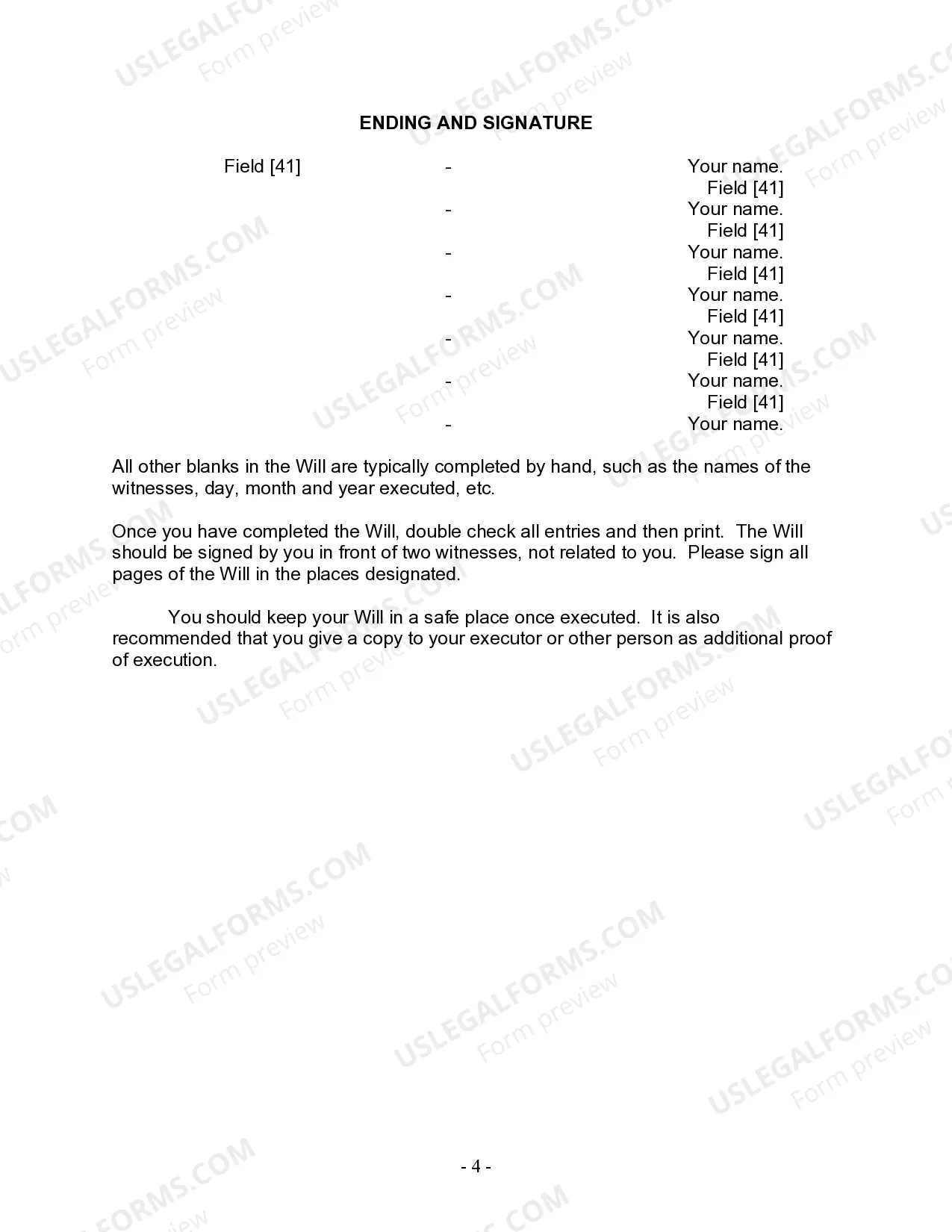
- Review all information for accuracy, then print and sign the document in front of two unrelated witnesses.
Does this form need to be notarized?
This form does not typically require notarization to be legally valid. However, some jurisdictions or document types may still require it. US Legal Forms provides secure online notarization powered by Notarize, available 24/7 for added convenience.
Get your form ready online
Our built-in tools help you complete, sign, share, and store your documents in one place.
Make edits, fill in missing information, and update formatting in US Legal Forms—just like you would in MS Word.
Download a copy, print it, send it by email, or mail it via USPS—whatever works best for your next step.
Sign and collect signatures with our SignNow integration. Send to multiple recipients, set reminders, and more. Go Premium to unlock E-Sign.
If this form requires notarization, complete it online through a secure video call—no need to meet a notary in person or wait for an appointment.
We protect your documents and personal data by following strict security and privacy standards.

Make edits, fill in missing information, and update formatting in US Legal Forms—just like you would in MS Word.

Download a copy, print it, send it by email, or mail it via USPS—whatever works best for your next step.

Sign and collect signatures with our SignNow integration. Send to multiple recipients, set reminders, and more. Go Premium to unlock E-Sign.

If this form requires notarization, complete it online through a secure video call—no need to meet a notary in person or wait for an appointment.

We protect your documents and personal data by following strict security and privacy standards.
Common mistakes to avoid
- Forgetting to update the will after significant life events such as new marriages or births.
- Not having the required number of witnesses sign the will.
- Failing to include clear language on the distribution of specific items or properties.
- Forgetting to appoint an alternate executor in case the primary cannot serve.
Why use this form online
- Convenient to complete from the comfort of your home, saving time and resources.
- Editability allows for easy updates to reflect changes in circumstances or wishes.
- Access to reliable legal templates drafted by licensed attorneys ensures compliance with legal standards.
- Quick and straightforward navigation through the form makes it user-friendly, even for those with little legal experience.
Quick recap
- This will is tailored for married individuals with adult children from prior marriages.
- Clear specifications for asset distribution can prevent misunderstandings among heirs.
- Proper execution, including witnessing and notarization, is essential for validity.
- Regular updates to the will are necessary to reflect changes in personal circumstances.
Looking for another form?
Form popularity
FAQ
Maryland law requires that your will be in writing, signed by the testator (you) and witnessed by two individuals in the testator's presence. This is called "executing a will." When you are ready to execute your will, you should have at least two witnesses, although three is better.
Maryland law requires that your will be in writing, signed by the testator (you) and witnessed by two individuals in the testator's presence. This is called "executing a will." When you are ready to execute your will, you should have at least two witnesses, although three is better.
Is a holographic (handwritten) Will legal in Maryland ? Yes, if it complies with Maryland Law.
Holographic wills are wills that have been written entirely in the hand of the testator. Although Maryland does recognize holographic wills, they must comply with Maryland law. Unless holographic wills are written properly, there is a chance the courts may not recognize the document as a valid last will and testament.
Self-written wills are typically valid, even when handwritten, as long as they're properly witnessed and notarized, or proven in court. A handwritten will that is not witnessed or notarized is considered a holographic will. Not all states accept holographic wills .
No, in Maryland, you do not need to notarize your will to make it legal. Maryland does allow you to make your will "self-proving," which speeds up probate because the court can accept the will without contacting the witnesses who signed it.
No. You can make your own will in Maryland, using Nolo's do-it-yourself will software or online will programs. However, you may want to consult a lawyer in some situations. For example, if you think that your will might be contested or if you want to disinherit your spouse, you should talk with an attorney.
No, in Maryland, you do not need to notarize your will to make it legal. Maryland does allow you to make your will "self-proving," which speeds up probate because the court can accept the will without contacting the witnesses who signed it.
Maryland law requires that your will be in writing, signed by the testator (you) and witnessed by two individuals in the testator's presence. This is called "executing a will." When you are ready to execute your will, you should have at least two witnesses, although three is better.