Maryland Warranty Deed from Husband and Wife to LLC
What is this form?
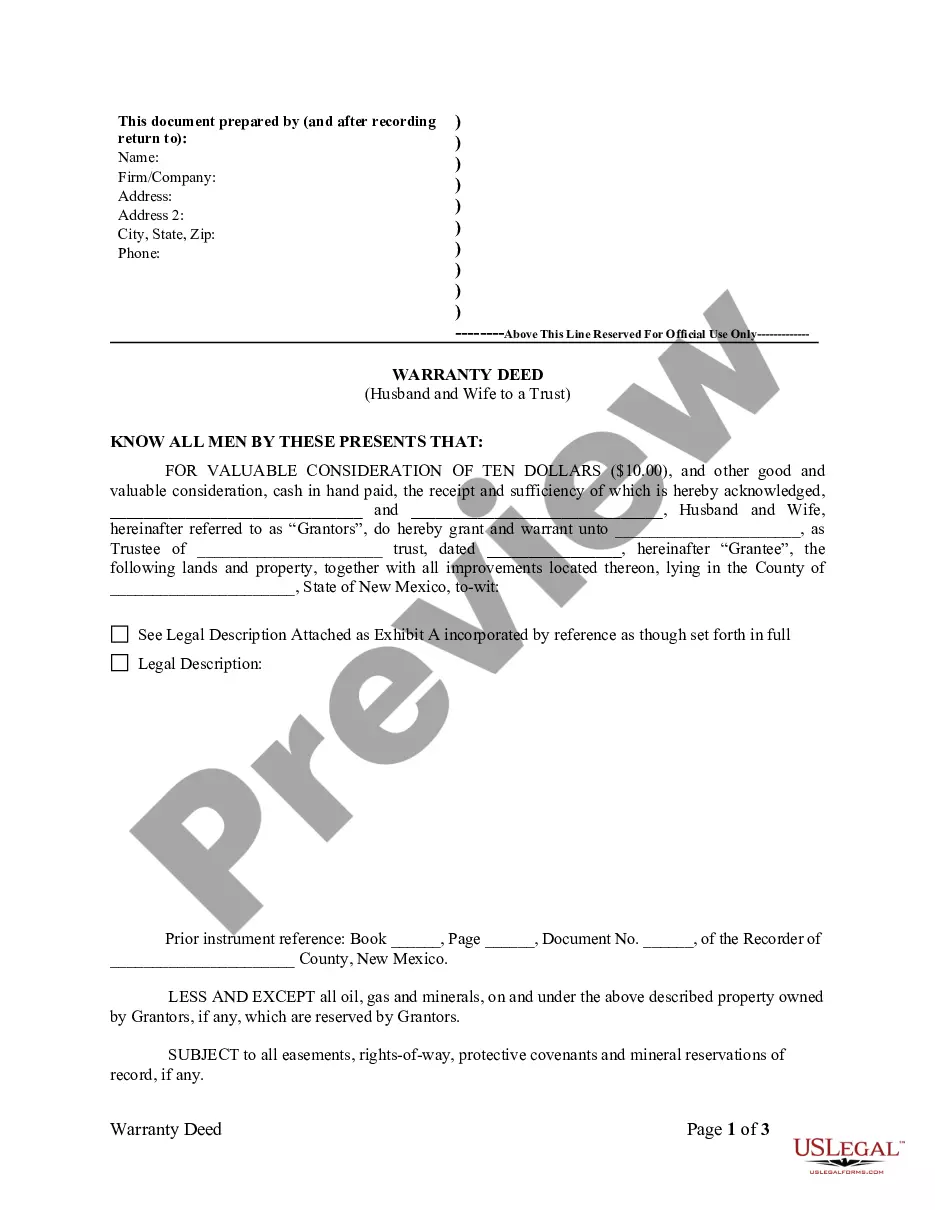
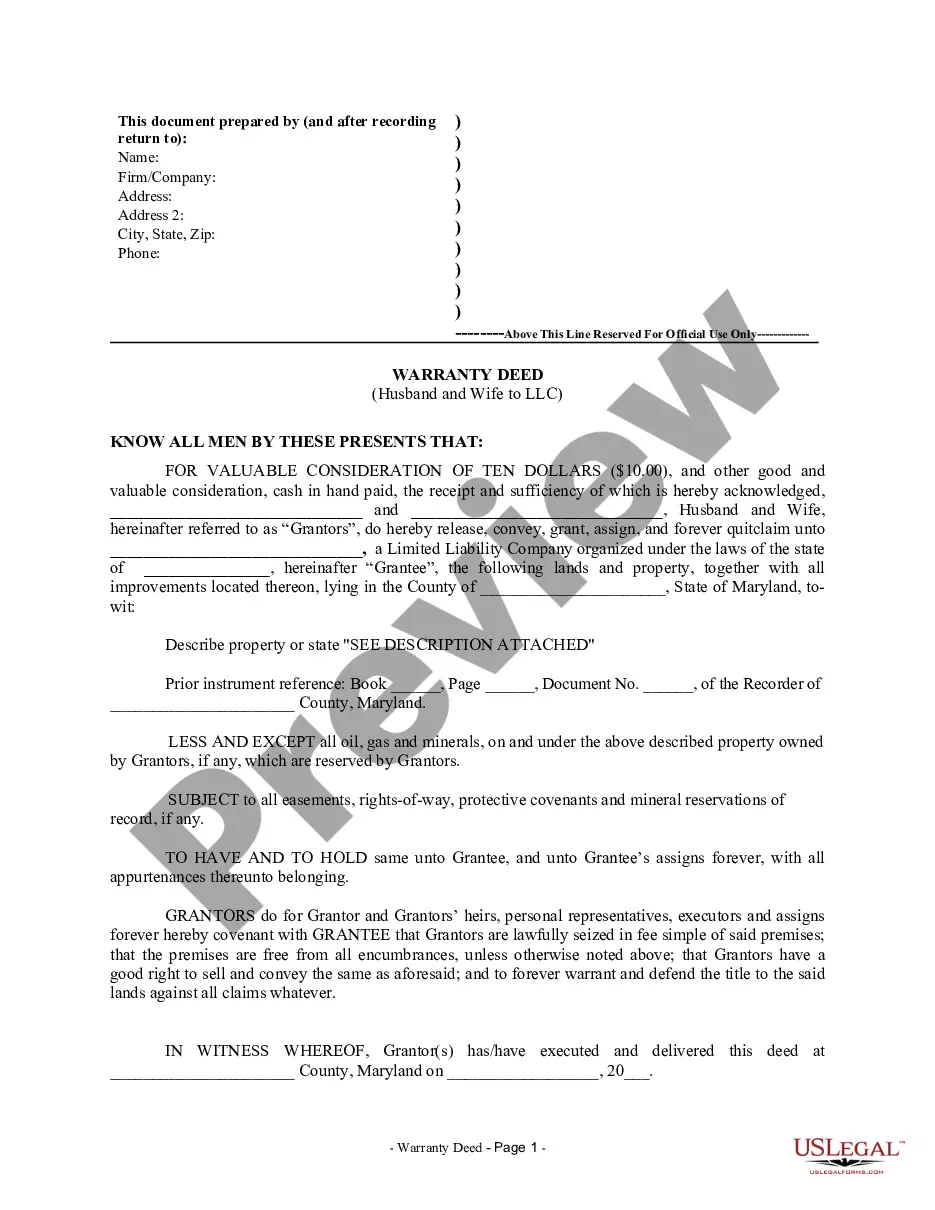
The Warranty Deed from Husband and Wife to LLC is a legal document that allows a married couple to transfer ownership of their real property to a limited liability company (LLC). This specific type of warranty deed provides strong assurances about the title of the property, ensuring that it is free from encumbrances, except as otherwise noted. It is distinct from other deeds since it involves two grantors and the grantee is a business entity, not an individual.
Key parts of this document
- Description of the property being transferred
- Prior instrument references detailing the history of the property
- Reservation of rights for oil, gas, and minerals
- Covenant guaranteeing the title is free from encumbrances
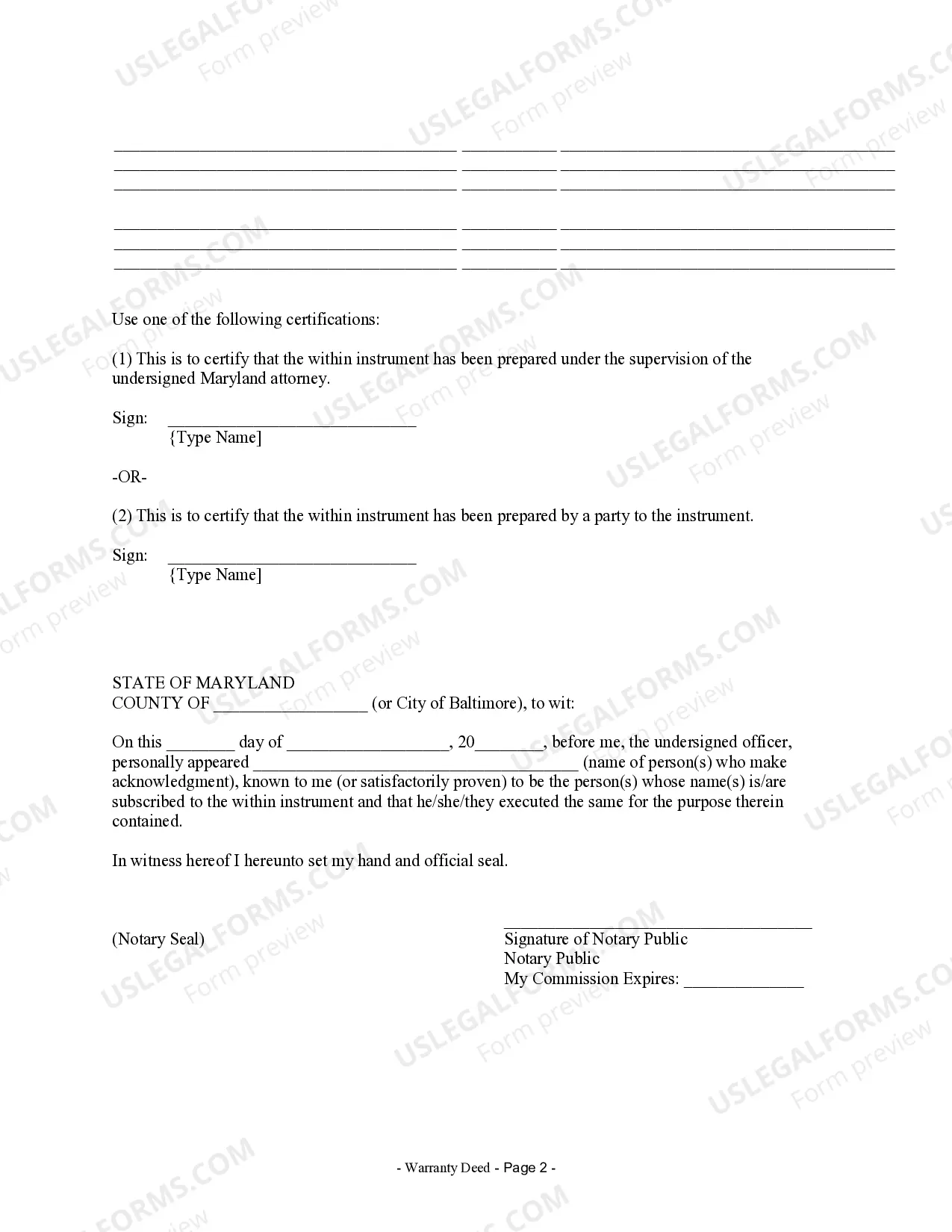
- Signatures of both grantors and a notary public





When to use this form
This form is typically used when a married couple wishes to transfer ownership of their property to an LLC for reasons such as asset protection, to facilitate business operations, or for estate planning purposes. It is also appropriate when the couple wants to ensure the property's title and protect against future claims.
Intended users of this form
This form is suitable for:
- Married couples who own real property
- Individuals who want to create an LLC to hold real estate
- Business owners seeking to formalize ownership of property within an LLC
Steps to complete this form
- Identify the parties involved as grantors (husband and wife) and the grantee (LLC).
- Describe the property clearly or refer to an attached description.
- Fill in the prior instrument reference details from the local Recorder's Office.
- Specify any reservations related to oil, gas, and minerals.
- Have both grantors sign the deed in front of a notary public.
Does this document require notarization?
This form needs to be notarized to ensure legal validity. US Legal Forms provides secure online notarization powered by Notarize, allowing you to complete the process through a verified video call, available anytime.
Get your form ready online
Our built-in tools help you complete, sign, share, and store your documents in one place.
Make edits, fill in missing information, and update formatting in US Legal Forms—just like you would in MS Word.
Download a copy, print it, send it by email, or mail it via USPS—whatever works best for your next step.
Sign and collect signatures with our SignNow integration. Send to multiple recipients, set reminders, and more. Go Premium to unlock E-Sign.
If this form requires notarization, complete it online through a secure video call—no need to meet a notary in person or wait for an appointment.
We protect your documents and personal data by following strict security and privacy standards.

Make edits, fill in missing information, and update formatting in US Legal Forms—just like you would in MS Word.

Download a copy, print it, send it by email, or mail it via USPS—whatever works best for your next step.

Sign and collect signatures with our SignNow integration. Send to multiple recipients, set reminders, and more. Go Premium to unlock E-Sign.

If this form requires notarization, complete it online through a secure video call—no need to meet a notary in person or wait for an appointment.

We protect your documents and personal data by following strict security and privacy standards.
Common mistakes
- Failing to accurately describe the property.
- Omitting prior instrument references, which can lead to title issues.
- Not obtaining notarization, making the deed invalid.
Benefits of completing this form online
- Immediate access to professionally drafted documents, ensuring legal compliance.
- Easy customization to meet specific needs, such as including property details and additional clauses.
- Secure digital storage of your completed documents for future reference.
What to keep in mind
- The Warranty Deed from Husband and Wife to LLC is essential for transferring property ownership to an LLC.
- Ensure that all essential details and reservations are included in the deed.
- Notarization of the deed is a legal requirement in Maryland.
Looking for another form?
Form popularity
FAQ
To change the names on a real estate deed, you will need to file a new deed with the Division of Land Records in the Circuit Court for the county where the property is located. The clerk will record the new deed.
A warranty deed guarantees that: The grantor is the rightful owner of the property and has the legal right to transfer the title.The title would withstand third-party claims to ownership of the property. The grantor will do anything to ensure the grantee's title to the property.
Discuss the terms of the deed with the new owners. Hire a real estate attorney to prepare the deed. Review the deed. Sign the deed in front of a notary public, with witnesses present. File the deed on public record.
Typically, the only cost is between $25 and $55 to record the new deed and obtain a certificate from the city/county to show that all taxes are current. The deed should be notarized and must be prepared by one of the parties or under the supervision of a Maryland attorney.
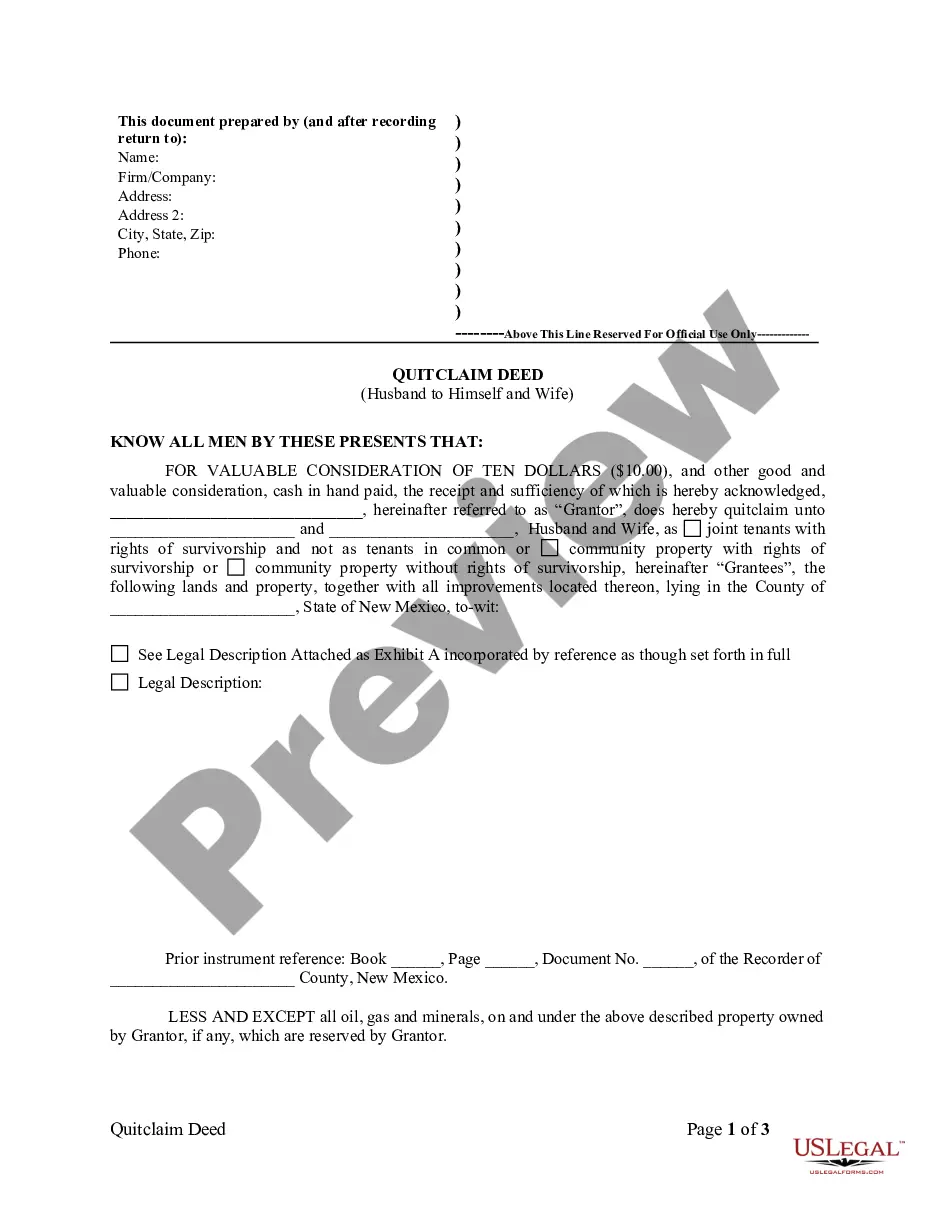
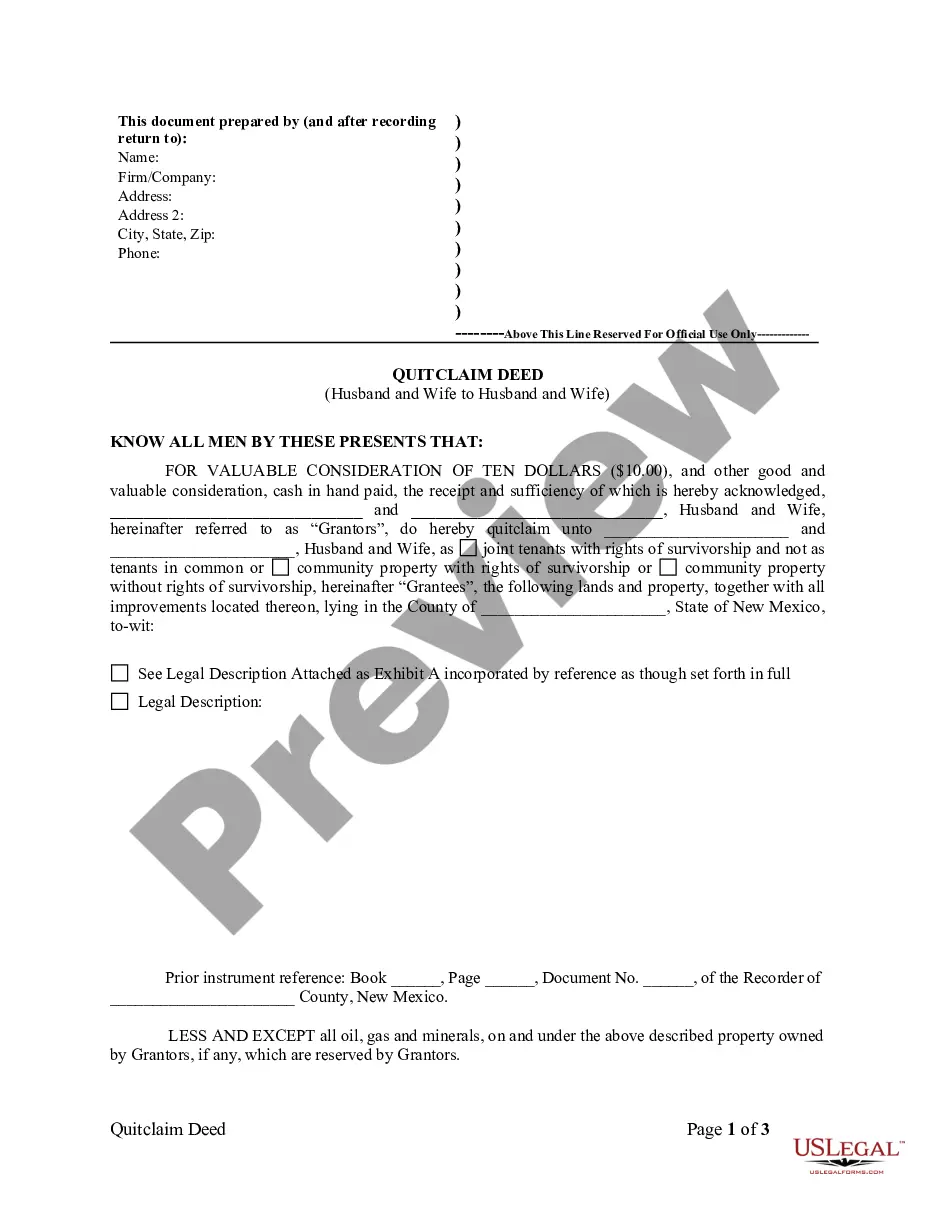
How to Quitclaim Deed to LLC. A quitclaim deed to LLC is actually a very simple process. You will need a deed form and a copy of the existing deed to make sure you identify titles properly and get the legal description of the property.
Retrieve your original deed. Get the appropriate deed form. Draft the deed. Sign the deed before a notary. Record the deed with the county recorder. Obtain the new original deed.
Quitclaim deeds are most often used to transfer property between family members. Examples include when an owner gets married and wants to add a spouse's name to the title or deed, or when the owners get divorced and one spouse's name is removed from the title or deed.
A consenting individual may be removed from a deed by filing a quitclaim deed. Under Maryland law each county has a separate procedure and requirements for filing a quitclaim deed.
In order to transfer ownership of the marital home pursuant to a divorce, one spouse is going to need to sign a quitclaim deed, interspousal transfer deed, or a grant deed, in order to convey the title to the property.