Maryland Quitclaim Deed from Husband and Wife to Corporation
Overview of this form
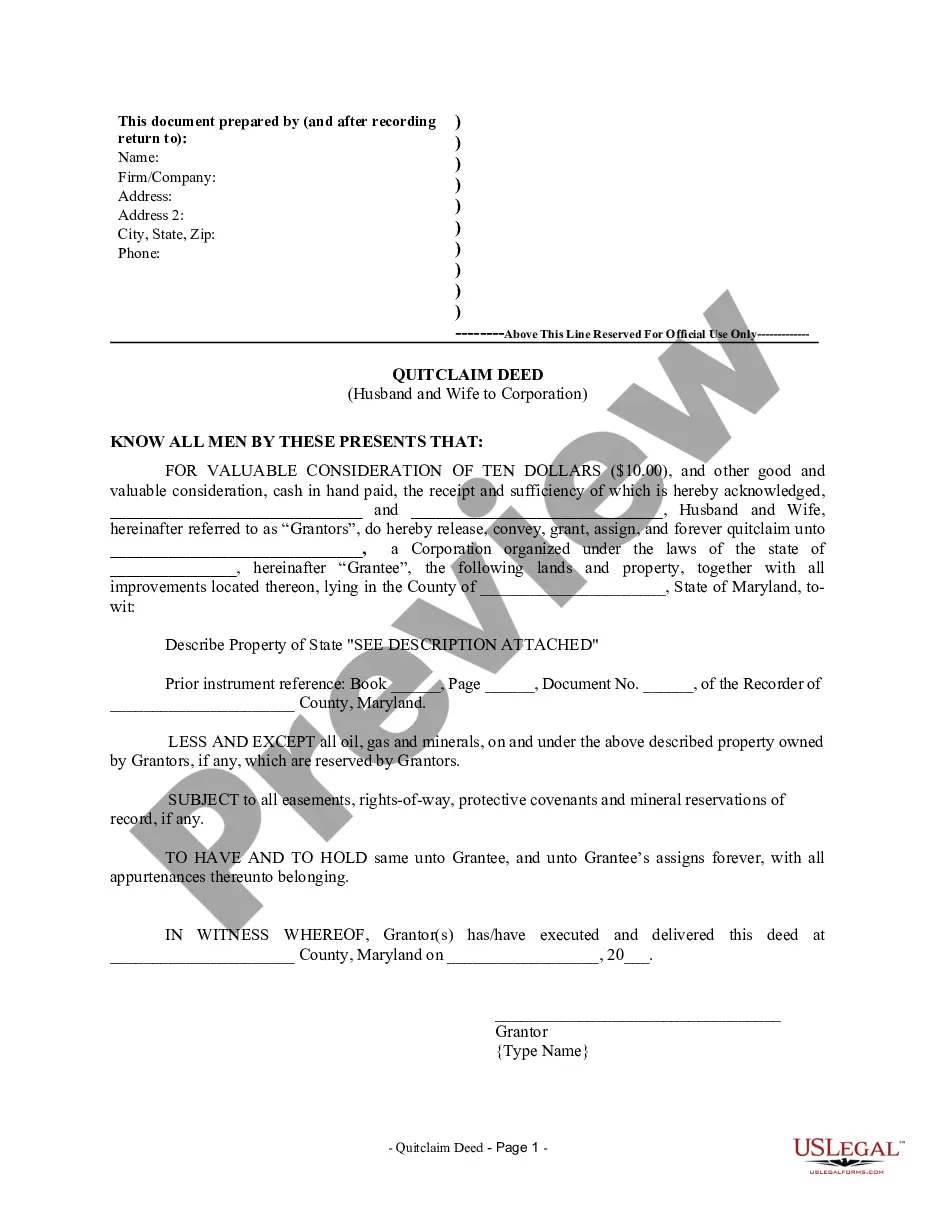
The Quitclaim Deed from Husband and Wife to Corporation is a legal document used to transfer ownership of property from a married couple to a corporation. Unlike warranty deeds, a quitclaim deed does not guarantee that the grantors hold clear title to the property; instead, it simply conveys their interest in the property without any warranties. This form is particularly useful when a couple wants to transfer property ownership to a corporation, potentially for business or financial reasons.
What’s included in this form
- Property description: Details the specific property being transferred.
- Prior instrument reference: Provides history for the property transfer, including book, page, and document number from county records.
- Reservation clause: States that the grantors retain ownership of any oil, gas, and minerals under the property.
- Subject to existing rights: Acknowledges any easements or covenants affecting the property.
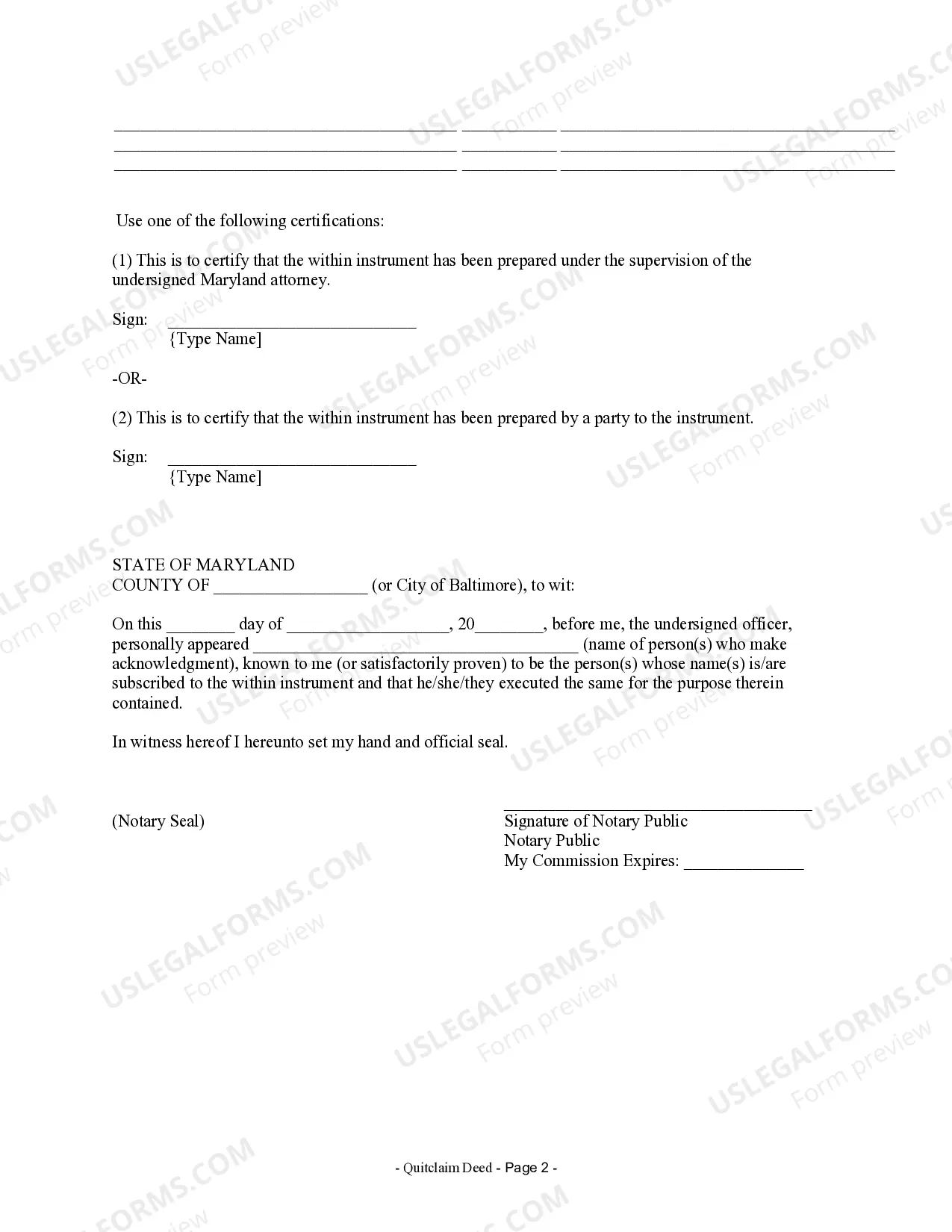
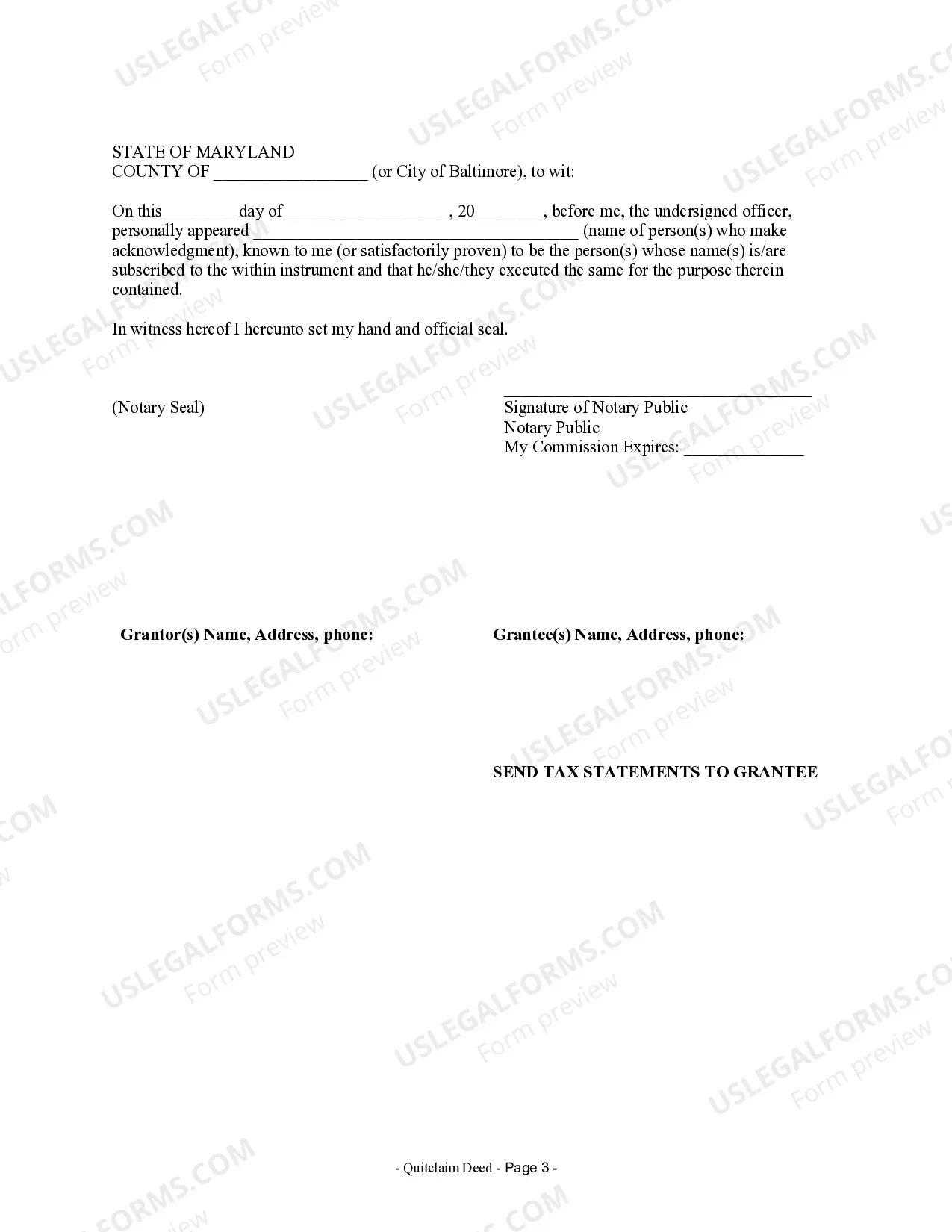
- Signatures: Requires the signatures of both grantors and potentially a notary acknowledgment.



When to use this form
This form is ideal when a married couple wants to transfer property ownership to a corporation, whether for estate planning, financial restructuring, or business purposes. It is commonly used in situations such as transferring family property to a corporation for investment or business activities, or when setting up a business entity to manage specific properties.
Who can use this document
This form is intended for:
- Married couples wishing to transfer property to a corporation.
- Business owners who want to consolidate property under a corporate entity.
- Individuals involved in estate planning that includes property ownership changes.
How to complete this form
- Identify the parties: Include the full names of both grantors (husband and wife) and the grantee (corporation).
- Specify the property: Provide a clear description of the property being transferred, including location and any references to prior instruments.
- Fill out reservations: Clearly note any reservations regarding oil, gas, and minerals owned by the grantors.
- Include signatures: Ensure both grantors sign the form and date it appropriately.
- Notarization: Determine if notarization is required, based on local laws.
Notarization guidance
This form does not typically require notarization unless specified by local law. However, having a notary public witness the signing can add an extra layer of validity to the deed in some situations.
Get your form ready online
Our built-in tools help you complete, sign, share, and store your documents in one place.
Make edits, fill in missing information, and update formatting in US Legal Forms—just like you would in MS Word.
Download a copy, print it, send it by email, or mail it via USPS—whatever works best for your next step.
Sign and collect signatures with our SignNow integration. Send to multiple recipients, set reminders, and more. Go Premium to unlock E-Sign.
If this form requires notarization, complete it online through a secure video call—no need to meet a notary in person or wait for an appointment.
We protect your documents and personal data by following strict security and privacy standards.

Make edits, fill in missing information, and update formatting in US Legal Forms—just like you would in MS Word.

Download a copy, print it, send it by email, or mail it via USPS—whatever works best for your next step.

Sign and collect signatures with our SignNow integration. Send to multiple recipients, set reminders, and more. Go Premium to unlock E-Sign.

If this form requires notarization, complete it online through a secure video call—no need to meet a notary in person or wait for an appointment.

We protect your documents and personal data by following strict security and privacy standards.
Common mistakes to avoid
- Not providing a complete property description.
- Failing to sign or date the document properly.
- Neglecting to include necessary reservations regarding oil, gas, and minerals.
- Using incorrect or outdated legal terminology.
Why complete this form online
- Convenience: Download and complete the form at your own pace.
- Editability: Easily modify the document to suit your specific needs before finalizing.
- Reliability: Forms are drafted by licensed attorneys, ensuring legal compliance.
Looking for another form?


Form popularity
FAQ
To fill out a quitclaim deed to add a spouse, start by gathering essential information about both parties and the property. Clearly state the type of ownership you are transferring, whether it’s from you and your spouse or solely from one spouse. Ensure all names and addresses are accurate. Utilizing platforms like US Legal Forms can help streamline this process.
Quitclaim deeds are most often used to transfer property between family members.Examples include when an owner gets married and wants to add a spouse's name to the title or deed, or when the owners divorce and one spouse's name is removed from the title or deed.
It's usually a very straightforward transaction, but it's possible for a quitclaim deed to be challenged. If a quitclaim deed is challenged in court, the issue becomes whether the property was legally transferred and if the grantor had the legal right to transfer the property.
But you might be wondering if an owner can transfer a deed to another person without a real estate lawyer. The answer is yes. Parties to a transaction are always free to prepare their own deeds.A quitclaim deed, for example, is far simpler than a warranty deed.
The drawback, quite simply, is that quitclaim deeds offer the grantee/recipient no protection or guarantees whatsoever about the property or their ownership of it. Maybe the grantor did not own the property at all, or maybe they only had partial ownership.
Fill out the quit claim deed form, which can be obtained online, or write your own using the form as a guide. The person giving up the interest in the property is the grantor, and the person receiving the interest is the grantee.
A Quitclaim Deed must be notarized by a notary public or attorney in order to be valid.Consideration in a Quitclaim Deed is what the Grantee will pay to the Grantor for the interest in the property.
If the quitclaim deed requires the signature of all co-owners, the deed is invalid unless all co-owners have signed it and the deed is then delivered to the grantee.If one individual owns real estate and desires to add a co-owner such as a spouse, a quitclaim deed might be used.
Documents: To submit the quitclaim deed to the Clerk of the Circuit Court, you must have a Land Intake Sheet with the deed. Filing: Quitclaim deeds in Maryland are filed with the Clerk of the Circuit Court in the county where the property is located. Each county has its own filing fee.