Maryland Warranty Deed from two Individuals to Corporation
Overview of this form
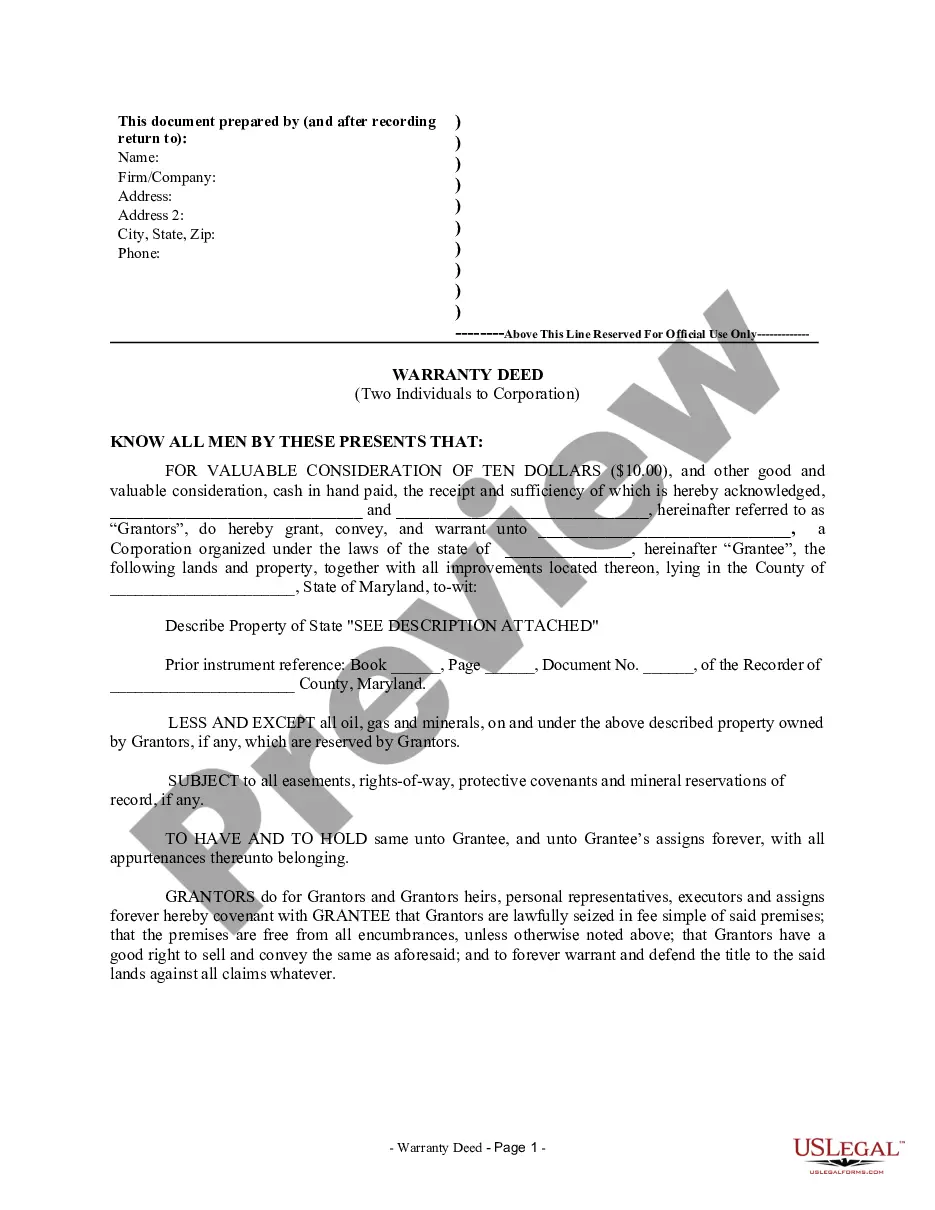
The Warranty Deed from two Individuals to Corporation is a legal document used to convey real property from two grantors (individuals) to a grantee (a corporation). This form establishes the ownership transfer while ensuring the grantors warrant the title, affirming they have the legal right to sell the property and that it is free from encumbrances, except where noted. Unlike other deeds, this document specifically addresses the situation where individuals transfer property to a corporate entity, which can be important for business or investment purposes.
Key parts of this document
- Description of the property being transferred.
- Reference to the prior instrument used for the property.
- Clauses outlining the reservation of oil, gas, and minerals by the grantors.
- Covenants made by the grantors regarding the title and its encumbrances.
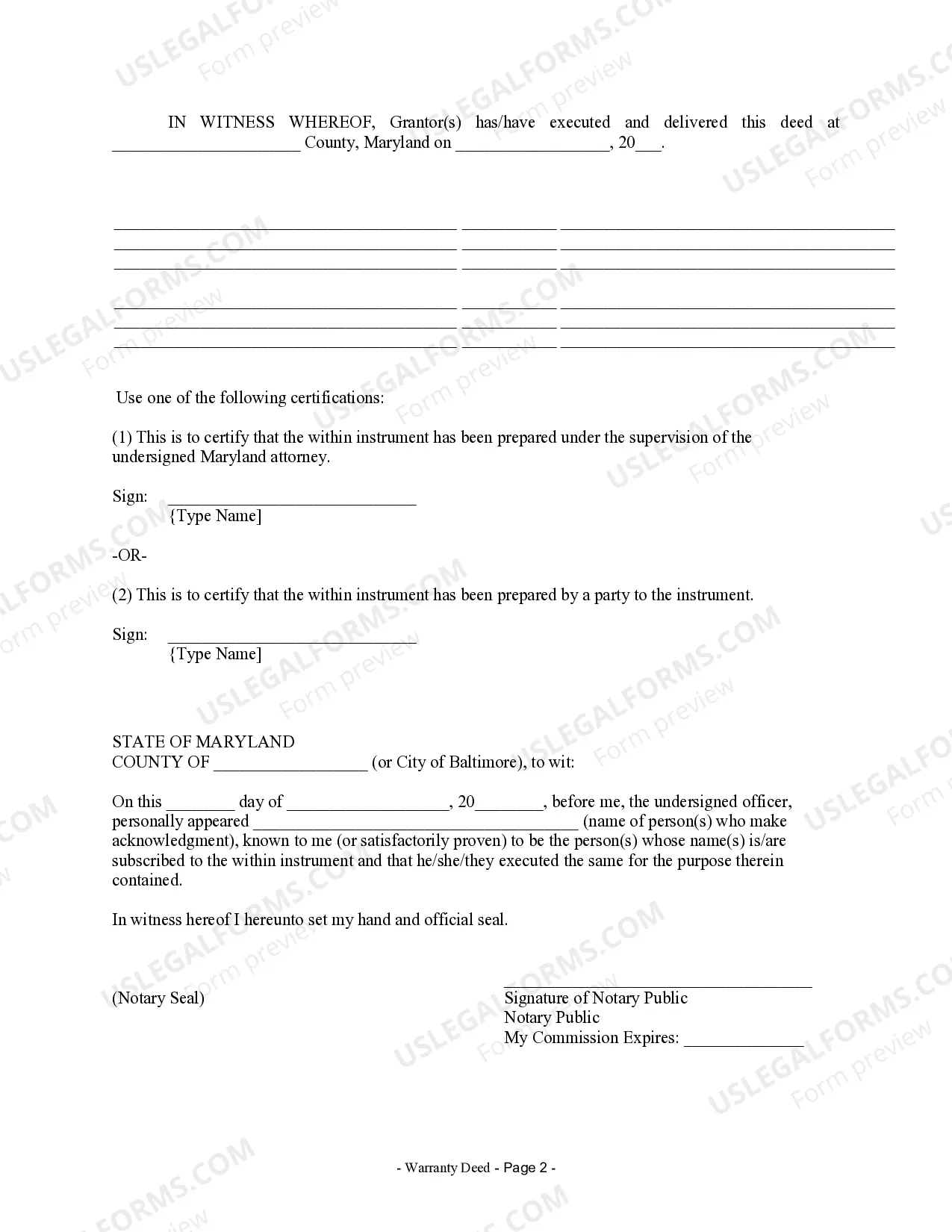
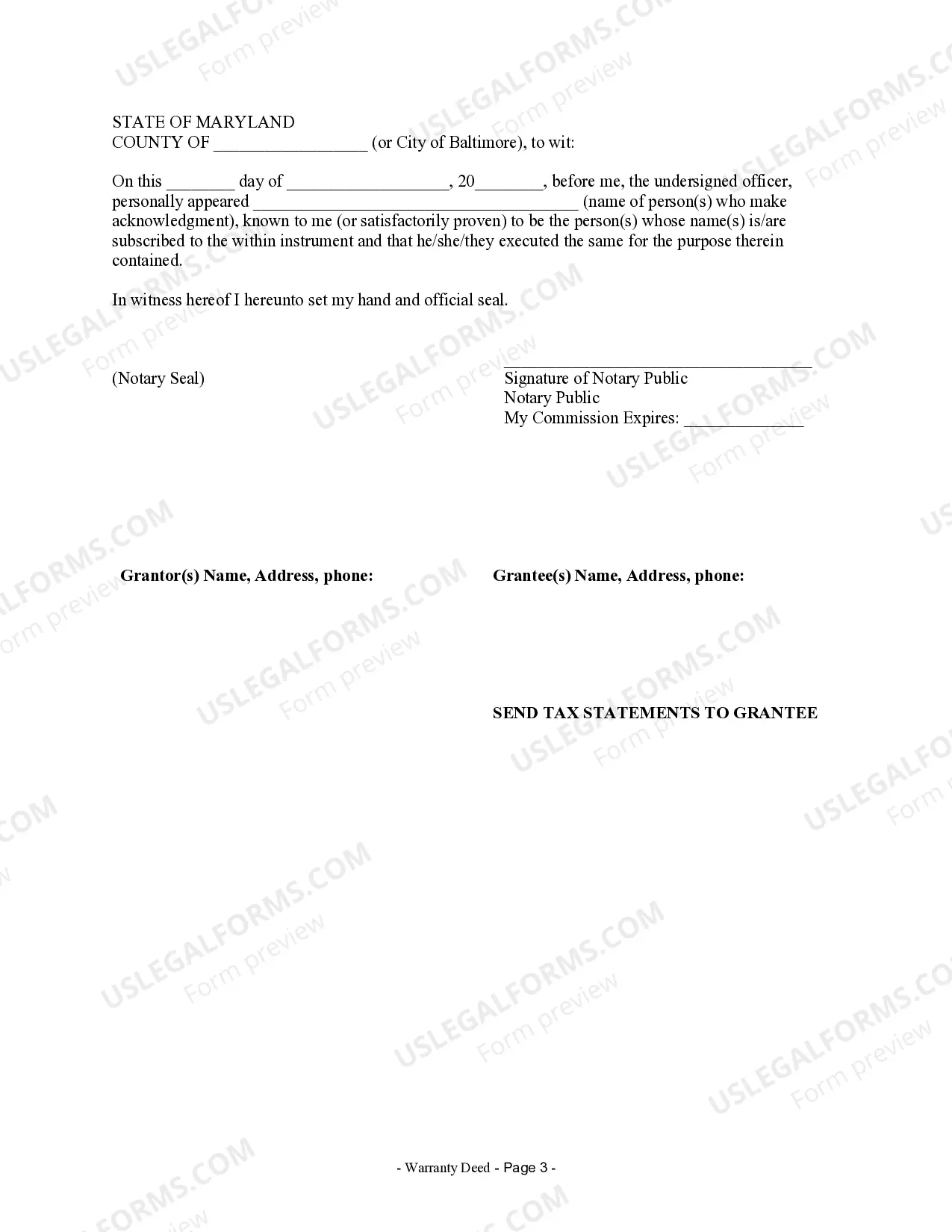
- Signature lines for the grantors and a notary acknowledgment section.


Common use cases
This form should be used when two individuals wish to transfer property to a corporation. Common scenarios include when individuals are forming a business that requires real estate ownership, or when they are selling property that they currently hold in their names to a newly created corporate entity. This deed ensures a clear transfer of title, making it essential in commercial real estate transactions involving corporations.
Who can use this document
- Individuals who currently own real estate and wish to transfer it to a corporation.
- Business owners forming a corporate entity that requires property ownership.
- Legal representatives or real estate professionals involved in such transactions.
How to complete this form
- Identify the parties involved: Name the two individuals as grantors and the corporation as the grantee.
- Describe the property: Provide a detailed description of the property, including the prior instrument reference.
- Specify any reservations: Indicate any reservations for oil, gas, and minerals and note any encumbrances.
- Complete the execution date and county information where the deed will be executed.
- Ensure signatures: Both grantors must sign, and a notary public must acknowledge the signatures.
Notarization requirements for this form
Yes, this form must be notarized to be legally valid. The notary public will verify the identities of the grantors signing the document, ensuring the authenticity of the execution. US Legal Forms offers integrated online notarization services that are available 24/7, featuring secure video calls to facilitate this process without the need for in-person meetings.
Get your form ready online
Our built-in tools help you complete, sign, share, and store your documents in one place.
Make edits, fill in missing information, and update formatting in US Legal Forms—just like you would in MS Word.
Download a copy, print it, send it by email, or mail it via USPS—whatever works best for your next step.
Sign and collect signatures with our SignNow integration. Send to multiple recipients, set reminders, and more. Go Premium to unlock E-Sign.
If this form requires notarization, complete it online through a secure video call—no need to meet a notary in person or wait for an appointment.
We protect your documents and personal data by following strict security and privacy standards.

Make edits, fill in missing information, and update formatting in US Legal Forms—just like you would in MS Word.

Download a copy, print it, send it by email, or mail it via USPS—whatever works best for your next step.

Sign and collect signatures with our SignNow integration. Send to multiple recipients, set reminders, and more. Go Premium to unlock E-Sign.

If this form requires notarization, complete it online through a secure video call—no need to meet a notary in person or wait for an appointment.

We protect your documents and personal data by following strict security and privacy standards.
Typical mistakes to avoid
- Failing to provide a complete property description.
- Not including necessary reservations or encumbrances, which can lead to future disputes.
- Missing signatures or notary acknowledgment, making the deed invalid.
- Inaccurately referencing the prior instrument, which could complicate title searches.
Why use this form online
- Convenient download and immediate access to the form.
- Editability allows users to tailor the document to their specific transfer needs.
- Reliability, as the form is drafted by licensed attorneys ensuring legal compliance.
Legal use & context
- This warranty deed establishes the transfer of title and is enforceable in a court of law.
- The form contains covenants that guarantee the grantors have the legal authority to convey the property.
- Reservations regarding minerals are critical to protect the grantorsâ interests and must be clearly stated.
- Failure to comply with state specifications can lead to challenges in the enforceability of the deed.
Quick recap
- The Warranty Deed from two Individuals to Corporation is essential for transferring ownership to a corporate entity.
- Proper execution, including notarization, is required for validity.
- Understanding the reservations and encumbrances is crucial to avoid future complications.
Looking for another form?
Form popularity
FAQ
To sign over property ownership to another person, you'll use one of two deeds: a quitclaim deed or a warranty deed.
A general warranty deed covers the property's entire history.With a special warranty deed, the guarantee covers only the period when the seller held title to the property. Special warranty deeds do not protect against any mistakes in a free-and-clear title that may exist before the seller's ownership.
A statutory warranty deed is different from a warranty deed because it is a shorter form made available through your state's statutes and it may not outright list the promise that the title is guaranteed to be clear. Instead, because it is a statutory form, this guarantee is implied and is still legally enforceable.
Let's start with the definition of a deed: DEED: A written instrument by which one party, the Grantor, conveys the title of ownership in property to another party, the Grantee. A Warranty Deed contains promises, called covenants, that the Grantor makes to the Grantee.
Typically, the only cost is between $25 and $55 to record the new deed and obtain a certificate from the city/county to show that all taxes are current. The deed should be notarized and must be prepared by one of the parties or under the supervision of a Maryland attorney.
To change the names on a real estate deed, you will need to file a new deed with the Division of Land Records in the Circuit Court for the county where the property is located. The clerk will record the new deed.
A consenting individual may be removed from a deed by filing a quitclaim deed. Under Maryland law each county has a separate procedure and requirements for filing a quitclaim deed.
Typically, the lender will provide you with a copy of the deed of trust after the closing. The original warranty deeds are often mailed to the grantee after they are recorded. These are your original copies and should be kept in a safe place, such as a fireproof lockbox or a safe deposit box at a financial institution.
Retrieve your original deed. Get the appropriate deed form. Draft the deed. Sign the deed before a notary. Record the deed with the county recorder. Obtain the new original deed.