Massachusetts Last Will and Testament for Widow or Widower with Minor Children
Understanding this form
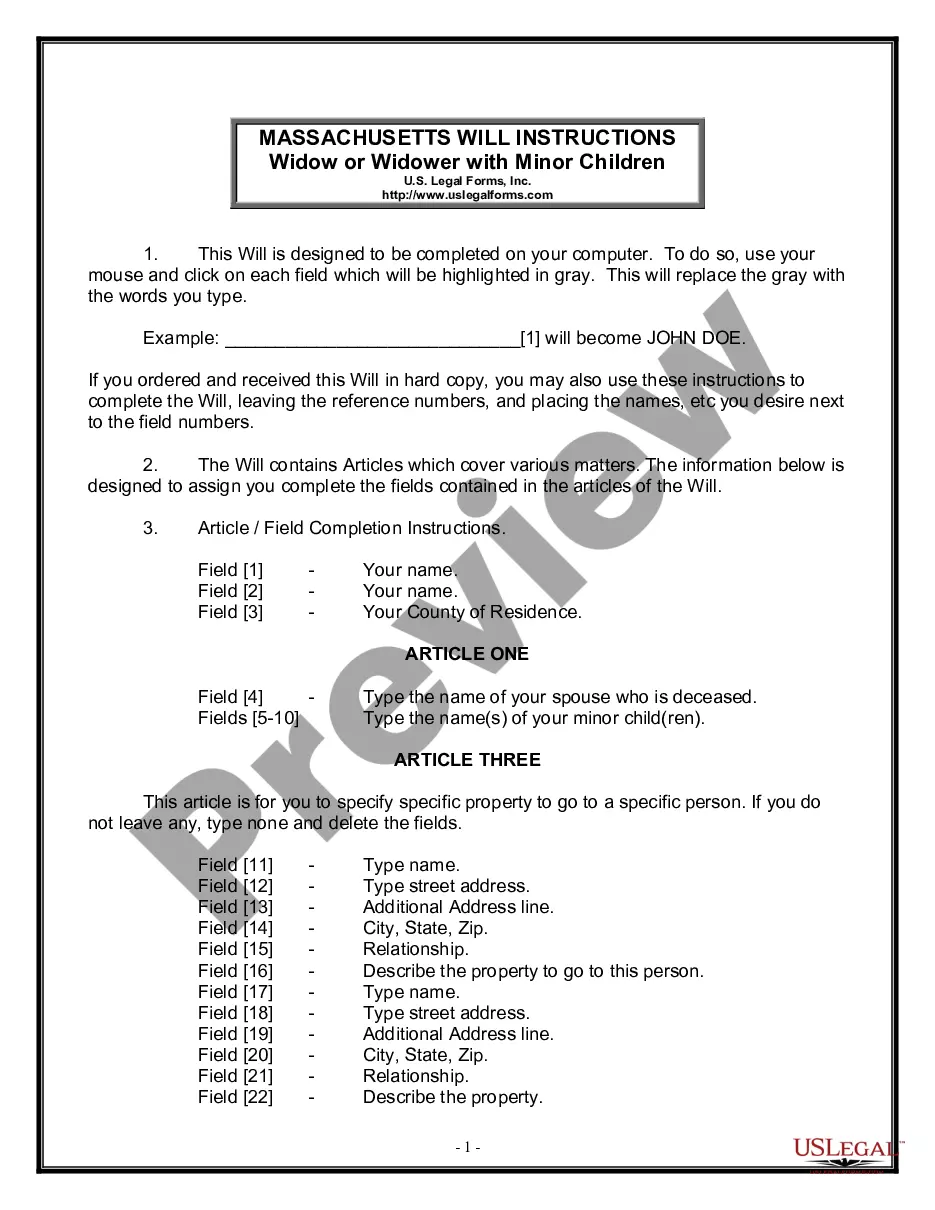
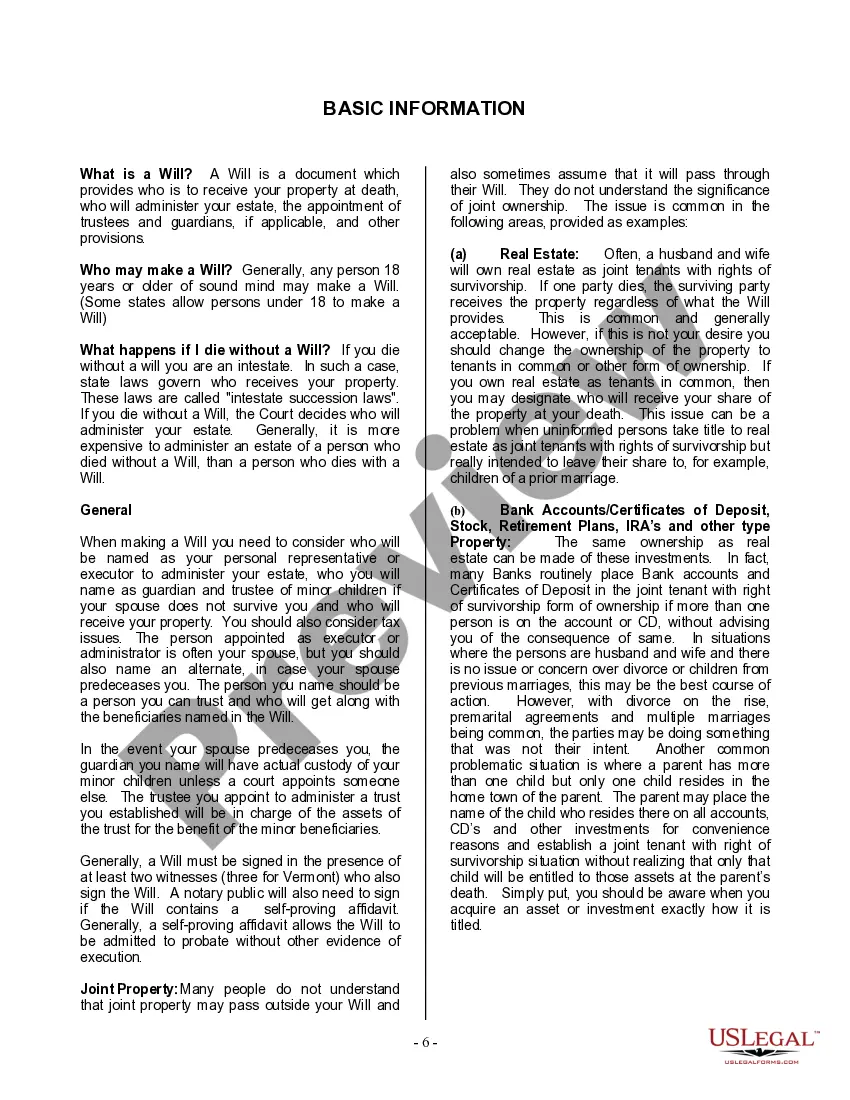
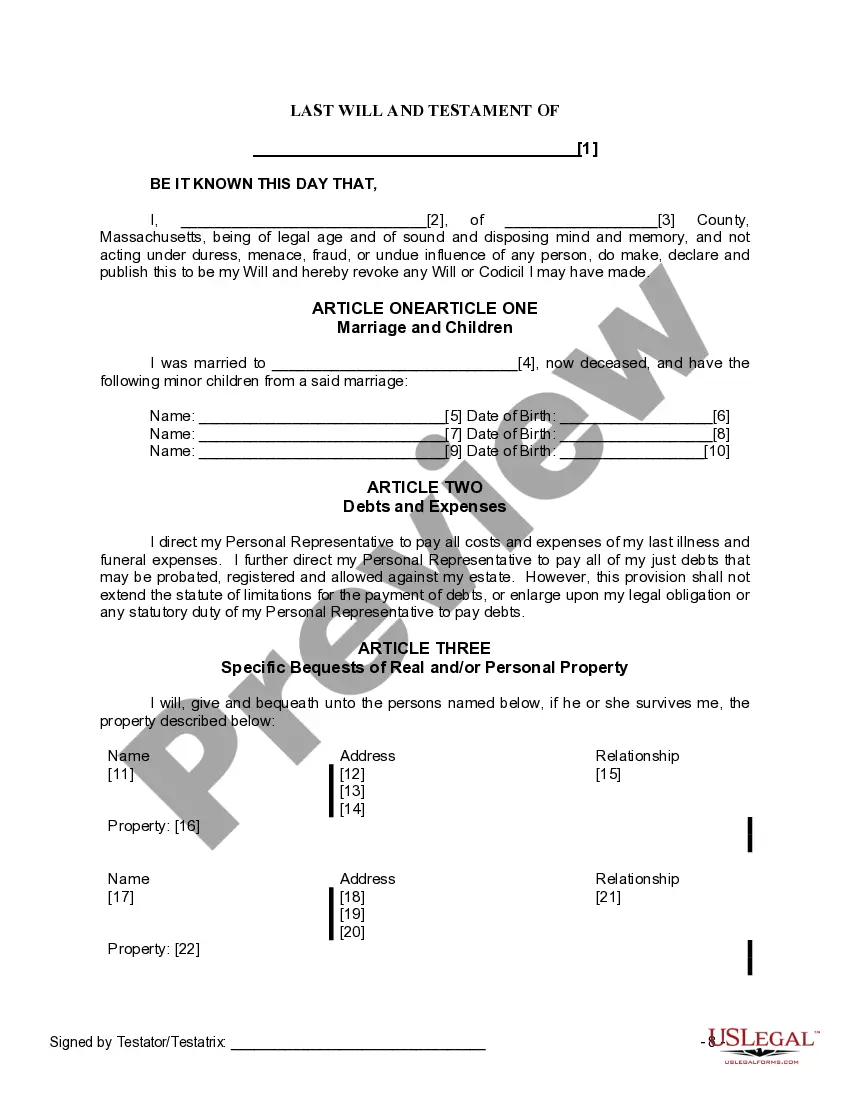
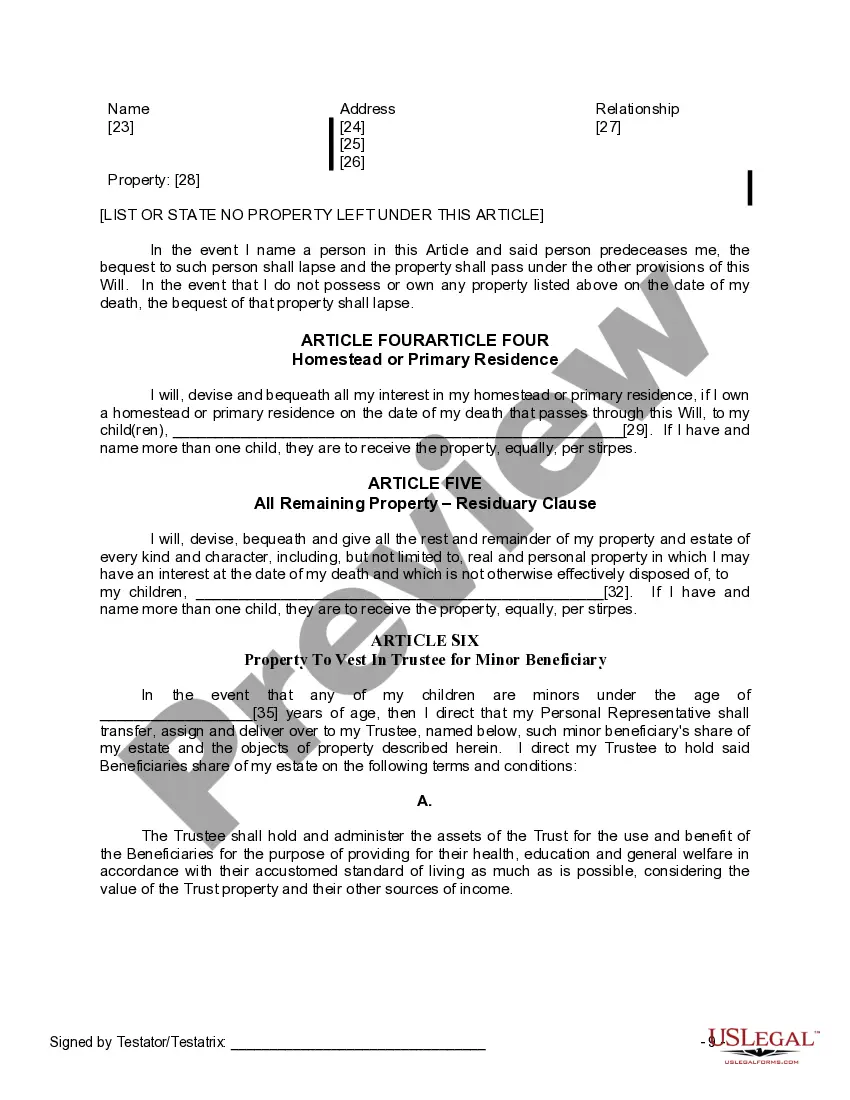
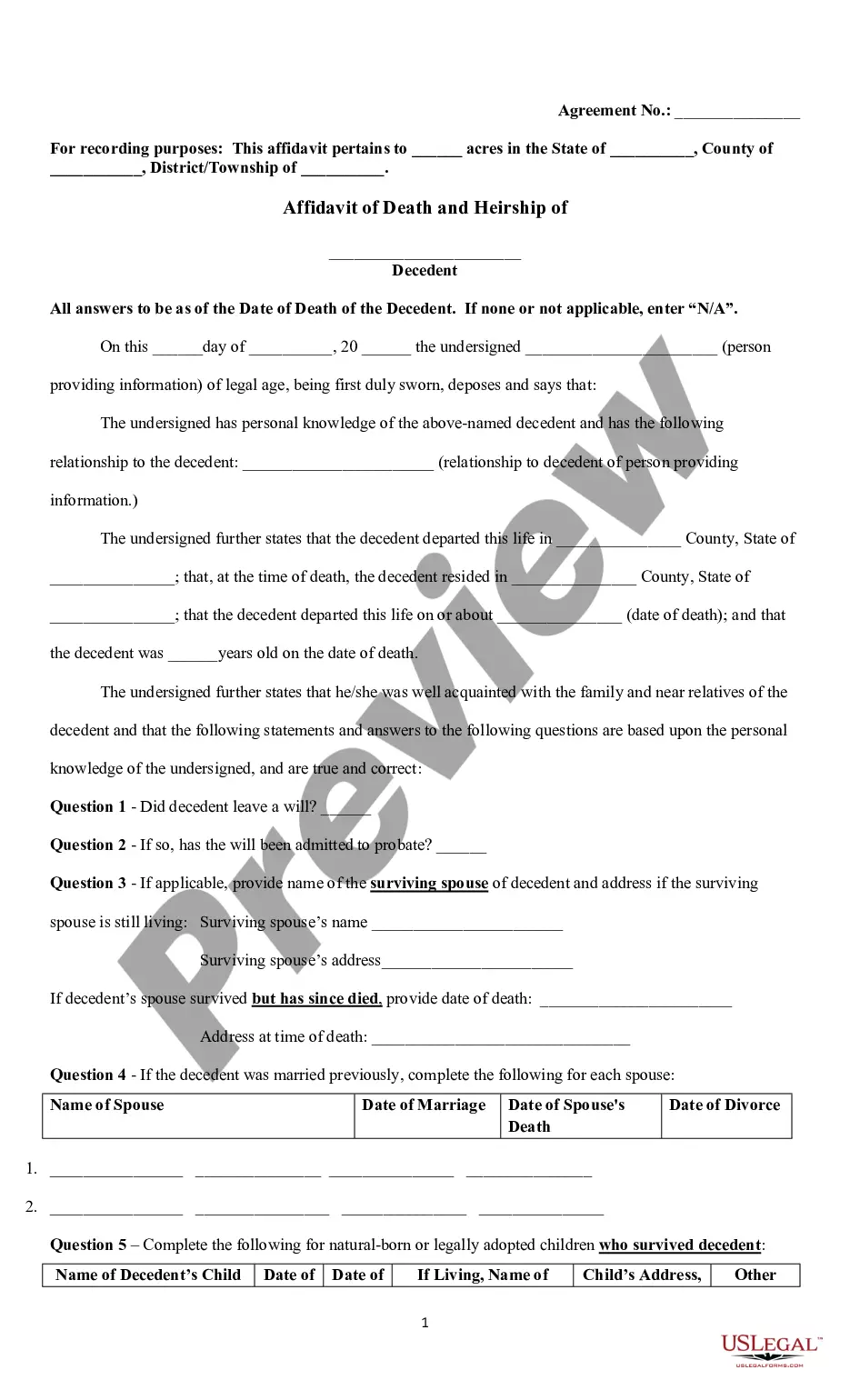
The Last Will and Testament for Widow or Widower with Minor Children is a legal document that outlines how your assets will be distributed upon your death, specifically designed for individuals who are widowed or widowers with dependent children. This form allows you to appoint a personal representative to manage your estate and includes provisions for the care of minor children, ensuring that their interests are protected.
Main sections of this form
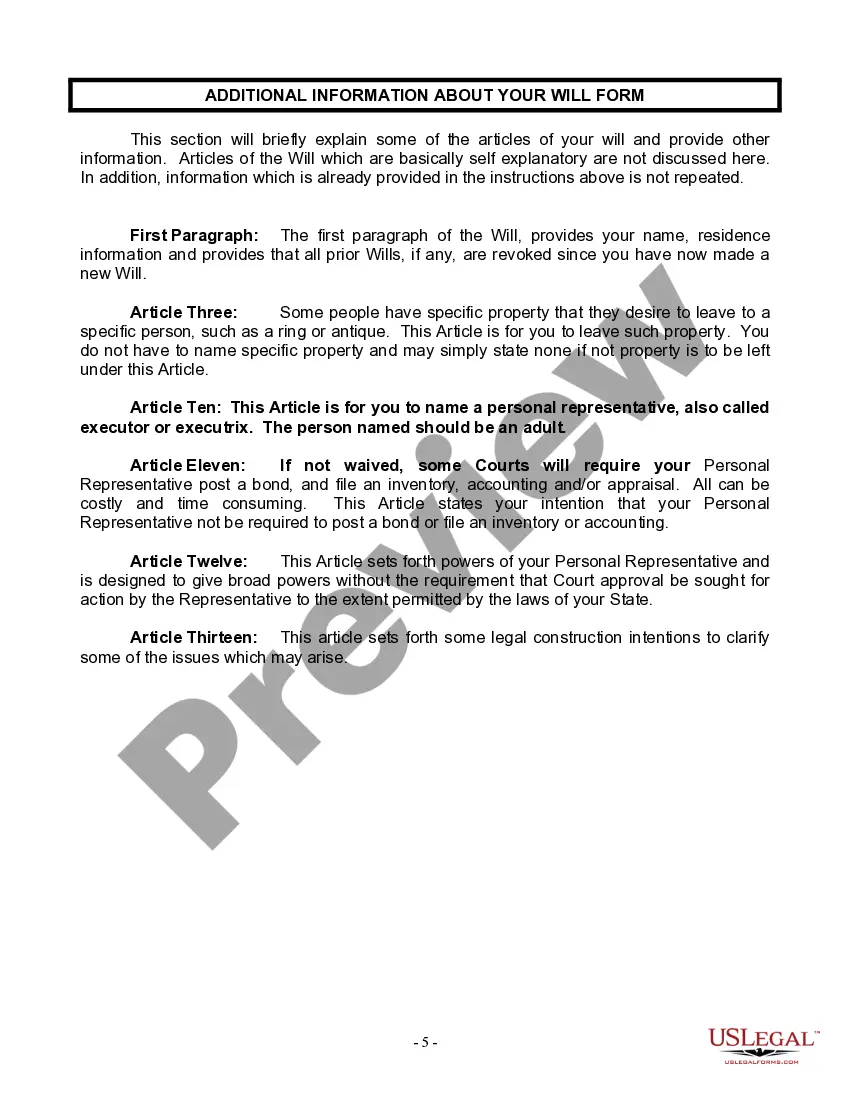
- Appointment of a personal representative to manage the estate.
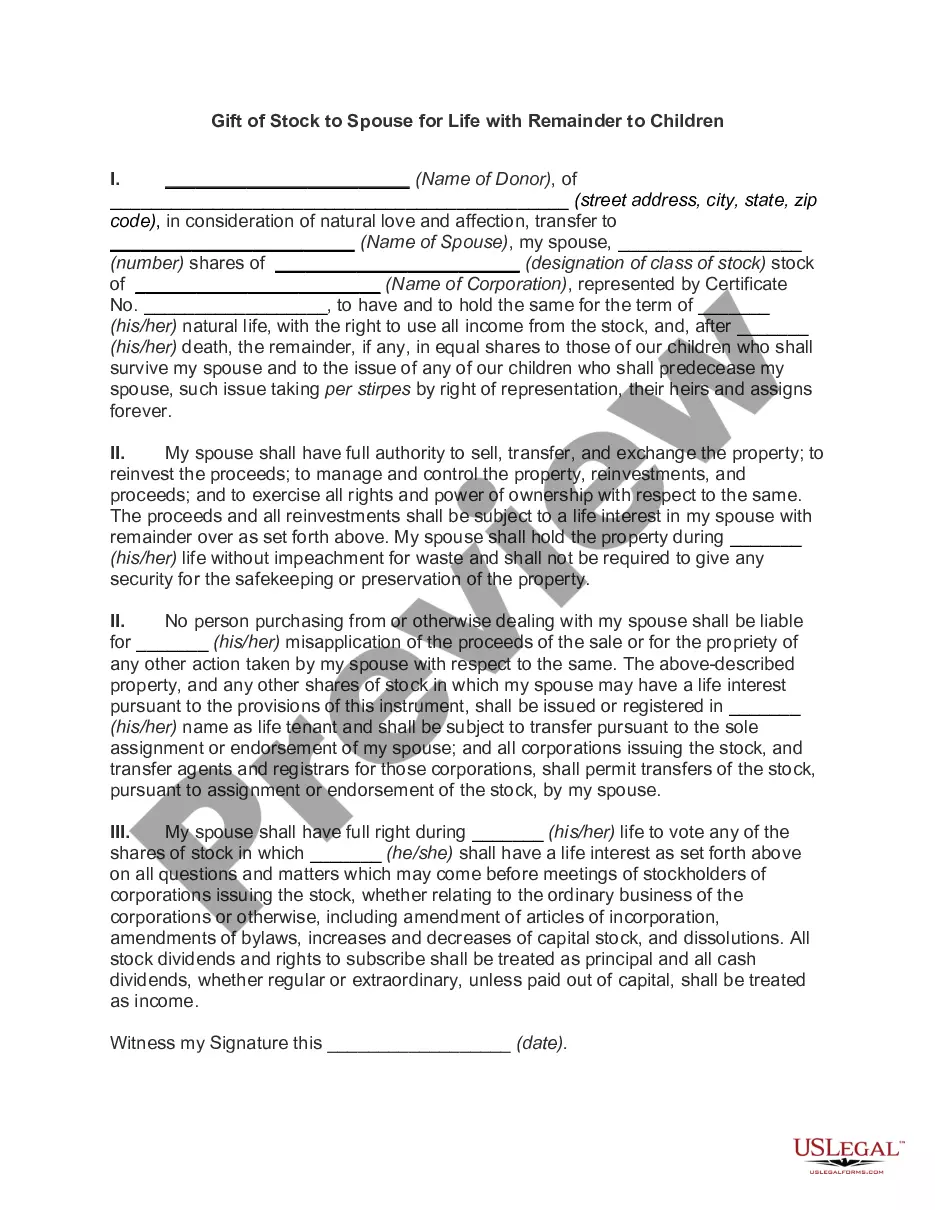
- Designation of beneficiaries, including minor children and specific property assignments.
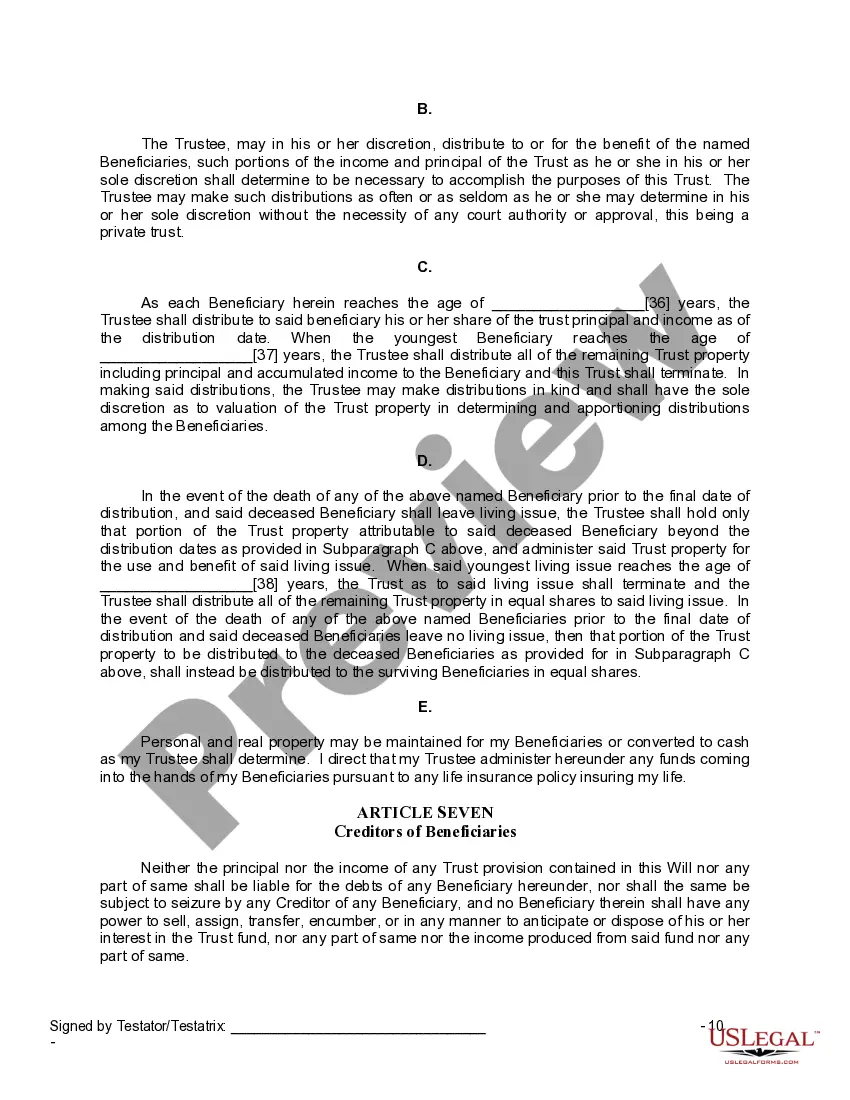
- Provisions for guardianship of minor children.
- Establishment of a trust for minor beneficiaries' assets.
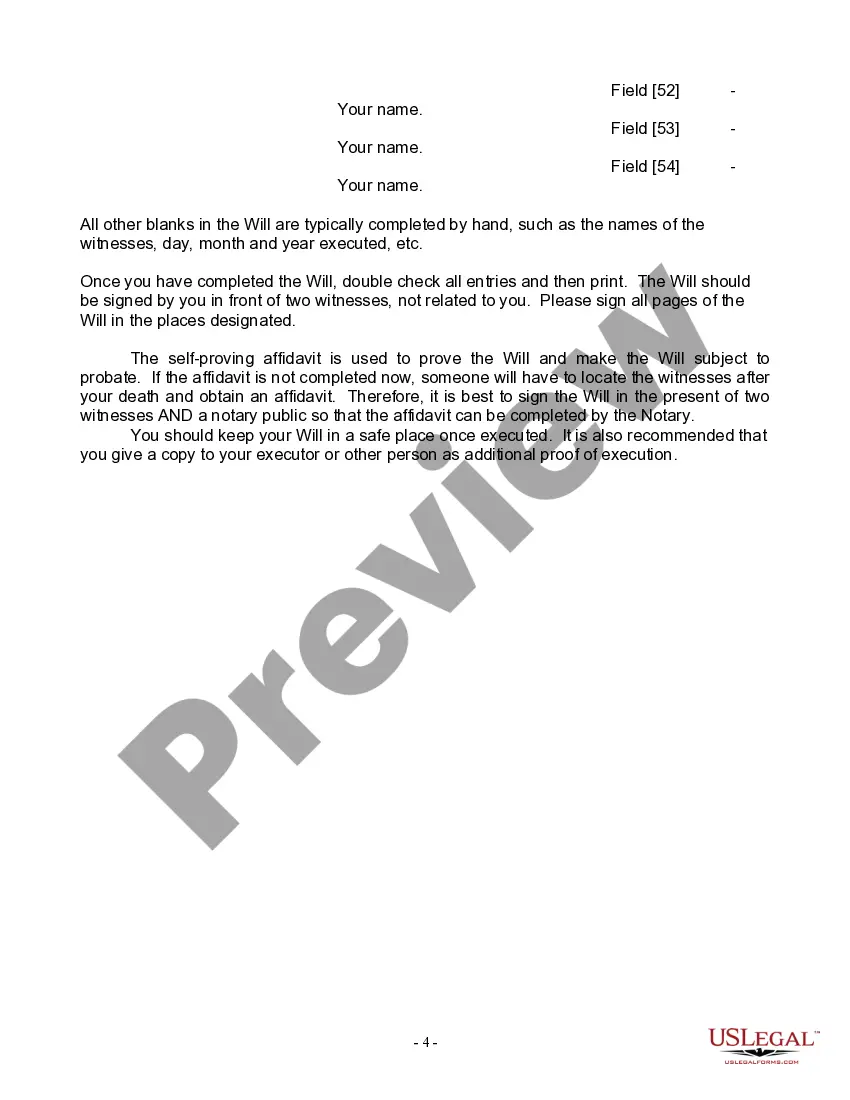
- Self-proving affidavit option for simplified probate.




When to use this form
This form should be used when a widow or widower wishes to create a legally binding document to manage the distribution of their estate, ensuring that their minor children are provided for in the event of their passing. It is particularly important if you have specific assets you wish to bequeath or if you want to ensure a trusted individual oversees your affairs and those of your children.
Who needs this form
This form is suitable for:
- Widows or widowers who are parents or guardians of minor children.
- Individuals looking to ensure their assets are distributed according to their wishes after their passing.
- People who wish to appoint a trusted individual to manage their estate and care for their children.
Instructions for completing this form
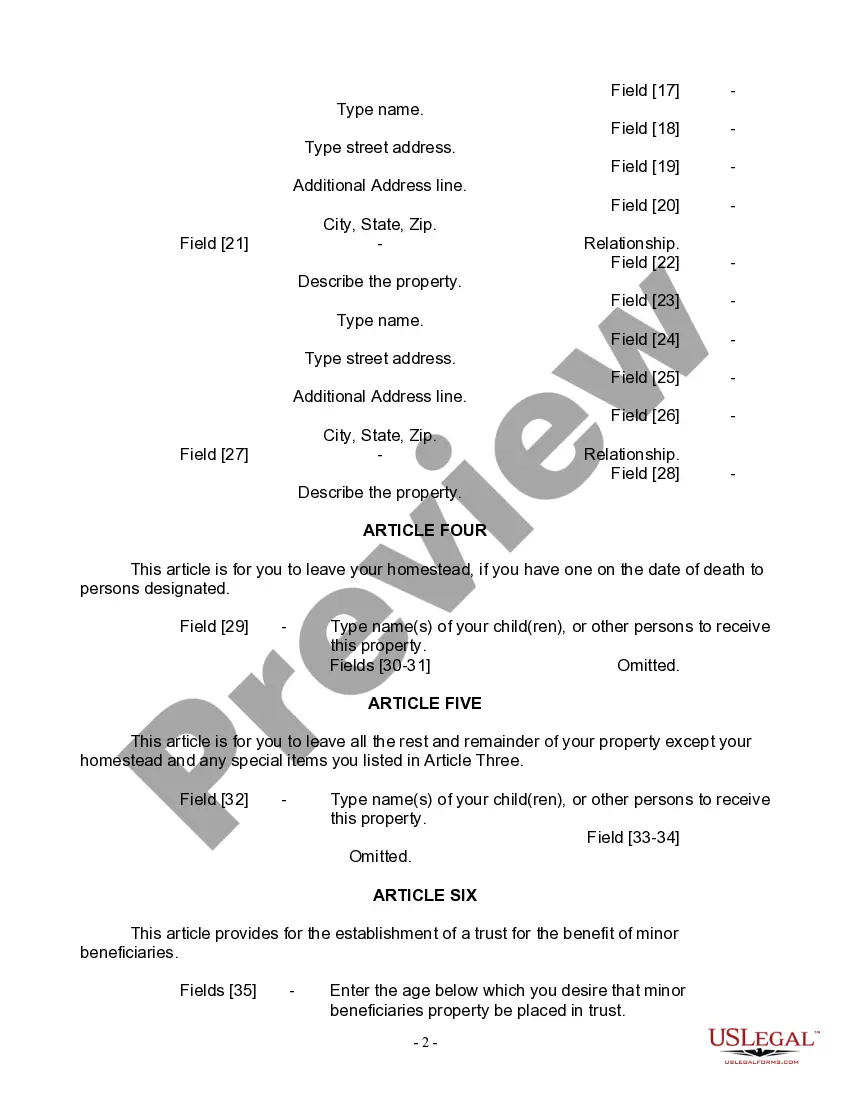
- Enter your name and county of residence in the designated fields.
- Provide the names of your deceased spouse and your minor children.
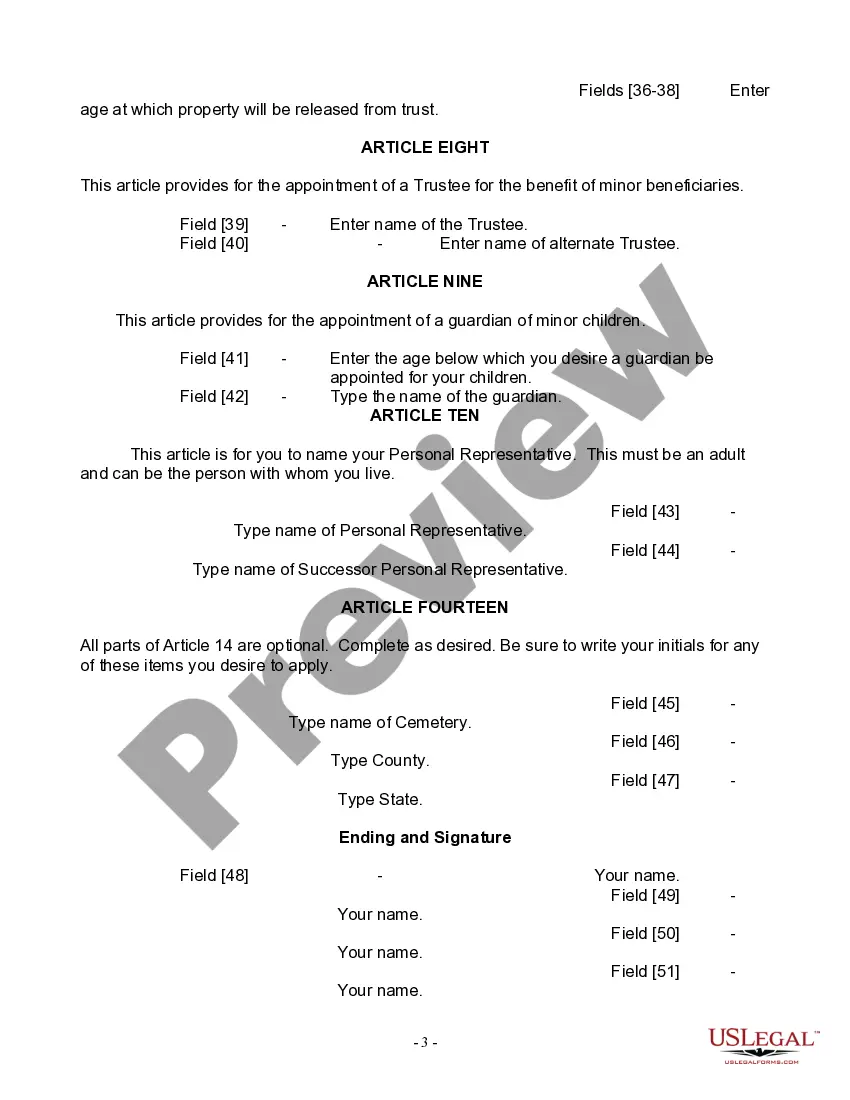
- Designate beneficiaries for specific property and complete any relevant details.
- Specify your chosen guardian for minor children and appoint a personal representative.
- Ensure you have the form witnessed and notarized if required by your state.
Notarization requirements for this form
Yes, this form must be notarized to be legally valid. You may complete the self-proving affidavit with a notary public to help simplify the probate process and confirm the authenticity of your signature.
Get your form ready online
Our built-in tools help you complete, sign, share, and store your documents in one place.
Make edits, fill in missing information, and update formatting in US Legal Forms—just like you would in MS Word.
Download a copy, print it, send it by email, or mail it via USPS—whatever works best for your next step.
Sign and collect signatures with our SignNow integration. Send to multiple recipients, set reminders, and more. Go Premium to unlock E-Sign.
If this form requires notarization, complete it online through a secure video call—no need to meet a notary in person or wait for an appointment.
We protect your documents and personal data by following strict security and privacy standards.

Make edits, fill in missing information, and update formatting in US Legal Forms—just like you would in MS Word.

Download a copy, print it, send it by email, or mail it via USPS—whatever works best for your next step.

Sign and collect signatures with our SignNow integration. Send to multiple recipients, set reminders, and more. Go Premium to unlock E-Sign.

If this form requires notarization, complete it online through a secure video call—no need to meet a notary in person or wait for an appointment.

We protect your documents and personal data by following strict security and privacy standards.
Mistakes to watch out for
- Failing to have the will signed by two disinterested witnesses.
- Not naming a guardian for minor children, leaving their care uncertain.
- Overlooking the inclusion of a self-proving affidavit for easier probate.
Why complete this form online
- Convenient and accessible from anywhere at any time.
- Editable fields allow for easy customization to meet your specific needs.
- Documents are created and downloaded, ensuring immediate availability.
Main things to remember
- This form is crucial for widows or widowers with minor children, ensuring their wishes are respected after their death.
- Appointing a guardian and trustee can provide care and financial security for minor beneficiaries.
- Proper execution with witnesses and notarization is essential for the will's validity.
Looking for another form?
Form popularity
FAQ
Step 1 Treatment Preferences Statement of Goals and Values: Step 2 Preferences in case of terminal condition Step 3 Preference in Case of Persistent Vegetative State Step 4 Preference in Case of End2010Stage Condition
In most situations, a will template is an easy and inexpensive way to make sure your wishes are known and carried out. Most people can get everything they need by using a will template, with little cost or hassle.
That's right, in Massachusetts, your will may be handwritten. According to the law, as long as your will is a written document, you were over the age of 18 and of sound mind when you wrote/signed it, and you had at least 2 witnesses who were also competent to sign your will, your will may be valid.
You can either download a template (many are free) and write your Will at your own pace offline using your word processor, or tell us your wishes in our online questionnaire and let us write it for you.
It does not matter whether the will was prepared online or by an attorney, so long as it is valid. In order for a will to be valid, it must meet the requirements of the state where the testator lives.
Include personal identifying information. Include a statement about your age and mental status. Designate an executor. Decide who will take care of your children. Choose your beneficiaries. List your funeral details. Sign and date your Last Will and Testament.
Age: The testator must be at least 18 years old. Capacity: The testator must be of sound mind. Signature: The will must be signed by the testator or by someone else in the testator's name in his presence, by his direction.
No, in Massachusetts, it is not necessary to notarize your will to make it legal. Massachusetts does, however, allow you to make your will "self-proving." A self-proving will speeds up probate because the court can accept the will without contacting the witnesses who signed it.
Setting up a will is one of the most important parts of planning for your death. Drafting the will yourself is less costly and may put you out about $150 or less. Depending on your situation, expect to pay anywhere between $300 and $1,000 to hire a lawyer for your will.