Massachusetts Last Will and Testament for Married Person with Adult Children
Understanding this form
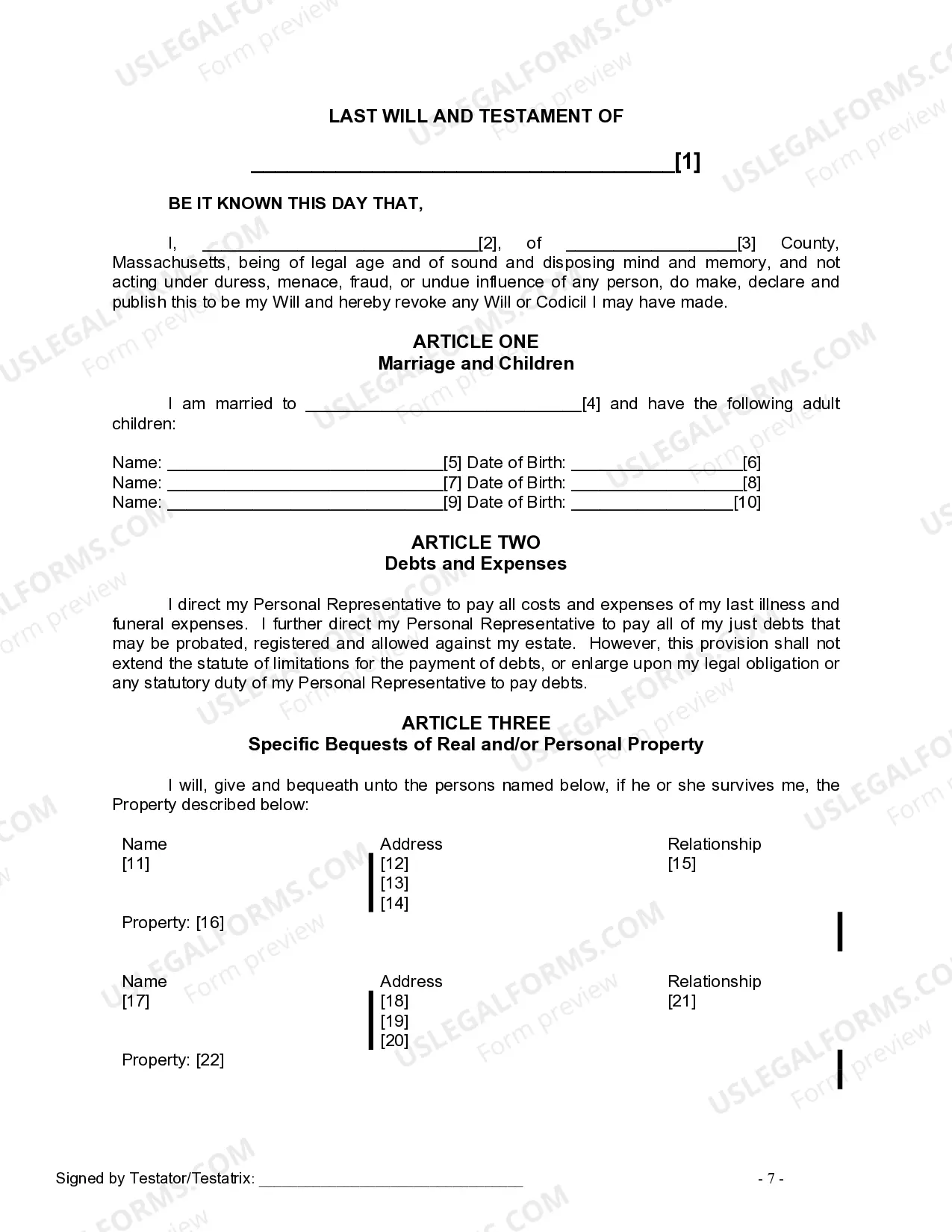
The Last Will and Testament for Married Person with Adult Children is a legal document designed for individuals who are married and have adult children. This form allows you to specify how your assets will be distributed after your death, who will administer your estate, and includes various provisions for your spouse and children. It serves to ensure your wishes are carried out according to your preferences and differs from simpler wills in its tailored provisions for married individuals with adult offspring.
Main sections of this form
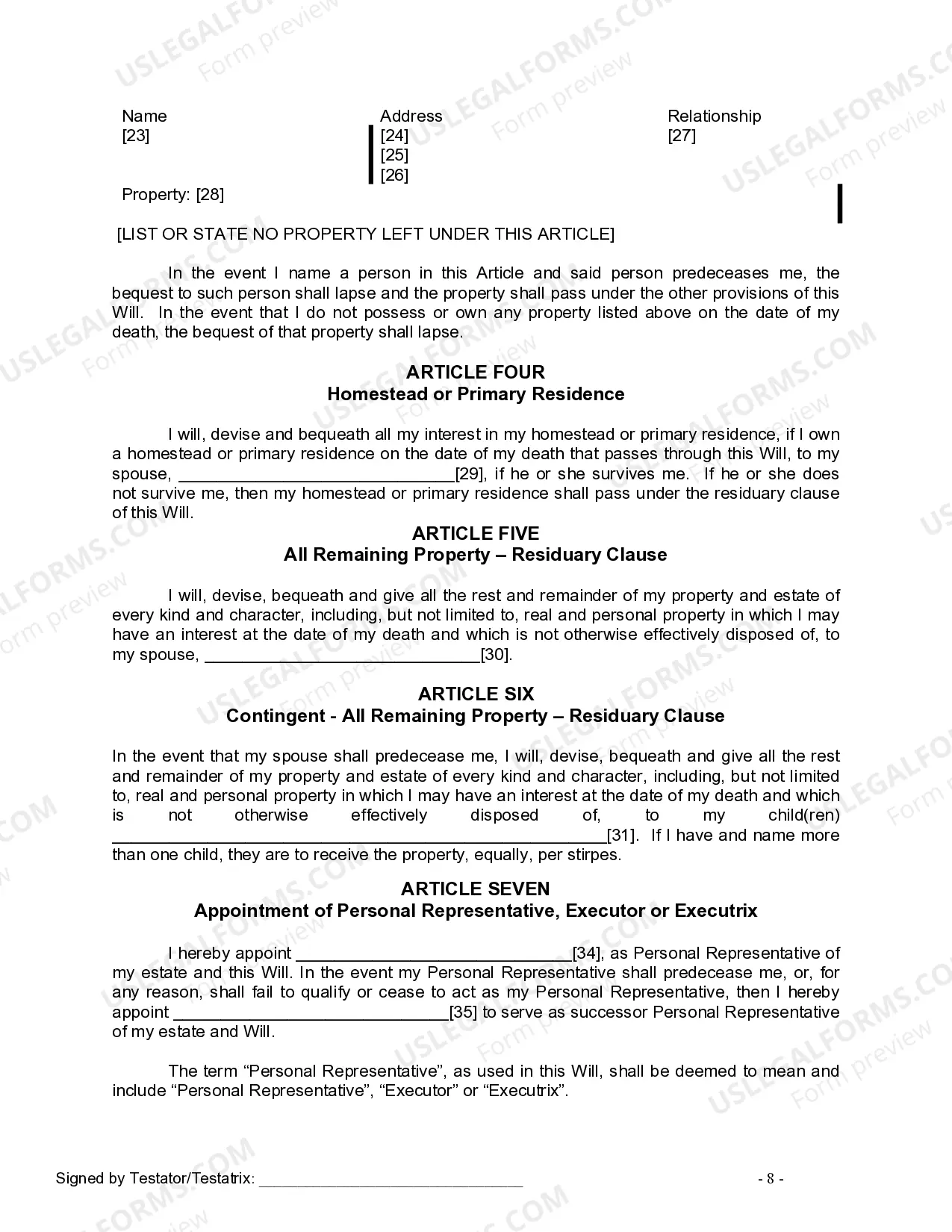
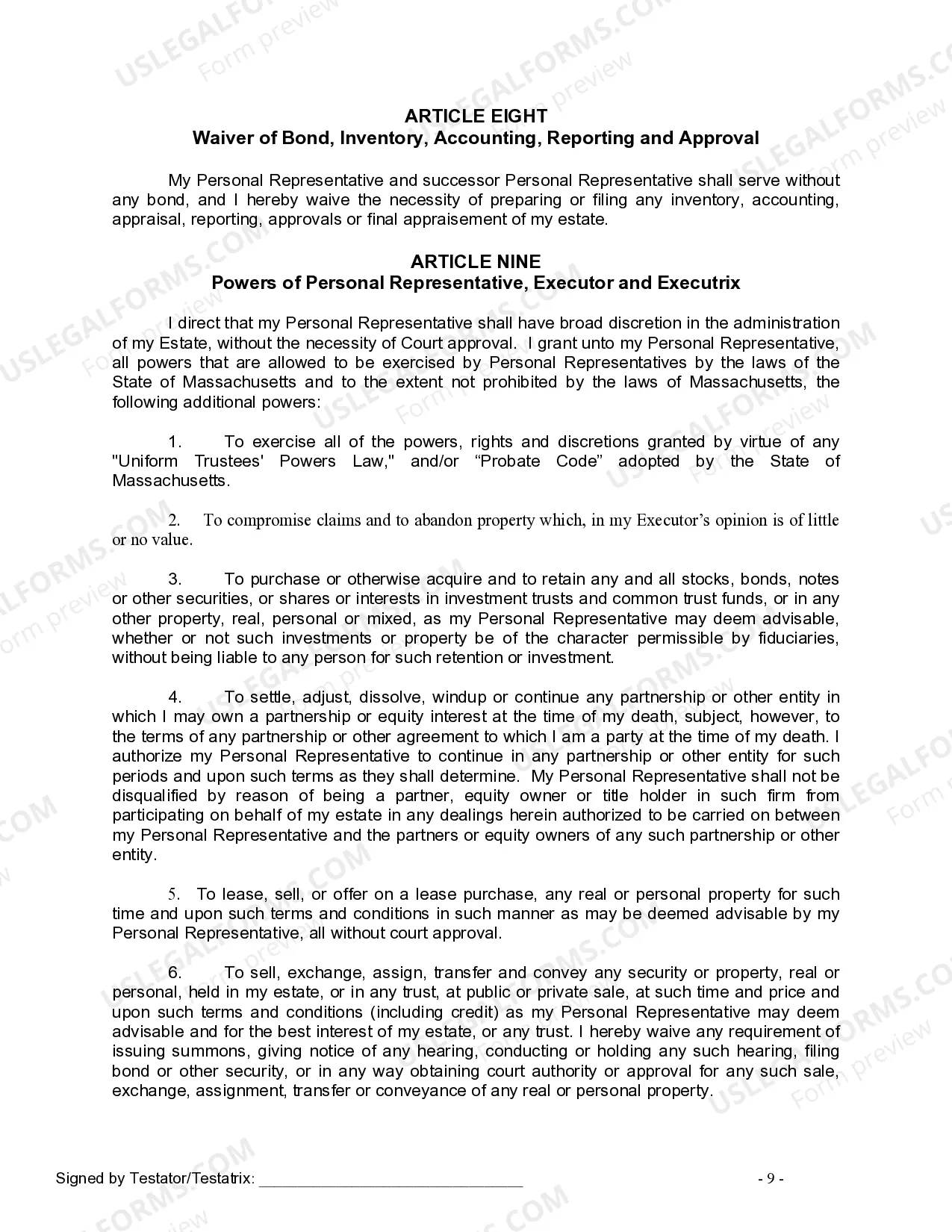
- Appointment of a personal representative to execute the will.
- Designation of beneficiaries, including spouse and children.
- Specific bequests of property to named individuals.
- Provisions for homestead distribution and remaining assets.
- Instructions for the care of minor children, if applicable.
- Signing requirements, including witness and notary provisions.





When this form is needed
This form should be used when a married individual with adult children wishes to create a legally binding document that outlines their wishes regarding asset distribution upon their death. It is particularly useful during important life events such as marriage, significant asset acquisition, or when family dynamics change, such as the birth of grandchildren or changes in relationships.
Who can use this document
- Married individuals with adult children who want to specify their wishes regarding asset distribution.
- Individuals looking to ensure their spouse's financial security after their death.
- People seeking to provide for adult children, including any specific property bequests.
- Anyone wanting to create a clear and legally binding will to avoid potential disputes among heirs.
How to prepare this document
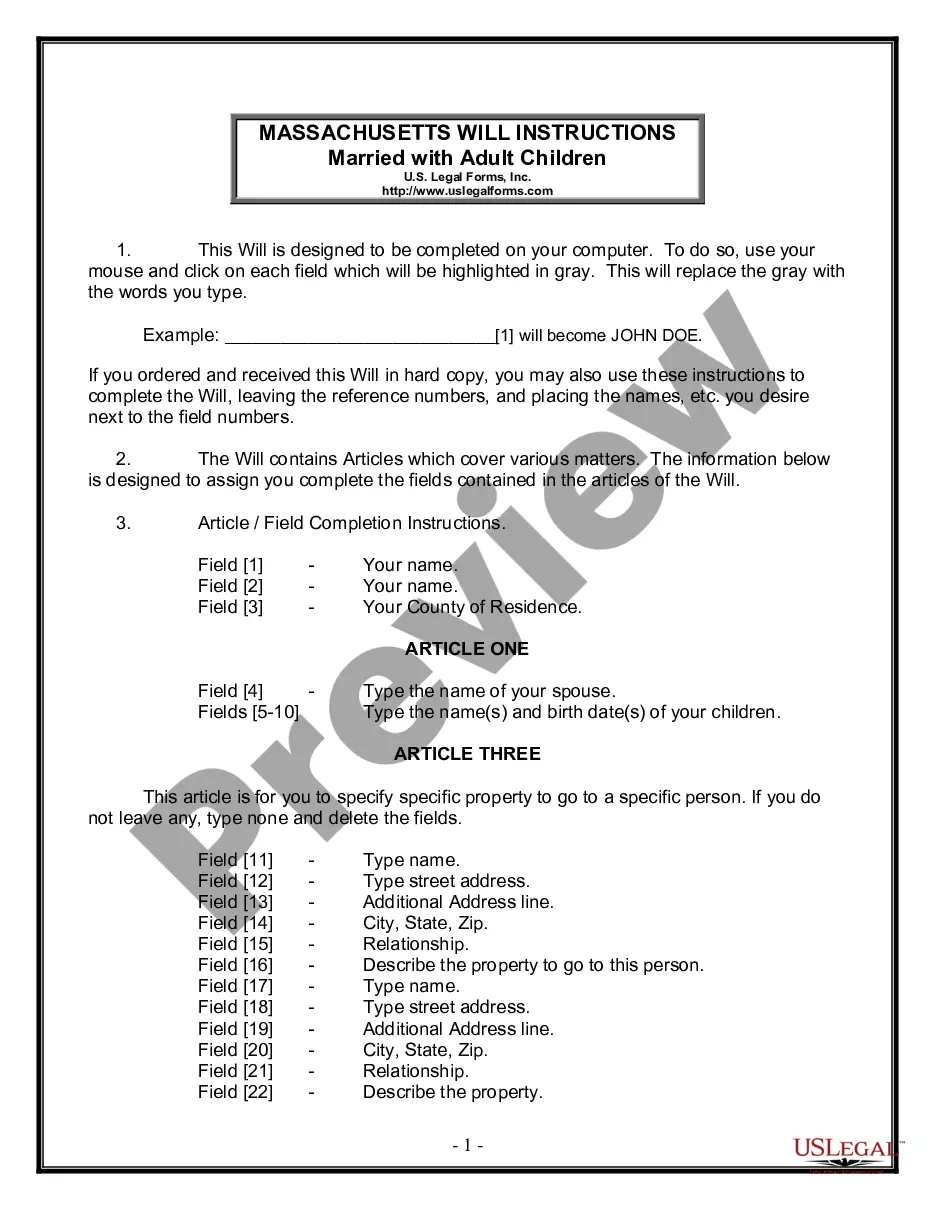
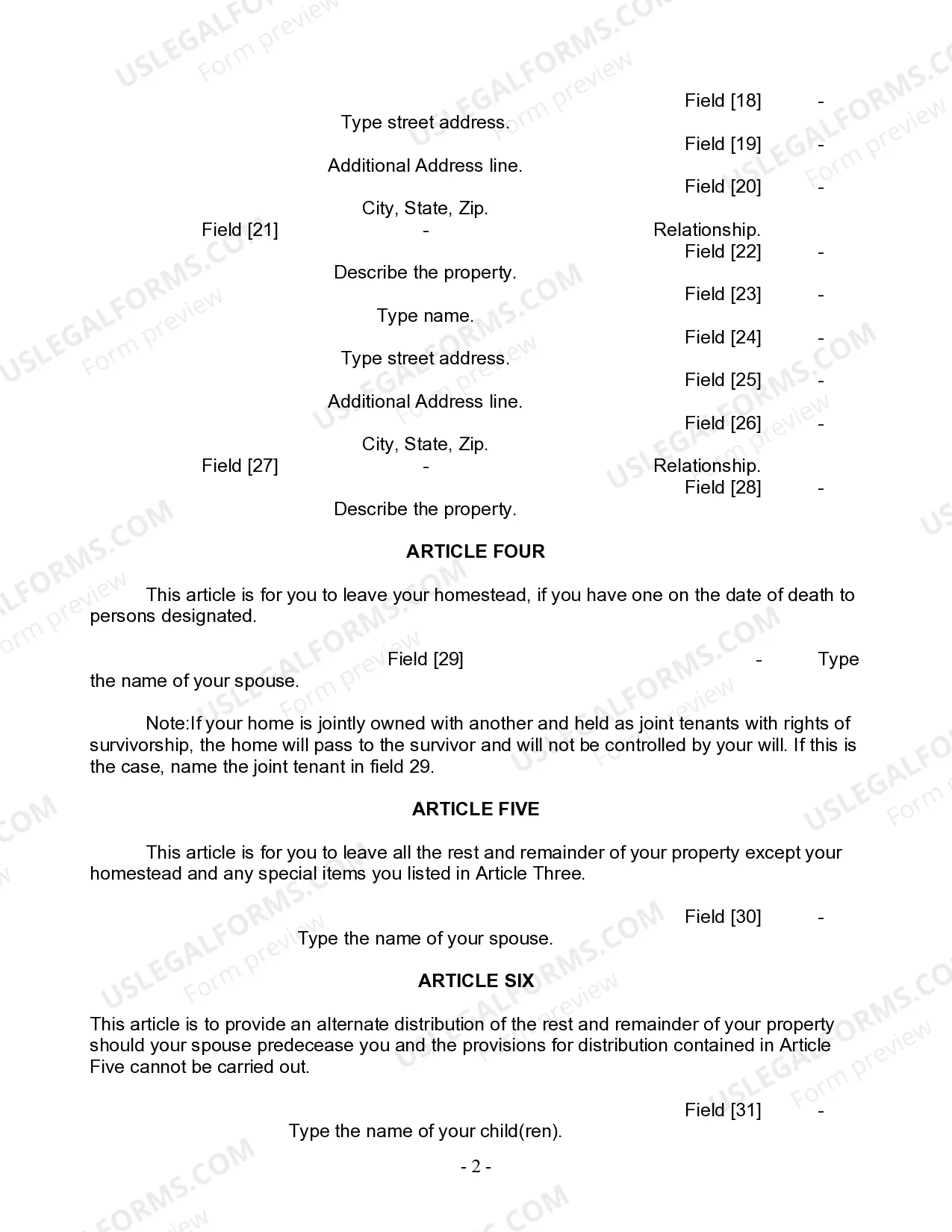
- Provide your full name and county of residence.
- Enter your spouse's name and the names and birth dates of your adult children.
- Specify any specific property bequests you wish to make to individual beneficiaries.
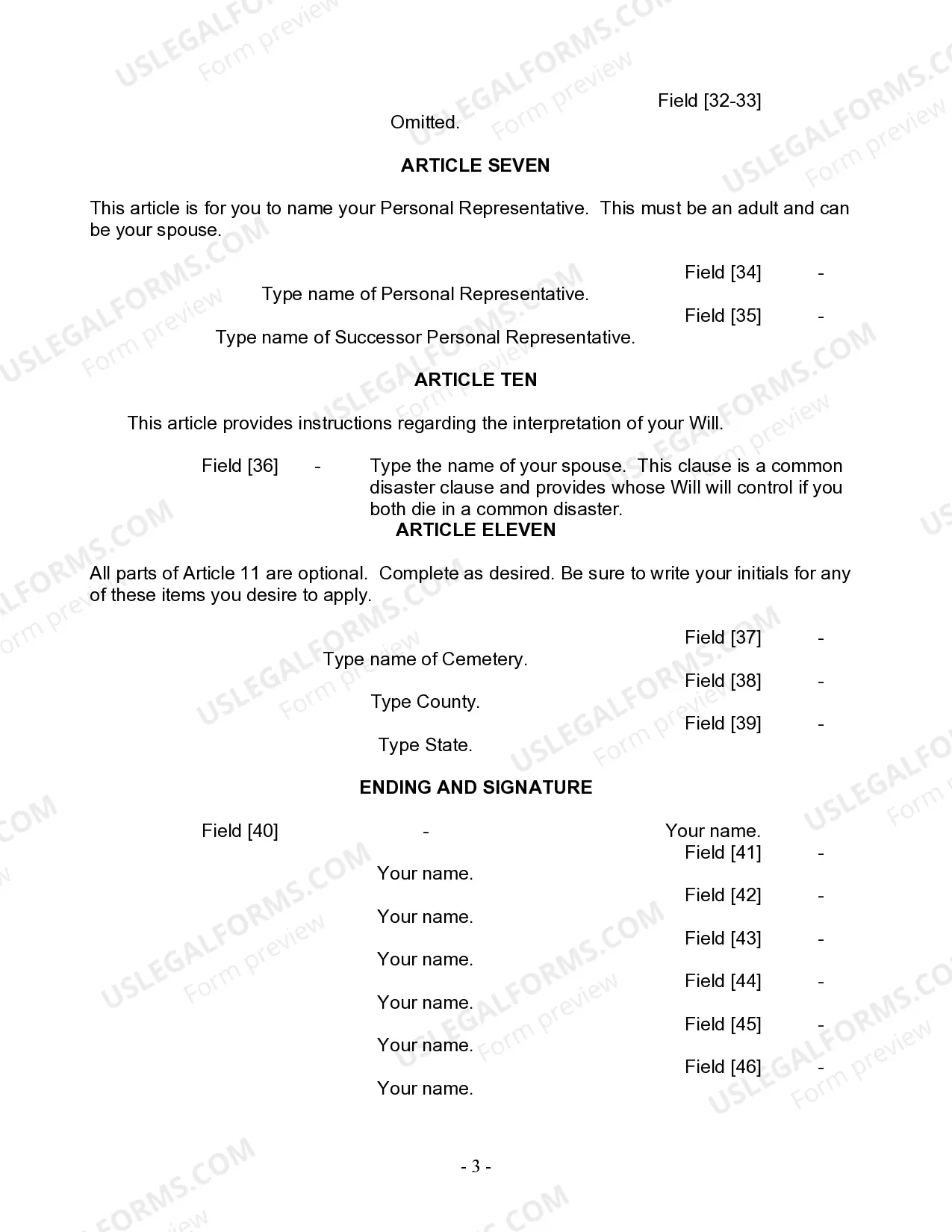
- Designate your personal representative and successor personal representative.
- Ensure the will is signed in the presence of two witnesses and a notary public, if required.
Is notarization required?
This document requires notarization to meet legal standards. US Legal Forms provides secure online notarization powered by Notarize, allowing you to complete the process through a verified video call, available 24/7.
Get your form ready online
Our built-in tools help you complete, sign, share, and store your documents in one place.
Make edits, fill in missing information, and update formatting in US Legal Forms—just like you would in MS Word.
Download a copy, print it, send it by email, or mail it via USPS—whatever works best for your next step.
Sign and collect signatures with our SignNow integration. Send to multiple recipients, set reminders, and more. Go Premium to unlock E-Sign.
If this form requires notarization, complete it online through a secure video call—no need to meet a notary in person or wait for an appointment.
We protect your documents and personal data by following strict security and privacy standards.

Make edits, fill in missing information, and update formatting in US Legal Forms—just like you would in MS Word.

Download a copy, print it, send it by email, or mail it via USPS—whatever works best for your next step.

Sign and collect signatures with our SignNow integration. Send to multiple recipients, set reminders, and more. Go Premium to unlock E-Sign.

If this form requires notarization, complete it online through a secure video call—no need to meet a notary in person or wait for an appointment.

We protect your documents and personal data by following strict security and privacy standards.
Avoid these common issues
- Not having the will signed in front of the required number of witnesses.
- Failing to update the will after significant life changes, such as divorce or the birth of children.
- Neglecting to provide a clear designation for specific bequests, leading to potential confusion.
Why complete this form online
- Convenient access from anywhere, allowing for easy editing and updating of your will.
- Guidance provided throughout the form completion process ensures accuracy.
- Quick download for immediate use and easier storage of your legal documents.
Summary of main points
- The Last Will and Testament for Married Person with Adult Children is essential for clear estate planning.
- Proper witnessing and notarization are crucial for validity.
- Review and update your will regularly to reflect changes in family situation or assets.
- Specific bequests should be clearly defined to avoid confusion later.
Looking for another form?








Form popularity
FAQ
Living will. A living will is a written, legal document that spells out medical treatments you would and would not want to be used to keep you alive, as well as your preferences for other medical decisions, such as pain management or organ donation. In determining your wishes, think about your values.
A living will is a vital part of the estate plan. You can alter it as your preferences and needs change over time.But your family cannot override your living will. They cannot take away your authority to make your own treatment and care plans.
In Massachusetts, if you are over 18 and of sound mind, and have the signatures of 2 witnesses, your handwritten will may be considered valid. However, there are some issues you should consider before deciding a handwritten will (also called holographic) is sufficient for your estate planning needs.
What happens if you die without a will? "If you die without a will in Massachusetts, your assets will go to your closest relatives under state 'intestate succession' laws.
Most states do accept living wills from other states as long as the document is valid in the state in which it was created, but not all do, so it is important to check when your living will is created.
If you die intestate, according to Massachusetts intestacy law, everything goes to your next of kin. Your next of kin are the people who have the closest relation to you. If you're married, then that's your spouse. If you're not married, your closest blood relations or equivalent, will inherit your property.
Massachusetts is one of only three states that recognizes Health Care Proxies but does not recognize Living Wills. Living Wills are still potentially useful because they guide Agents and physicians about the types of choices a person would make.
No -- you can create your own will in Massachusetts, using Nolo's do-it-yourself will software or online will programs. You may want to consult a lawyer in some situations, however. For example, if you think that your will might be contested or if you want to disinherit your spouse, you should talk with an attorney.
Step 1 Treatment Preferences Statement of Goals and Values: Step 2 Preferences in case of terminal condition Step 3 Preference in Case of Persistent Vegetative State Step 4 Preference in Case of End2010Stage Condition