Massachusetts Mutual Wills Package with Last Wills and Testaments for Married Couple with Minor Children
What this document covers
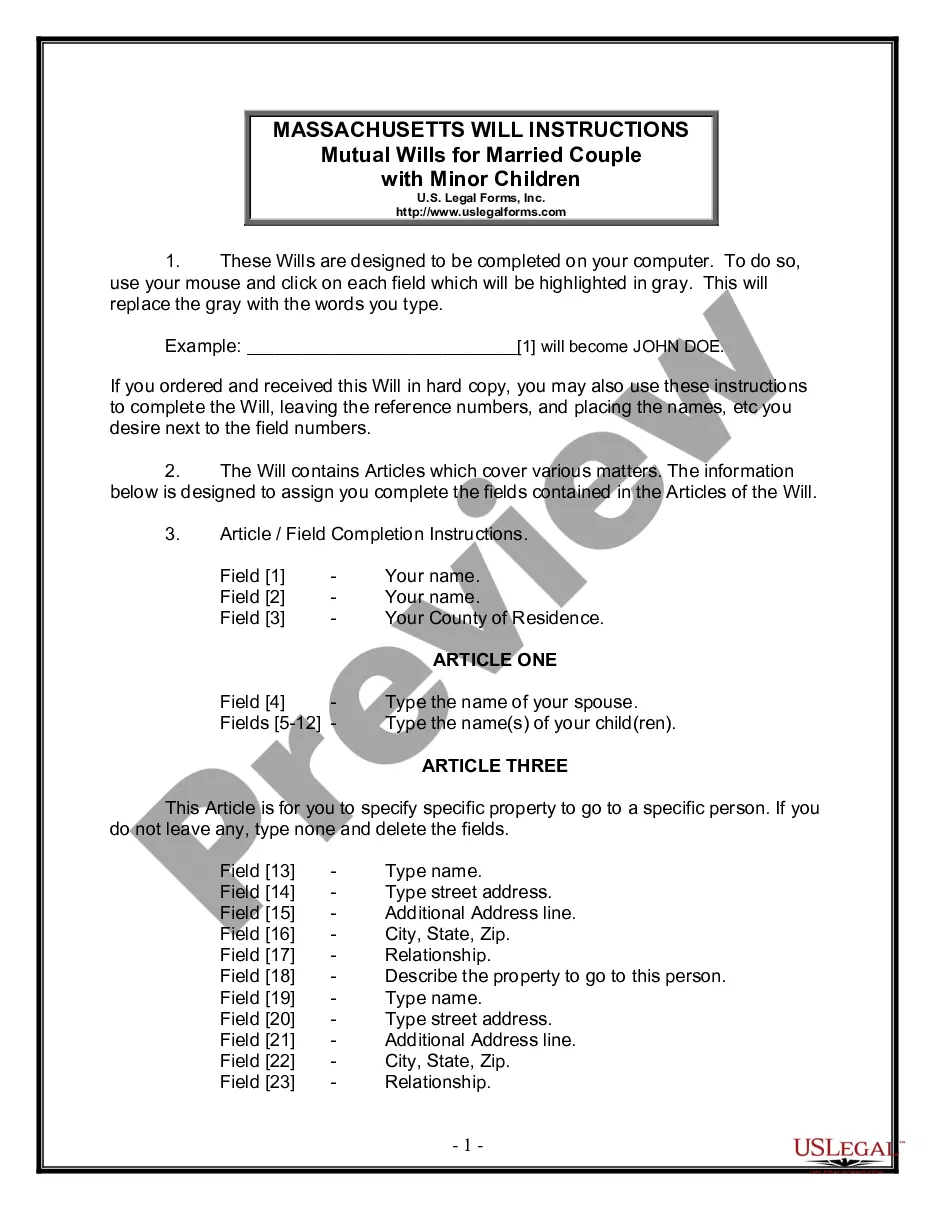
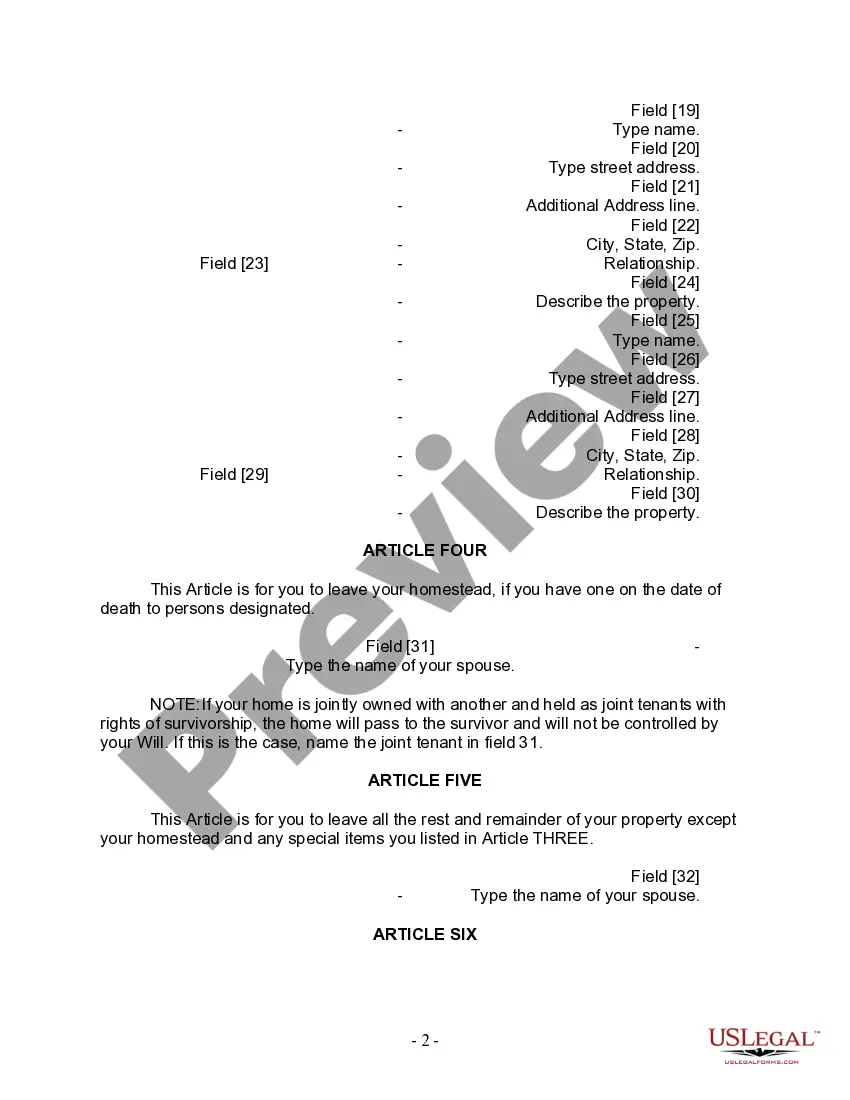
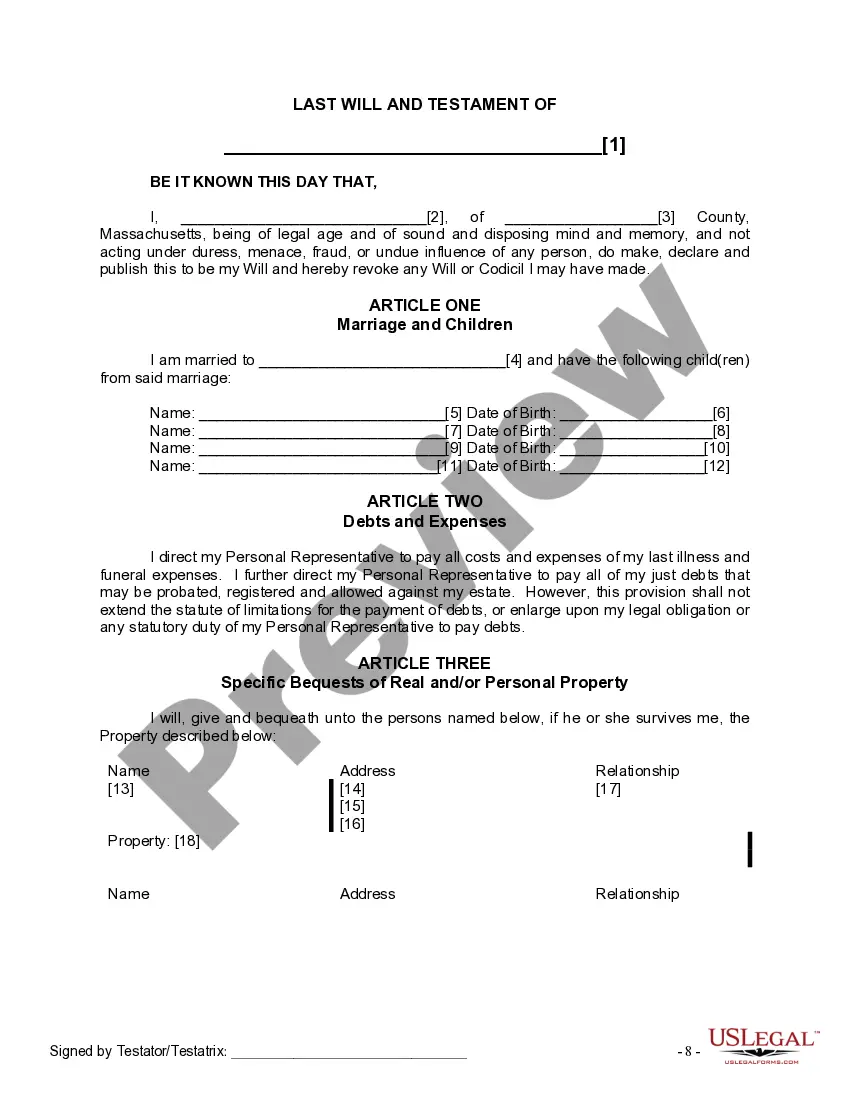
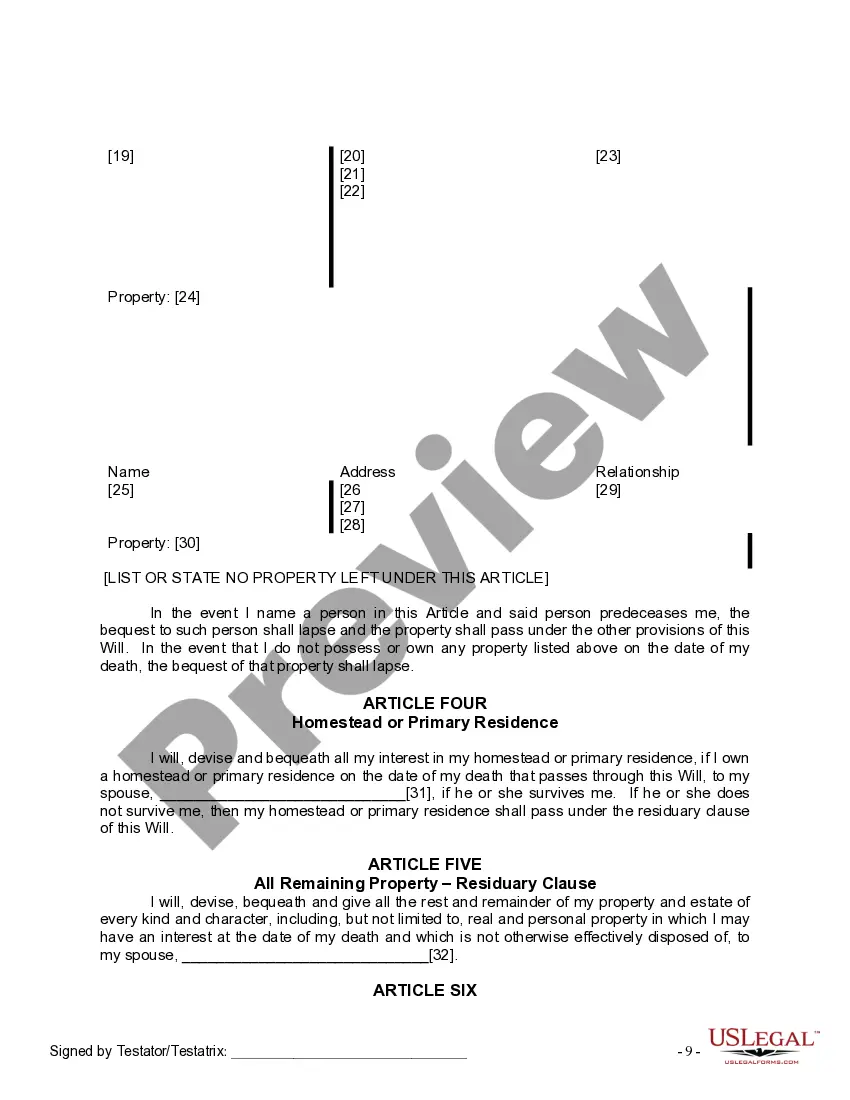
The Mutual Wills Package with Last Wills and Testaments for Married Couple with Minor Children is a legal document designed specifically for married couples. It outlines how the couple wishes to distribute their assets upon their passing while ensuring the care of their minor children. This package includes two last wills, one for each spouse, and outlines the naming of a personal representative, specific bequests, and the establishment of trusts for minors. Unlike standard wills, mutual wills cannot be changed unilaterally, ensuring consistent distribution intentions between spouses.
Key components of this form
- Two separate wills for each spouse.
- Appointment of a personal representative or executor.
- Designation of beneficiaries, including provisions for each spouse and minor children.
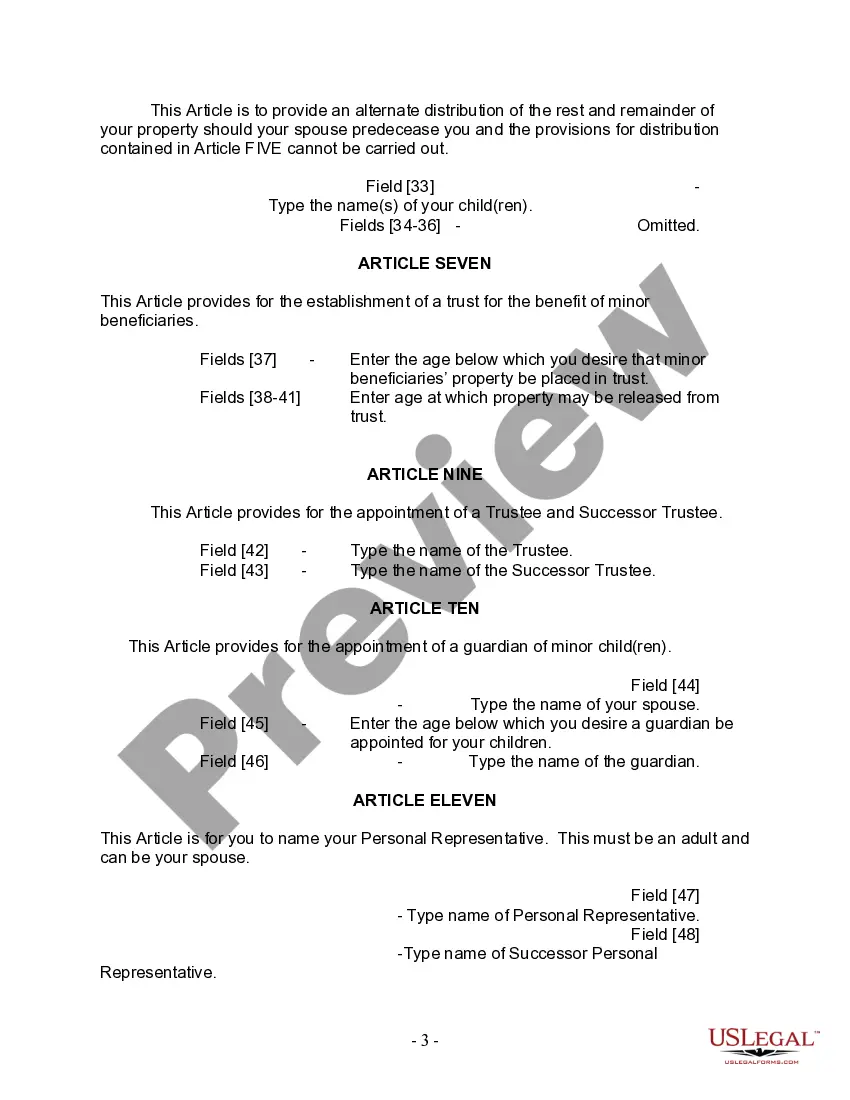
- Establishment of a trust for minor beneficiaries.
- Guardian designation for minor children.
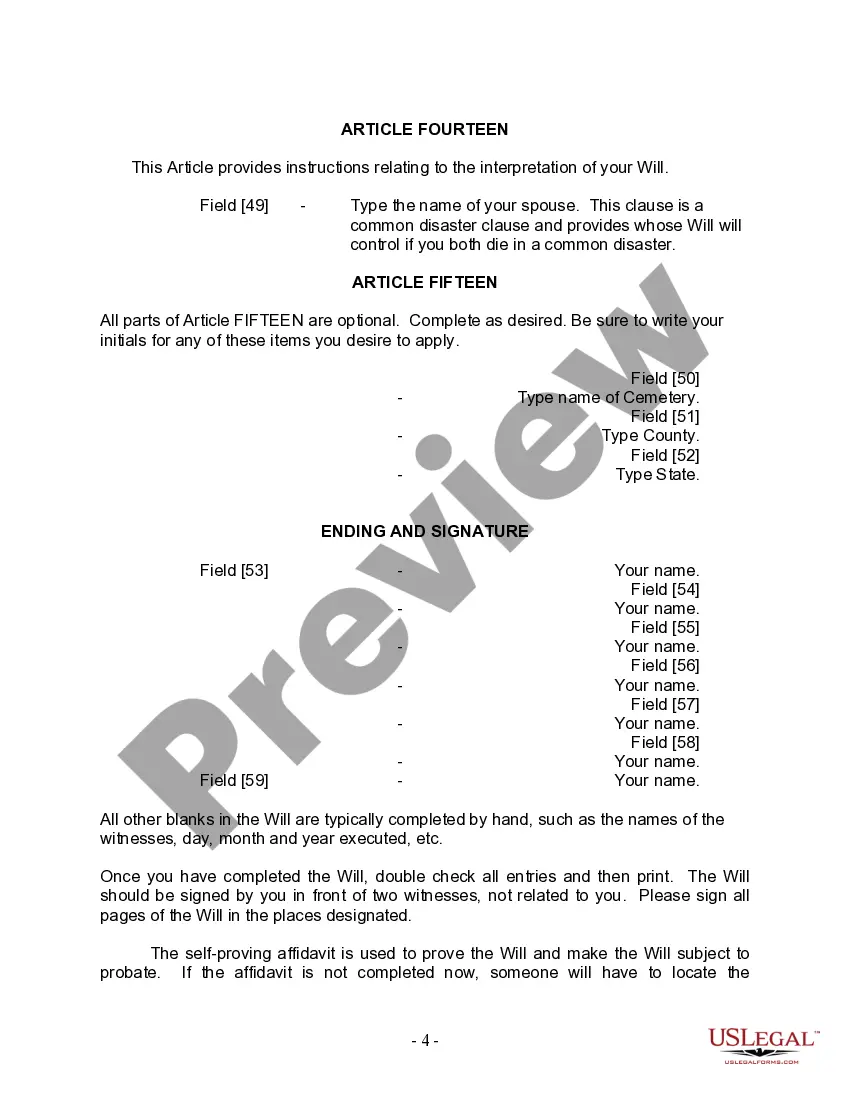
- Completion guidelines, including a self-proving affidavit for legal validation.





When this form is needed
This form is particularly useful for married couples with minor children who want to ensure that their assets are distributed according to their mutual wishes. It should be used when both spouses wish to create binding last wills to protect their children's financial and caregiving needs in the event of their deaths. This package is ideal when both parties agree on their estate plans and want to create a unified approach to their wills.
Who needs this form
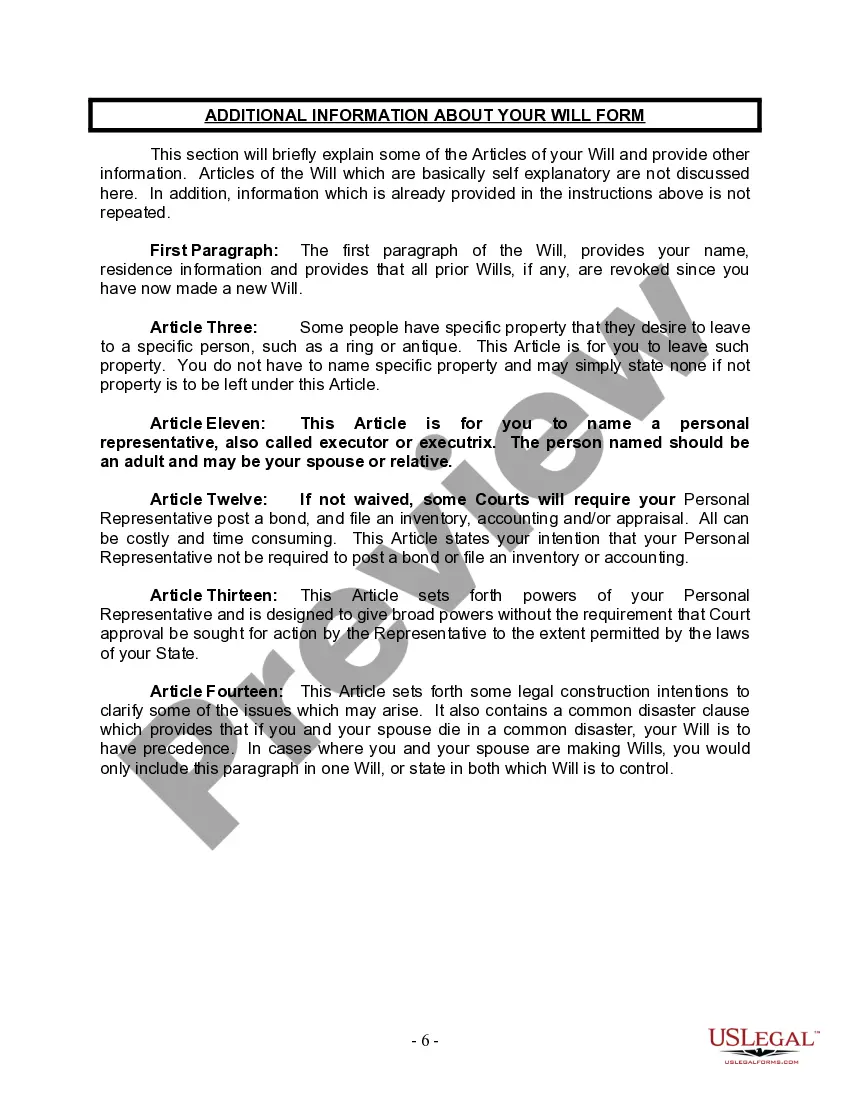
- Married couples looking to establish mutually binding wills.
- Couples with minor children who need to appoint guardians and trustees.
- Individuals who want to clearly express their intentions for asset distribution.
- Spouses who wish to simplify the probate process for their heirs.
Completing this form step by step
- Identify the parties involved, including each spouse's name and address.
- Designate your personal representative and specific beneficiaries for your assets.
- Specify any unique properties and desired distributions in each will.
- Indicate guardianship for minor children and establish trust provisions if needed.
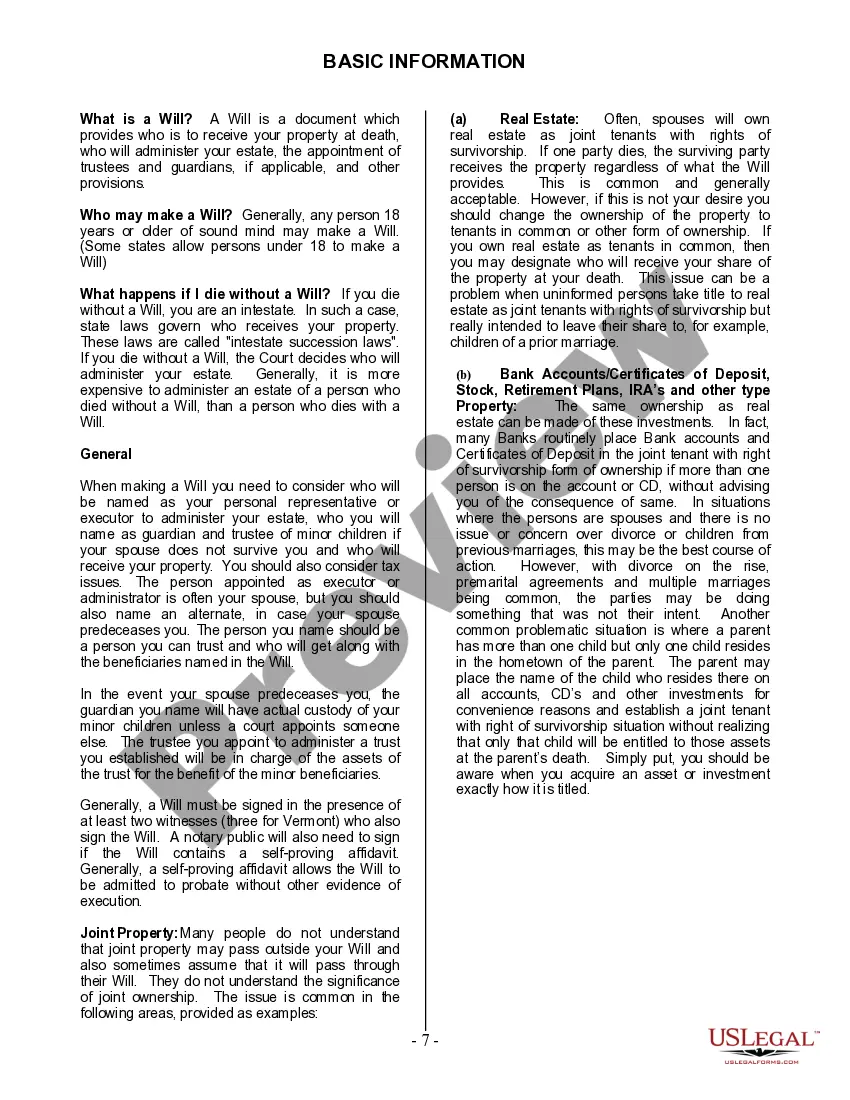
- Have both wills signed in the presence of two witnesses, ensuring the legality of the documents.
- Consider notarizing the wills if required by state law, especially if a self-proving affidavit is included.
Notarization requirements for this form
Yes, this form must be notarized to be legally valid. Notarization helps ensure the authenticity of the signatures and can simplify the probate process. US Legal Forms offers integrated online notarization services available around the clock through secure video calls, making it easy to complete your estate planning efficiently.
Get your form ready online
Our built-in tools help you complete, sign, share, and store your documents in one place.
Make edits, fill in missing information, and update formatting in US Legal Forms—just like you would in MS Word.
Download a copy, print it, send it by email, or mail it via USPS—whatever works best for your next step.
Sign and collect signatures with our SignNow integration. Send to multiple recipients, set reminders, and more. Go Premium to unlock E-Sign.
If this form requires notarization, complete it online through a secure video call—no need to meet a notary in person or wait for an appointment.
We protect your documents and personal data by following strict security and privacy standards.

Make edits, fill in missing information, and update formatting in US Legal Forms—just like you would in MS Word.

Download a copy, print it, send it by email, or mail it via USPS—whatever works best for your next step.

Sign and collect signatures with our SignNow integration. Send to multiple recipients, set reminders, and more. Go Premium to unlock E-Sign.

If this form requires notarization, complete it online through a secure video call—no need to meet a notary in person or wait for an appointment.

We protect your documents and personal data by following strict security and privacy standards.
Avoid these common issues
- Failing to have the wills signed in front of required witnesses.
- Not updating the wills to reflect changes in family dynamics or financial situations.
- Overlooking the appointment of a guardian for minor children.
- Neglecting to include specific instructions for asset distribution.
Advantages of online completion
- Convenience of completing wills from home without needing to visit an attorney.
- Easy editing of documents to reflect changing circumstances.
- Access to legal guidance through built-in instructions for each section.
- Secure document storage for peace of mind.
Quick recap
- This package includes all required forms for creating mutual wills for married couples with minor children.
- Proper execution includes signatures from witnesses and a notary to ensure validity.
- It establishes essential provisions for both spouseâs last wishes and their children's future.
- By using this form, families can avoid unnecessary legal complications and ensure their assets are distributed as intended.
Looking for another form?
Form popularity
FAQ
The probate file is public record. You can go to the filing room and request to see the file. The file will contain the Will and any other documentation that has been filed thus far. You can also copy documents in the file to take with you.
Age: The testator must be at least 18 years old. Capacity: The testator must be of sound mind. Signature: The will must be signed by the testator or by someone else in the testator's name in his presence, by his direction.
Technically, you can create your own will in Massachusetts. The only legal requirement is that you sign it in front of at least 2 witnesses and that those witnesses also sign the will.
Setting up a will is one of the most important parts of planning for your death. Drafting the will yourself is less costly and may put you out about $150 or less. Depending on your situation, expect to pay anywhere between $300 and $1,000 to hire a lawyer for your will.
In Massachusetts, if you are over 18 and of sound mind, and have the signatures of 2 witnesses, your handwritten will may be considered valid. However, there are some issues you should consider before deciding a handwritten will (also called holographic) is sufficient for your estate planning needs.
Create the initial document. Start by titling the document Last Will and Testament" and including your full legal name and address. Designate an executor. Appoint a guardian. Name the beneficiaries. Designate the assets. Ask witnesses to sign your will. Store your will in a safe place.
No, in Massachusetts, it is not necessary to notarize your will to make it legal. Massachusetts does, however, allow you to make your will "self-proving." A self-proving will speeds up probate because the court can accept the will without contacting the witnesses who signed it.