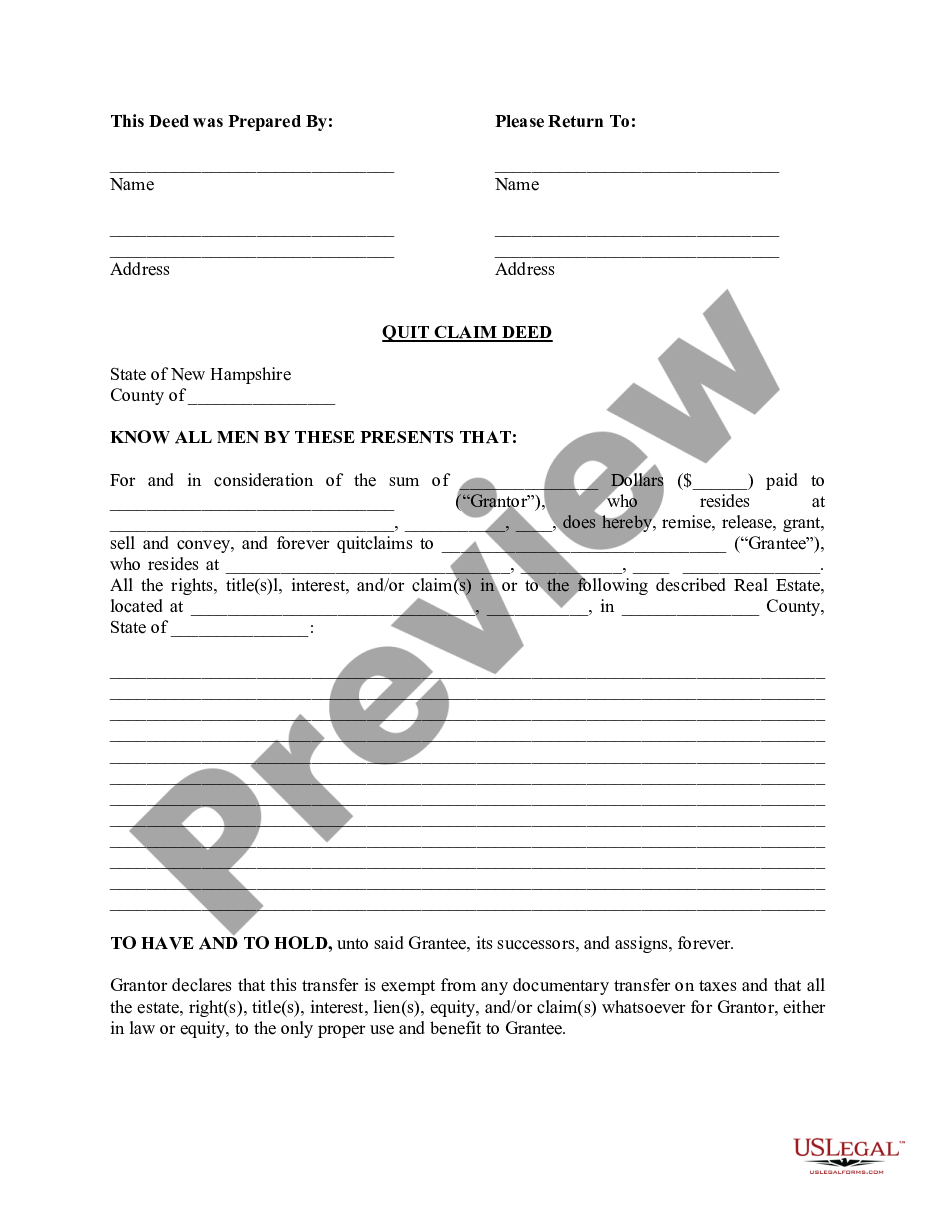
Massachusetts Warranty Deed from Limited Partnership or LLC is the Grantor, or Grantee
What this document covers
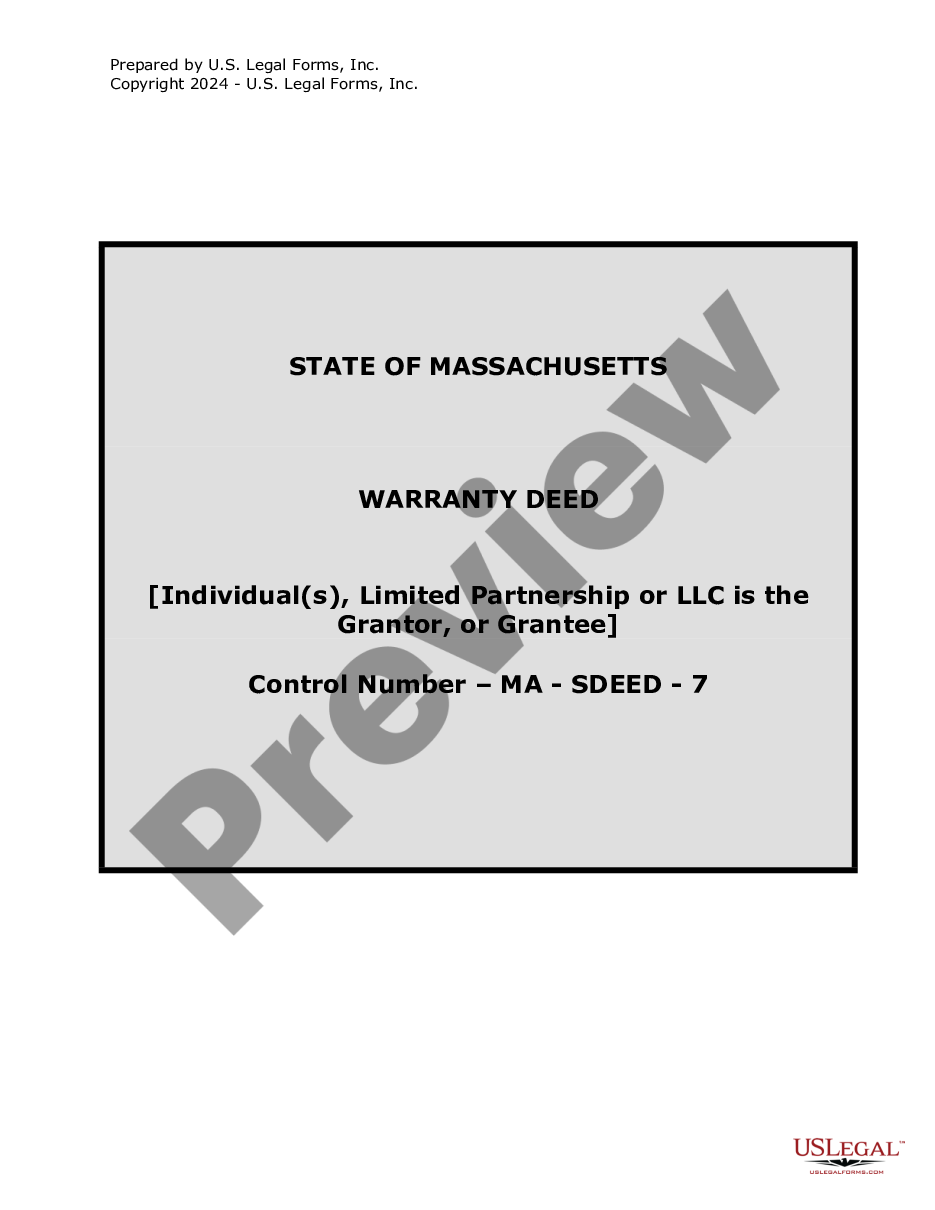
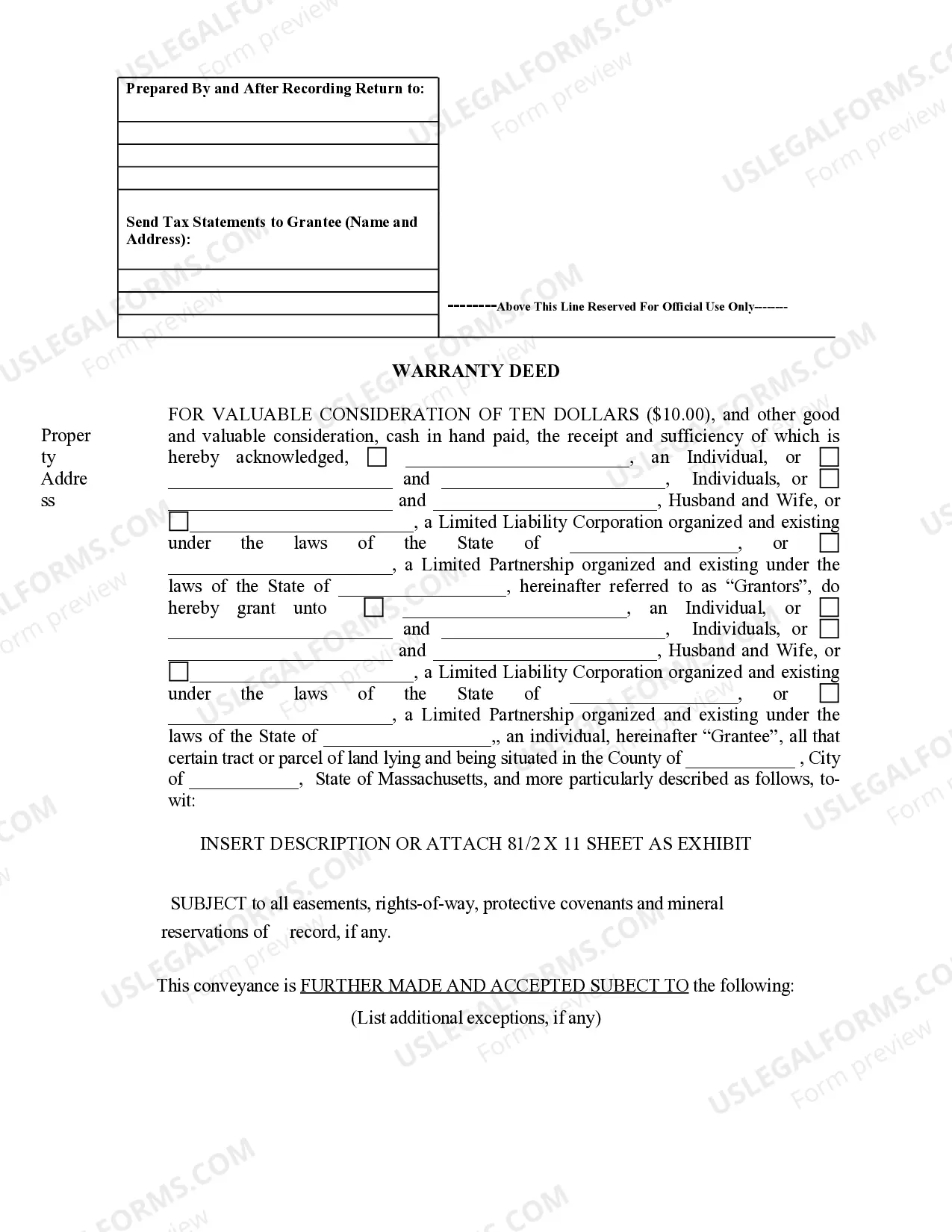
This Warranty Deed is a legal document that facilitates the transfer of property ownership. It allows a Limited Partnership or Limited Liability Company (LLC) to act as a grantor (seller) or grantee (buyer) in the transaction. Unlike a quitclaim deed, a warranty deed guarantees that the grantor holds clear title to the property and has the right to transfer it, providing added security for the grantee. This form is specifically designed for transactions in Massachusetts and caters to those involved in business structures such as LLCs and limited partnerships.
Key components of this form
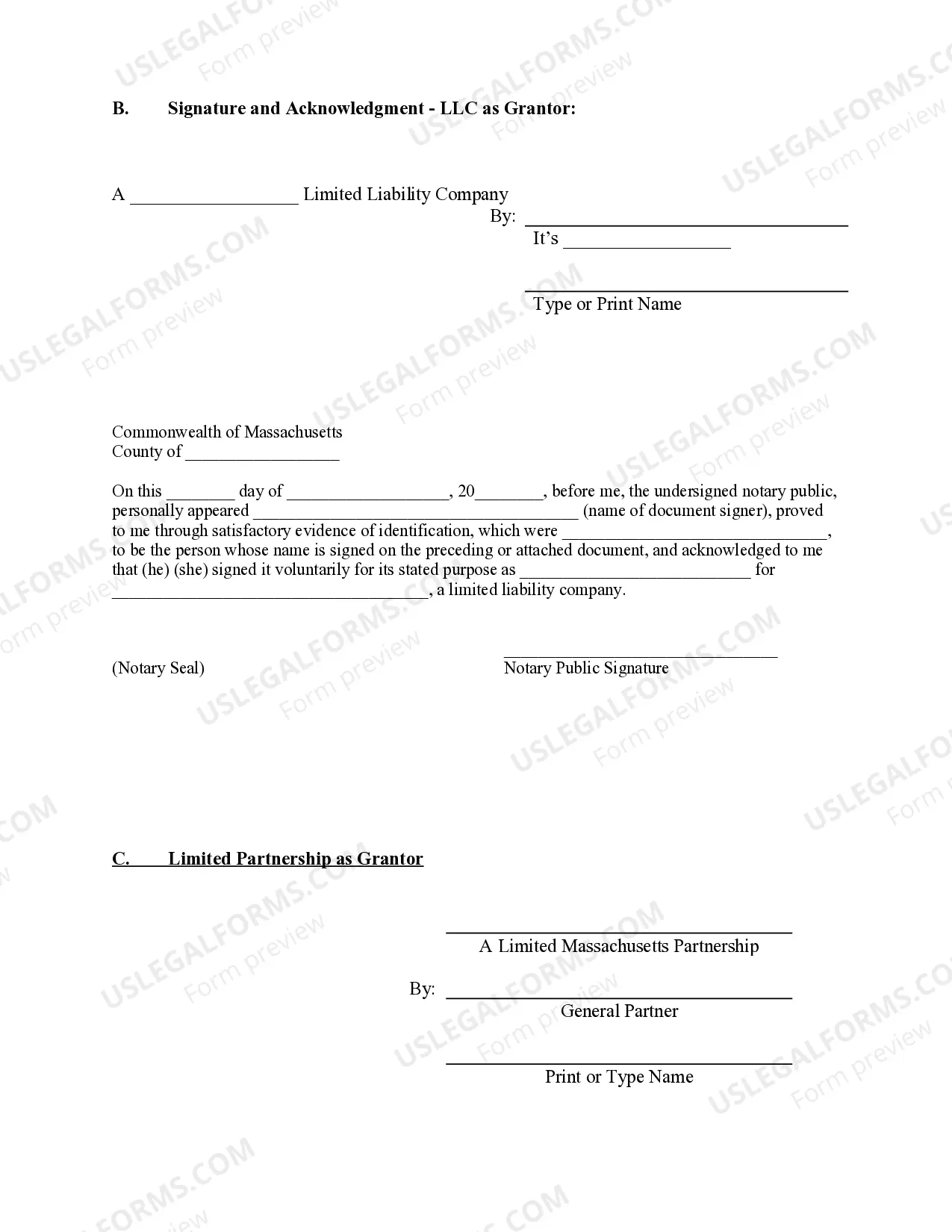
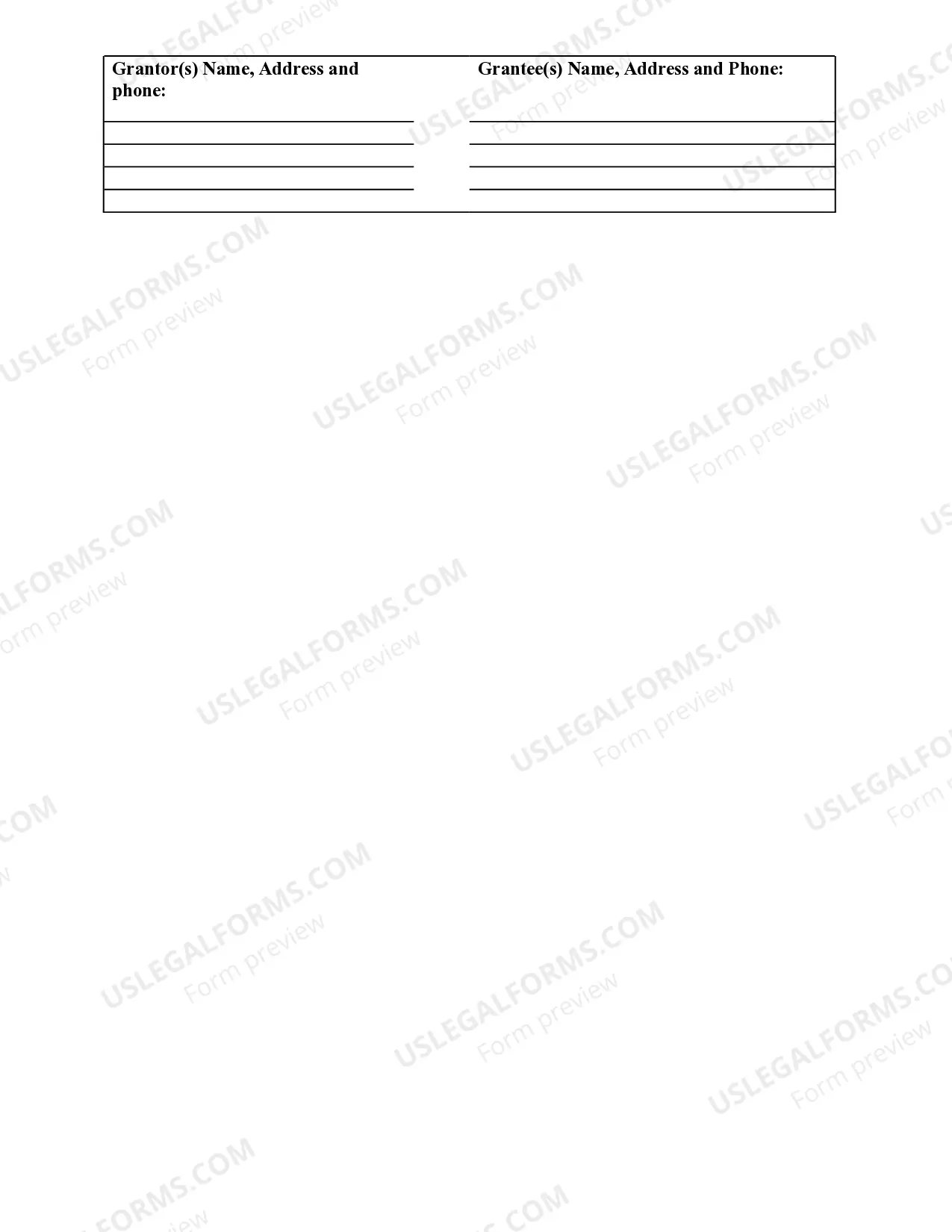
- Identification of the grantor (individual, LLC, or limited partnership).
- Details about the grantee (individual, LLC, or limited partnership).
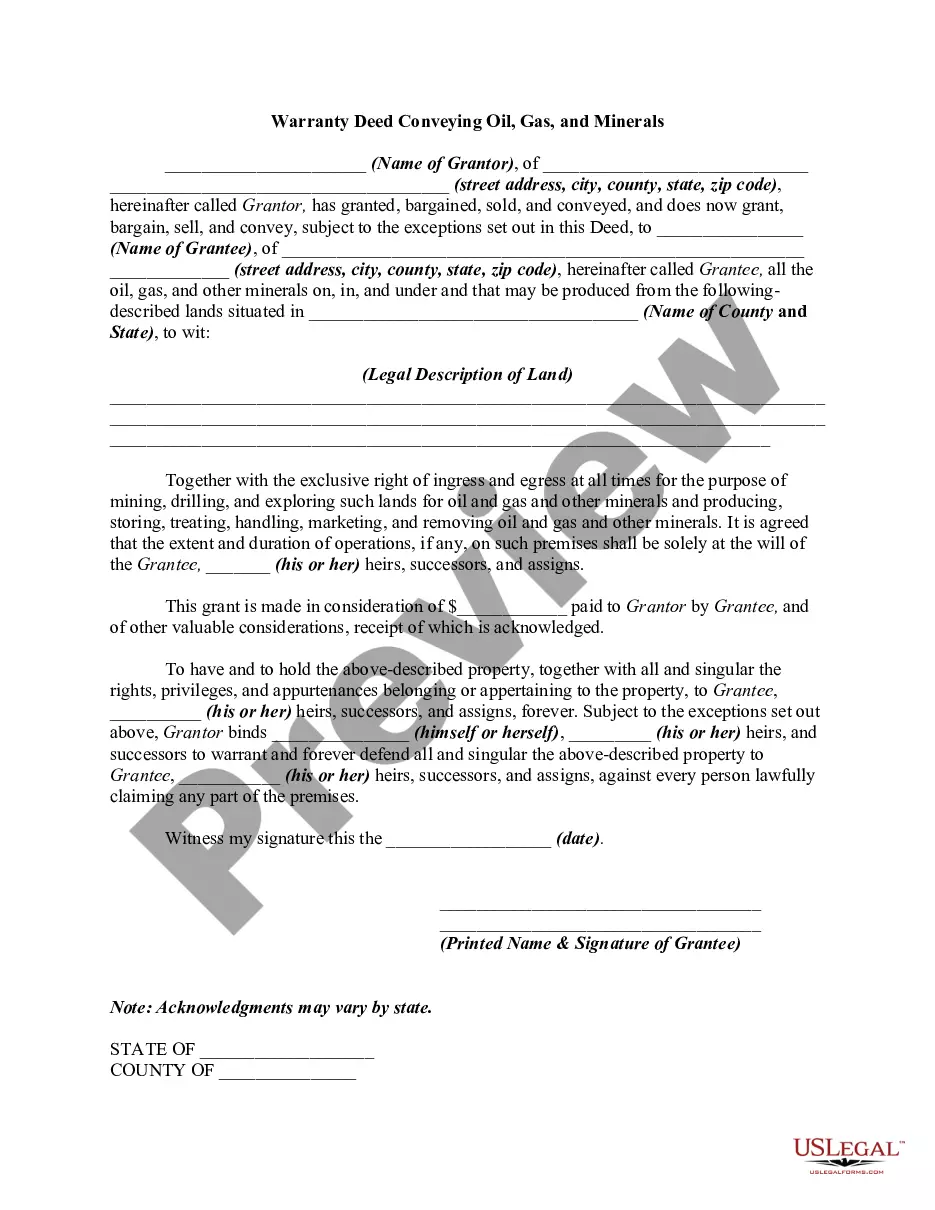
- Legal description of the property being conveyed.
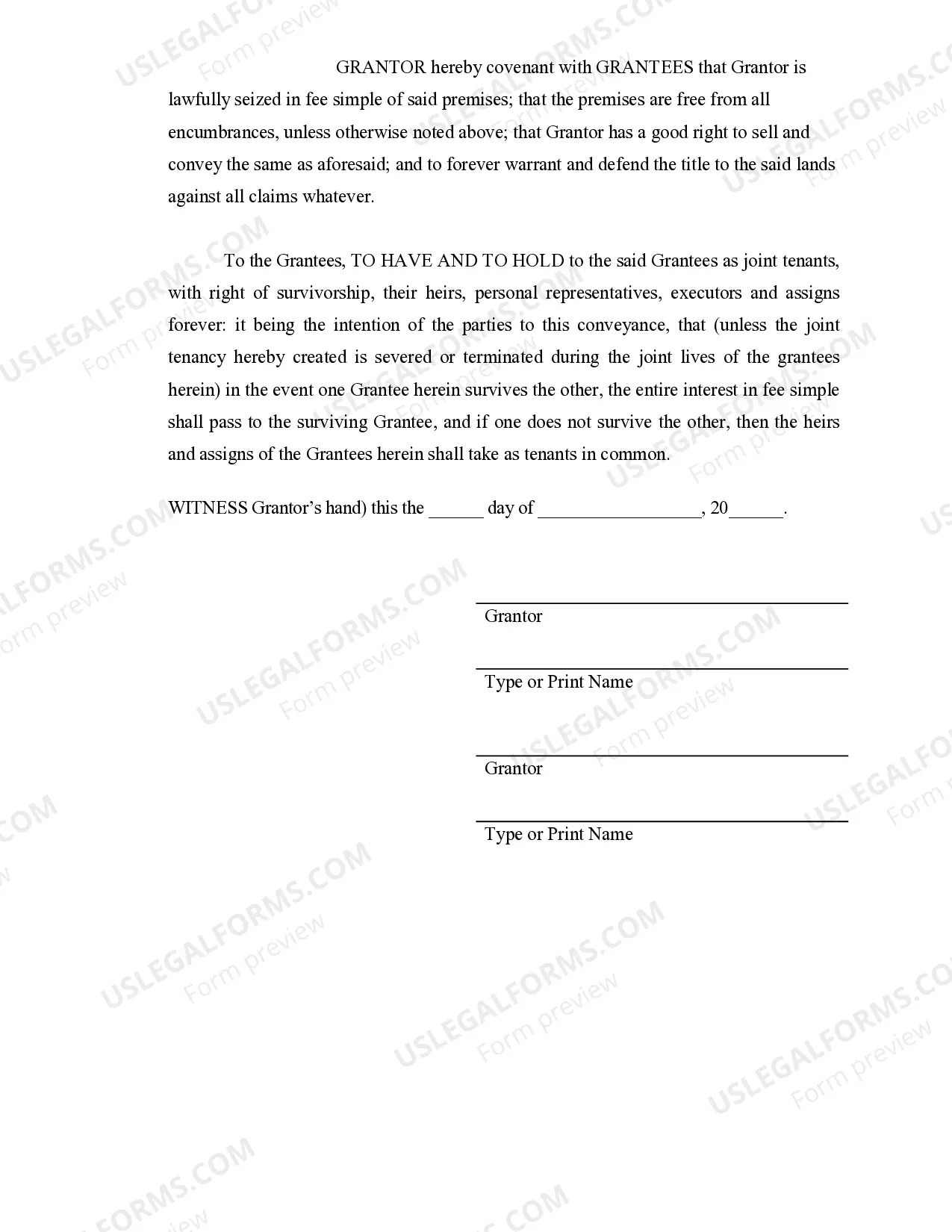
- Covenants regarding the title, ensuring it is free from encumbrances.
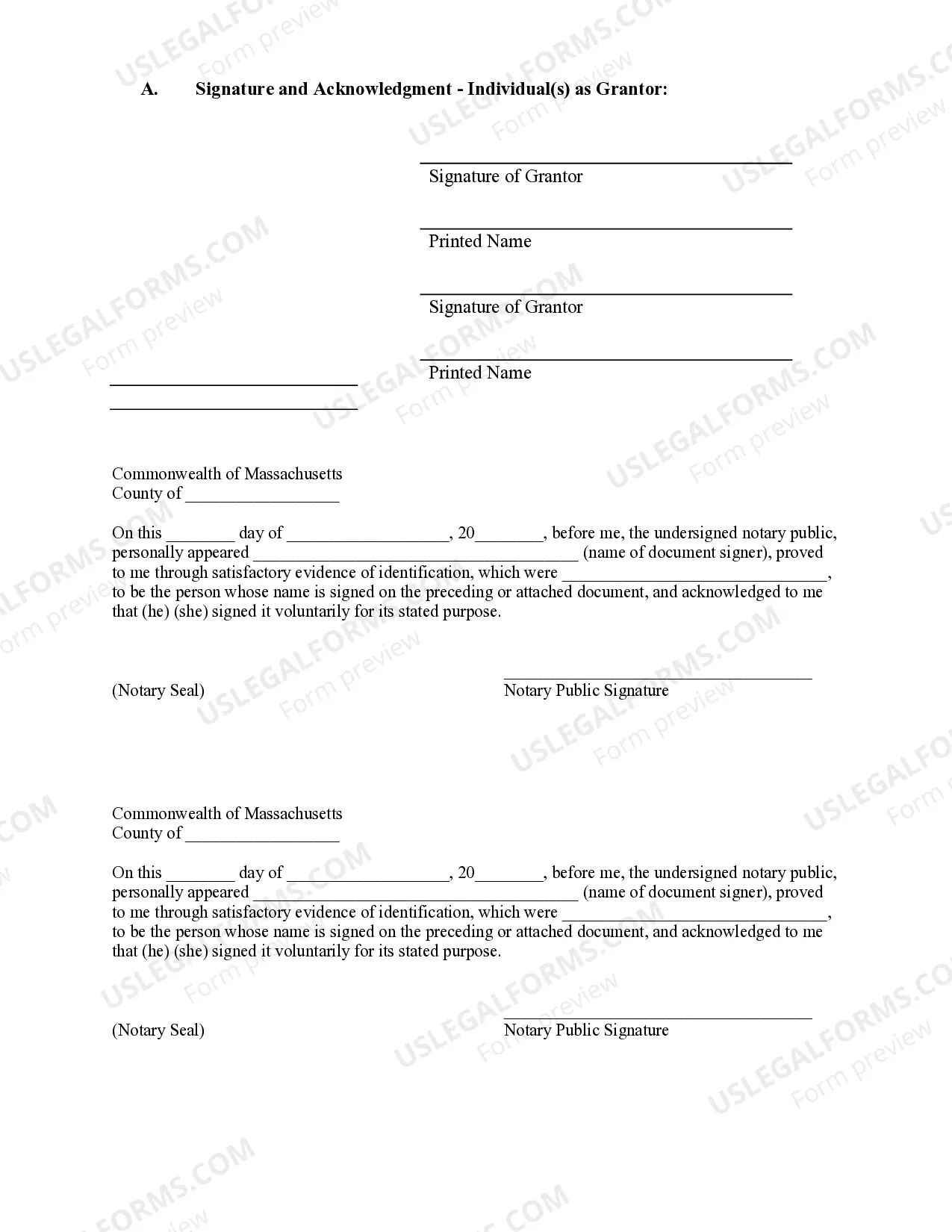
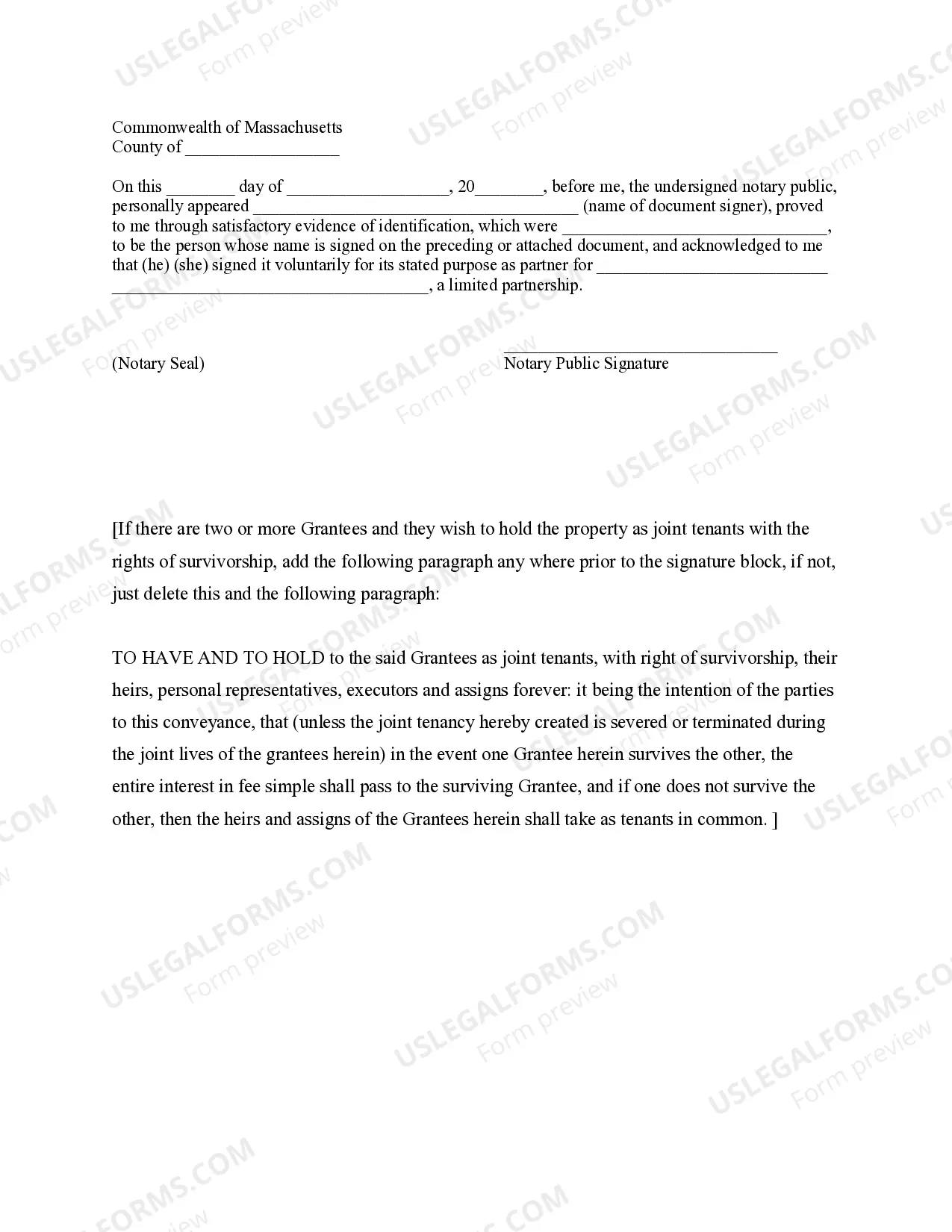
- Signature and acknowledgment blocks for notarization purposes.



Common use cases
You should use this Warranty Deed when transferring property ownership from a Limited Partnership or LLC to another party. This can occur during the sale of real estate, inheritance scenarios, or transfers between business entities. It's essential to provide clear title assurance and protect the interests of all parties involved.
Who should use this form
- Business owners operating as Limited Partnerships or LLCs looking to transfer property.
- Individuals buying property from an LLC or limited partnership.
- Real estate professionals facilitating transactions involving business entities.
- Estate executors managing asset transfers as part of the estate settlement.
How to prepare this document
- Identify the grantor by selecting whether it is an individual, LLC, or limited partnership.
- Identify the grantee in the same manner.
- Provide a legal description of the property being transferred, attaching any necessary additional documents.
- Secure signatures from all grantors, ensuring they are acknowledged by a notary.
- Review the completed document for accuracy before submission.
Notarization requirements for this form
Yes, this form must be notarized to be legally valid. In Massachusetts, notarization confirms the identities of the parties signing the deed. US Legal Forms offers integrated online notarization options, making the process accessible and secure through video calls at any time.
Get your form ready online
Our built-in tools help you complete, sign, share, and store your documents in one place.
Make edits, fill in missing information, and update formatting in US Legal Forms—just like you would in MS Word.
Download a copy, print it, send it by email, or mail it via USPS—whatever works best for your next step.
Sign and collect signatures with our SignNow integration. Send to multiple recipients, set reminders, and more. Go Premium to unlock E-Sign.
If this form requires notarization, complete it online through a secure video call—no need to meet a notary in person or wait for an appointment.
We protect your documents and personal data by following strict security and privacy standards.

Make edits, fill in missing information, and update formatting in US Legal Forms—just like you would in MS Word.

Download a copy, print it, send it by email, or mail it via USPS—whatever works best for your next step.

Sign and collect signatures with our SignNow integration. Send to multiple recipients, set reminders, and more. Go Premium to unlock E-Sign.

If this form requires notarization, complete it online through a secure video call—no need to meet a notary in person or wait for an appointment.

We protect your documents and personal data by following strict security and privacy standards.
Common mistakes to avoid
- Failing to include a complete legal description of the property.
- Not obtaining signatures from all required parties.
- Forgetting to have the document notarized, which is crucial for validity.
- Confusing grantor and grantee information, leading to errors in ownership transfer.
Why use this form online
- Convenient download and editing capabilities, allowing for quick completion from any device.
- Integrated guidance through form fields to ensure accurate information entry.
- Immediate access to forms that reflect current legal standards, ensuring compliance.
Looking for another form?



Form popularity
FAQ
Limited Warranty Deeds In a Limited Warranty Deed, the seller usually gives two warranties. The seller only warrants to the buyer that: The seller personally has not done anything to the title that the seller received.
Let's start with the definition of a deed: DEED: A written instrument by which one party, the Grantor, conveys the title of ownership in property to another party, the Grantee. A Warranty Deed contains promises, called covenants, that the Grantor makes to the Grantee.
Three basic types of deeds commonly used are the grant deed, the quitclaim deed, and the warranty deed. A sample grant deed. the property he or she is transferring is implied from such language.
Quitclaim Deed. Deed of Trust. Warranty Deed. Grant Deed. Bargain and Sale Deed. Mortgage Deed.
Warranty deeds provide the purchaser of the property with the highest form of protection, and are often used when a buyer wants to get financing for a mortgage or title insurance.The grantor is the rightful owner of the property and has the legal right to transfer the title.
It's important to note that a warranty deed does not actually prove the grantor has ownership (a title search is the best way to prove that), but it is a promise by the grantor that they are transferring ownership and if it turns out they don't actually own the property, the grantor will be responsible for compensating
While a general warranty deed guarantees against all encumbrances and claims to title, a limited warranty deed protects only against claims made after the seller obtained title to the property. A limited warranty deed therefore makes no guarantees about anything that occurred before the seller owned the property.
A limited warranty deed is a legal document that transfers ownership of real property from one person or organization, known as the grantor, to another, the grantee.The deed does not offer any guarantees about the condition of the title from the time period before the grantor took ownership.
Limited Warranty Deeds. While a general warranty deed guarantees against all encumbrances and claims to title, a limited warranty deed protects only against claims made after the seller obtained title to the property.