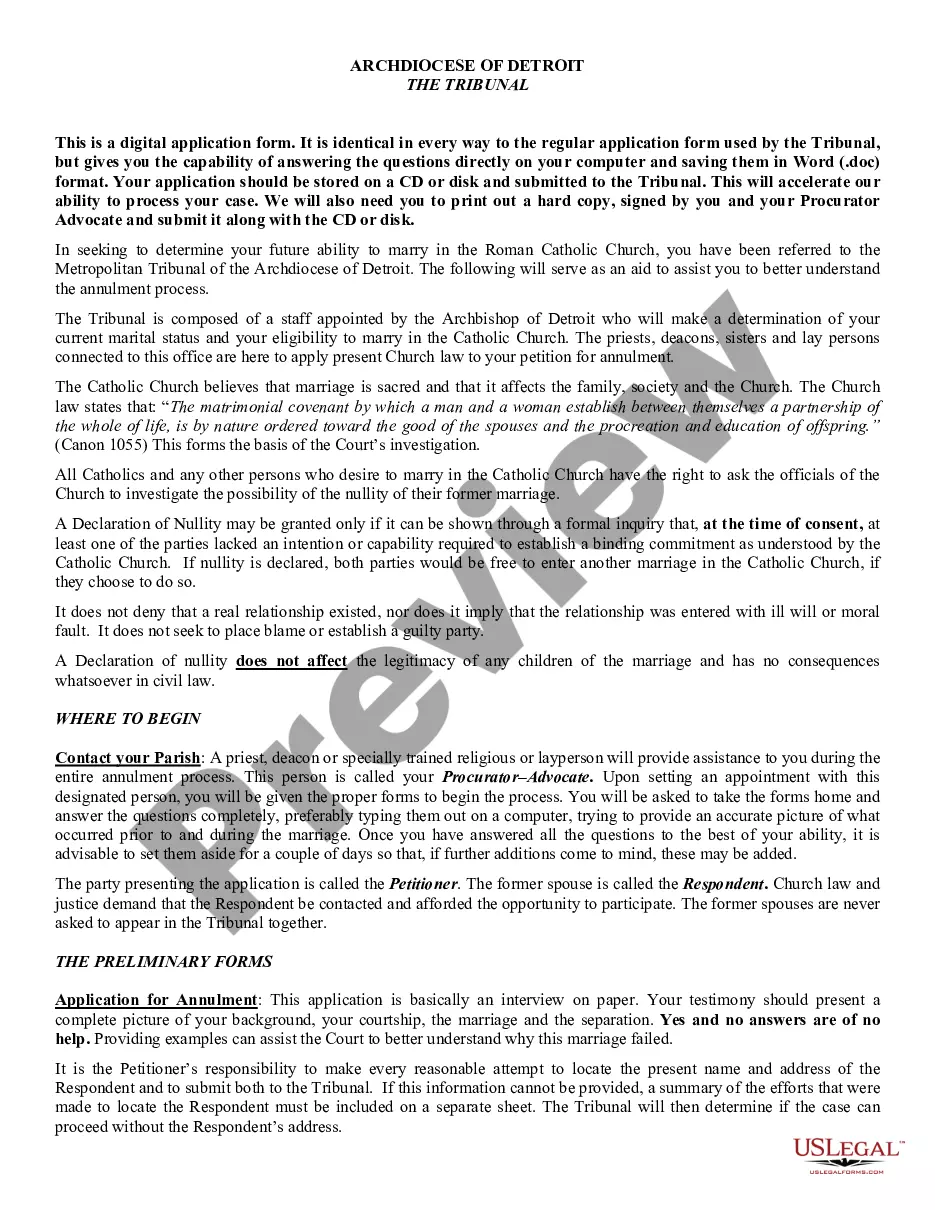
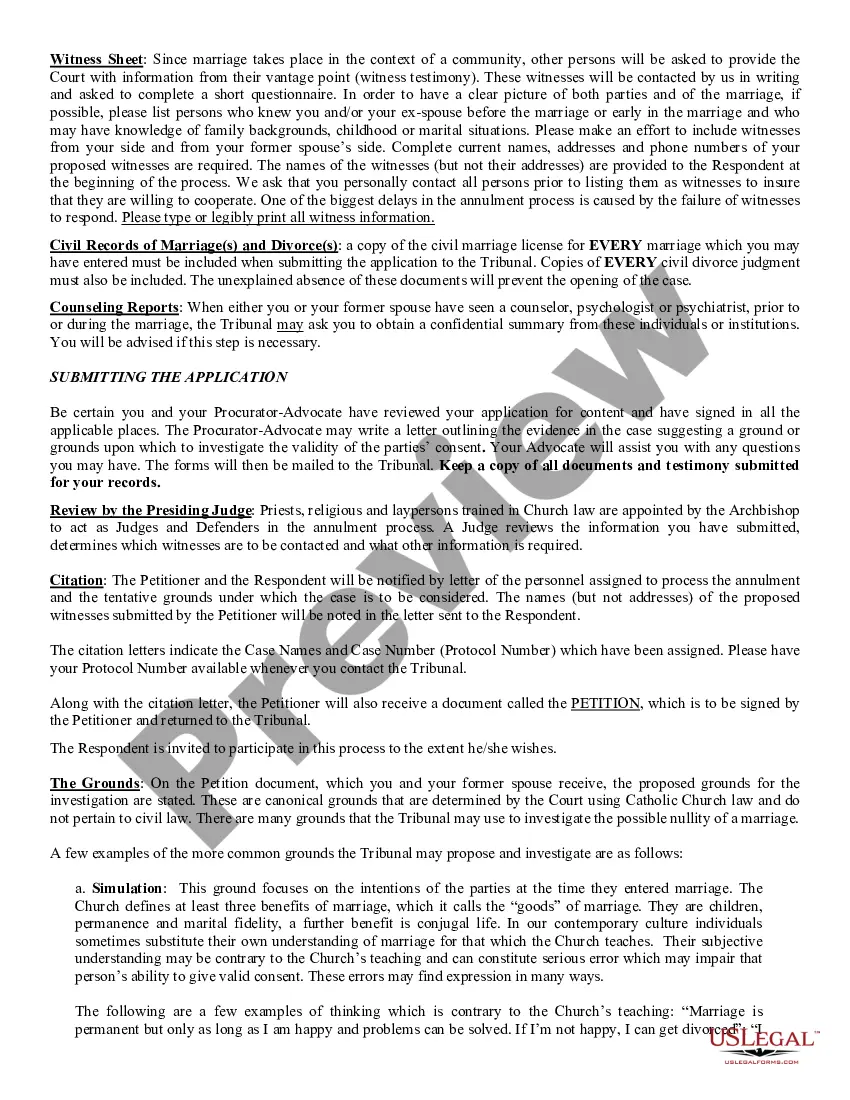
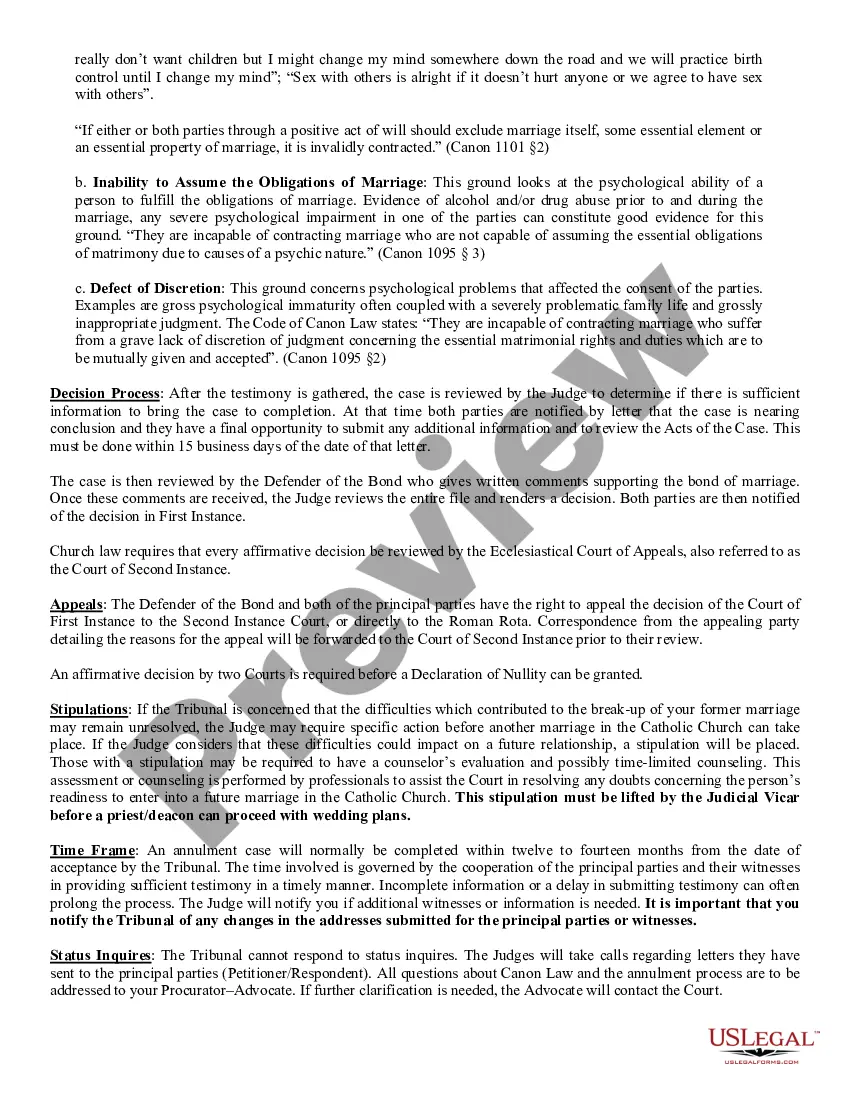
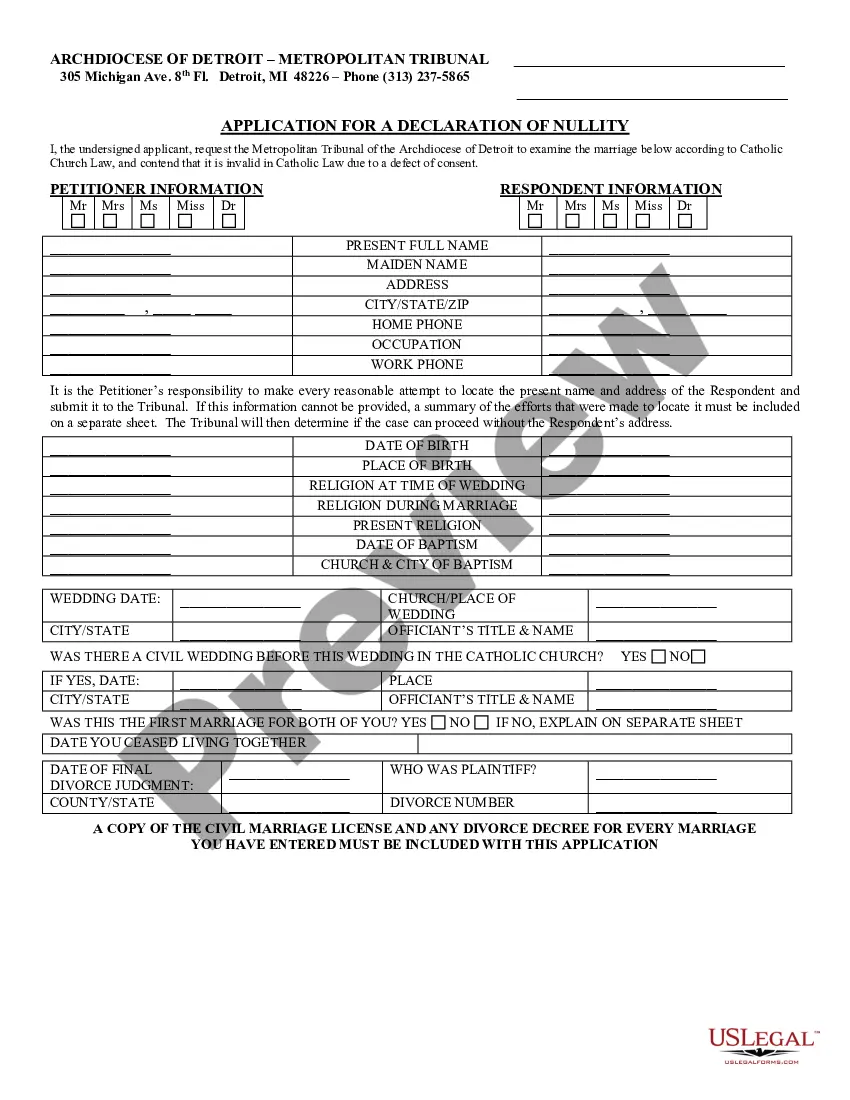
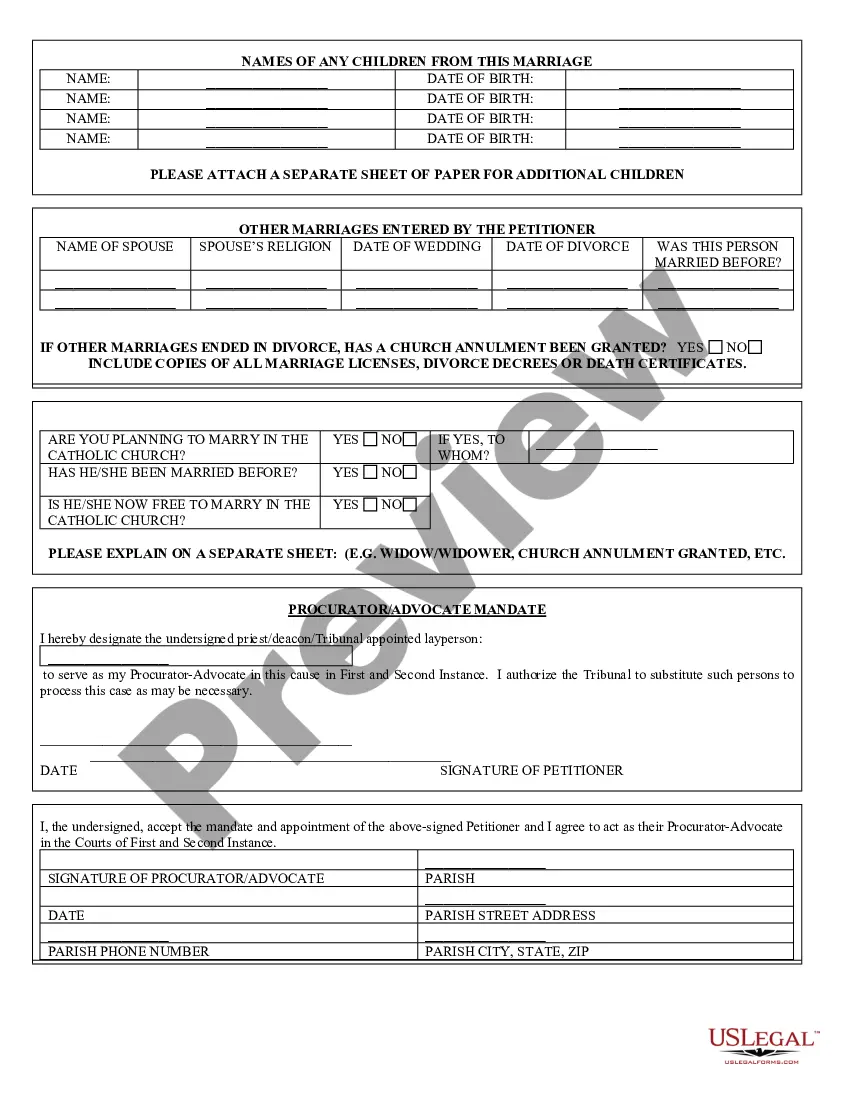
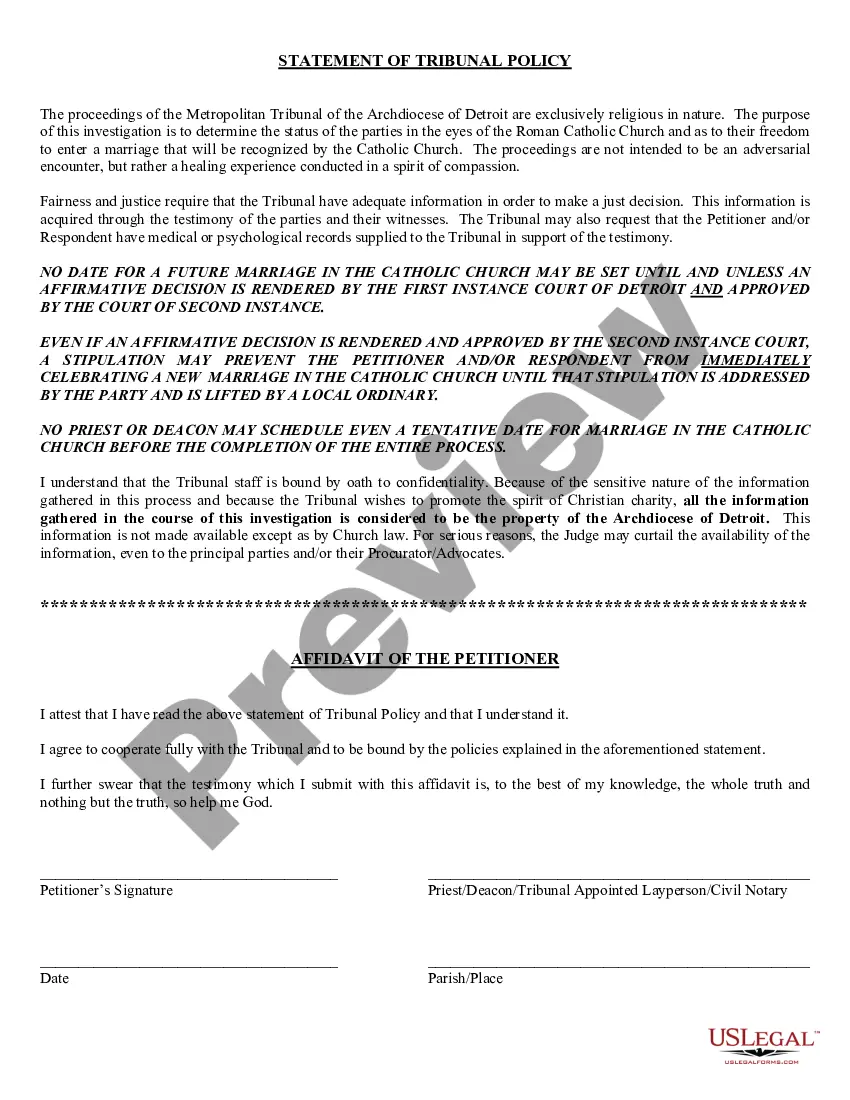
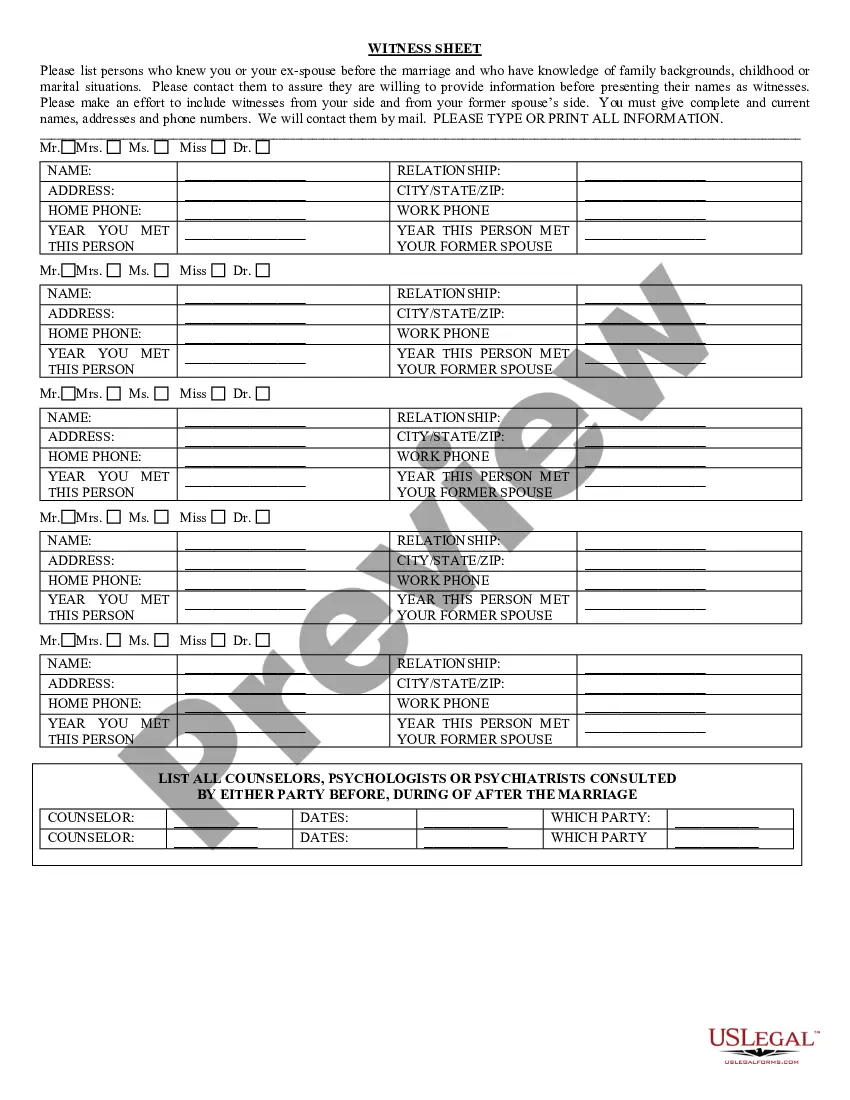
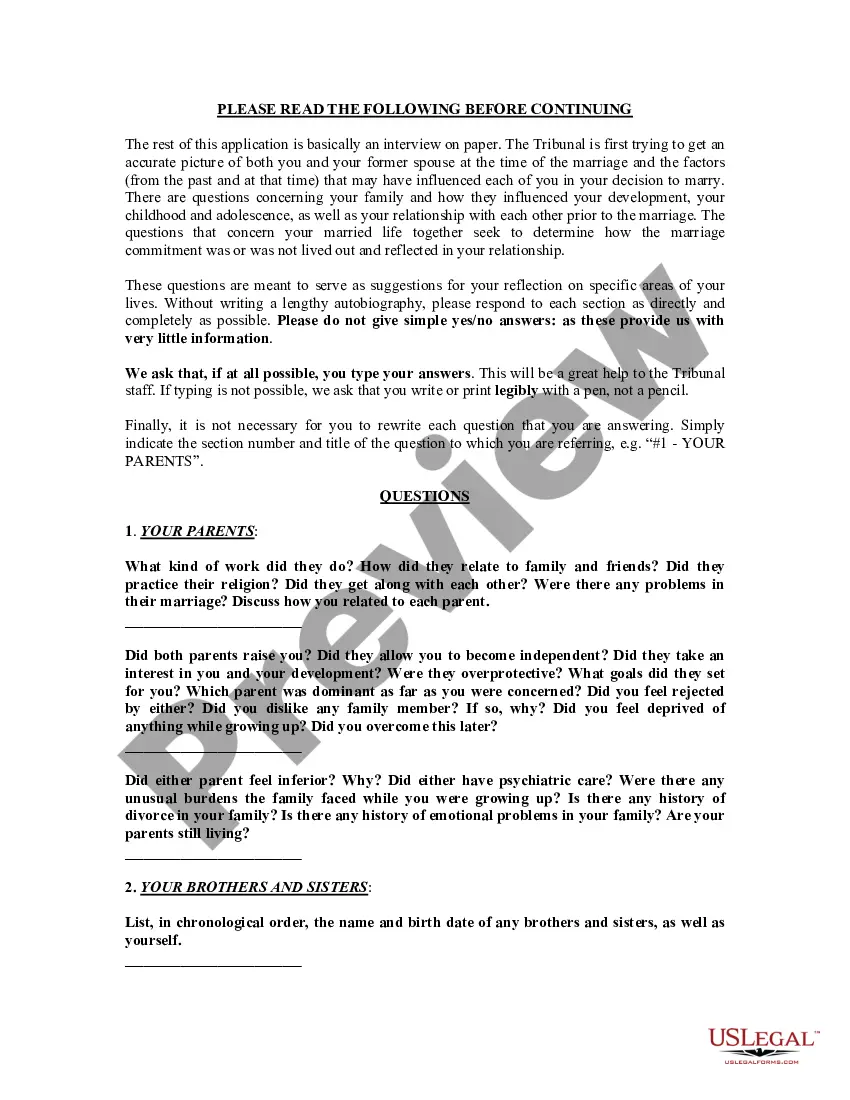
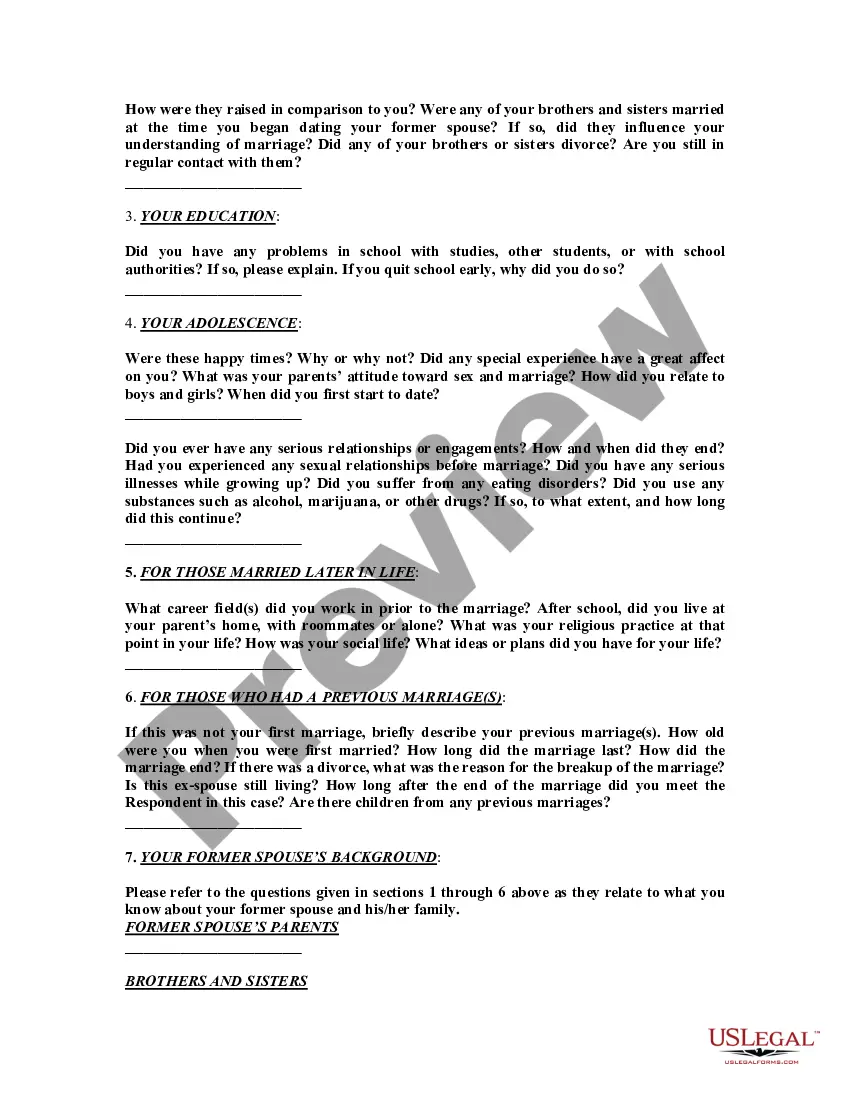
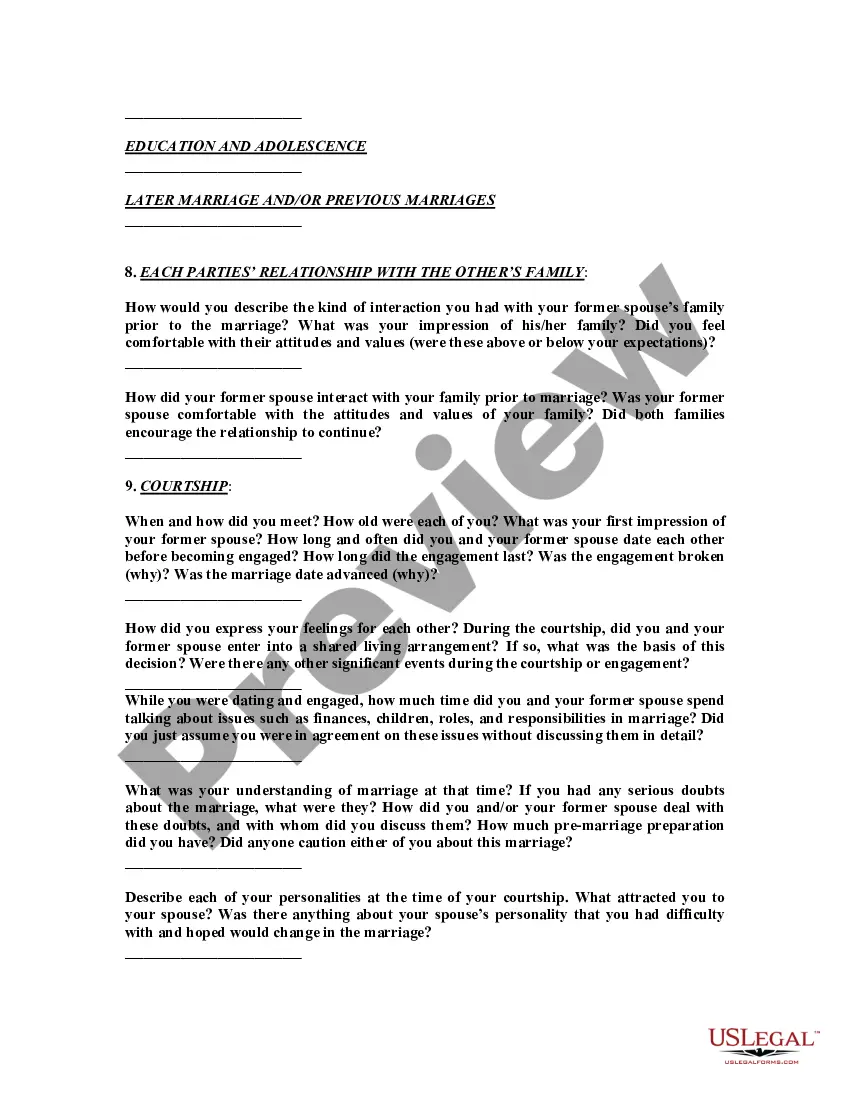
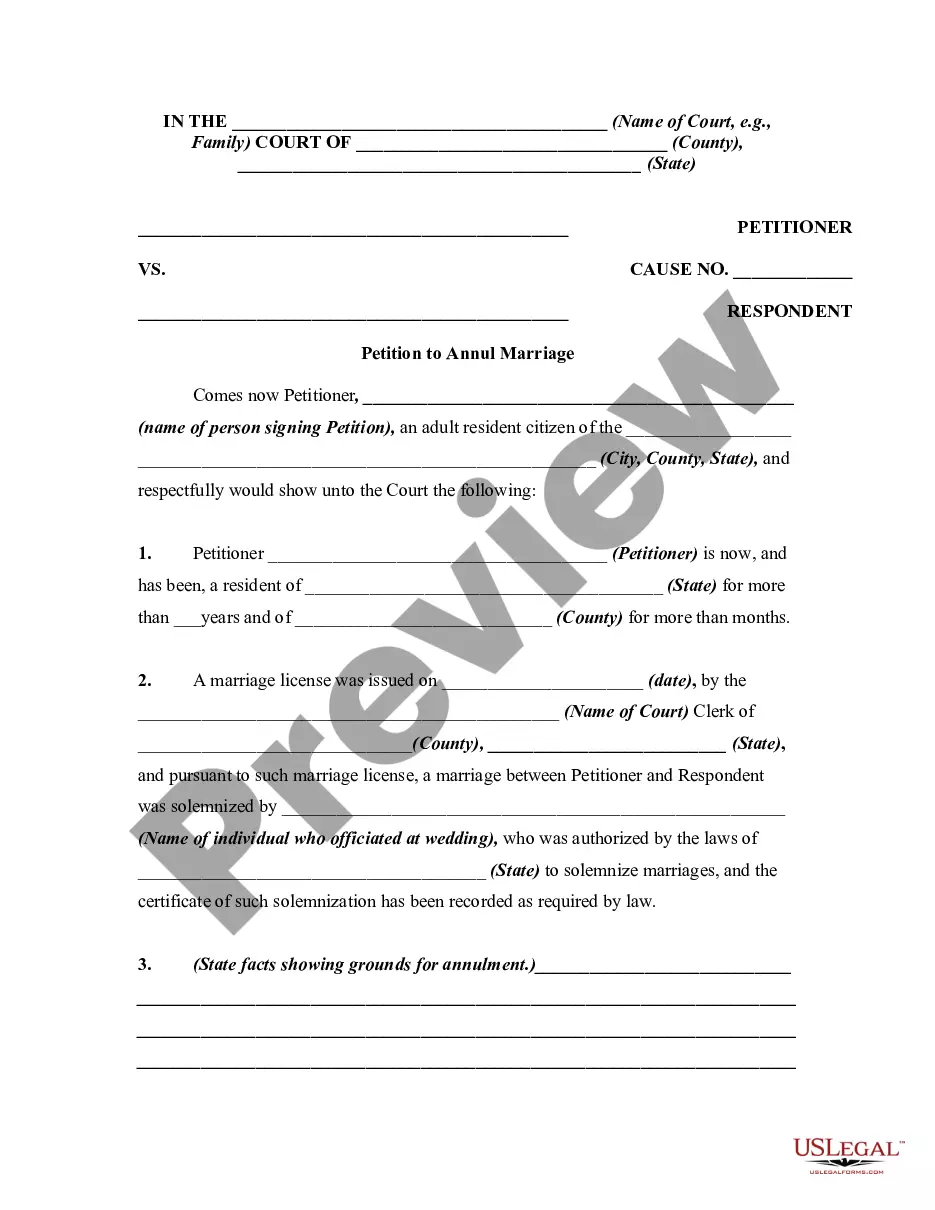
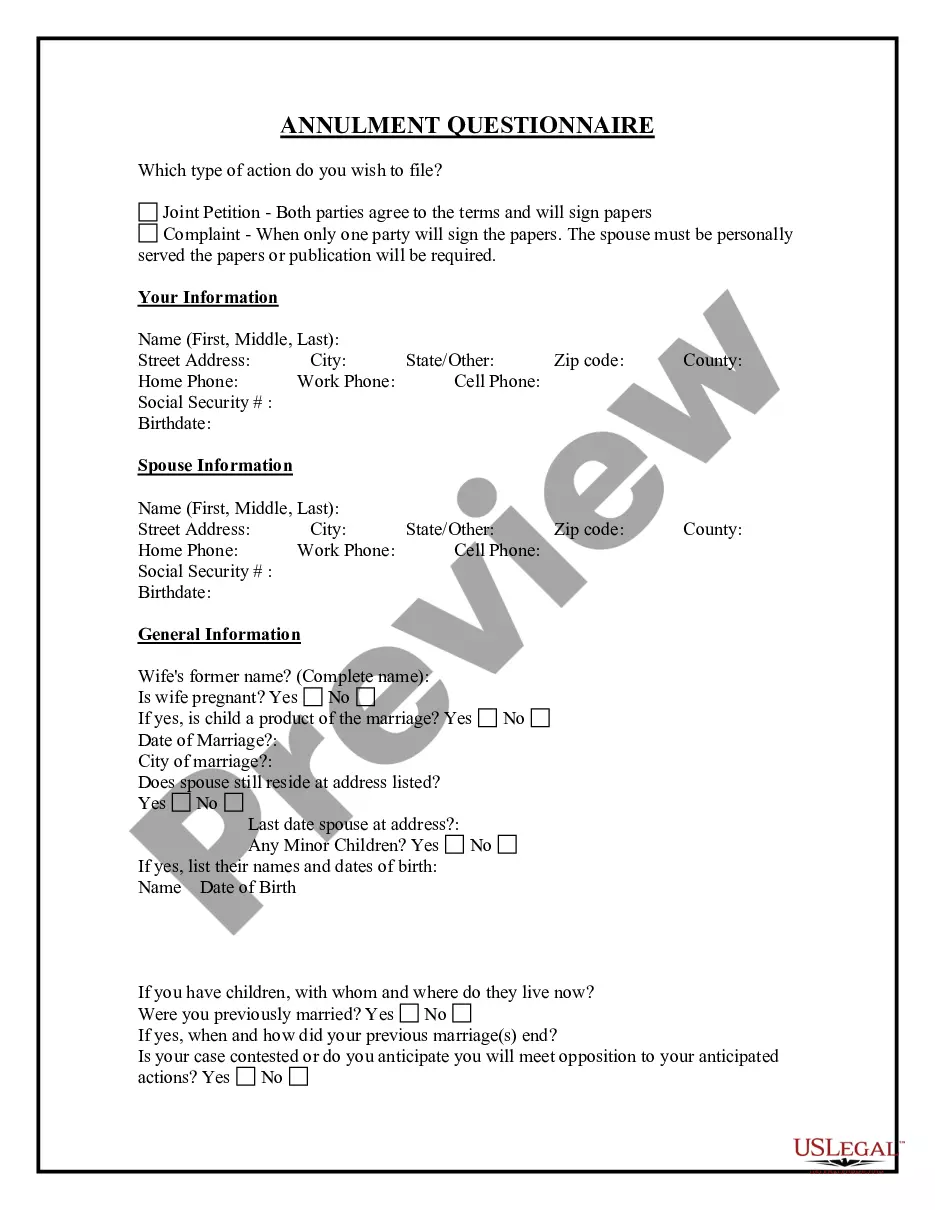
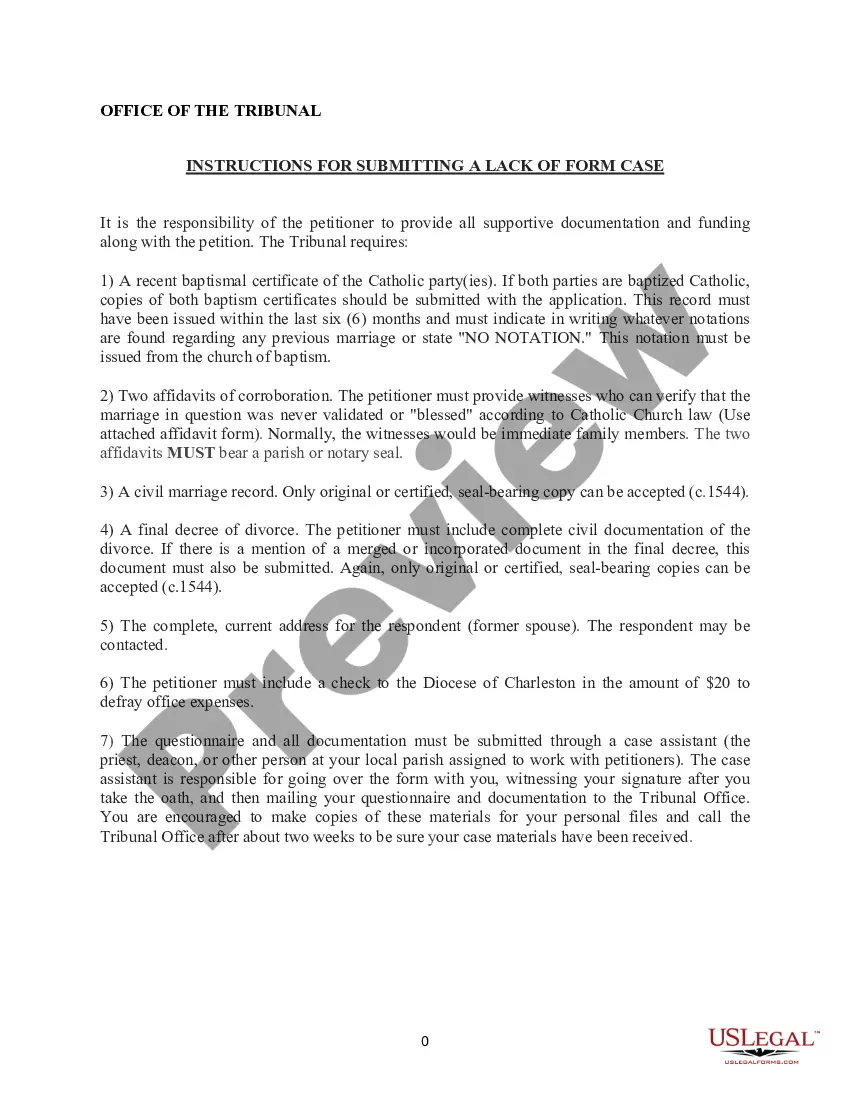
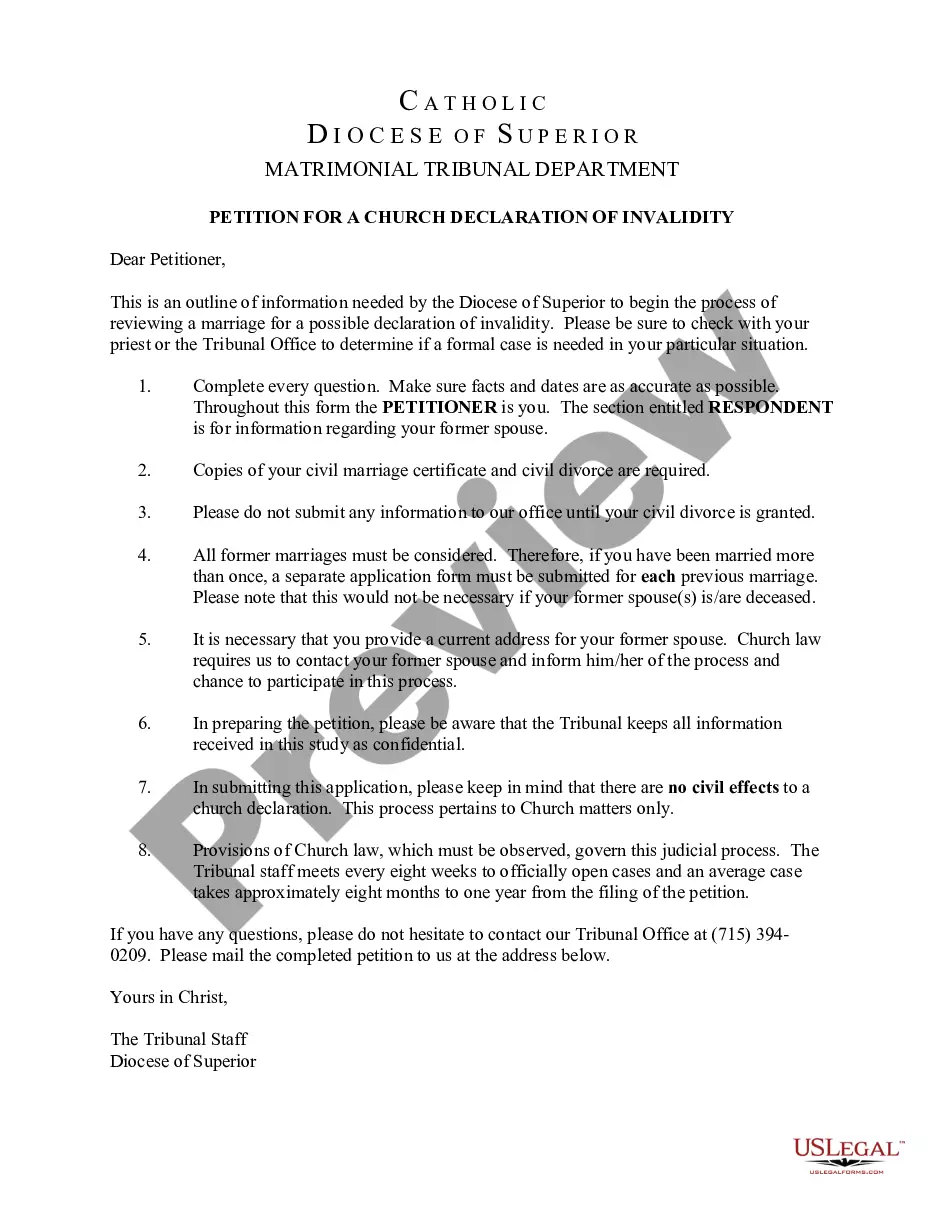
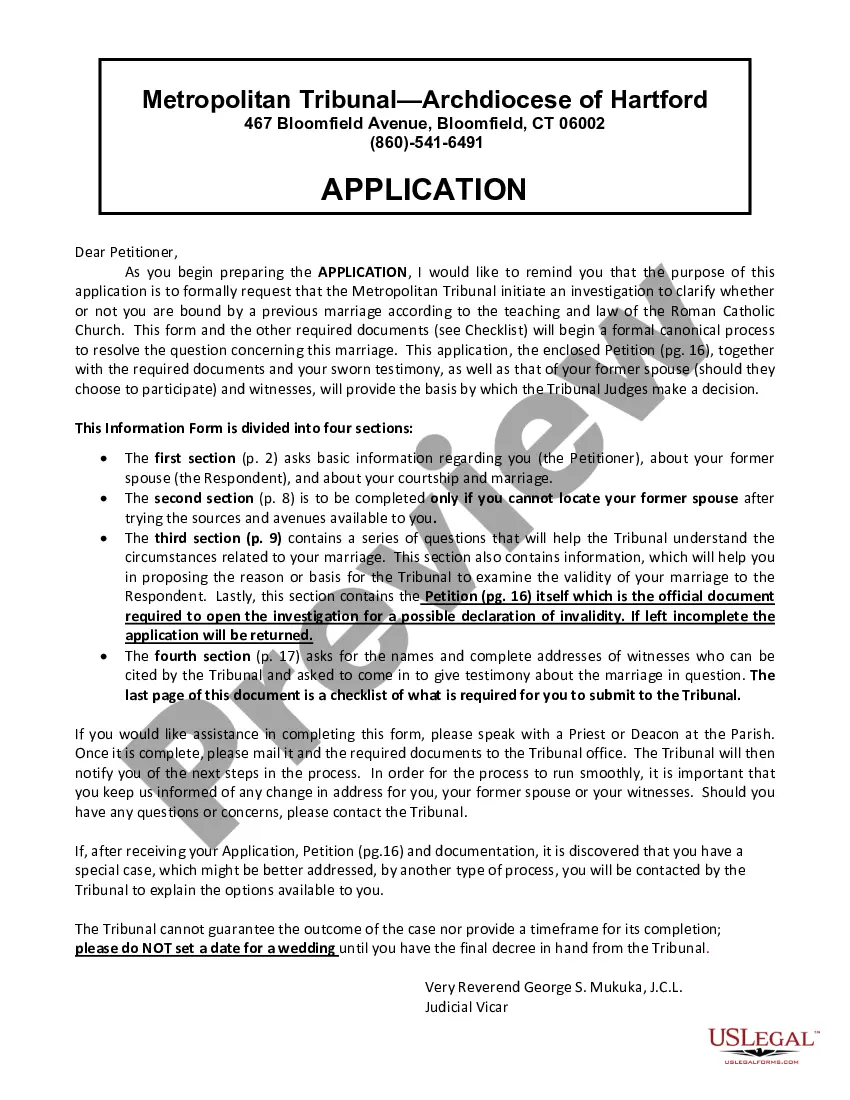
This form is used in the Catholic Church named a declaration of nullity, commonly known as an annulment , a decision that is made by the Church, which acknowledges that a couple never established the sacred bond of marriage.
A Declaration of Nullity typically doesn’t affect child custody or support, but it might have implications for property division, so it's smart to get some advice on that.
After you file, a court will review your case and may schedule a hearing. It’s the court's way of checking if everything checks out.
While it's not required, having a lawyer can help you navigate the process and make sure everything’s in order. It’s like having a good map on a long journey!
It's best to act quickly! Generally, you need to file within a few years after finding out about the grounds for nullity.
You can file on several grounds, like if one spouse was already married, if there was fraud, or if either spouse didn’t have the capacity to marry.
Usually, either spouse can file for a Declaration of Nullity if they believe the marriage wasn't valid due to certain reasons.
A Declaration of Nullity is a legal way to say that a marriage was never valid. It's like saying the marriage was never really a thing.