There's no strict deadline, but it's best to file it as soon as possible, ideally shortly after the person's passing, to avoid any complications down the road.
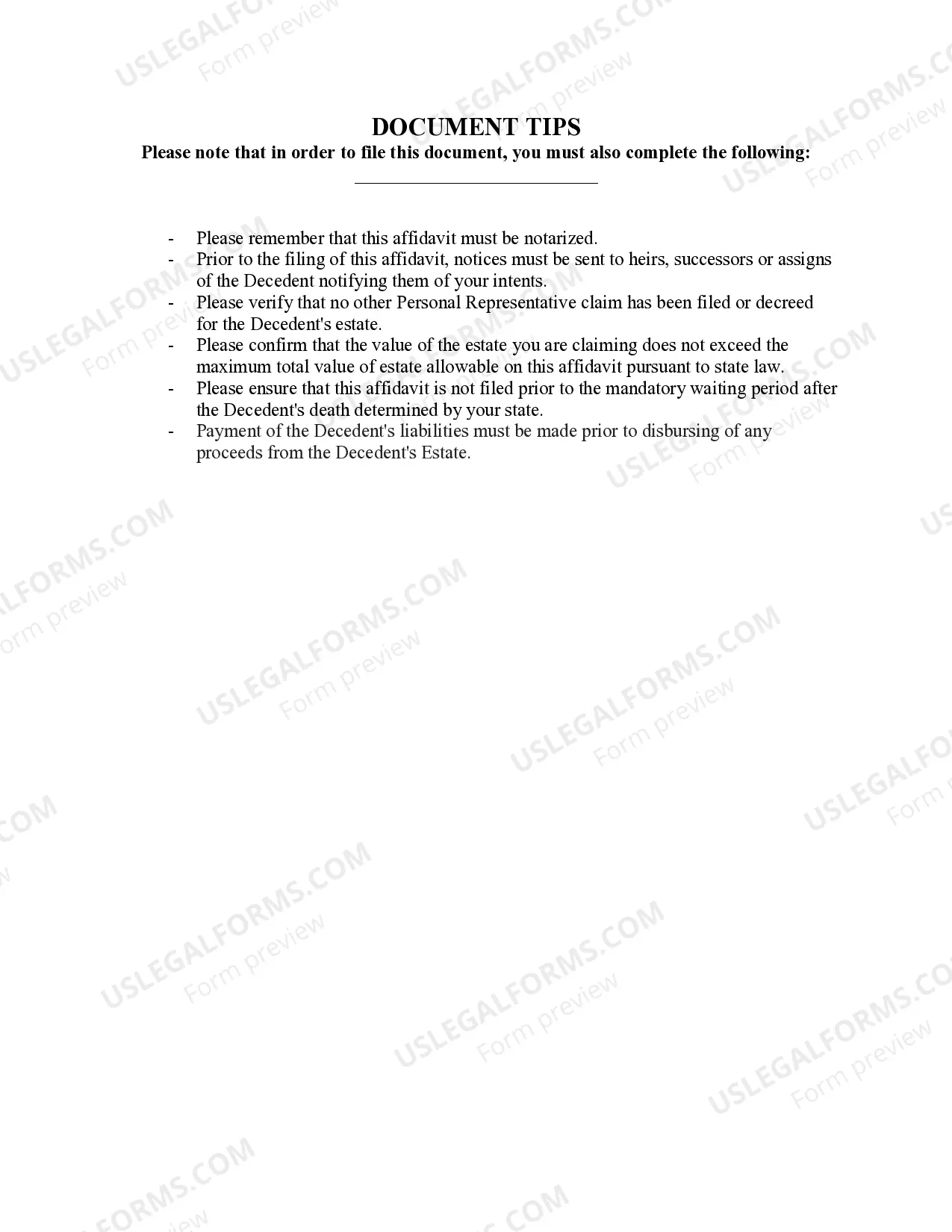
If the estate's value exceeds the limit, you'll need to go the regular probate route, which can take more time and can be a bit more complicated.
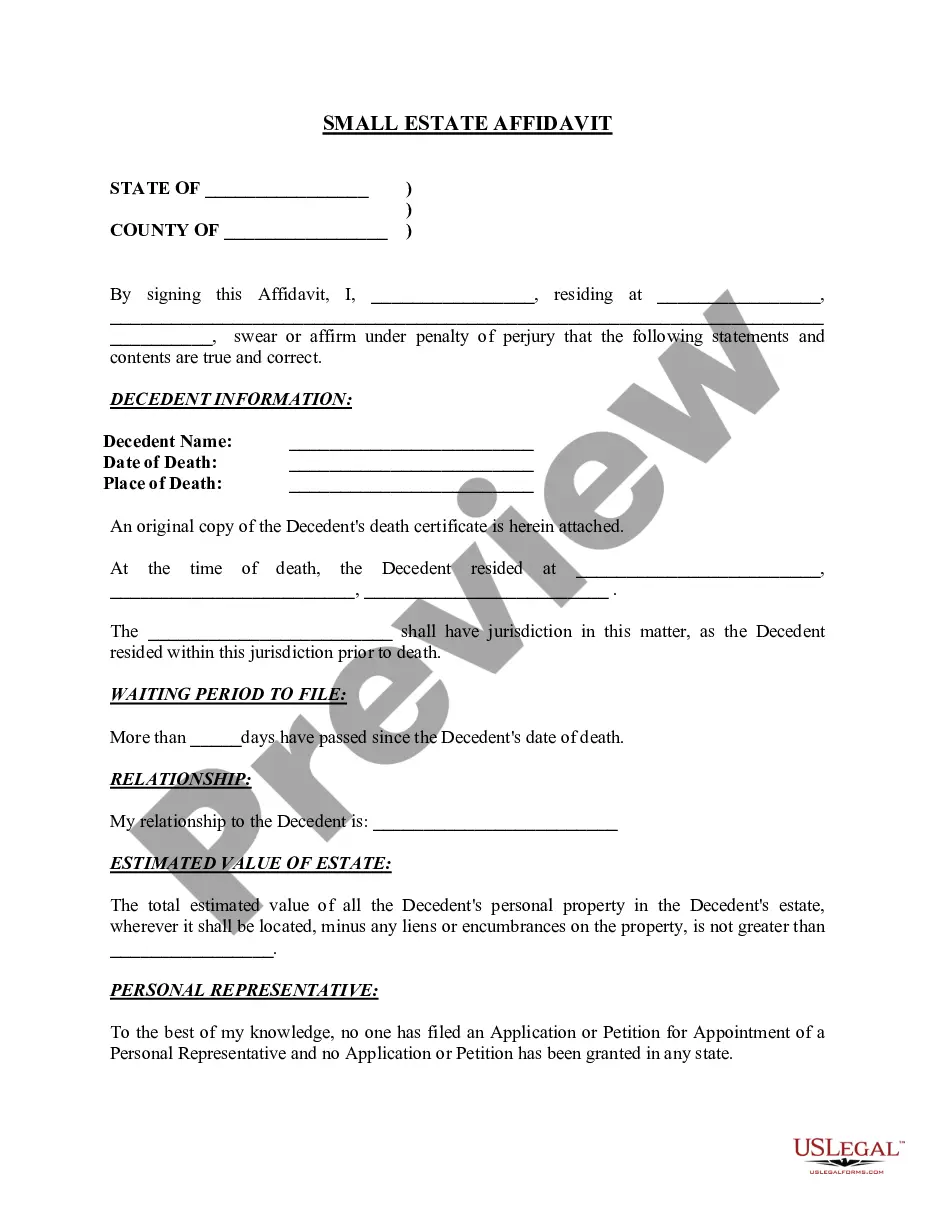
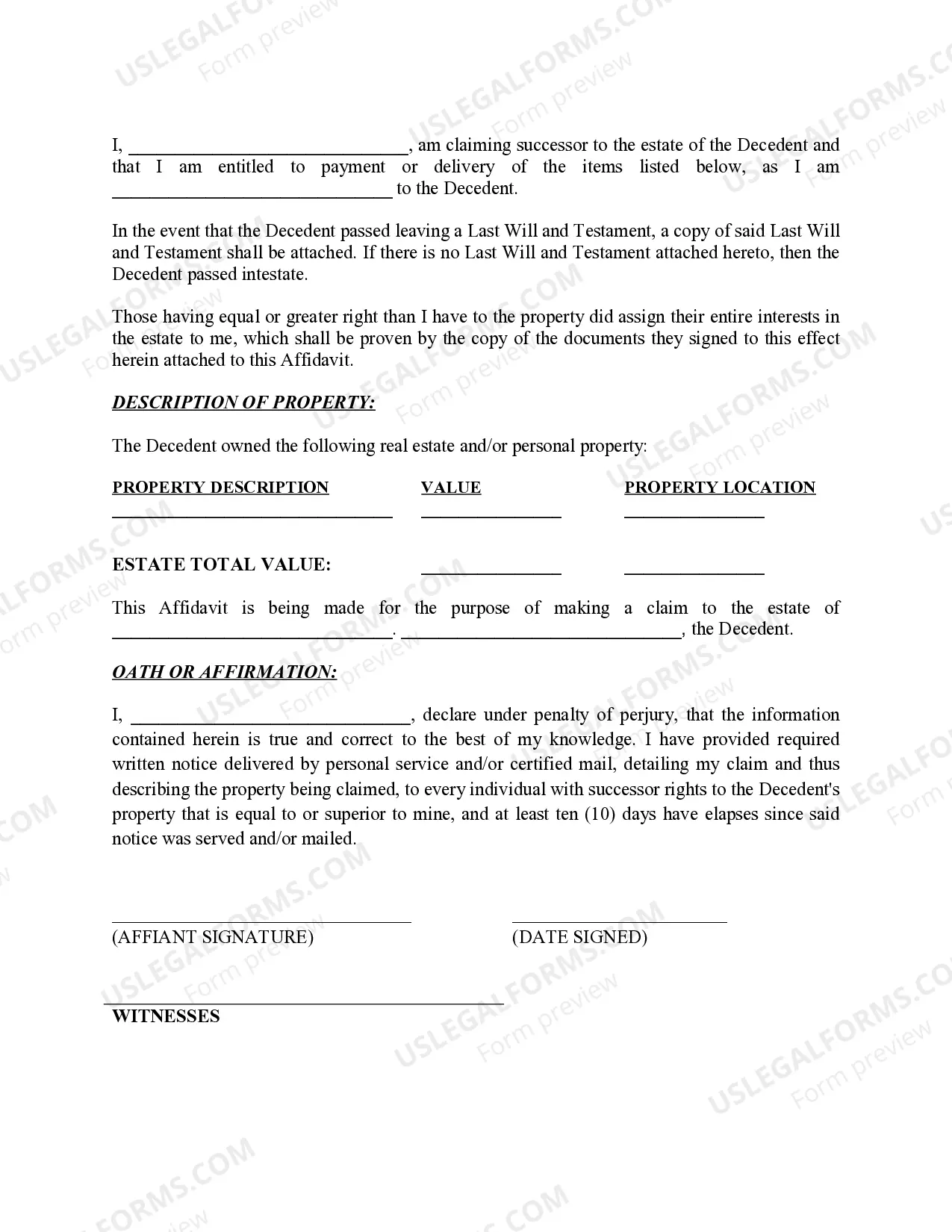
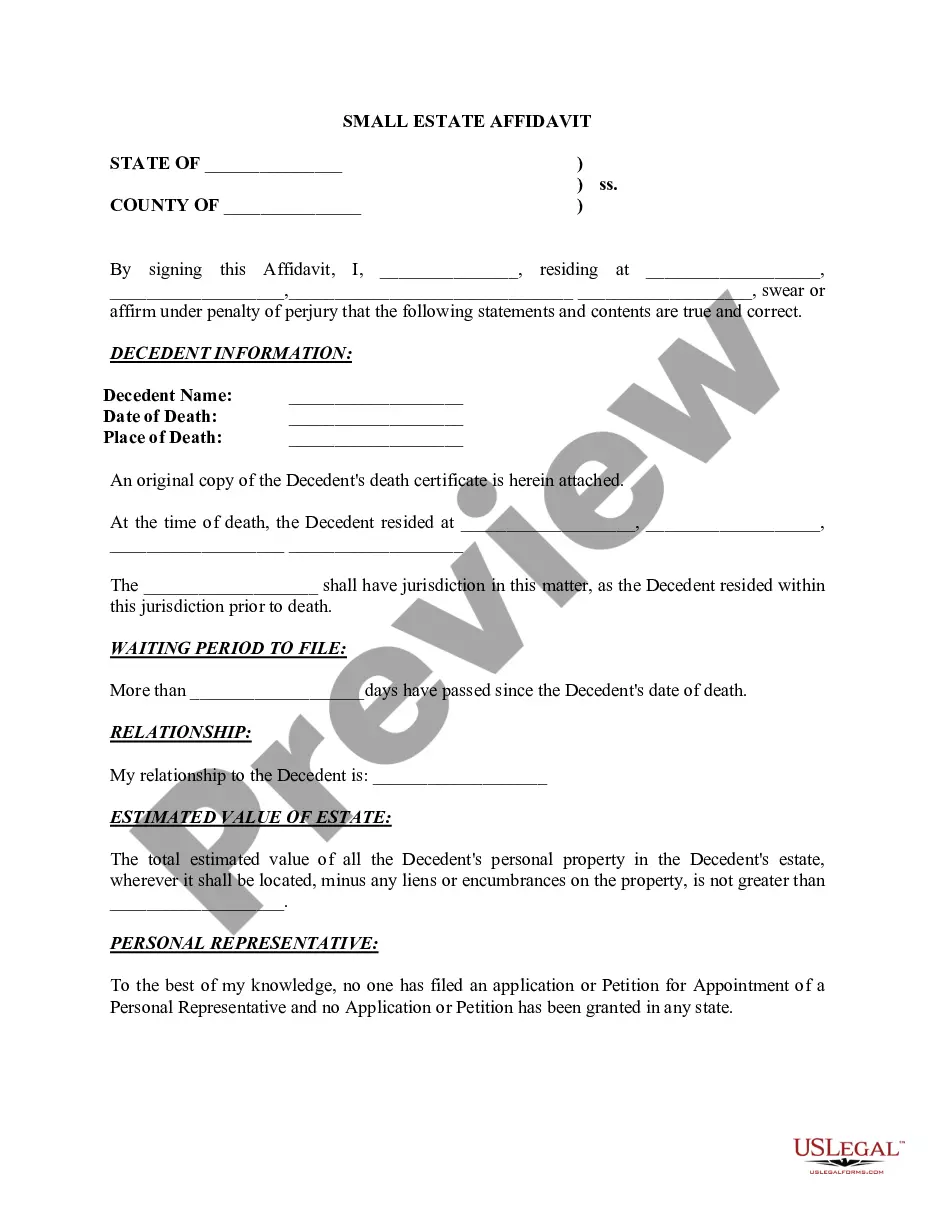
The process is pretty straightforward. You'll fill out the affidavit, gather necessary documents, and then present everything to the financial institutions or other parties holding the deceased's assets.
Not necessarily! While having an attorney can help you navigate the process, you can certainly handle it on your own if you feel comfortable and understand the requirements.
Currently, the limit is set at $15,000 for personal property and $10,000 for real property, but it's wise to check for updates or changes in the law.
Generally, you can use a Small Estate Affidavit if you're an heir, a beneficiary, or a legal representative of the estate, as long as the total value of the estate is under a specific limit set by the state.
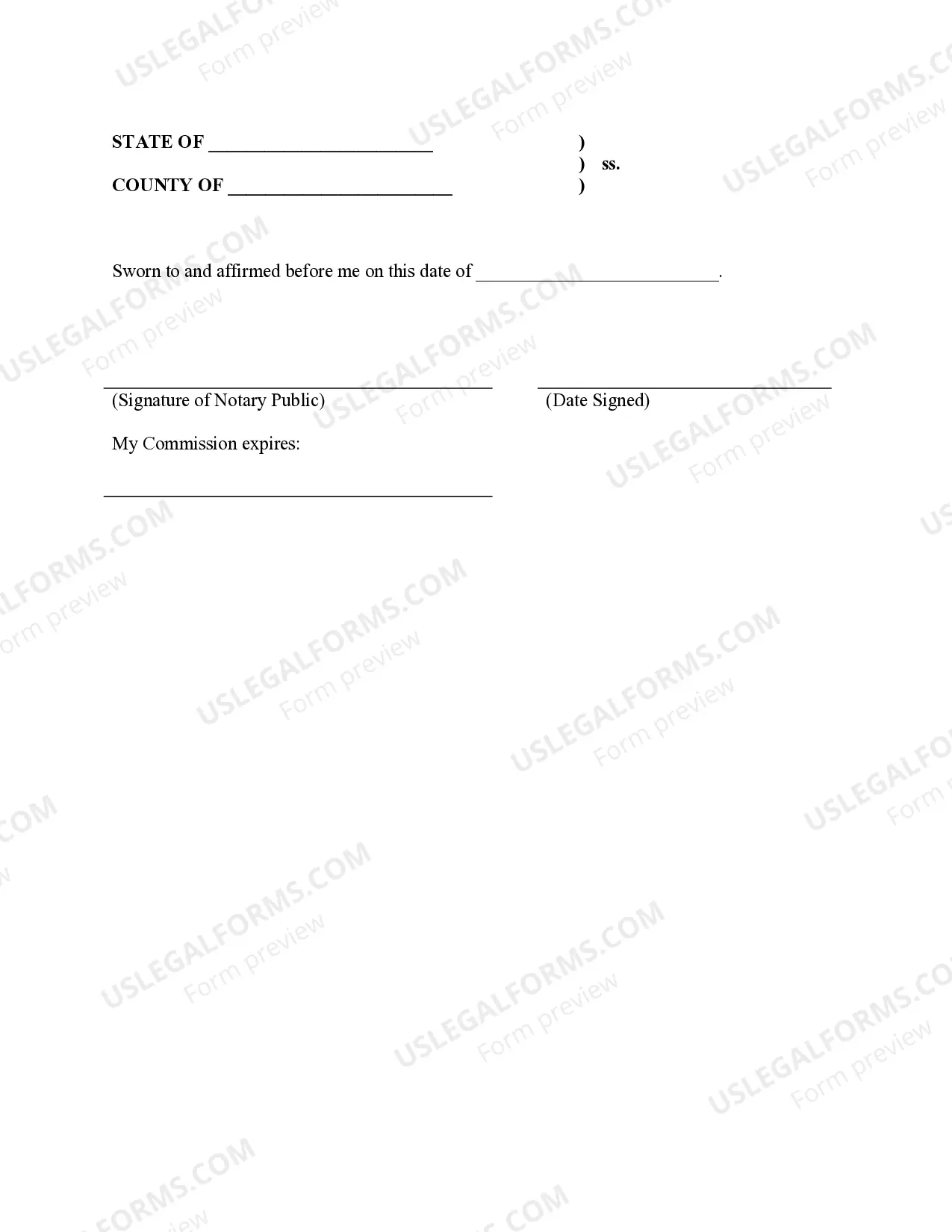
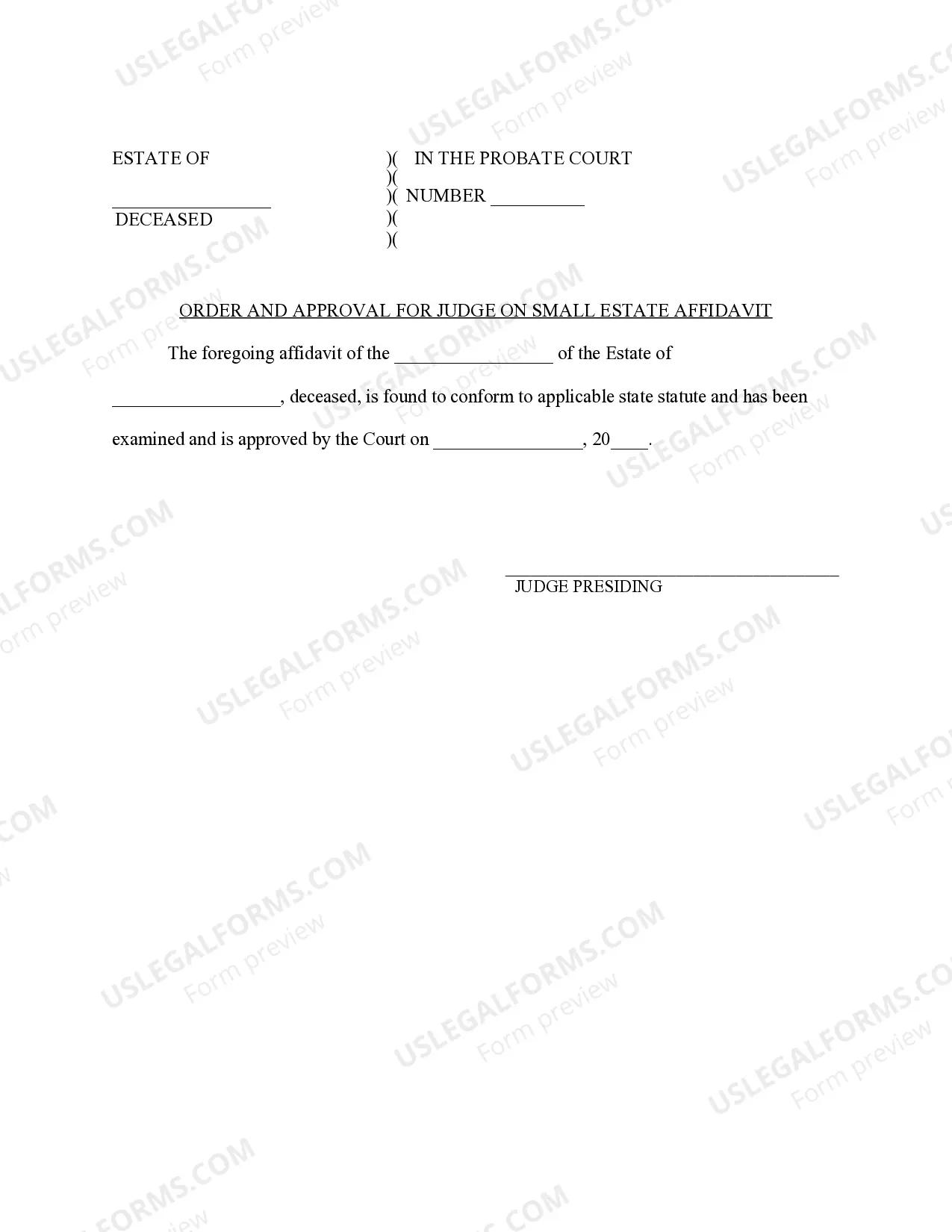
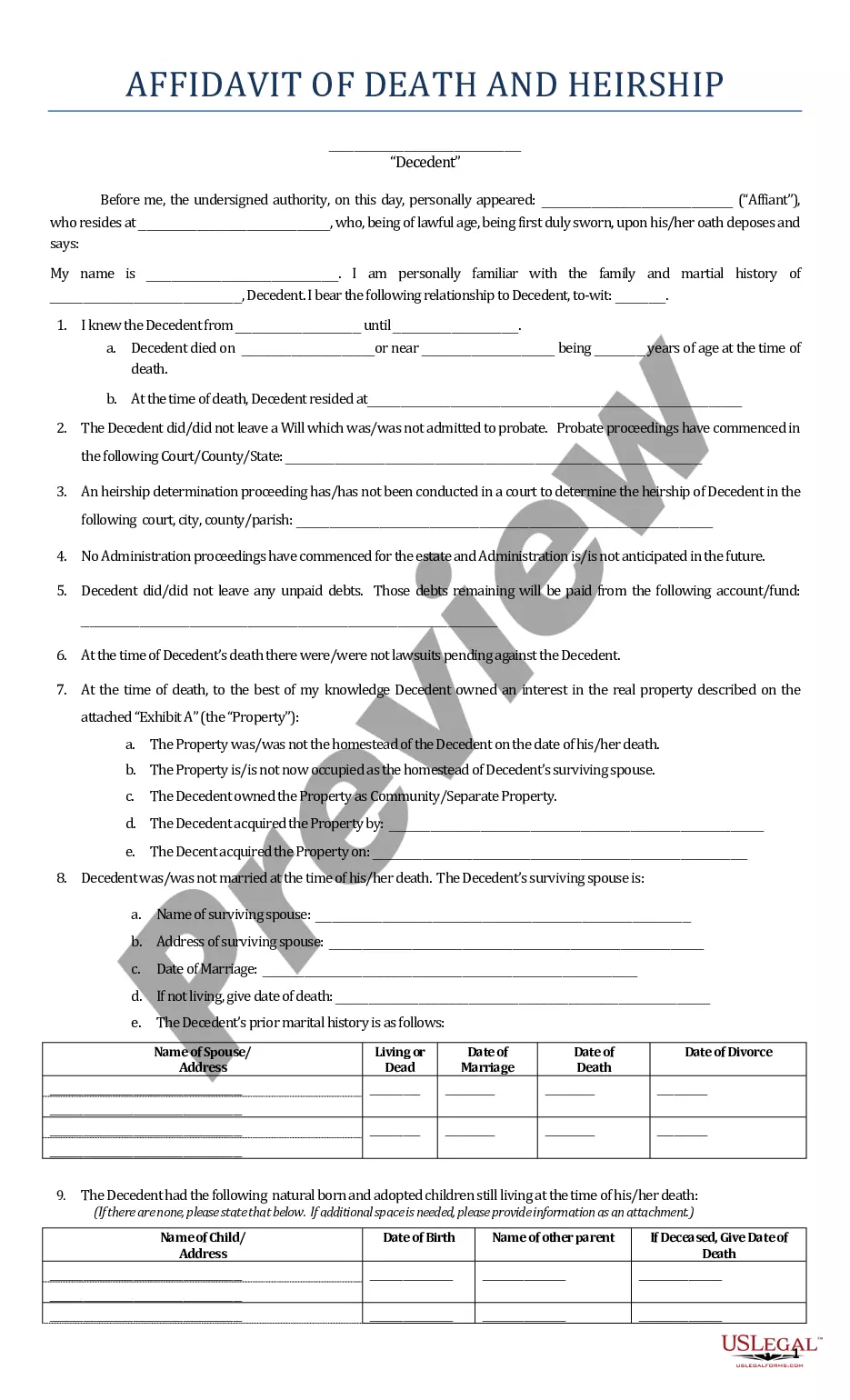
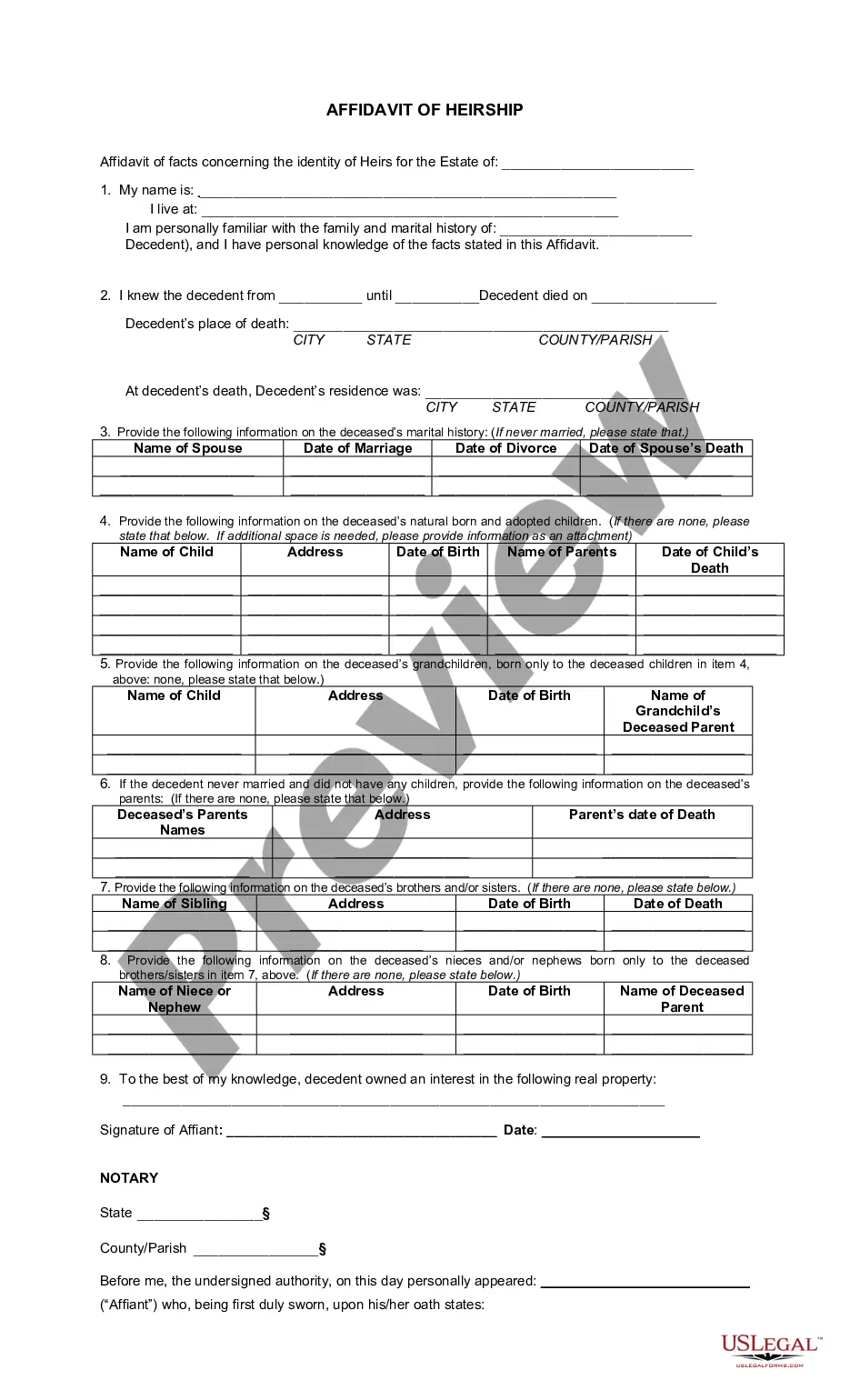
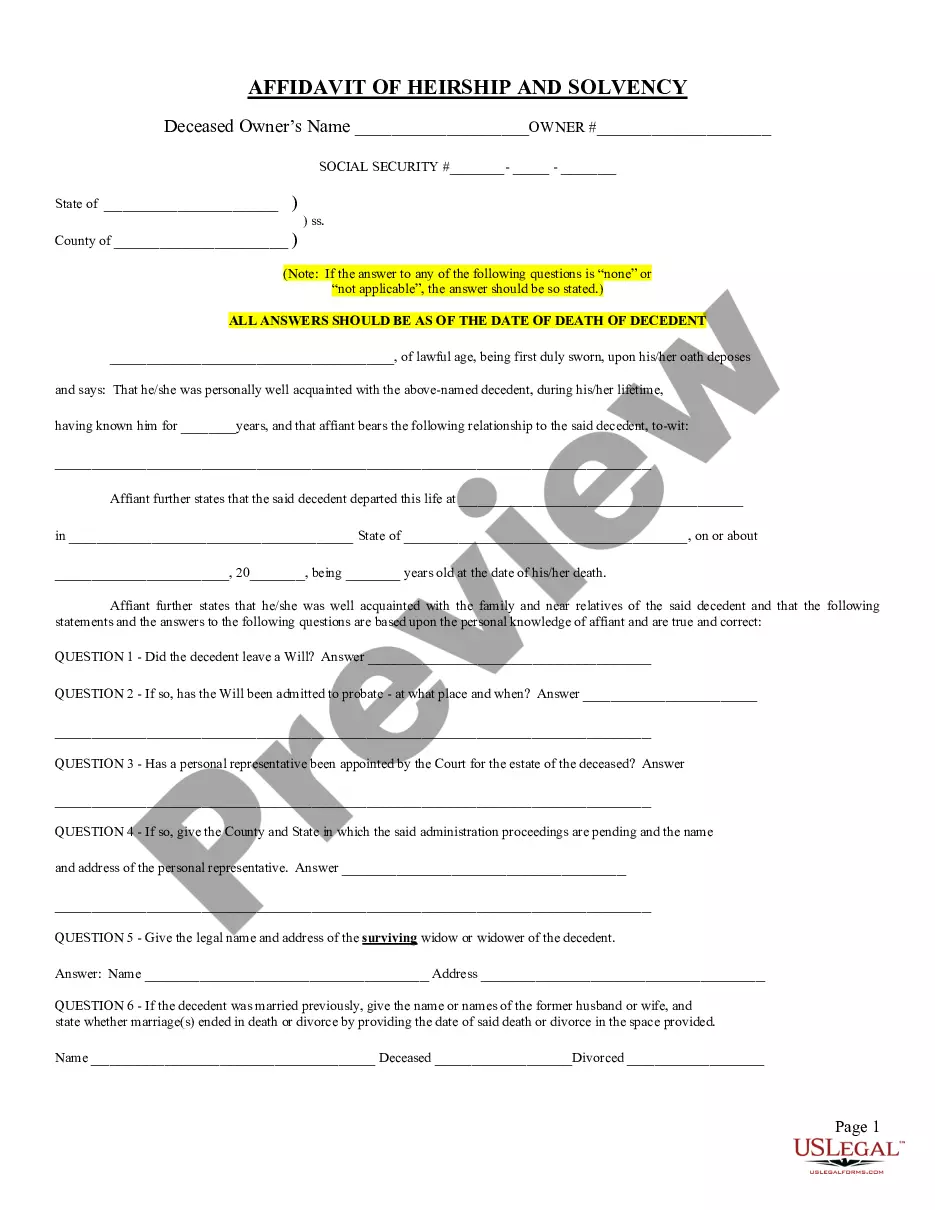
A Small Estate Affidavit is a legal document that allows heirs to settle a deceased person's estate without going through the lengthy probate process, provided the estate meets certain criteria.