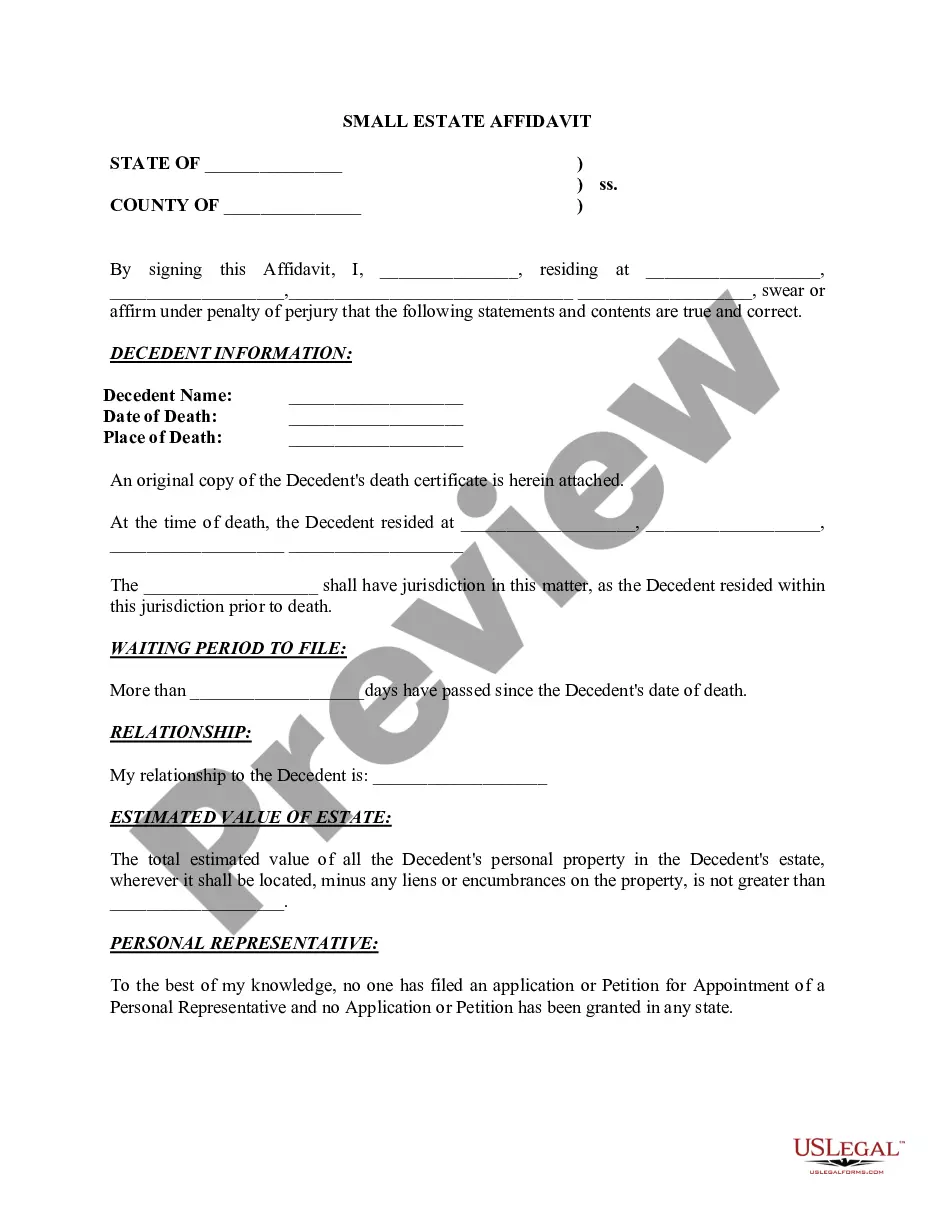
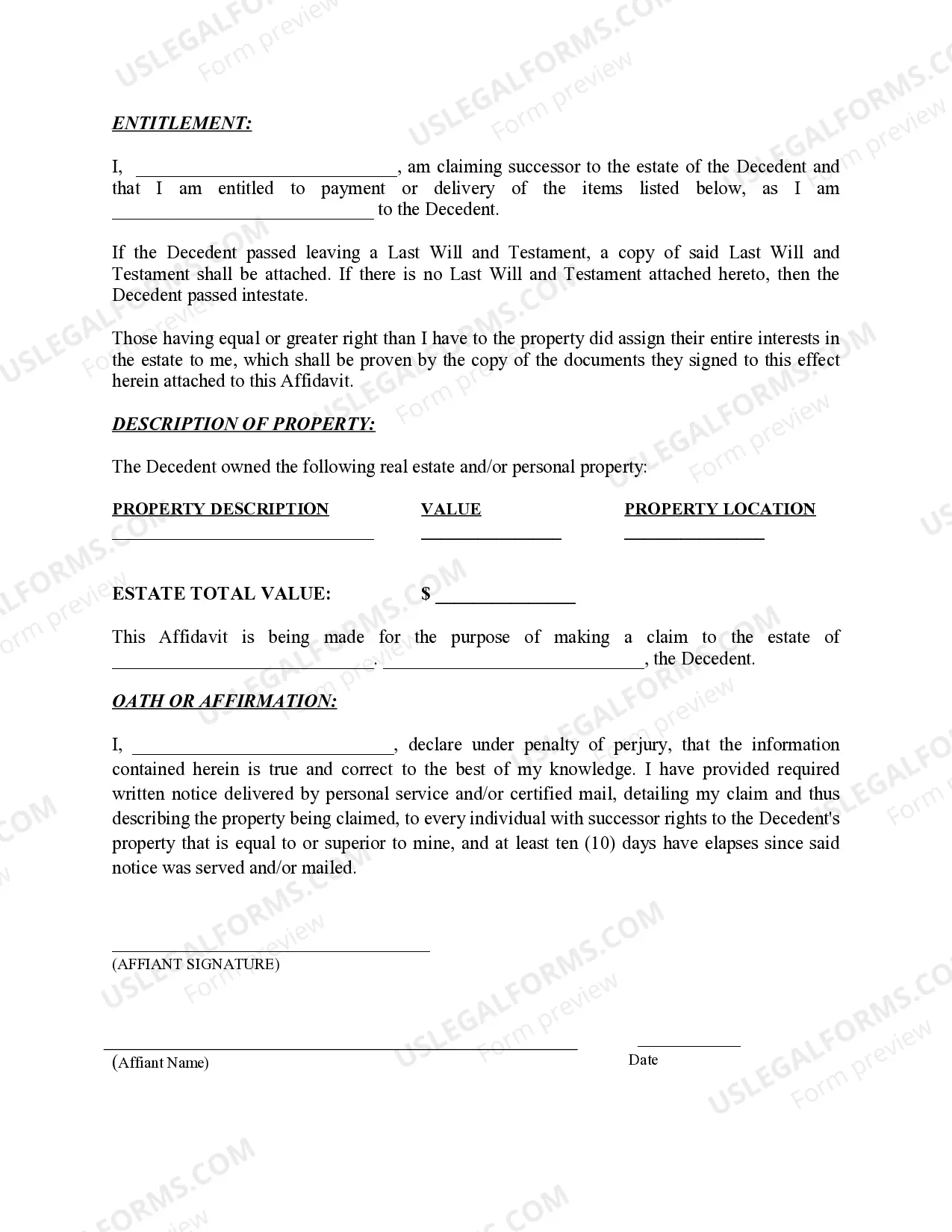
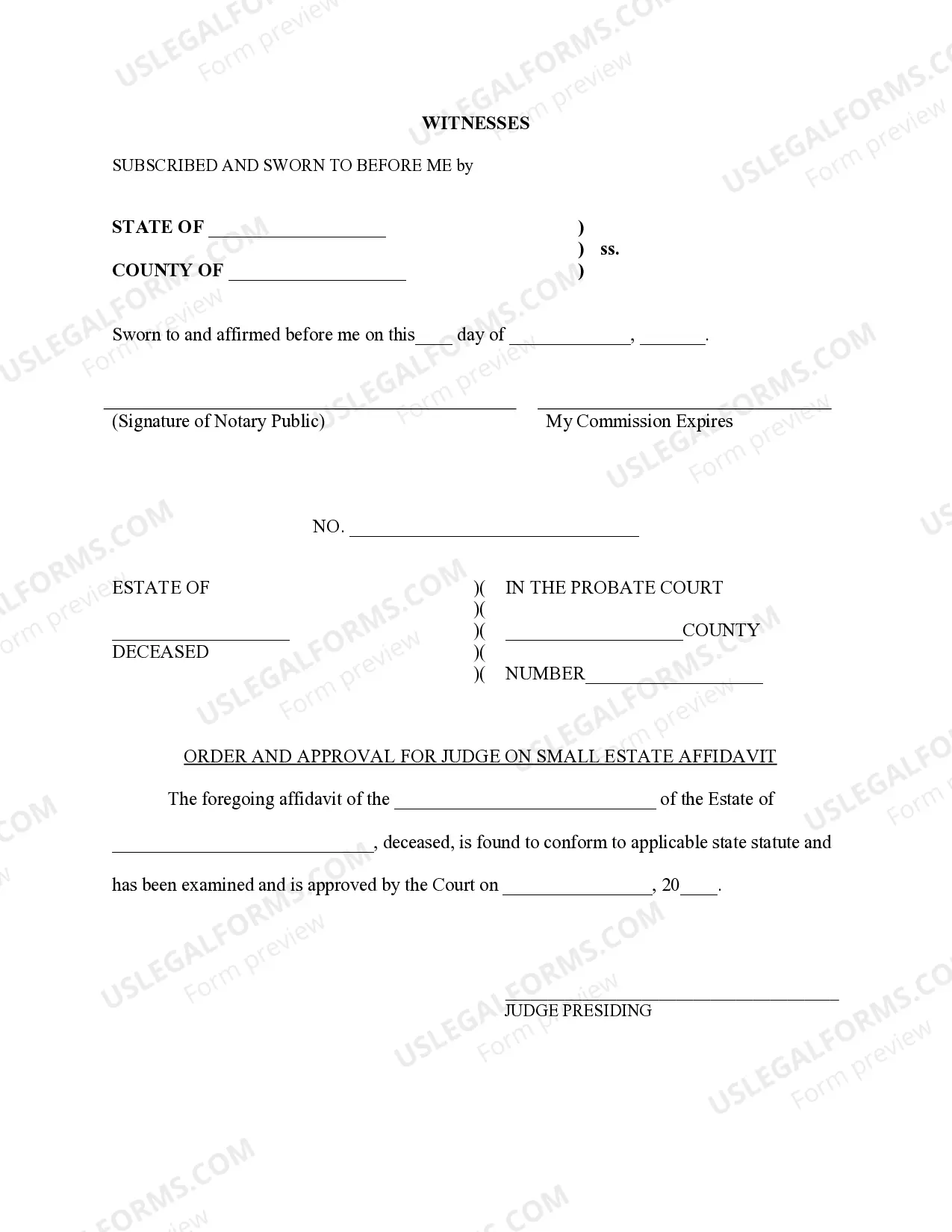
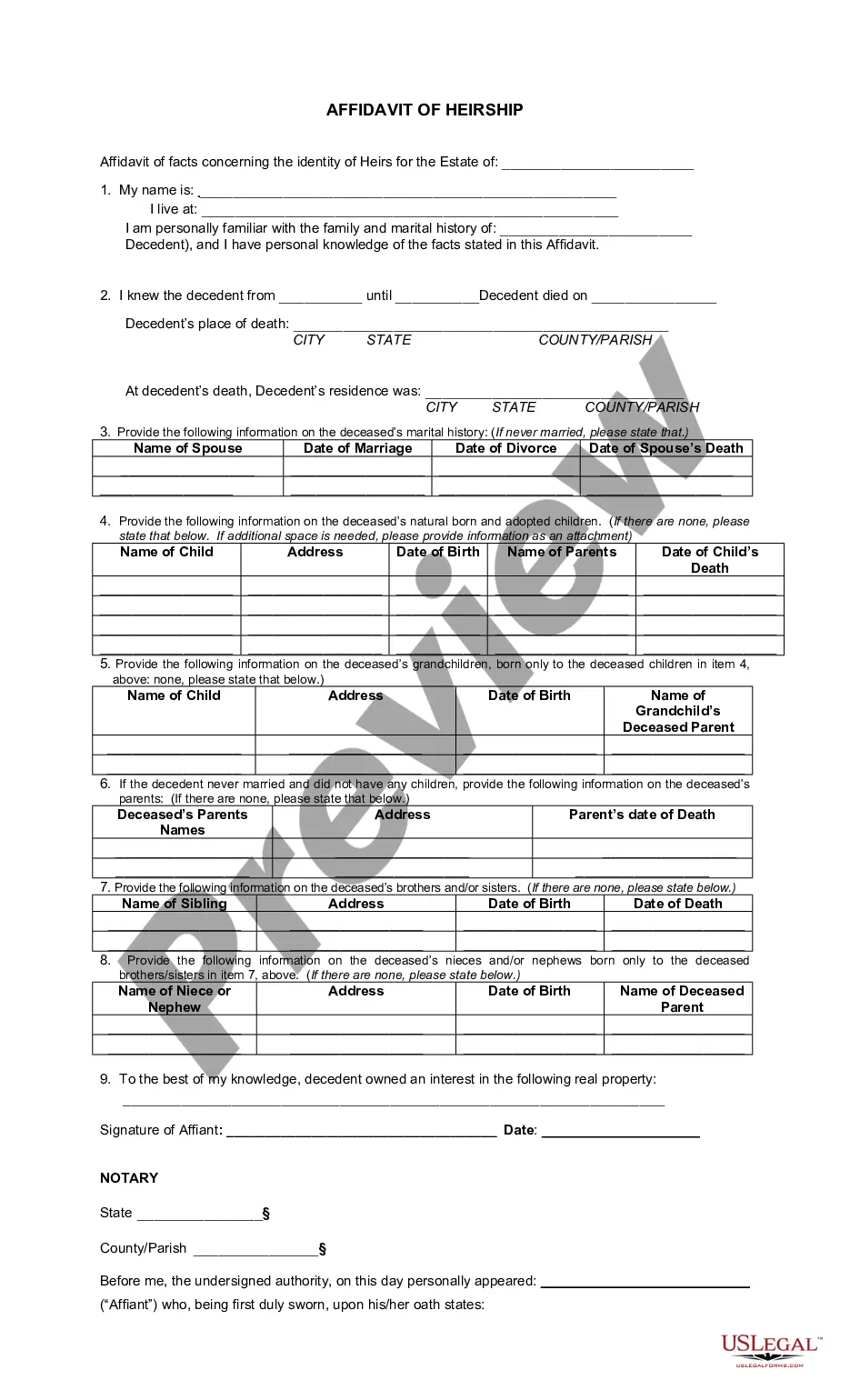
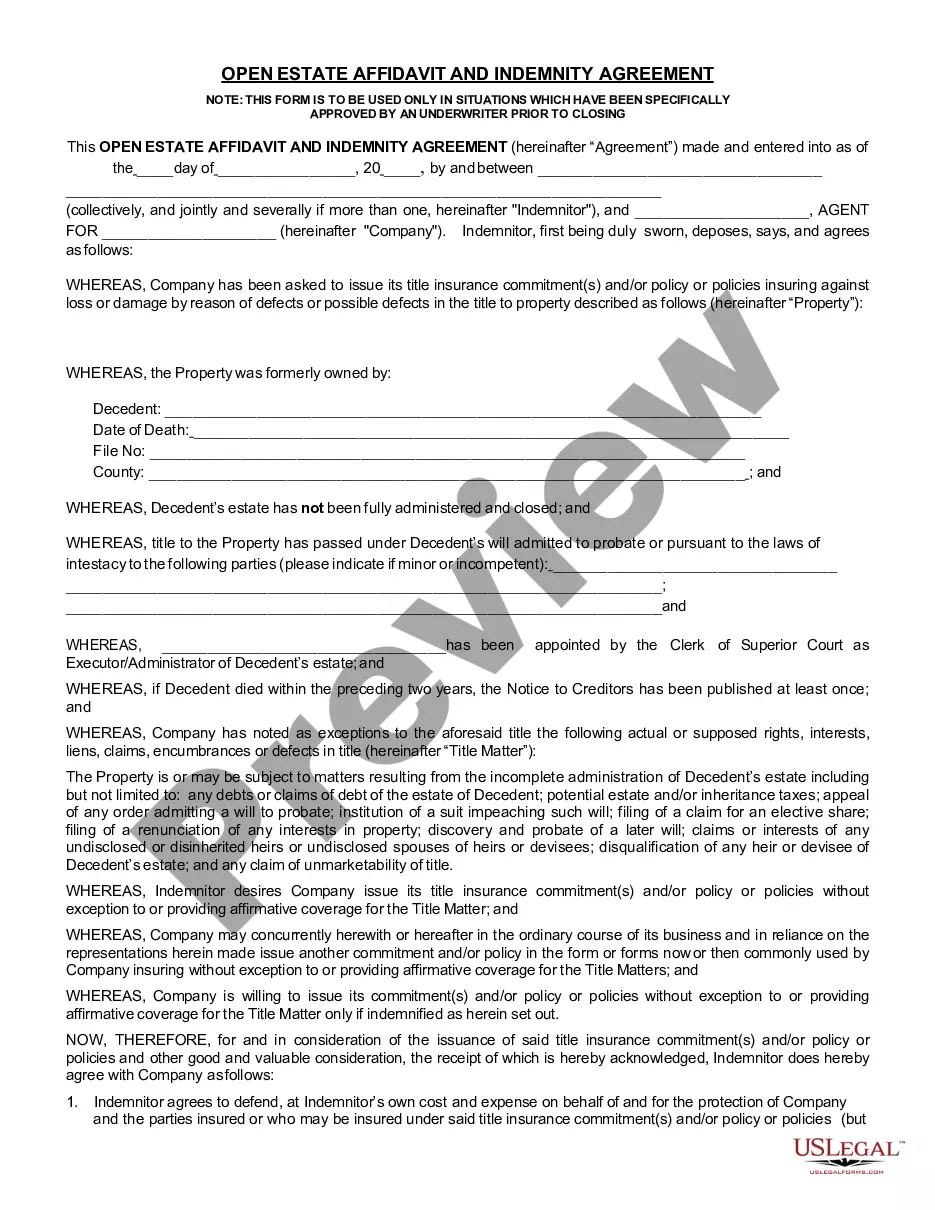
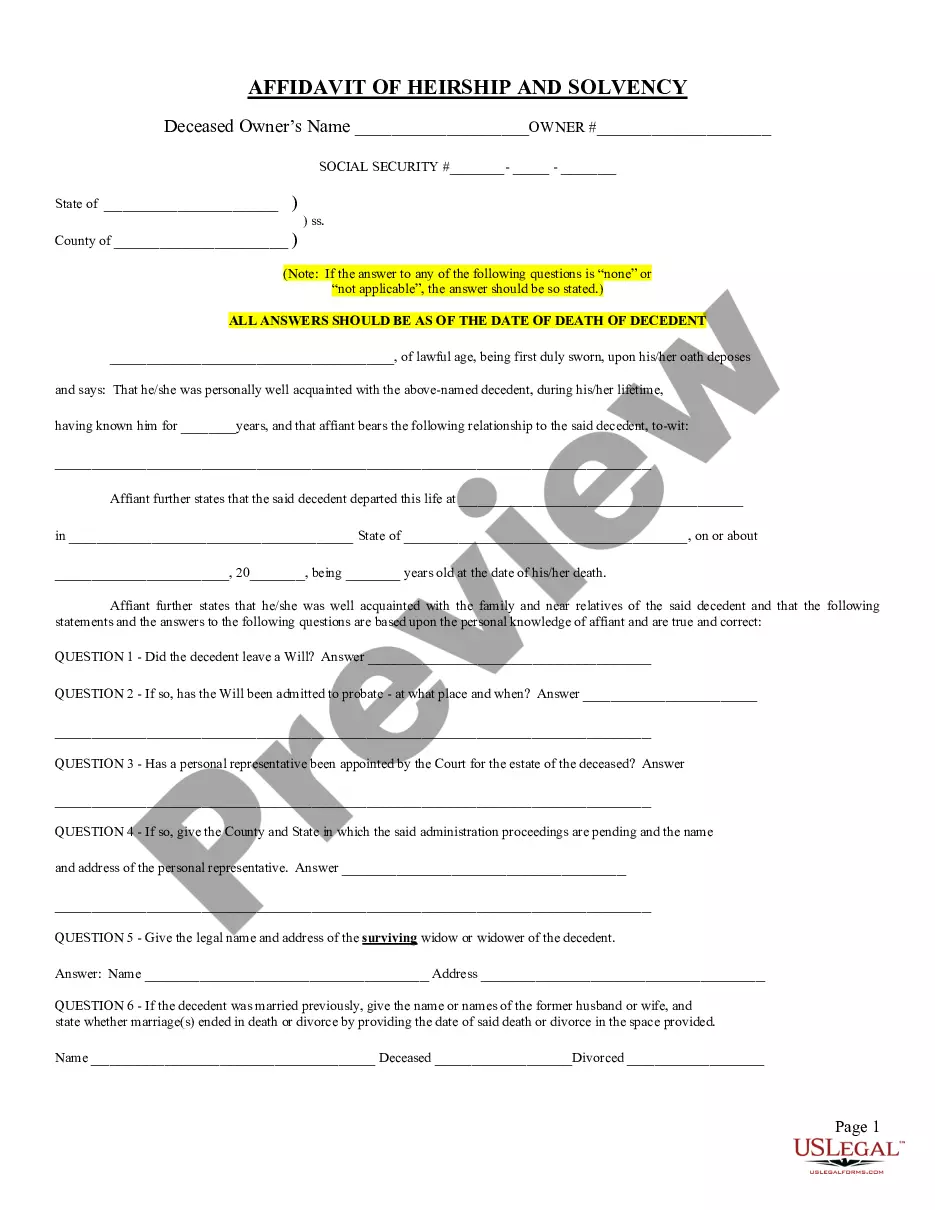
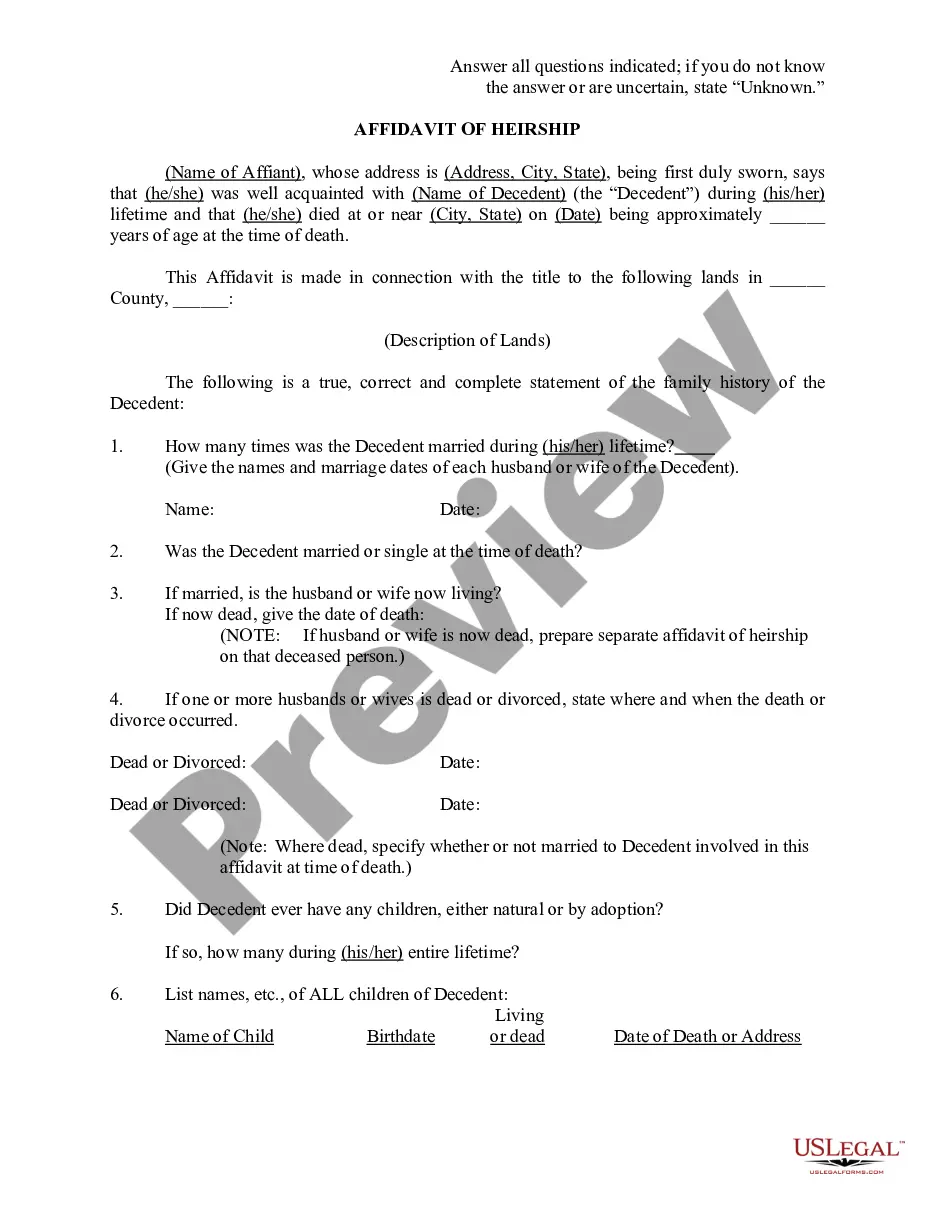
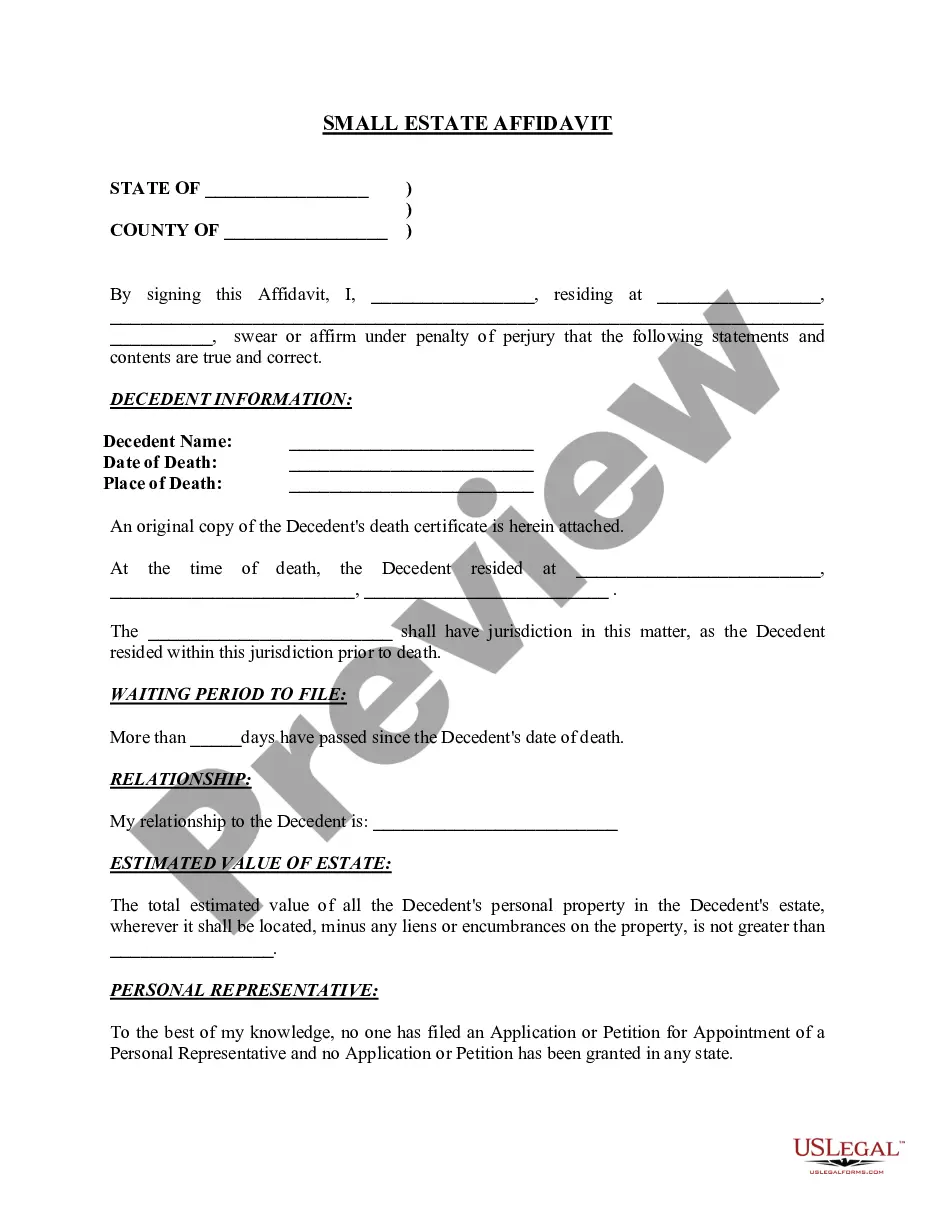
An Affidavit is a sworn, written statement of facts, signed by the 'affiant' (the person making the statement) before a notary public or other official witness. The affiant swears to the truth and accuracy of the statement contained in the affidavit. Where an estate is valued at less than $100,000, an interested party, as successor to the decedent, may, issue a small estate affidavit to collect or claim entitlement to the deceased property.
Absolutely! If things get tricky or if the estate value increases, you can always transition to a probate process down the line.
Once you submit the affidavit, any financial institutions or asset holders can release the assets to you, allowing you to settle the deceased's affairs smoothly.
First, gather all the necessary information about the deceased's assets and heirs. Then, fill out the affidavit as per the guidelines provided by Ohio law.
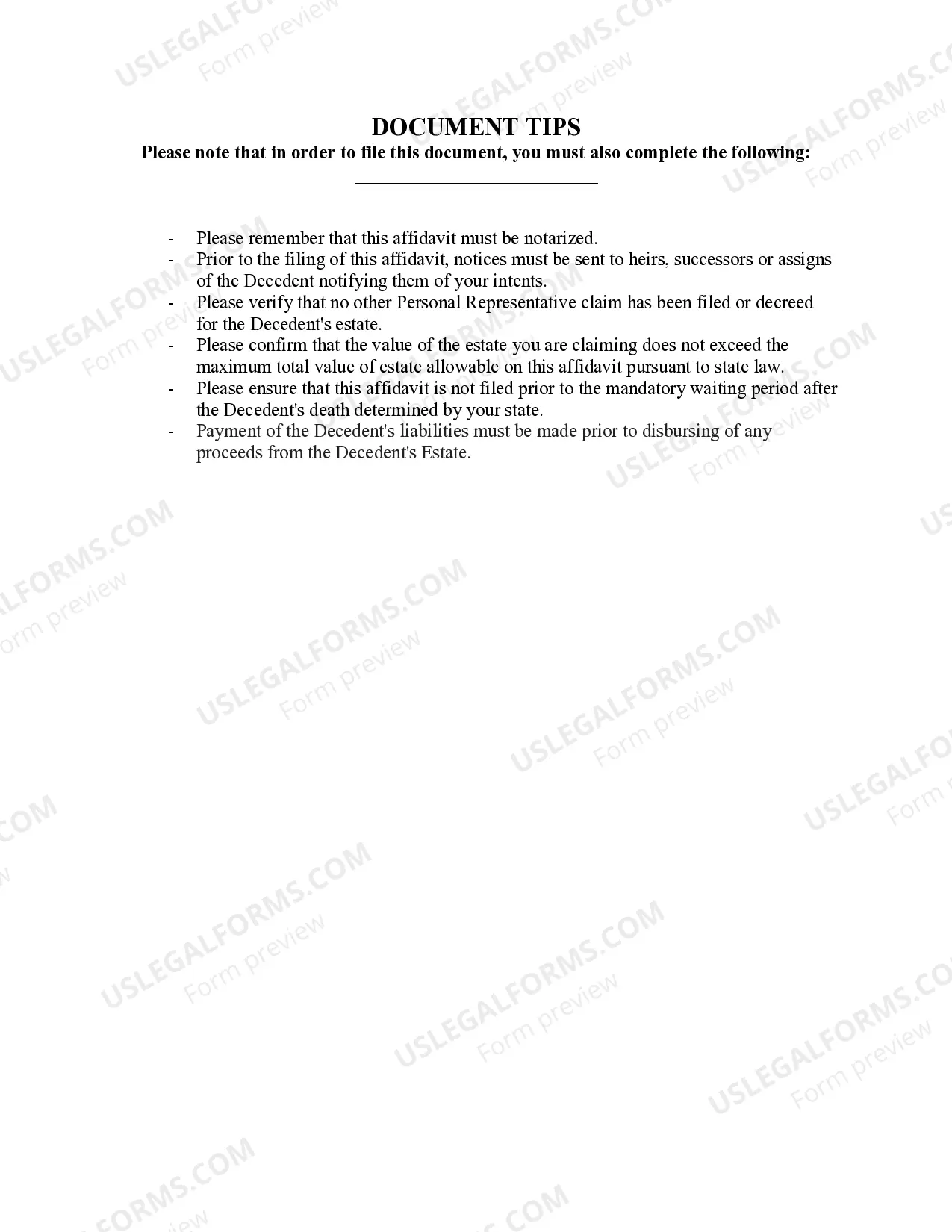
You need to show that the estate total is below a specific amount and that a certain amount of time has passed since the person passed away, among other key details.
Generally, anyone who is a surviving spouse, heir, or appointed personal representative can use the Small Estate Affidavit to claim a deceased person's assets.
A Small Estate Affidavit is a legal document that allows a person to collect the assets of someone who has passed away, without going through the full probate process, as long as the estate is under a certain value.