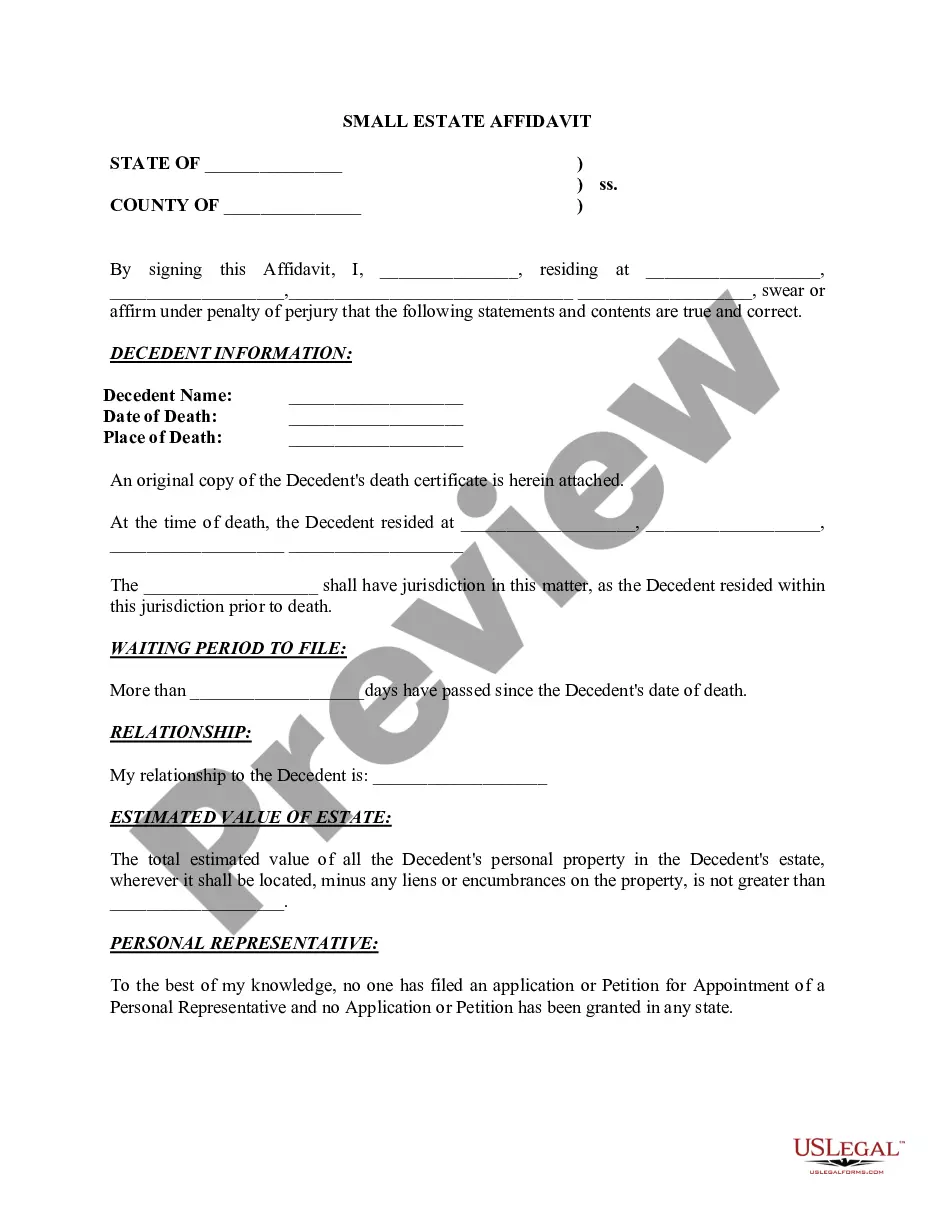
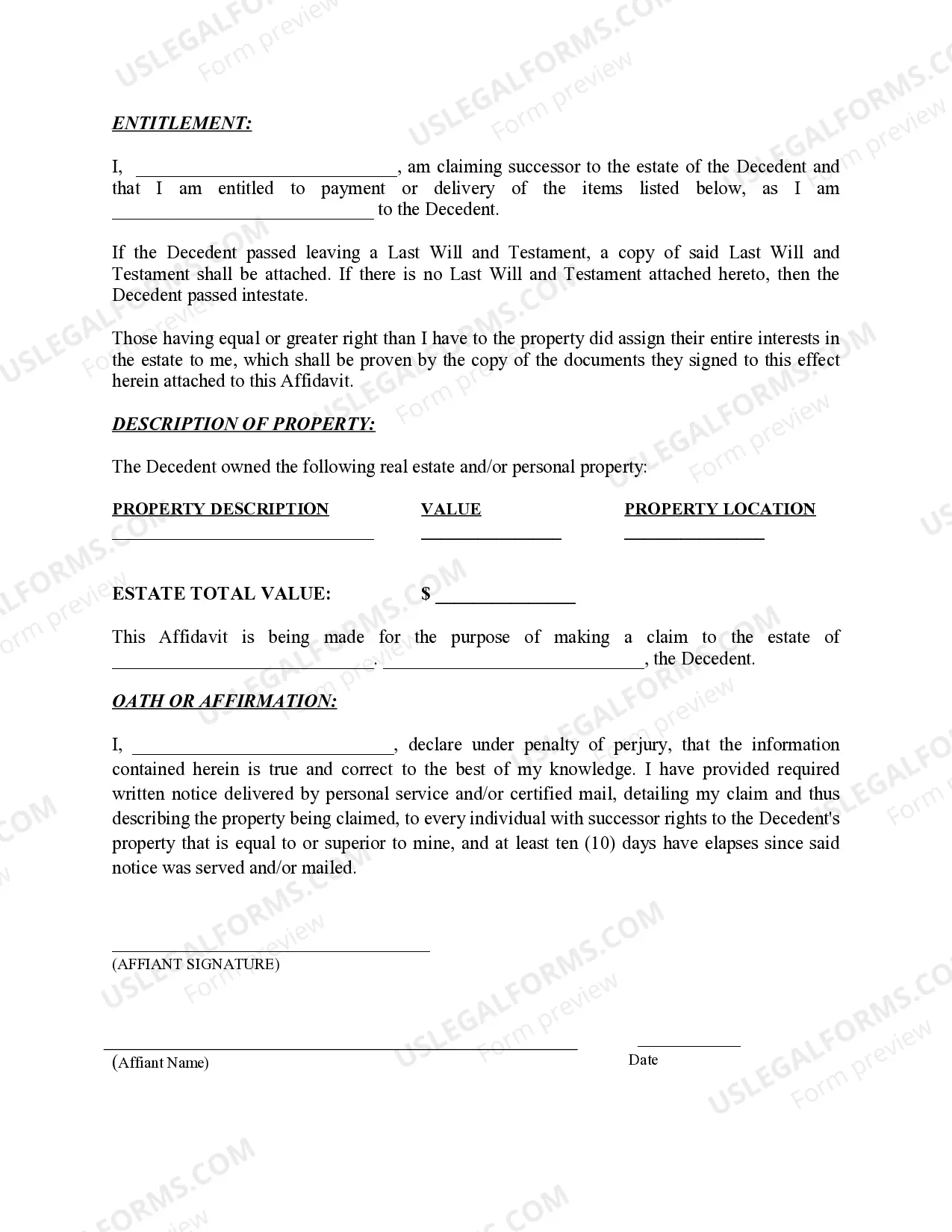
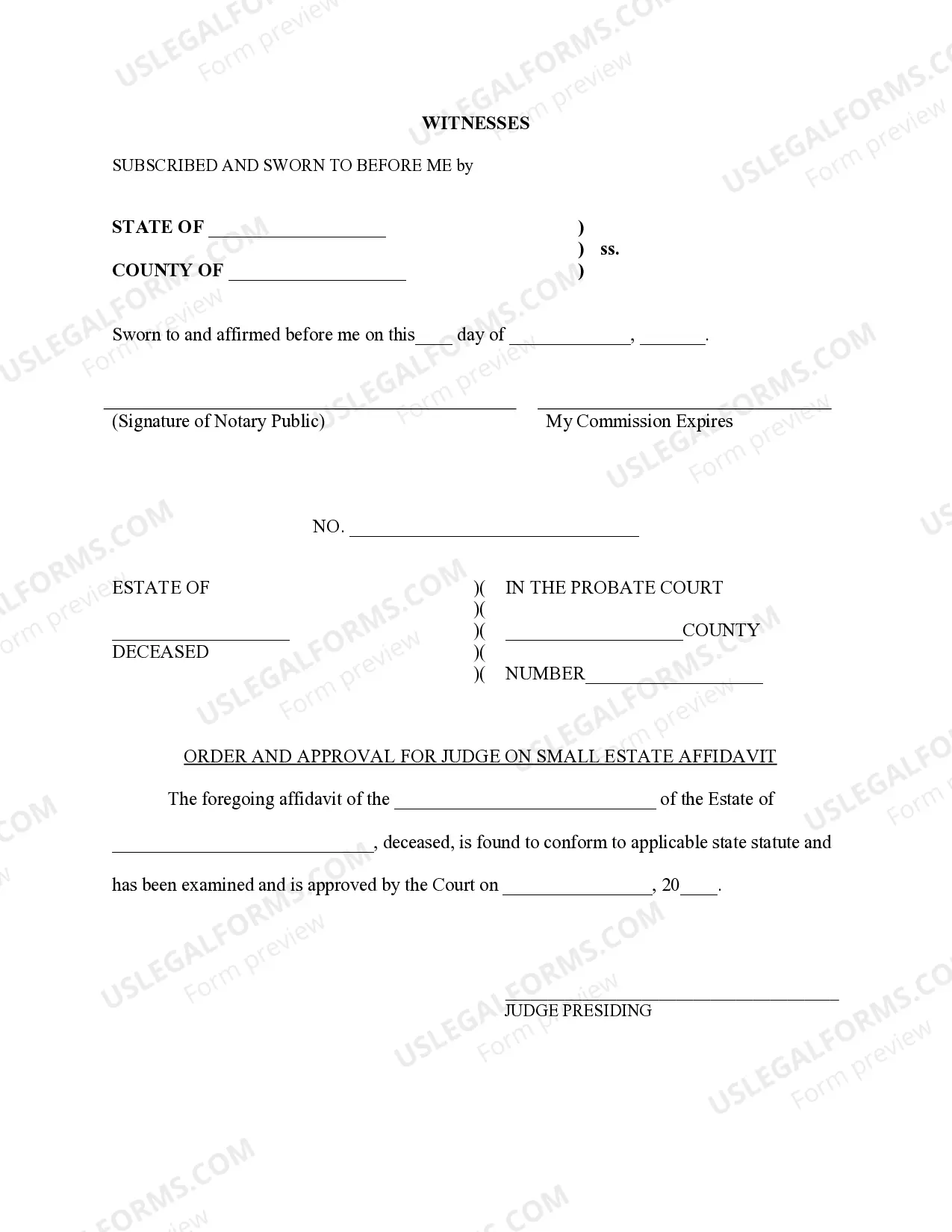
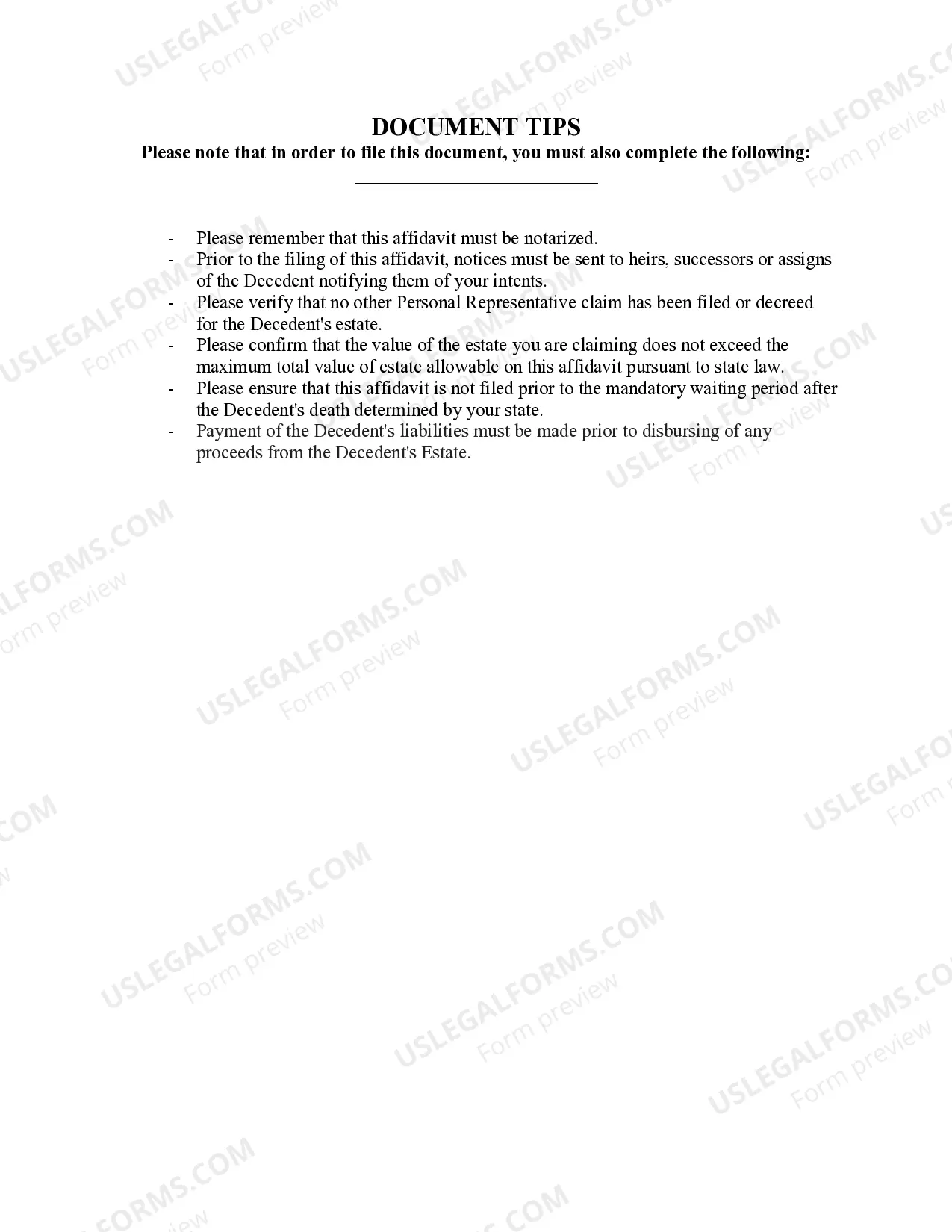
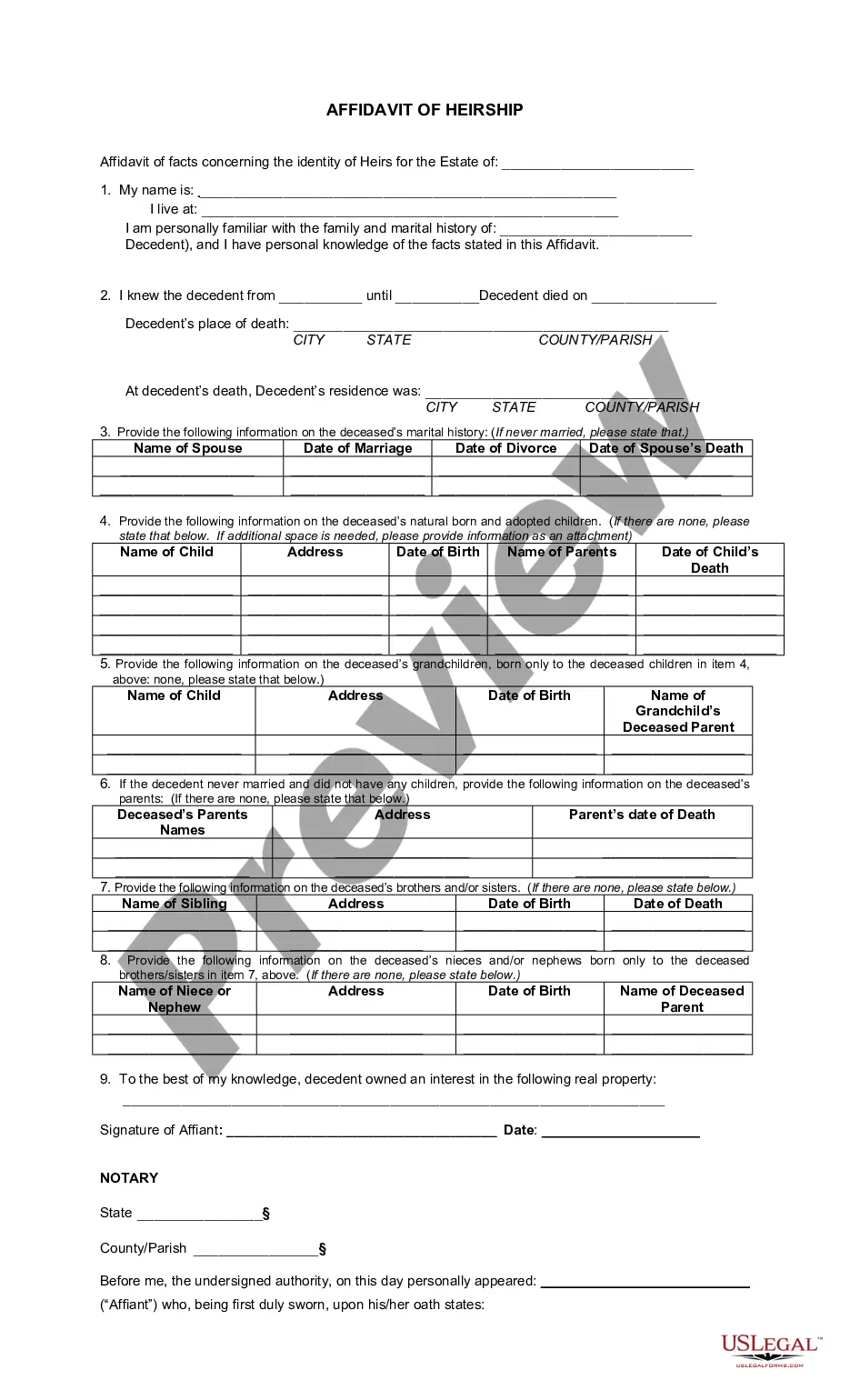
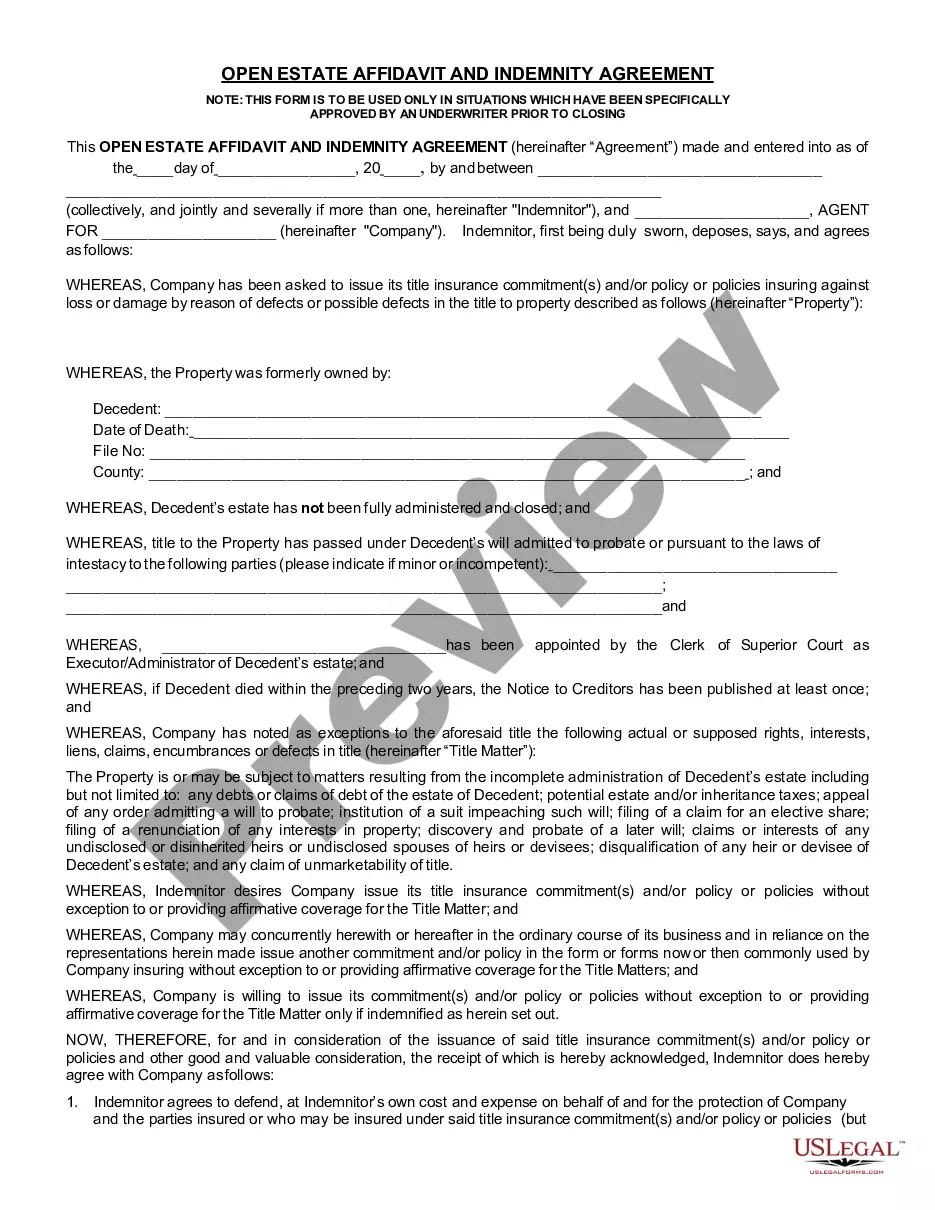
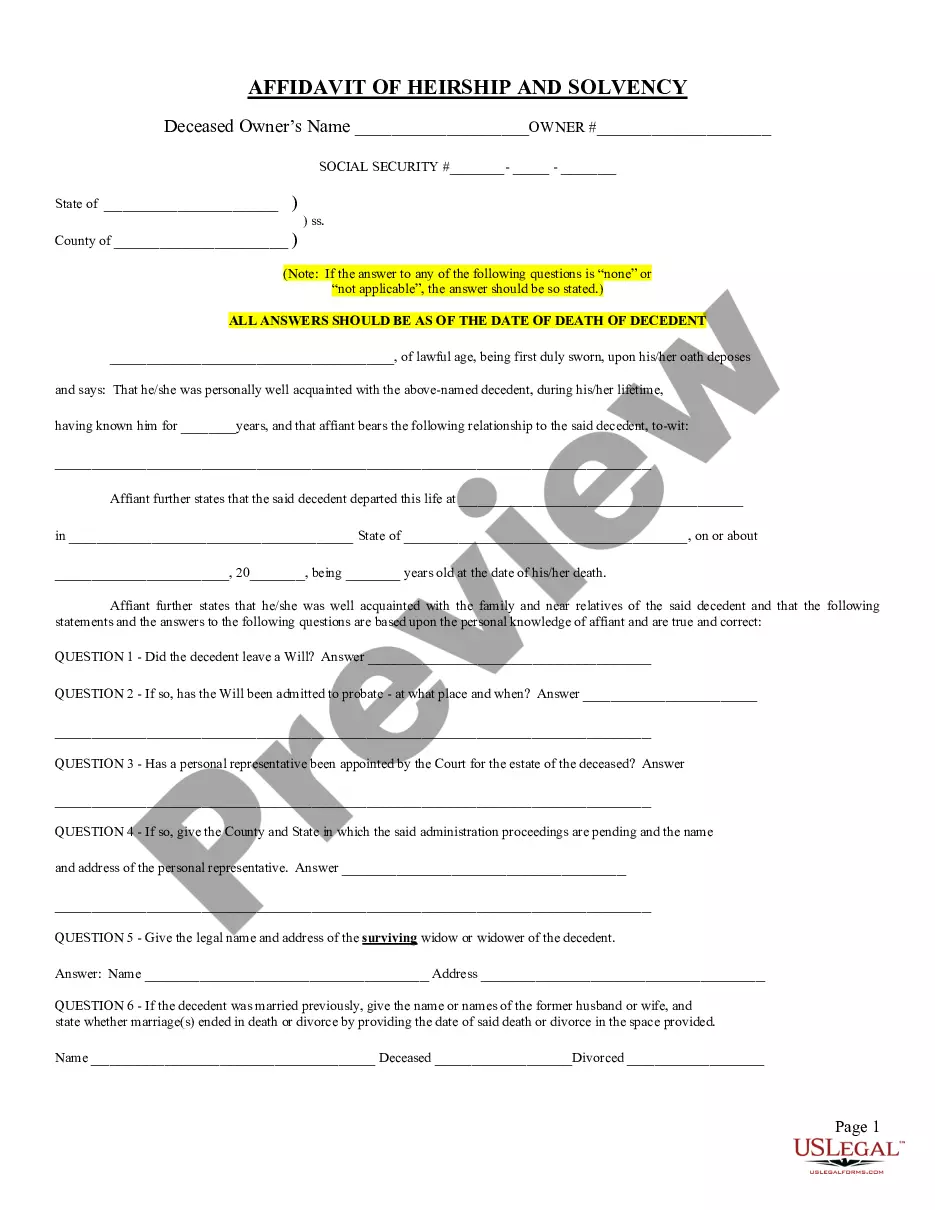
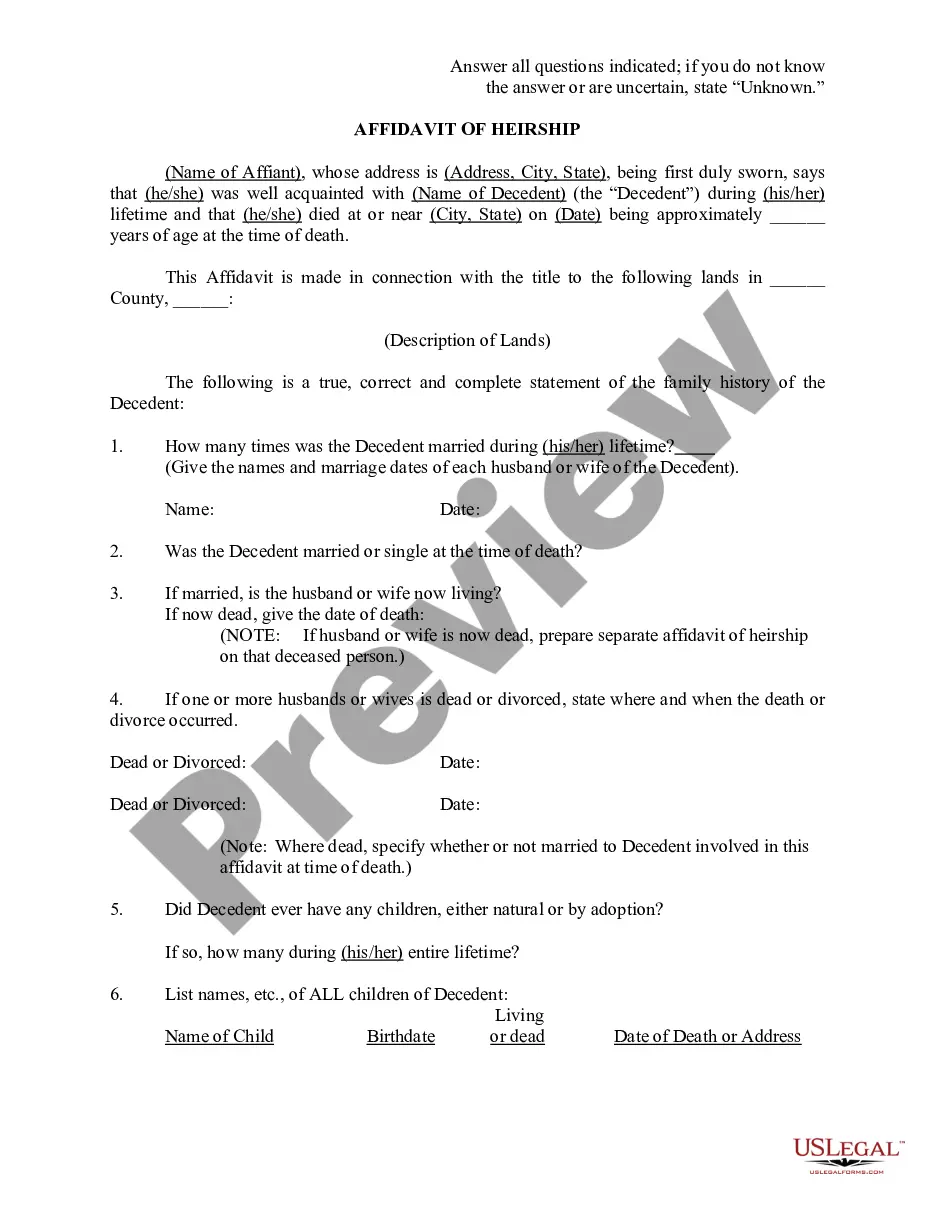
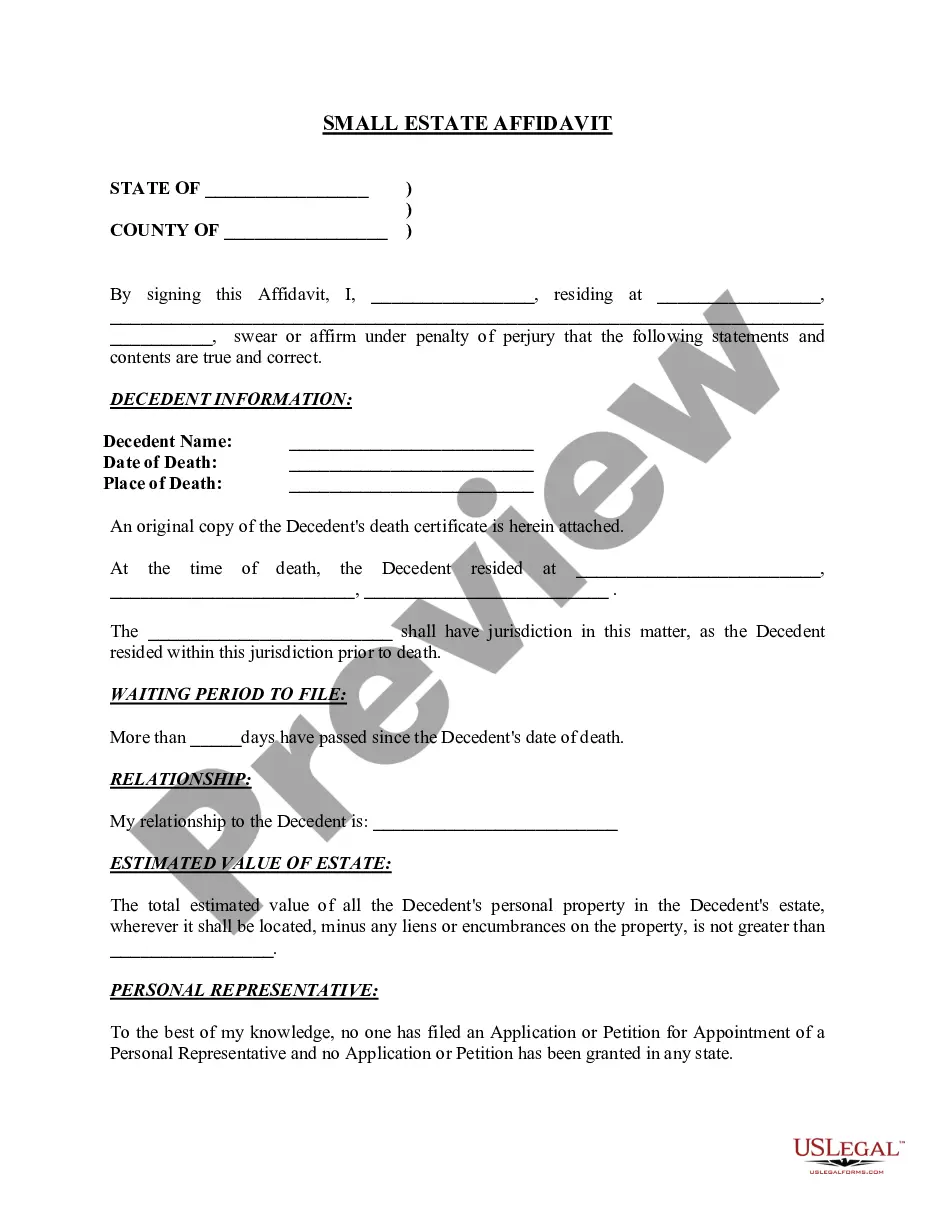
An Affidavit is a sworn, written statement of facts, signed by the 'affiant' (the person making the statement) before a notary public or other official witness. The affiant swears to the truth and accuracy of the statement contained in the affidavit. Where an estate is valued at less than $100,000, an interested party, as successor to the decedent, may, issue a small estate affidavit to collect or claim entitlement to the deceased property.
If there are disagreements, it could throw a wrench in the works. It's best to try to settle things amicably, but you might want to consult a lawyer if it gets messy.
Yes, you can! If the will doesn’t appoint an executor or if the estate is small enough, a Small Estate Affidavit can still do the trick.
Once submitted, if everything checks out, the affidavit allows the heirs to access the deceased's assets without any further fuss. It's a smoother ride to settle the estate!
Nope! One of the great things about a Small Estate Affidavit is that you don't have to set foot in a courtroom to settle the estate, which saves time and hassle.
You'll need to gather information about the deceased, their assets, and the heirs. Once you have that, you can fill out the affidavit form with all the necessary details.
Typically, if the total value of the deceased's estate is less than $166,250, the rightful heirs can use this affidavit. It's a way to help families wrap things up quickly.
A Small Estate Affidavit is a legal document that lets heirs settle an estate without going through the lengthy probate process. It's like a shortcut for small estates!